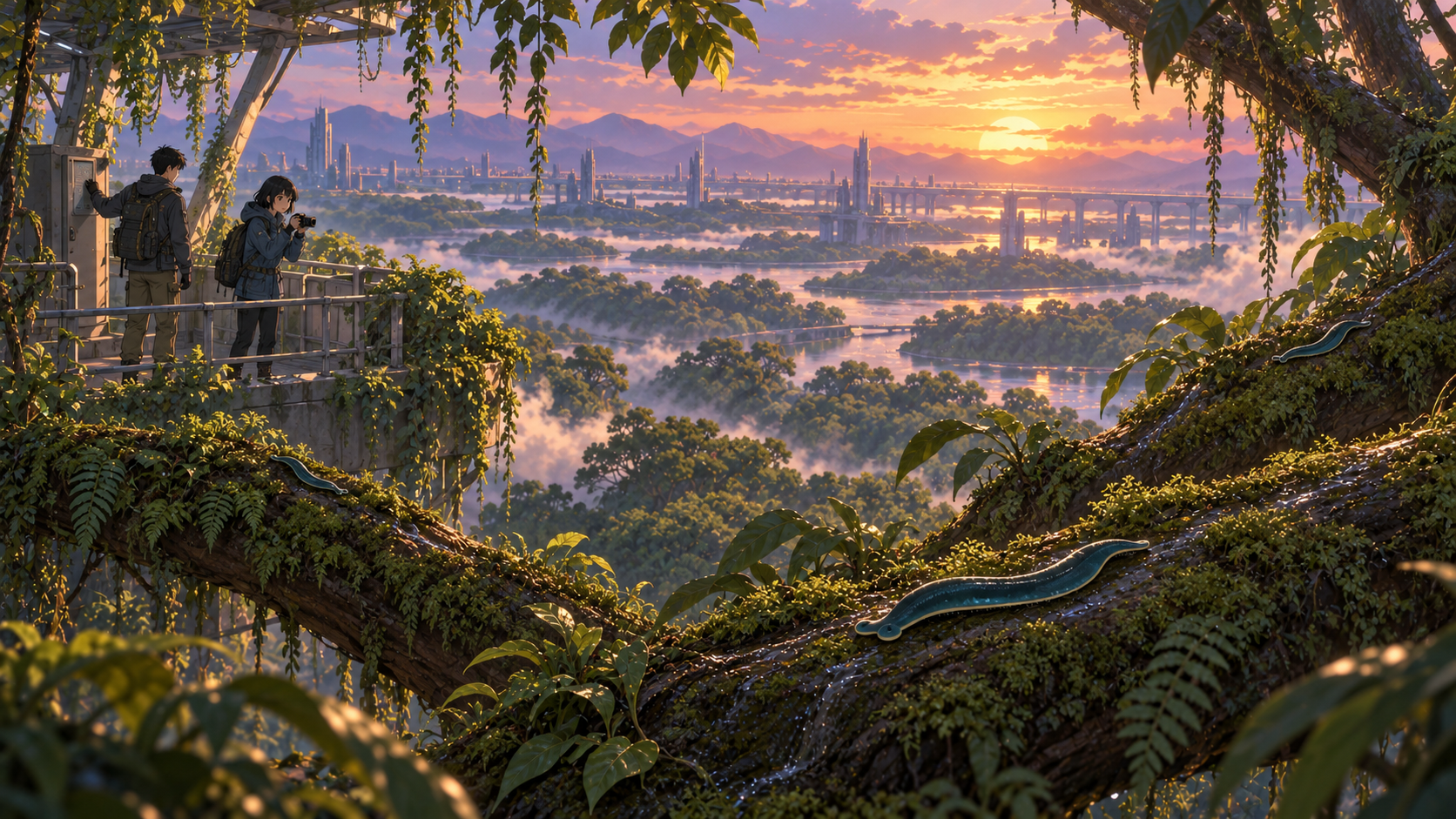
Inverted-Rain Suspended Reservoir Forest is a five-day field route where Fang and K document a local ecology through observation, distance, and response.
Day 01 / 10.08
The Line Against the Water
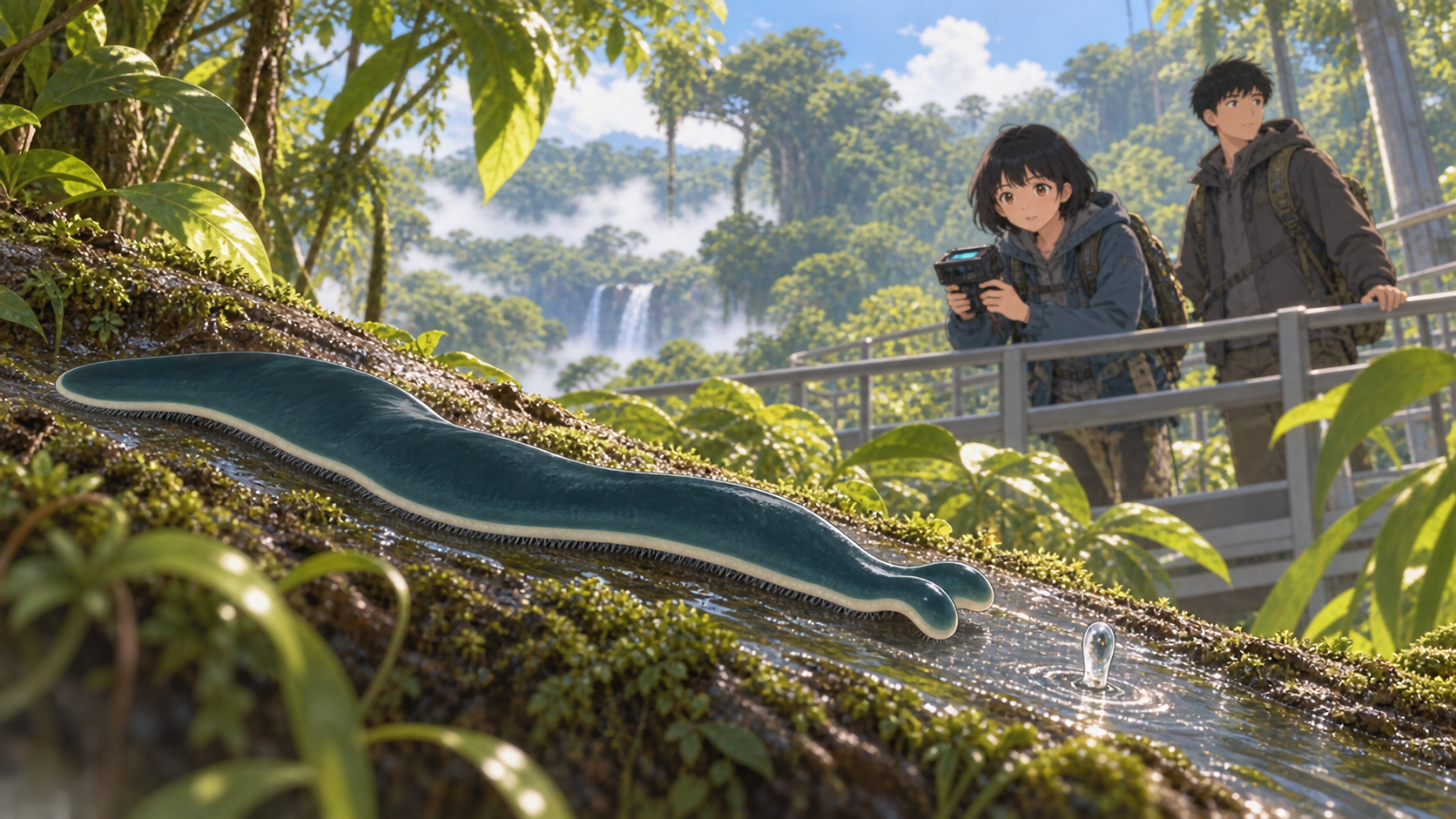
Rain-Vein Ribbon FlatwormLow Risk
At Rain-Vein Branch Channel I stopped active tracking. A Rain-Vein Ribbon Flatworm turned against the film on a wet branch while mist droplets drifted upward. The two movements pointed in different directions. The first watercourse changed by pumping was under our feet, not in the warning light above us.
MORNINGFang recorded the water level, wind, and the flatworm's turn from a safe distance. I stayed on the bridge side where we could retreat and checked the actual rhythm of the Cloudport pumps. The warning board classified every rising droplet as inverted-rain trouble. The flatworm kept to the bark and went the other way. Fang asked me to mark where it turned, then compare that point with the waterline in the leaf channel. These quiet marks told us more than the alarm. A natural wind window would not dry the whole wet branch at once. We did not follow the animal into its channel.NOONFang took a non-invasive reading of the bacterial film and water level. I marked the boundary of the reverse flow caused by pumping from outside the branch channel. Along the safe bridge, I put three sealed side channels on an offline map, one by one. I did not lift the bark. Fang found fresh film and the trace of water drawn away; the flatworm's ventral cilia were still working in the same direction. Taken together, those signs traced the reverse flow to a pressure difference we had created in the upper reservoir, not a strange habit of the animals. We could correct our pumps and gates. We had no reason to handle the flatworms.EVENINGWe opened the leaf gate only a little by remote control and waited for the water to find its exit. The wet branch darkened first. Then the flatworms' tight turning line slowly loosened as a thin film ran downhill along the natural recharge course. Fang did not say we had repaired the whole forest. She wrote down a change we could observe again. I kept the gate's maximum opening low; the next inverted rain must not scour the branch channel that had just begun to recover. We noted the time, equipment state, and habitat signs for the next wind window. One scene was not proof of a restored ecosystem.
「We adjusted the pump and gate, not the animals. Fang kept the measurements. I left the branch its next wind window.」— K
Day 02 / 10.09
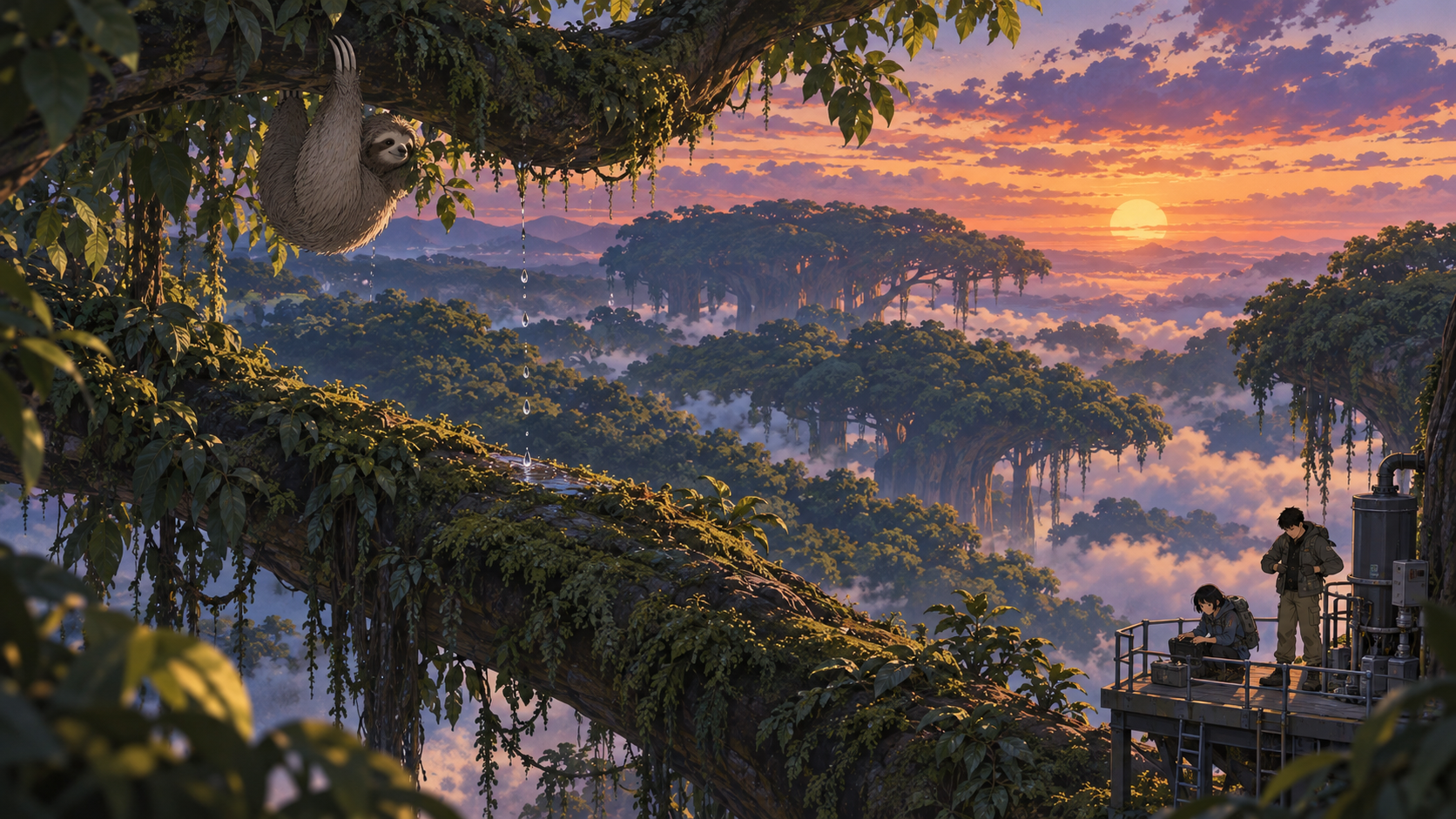
A Small Water Tower in the Shade
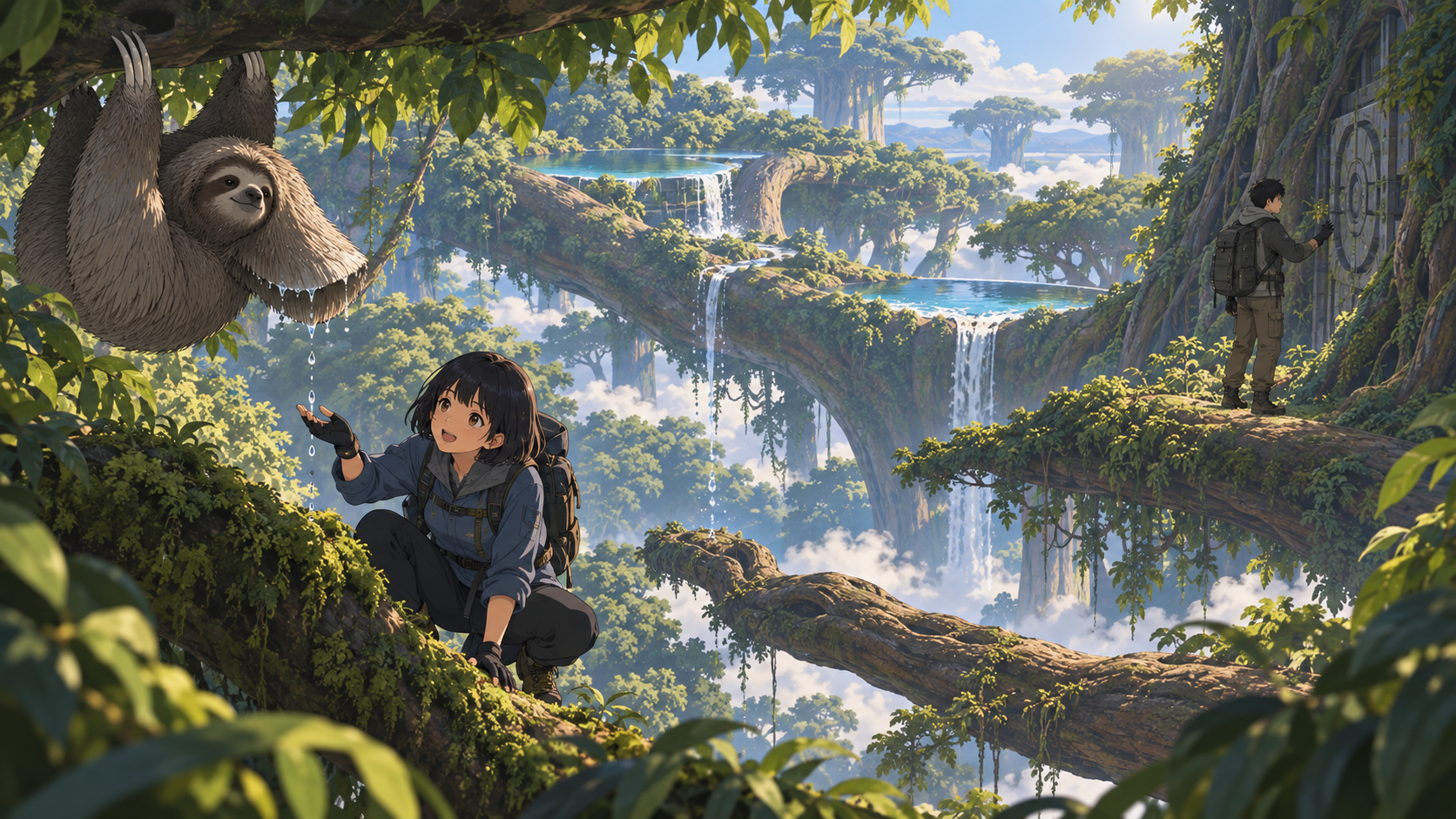
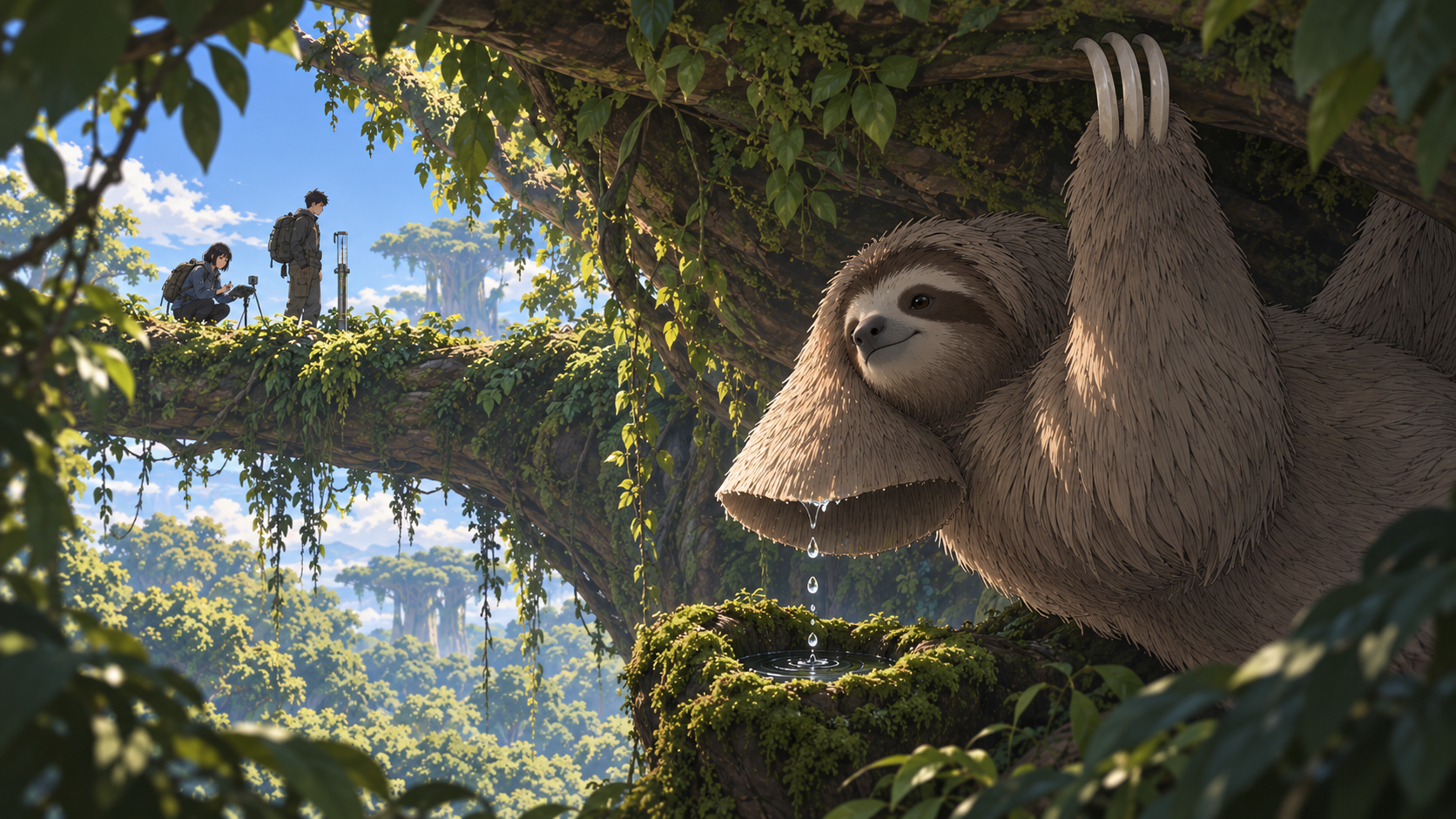
Bell-Crowned Canopy SlothModerate
I stopped active tracking at Bell-Crown Shaded Branch. The Bell-Crowned Canopy Sloth held to its branch. Water gathered in the hollow guard hairs at its shoulders and fell to the moss one drop at a time. The branch below was dry. I needed to read the water path before changing a pump.
MORNINGFang noted the water level, wind, and the sloth's response from a safe distance. I remained on the side of the bridge where we could retreat and checked the Cloudport equipment's actual rhythm. The sloth was so slow that I nearly missed its work. Each shoulder hair caught a little water and passed it to the moss beneath the branch. It was a small water tower that breathed. The Cloudport had read these drips as a pipe leak. Its continuous pumping, together with a closed gate, made the lower tree pool dry faster. I stayed outside the shaded branch. We did not chase the animal to prove the reading.NOONFang measured the interval between drops and noted the shade. She was measuring water, not claiming the sloth. I turned the camera toward the junction of moss and leaf channel so it could feed in peace. From beyond the bridge I compared two reservoir levels. Water remained above, but too little reached the lower branch. We did not need a stronger pump. We needed a rhythm the habitat could use. At the maintenance platform, I changed the continuous pump to short pulses we could reverse. We touched neither the sloth nor its branch.EVENINGWhen a short pulse stopped, the moss darkened first. Only then did a thin flow reach the next fork. The sloth did not perform for us or change position. Good. Fang recorded how long the drips took to return. I left a passive water-level gauge for the night. If slow supply persists when the next mist comes, the adjustment may hold. Until then we have one observed response, not a repaired forest. I logged the time, equipment state, and repeatable habitat signs for the next wind window.
「We changed the pump, not the sloth. Fang kept the drip interval. I left the water gauge and the next mist window to test our work.」— K
Day 03 / 10.10
A Crossing the Fish Chose
Fold-Fin Canopy KillifishModerate
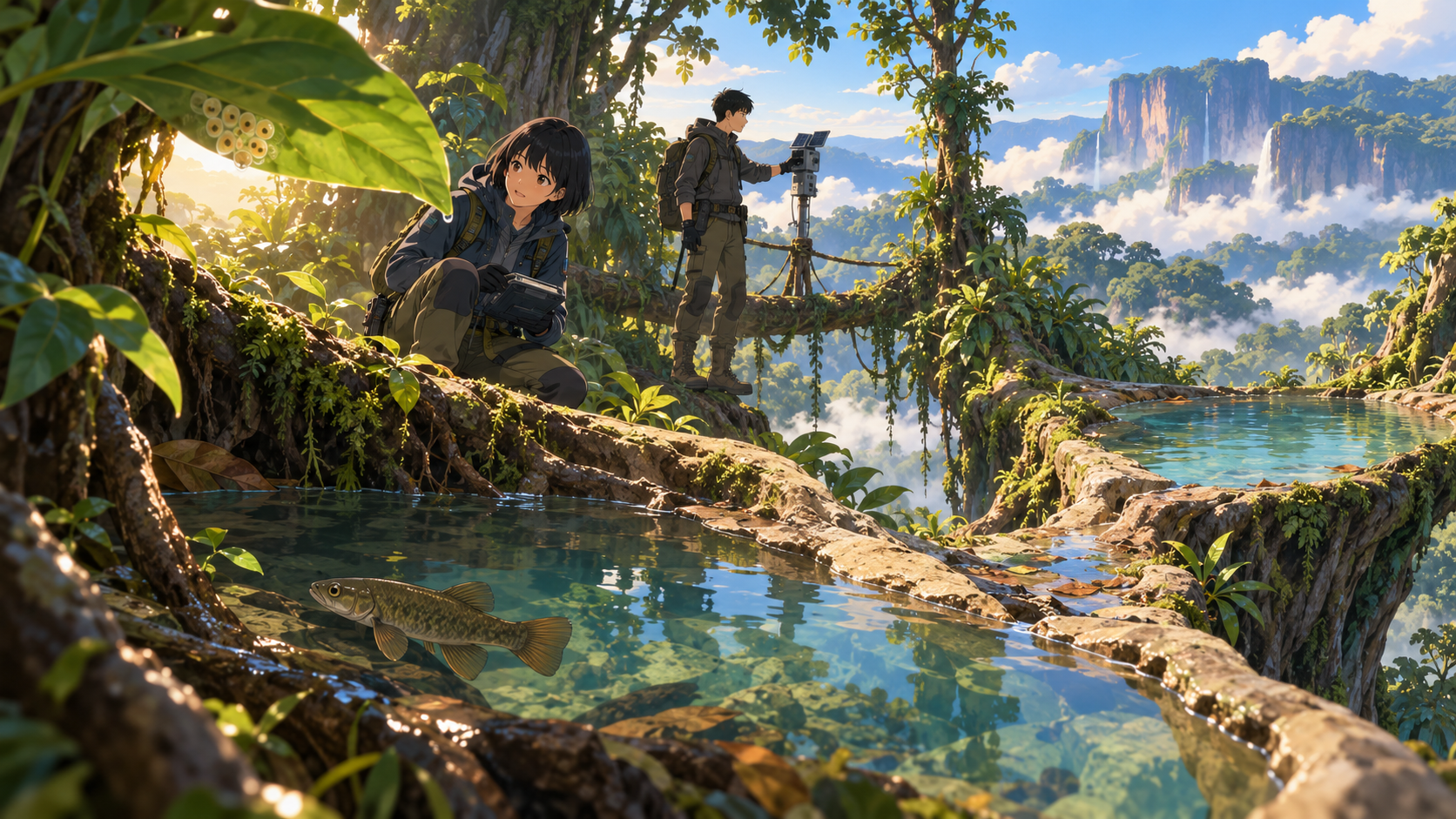
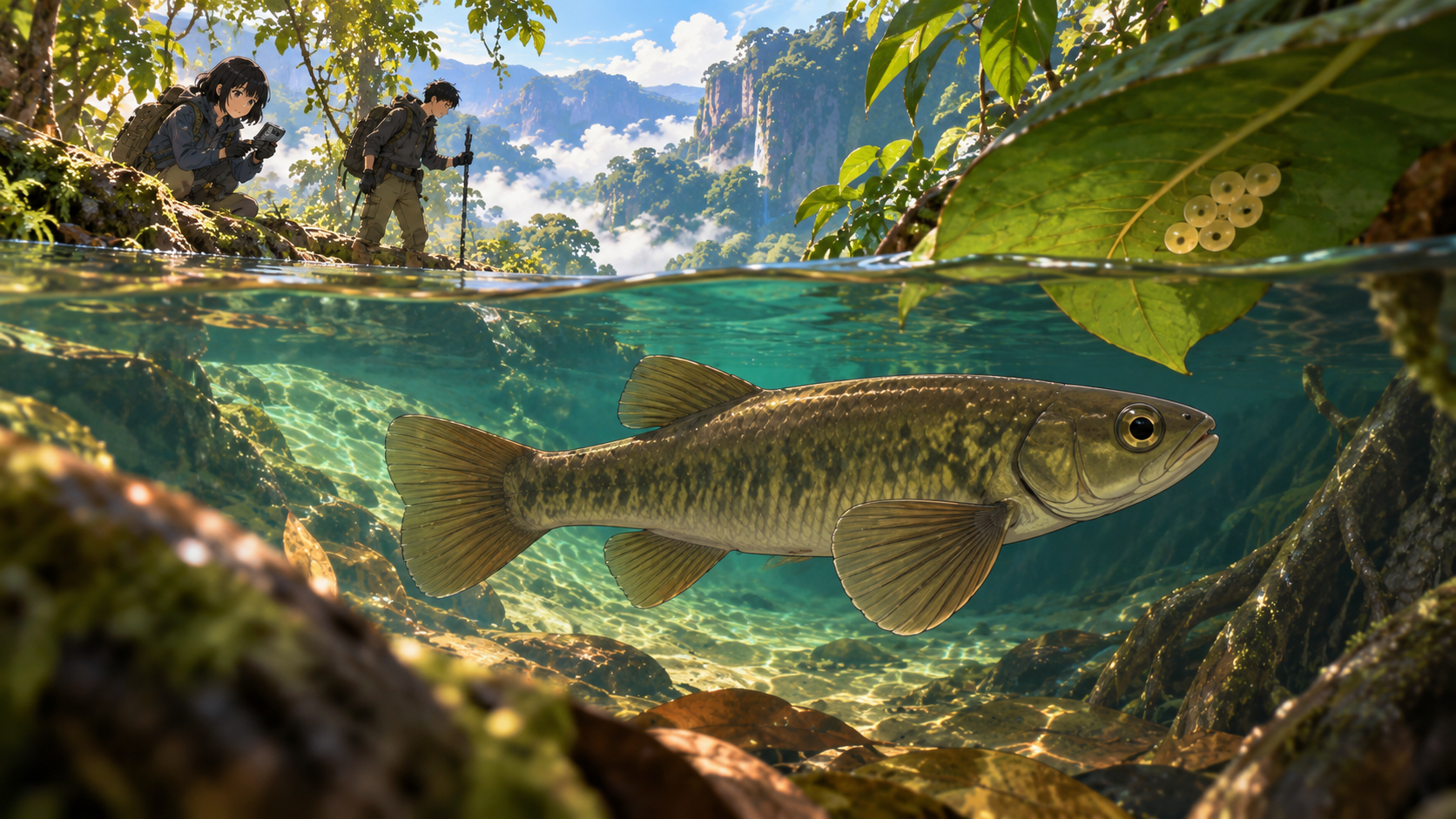
At Fold-Fin Tree Pool I stopped active tracking. A Fold-Fin Canopy Killifish folded its fins, tried twice to reach the next pool, and stopped at a dry branch channel. Its eggs clung beneath a leaf. The waterline had fallen below them. We had cut the route it knew.
MORNINGFang recorded the water level, wind, and the fish's response from a safe distance. I stayed on the tree-bridge side where we could retreat and checked the Cloudport equipment's actual rhythm. The fish pressed its broad pectoral fins close and made two short attempts over the wet branch. Both ended at the dry gap. This was not an ocean fish taking flight. It was a freshwater fish using a nearby wet branch to pass between pools. The eggs beneath an overflow leaf were now above the waterline. Fang checked their moisture first. I followed the broken middle channel from the bridge; we did not chase the fish into another leap.NOONFang compared egg moisture with the slope of the shallow channel and noted the salt level at the pool edge. I found the automatic gate that had cut the two pools apart. It looked as though it protected the seed bank, but it left the pools as islands. Fang did not scoop up the fish. I checked which way the gate would open against the natural slope. If I opened it all at once, one pool would pour into the other. The killifish waited in the shade. We waited too. Startling it would tell us nothing useful about its crossing.EVENINGI let water into the channel step by step. First we checked the undersides of the leaves, then the color of both pools. When Fang saw the eggs back within a moist layer, she nodded, and I widened the gate by one final increment. A thin flow joined the pools. One killifish crossed the short distance between branches on its own. We neither carried nor drove it. The small channel also joined mosquito larvae, fish, and the upper reservoir again. I recorded the time, the gate setting, and the signs we can check in the next wind window. One passage does not prove that the whole canopy has healed.
「We changed the gate, not the fish. Fang kept the egg and water readings. I left the next wind window to test our work.」— K
Day 04 / 10.11
When the Third Beat Went Quiet
Pulse-Beat Cloud BeesIntelligent
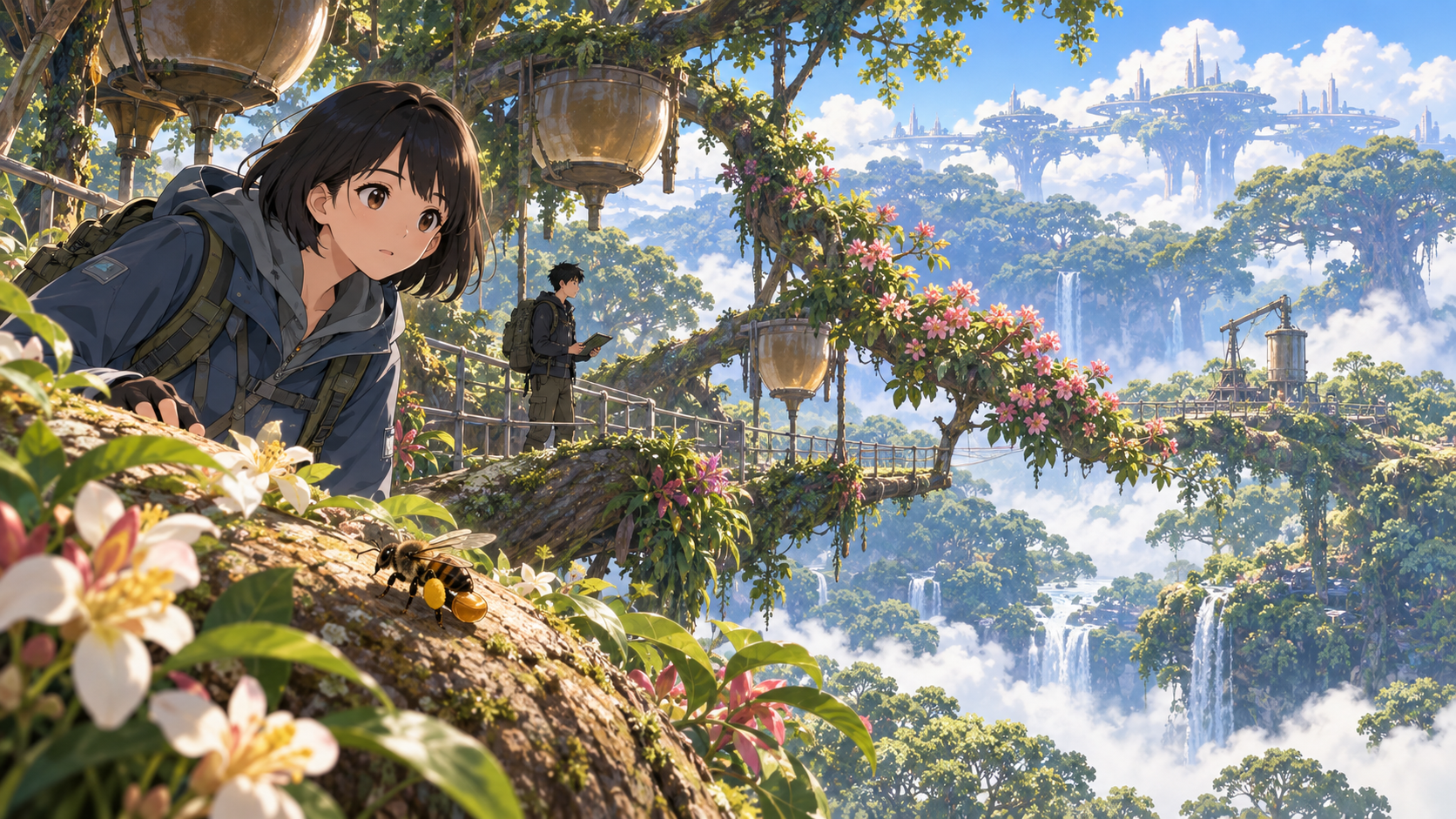
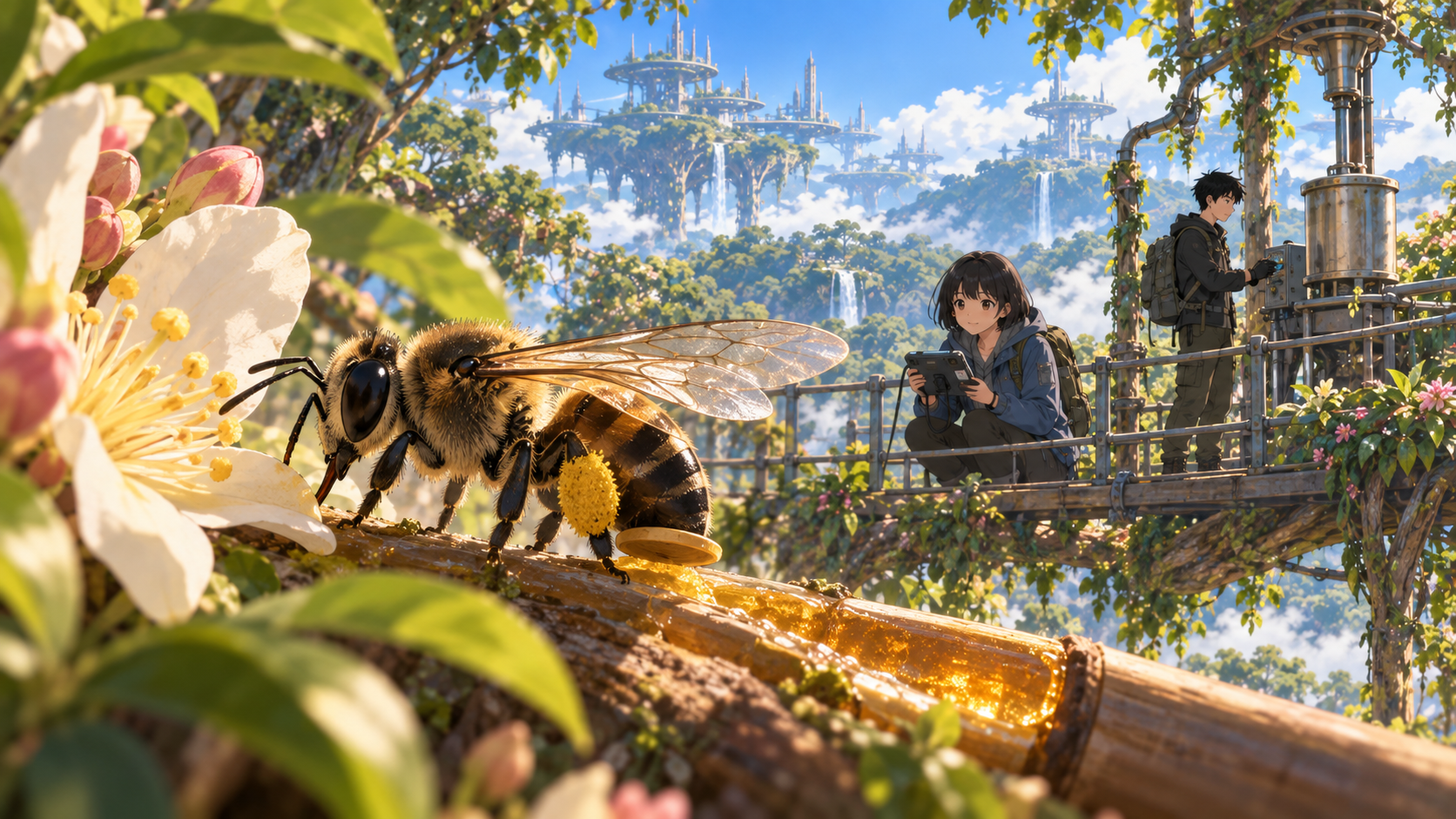
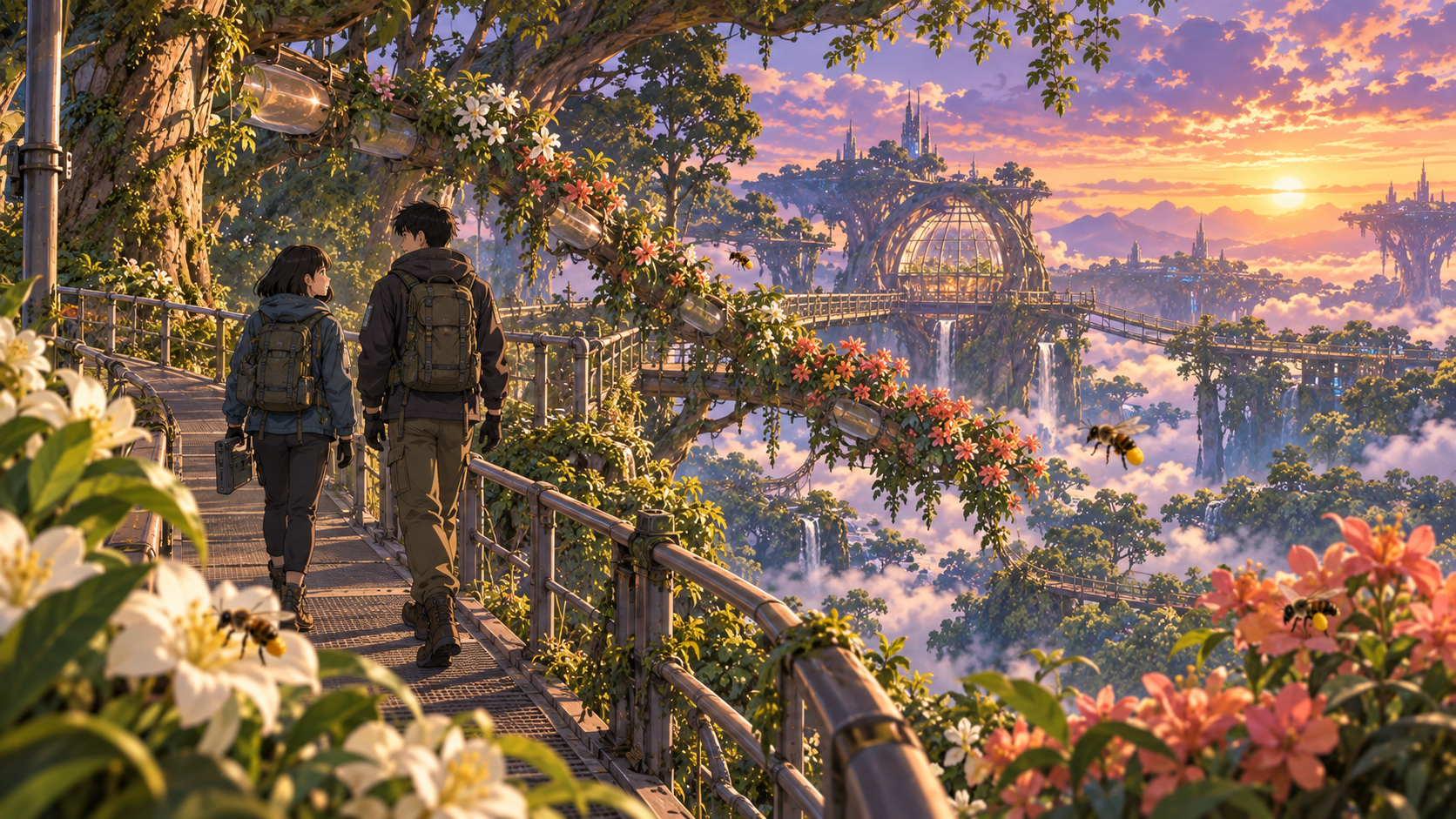
The tree bridge was still above the clouds. Flowers led toward the seed bank, with resin tubes hanging between white and pink blooms. A worker carried pollen past Fang. When the distant test pump started, the third beat stopped returning from the next tree. I marked the pump and wind from the bridge. We did not follow the bee.
MORNINGMorning light reached the flower corridor. Fang stopped beside a cluster of white flowers and did not touch the pollen-bearing worker. It skimmed a wet branch, and the drum plate beneath its abdomen showed a little warm color. Before the pump started, three taps had answered across the trees. The last answer vanished beneath its noise. Cloudport called the colony lost, but I could still see bees on another tree waiting for a reply. Fang asked me to mark where they stopped before going any farther. The seed bank floated beyond the cloud, and water still moved slowly along the branch channels of the suspended reservoir. One sighting could not settle what had happened to the whole water route. The relay did change when the noise began. The flower corridor was there; the bees could no longer hear across it. I marked each pause against bloom, wind window, and pump sound. We would check the same bridge again when it was quiet. If the colony could answer on its own, it needed no new orders from us.NOONCloser to the pump station, a white flower and a resin tube drew our eyes to one worker. Pollen clung to its short, broad hind legs. The plate beneath its abdomen touched the tube and tapped the old three-beat rhythm between nests. It was not a plea to us. Fang stayed behind the tree bridge, using the colony BCI to compare bloom timing with the inverted-rain wind window. She did not appoint a worker to speak for the colony. I switched off the test pump that covered the drum sound, took my hand from the controls, and stepped back. A nearby white flower was visited again. Then a short reply came from a distant tree. The display showed less noise, but the renewed passage between flowers told me more. We had not drawn a route for the bees. The city had paused an unnecessary sound and left them to choose their next beat. Fang said that reading group memory did not mean we knew their whole lives. I agreed. The distant reply was still faint, so I recorded only the two visits we had seen. Evening would test the next part.EVENINGEvening light outlined the pollination window. White and pink flowers occupied separate branches beside the bridge. The bees did not gather into a mass. A few workers crossed the mist between spaced blossoms, and three beats passed again between separate resin tubes. Fang put the BCI into read-only mode. It showed a colony moving between trees, not an individual following our command. I saved the pump-off interval in the seed-bank equipment and packed away the instruments with her. We walked back along the safe bridge. From here, gaps remained in the flower corridor. Whether the relay would survive the next wind window was for the colony to show us. Today we corrected human noise. The route among bee, flower, and seed had been here all along. Cloudport had wanted more signals to track each worker; we recorded quiet equipment hours and bloom instead. Fang watched a distant answer and did not call it a success. Neither did I. The space between trees was still long, but the bees were joining it one beat at a time.
「I left the pump-off hours in the record. Fang kept the BCI read-only. The next answer belongs to the bees.」— K
The wet branch gave us the first answer: a few fish scales and one waterbird feather beside the raised water. Before I saw the inner reservoir, I saw overflow below the station cable. Fang tied a red boundary marker to the bridge. We could watch from here. We could not step farther.
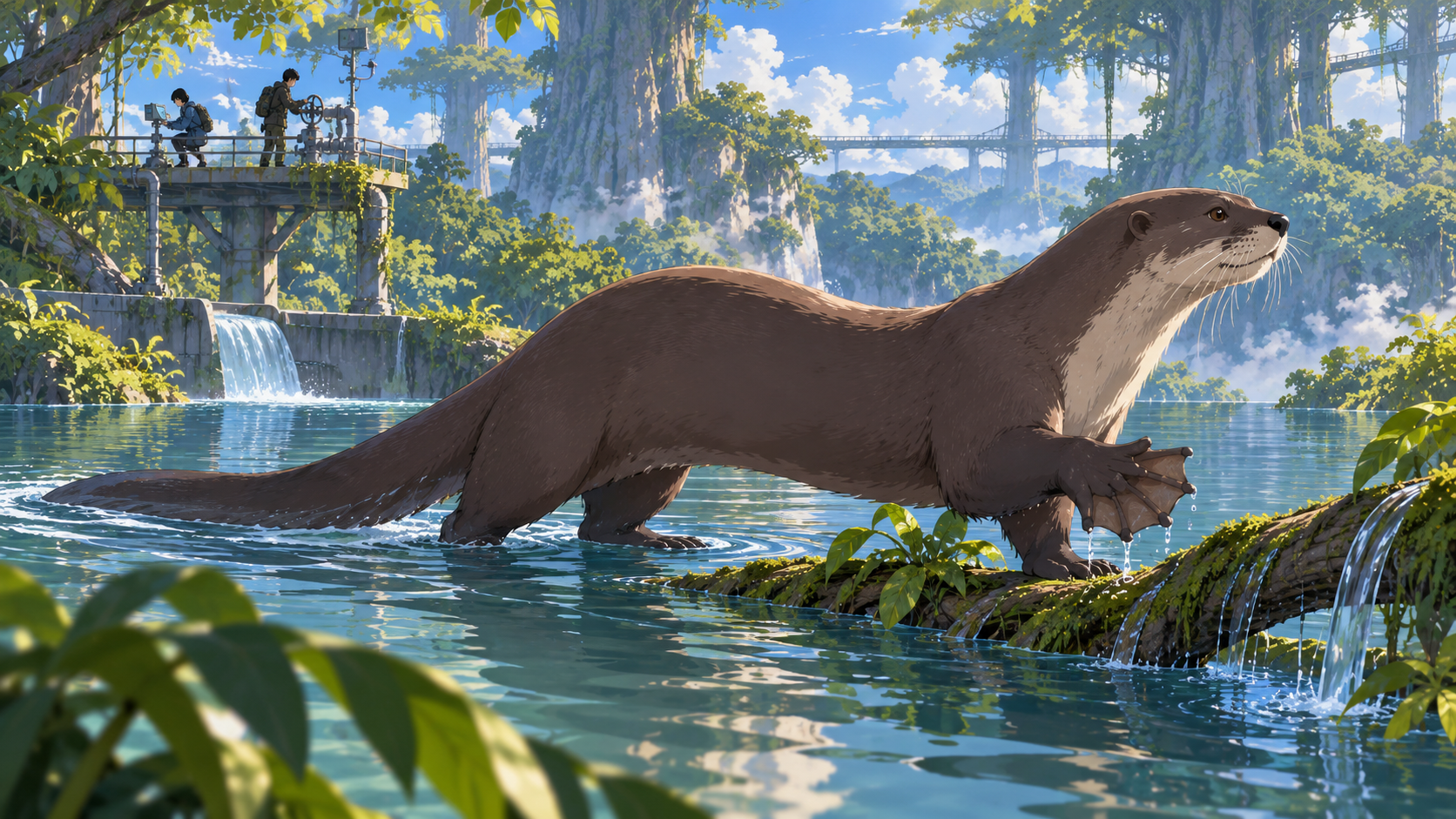
MORNINGThe wet branch gave us the first answer: a few fish scales and one waterbird feather caught in its bark beside the raised water. Before I could see inside the reservoir, I noticed overflow below the station cable. Fang tied a red marker to the tree bridge. This was the last safe observation point. Across the water, a Split-Web Reservoir Giant Otter rose onto a wet branch. Its long body nearly matched the branch channel. A thick, flat tail rested against the water and its forepaws spread over the bark. It did not come toward us. It kept watch over the inner pool. I walked back along the bridge to check the retreat route and the cable load. I did not push the camera toward the young. Scales and feathers support a diet of fish and waterbirds in these canopy channels. The marks where it had waited on the branch also told us its patrol had begun before we arrived. The changed thing was the level behind the closed gate. Water that once split toward the inner pool was being pressed toward the station by continuous pumping and an inverted-rain sensor reading natural recharge as leakage and closing the gate. Fang marked wind direction and the boundary. I wrote down the pumping hours. For now the red line would stay on our side. We would see from a distance whether water could return to its own route.NOONFrom the Remote Recharge Platform, the otter looked closer through the lens than it had in the morning. A whole restricted reservoir still lay between us. The telephoto view brought its forepaw into focus as it stepped onto a branch channel. The paw was broad. Webbing divided into lobes between the toes opened and closed, and water dropped from each edge into the tree pool. Its short, dense fur did not flatten under the water. Its thick tail turned behind it. These parts let it move between wet branches and a suspended reservoir. We did not have to draw it closer to understand how it used the ground. Fang checked the nursery level from the opposite platform. I changed the seed bank's continuous pumping to short intervals of recharge. The first flow entered the outer channel. Only the second followed living branches toward the inner pool. That kept a pressure wave from reaching where the young rested. The adult stayed on its branch. It did not come closer after our adjustment. Scales, the feather, and the waiting marks showed what it ate; the clear paw view showed how it held this high water route. I wrote the equipment response and the animal response in separate lines. The level began to fall, but its territory had not become smaller. We left the controller outside the boundary and kept the power to reverse the setting at a staffed platform.EVENINGAt dusk we looked back from above. Water no longer crossed the station cable. It followed channels in living branches, section by section, into the inner reservoir. The adult we had watched all day slipped into the pool. Behind it came a short-tailed, dark-brown young otter. Neither approached us or waited for us to clear a path. The overflow had changed direction; their old nursery passage was connected again. Fang put her instruments in read-only mode. I stopped the last unnecessary pumping interval, and we walked out along the safe tree bridge. I did not write that the mother had been tamed. She was still four meters long and could still drive a wave across a branch channel with her flat tail. A fall from this height and her patrol around the young were still dangers after the recharge. We left the red marker at the bridgehead so the next visitor could see where to stop. The seed bank still shone in the distance. For this wind window, the tree pools, slow drips along leaf channels, and bees in the flower corridor could be heard and measured together. This was one correction we could read back, not proof that we had repaired the forest. I logged the ceiling for intermittent recharge, how to undo it, and the water level to check tomorrow. The adult and young turned inside the pool and disappeared behind the trees. We gave the route back. The boundary remained theirs.
「I left the recharge limit and the reversal method in the record. Fang left the instruments read-only. The red line stays where we must stop.」— K
JOURNEY DISPATCH
Subscribe to K's Hunting Log
Subscribe to K's Hunting Log and receive Neo Babylon Zero Art Book — A World Waiting to Be Explored in Traditional Chinese, plus Fang and K's new field records.