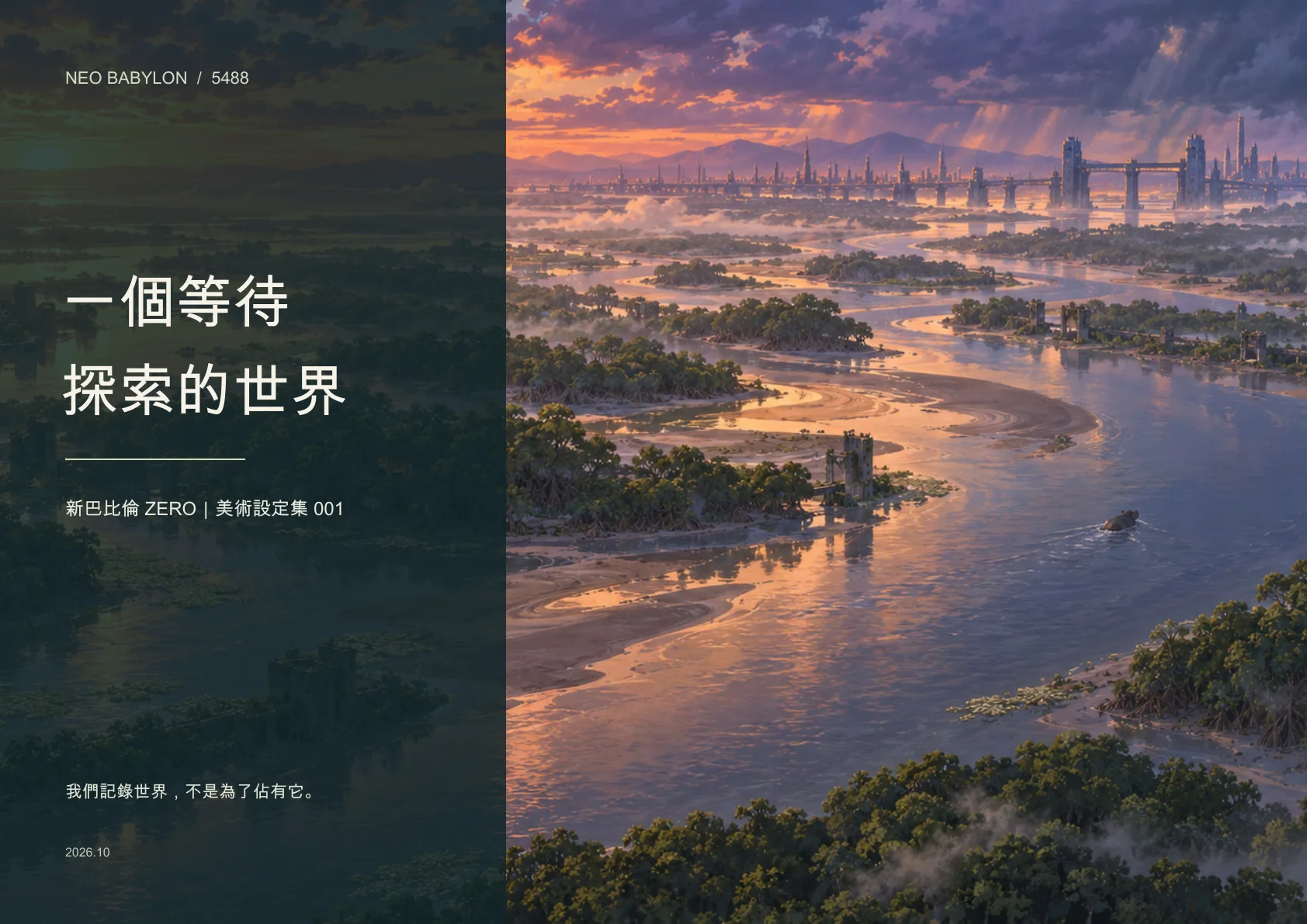
 01
07.28Low Risk
The First Tide-Light Beneath the Wing
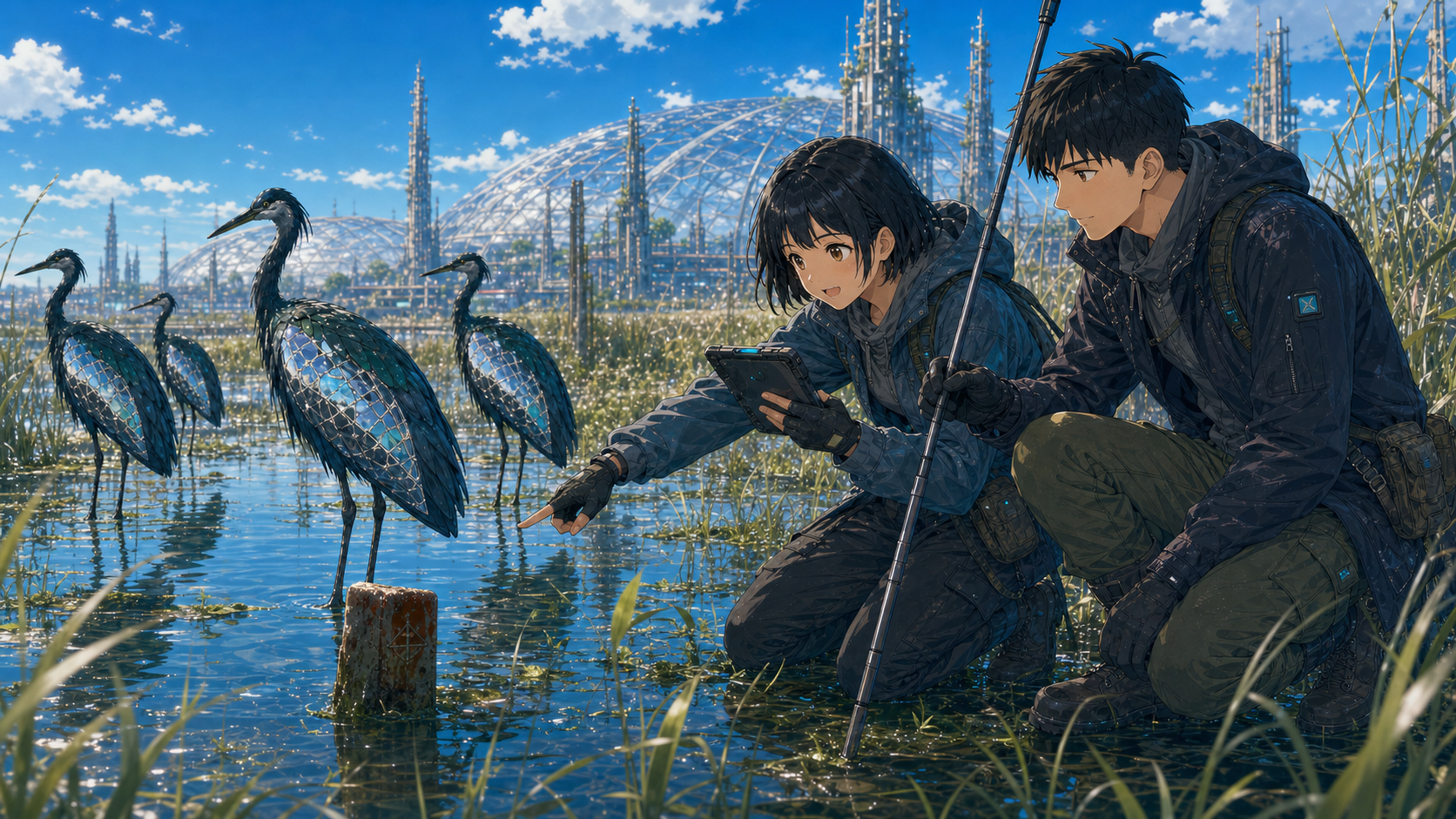
Fang spotted the juveniles first. She signaled, and we switched positions. Until we understood what we were seeing, I kept our pace slower than curiosity.
Not a list of kills, but a record of choosing to understand, detour, and open the way.
01 Fang spotted the juveniles first. She signaled, and we switched positions. Until we understood what we were seeing, I kept our pace slower than curiosity.
 02
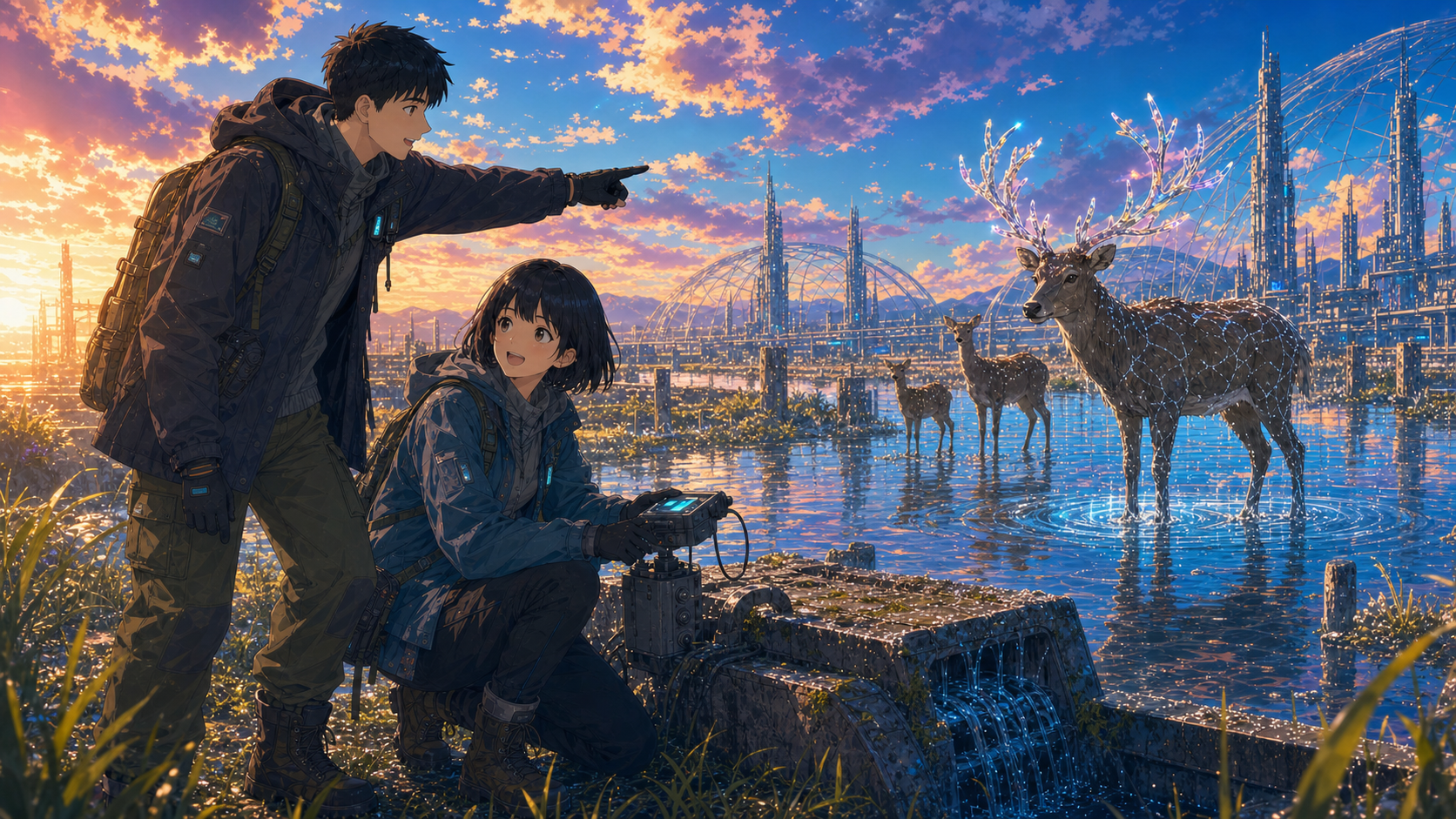
Fang read the vibration patterns in the ground. I called the wind direction. The herd looked back, alert, and we kept our distance.
 03
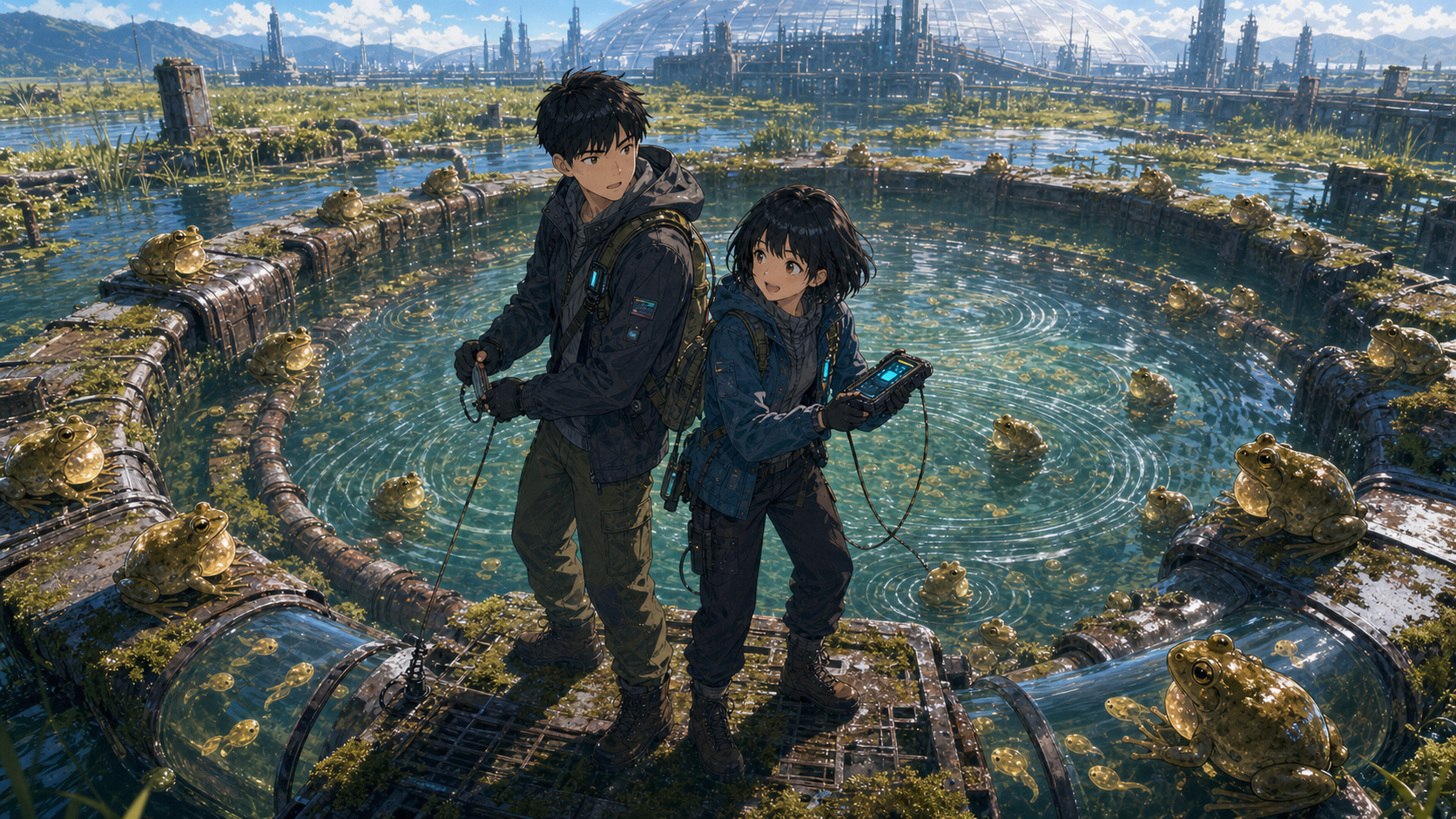
Fang extended the sensor. I held the safety line and watched the rusted pipe. The rhythm was biological; the danger came from what its resonance could loosen.
 04
A calf was caught in a maintenance net. We watched the mother's route first. Moving too soon would only turn a rescue into a threat.
 05
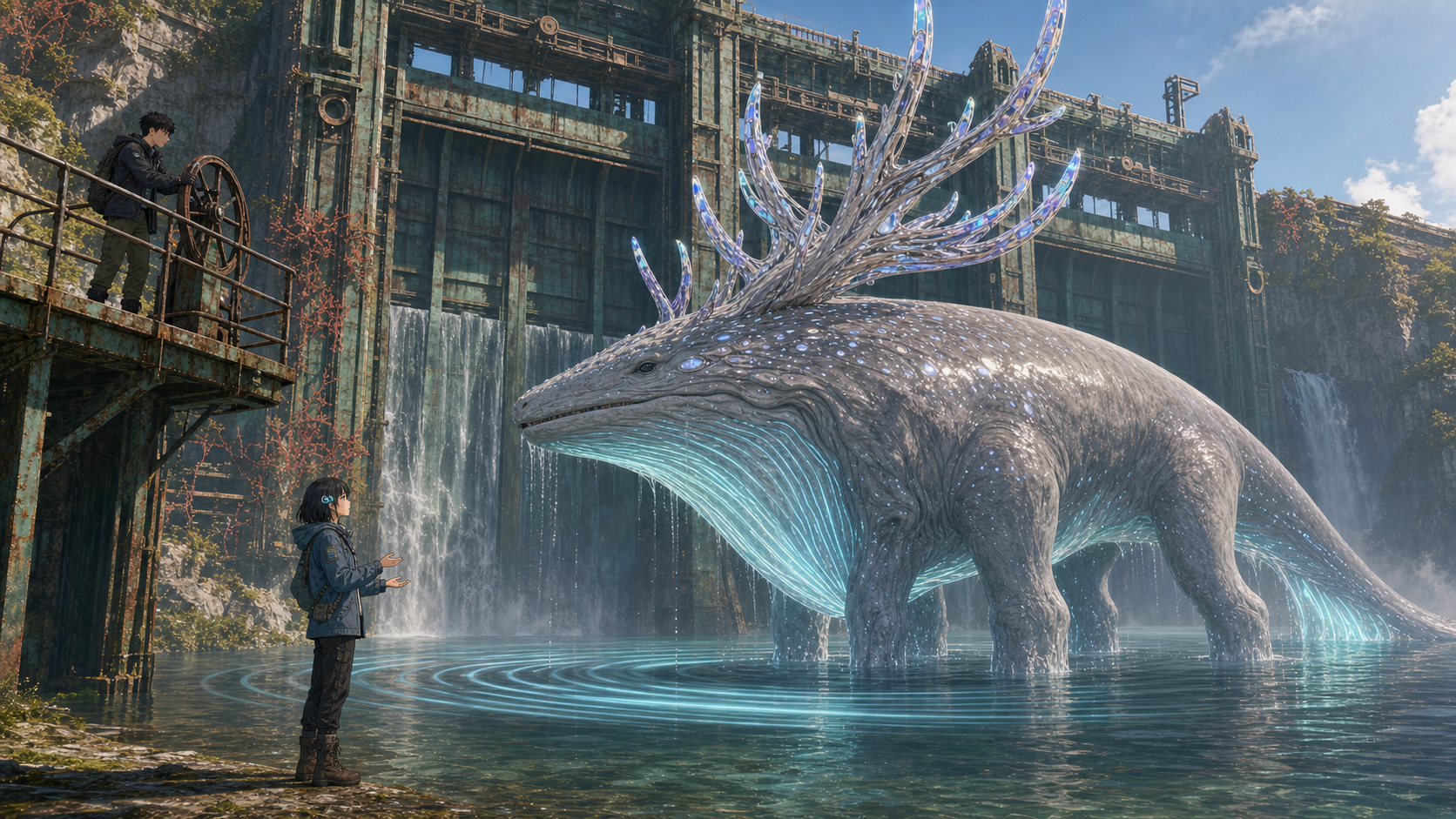
Low-frequency ripples reached us before the animal did. Fang watched the pattern on the water. I watched the old gate. Neither gave us a reason to fire.
 01
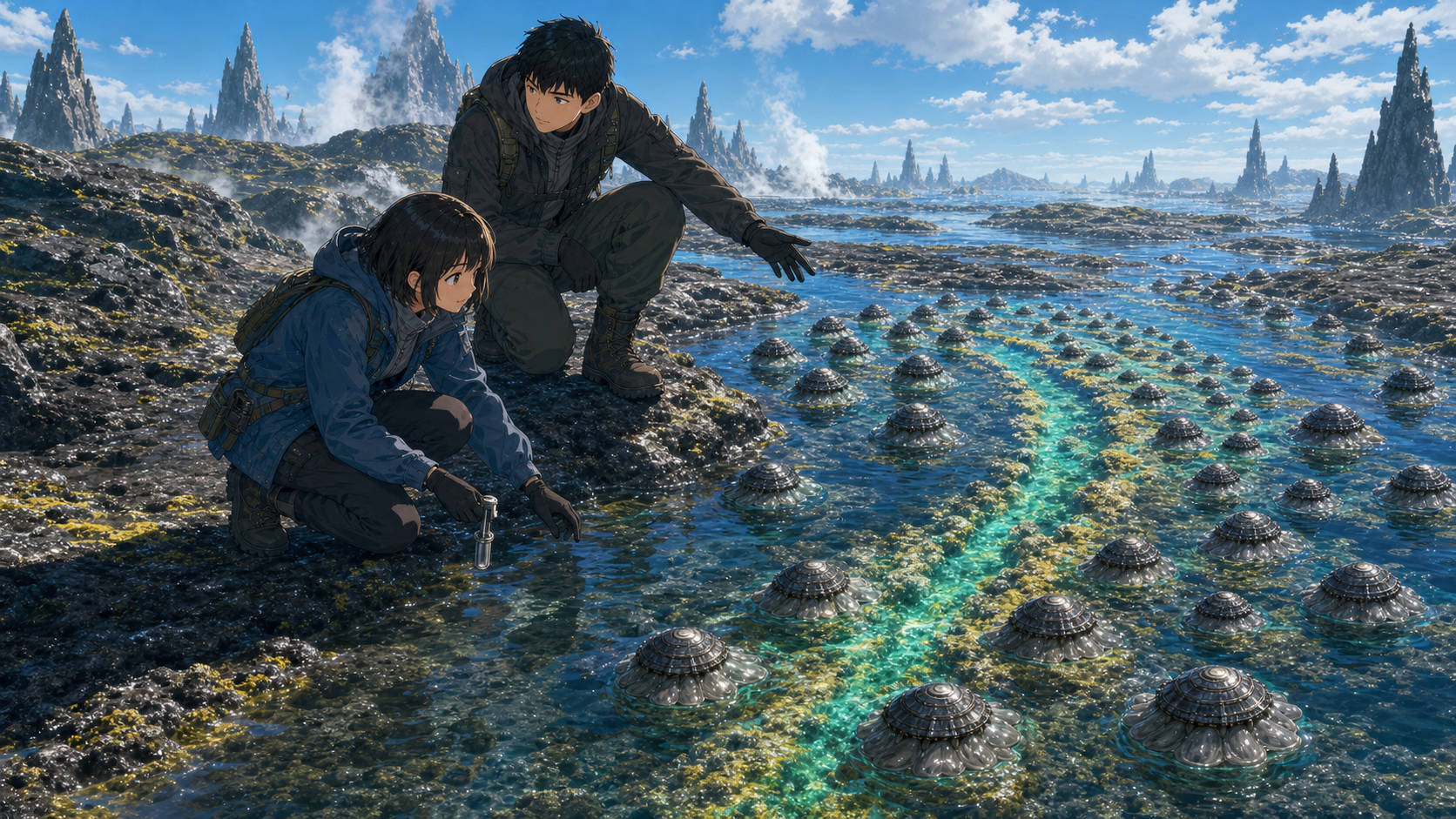
The colony turned in the same second. Fang crouched to inspect the shell ridges. I set a mechanical compass on the wet rock. Both shifted by the same angle.
 02
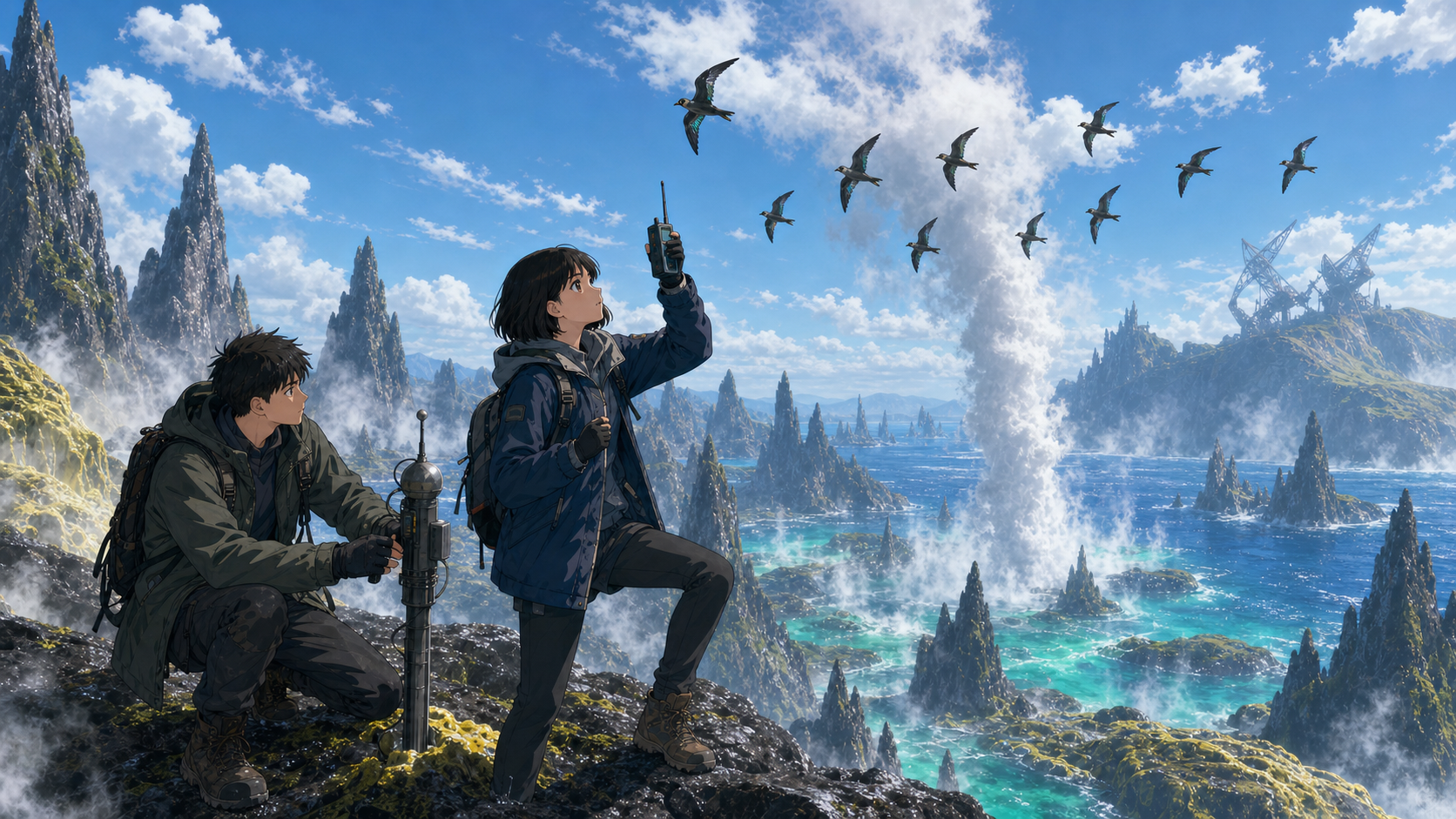
The flock curved around the warmest steam column as if an invisible wall stood there. Fang watched the birds. I watched our way back. None was injured. They were avoiding a pulse before it reached them.
 03
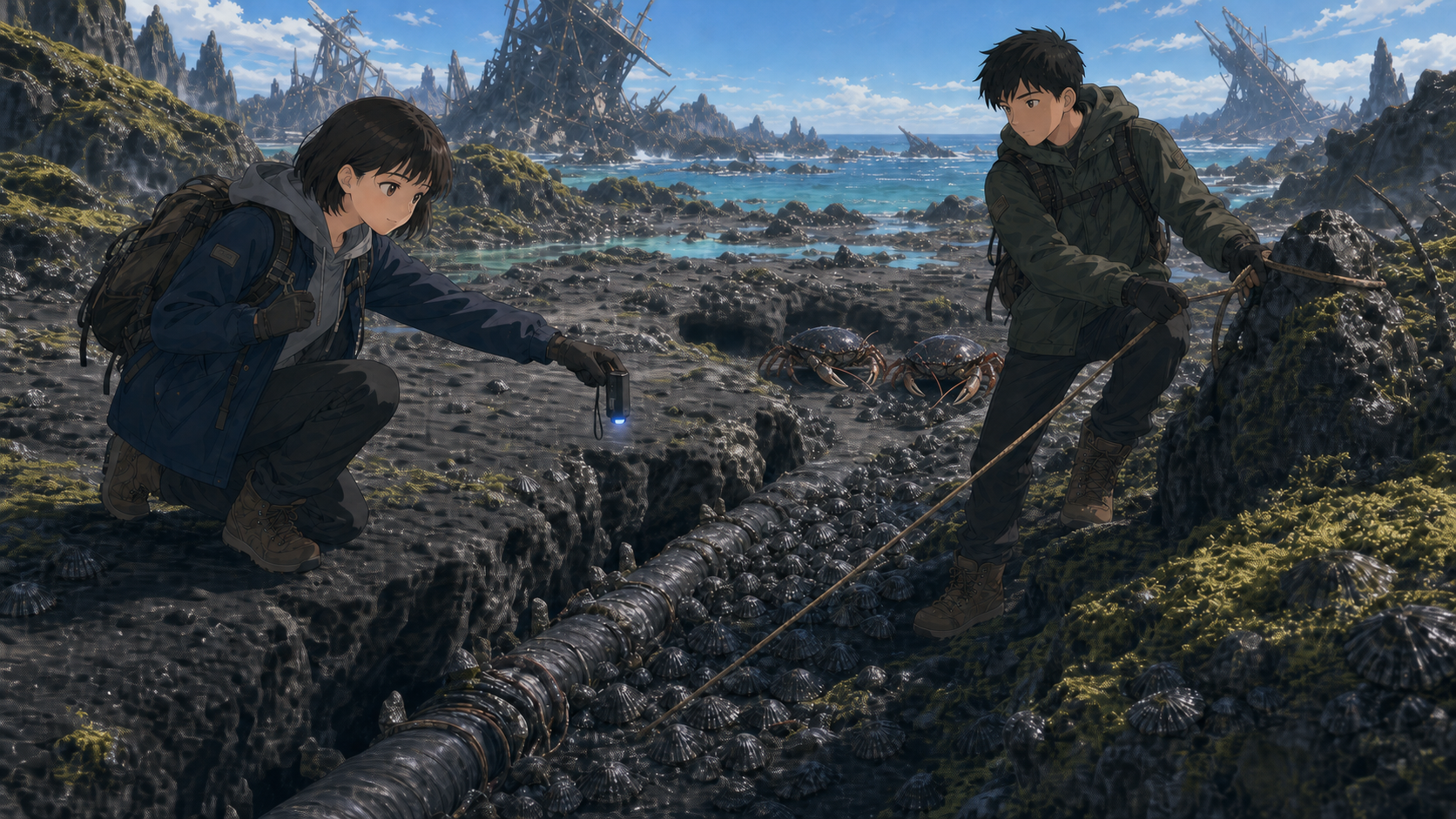
The crabs had stacked the shells more neatly than an engineering crew. Fang held back a laugh. I moved my boot outside their carrying line. They did not come closer. They kept building their black-sand city.
 04
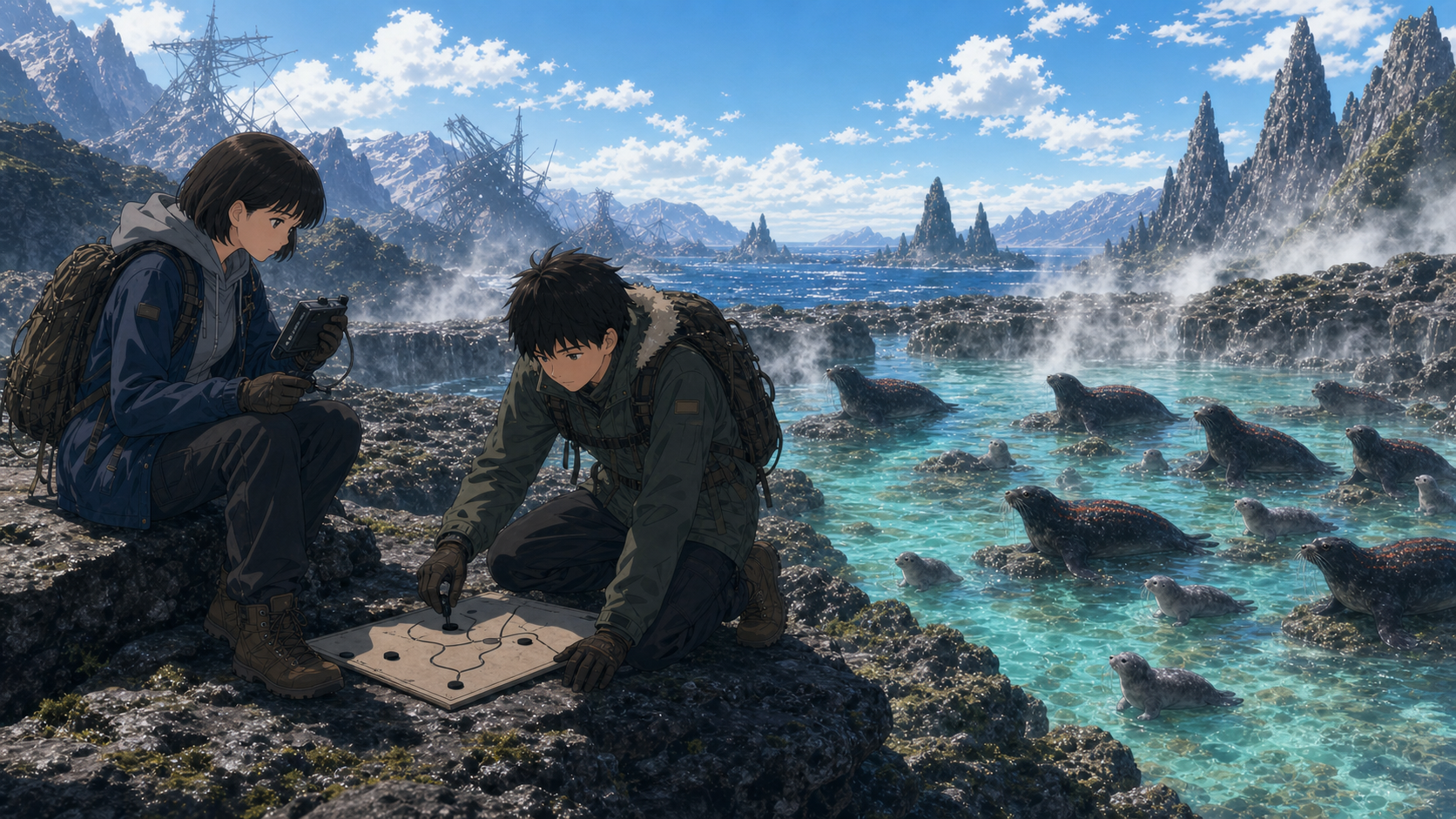
The adult seals did not charge. One low call made the boundary clear. Fang counted the pups. I counted the exits. We stopped outside the steam. There was no reason to make them warn us twice.
 05
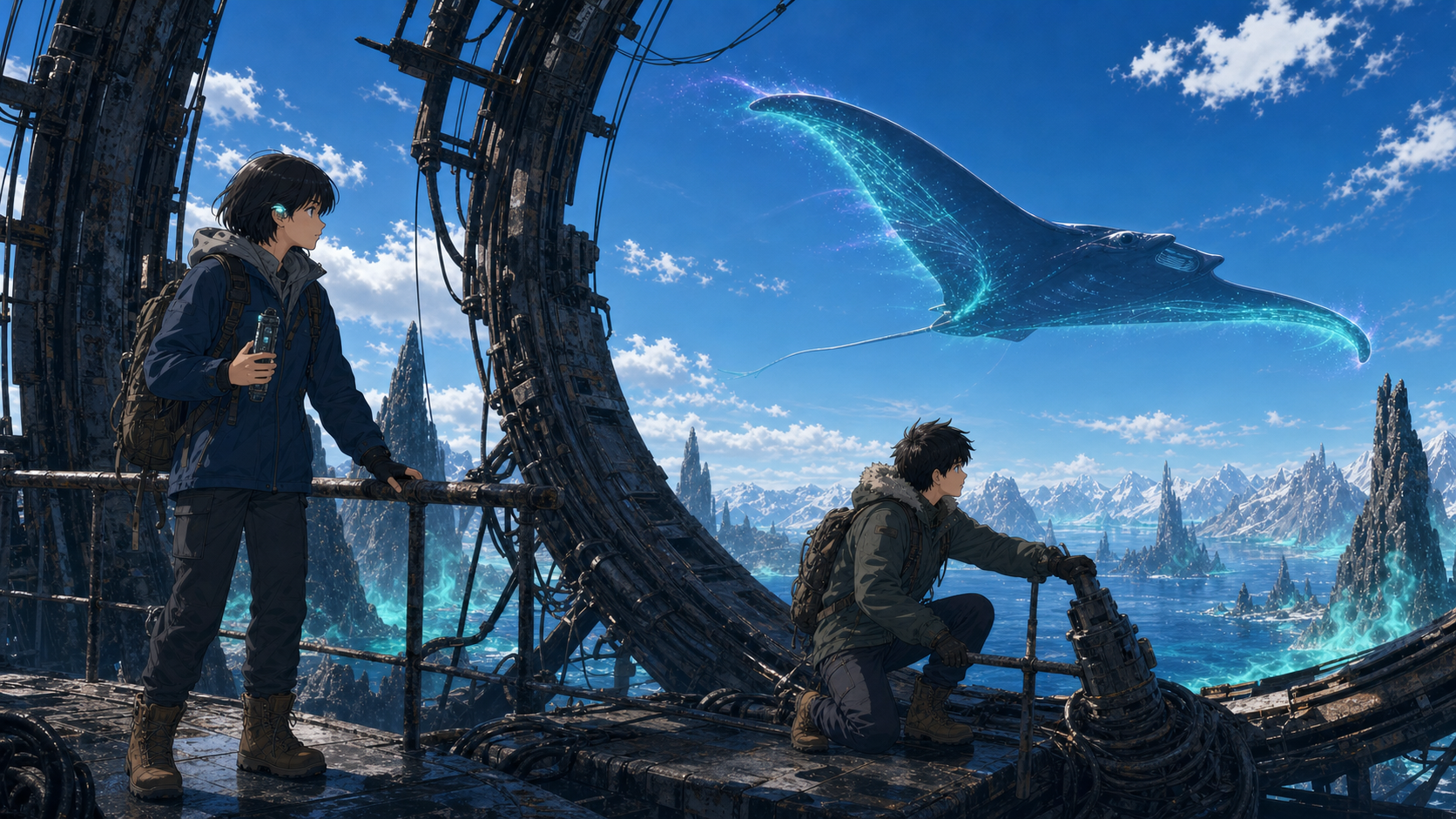
The manta waited outside the gate. It did not threaten us or come closer. It only bent the whole aurora once along the edge of its wing. Fang said it was not lost. It was waiting. I started looking for whoever had closed the gate.
 01
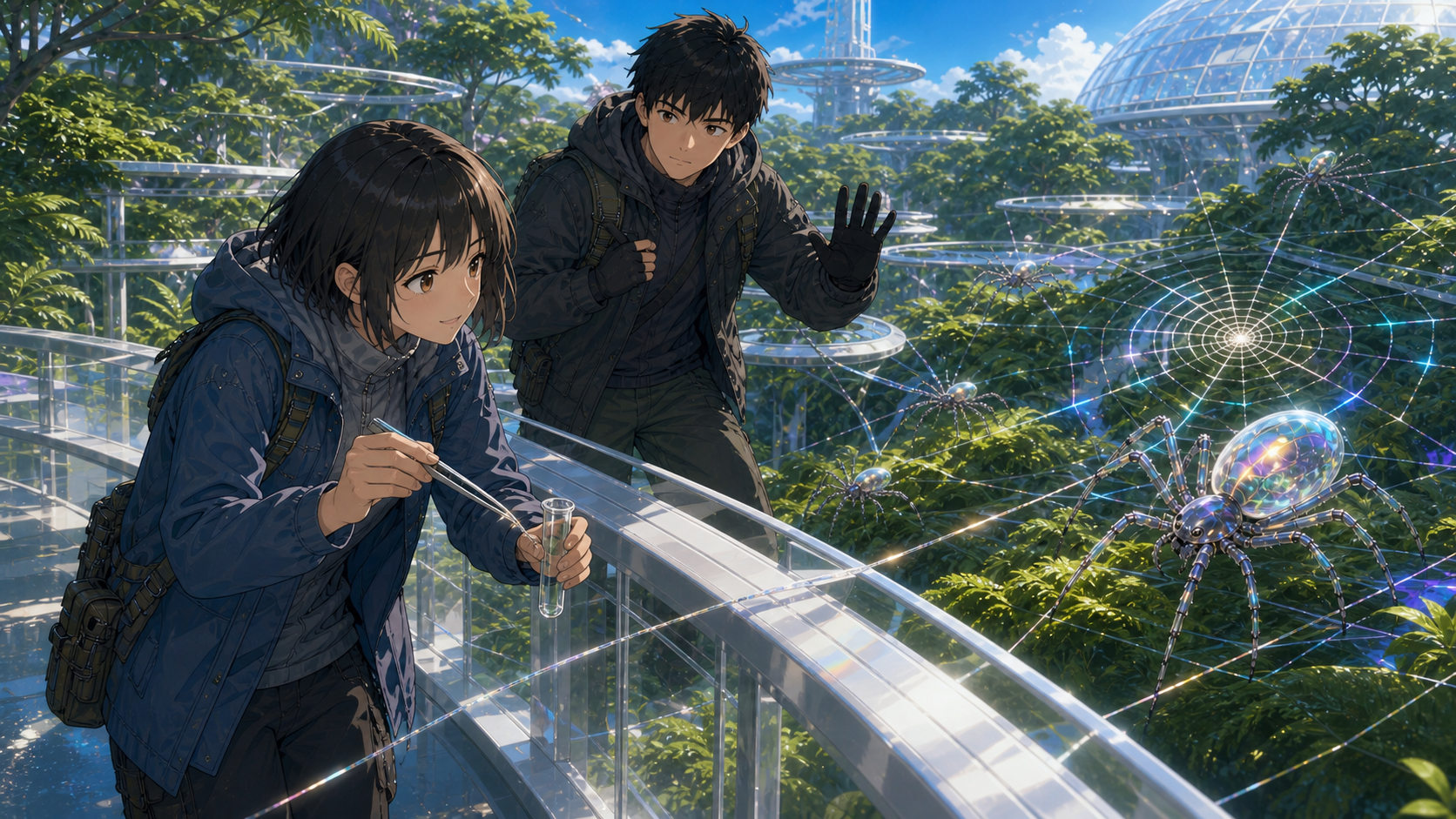
There was one sun over the channel. The web kept two times. Fang followed the angle across the silk. I pressed the ruler into the unlit strip. The eight-legged little things did not run. They made the error easy to see.
 02
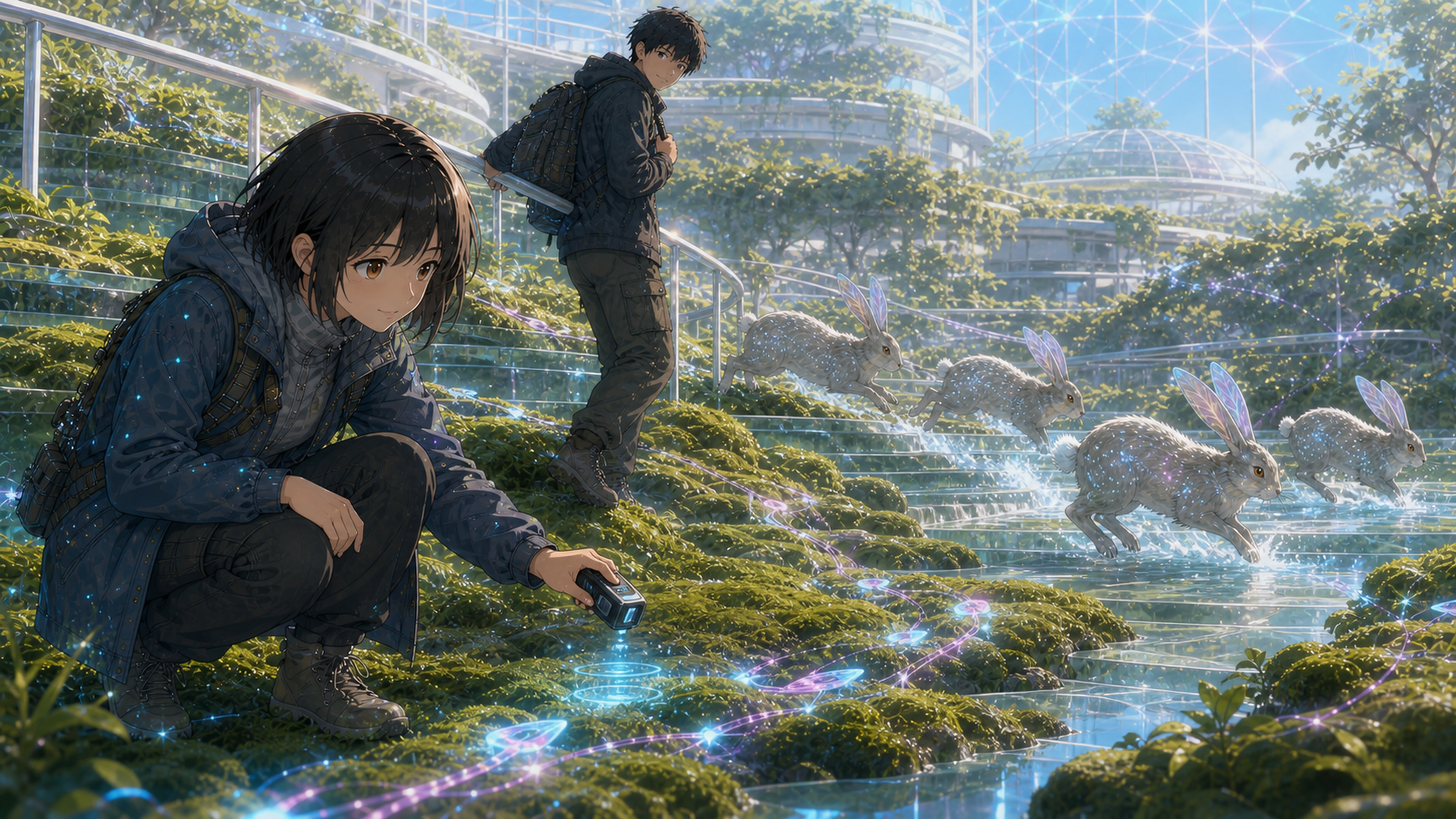
The flash had not started. The herd flattened its ears first. Fang signaled me not to chase them. I marked only the direction they withdrew. The cyan and magenta veins reacted twelve seconds before the city alarm. Enough to prove they were not intruders.
 03
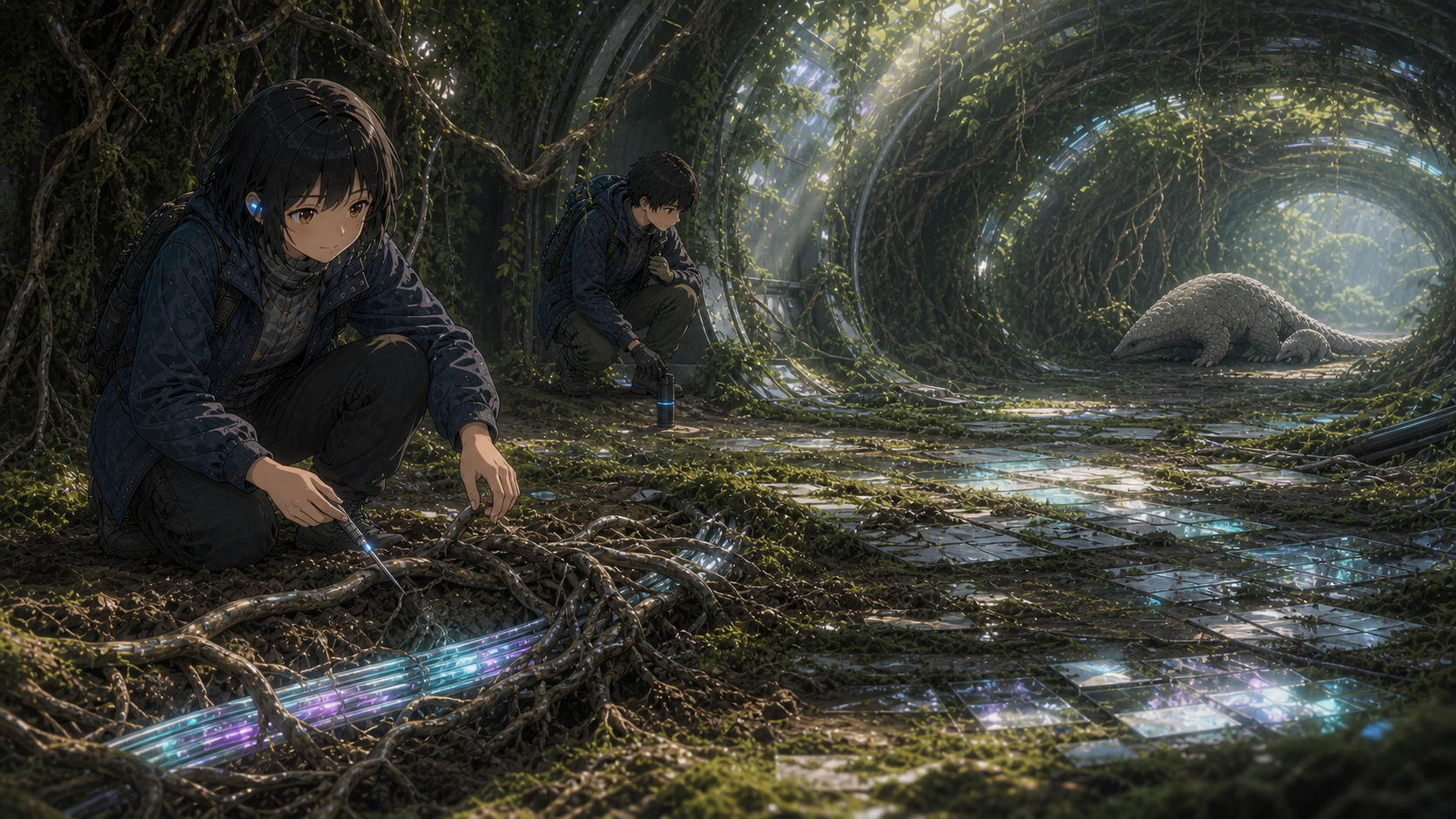
The mound rose in front of us. A mist-white armored back moved beneath the trench. Fang approached the newly exposed root, not the burrow mouth. I held the return line. The burrower made no threat. Its broad claws only reopened ground the city had sealed shut.
 04
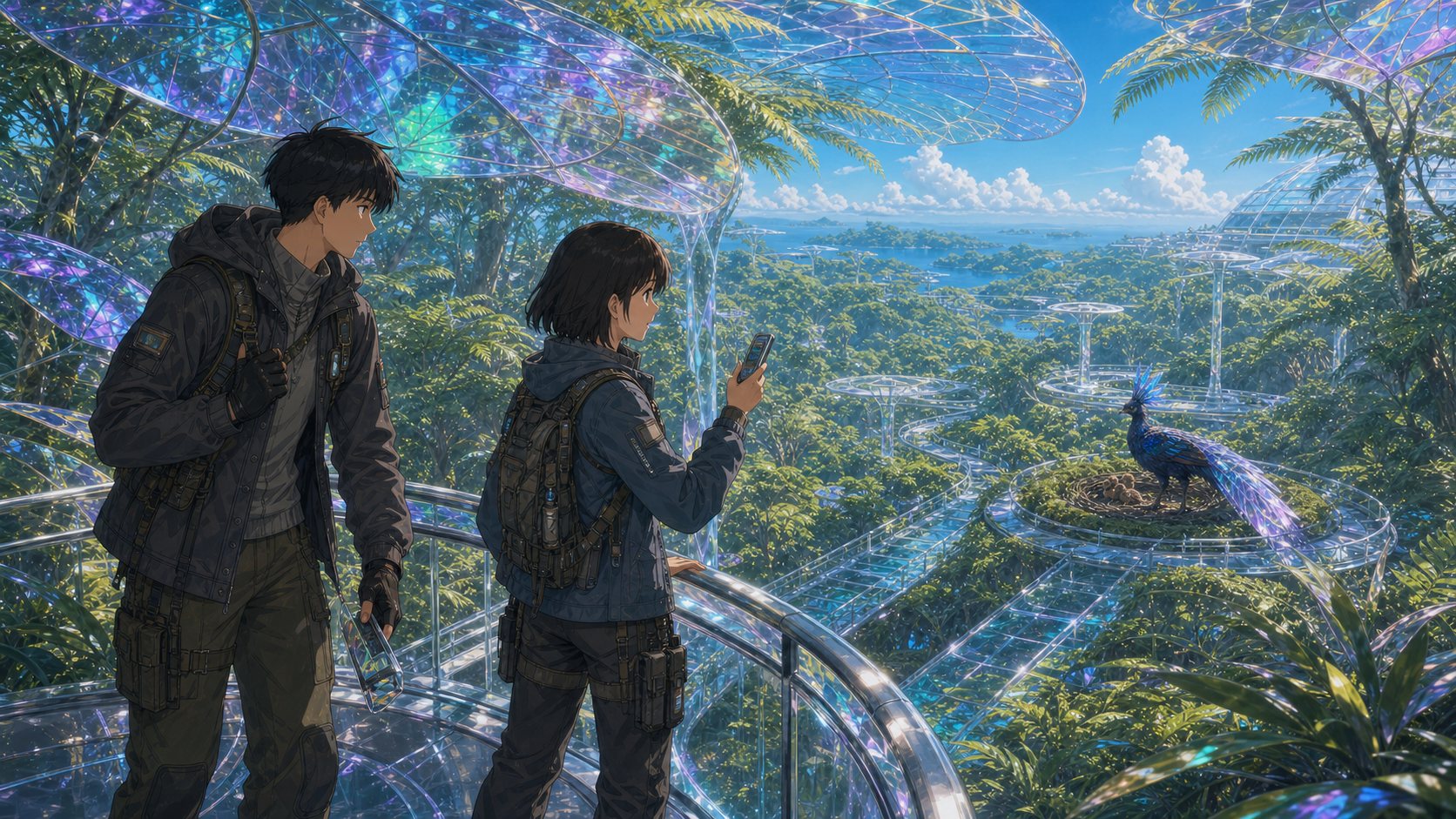
When the first adult raised its crest, the whole grove became a prism wall. Fang stepped back first. I followed and lowered the sensor. They were guarding chicks inside the fungal ring. If we could read the boundary, the warning did not need to rise.
 05
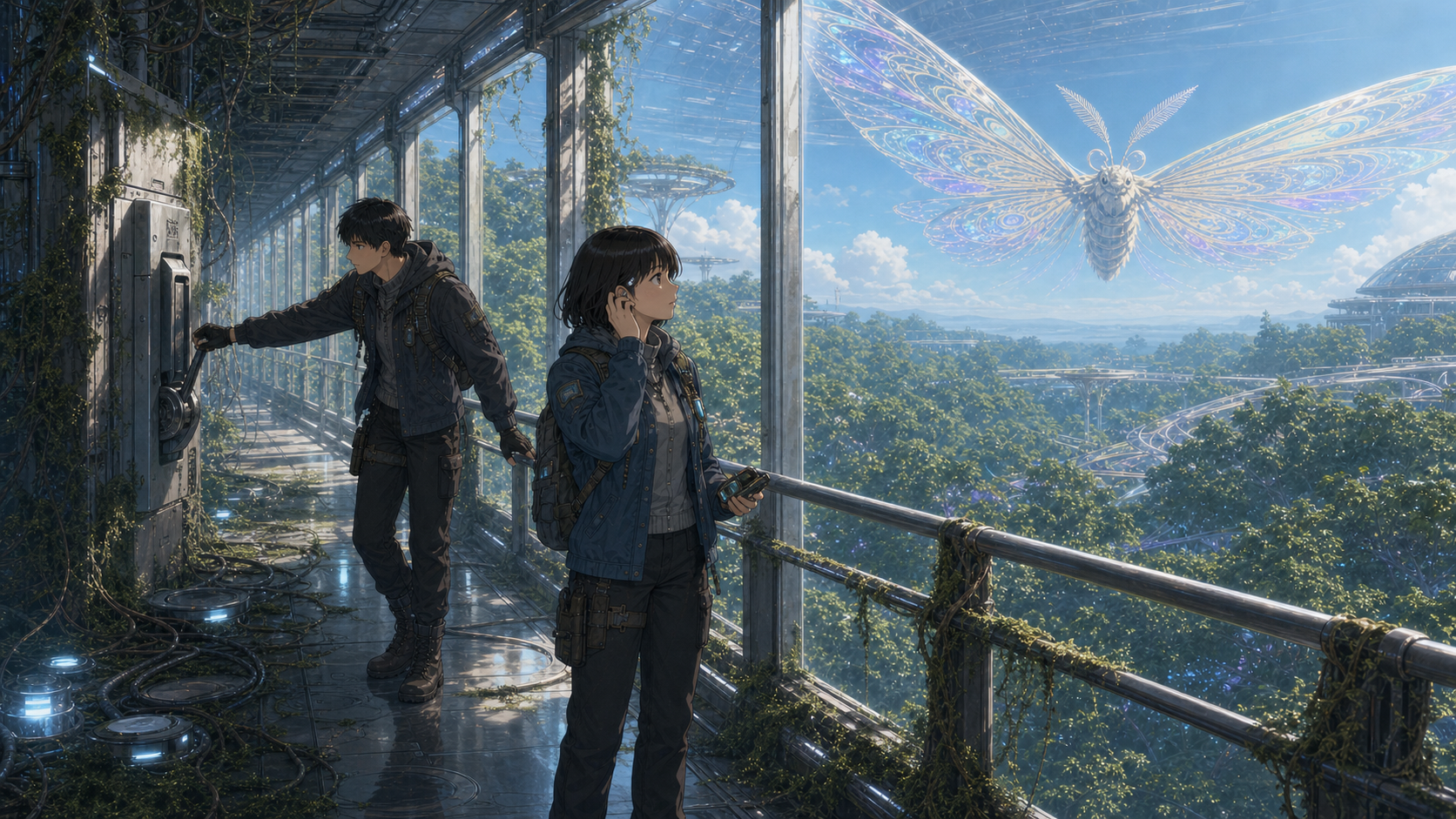
The wings opened above the atrium. Morning, noon, and dusk appeared across the same forest. Fang heard the three-part rhythm first. I saw only the old exposure sequence cutting through it again and again. The moth did not come closer. The city's residual light was blocking its way home.
 01
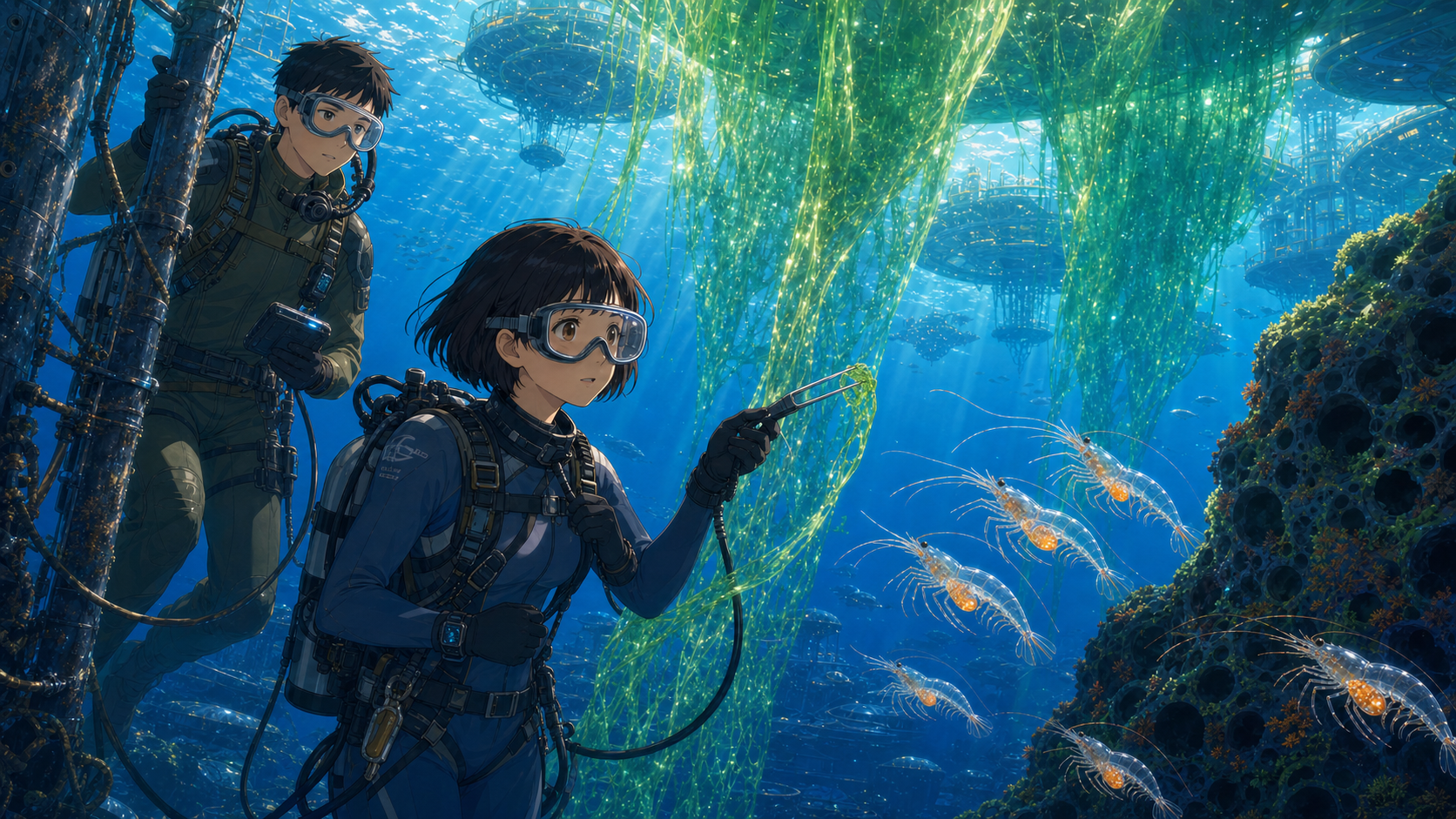
The water around the buoy went thin. Then the wrong pulse arrived. The shrimp's sensory setae had already folded flat. Fang measured the delay. I shut down the buoy's active signal. She treats a living response as a coordinate. I make the city quiet enough to read it.
 02
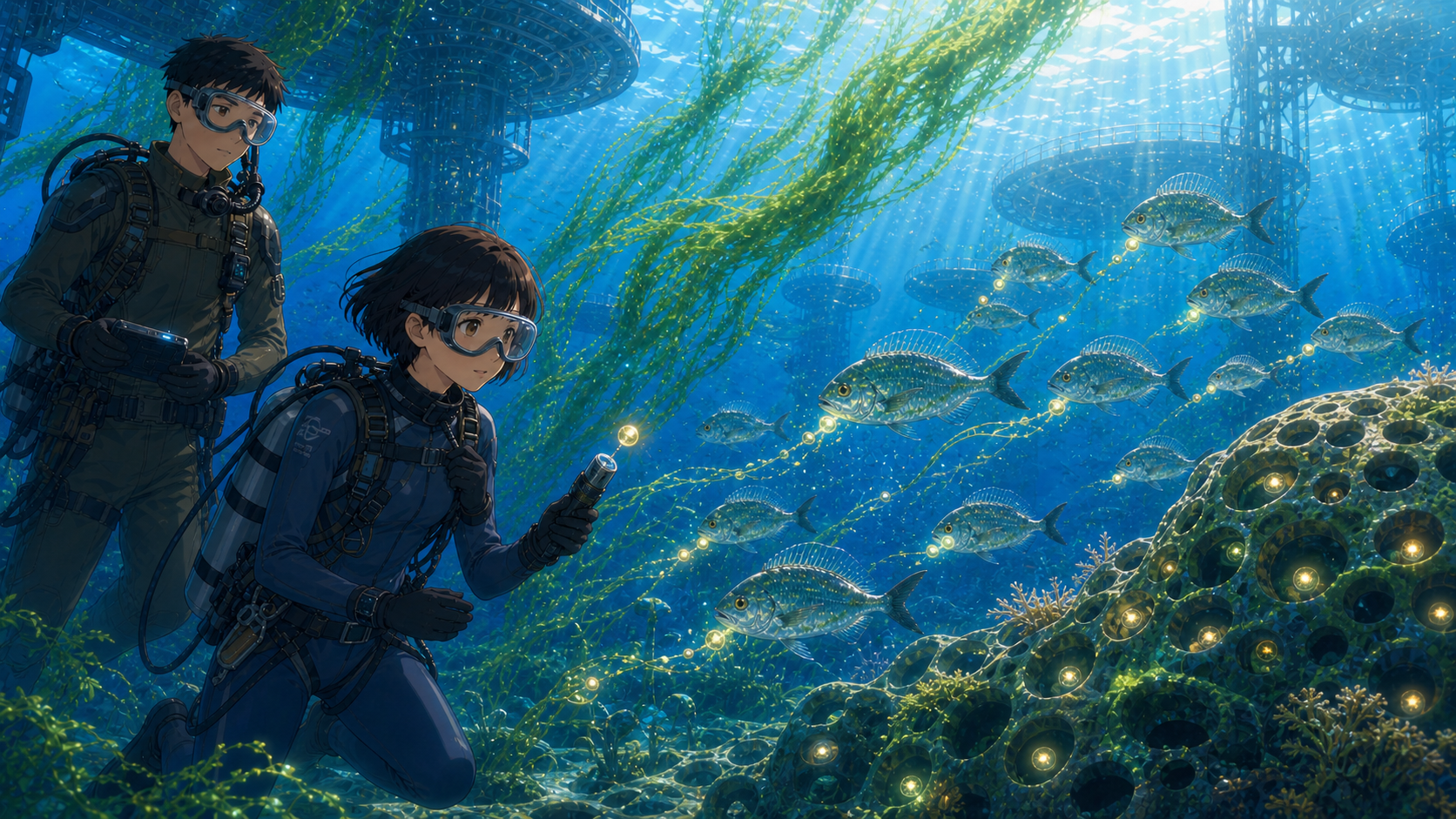
The sound of the water beneath the bridge thinned before the wrong pulse arrived. The bream turned upstream together. Fang recorded the angle of their curtain fins. I checked the flow gate. She treats a living response as a coordinate. I make the city quiet enough to read it. This time, the current itself had been bent.
 03
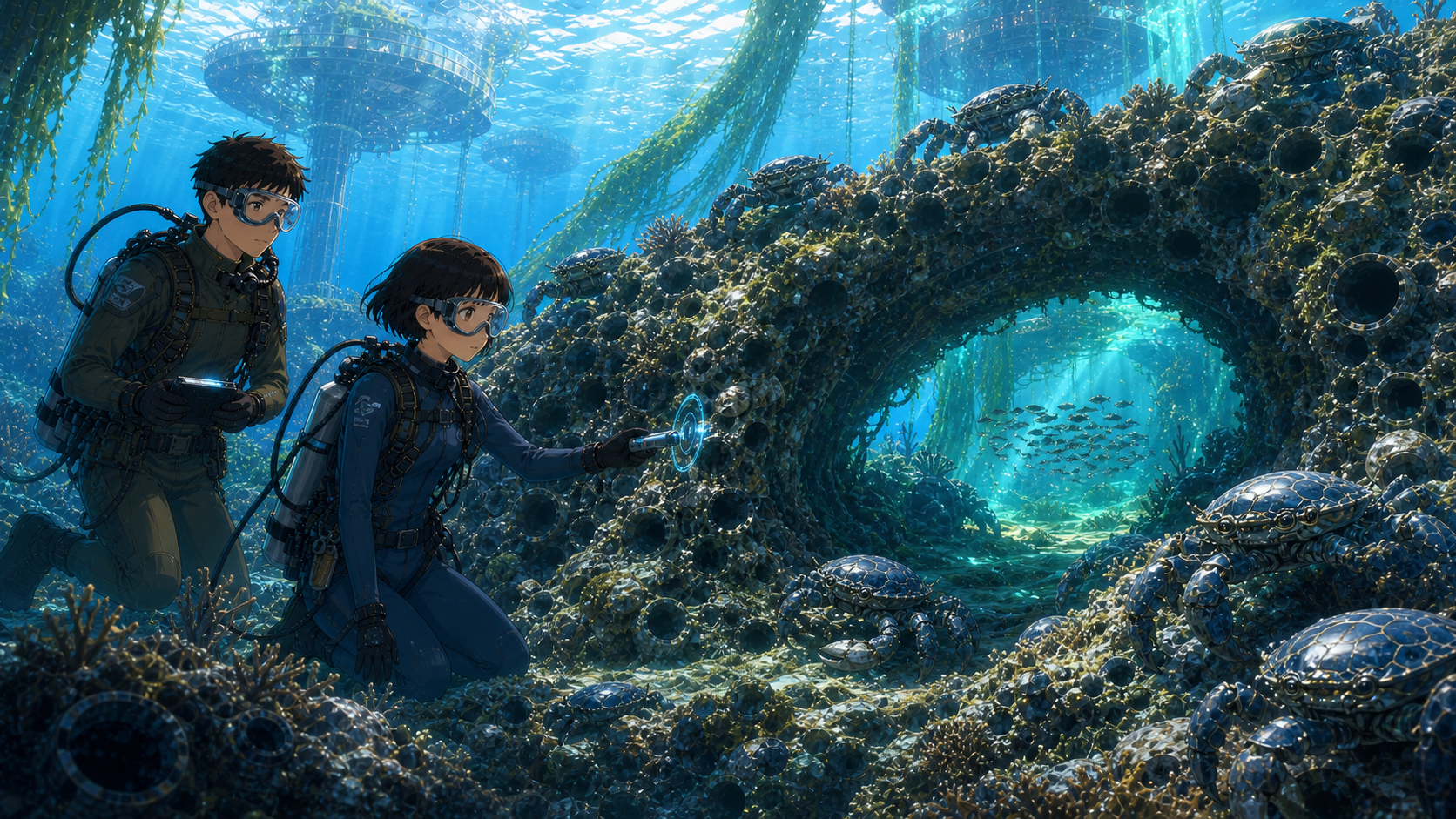
The sound of the water at the well thinned before the wrong pulse arrived. The crabs kept building. Fang mapped the openings from the outer ring. I marked the distance to the nursery core. She treats a living response as a coordinate. I keep the city quiet enough to read it. The reef had already recorded where the signal came from.
 04
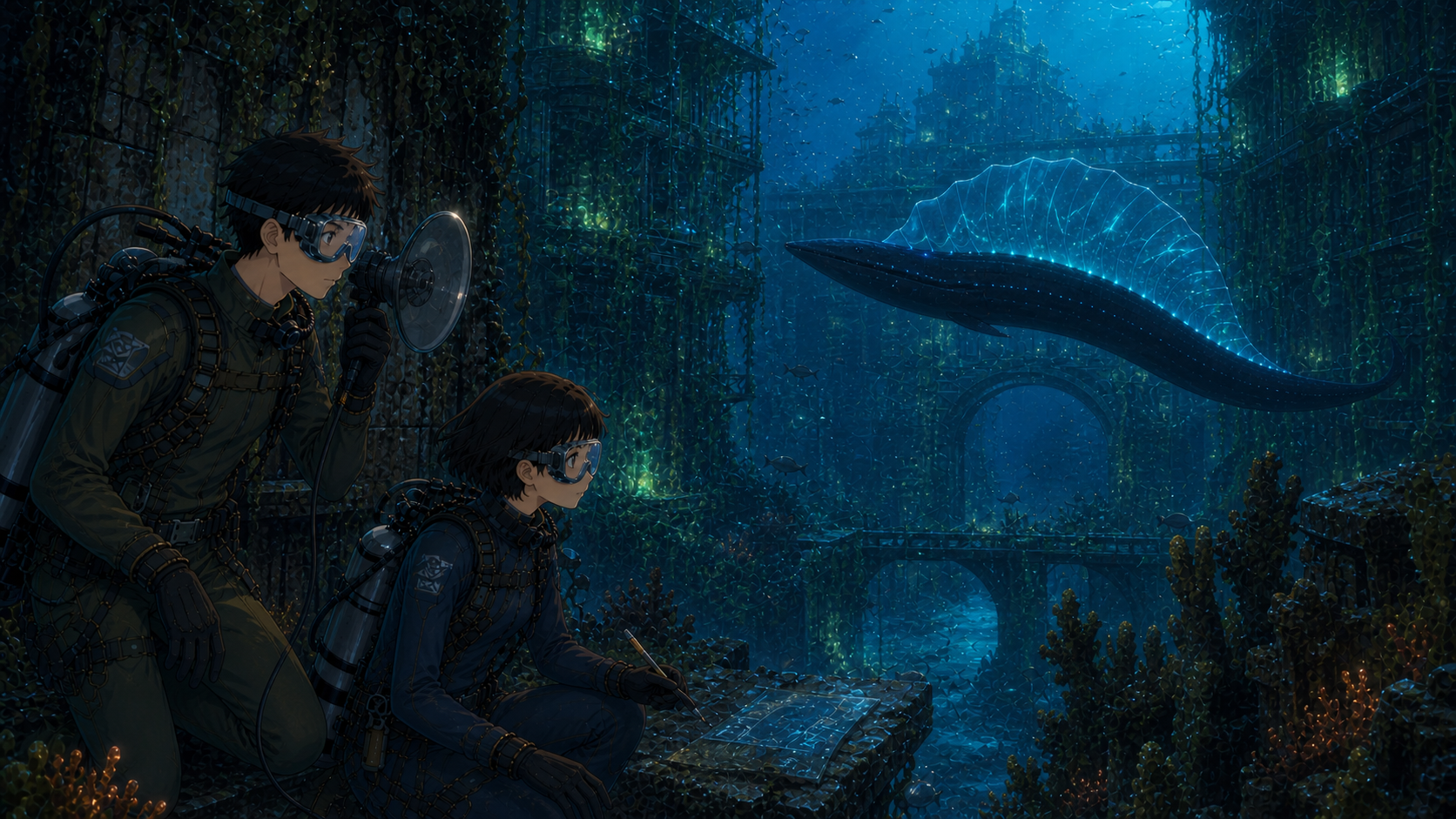
The soundscape in Drowned-City Sonar Lane thinned before the wrong pulse arrived. A six-meter eel held at the intersection returning the strongest echo. Fang killed the active sonar. I marked our ascent route and moved us into the building shadow. She treats a living response as a coordinate. I keep the city quiet enough to read it. The animal was not the obstruction. The noise was.
 05
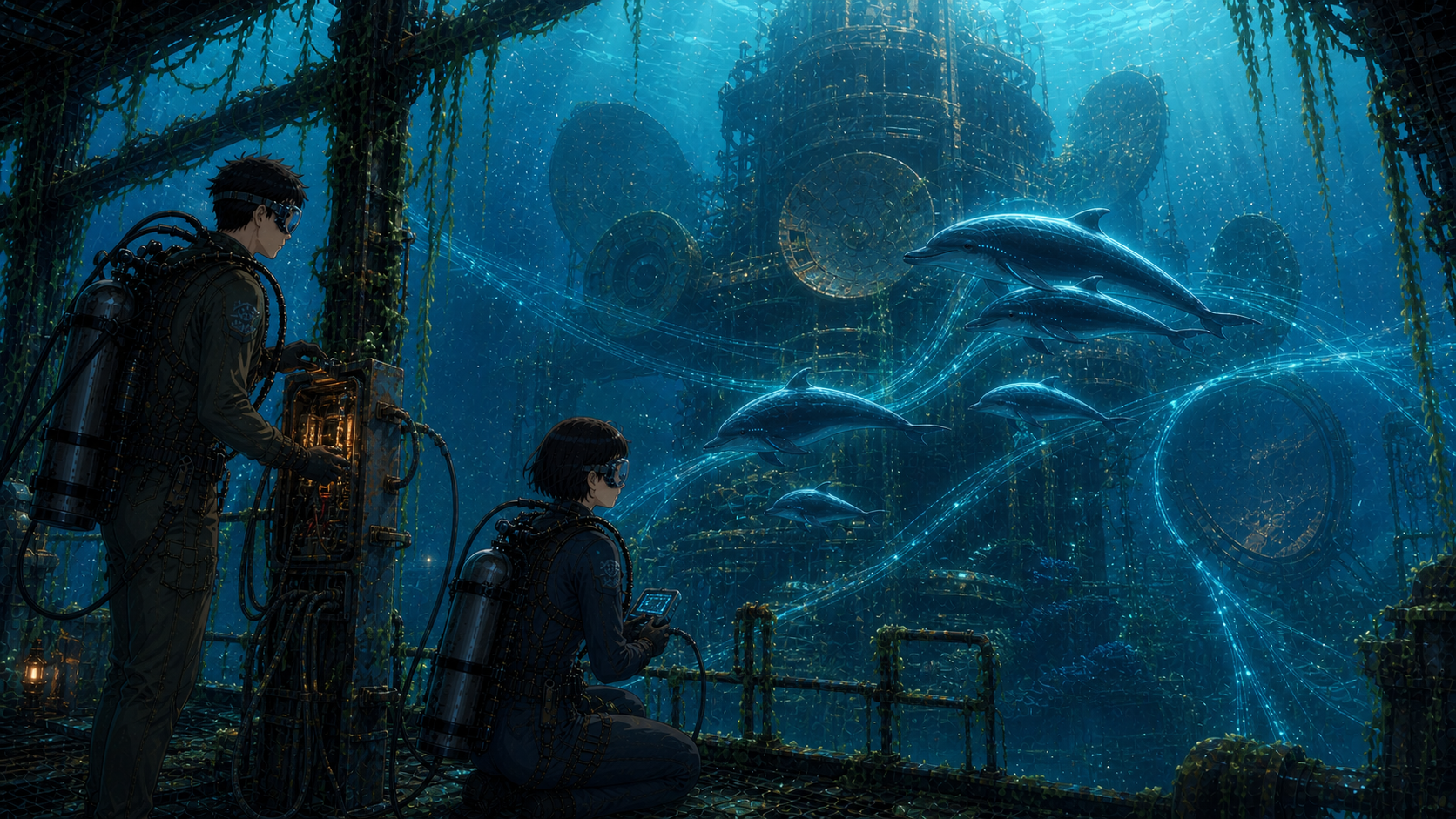
The soundscape at Kuroshio Pilot Ring thinned before the wrong pulse arrived. Three dolphin families held outside the corridor and sang. Drowned-city equipment split their voices into several false routes. Fang treated the living response as a coordinate. I kept the city quiet enough for her to read it. The animals were not what needed correcting. Our noise was.
 01
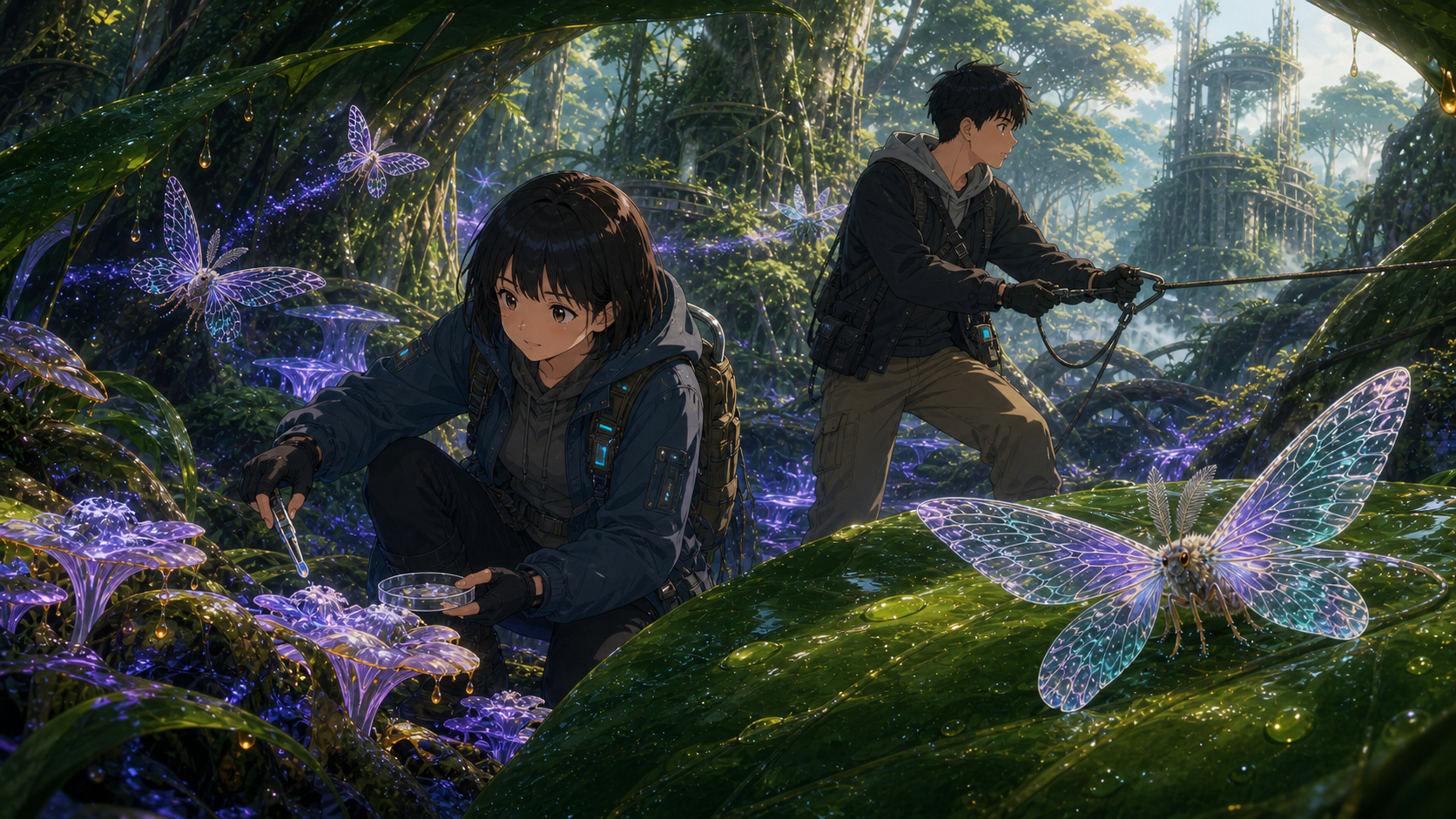
Moisture at Acid-Rain Leaf-Edge Station was uneven. Water still fell from the leaf tips, but the fungal light between the buttress roots had dimmed. The moths left the upstream leaves before the rain. Fang measured the water in their wing veins. I shut down the active lights and marked the load-bearing path, wind, and retreat line. The first anomaly was evidence, not a threat.
 02
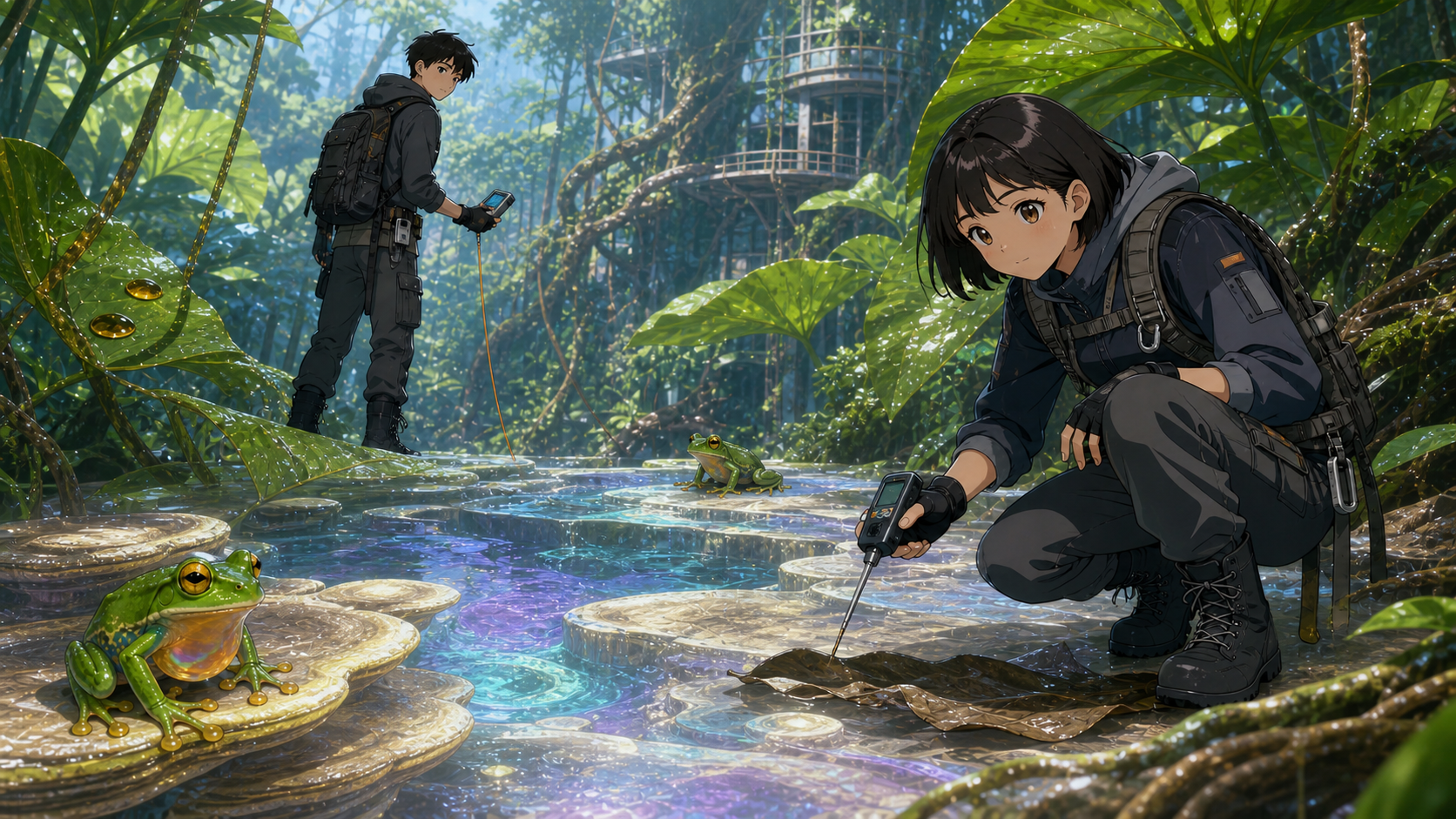
The leaf tips still dripped, but the calls came only from downstream. Fang compared the acidity of the water held in the frogs' throat reservoirs. I marked the dry branch segments, load-bearing points, wind, and retreat line. The frogs were not trapped. The waterway was broken around them.
 03
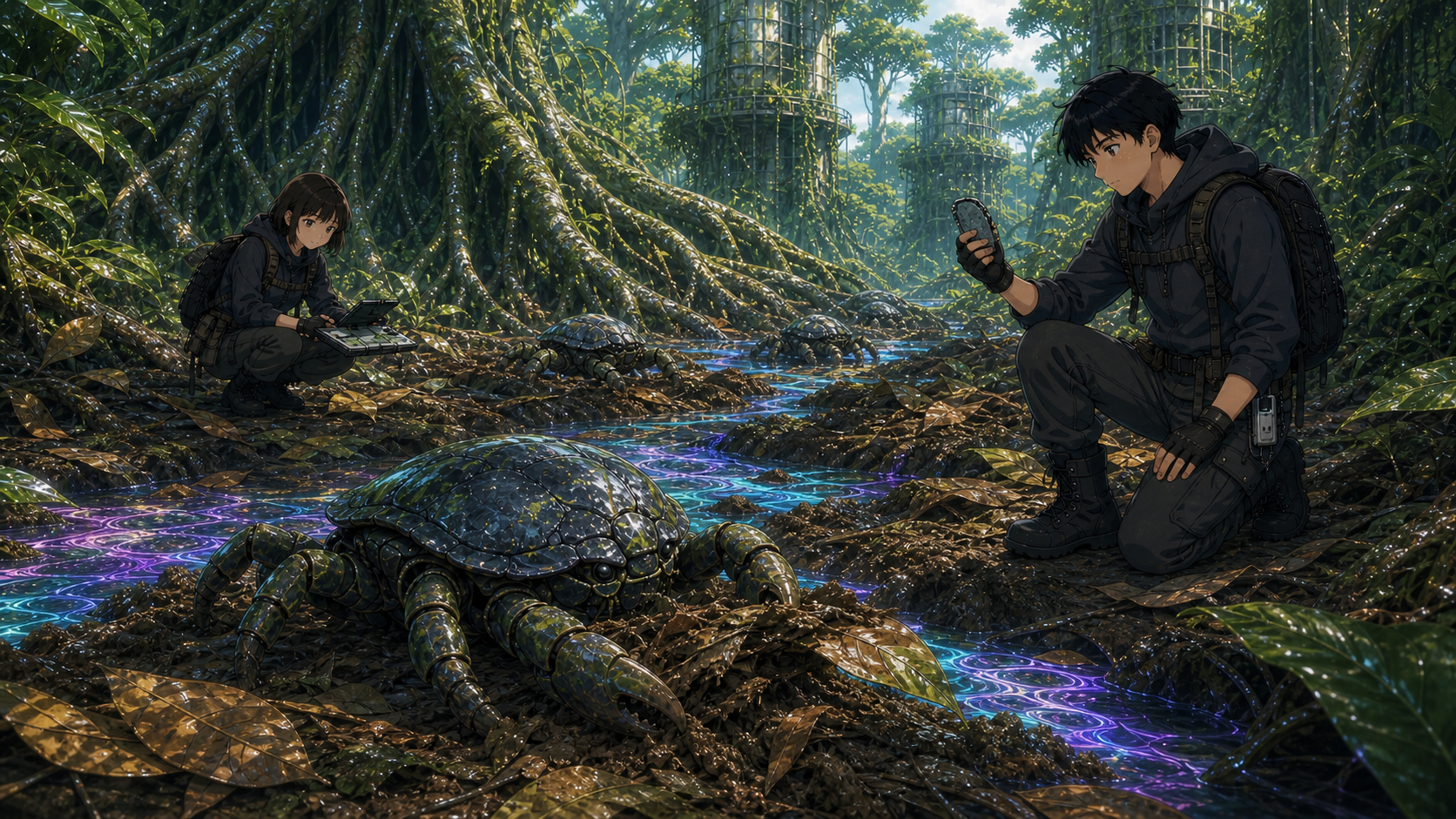
Fresh mud closed only the upstream openings. Fang watched the seepage. I marked the load-bearing roots, wind, and retreat line from outside the molting core. The crabs had not blocked the river. They had marked the side that was no longer safe.
 04
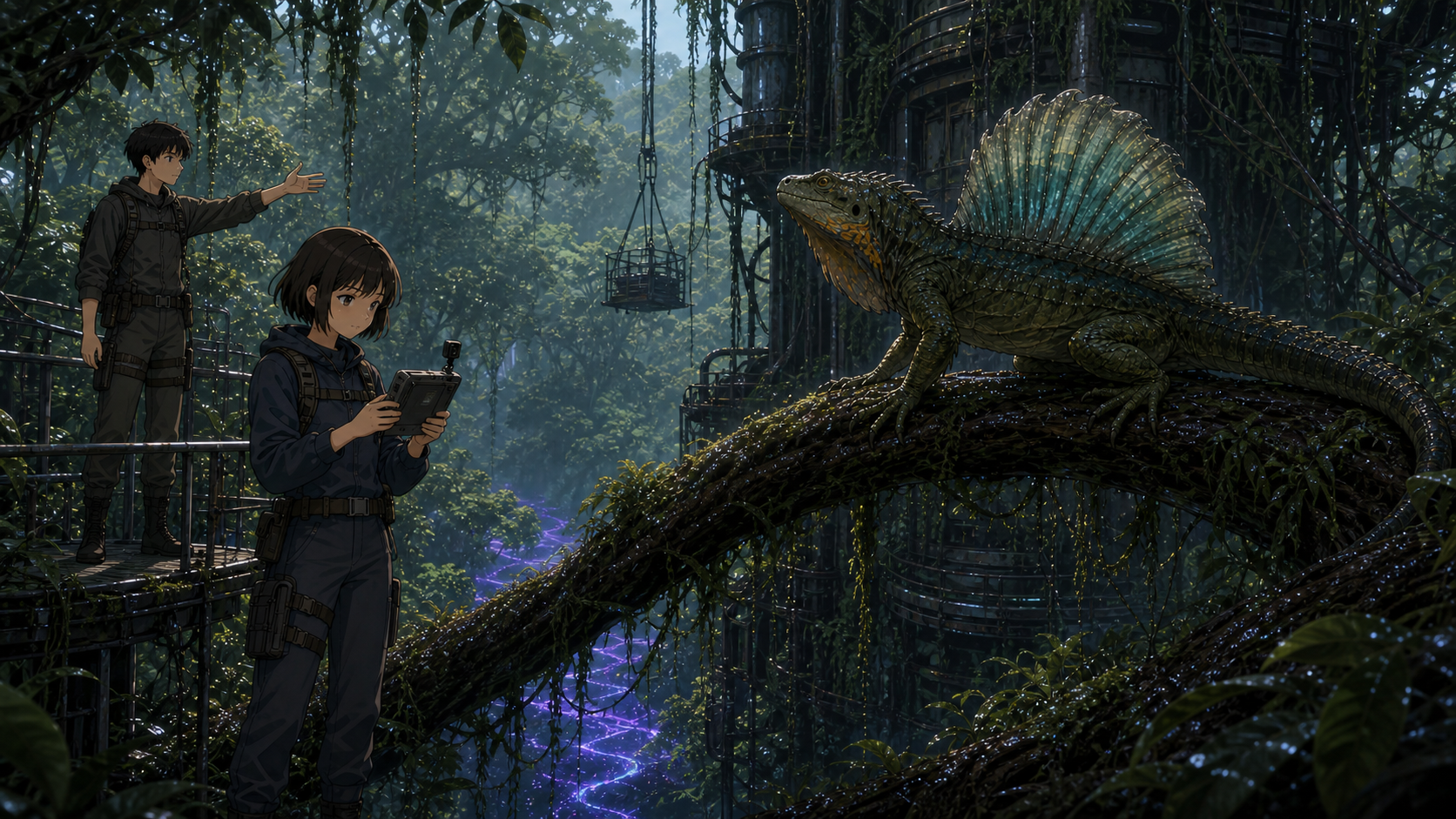
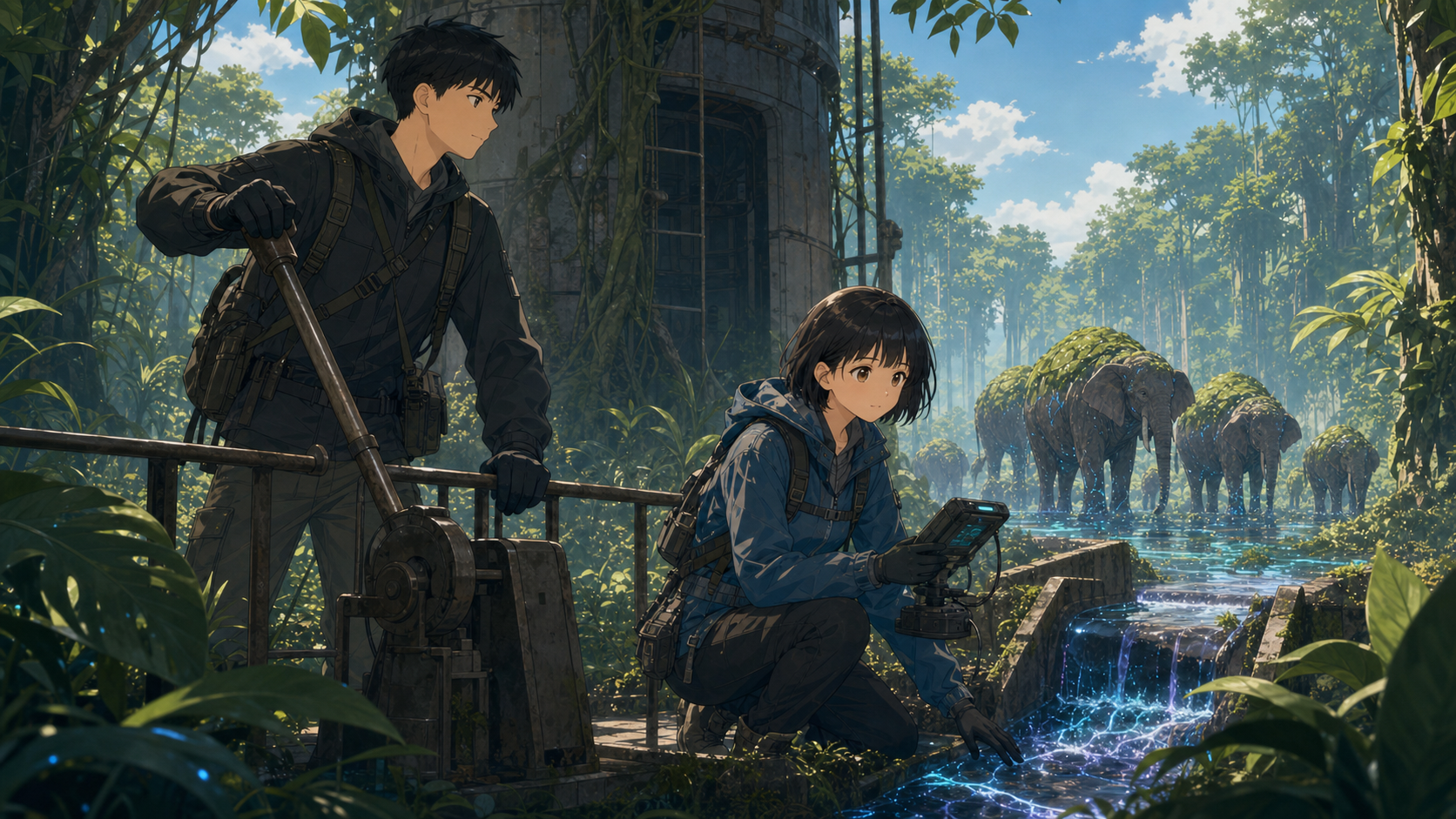
The leaves were still dripping, but the mycelial light between the buttress roots had dimmed. A Mist-Sail Arboreal Lizard held the last stable wet branch. Fang read the water in its sail. I marked the supports, wind, and retreat line. We stopped the lift and gave up the direct route.
 05
The herd was drifting toward the outpost, but it was not following us or the buildings. It was following moisture that the Mycelial River no longer carried. Fang read the water response without entering its migration line. I kept the route open and went back to the machine.
 01
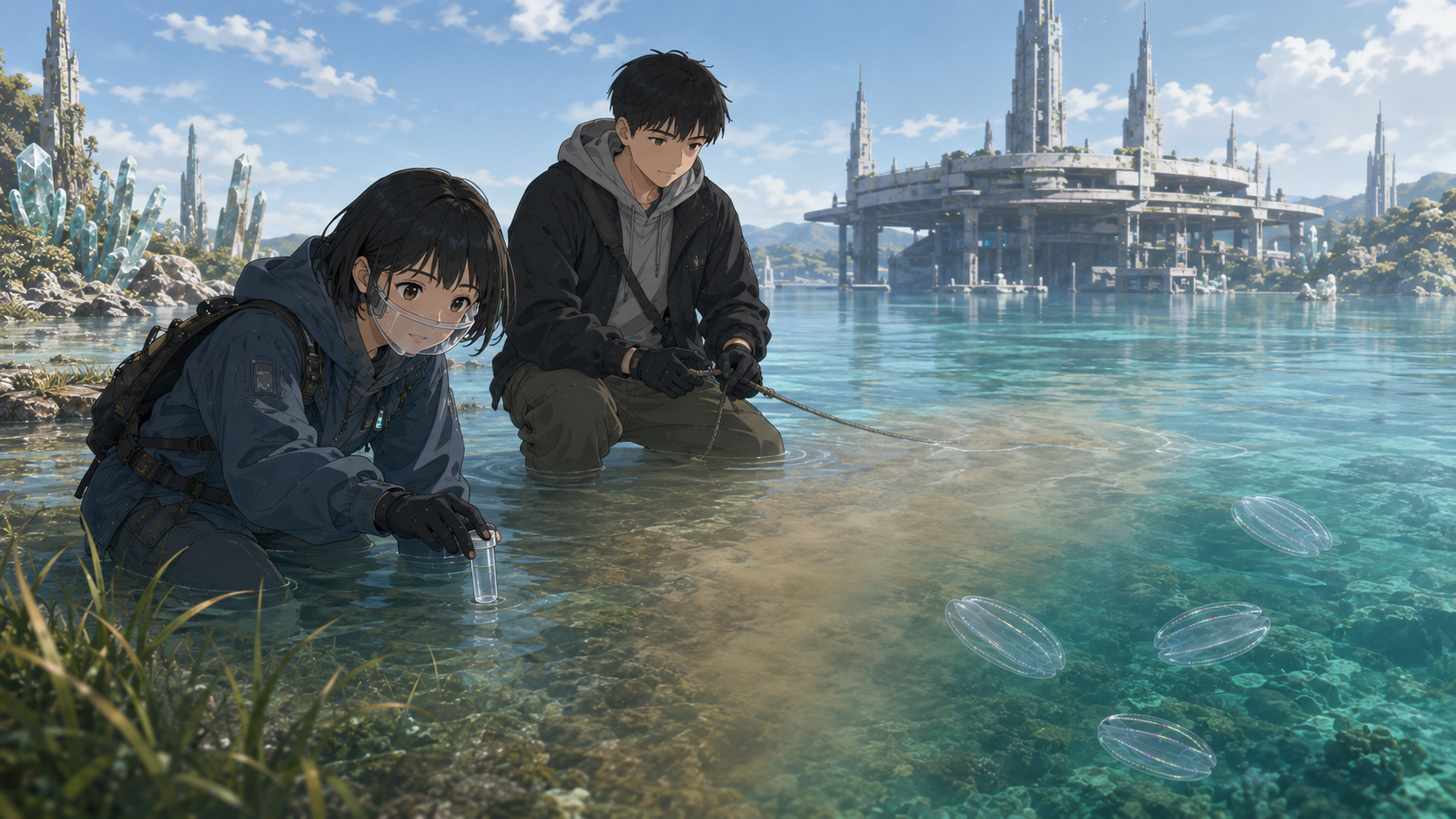
Pressure and crystal-reef reflections were still shifting at Outer-Ring Clearflow Outlet. The jellies held outside the reef-harvest discharge. Fang separated the rhythm of their comb rows into current, suspended particles, and direction. I shut down the active beacon and marked the load-bearing points, return flow, and retreat line. The animals were not blocking the passage. They were showing us where the water had stopped behaving like water.
 02
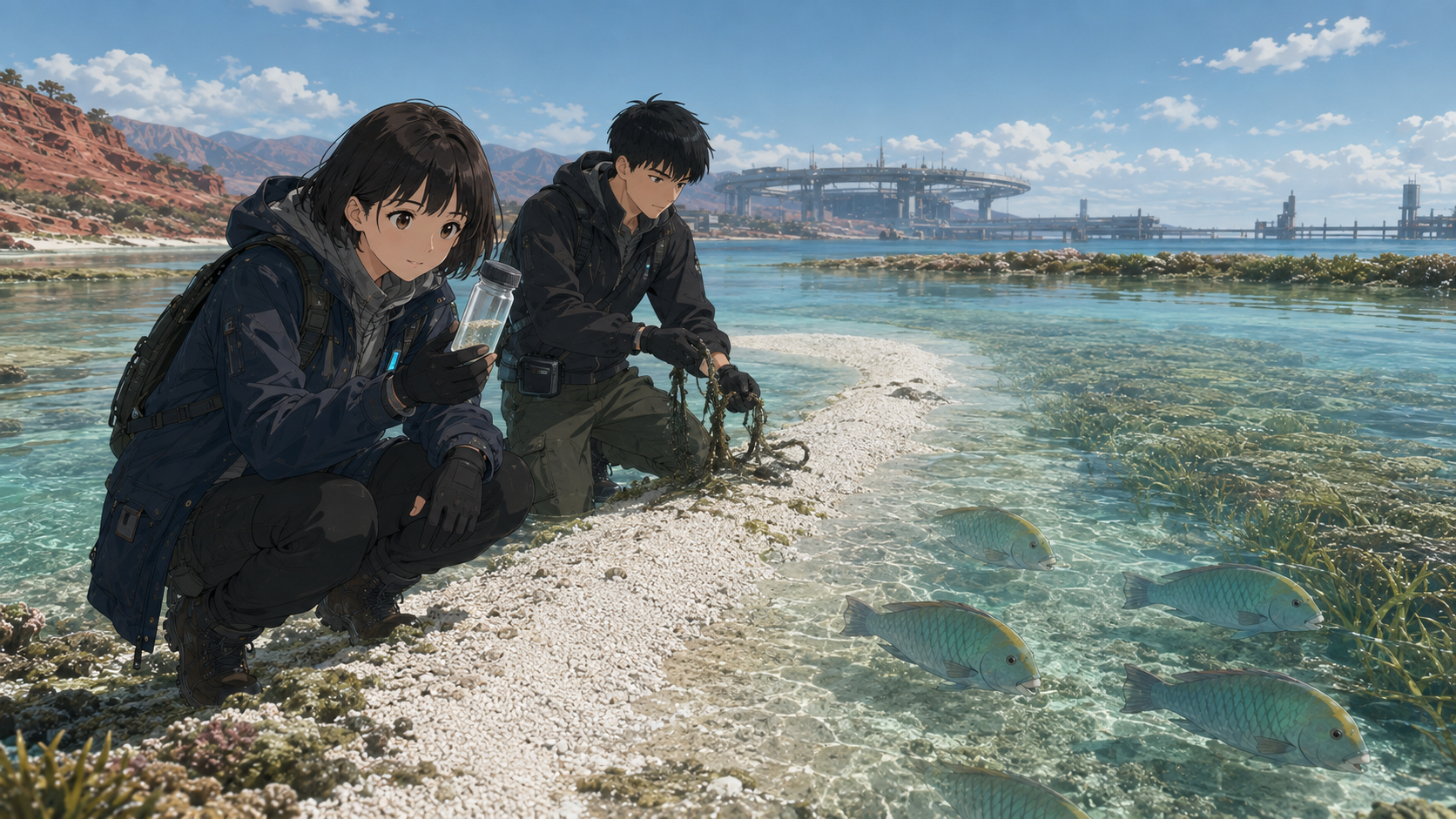
Pressure and crystal-reef reflections were still shifting at Parrotfish Reef-Grazing Flat. The school grazed only beyond the reach of the machinery's vibration, leaving a broken trail of pale sand. Fang separated the fishes' response into current, suspended particles, and movement. I marked the load-bearing points, return flow, and retreat line from outside the school. The missing sand was not a shortage. It was the edge of the disturbance.
 03
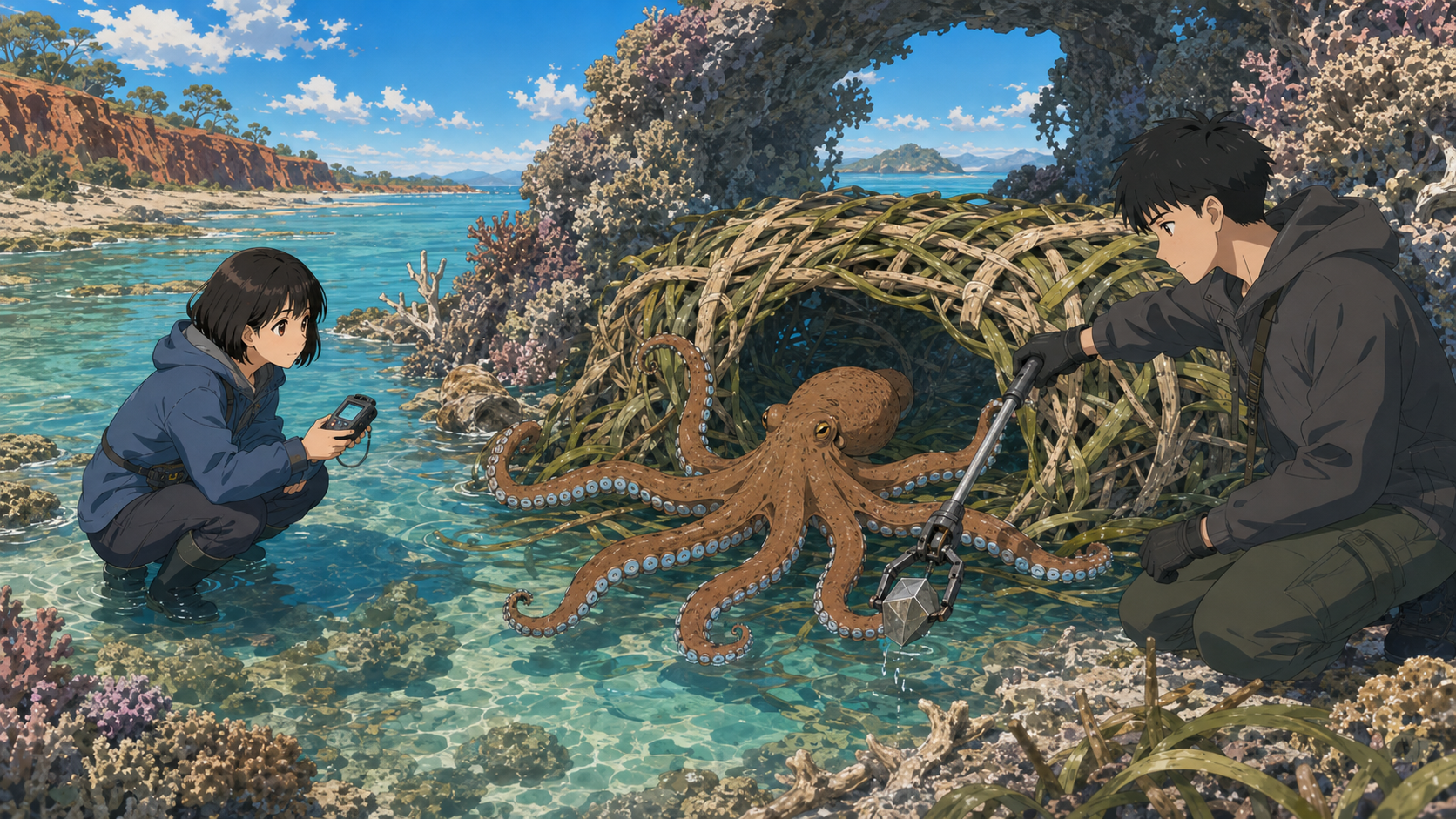
Tidal pressure and crystal-reef reflections were still shifting at Reef-Weaver Gate Pore. The octopus kept the flexible openings working but had sealed the entrance facing the harbor. Fang separated its response into current, suspended particles, and movement. I marked load-bearing points, return flow, and our retreat line from outside the den. We did not need to move the animal. We needed to find what had made it close the pore.
 04
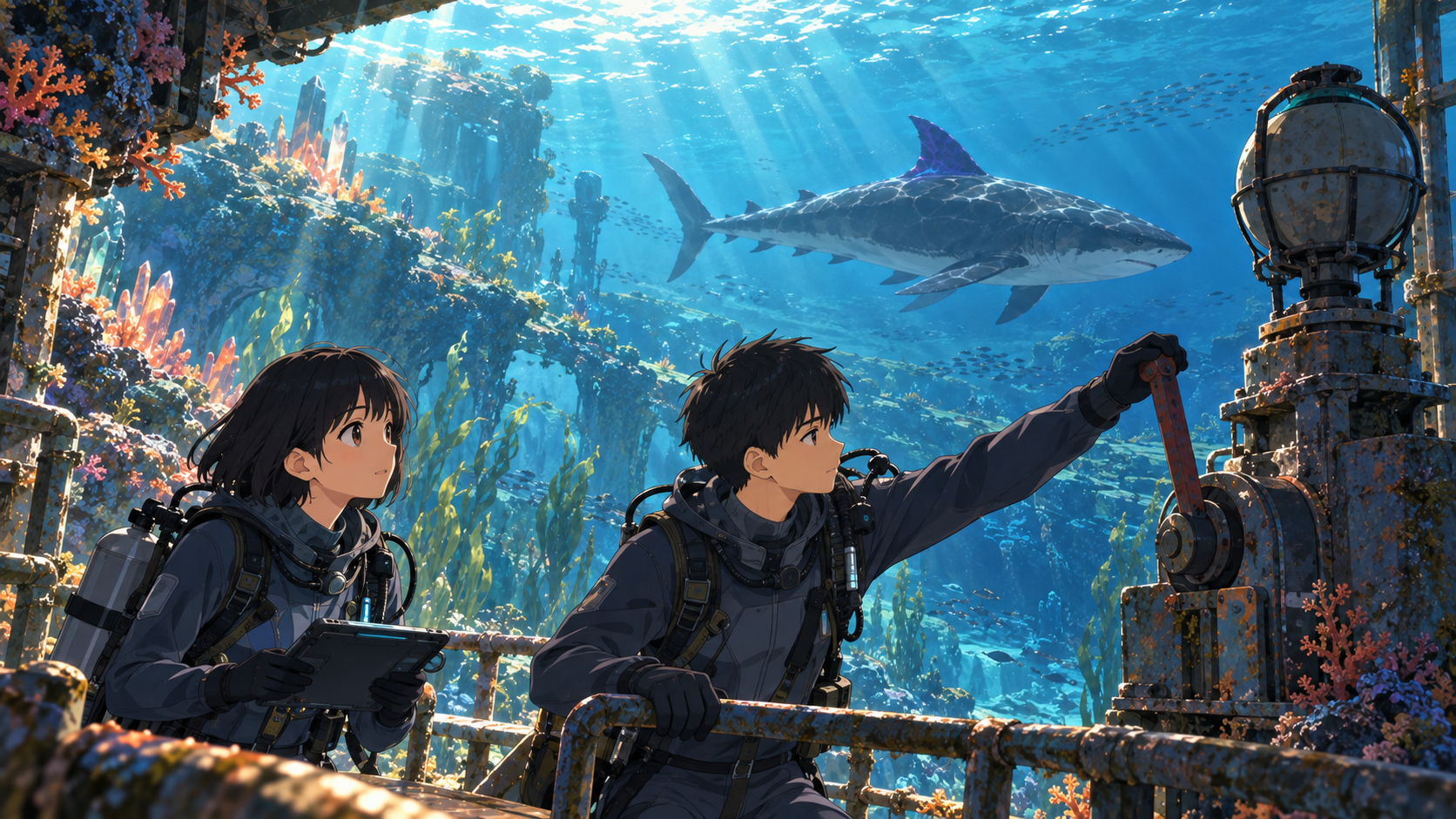
Tidal pressure and crystal-reef reflections were still shifting at Outer-Blue Patrol Line. The shark turned at the deep-water boundary and refused the shallow corridor lit by the reflective beacon. Fang separated its response into current, suspended particles, and movement. I marked load-bearing points, return flow, and our retreat line from outside the patrol. The shark was not blocking the route. It was showing us which light did not belong there.
 05
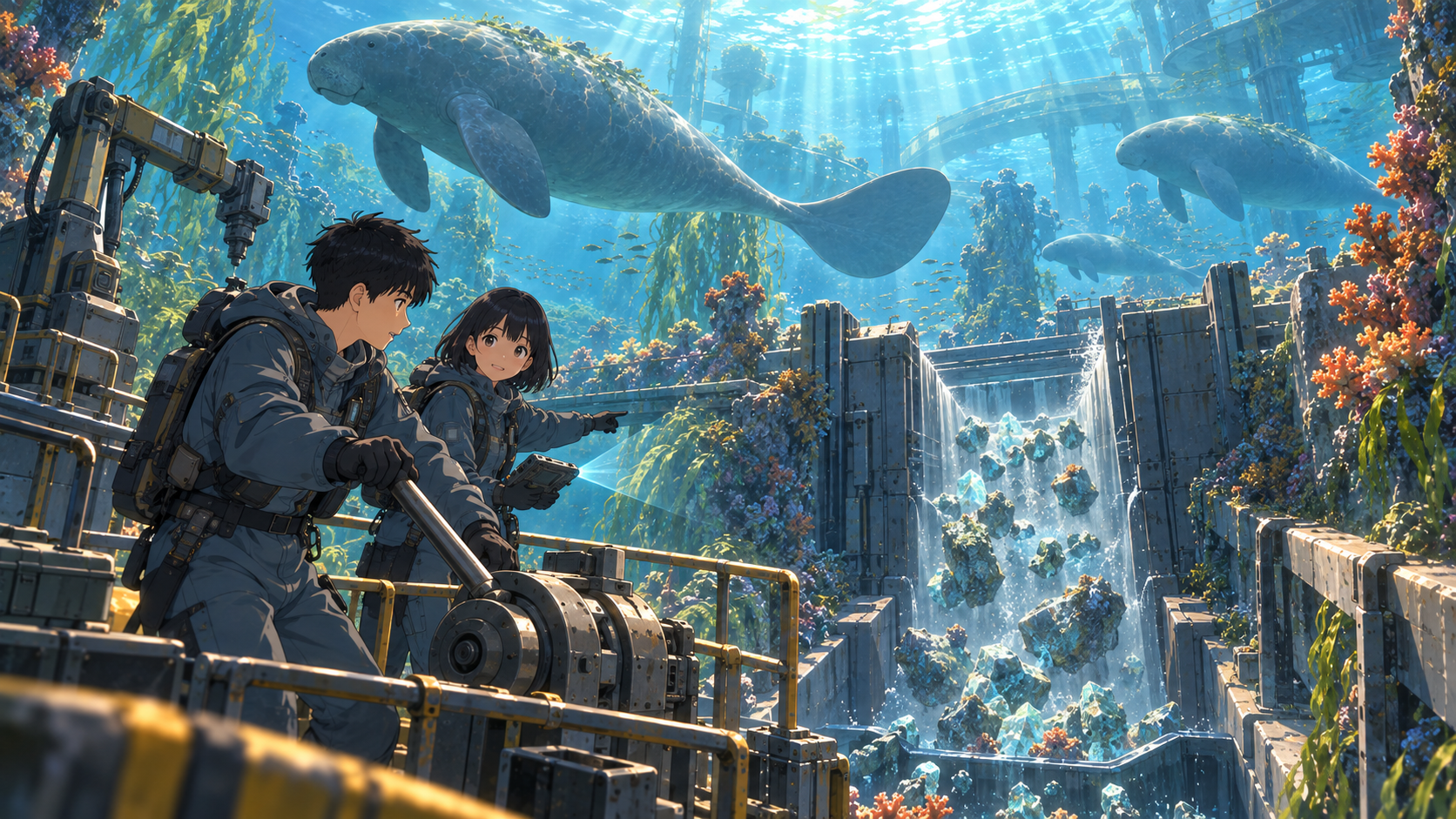
Tidal pressure and crystal-reef reflections were still changing at Seagrass Migration Gate. The herd had stopped outside the blocked gap. Fang separated its response into current, suspended particles, and movement direction, then read its grazing rhythm. I marked load-bearing points, return flow, and our retreat line from the outside. All active weapons stayed stowed. The animals did not need direction. The waterway did.
 01
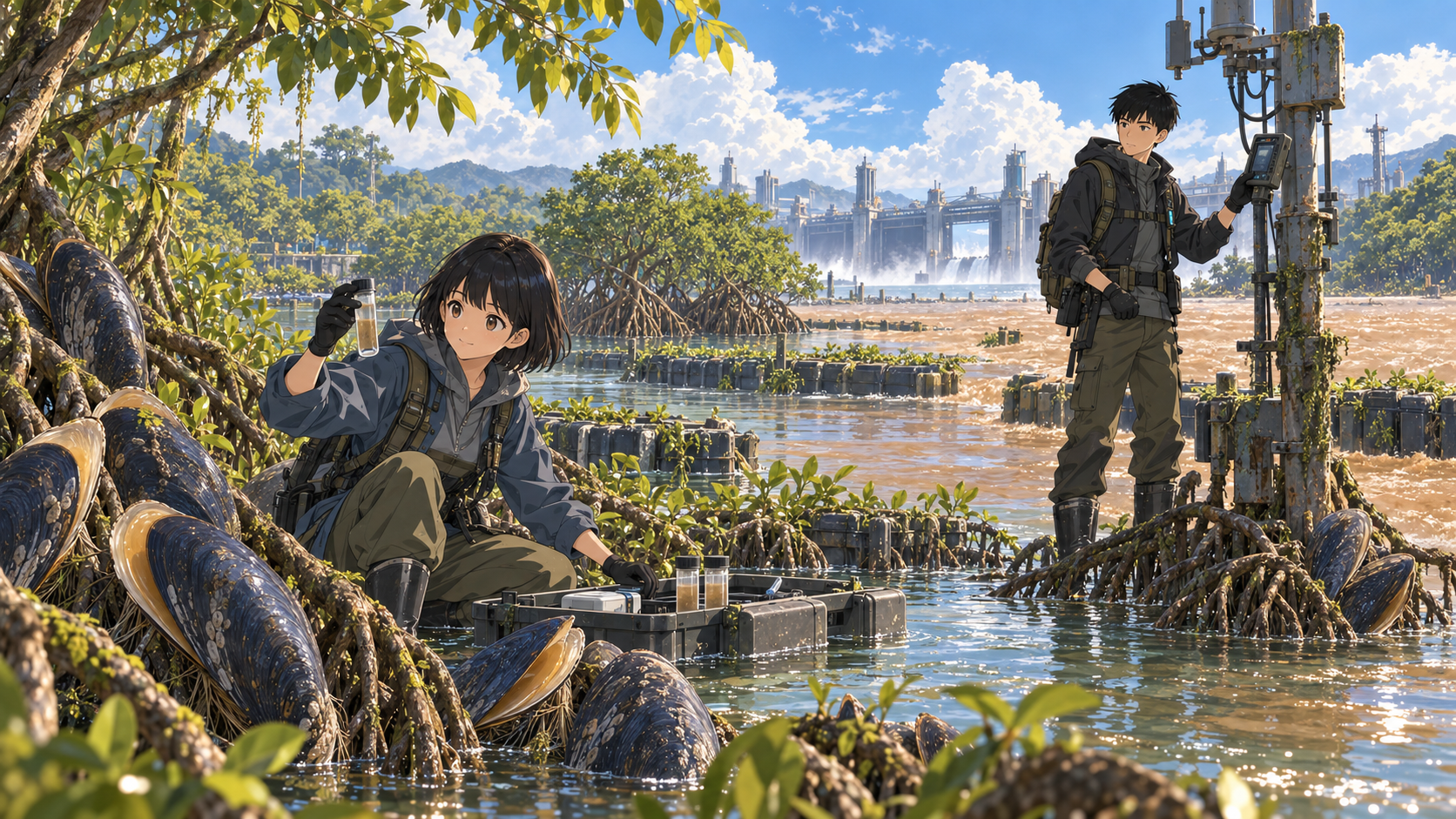
Rain at East Rain-Gate Root-Filter Bay did not fall straight down. Wind pressed it into diagonal lines along the floating levees. Fang and I descended to the edge of the root raft. Before the pumps made a sound, the Rainfold Sail Mussels folded away their broad shell lips together. Fang kept her distance, lowered a salinity probe into the outer water layer, and had me shut down active sonar. If the shells closed before the vibration, she said, they were sensing something other than sound.
 02
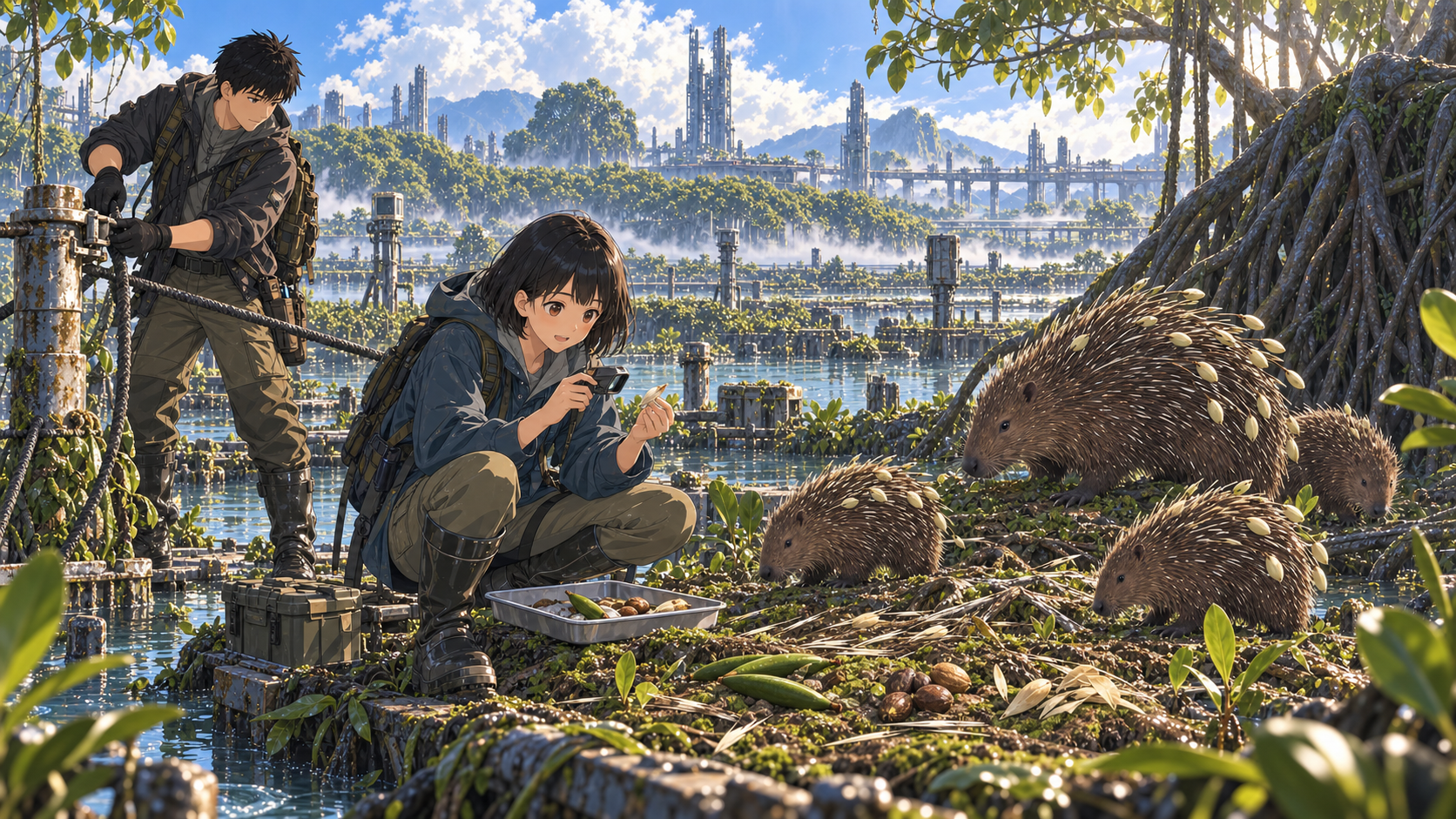
Rain pressure, root-raft height, and the old sensor readings were all changing at First Floating Seed Raft. A family of Floating-Seed Quill Porcupines carried floating seeds on broad, barbless quill tips, yet avoided the sections broken apart by reverse flow. Fang separated the quill-borne seeds, broad-toed tracks, and cache locations into repeatable evidence. I remained outside, marking load points, waterlines, and our retreat route. Every active weapon stayed stowed.
 03
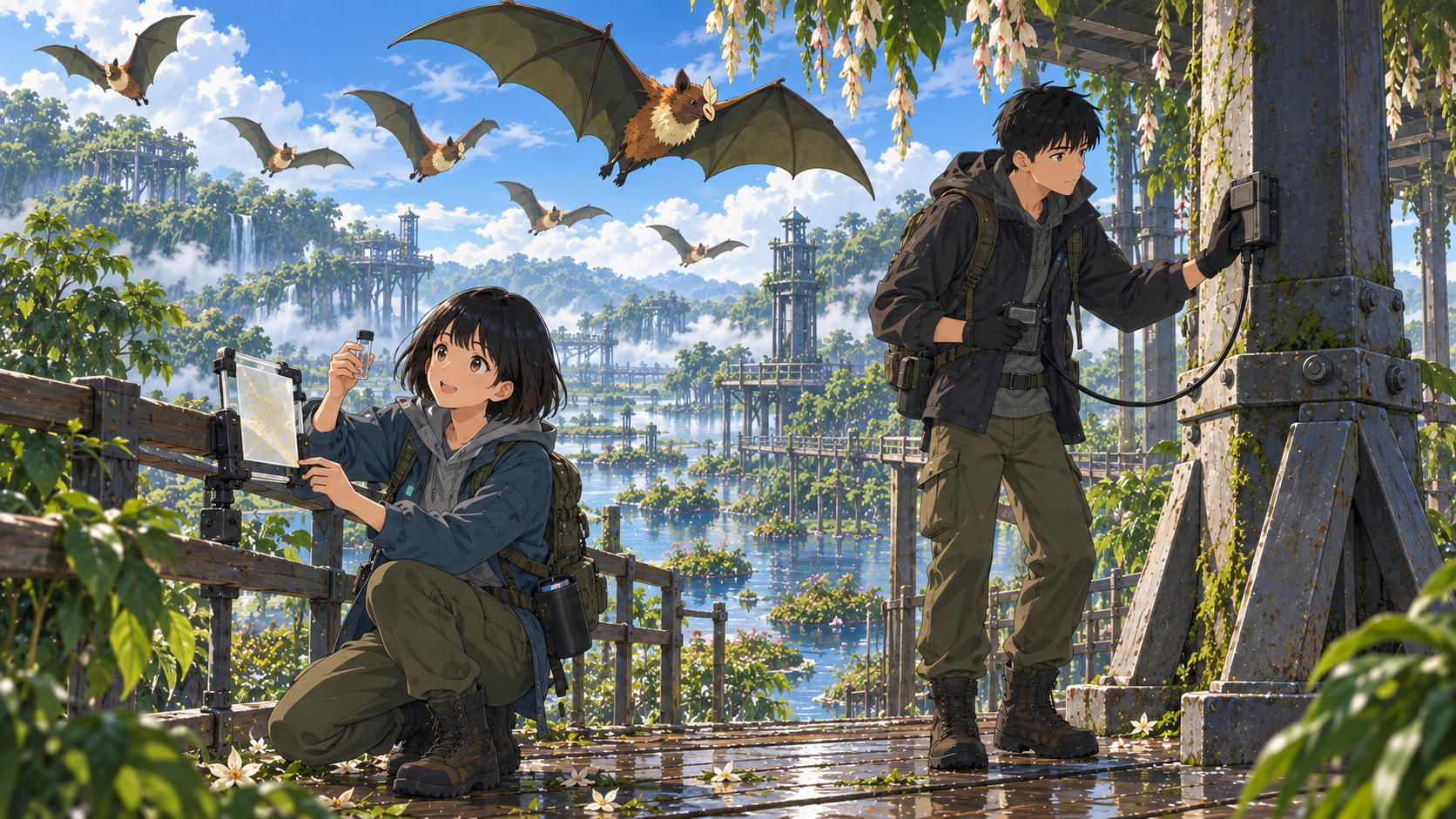
Rain pressure, root-raft height, and the old sensor readings were all changing at Flower-Nose Rainforest Window. Monsoon Flower-Nosed Flying Foxes glided low through the break in the rain. Their pale leaf-shaped nose pads registered the wind pressure, and their long chest fur carried pollen, yet the entire group turned away from the stilted seed vault. Fang set a thin sampling film beneath the route to catch only pollen that fell on its own. I stayed low at the tower footing and listened with passive instruments. The detour was not disorder. It was a reading.
 04
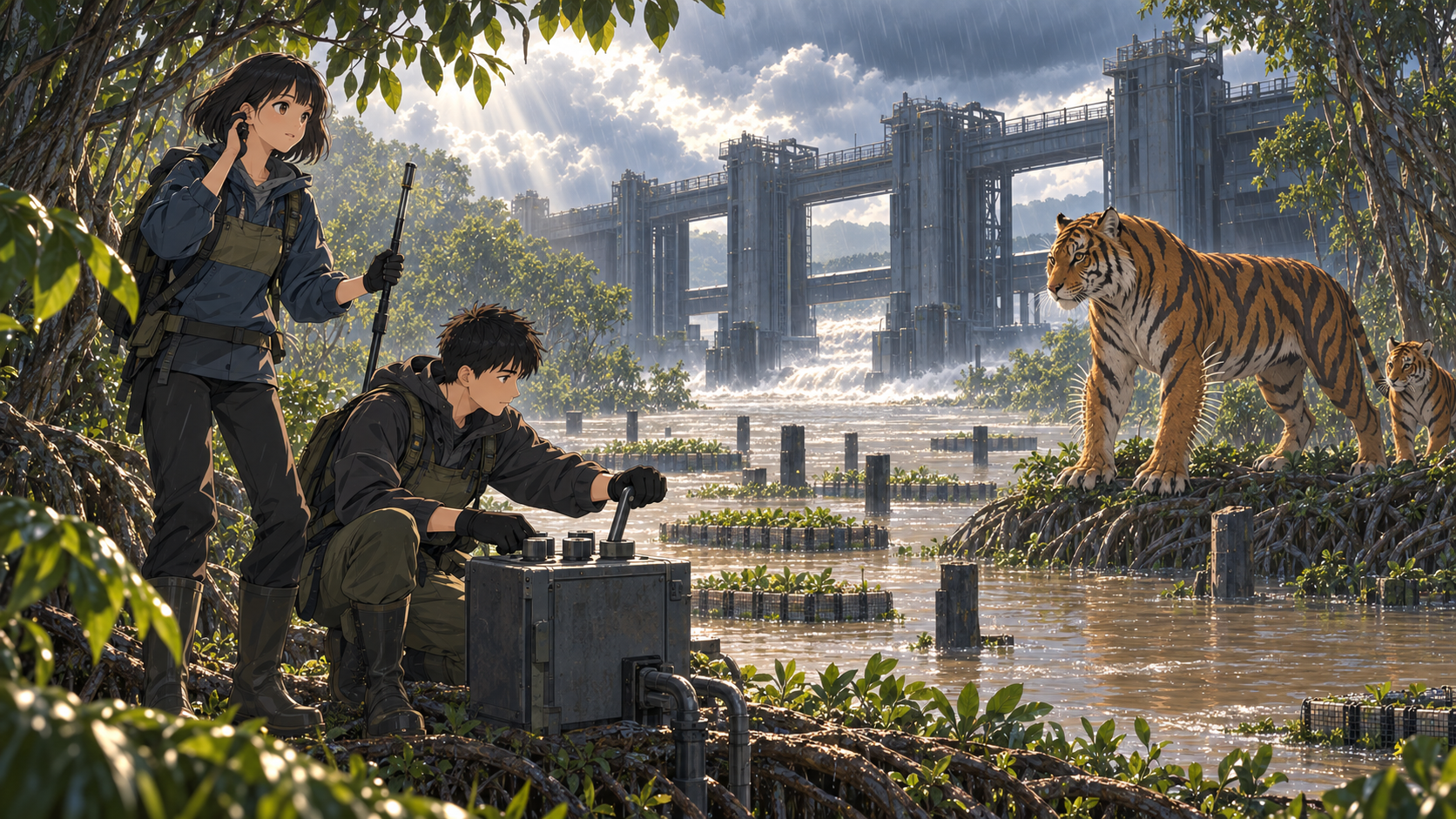
Rain pressure, root-raft height, and the old sensor readings were all jumping at Storm-Window Tiger Ridge. An adult female tiger and her cub held position on the high-root island. The whisker fans along her forearms stayed open against the gate-pump noise, while a ridge of muddy water began to rise in the distance. Fang separated the opening and closing of those whiskers, the placement of the webbed paws, and the nursery retreat route into repeatable evidence. I marked load points, waterlines, and our way out from the perimeter. Every active weapon stayed stowed. She did not pursue us. She warned the whole mangrove forest that the real pressure was waking below the water.
 05
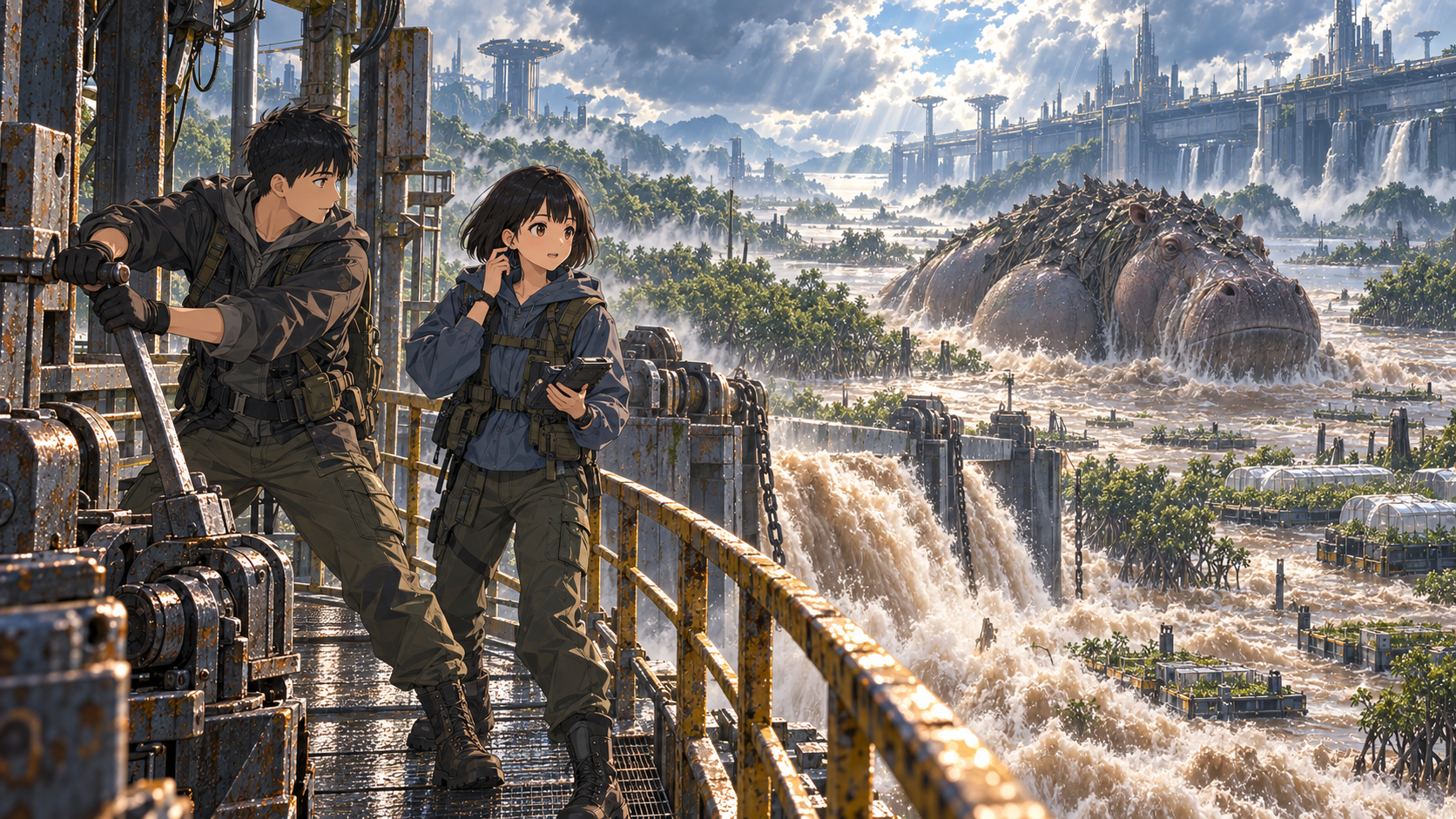
The water outside Sinking Root Gate was not rising. Something below was lifting it. When the Breach-Tide Mud-Crown Hippopotamus surfaced, its eighteen-meter back pressed the whole Mangrove Root Island downward. Black crown plates rose above the channel like the remains of a broken levee. It did not attack us. One breath was enough to bend a seed raft into an arc. This was not merely a high-risk animal. It was the center of a calamity-class pulse. As long as the fixed pump sequence kept driving muddy water backward, the entire seedbank would be pulled into its rhythm.
 01
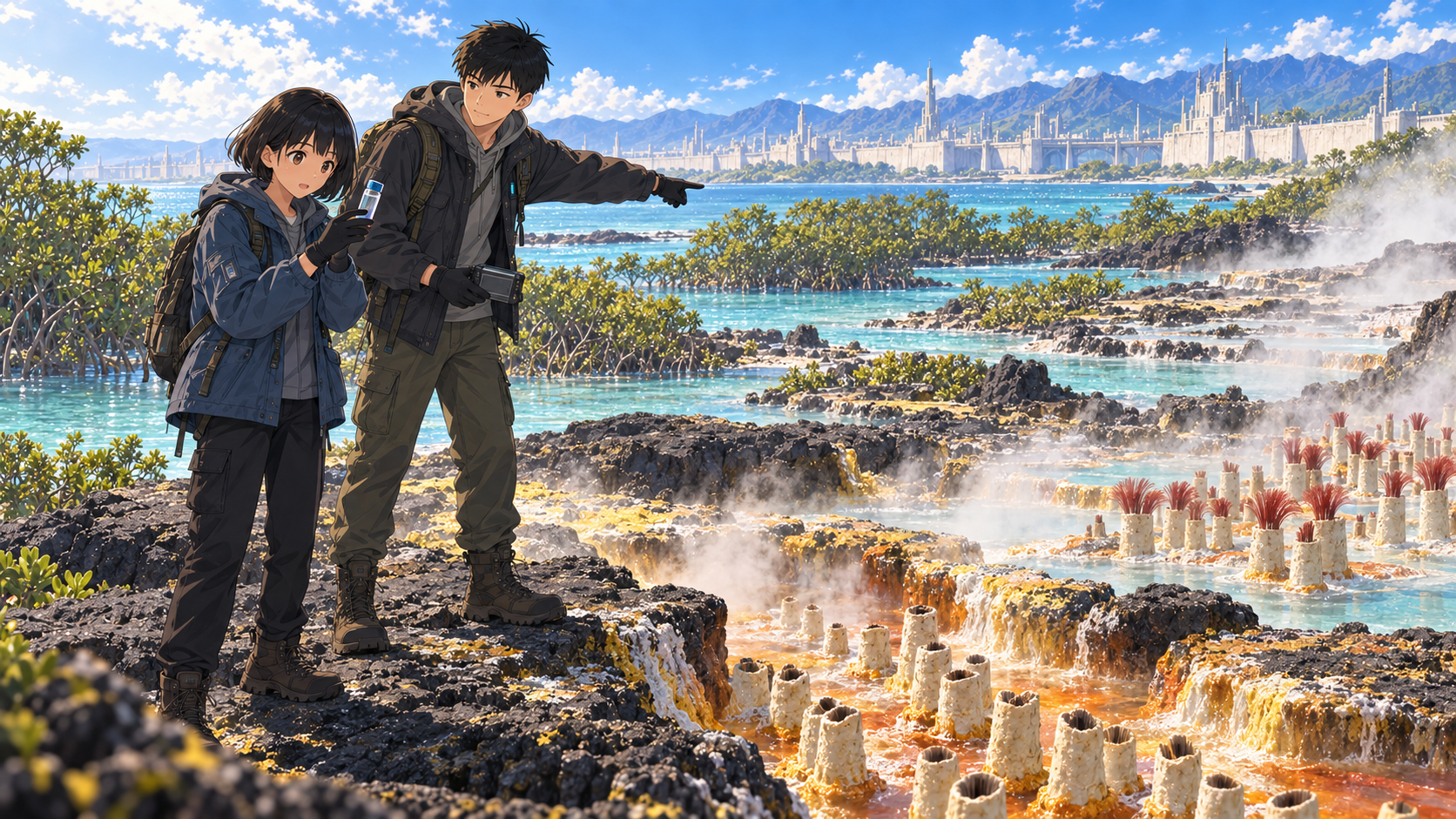
Mist at No. 9 Steam-Spring Basin moved flat across the salt. Fang and I had not yet heard the pumping well start when the crimson crowns above the ivory mineral tubes began retracting in sequence from the city side. Fang left her temperature probe at the colony's edge. I shut down active scanning and let a passive seismometer record the low sound below us. Each rise in well pressure sent the retreat line across the bank seventeen seconds before the alarm.
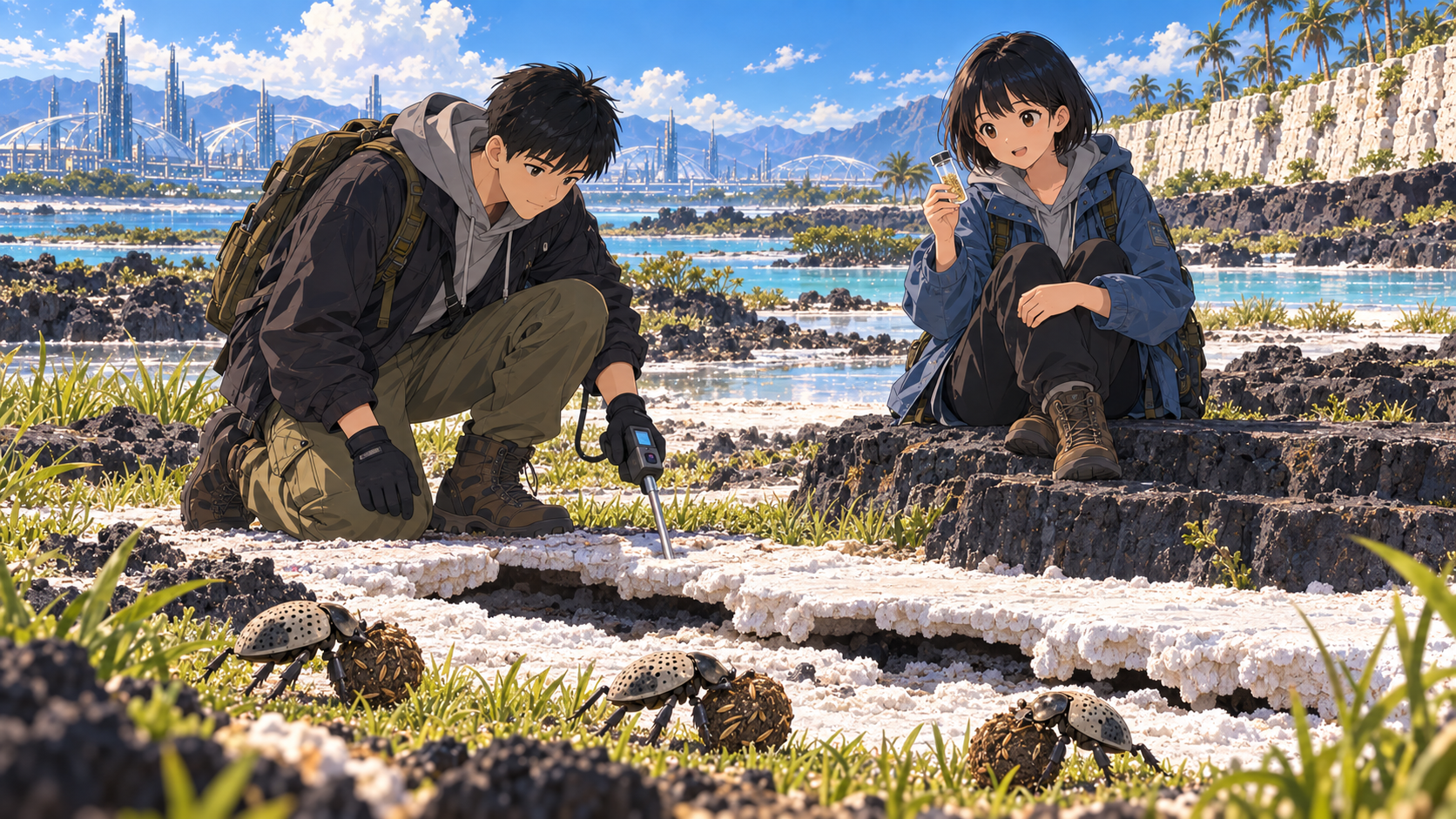 02
Salt-Crust Dung-Trace Slope should have offered the shortest route. Instead, the Salt-Porcelain Seed Beetles pushed their seed-rich dung balls into a broad curve, choosing rough lava over the white ground in the center. Fang stayed outside the trail and examined salt-tolerant seed left behind. I scanned the insect-free ground with thermal imaging. The surface was only a few degrees warmer than its surroundings, but heat had collected below it like an empty pot.
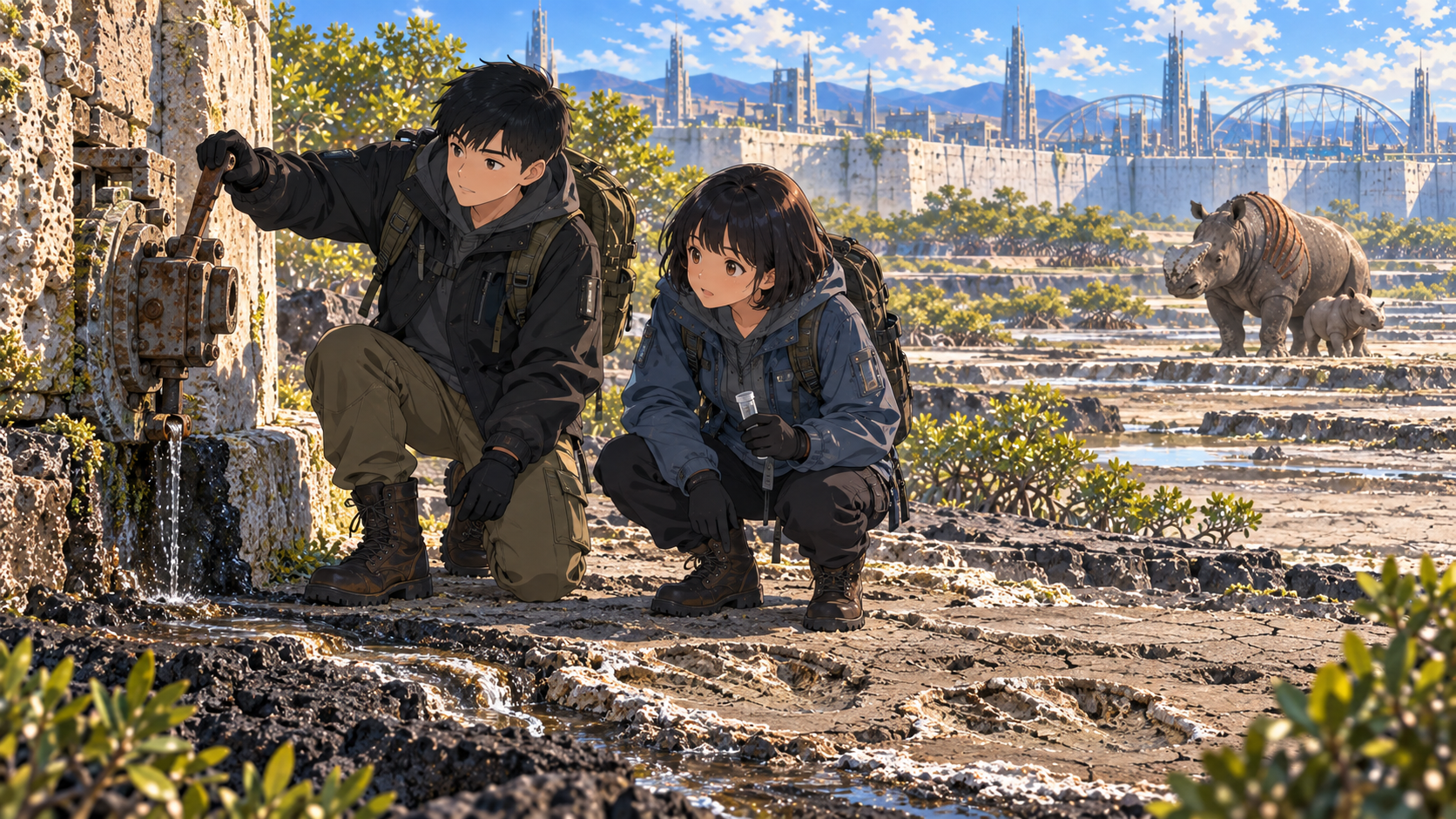 03
Only a gray-white mineral ring remained at Shield-Nose Cold Pool. An adult female stood between the basin and her calf. Her five-meter body did not advance, but her broad flat nasal shield remained pointed toward us. Fang stopped outside the territory and used her BCI to read heat moving through the lamellae along the animal's shoulders. I lowered my equipment and withdrew behind black rock.
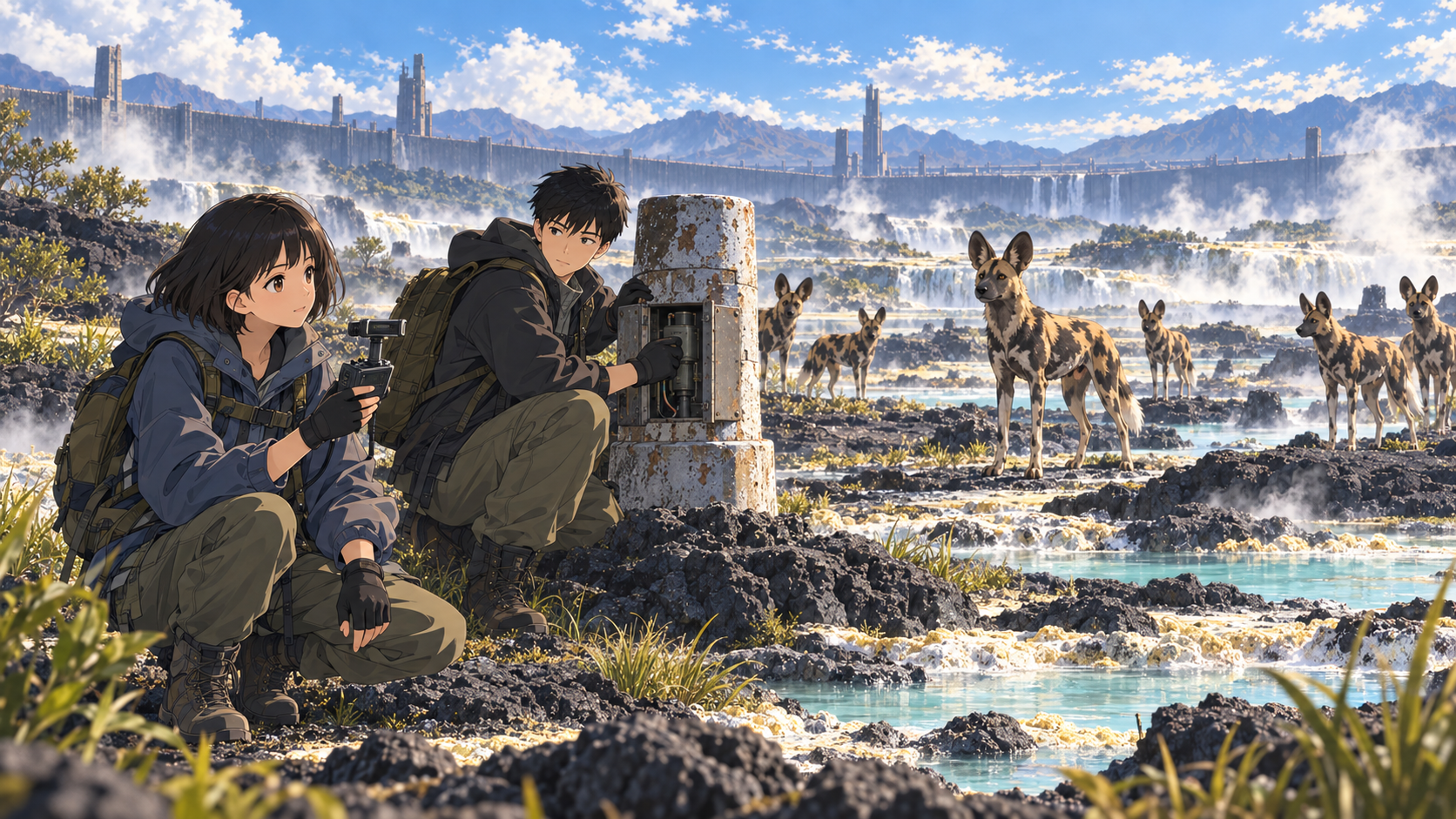 04
There were no calls on Tremor-Listening Wild Dog Ridge. Seven wild dogs stood on separate lava platforms, taking turns tapping short patterns with their forepaws. Their broad round ears turned toward the ground, while their ochre, black, and white patches kept clear distances in the sulfur mist. Fang quickly saw that the relay broke whenever it reached the old geothermal beacon. I recorded how they kept retreating to the same stable rock.
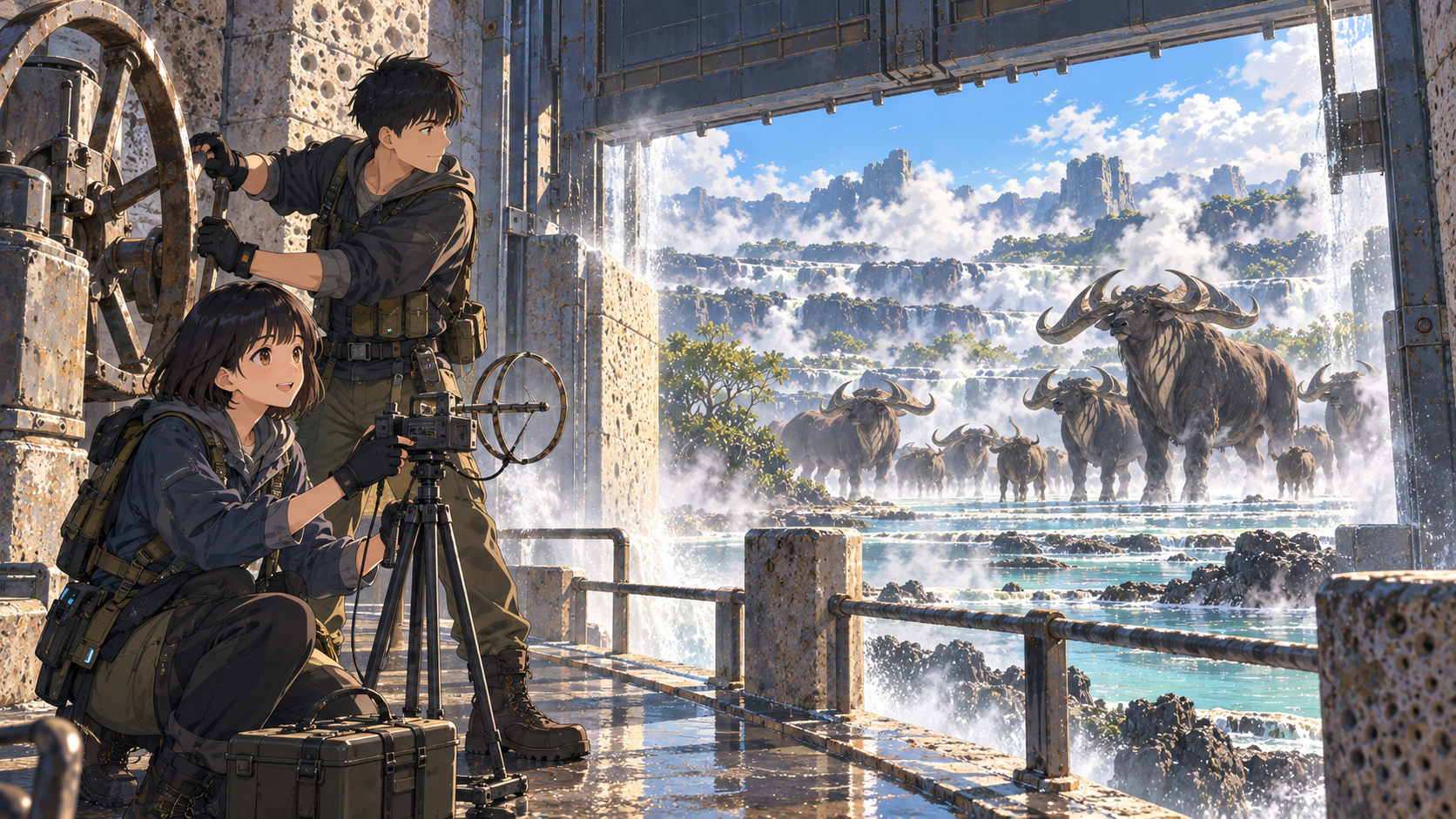 05
The ground outside Double-Crown Migration Gate moved like another heart. An eleven-meter herd stood in the sulfur mist, its double-layered horn crowns amplifying the geothermal beacons' remaining fixed pulse into a low resonance. The gate-guarding bull did not charge. It stood broadside across the only gap between the mothers, calves, and high wall. Fang separated the herd's breathing, true microtremors, and the human-made rhythm with a distant, noninvasive BCI. I shut down every active instrument. Danger did not require an attack: if the false signal continued, the entire nursery group would mistake a closed city gate for its only retreat.
 01
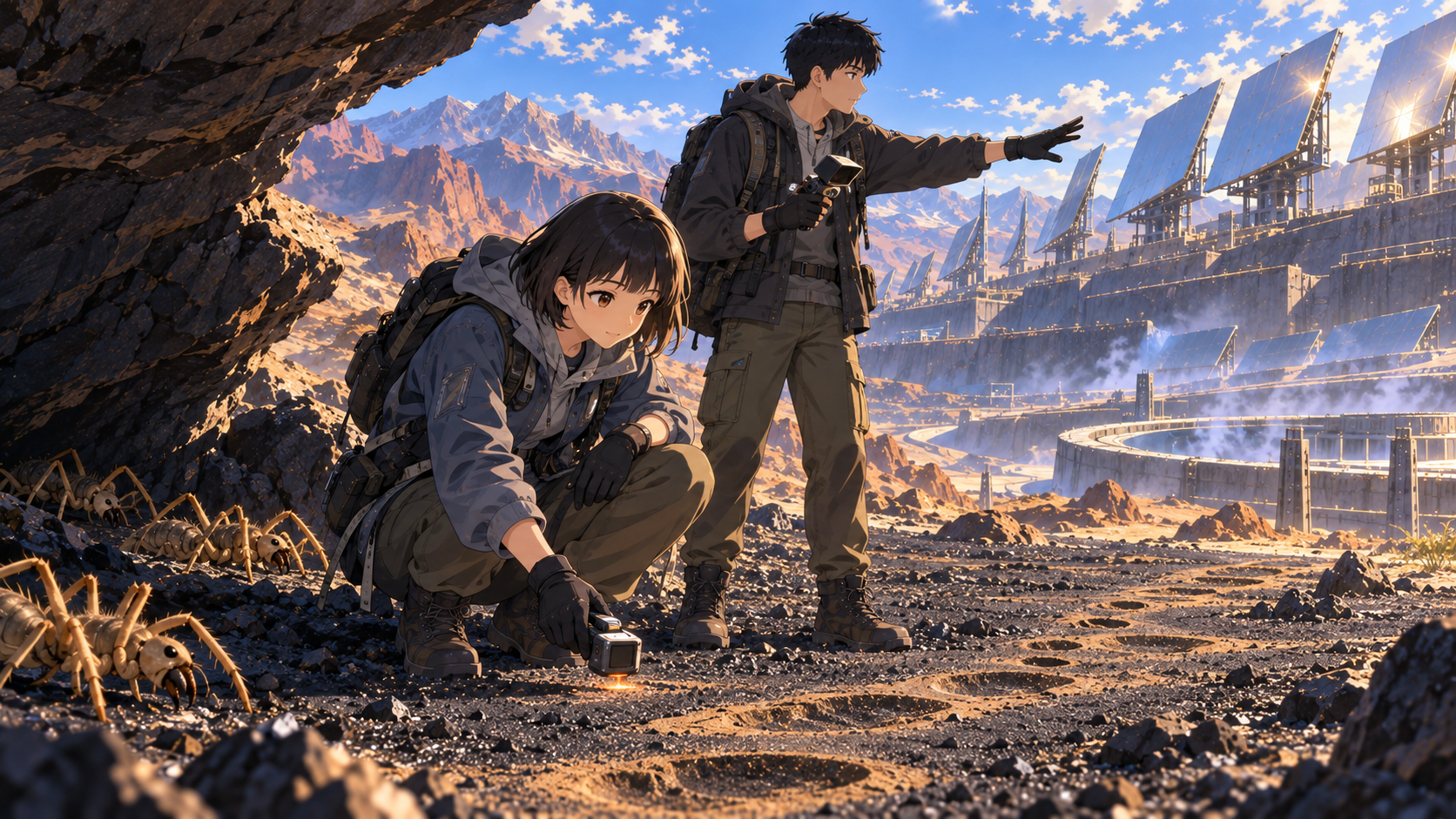
Thin mist from the night-cooled wells still clung to the black-glass gravel when we reached East Mirror-Trace Slope. Fang first saw a line of small ochre forms moving quickly along the edge of a shadow. I shut down active scanning and kept only the passive light meter running. The Lightbreak Solifuges stayed inside complete shade, long pedipalps testing the ground ahead. Then the entire line stopped at once. Forty-one seconds later, a heliostat hotspot swept across the path before them. Our first clue that day was not a footprint, but a line of living things choosing not to go on.
 02
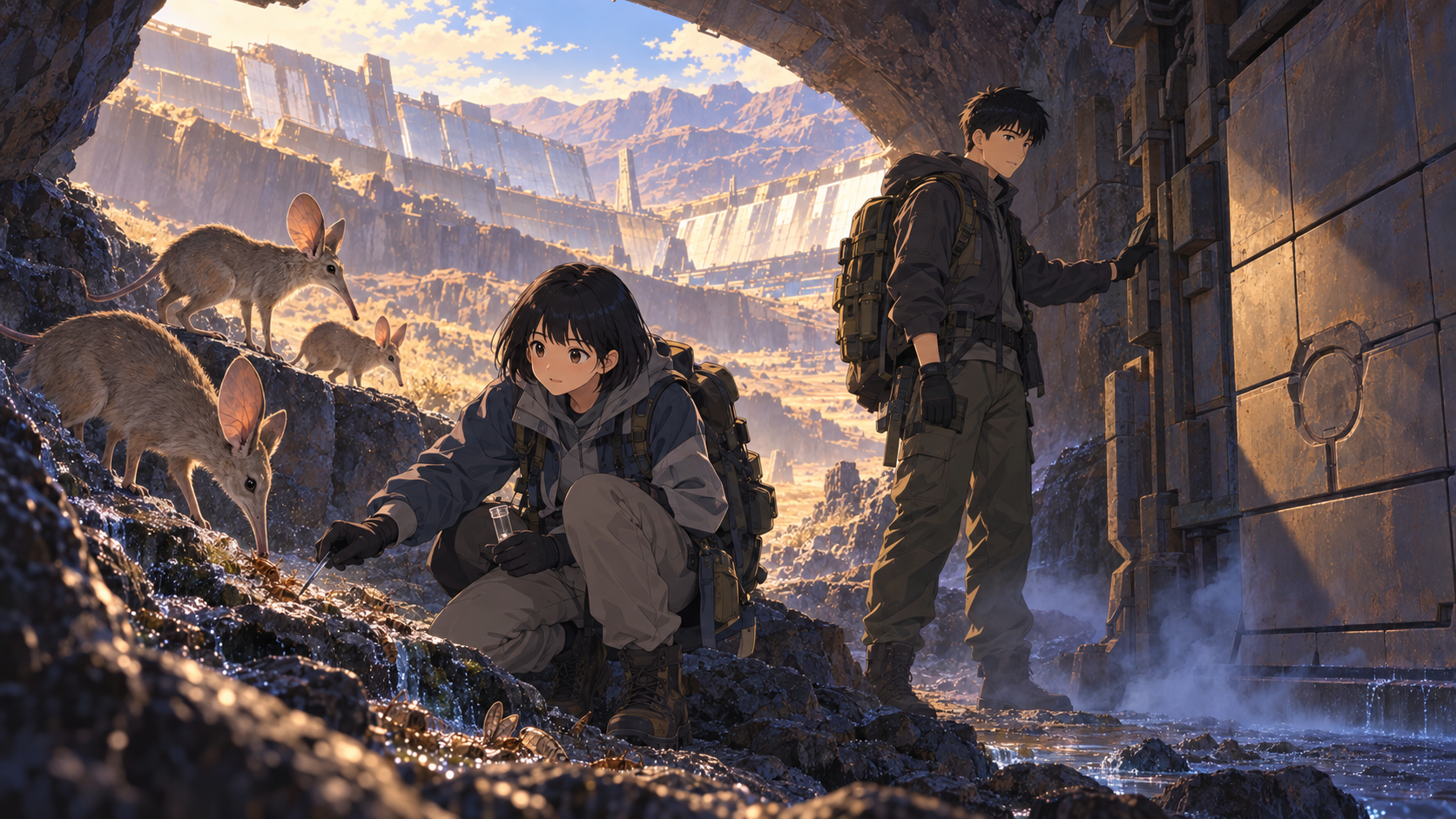
The change at Cool-Fissure Vent appeared first in the elephant shrews. A small family had gathered outside the blocked opening. Broad ears turned toward every broken pulse of cold air; long noses followed, testing the gaps between stones. Fang set her instruments beyond their activity line. I shut down anything active and looked for the human-made obstruction. We did not need to make the animals move. Their attention had already drawn the map.
 03
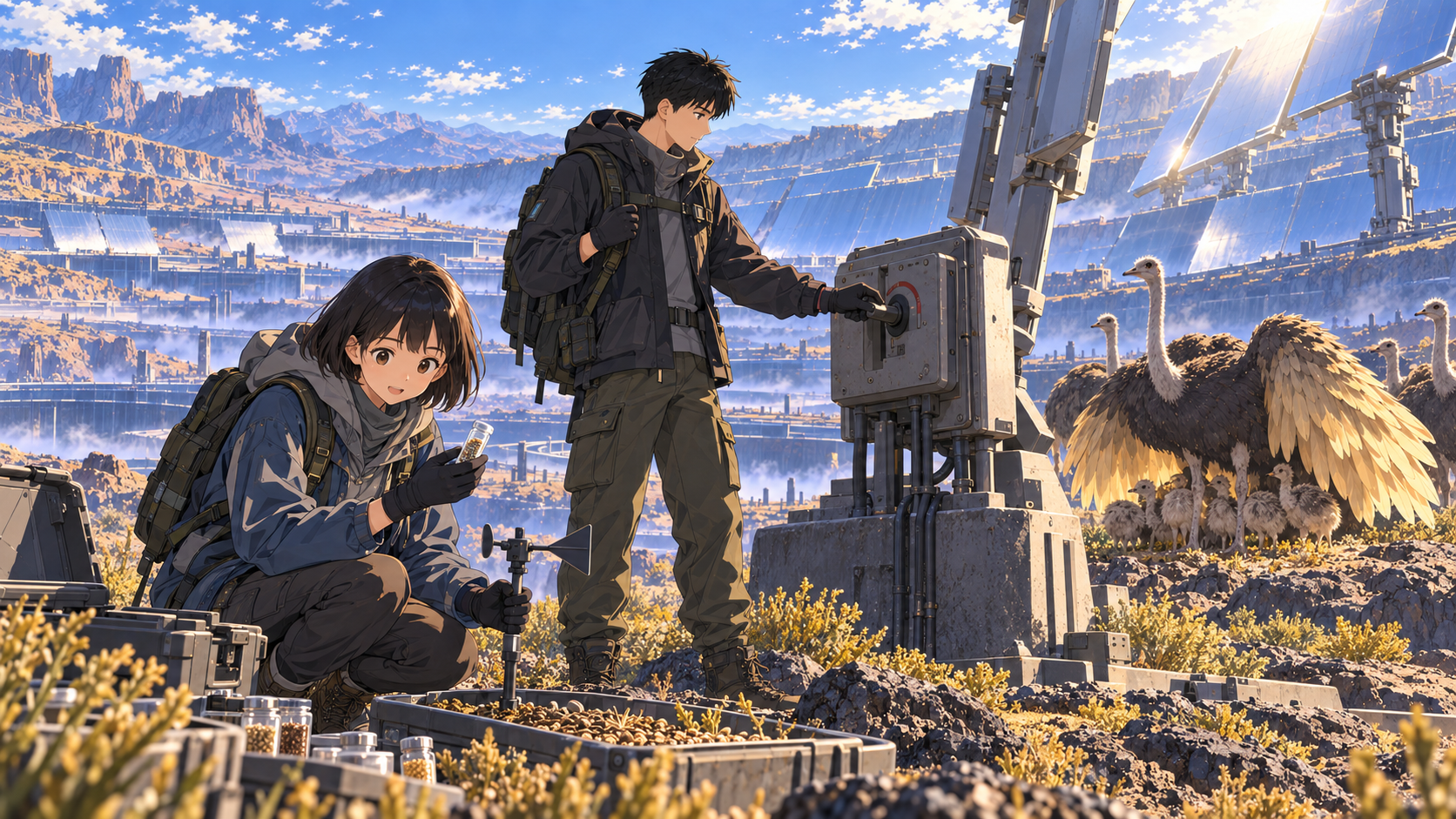
The flock read the change at Wind-Curtain Ostrich Valley before the mirror field raised an alarm. Six adults closed into a half arc and took turns opening their layered wings. Gray-down chicks and the seed slope disappeared inside the shade. Fang measured the temperature difference from beyond their activity line. I shut down active scanning and recorded the hot spot's turn. The birds did not charge or flee. They were calculating where the next safe shadow would fall.
 04
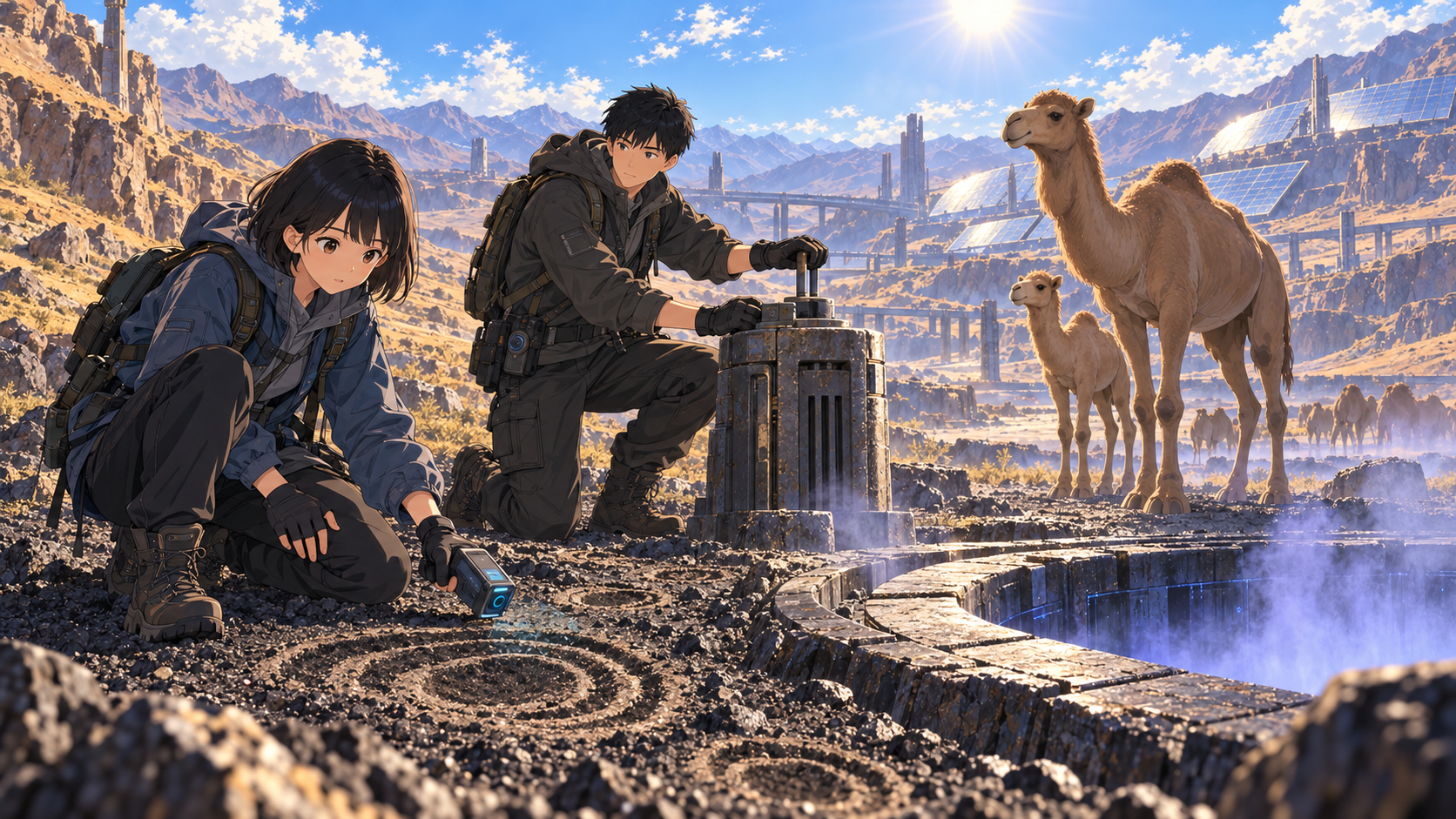
There was no usable city navigation at Route-Memory Camel Marker. The weathered signs had lost half their outlines, but three generations of camels still stopped between them in matrilineal order. The lead female lowered the resonance sac beneath her throat. A short call ran across the black-glass slope. A calf repeated it several steps later. Fang checked the mist from beyond their activity line. I shut active positioning down. The herd was not lost. It was a map that was still alive.
 05
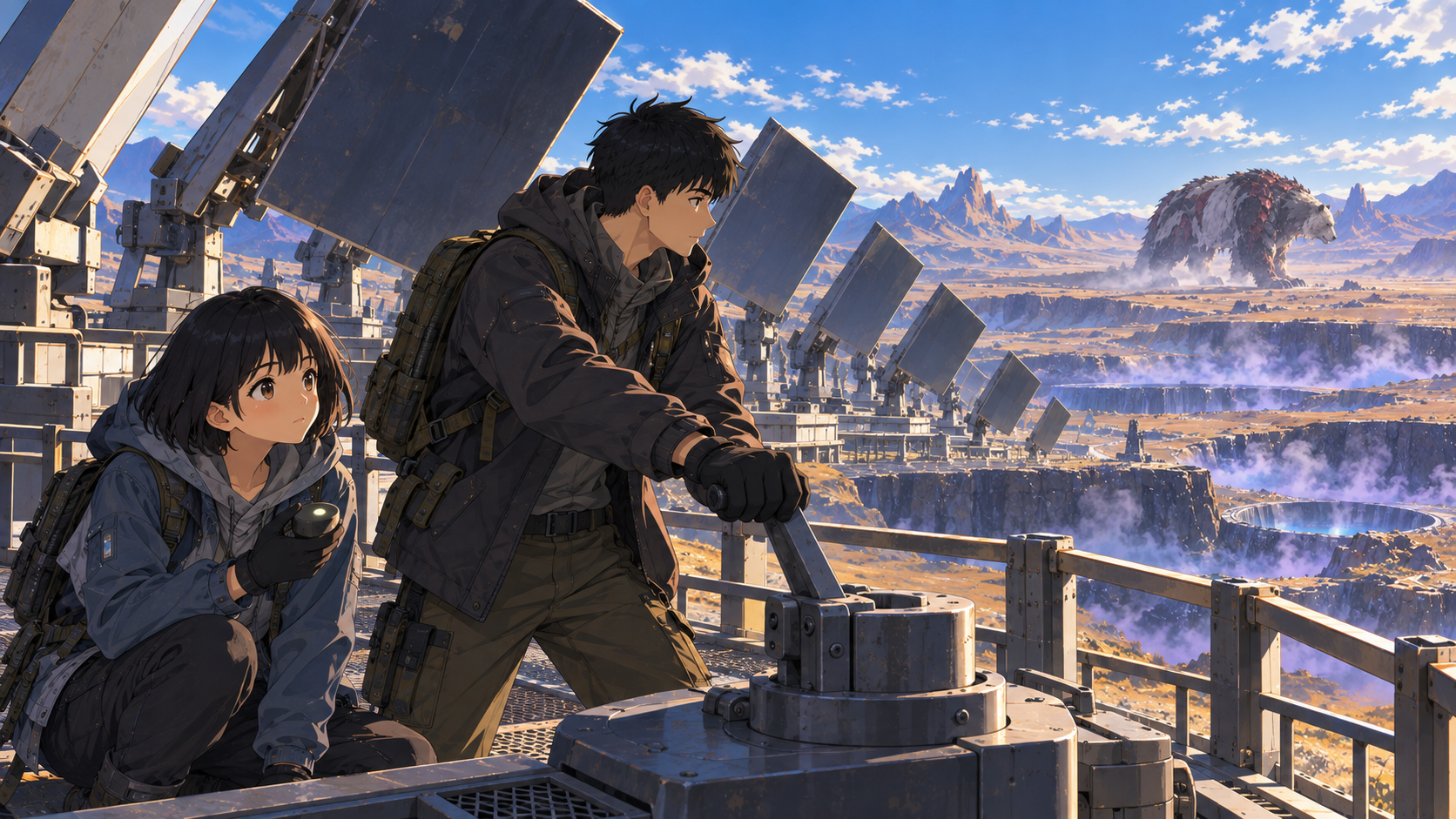
The obsidian ground at Heat-Veil Bear Boundary held two trails moving in opposite directions. Large foothill herbivores had turned away along the cold-well edge. The seventeen-meter bear had followed their scent on the descending night air. Its heavy muzzle stayed pointed into the wind. Overheated shoulder plates drove each step hard enough to split the mirror-black surface. Fang measured the heat veil from the safety line. I shut active scanning down and recorded the fractures. We could not approach. We did not need to. The ground had already told us how dangerous the distance was.
 01
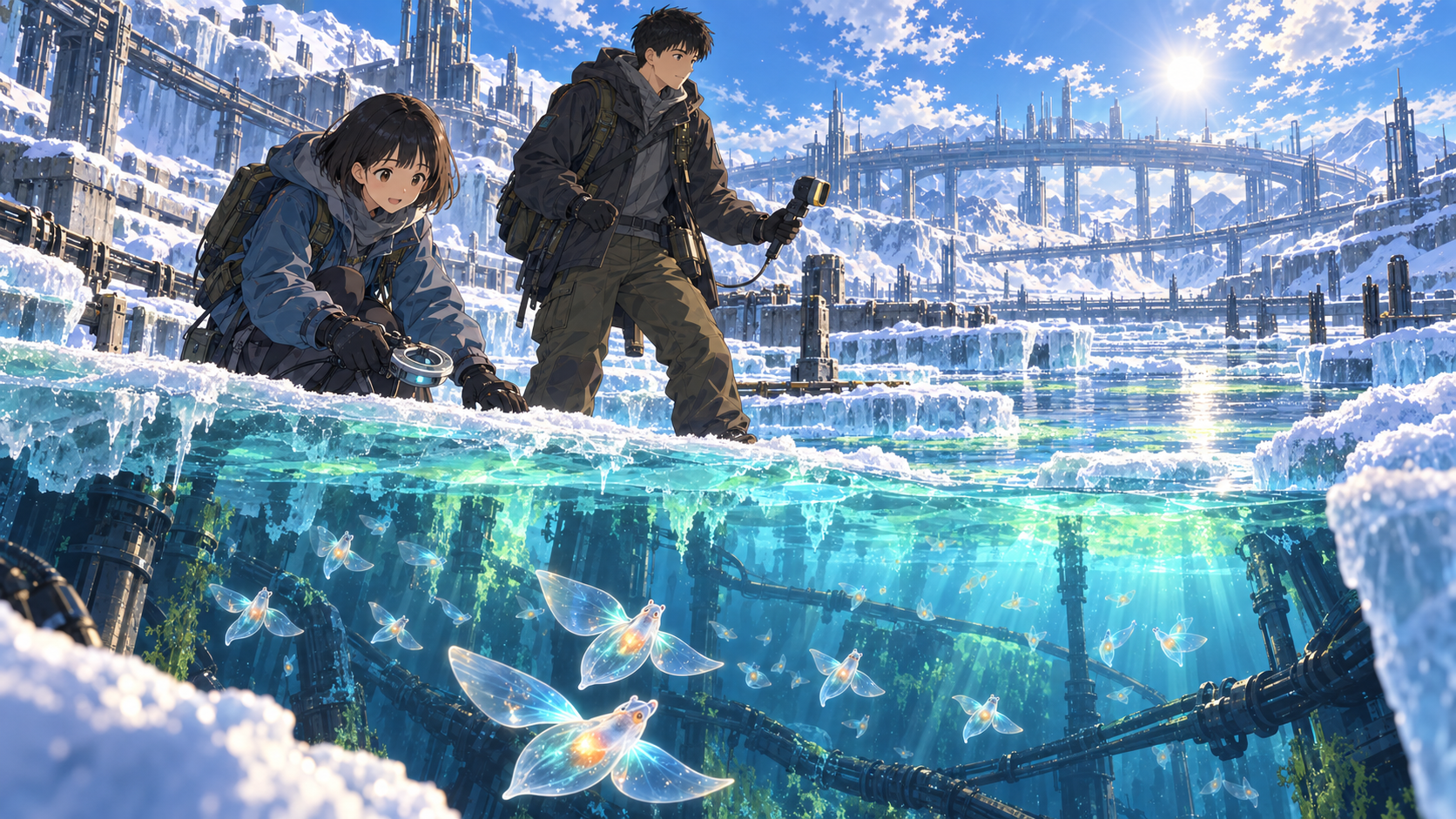
At Frostlamp Under-Ice Window, I shut down active scanning first. Below us, the sea butterflies folded their broad wing feet together and sank. The de-icing pulse had not arrived yet. Their line showed where it would cross. Fang kept her noninvasive BCI and sampler at a safe distance. I stood on the windward side with my weapon secured low.
 02
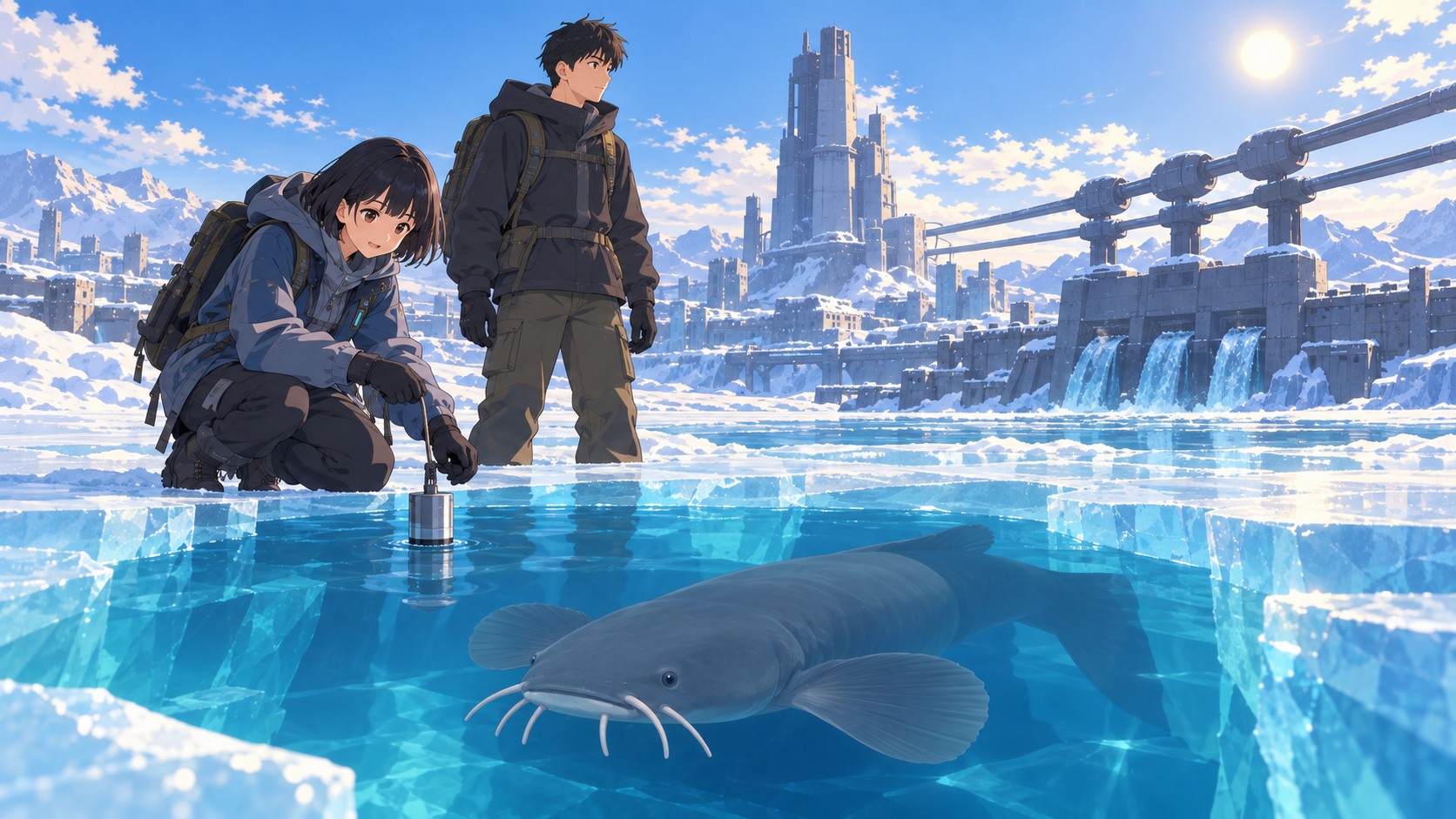
I shut down active scanning at Warm-Fissure Cable Well. Old city roofs lay beneath blue ice, but the de-icer had warmed the water beside the sunken cable too quickly. A slate-gray catfish approached a joint. Its six short ceramic barbels spread slightly, then it turned toward a natural warm fissure. It did not bolt. It kept feeding along the same brine line.
 03
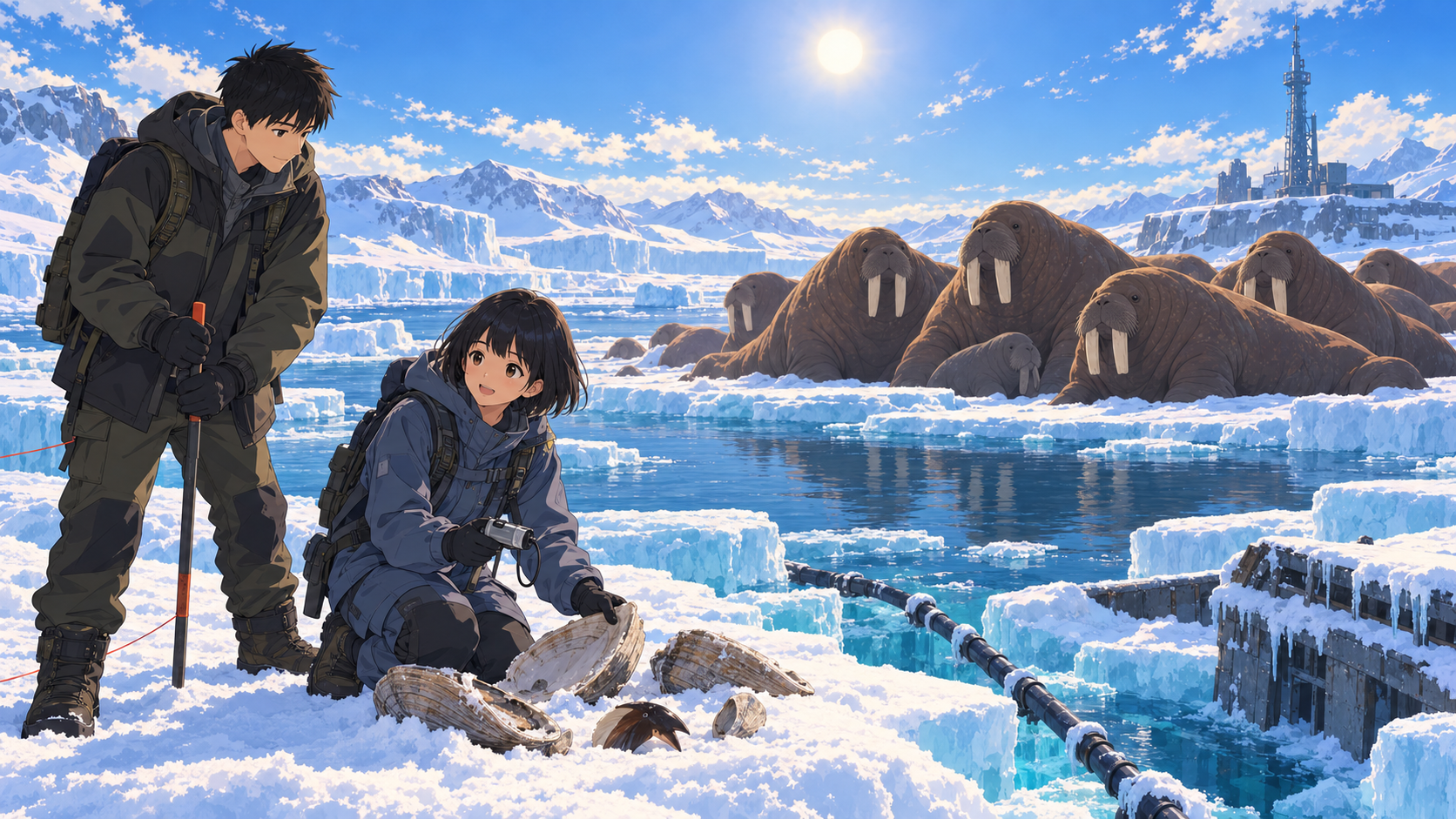
A skin of frost had sealed Hammer-Tusk Breathing Hole again before dawn. Blue light flickered below the sunken cable; the distant signal tower split the wind in two. We stopped on hard ice upwind and shut down active scanning. Across the opening, a gray-brown adult drove its broad, flat tusks through the new ice. Three matrilineal families held their short-tusked calves inside a ring. They did not move toward us, but their bodies closed the path over thin ice.
 04
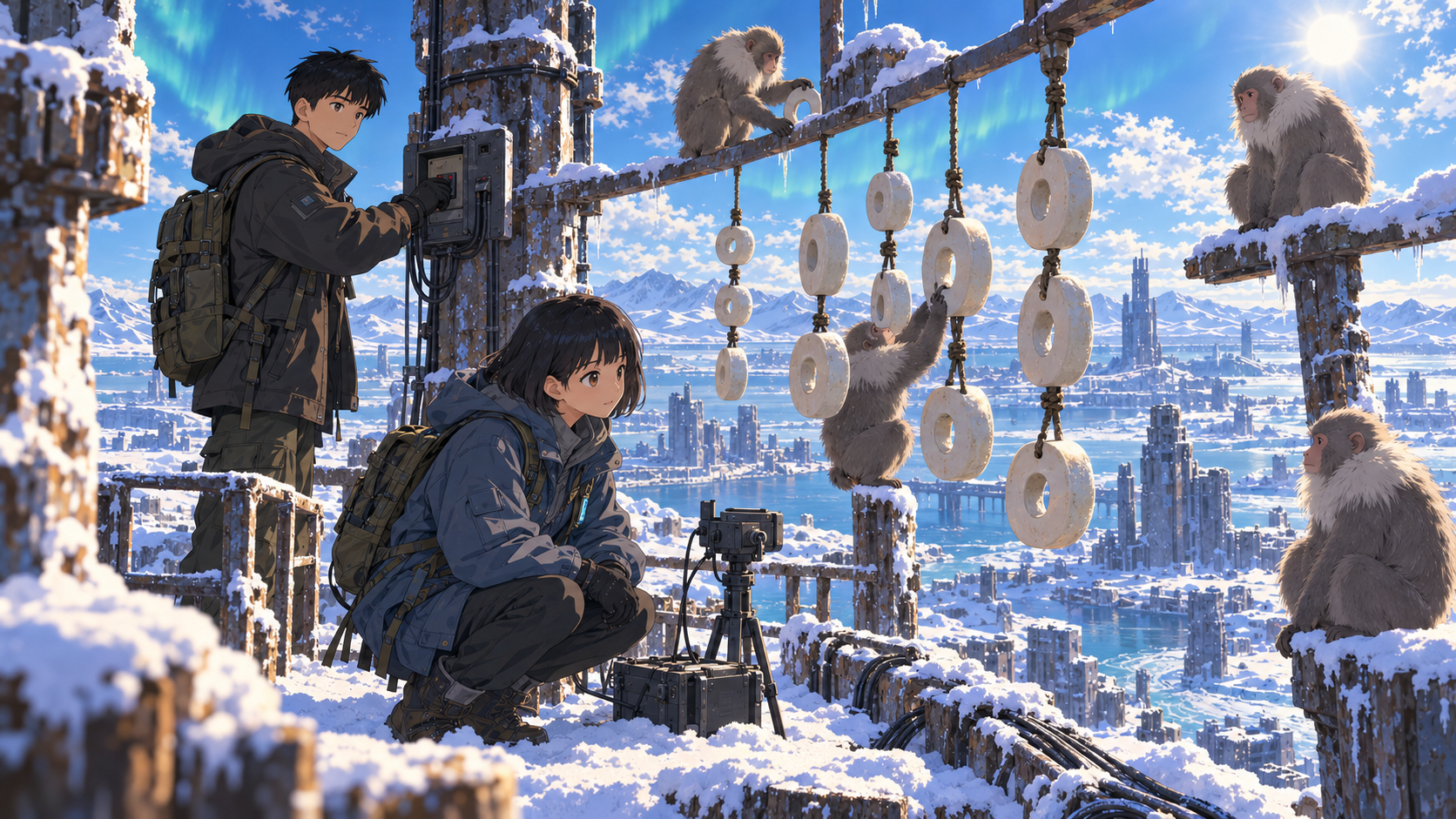
We followed the air route the walruses had reopened up to Tower-Ring Old-City Ridge. Wind cut hard edges into the snow on the half-buried roofs. I shut off active scanning first; another pulse would have buried the sounds here. Twelve snow macaques moved between two low towers. A gray adult raised a fallen ceramic insulator ring in its broad hands. Its hollow white shoulder mane lifted in the wind, and its short tail stayed close to its side. Three kinds of ring tone came to us in turn as the wind changed. The young copied them only beside safe crossbars.
 05
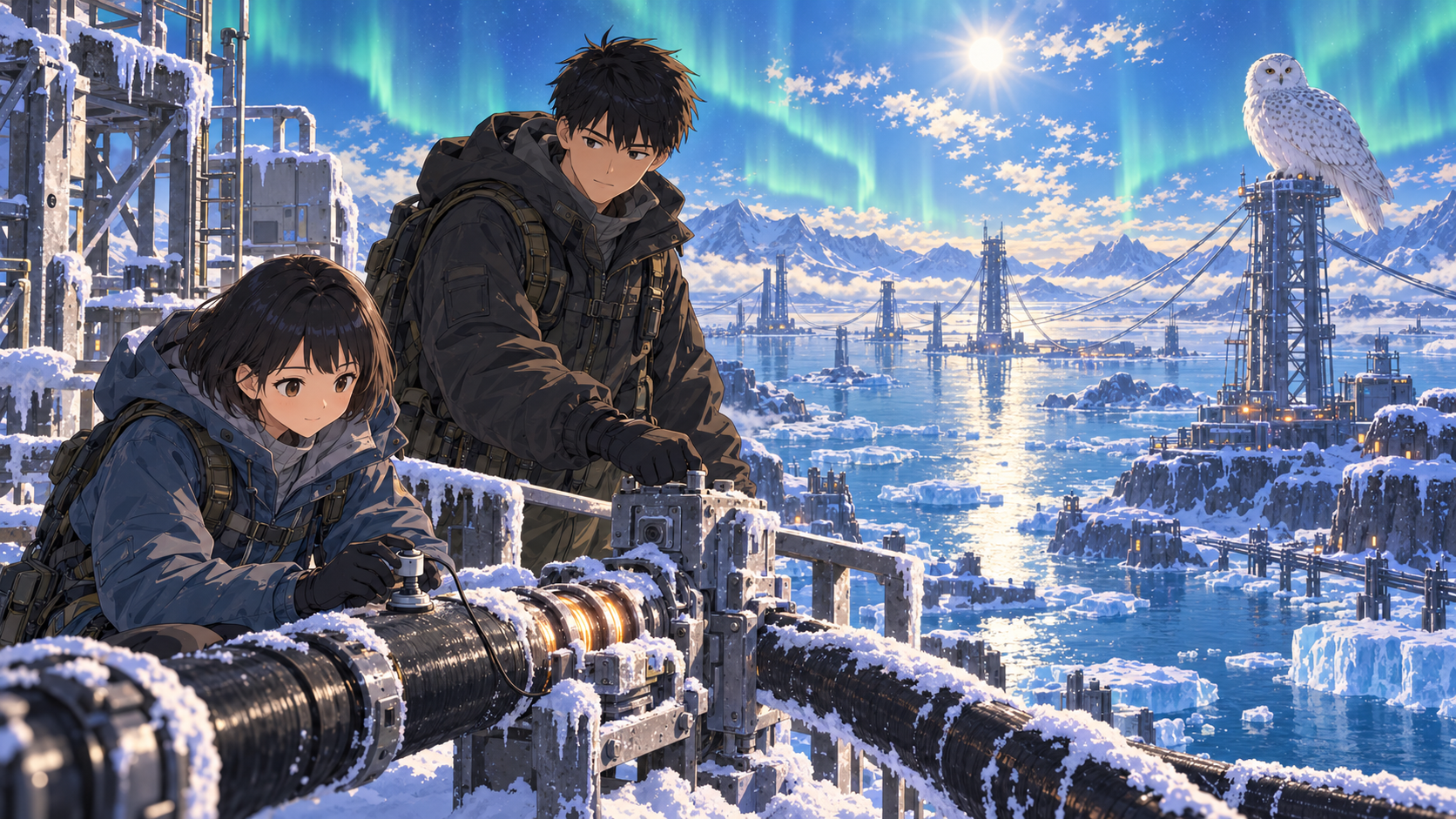
At Silent-Pressure Owl Boundary I switched off active scanning. I heard a snow cornice loosen before I saw the Silent-Pressure Snowy Owl on the highest rescue tower. Her wings, twelve meters from tip to tip, were folded, but her round facial disk kept turning toward the mistimed main cable. Soft-edged feathers made almost no sound. Downwash had lifted the snow below her. That was enough to tell us to go no farther.
 01
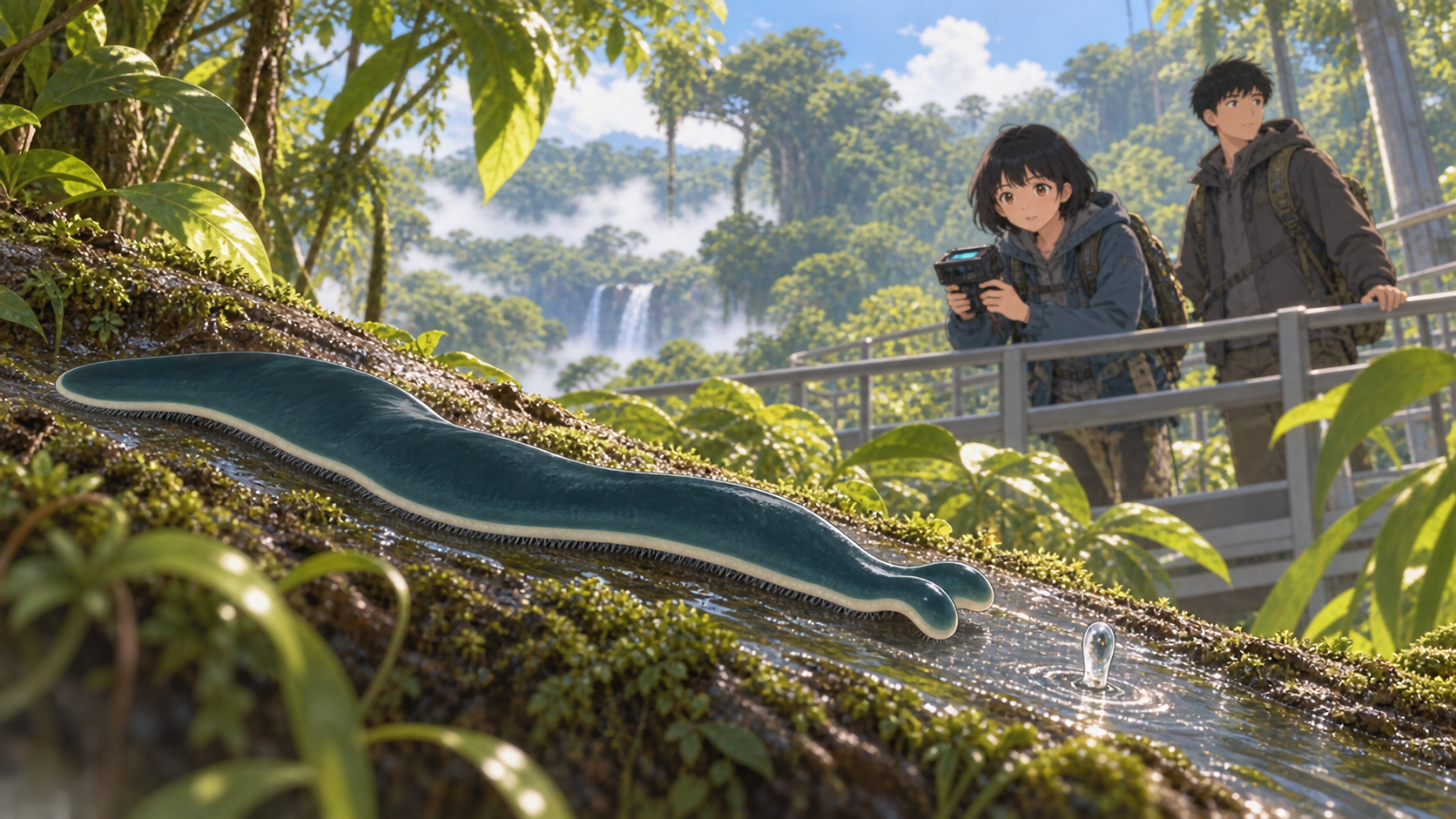
At Rain-Vein Branch Channel I stopped active tracking. A Rain-Vein Ribbon Flatworm turned against the film on a wet branch while mist droplets drifted upward. The two movements pointed in different directions. The first watercourse changed by pumping was under our feet, not in the warning light above us.
 02
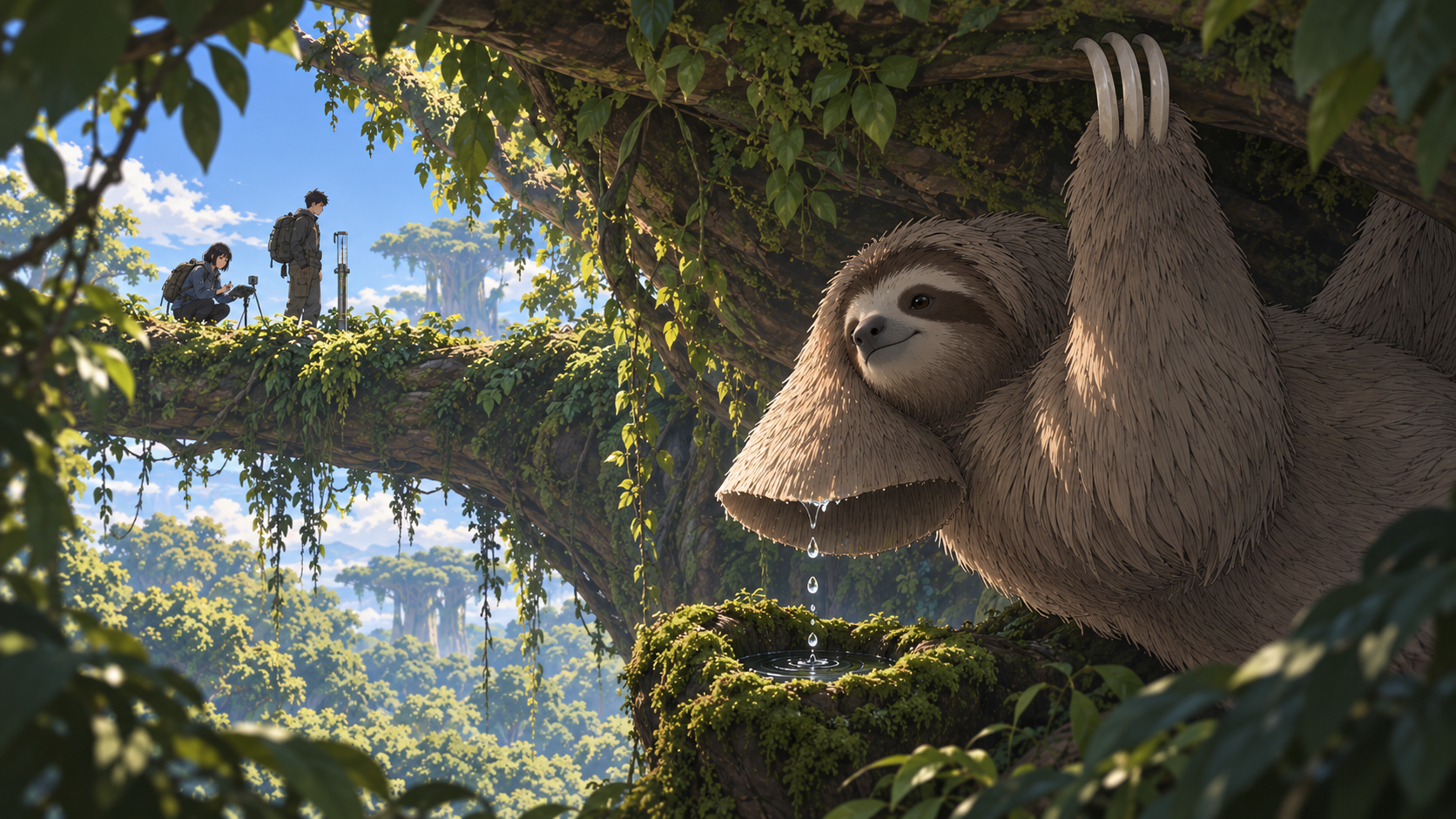
I stopped active tracking at Bell-Crown Shaded Branch. The Bell-Crowned Canopy Sloth held to its branch. Water gathered in the hollow guard hairs at its shoulders and fell to the moss one drop at a time. The branch below was dry. I needed to read the water path before changing a pump.
 03
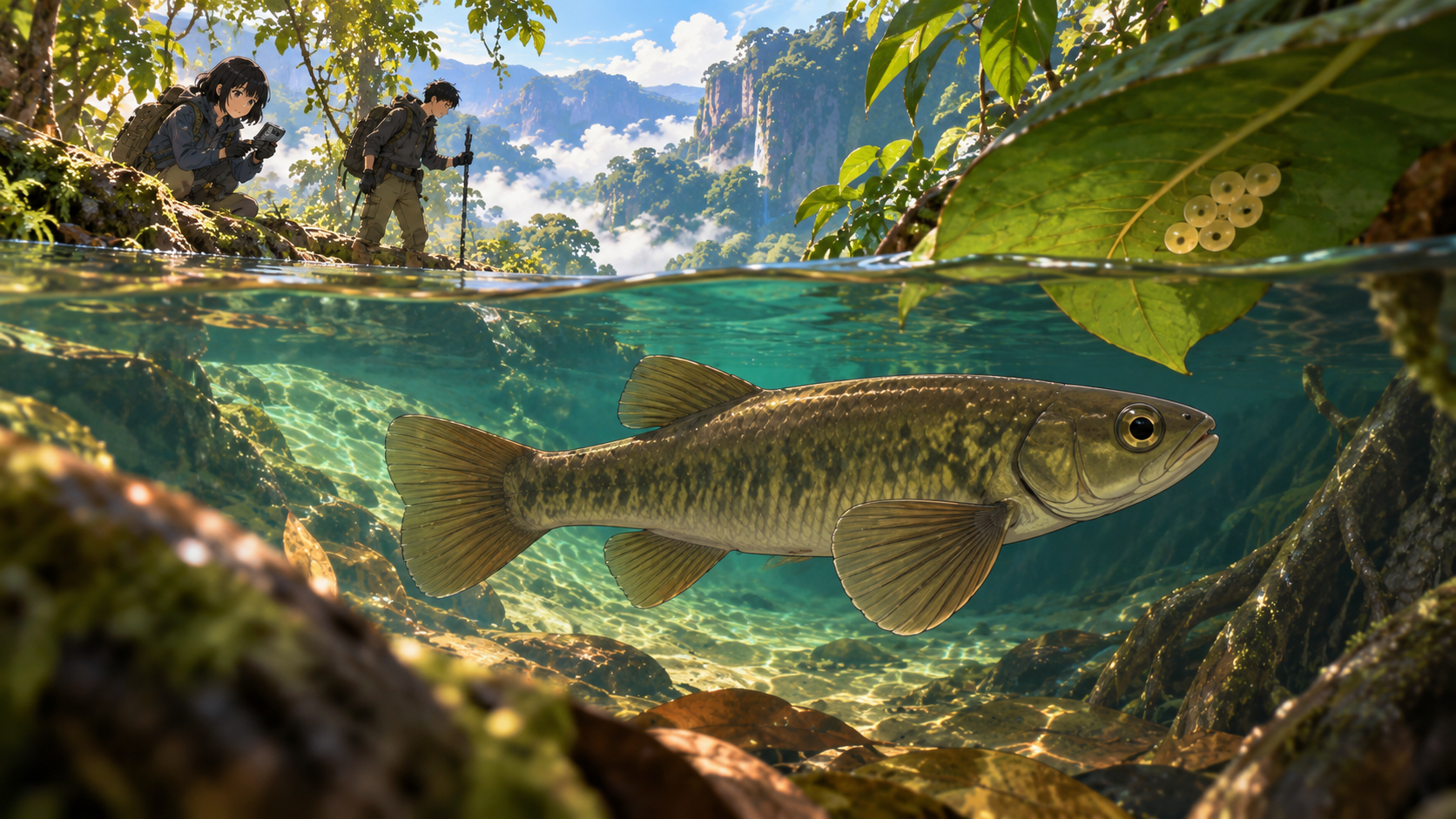
At Fold-Fin Tree Pool I stopped active tracking. A Fold-Fin Canopy Killifish folded its fins, tried twice to reach the next pool, and stopped at a dry branch channel. Its eggs clung beneath a leaf. The waterline had fallen below them. We had cut the route it knew.
 04
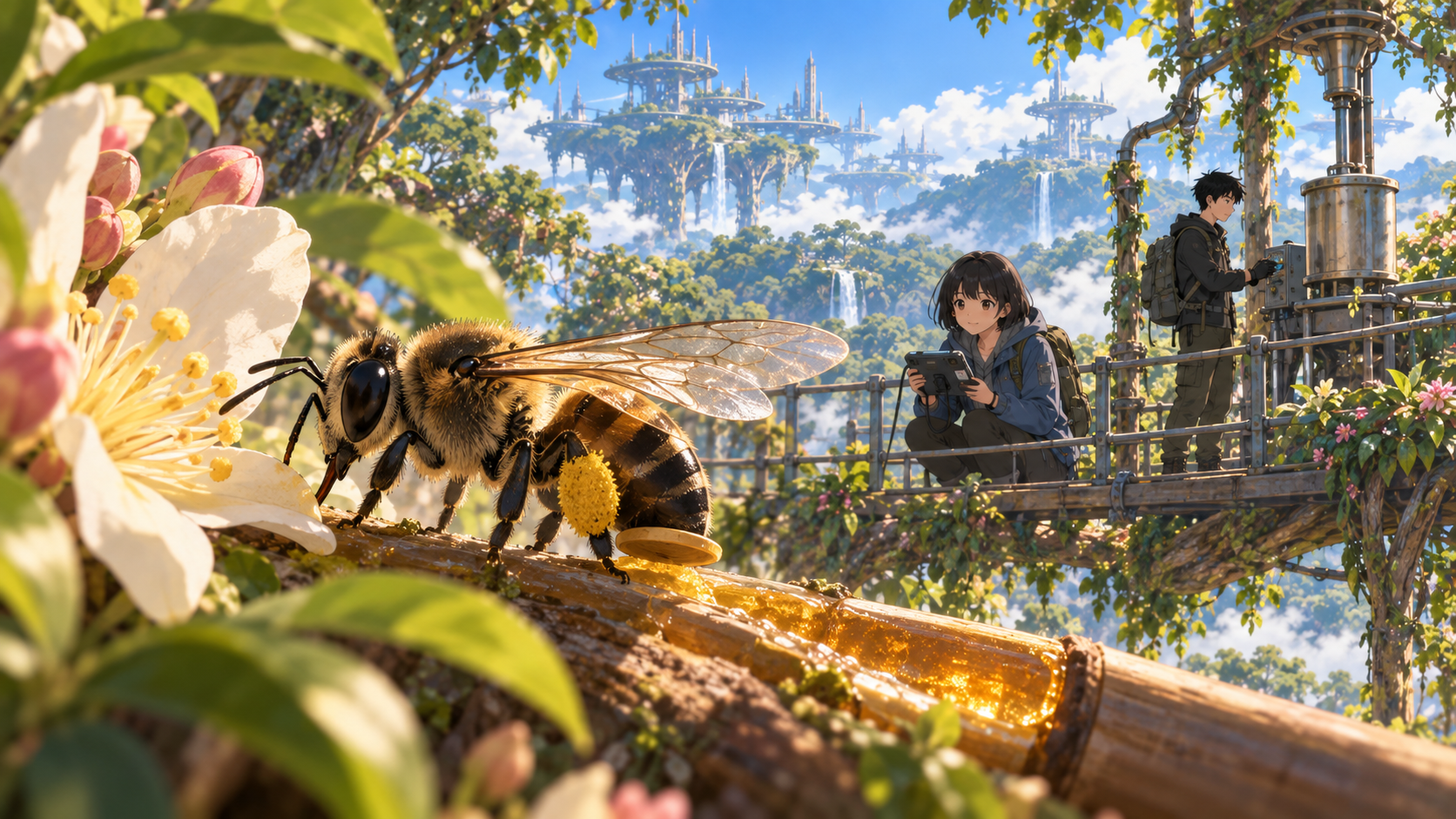
The tree bridge was still above the clouds. Flowers led toward the seed bank, with resin tubes hanging between white and pink blooms. A worker carried pollen past Fang. When the distant test pump started, the third beat stopped returning from the next tree. I marked the pump and wind from the bridge. We did not follow the bee.
 05
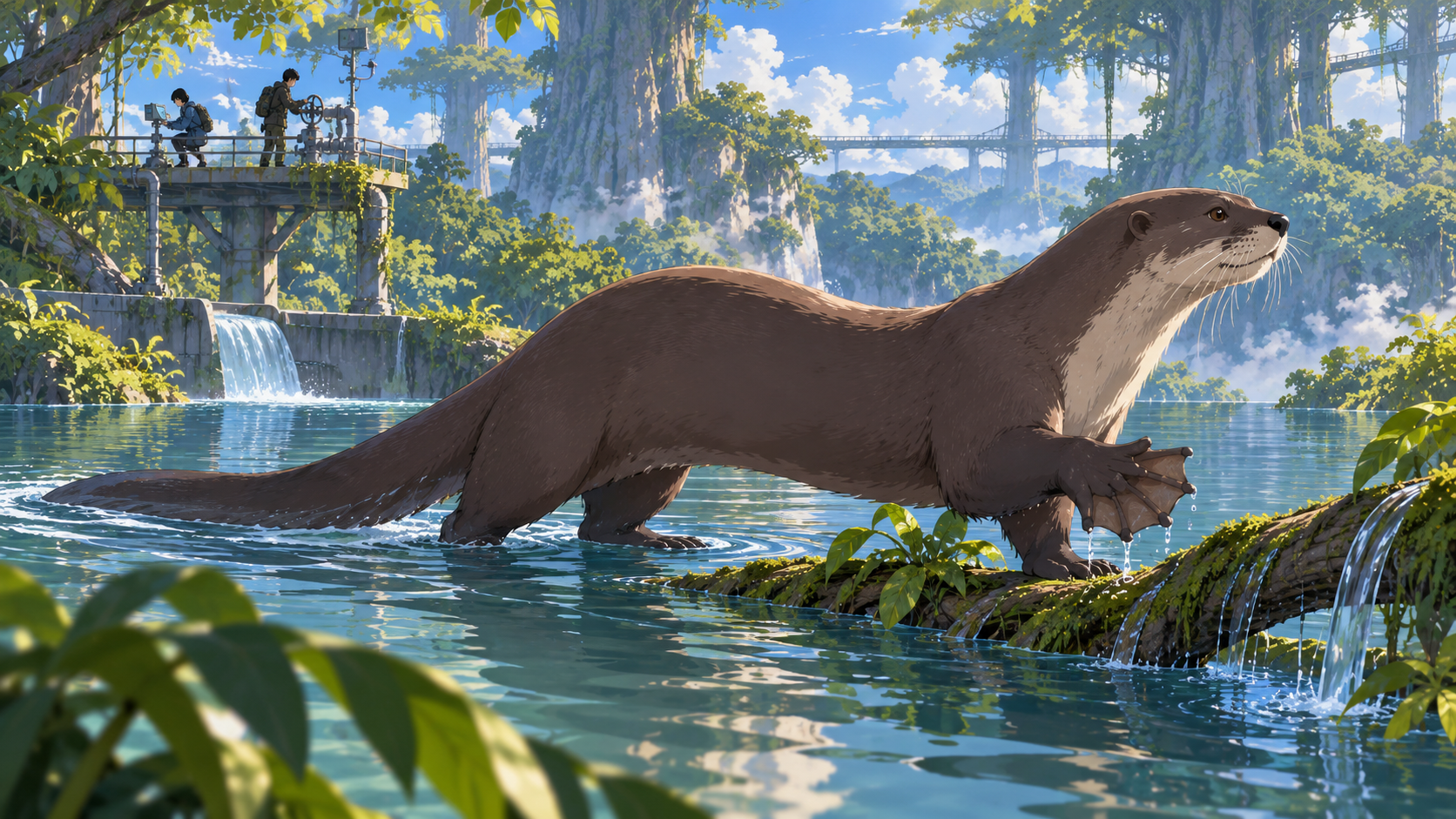
The wet branch gave us the first answer: a few fish scales and one waterbird feather beside the raised water. Before I saw the inner reservoir, I saw overflow below the station cable. Fang tied a red boundary marker to the bridge. We could watch from here. We could not step farther.
 01
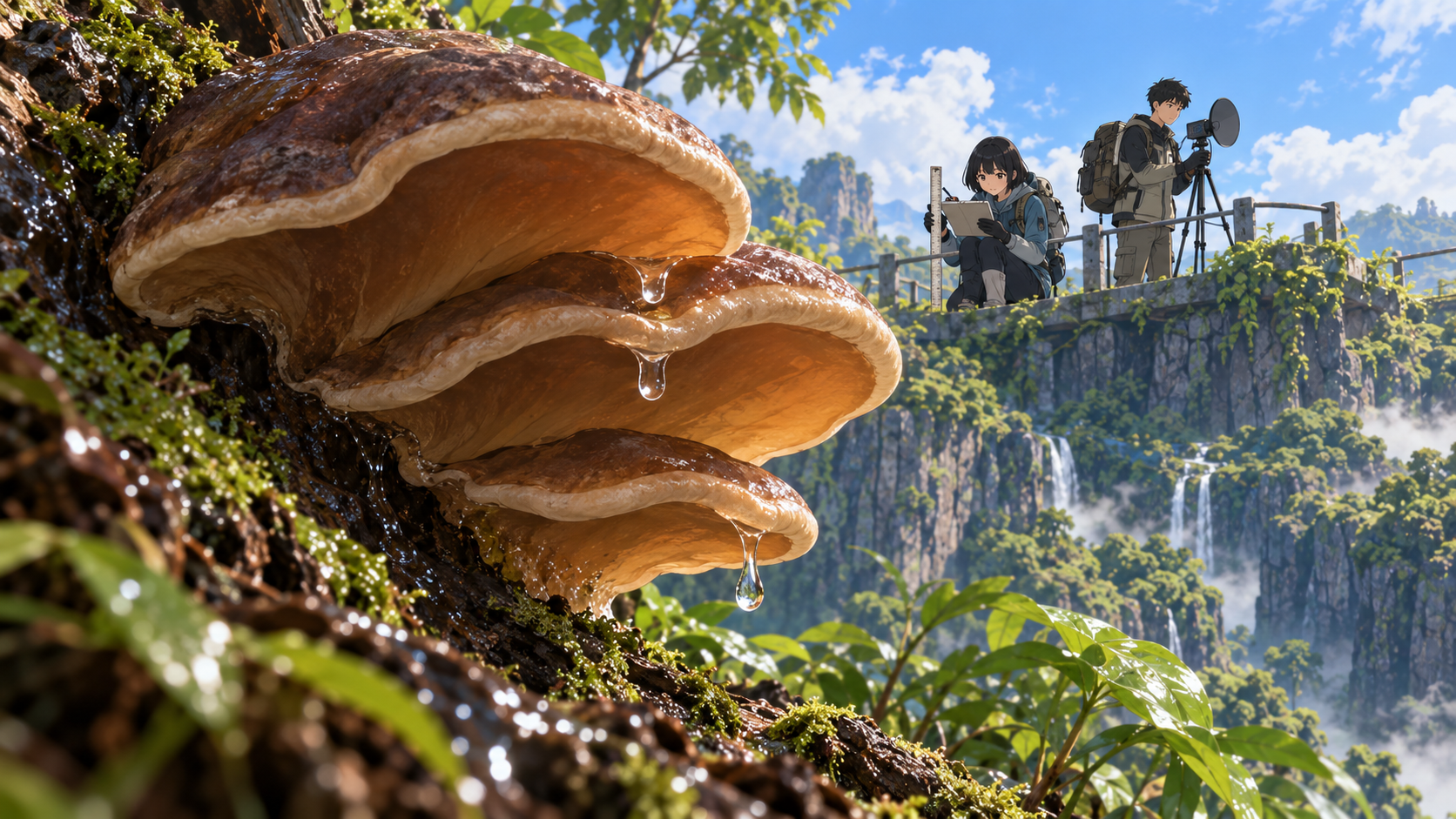
Morning light made the water marks on the mossy basalt easy to see, but the old buoy alarm still came half a beat late. I first blamed a wet sensor. Fang pointed to a small ear-shaped fungus on the decaying wood.
 02
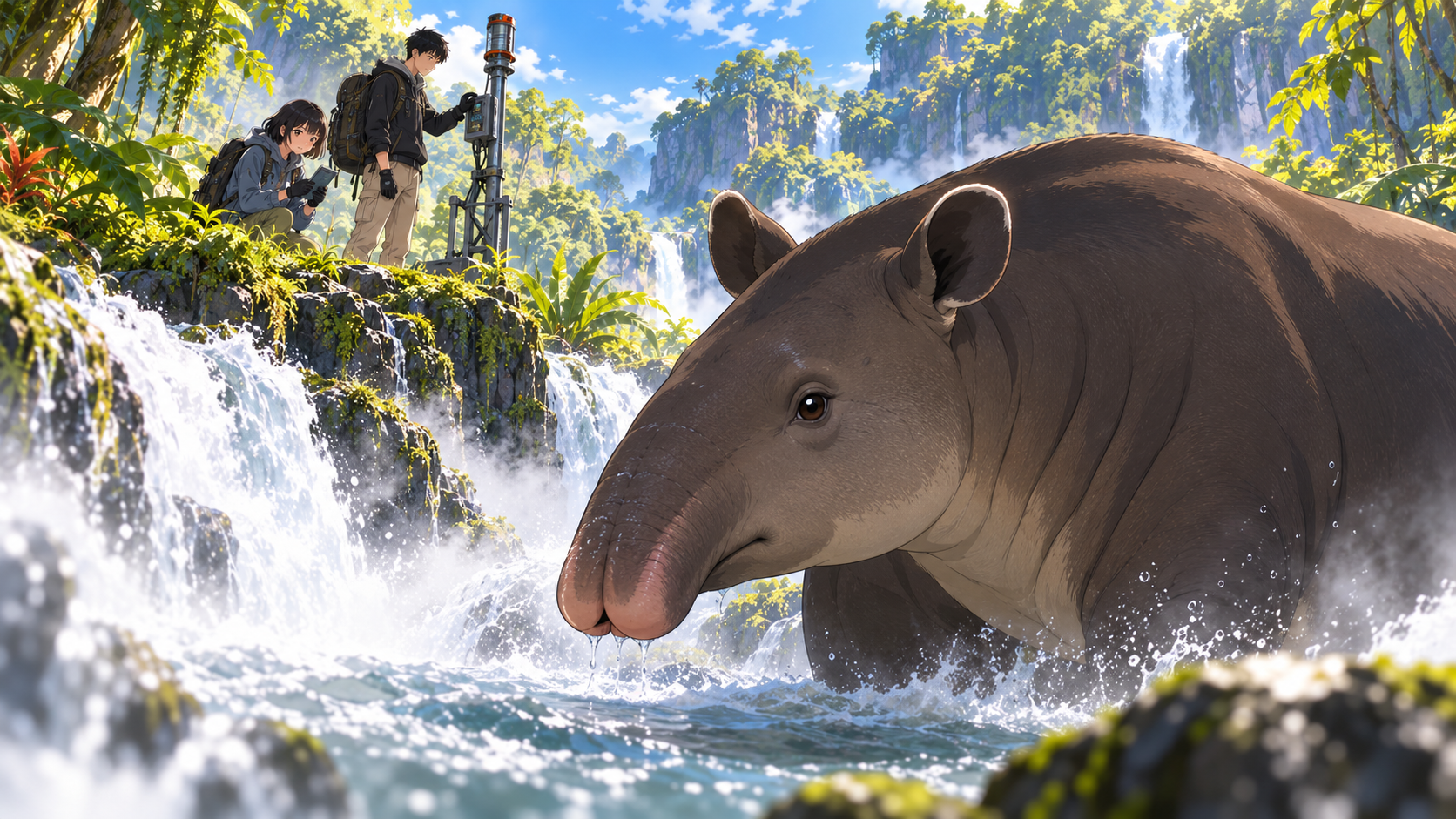
Fang and I recorded this from the safe line above the fallen-fruit slope. The seed trail broke off. One tapir closed the two valves at the end of its short snout before the mist pressure shifted, then stopped on the upper corridor. We waited where we were.
 03
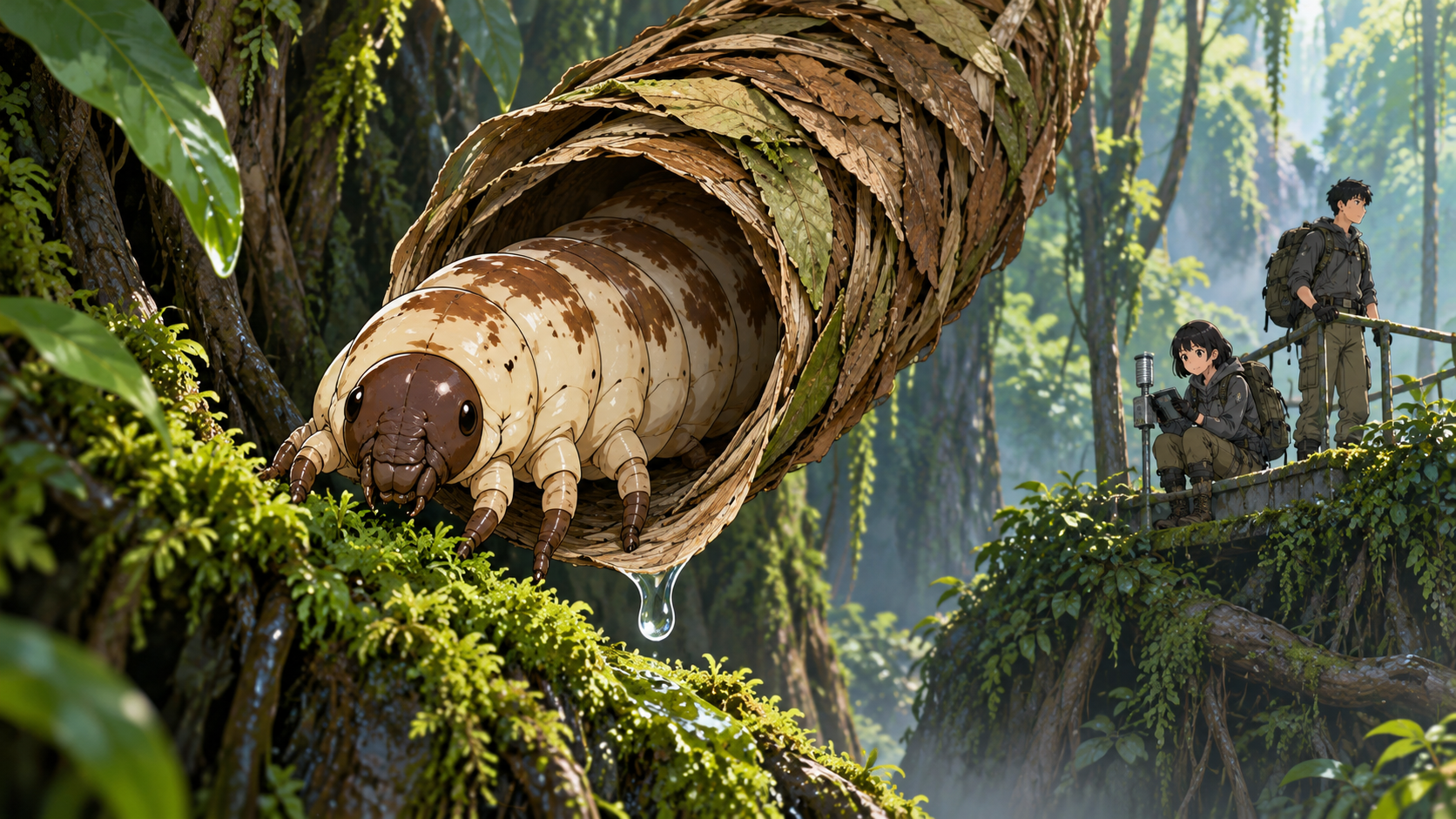
Fang and I looked down from the dry root bridge. Drops that should have followed the hanging roots were turning toward the side wall beside a narrow case. I kept the way back in sight.
 04
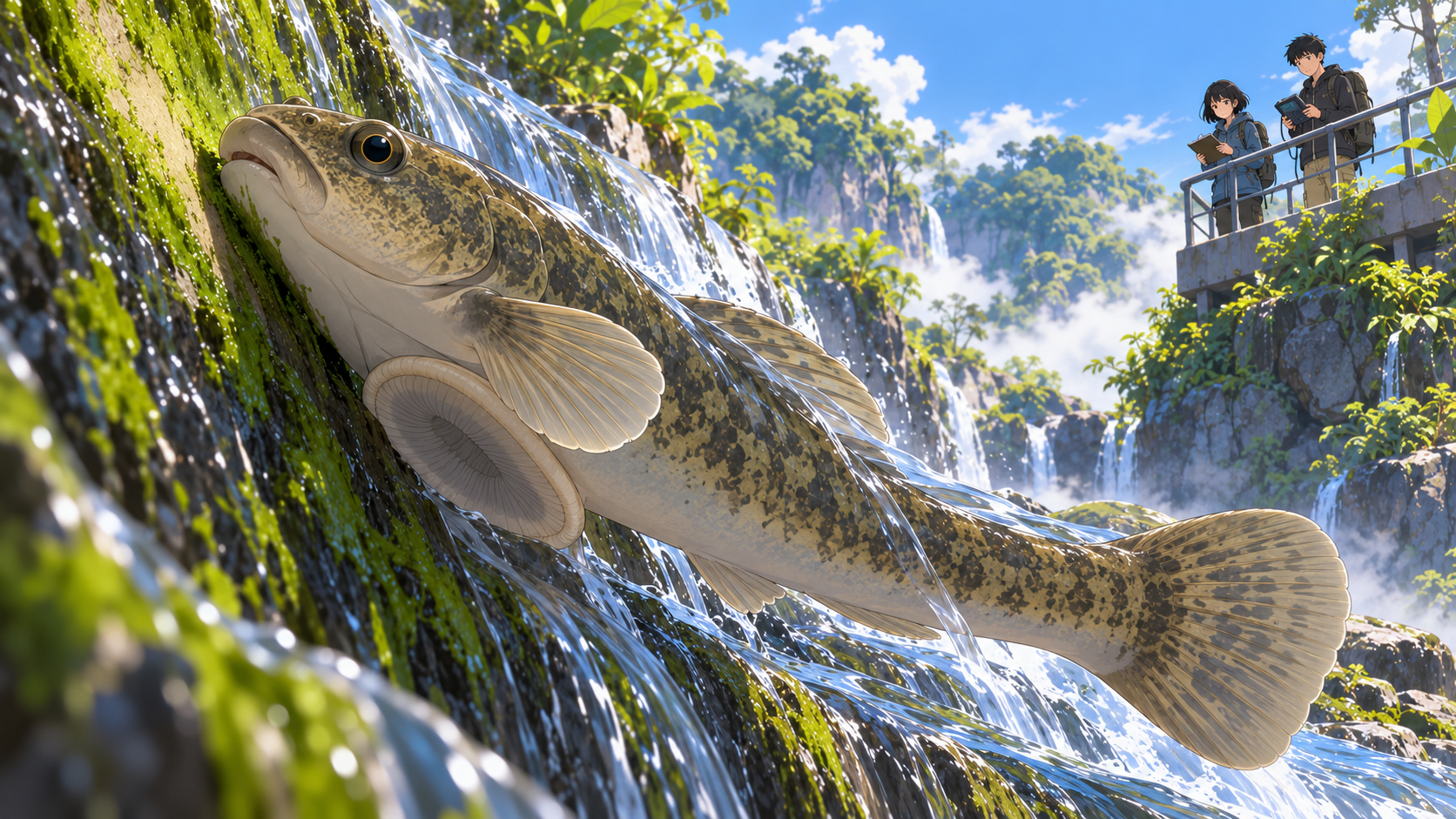
Fang and I looked down from the dry outer terrace. Several algae scrapes stopped at the same height, and a single goby held to wet rock below them. That shared line was a waterline, not a boundary set by the fish.
 05
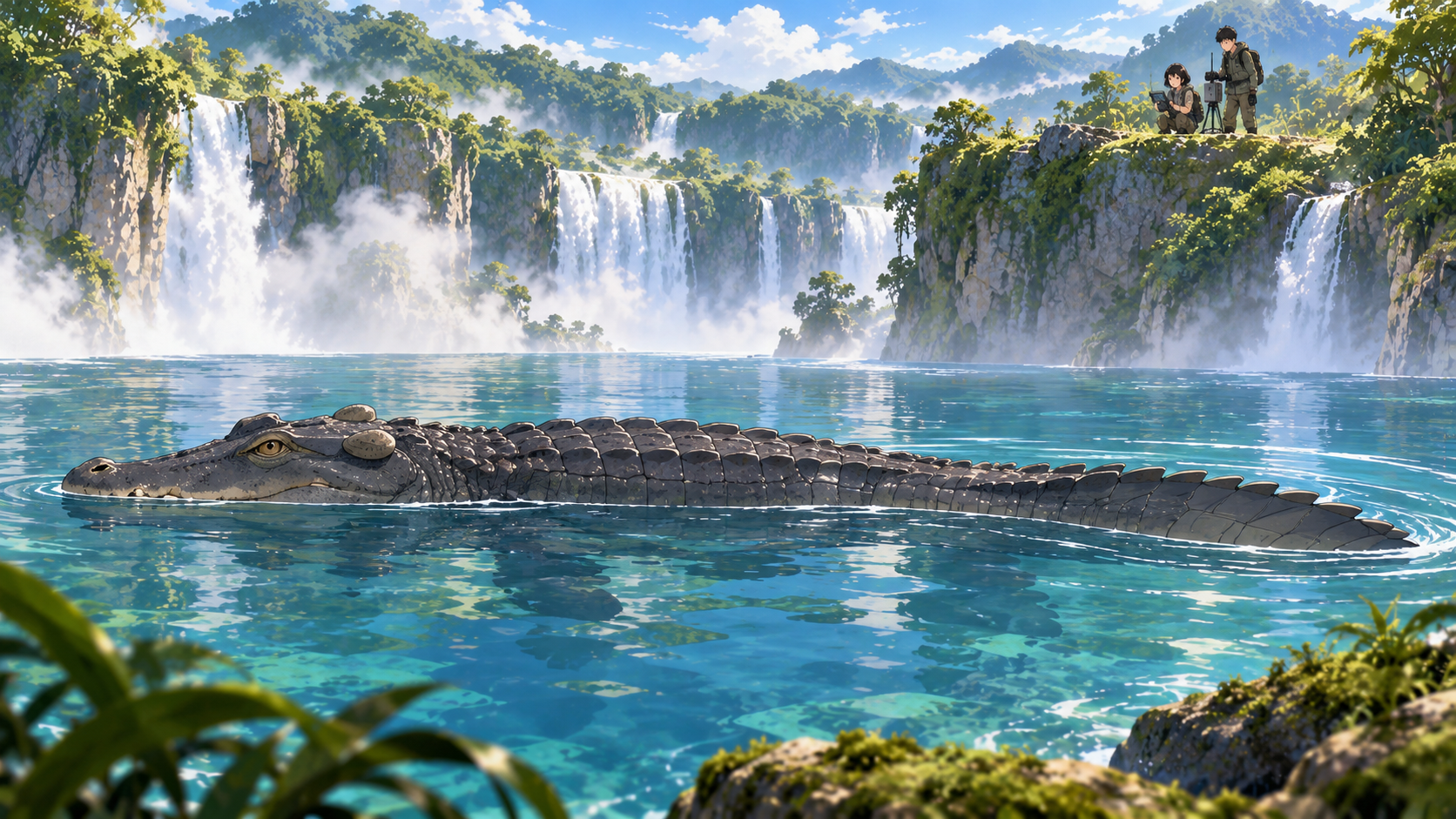
Fang and I stayed above the Outer Catch-Pool Exclusion Line. Fish scales, tufts of hair, and a low slide mark led toward the water. Far across the pool, a pair of crests briefly broke the surface. We did not go closer.
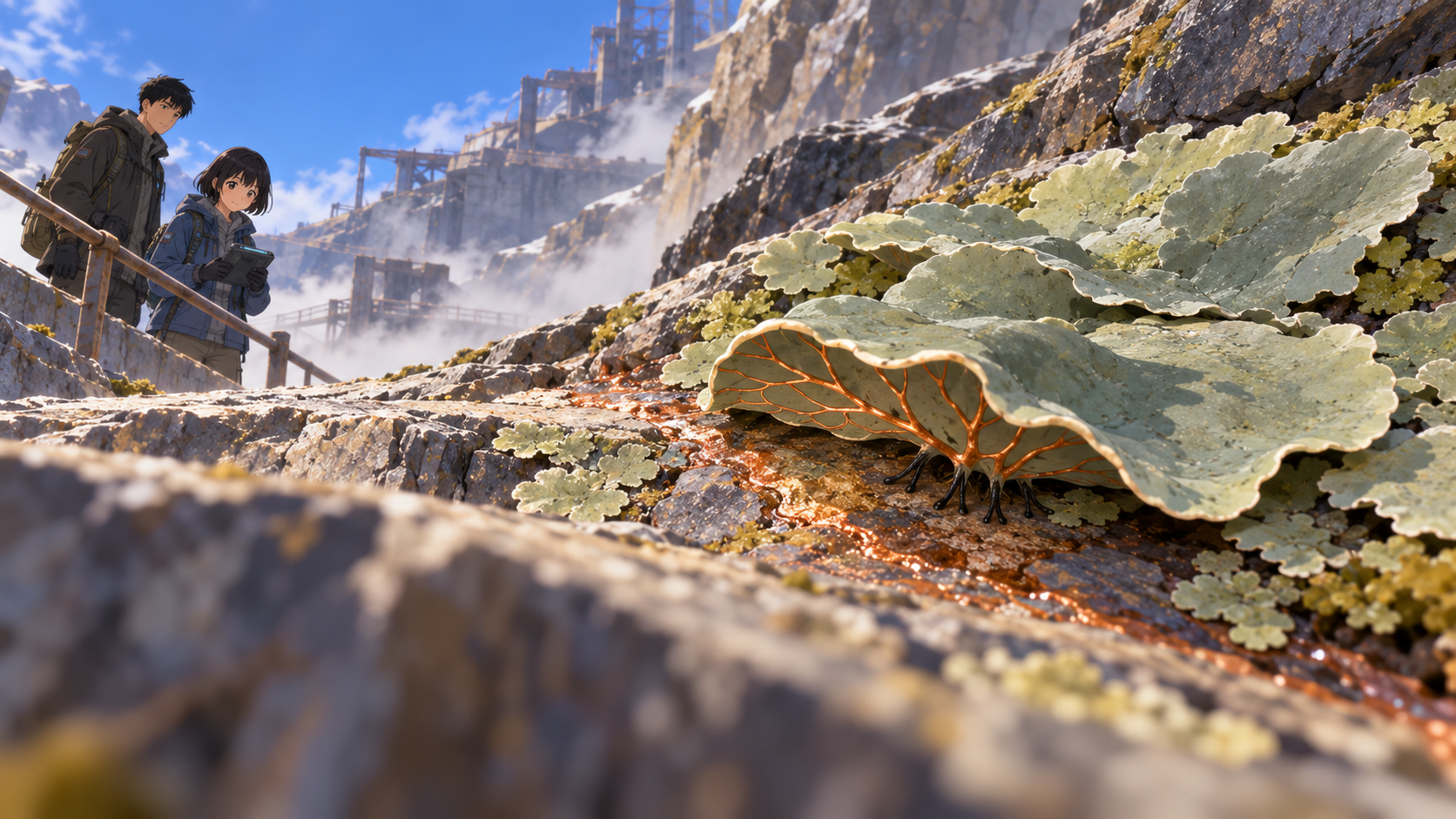 01
Cold fog hid most of the old cableway support. The new copper band on the stone did not align with the old one. Fang stopped outside the safety rail. I marked the upper path around the lichen before we took another reading.
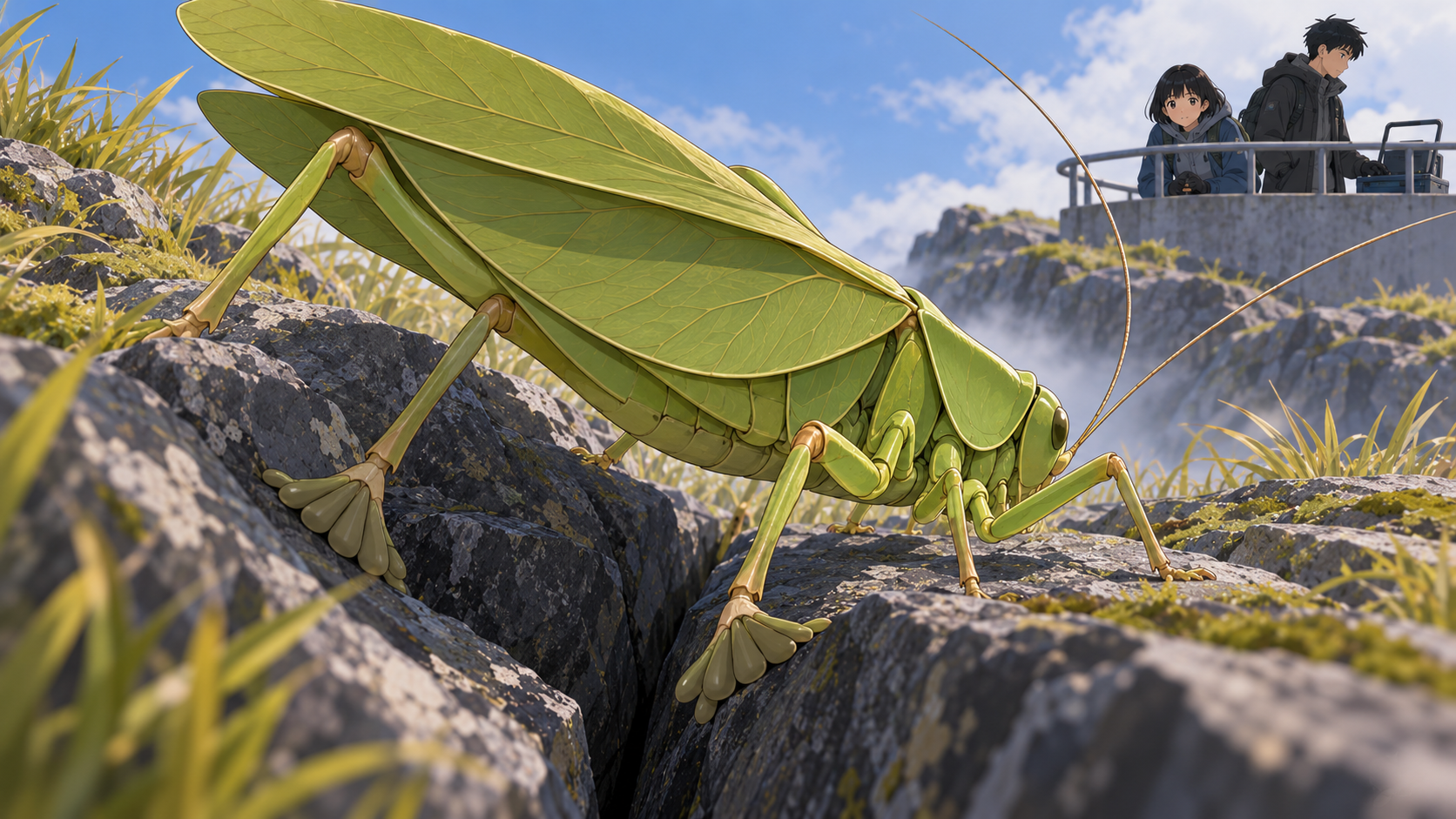 02
Cold fog reduced the old cableway support to one outline. A line of grazed grass ended beneath it. Fang followed the gap; I took the higher path to check the wind. A lone katydid showed its broad hind foot between the leaves.
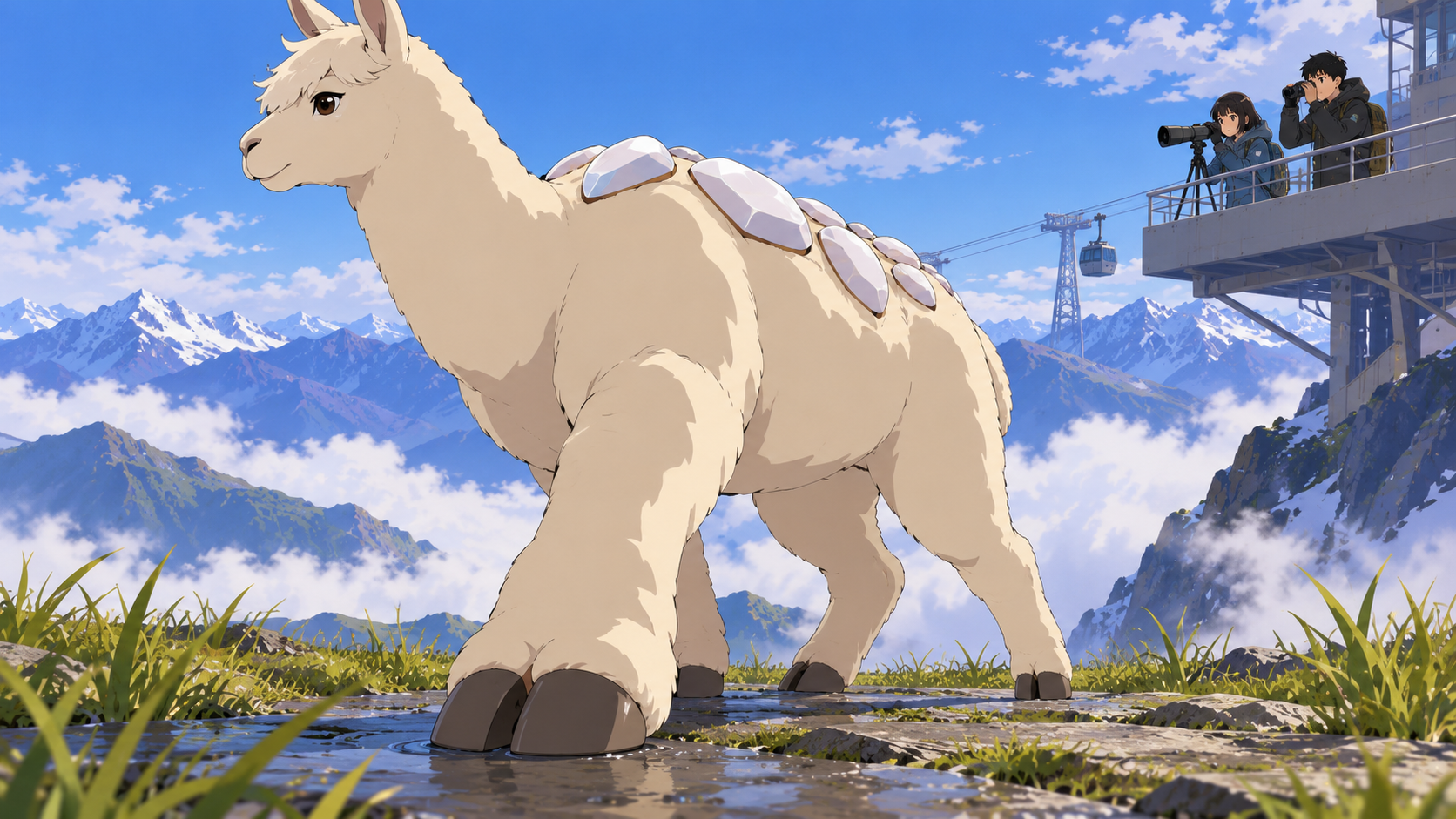 03
Cold fog left only part of the old cableway support in view. Hoofprints broke off beside the mining line, with grass seeds among them. Fang crouched over the marks; I checked cable vibration from behind the safety rail. A low-backed alpaca emerged without coming toward us.
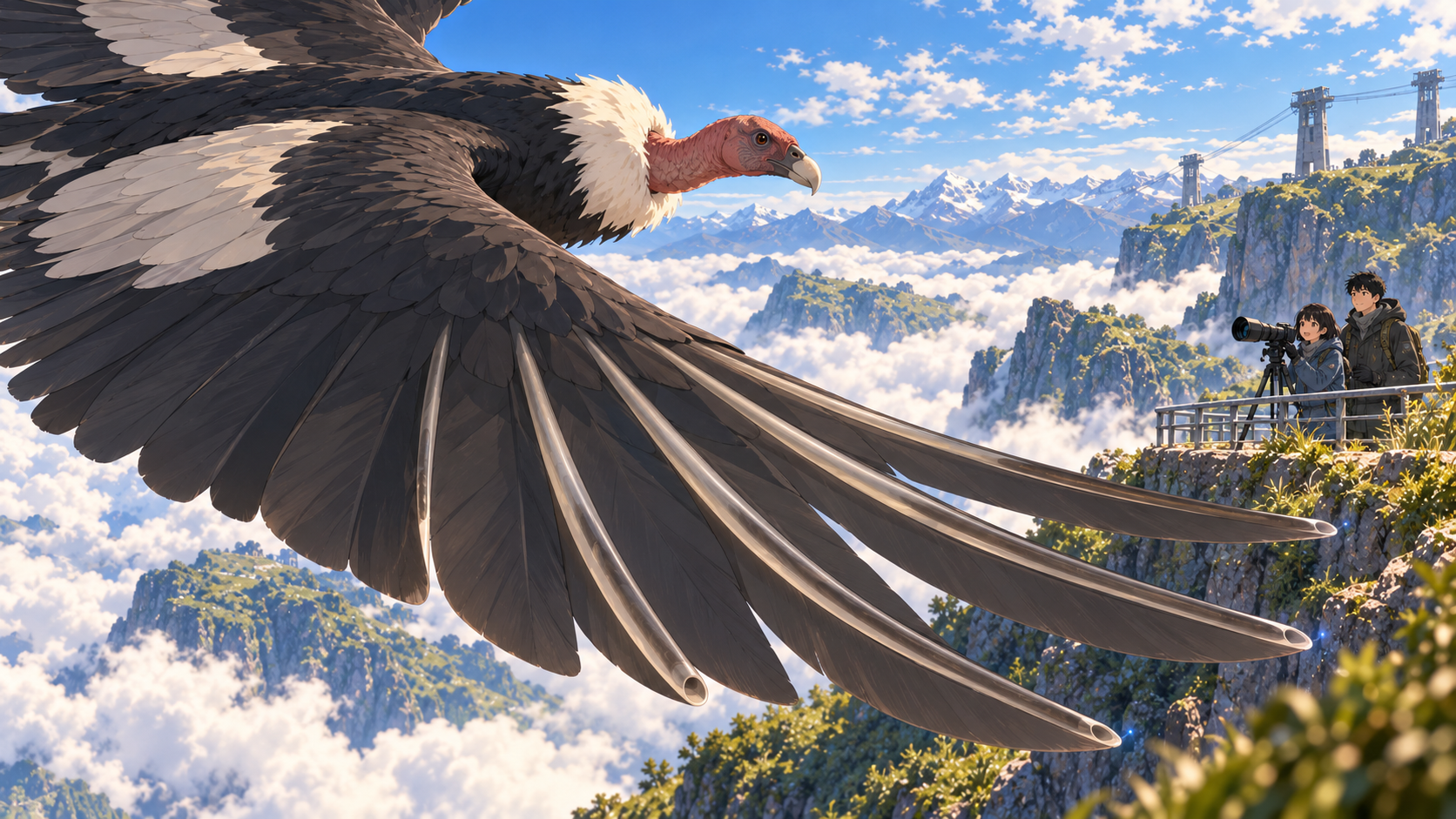 04
Cold fog reduced the cableway support to a short outline. The wind-window flight line moved outward. Fang checked the wind flag's shadow; I recorded the fixed cableway pulse from behind the rail. High above us, one condor's wide wings and bare neck came into view.
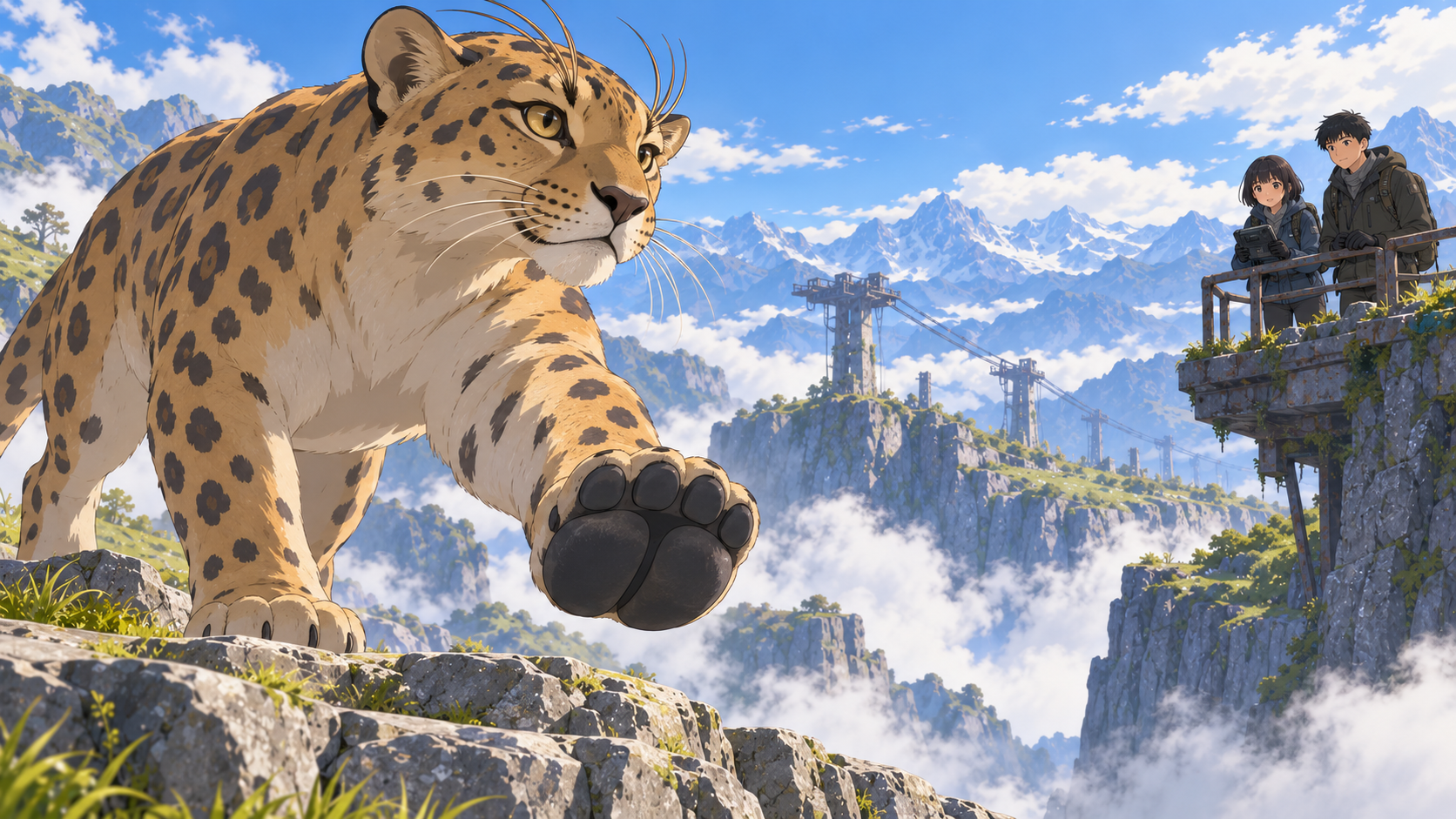 05
Cold fog erased most of the cableway support before it gave us the pawprints on the stone. Rock-mouse fur was caught in grass roots. Fang compared the spacing from behind the rail. I marked our way back.
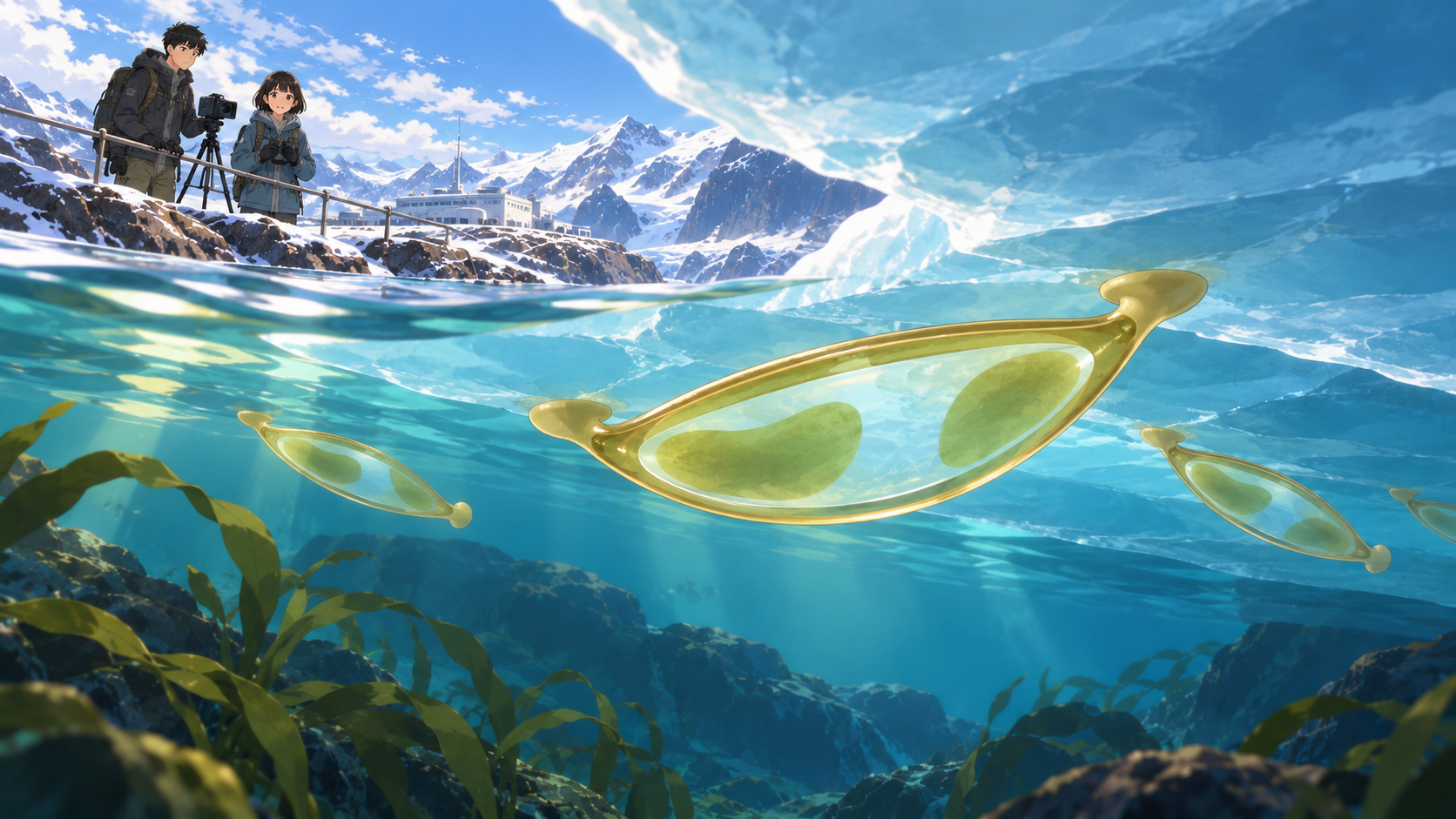 01
A band of light ended beneath the ice lip. I kept the safety line on the rocky shore while Fang measured it; we had no reason yet to say what had broken it.
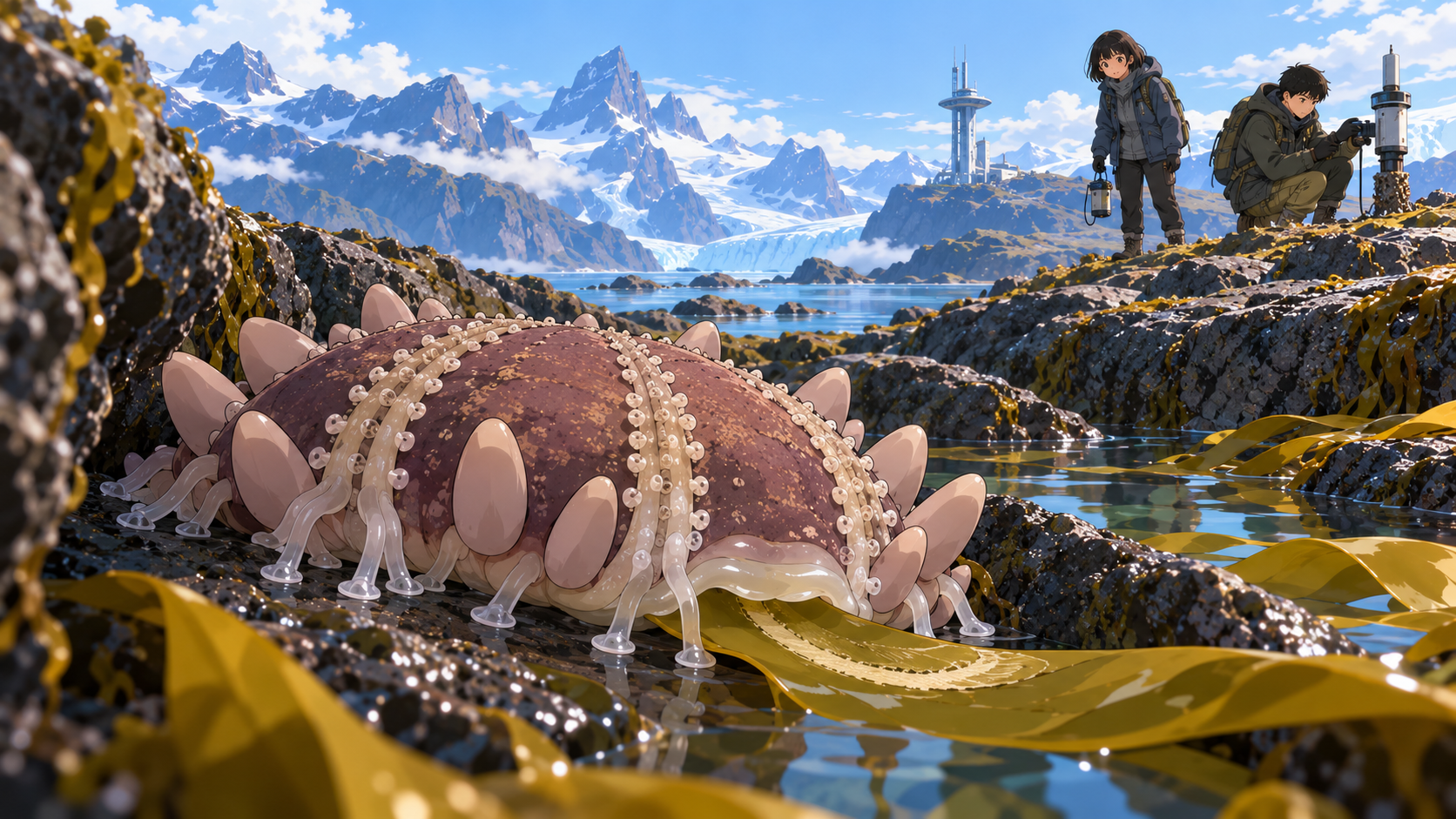 02
Tideglass Sea Urchin was recorded at Kelp-Root Shingle Flat. Fang and K kept the encounter observational, following the habitat signals without turning the fieldwork into a kill.
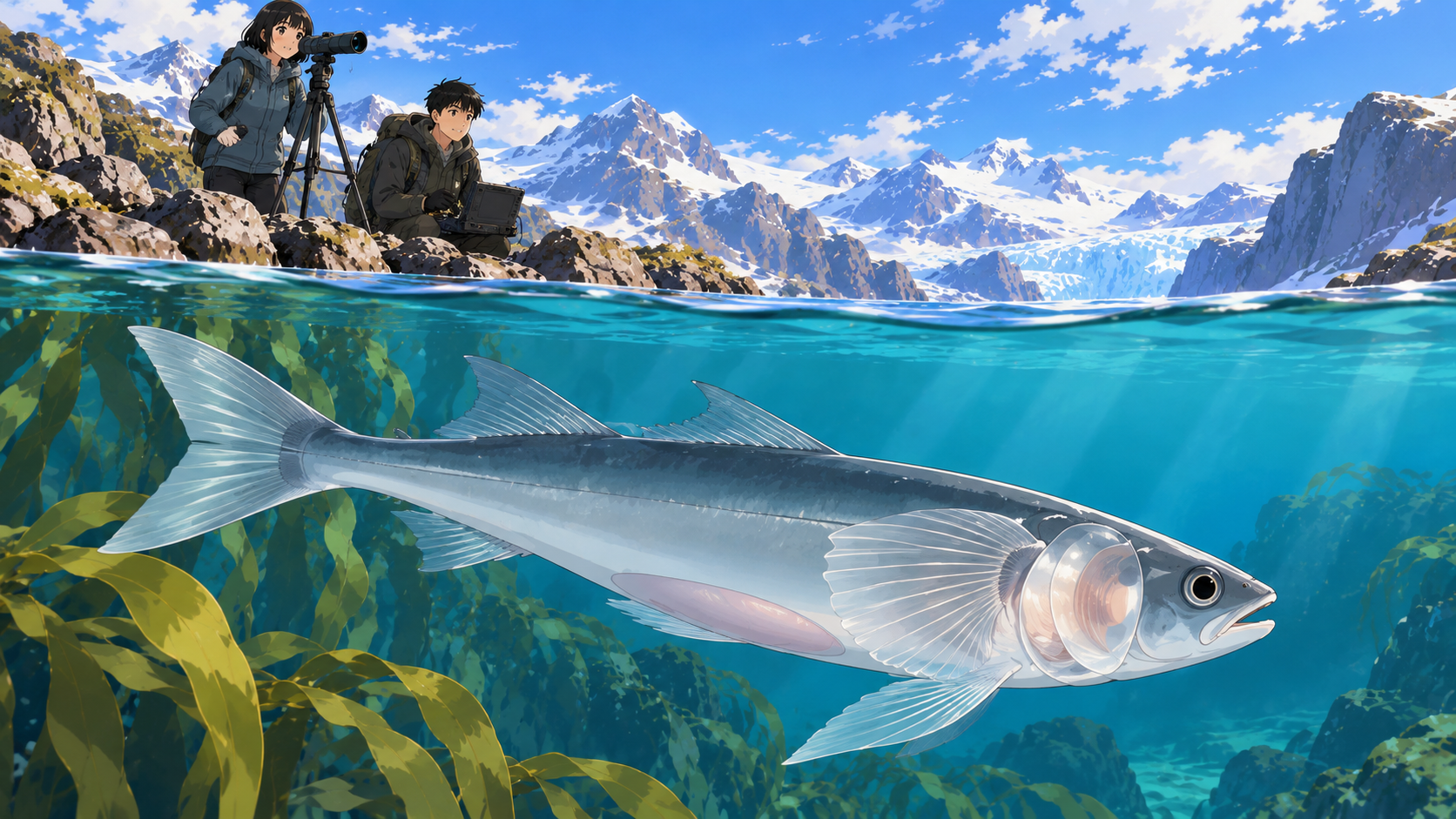 03
Clear-Gill Icefish was recorded at Outer Kelp Channel. Fang and K kept the encounter observational, following the habitat signals without turning the fieldwork into a kill.
Subscribe to K's Hunting Log and receive Neo Babylon Zero Art Book — A World Waiting to Be Explored in Traditional Chinese, plus Fang and K's new field records.