The Current Stopped Before the Jelly Did
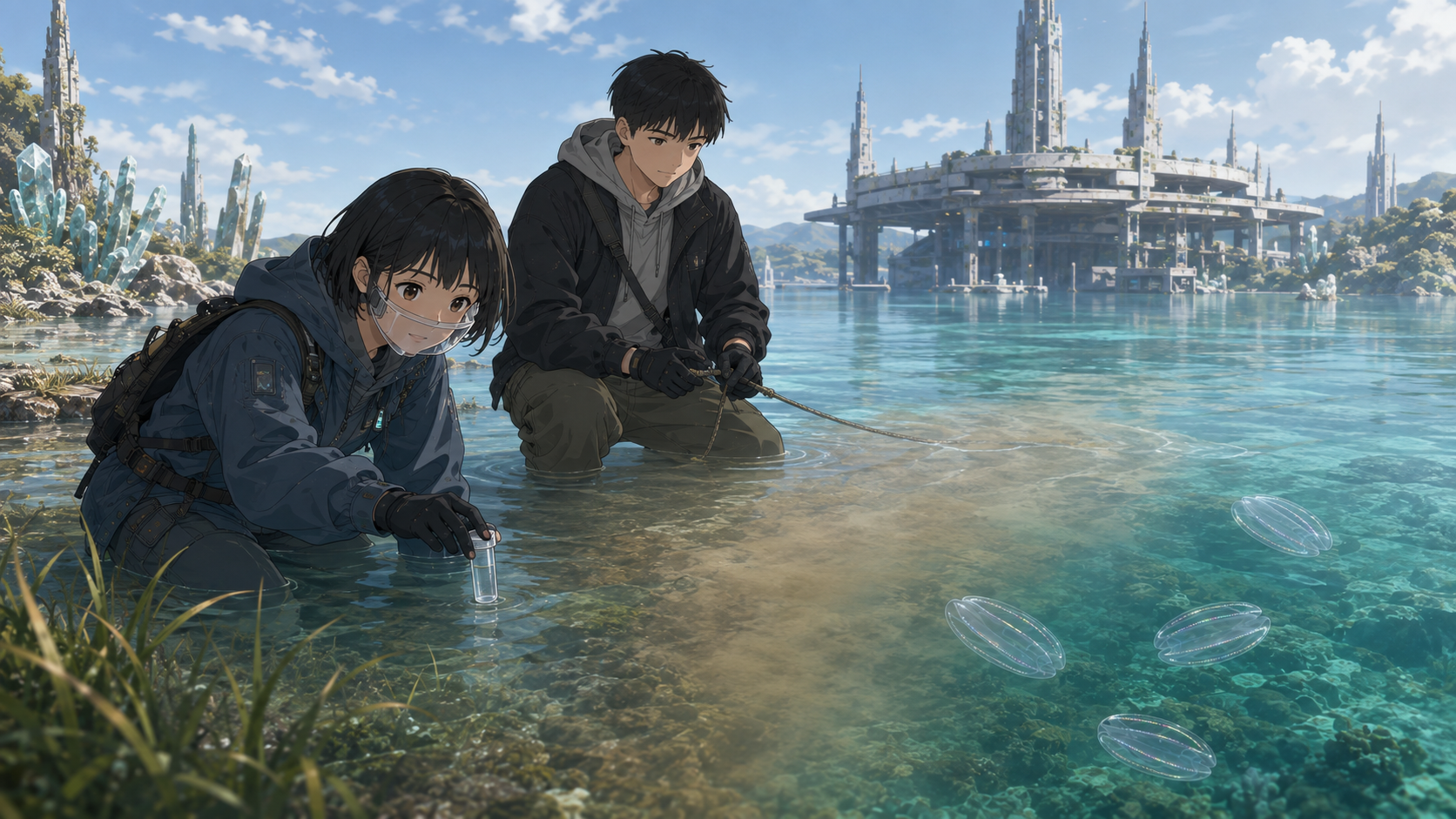
Pressure and crystal-reef reflections were still shifting at Outer-Ring Clearflow Outlet. The jellies held outside the reef-harvest discharge. Fang separated the rhythm of their comb rows into current, suspended particles, and direction. I shut down the active beacon and marked the load-bearing points, return flow, and retreat line. The animals were not blocking the passage. They were showing us where the water had stopped behaving like water.
Field Observation
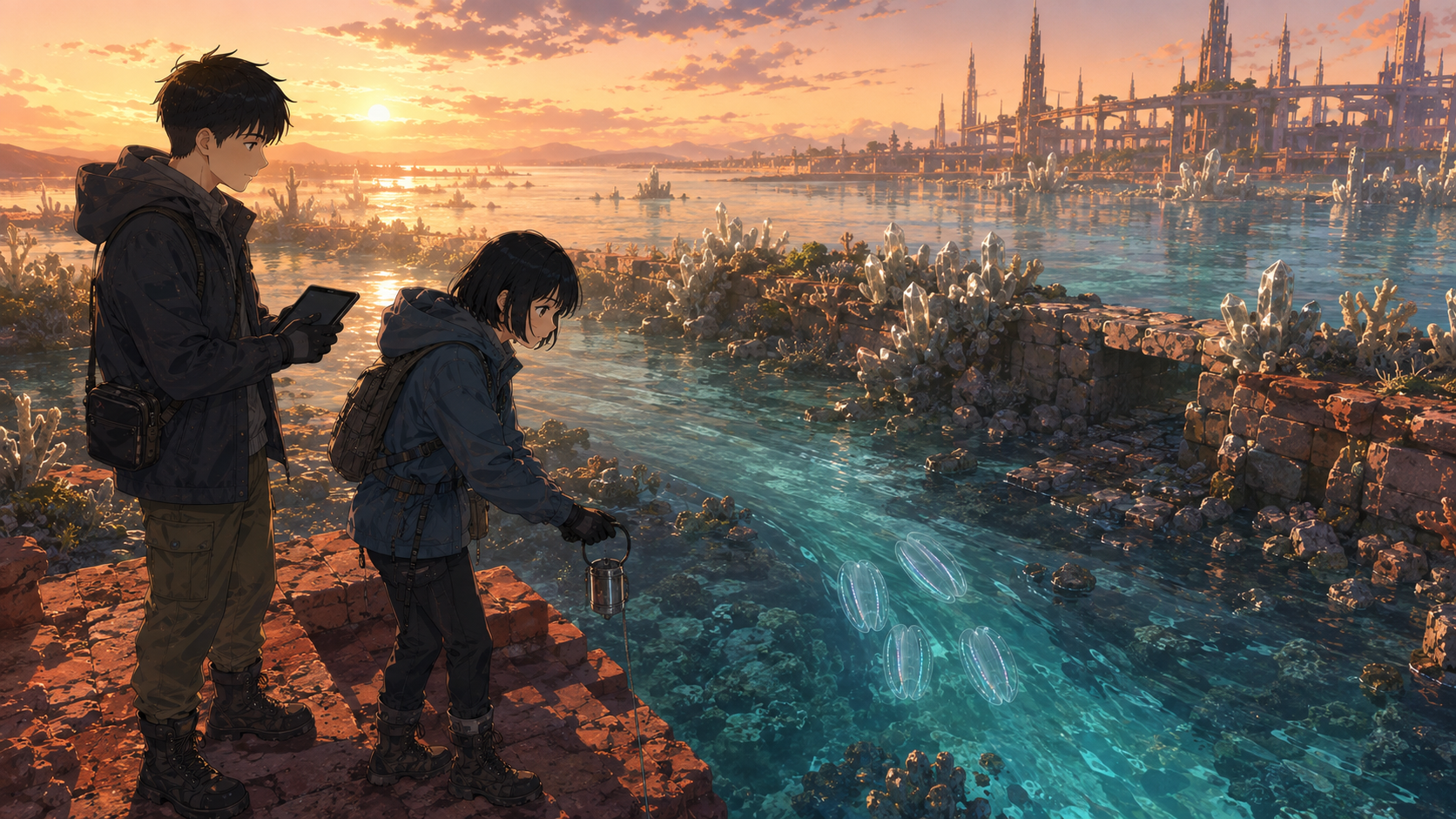
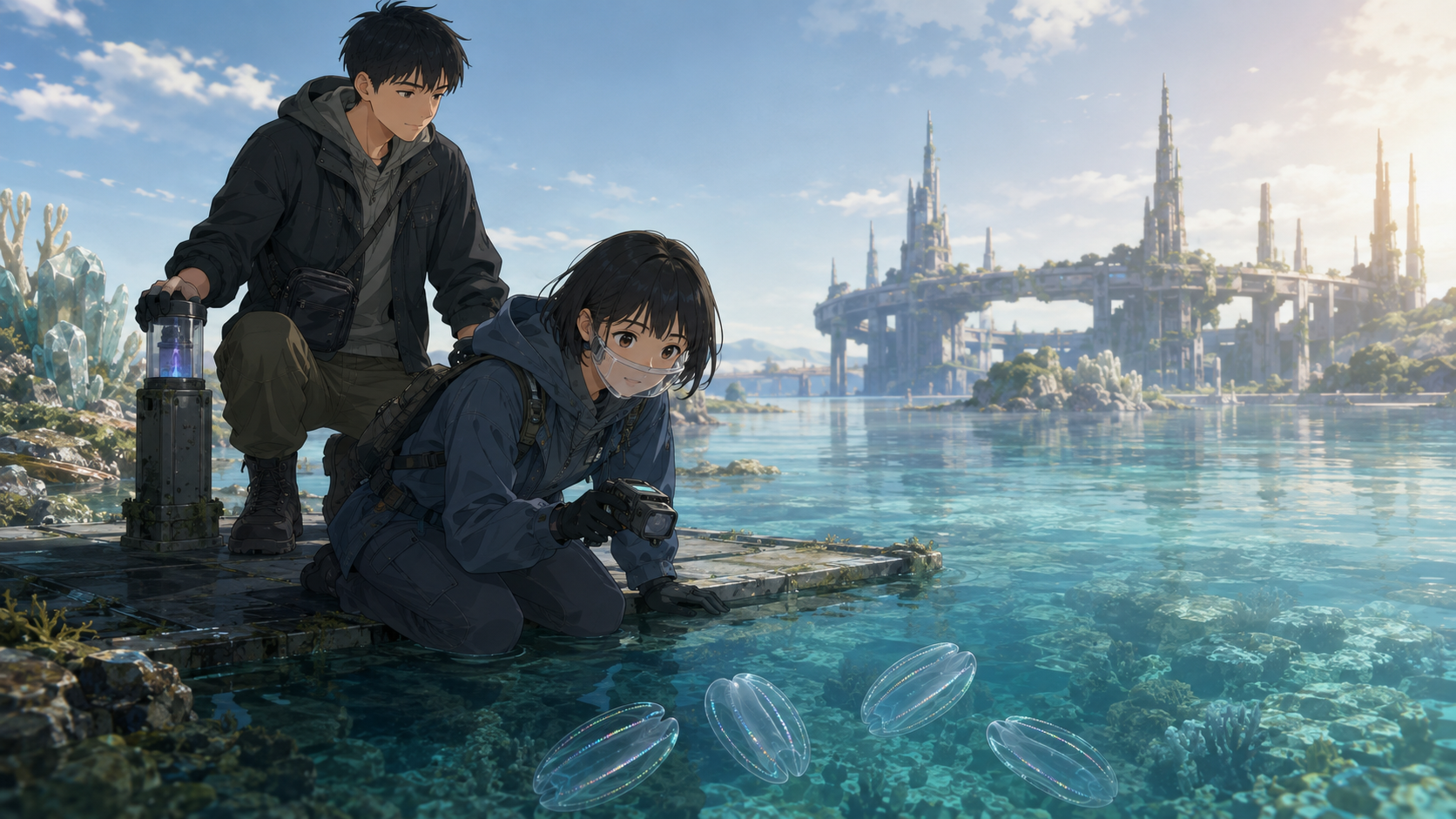
We took the low-noise boat lane around the harbor city's outer ring to Outer-Ring Clearflow Outlet, staying clear of the reef-harvest return flow. From there we descended along the same outer water belt to Suspended-Particle Slackwater Belt and compared particle concentrations with passive samples. In the evening, we followed the jellies' natural turn to Tide-Vein Flow-Dividing Mirror and reached the old passage entrance without crossing their route or pursuing them.
Morning · Outer-Ring Clearflow Outlet
Crystal-Comb Current Jellies remained beyond the reef-harvest discharge. Fang read their ciliary rhythm with non-invasive sensors. I stayed on the outer line, shut down the active beacon, marked the load-bearing points, return flow, and retreat route, and kept every active weapon stowed. We did not push the group toward the outlet. Its stopping point already marked the edge of the disturbed water.
Noon · Suspended-Particle Slackwater Belt
Passive samples confirmed that the return flow carried metal-bearing particles and was pushing planktonic larvae away from the seagrass arcade. Fang compared that concentration with the jellies' comb-row speed. I worked from below the current line and touched neither the animals nor the living reef. The disrupted flow, not the jellies, had broken the exchange between the reef and seagrass.
Evening · Tide-Vein Flow-Dividing Mirror
The jellies turned with a natural return current and stopped beside the old Tide Vein entrance. Loose crystal fragments had sealed the opening. We did not follow them farther. I marked the obstruction and shut down the remaining reef-harvest interference while Fang kept our work line outside the group's route. Their route had brought us to the fault without becoming our instrument.
Habitat Causality
Crystal corals remove metal and radioactive particles from seawater, seagrass roots hold carbonate sand, and flexible reef pores with deep channels keep the hard breakwater open to larvae, fish, and large migrants. Automated reef harvesting cut too much living reef. Loose crystal fragments blocked the old Tide Vein, and metal-bearing return flow pushed planktonic larvae away from the seagrass arcade. The jellies' ciliary rhythm and stopping positions exposed the altered flow from its outer boundary to the sealed entrance.
Species Behavior
The jellies drifted in a small calm group, feeding on plankton without long tentacles. Their eight short comb rows changed rhythm with current speed and particle load, producing soft bands of color. They did not cross the disturbed return flow. Once the active beacon and reef-harvest interference were removed, they turned with the natural current. Fang and I read that choice from a distance and did not force it.
「A living current does not need us to point the way. It needs us to stop bending it. The jellies showed the boundary. We changed the machine.」