LIVING SPECIMEN INDEX

Bestiary

Monster is only the name humans give the unknown. This index records how these lives actually live.

Mirrorwing Tide Heron01
Colonial wading birdLow Risk

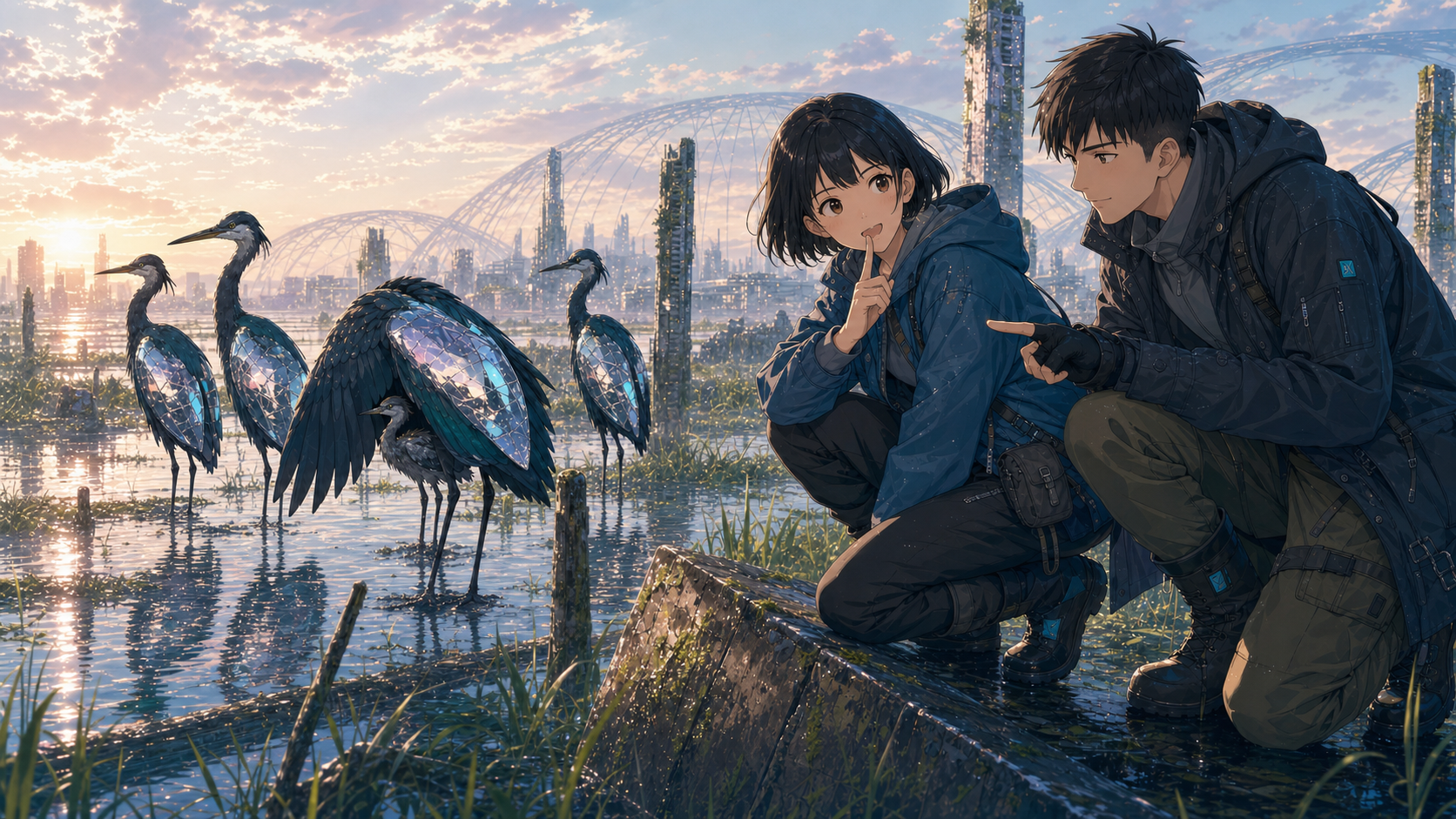
Mirrorwing Tide Heron

Flocks gather on maintenance buoys and use mirrored mineral feather plates to reflect the dome's morning light, driving fish into the shallows. When startled, they flash their wings and retreat rather than attack.

Read its way of life ↗

Saltvein Antler Deer02
Wetland deerModerate

Saltvein Antler Deer

They lick minerals from old concrete and cables, depositing excess salt along their backs. Their hollow antlers detect vibrations in buried pipes. At the old pump, a stag's crystal antlers resonated with the machinery, and the adults later guided the fawns away from flooded ground.

Read its way of life ↗
Sunken-Bell Frog Chorus03
Colonial wetland amphibiansLow Risk / Environmental High Risk

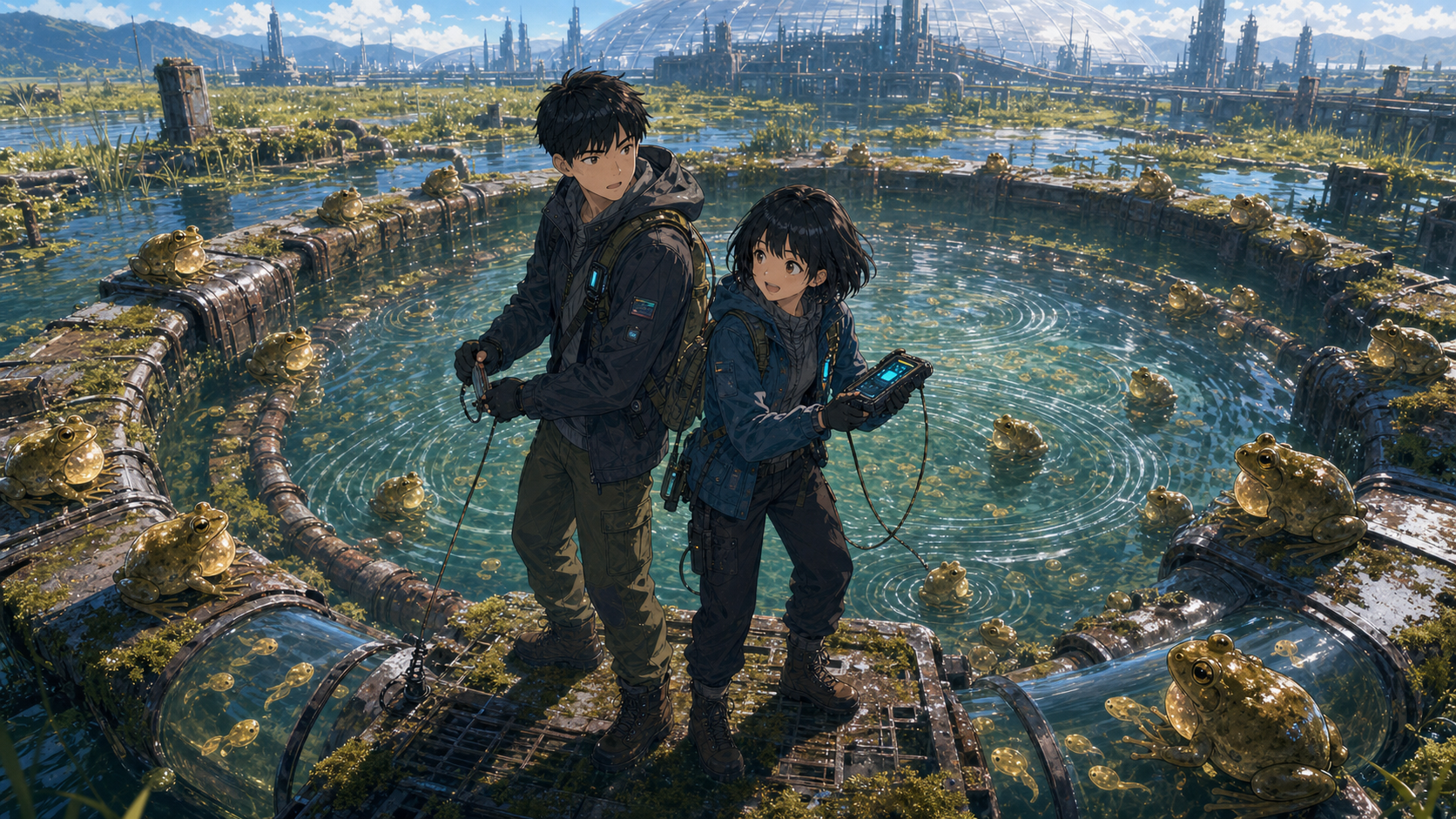
Sunken-Bell Frog Chorus

They cling to submerged buildings. At high tide, thousands inflate translucent bronze, bell-shaped throat sacs in synchrony to signal water pressure. Their pressure-sensitive lateral lines and synchronized pulses create visible ripples, while the resonance can loosen corroded metal.

Read its way of life ↗
Tideshell Matron04
Large semiaquatic herbivoreHigh Risk

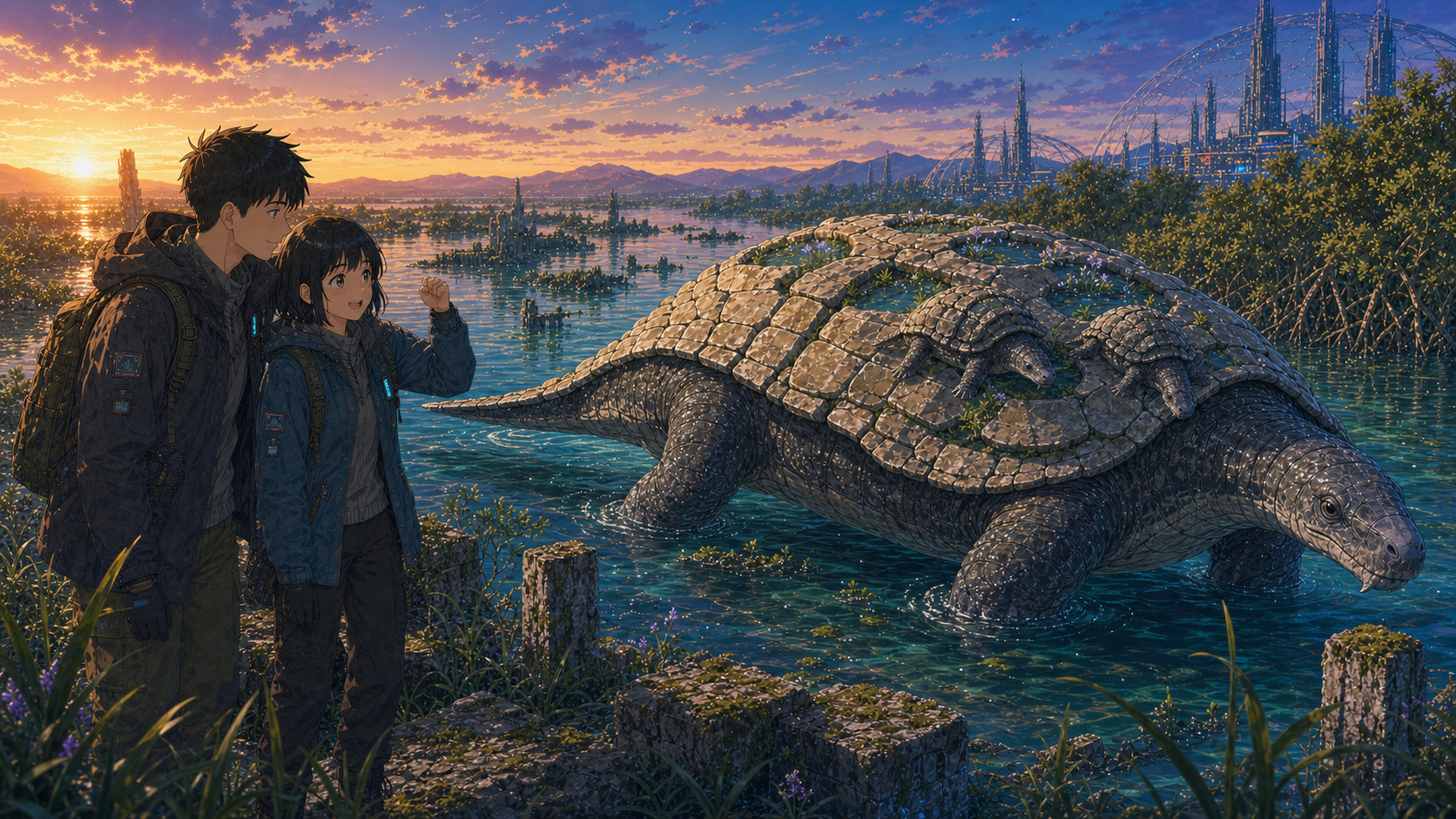
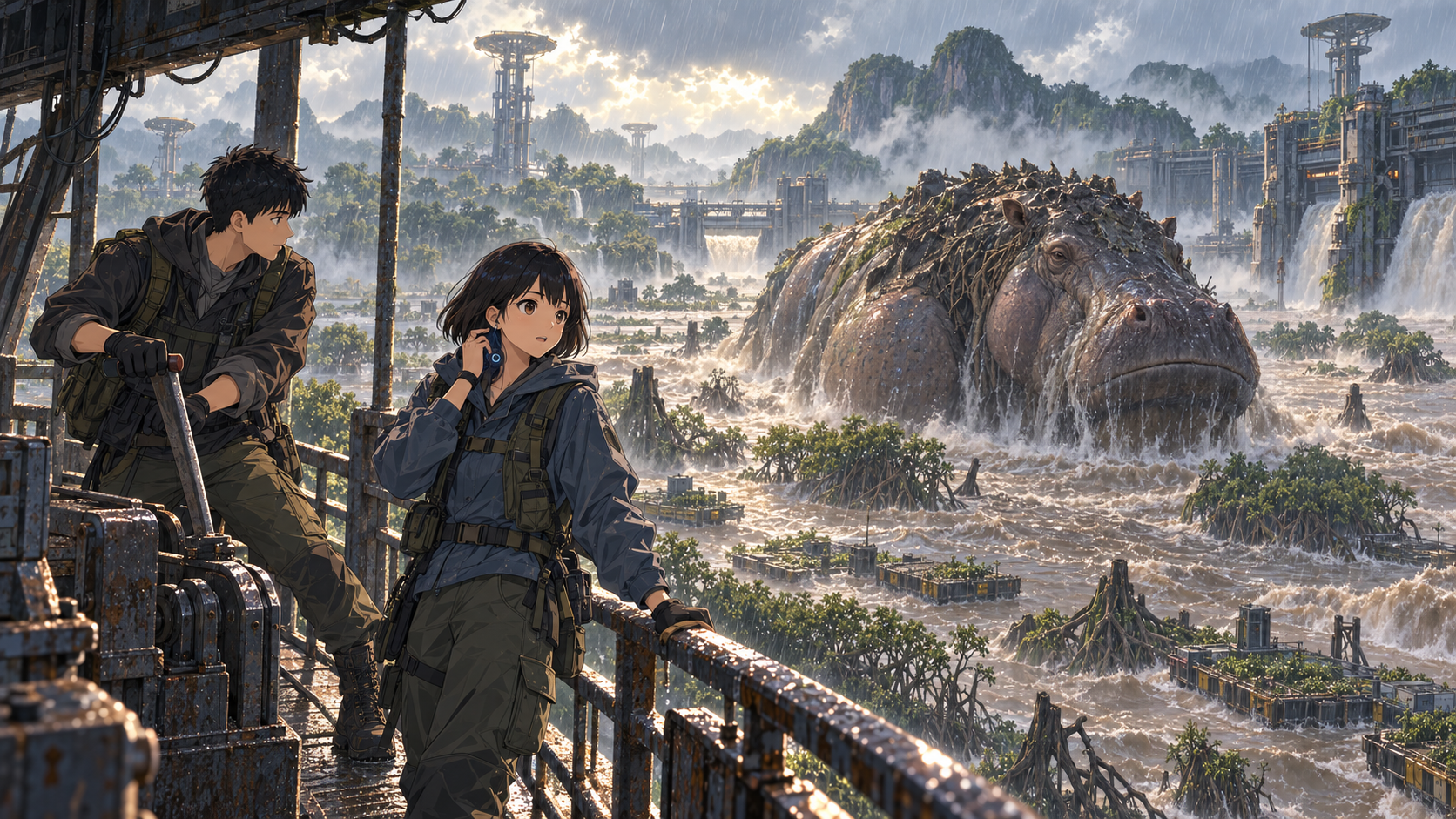
Tideshell Matron

An adult female carries freshwater in layered basins on her back, where calves can rest. The species is not normally aggressive and charges only when a calf or one of those freshwater basins is threatened.

Read its way of life ↗
Sky-Tide Crownwhale05
Divine-class semiaquatic filter feederDivine

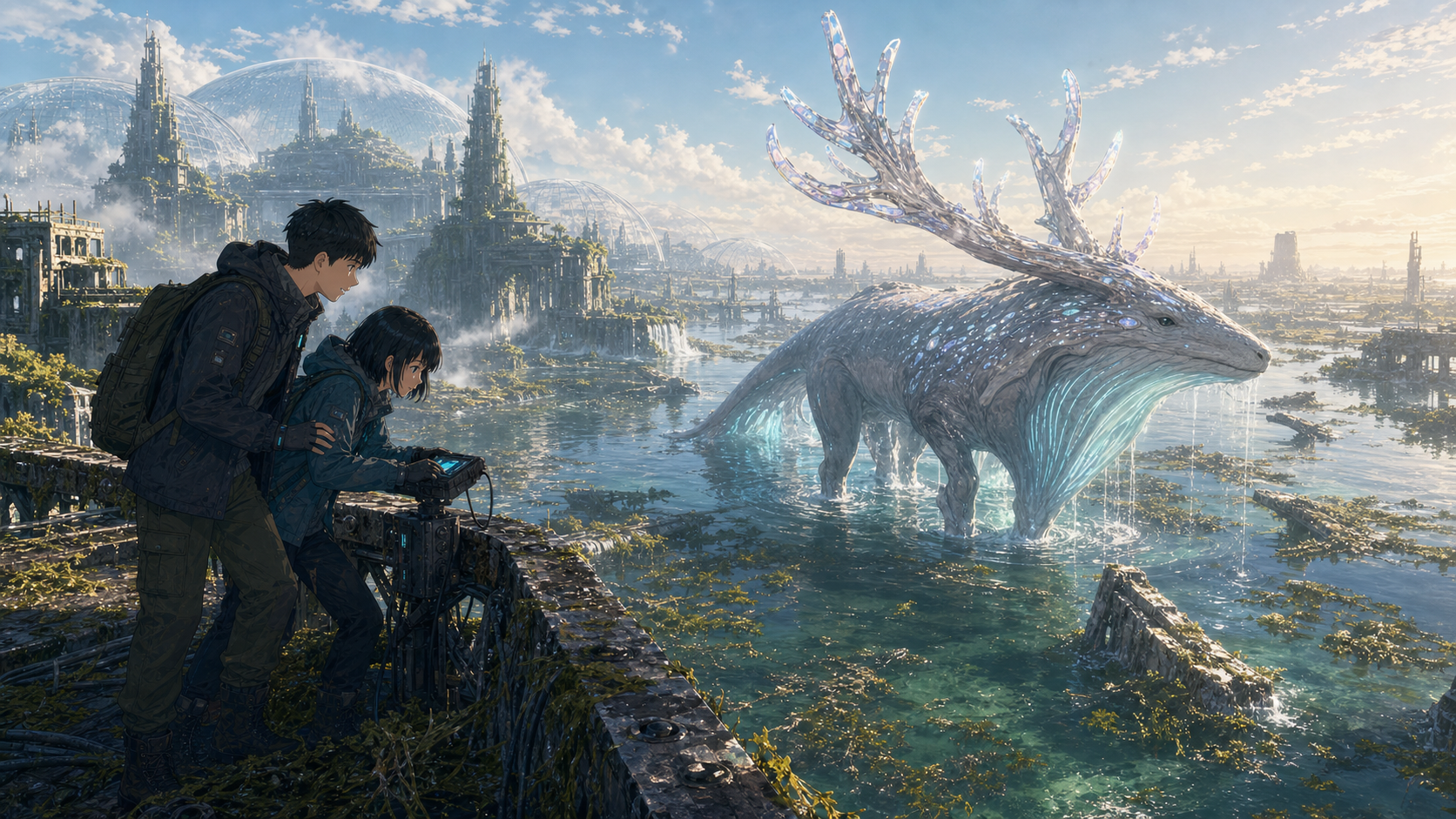
Sky-Tide Crownwhale

The 18-meter adult is non-aggressive. It filters food from the wetland and uses enormous hollow crown antlers to emit a low-frequency song that gathers multiple species for migration along the ancient tidal channel.

Read its way of life ↗
Ash Compass Limpet06
Colonial volcanic limpetLow Risk

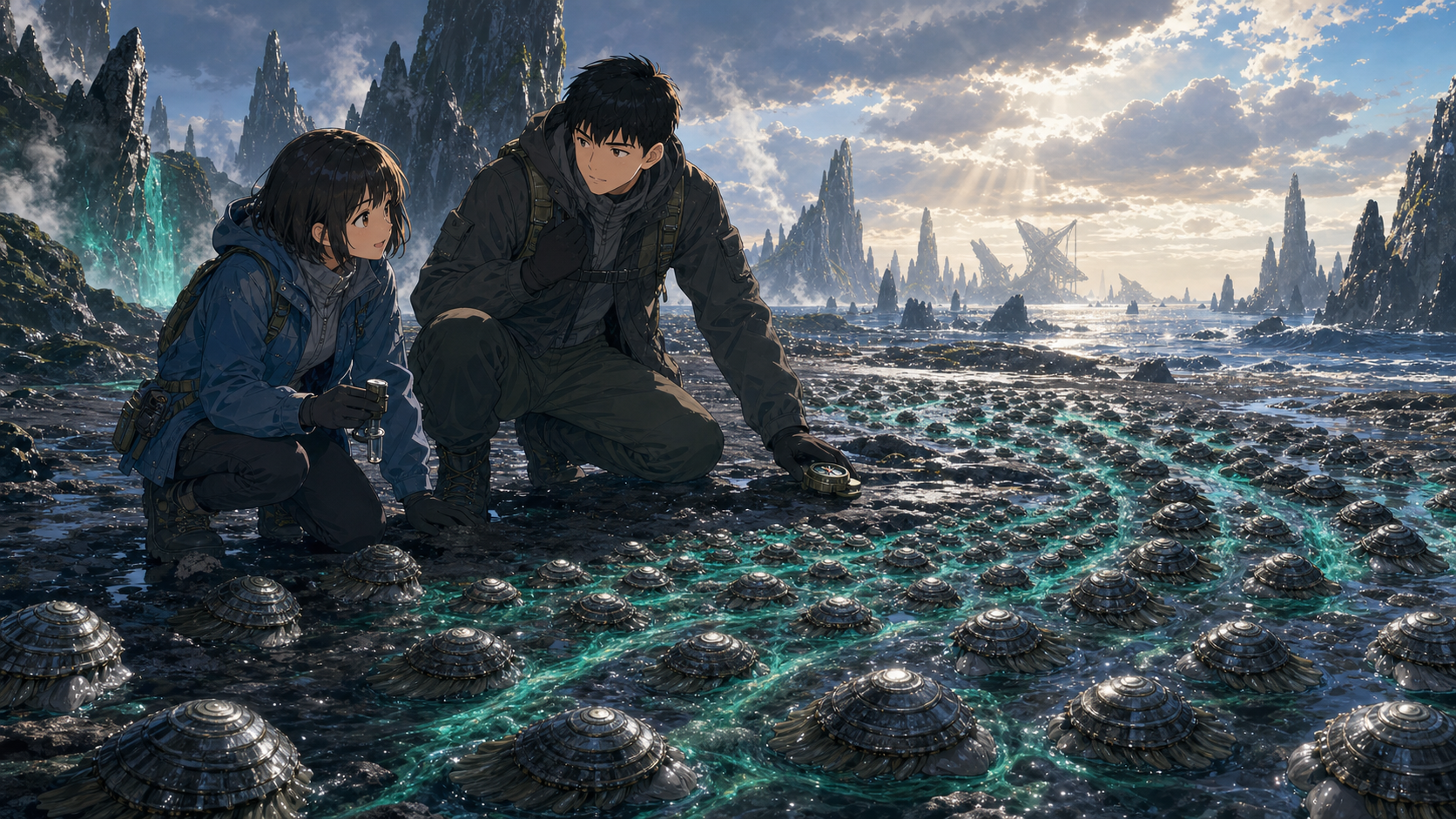
Ash Compass Limpet

The limpets graze chemosynthetic algae in geothermal fissures. Their concentric shell plates accumulate magnetite, and entire colonies align along invisible magnetic lines before reversing direction together when the field's polarity flips.

Read its way of life ↗
Heat-Vein Mist Petrel07
Small Aleutian storm petrel adapted to geothermal mistLow Risk

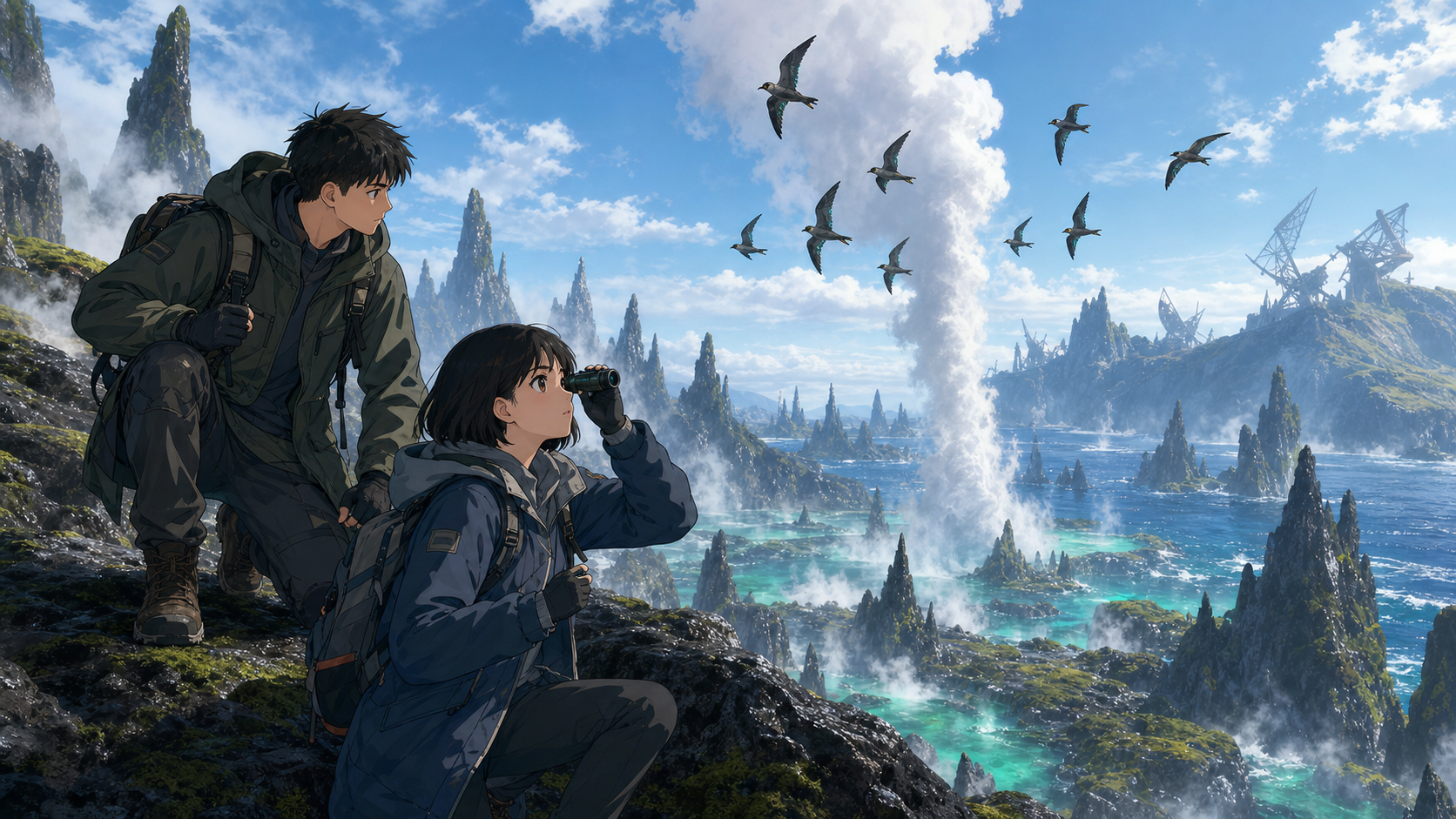
Heat-Vein Mist Petrel

The flock glides at a distance through geothermal mist and avoids the warmest steam column before contact with the disturbance. Each coordinated turn produces a soft static halo and matches another sensor spike from the ruined antenna field.

Read its way of life ↗
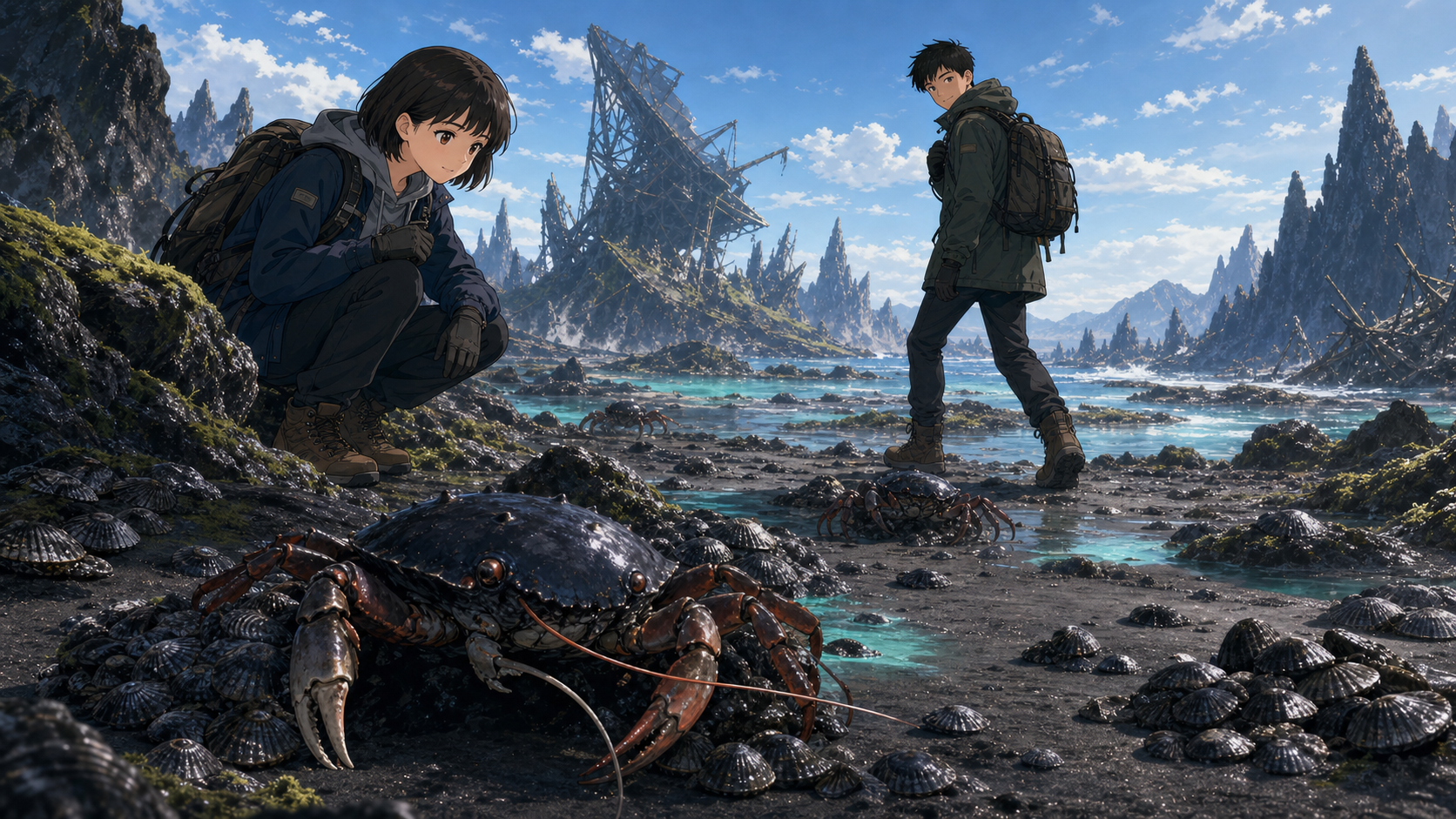
Magnet-Whisker Crab08
One-meter reef crab adapted to a magnetized intertidal habitatModerate

Magnet-Whisker Crab

The crabs use two long magnetosensory whiskers to find limpet eggs, algae clumps, and detritus after low tide. They drag discarded shells to stabilize burrow entrances and follow established carrying routes across the reef. They remain wary but do not attack; when observers step outside the route, they continue working. When a group exchanges shells, the movement produces a brief wave of metallic sound.

Read its way of life ↗
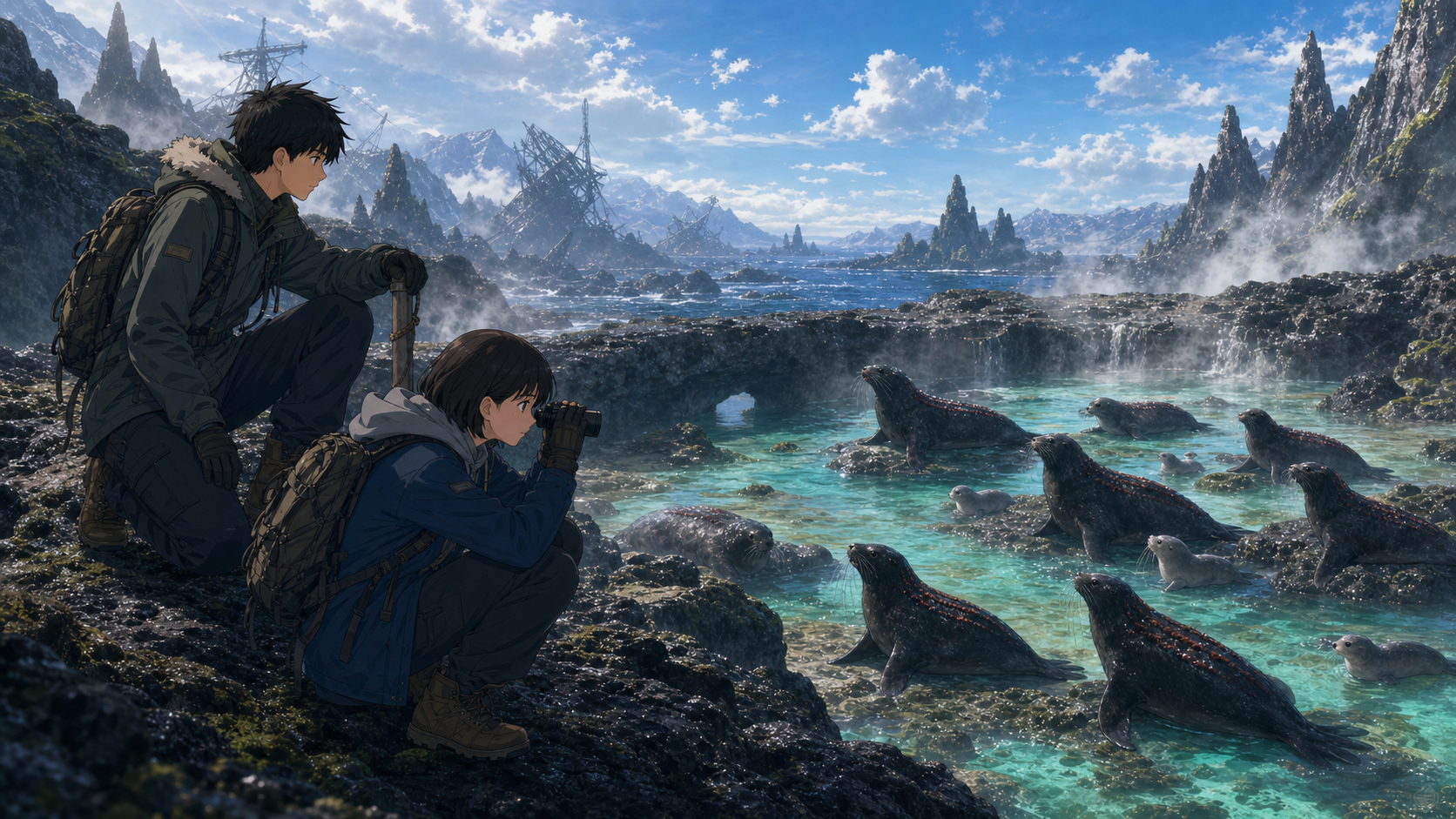
Lava-Ridge Magnetic Seal09
Four-meter geothermal seal with mineralized magnetic ridgesHigh Risk

Lava-Ridge Magnetic Seal

The seals feed on reef crabs and cold-water fish. Adult females guard the warm-spring nursery together, warning approaching animals or people by slapping the water, calling low, and blocking the channel rather than charging. They watch until the last pup returns to the warm pool, then ease their vigilance and look away once the observers take the upper route.

Read its way of life ↗
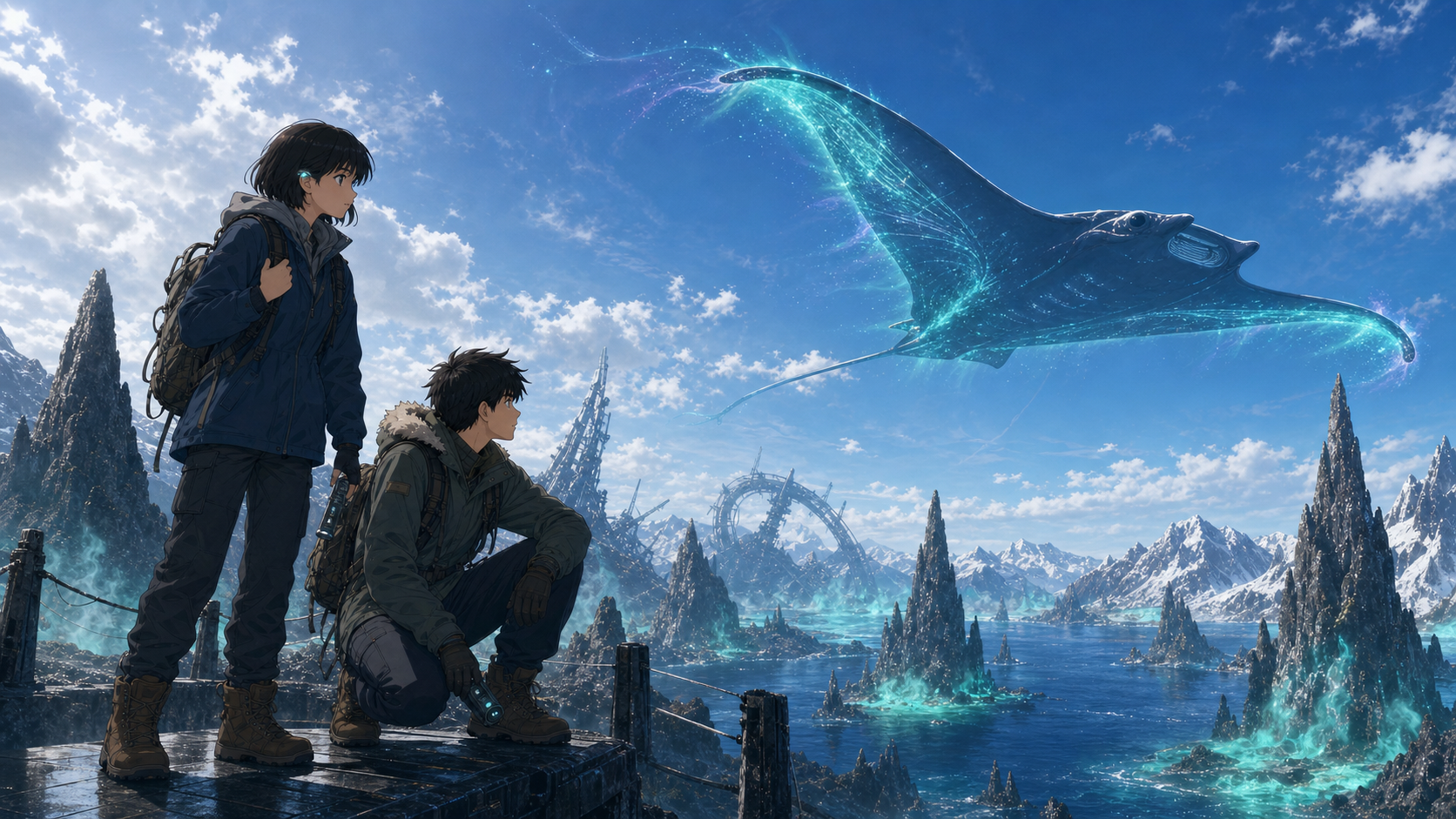
Thunder-Canopy Manta10
Thirty-meter amphibious aerial-oceanic filter-feeding giant rayDivine; non-aggressive, but able to alter the magnetic field, airflow, and routes across an entire fjord

Thunder-Canopy Manta

The manta filter-feeds on luminous magnetoplankton at the sea surface and in the steam layer. It does not prey on the fjord's other four recorded species and shows no aggression toward Fang or K. When a conflicting radar pulse blocks its route, it waits outside the gate instead of forcing passage.

Read its way of life ↗
Diffraction Spore Spider11
Palm-sized diffraction orb-weaverLow Risk

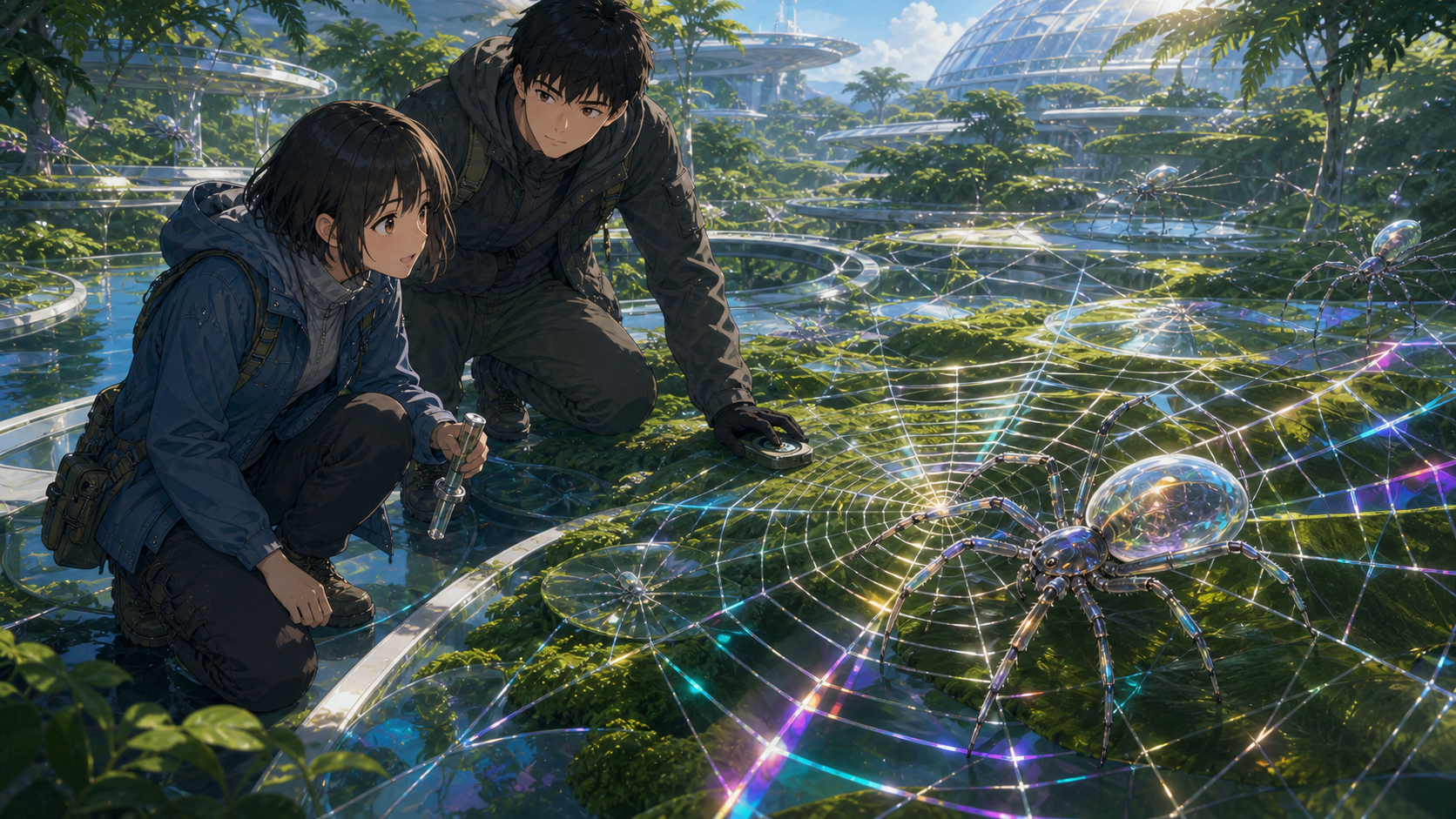
Diffraction Spore Spider

The spiders anchor all eight legs to the edges of wafer-glass leaves and weave clean radial webs. They prey on small insects from the retired test zone without threatening Fang or K. Fungal spores adhere to the silk and are carried into new cracks beneath the canopy as the colony rebuilds.

Read its way of life ↗
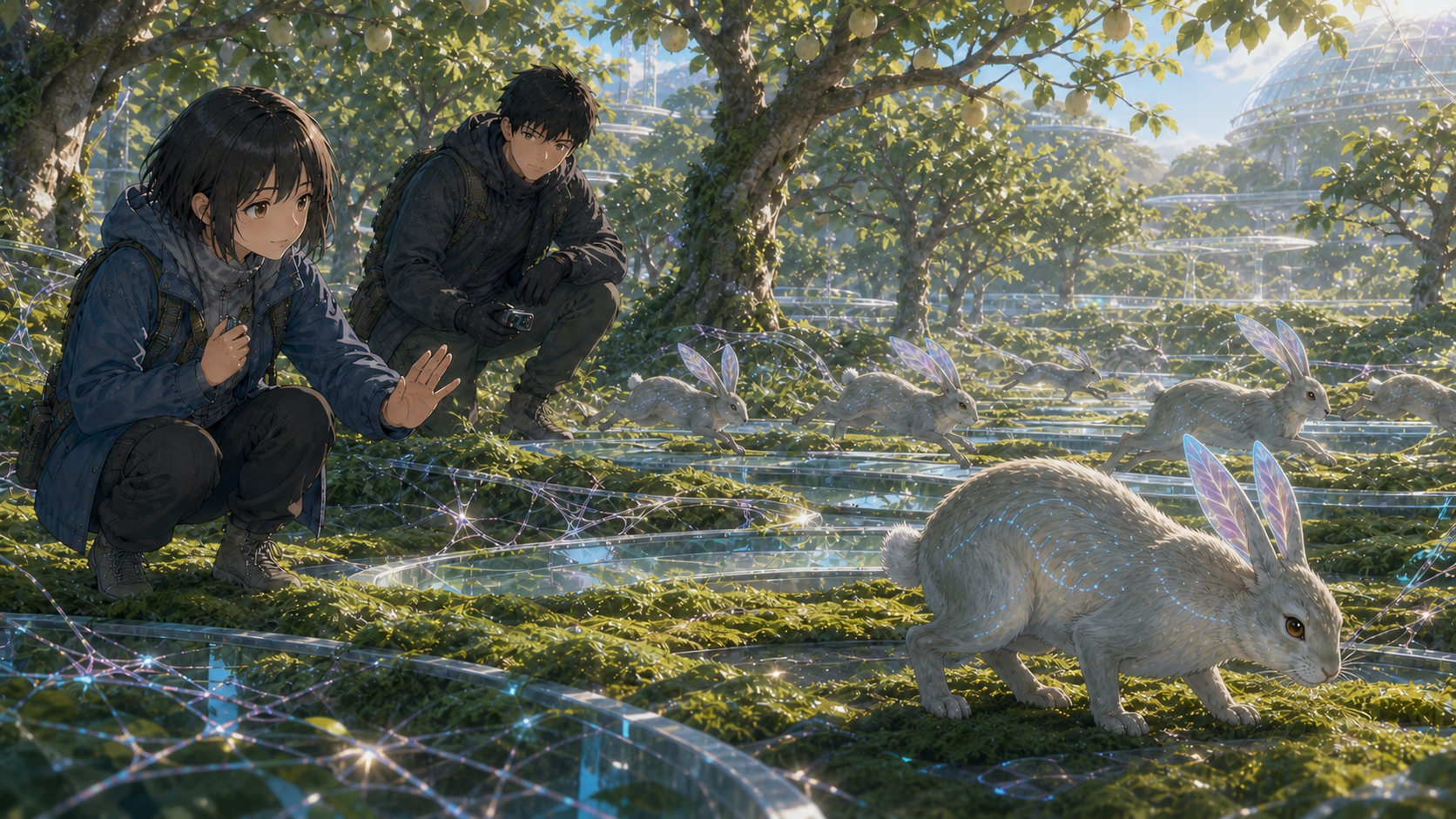
Veinlight Ear Hare12
Small post-nuclear hare with heat-venting photonic earsLow Risk

Veinlight Ear Hare

The hares graze on electro-moss and tender fungal-ring shoots. Twelve seconds before each false exposure pulse, the whole group lowers its long ears and withdraws toward the cooling channel. They avoid the overheated light band rather than charging observers, and they pass quietly through any open route left by Fang and K.

Read its way of life ↗
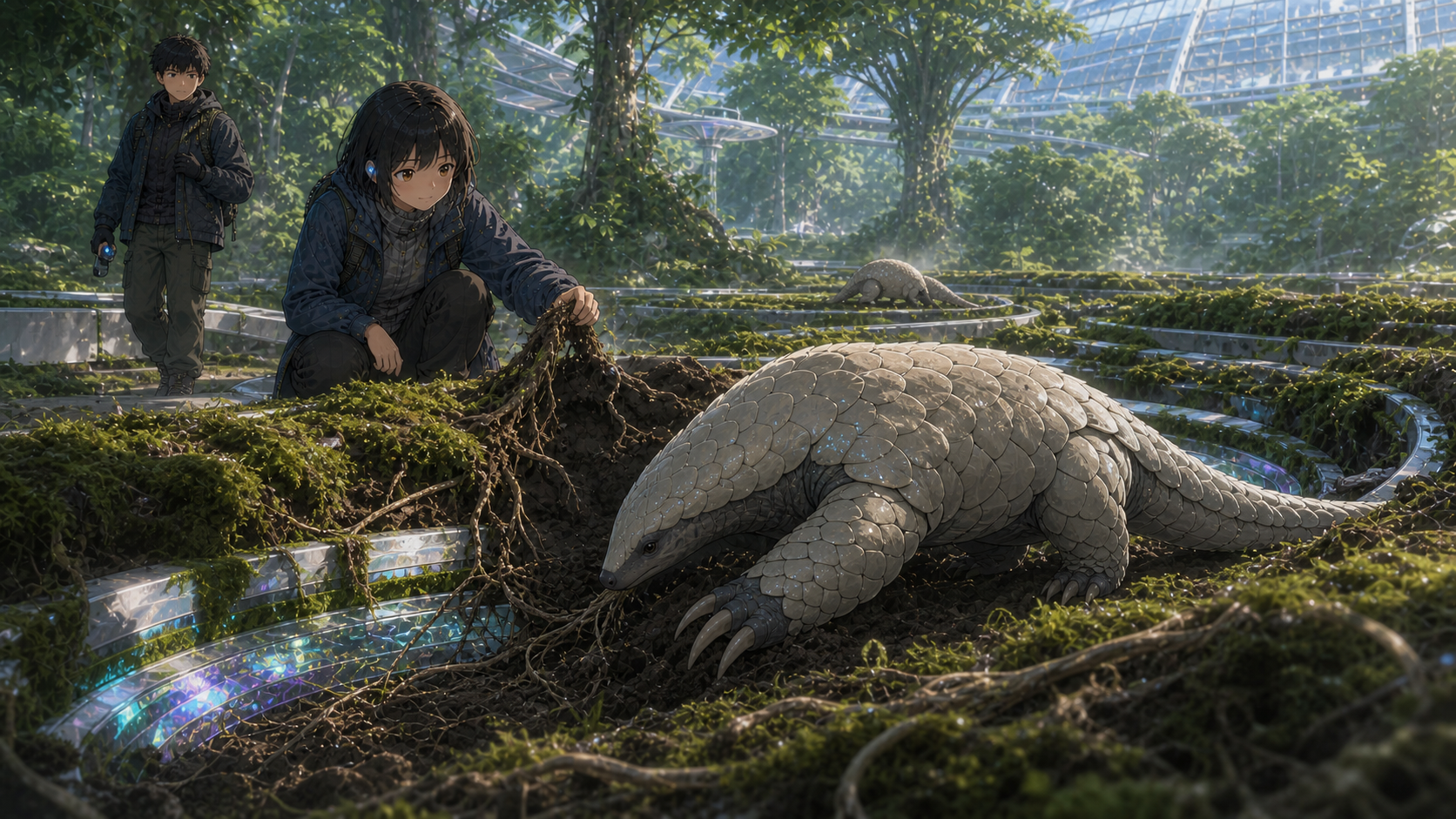
Crystal-Trench Burrower13
One-and-a-half-meter armored burrowing mammalModerate

Crystal-Trench Burrower

The burrowers use broad digging claws and blunt sensory snouts to turn over retired wafer trenches. They do not threaten Fang or K. Adults continue digging at a distance when the observers stay clear of fresh entrances and nursery tunnels. A group eventually exposes a pulsing photonic cable beneath the new soil.

Read its way of life ↗
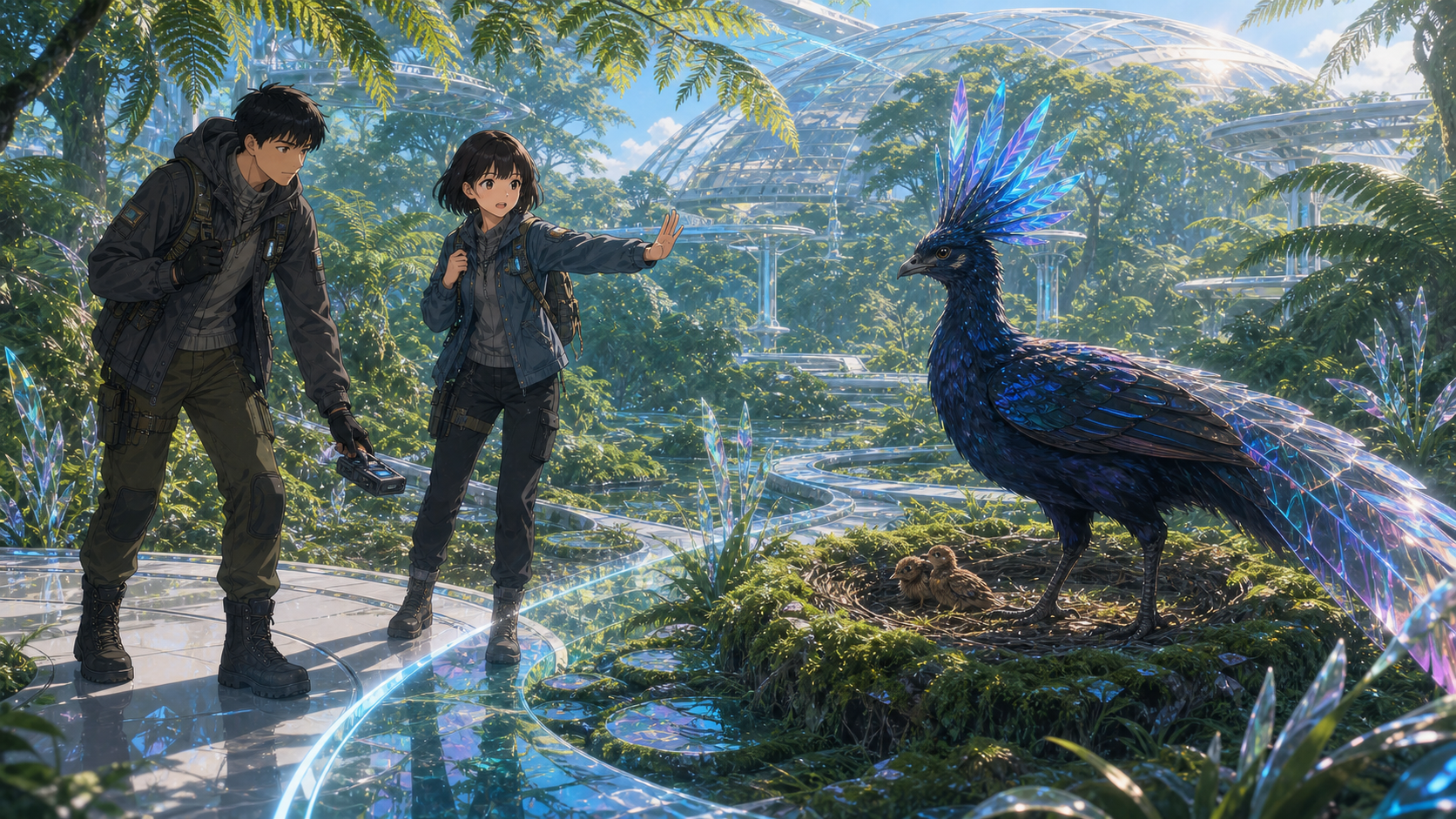
Prism-Crest Nursery Pheasant14
Large post-nuclear forest pheasant with a light-reflecting crestHigh Risk

Prism-Crest Nursery Pheasant

Adults jointly guard the nursery. They raise their prism crests, give low-frequency calls, and stand across an approach to mark a boundary. They do not need to strike when an observer stops outside the reflected light line. Once Fang and K take the longer lightless route, the adults lower their crests and the nest circle settles.

Read its way of life ↗
Layerlight Canopy Moth15
Divine-class migratory canopy moth with a wingspan of about twenty-five metersDivine; non-aggressive, but able to reset the reserve's light cycle and species activity

Layerlight Canopy Moth

The moth never approaches Fang or K and shows no predatory behavior. It glides over the canopy, feeding on microalgae in dome condensation and airborne spores. Its wing veins do not accelerate when K shuts down the test loop; they slowly return to the moth's own rhythm before it passes through the atrium.

Read its way of life ↗
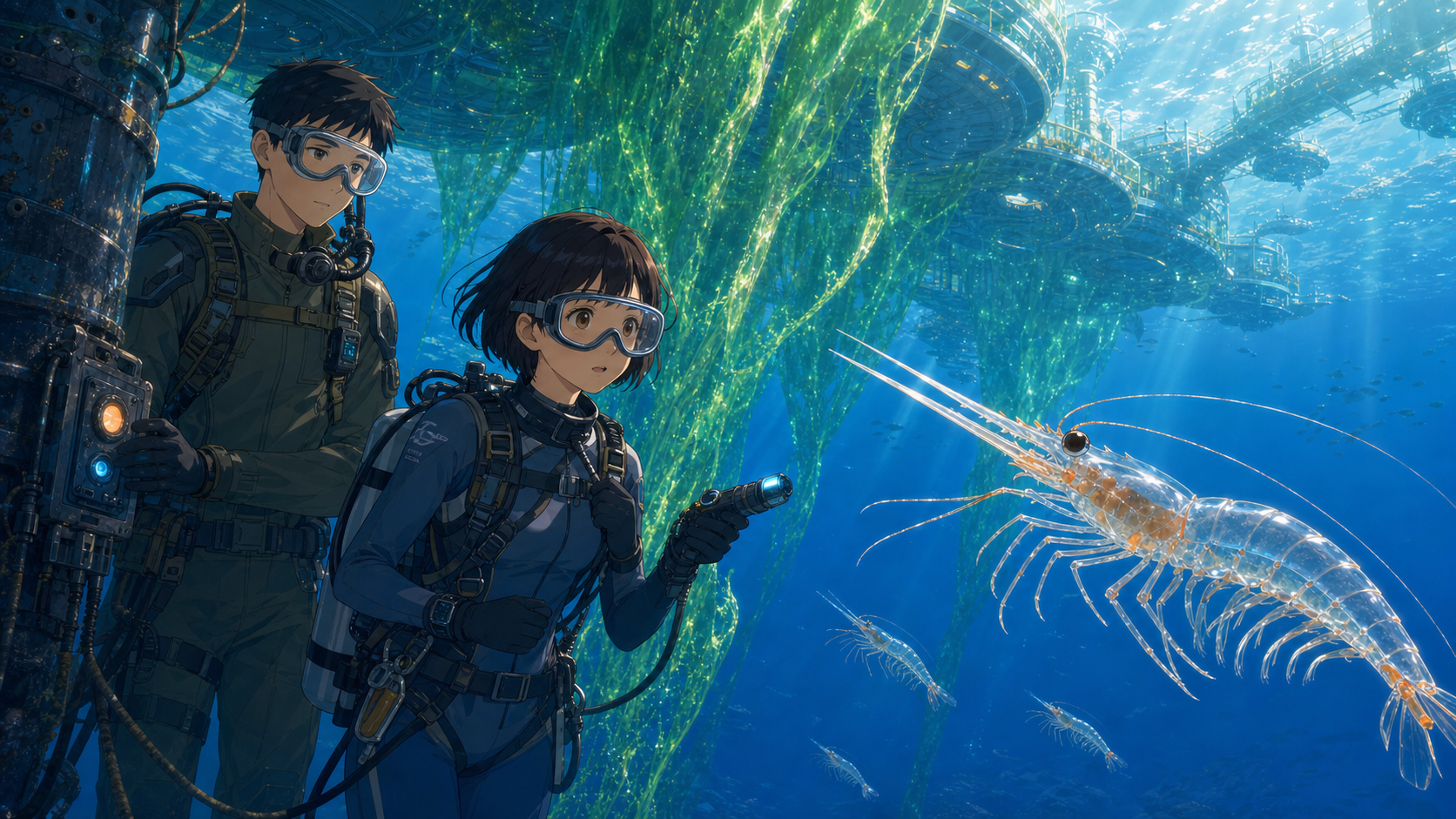
Acoustic-Sand Needle Shrimp16
Forearm-length translucent cleaner shrimp with a quartz rostrumLow Risk

Acoustic-Sand Needle Shrimp

The shrimp comb microalgae and acoustic sand from the membrane with slender quartz rostrums. Their pale-cyan sensory setae fold flat in unison before a high-frequency sonar pulse arrives. The entire group then burrows into reef pores on a fixed beat. They do not threaten Fang or K and resume cleaning when the active pulse stops.

Read its way of life ↗
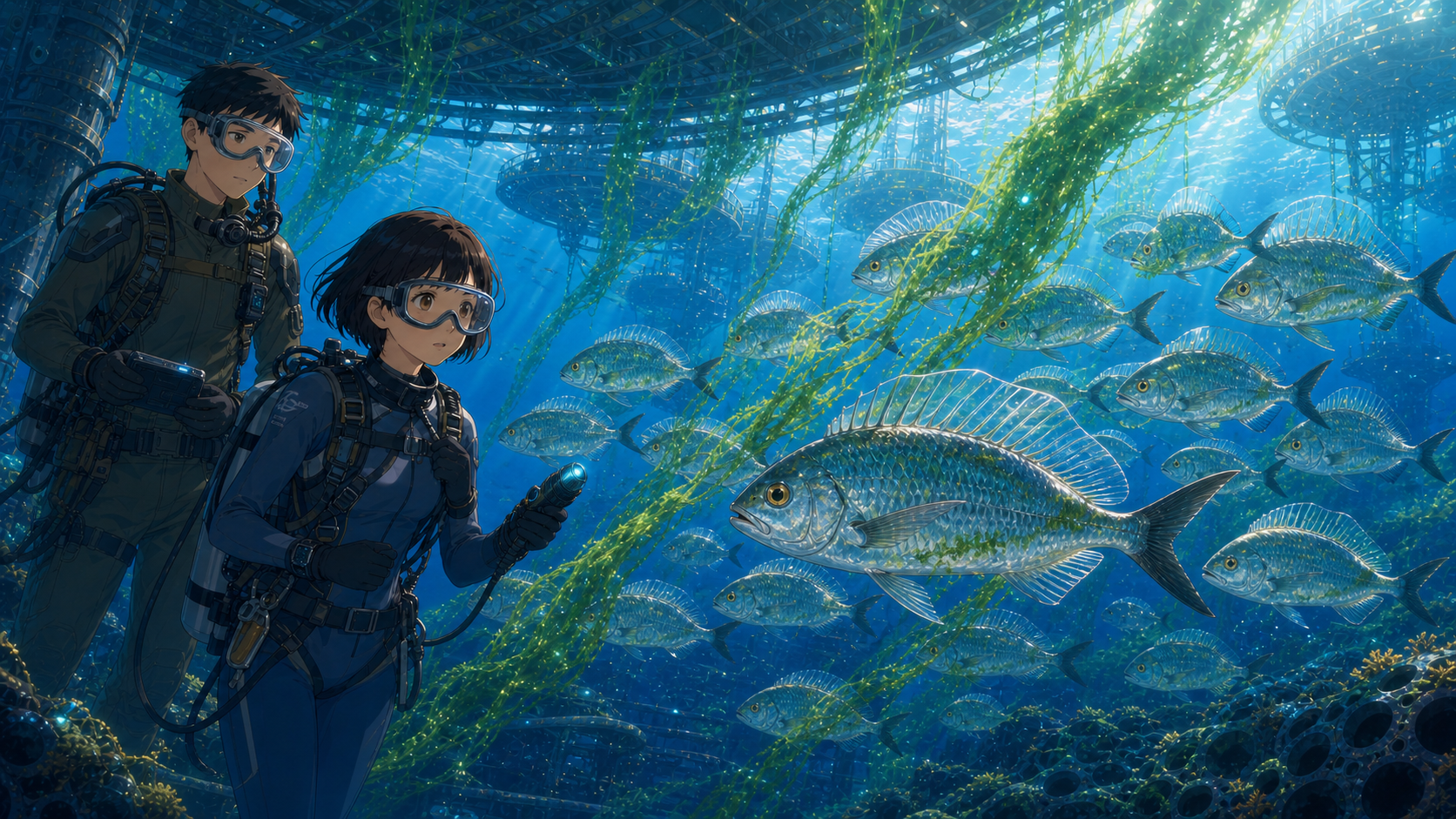
Curtain-Fin Algae Bream17
Half-meter silver-teal algae bream with curtain-like dorsal finsLow Risk

Curtain-Fin Algae Bream

The bream coordinate their soft dorsal fins to graze drifting algae ribbons without biting the live energy membrane. When false sonar triggers the flow gate, the whole school turns against the current. After K returns the gate to manual control, the fish choose the natural warm flow on their own and continue moving spore capsules toward the reef.

Read its way of life ↗
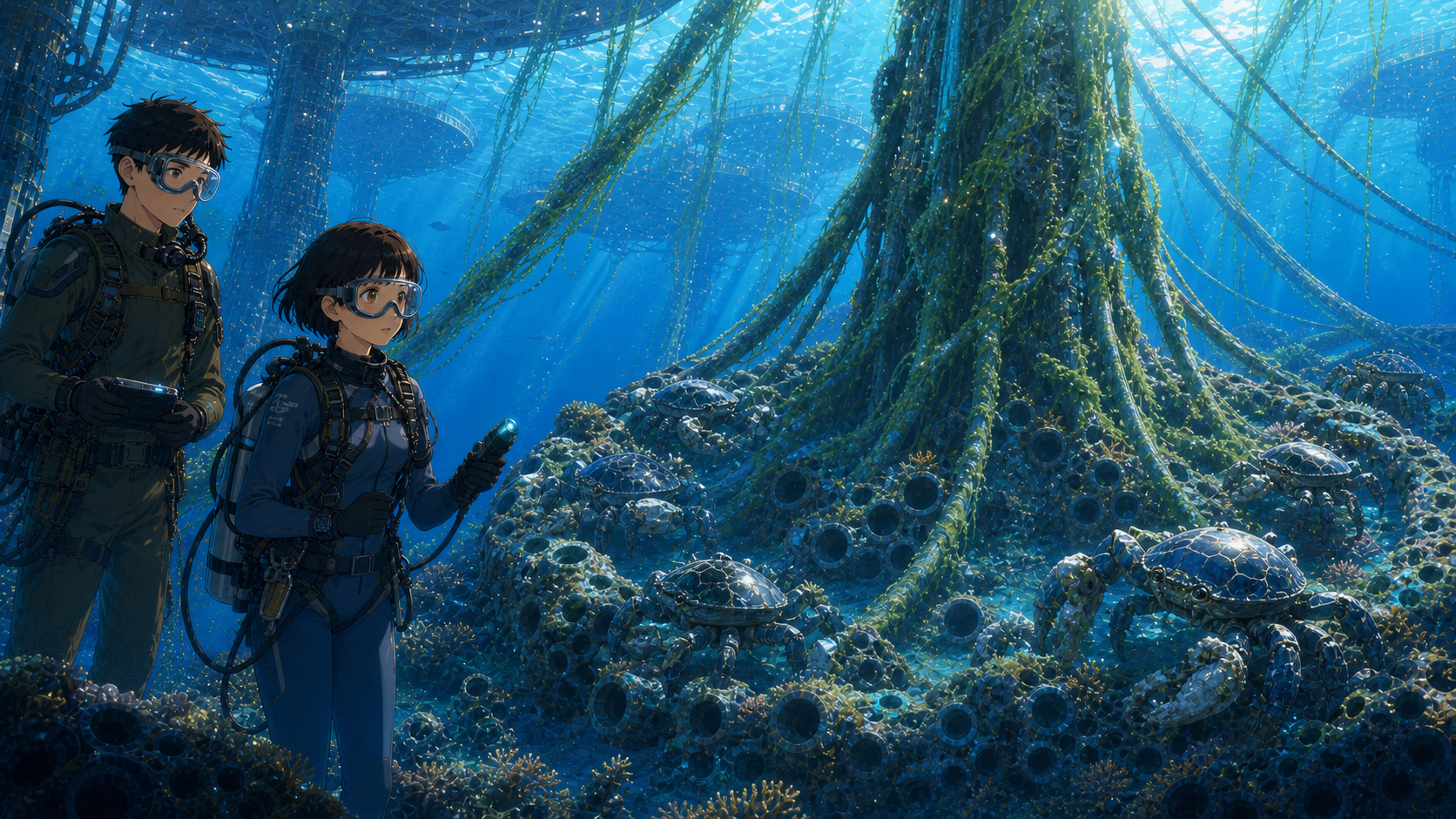
Anchor-Pore Reefbuilder Crab18
Meter-wide cobalt-black reefbuilder crab with blunt construction clawsModerate

Anchor-Pore Reefbuilder Crab

The crabs use six sturdy walking legs to brace against the current and two blunt claws to compact shell, mineralized algae, and loose cable fiber. They keep some pores open as slow-water passages while sealing openings exposed to the strongest repeated pulse. They are wary but do not attack Fang or K, and the group continues building when the observers remain outside the nursery core.

Read its way of life ↗
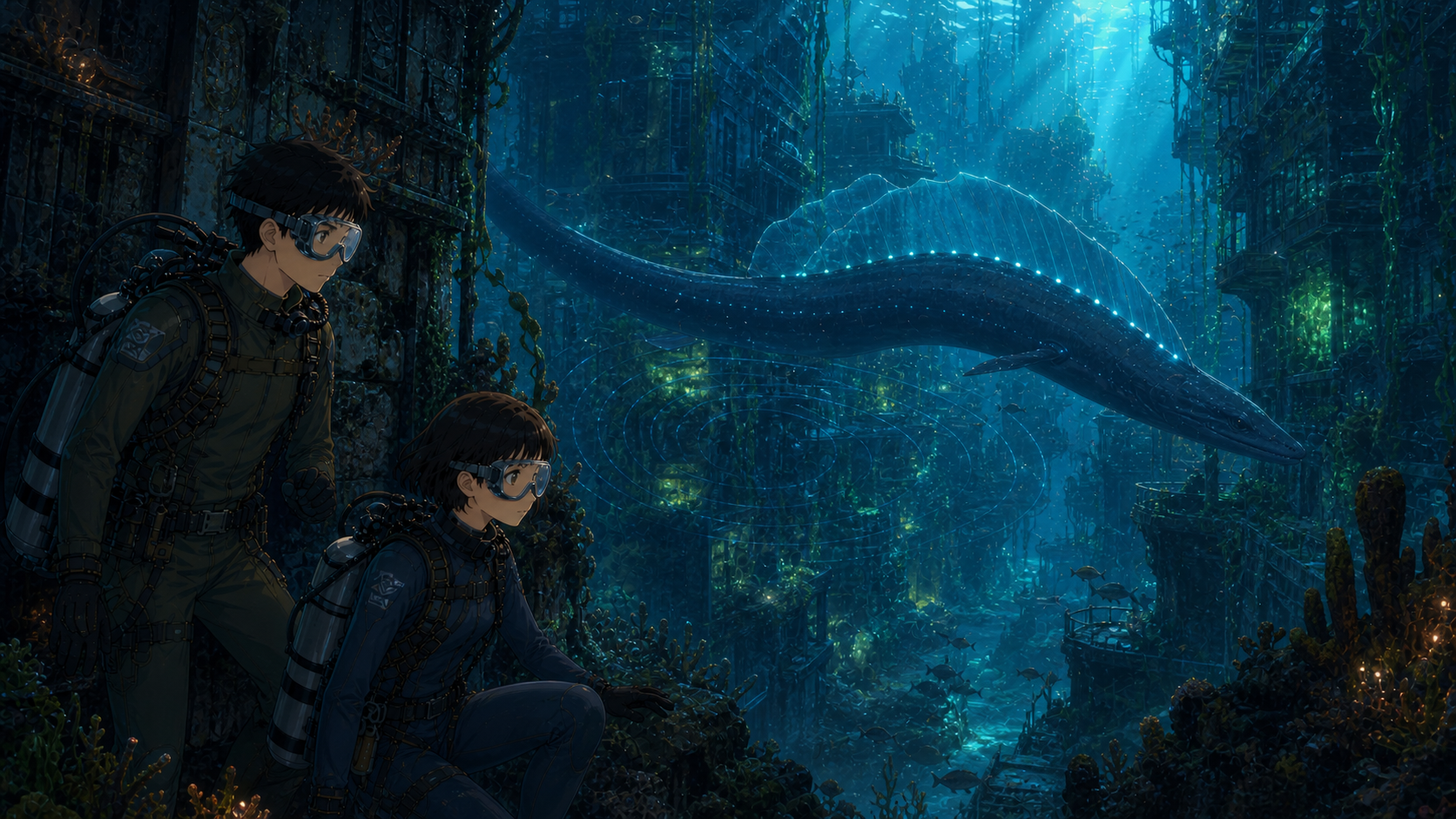
Echo-Sail Eel19
Solitary six-meter deepwater eel with a translucent acoustic sail and cyan lateral-line nodesHigh Risk

Echo-Sail Eel

The eel feeds on injured fish and deep-trench cephalopods. It normally keeps away from the floating cities. During sonar overload it stops at a strong echo and holds its ground rather than crossing the exposed sound field. The individual recorded here did not chase Fang or K after they shut down active sonar, backed into the building shadow, and stayed outside its guarded route.

Read its way of life ↗
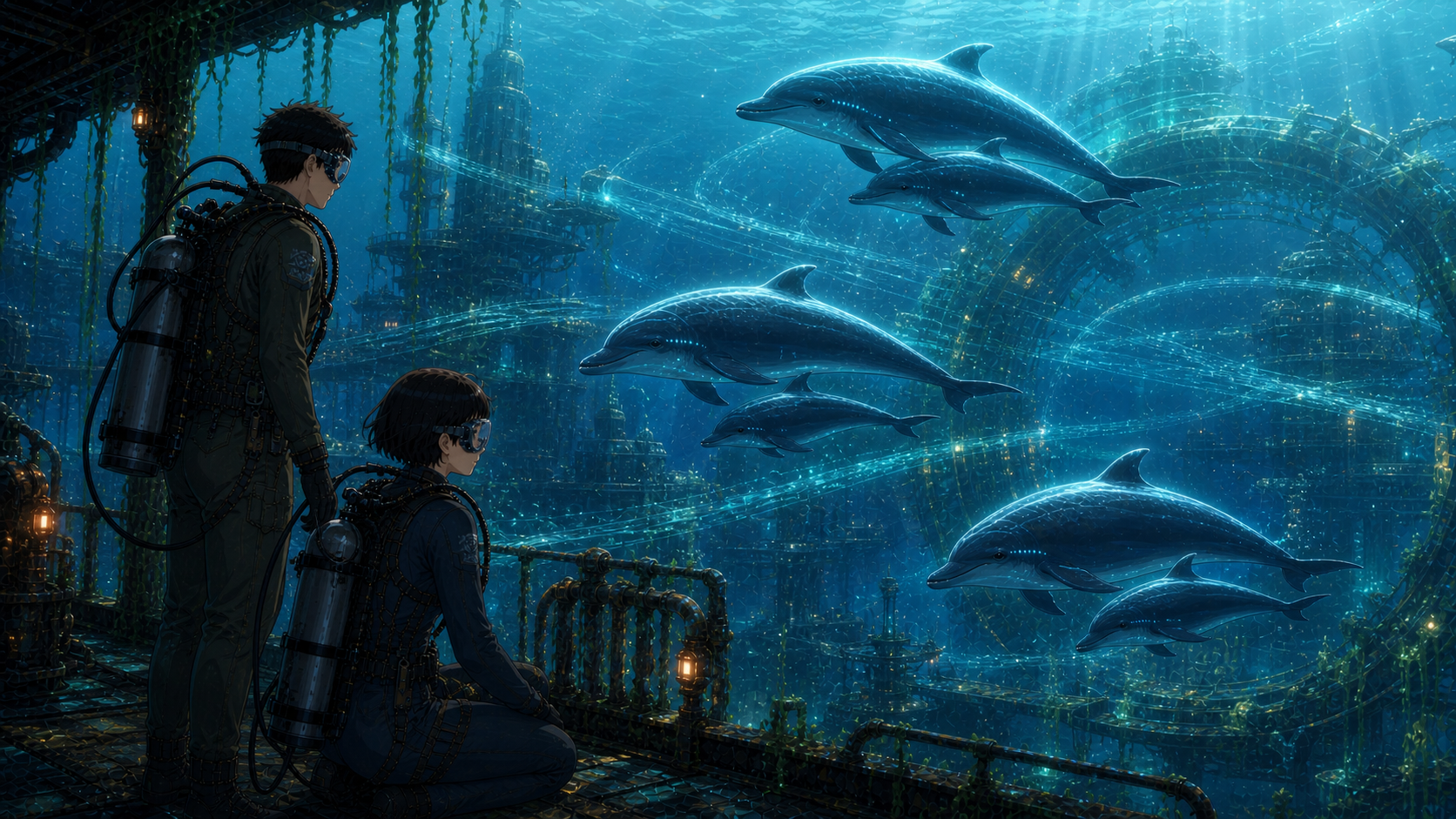
Harmonic-Tide Pilot Dolphin Pod20
Three intelligent family groups of four-meter pilot dolphins with translucent resonance crestsDivine. Non-aggressive, but the floating-city chain's anchoring, trench avoidance, and ecological passages depend on their shared soundscape

Harmonic-Tide Pilot Dolphin Pod

The dolphins do not obey city commands and do not prey on the corridor's four other core species. Each family holds a different part of a layered low-frequency chorus. They guide the floating cities only when the route preserves the pod, the nursery reef, and the shared ecological passage. During this encounter they remained calm, refused the false routes, and resumed guiding only after the human feedback ended.

Read its way of life ↗
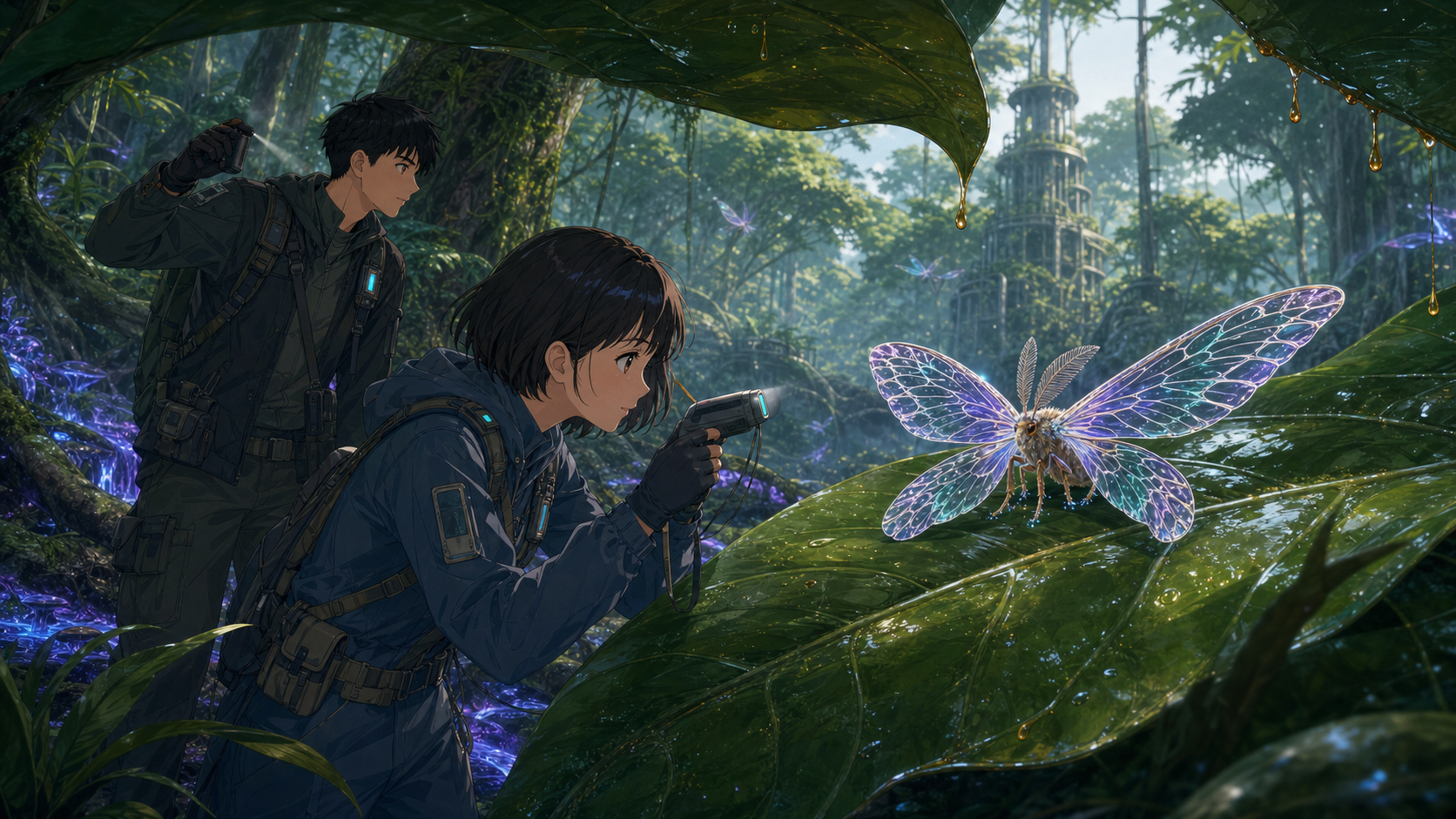
Dew-Vein Mycelial Moth21
Nocturnal mycelial moth with a roughly forty-centimeter wingspan, hollow dew-channel wing veins, and acid-neutralizing abdominal symbiontsLow Risk

Dew-Vein Mycelial Moth

The moths are nocturnal and non-aggressive. They gather dew in hollow wing veins, feed from luminous fungal flowers, and transport spores between wet leaf edges and dry canopy fissures. Under ordinary conditions they remain upstream until rain begins. During this encounter they left before rainfall, their upstream veins held less water, and the group recovered normal dew gathering only after crossing Spore-Drop Watershed Ridge.

Read its way of life ↗
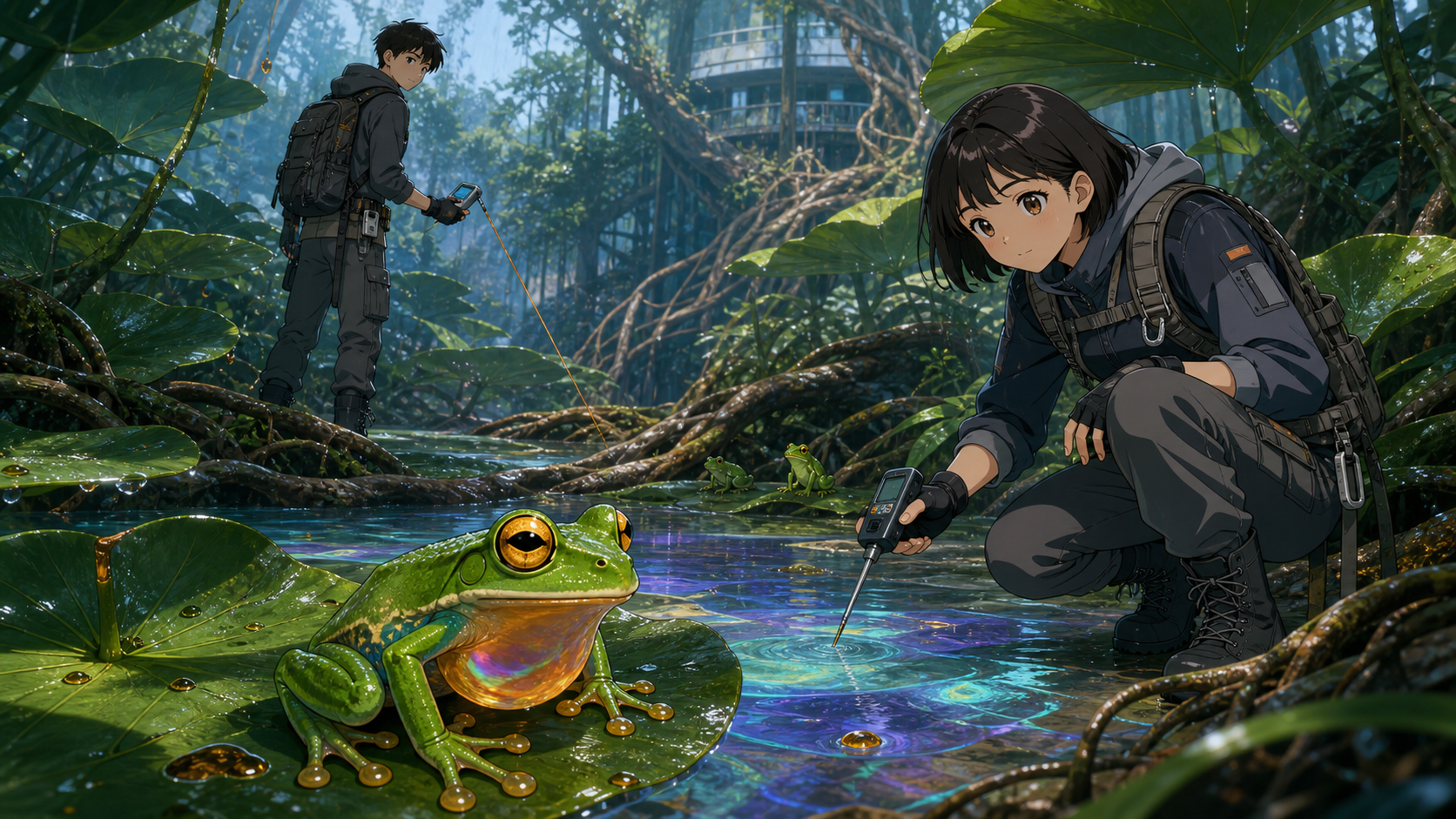
Rainbow-Sac Tree Frog22
Equatorial tree frog with broad adhesive toe pads and a translucent orange-gold throat reservoir that stores neutralized rainwaterLow Risk

Rainbow-Sac Tree Frog

The frogs are alert and non-aggressive. They cling to wet branches with broad toe pads, hunt fungal gnats and moth larvae, and move spores and seeds between pools. During this encounter they called only downstream. They continued feeding above the active fungal film at Calcifying Mycelial Terrace, then crossed the first dry branch again as soon as a blocked low-flow return gate was reopened.

Read its way of life ↗
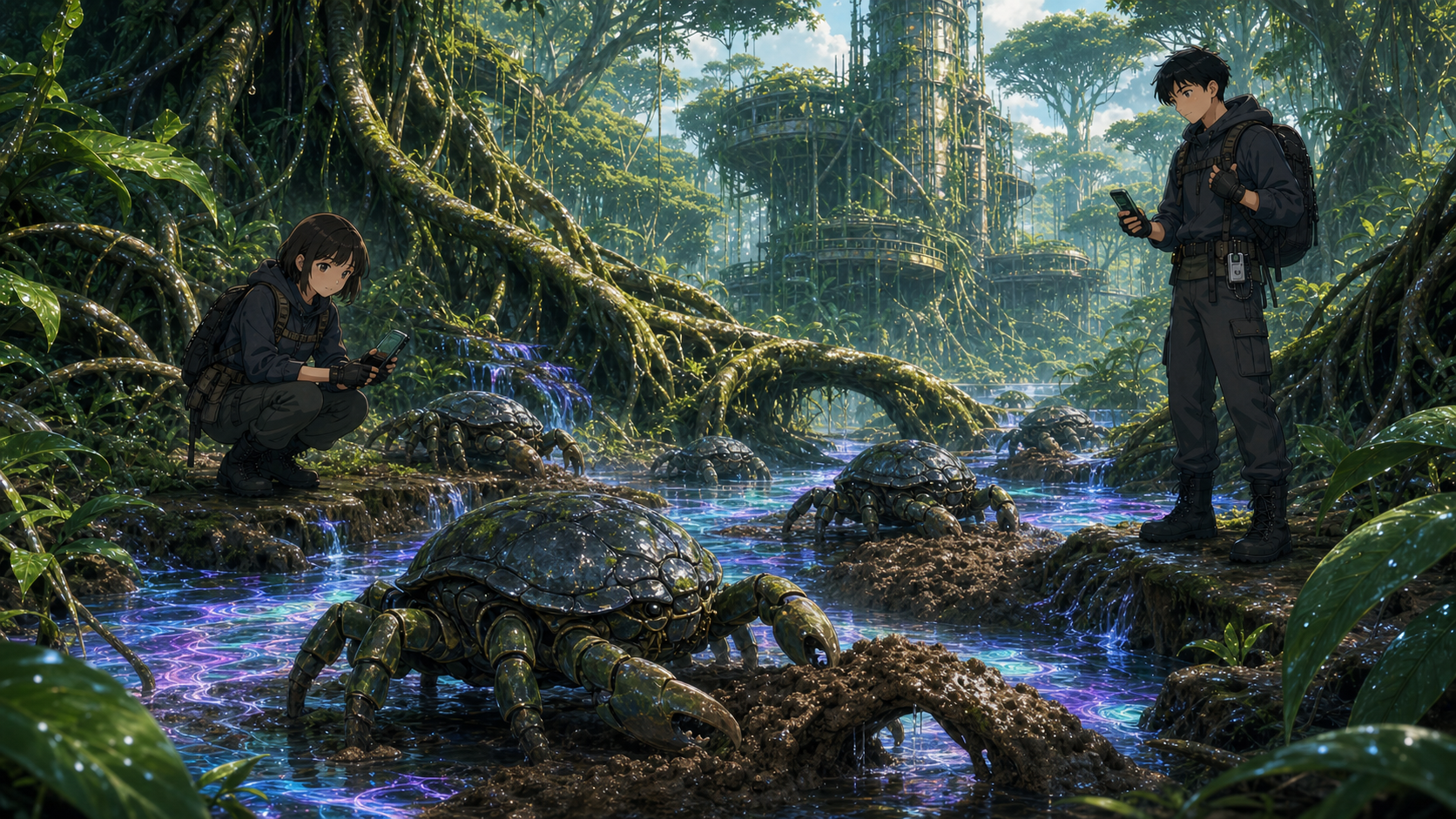
Root-Channel Armored Crab23
One-meter terrestrial crab with a mineralized blue-black carapace, six sturdy walking legs, and two blunt earth-moving clawsModerate

Root-Channel Armored Crab

The crabs sort fallen leaves and fungal matter, turn humus, and press sediment into arches that let water seep through dense buttress roots. They are wary but do not attack. During molting, the colony protects clean-water chambers and closes openings facing contamination while leaving its other channels intact.

Read its way of life ↗
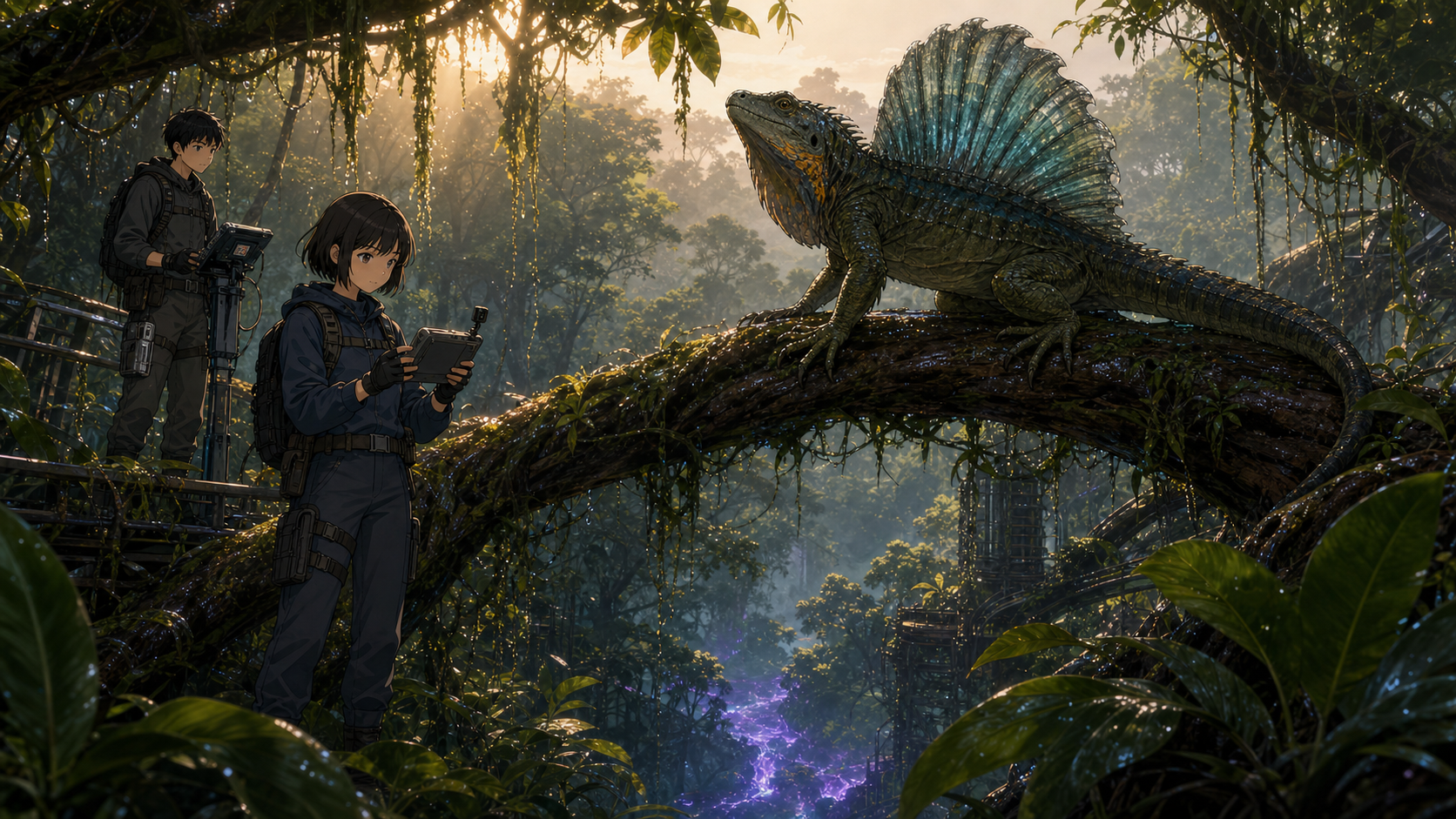
Mist-Sail Arboreal Lizard24
Five-meter arboreal lizard with deep olive scales, gripping toes, a heavy balancing tail, and a tall translucent sail that catches mist and senses air pressureHigh Risk

Mist-Sail Arboreal Lizard

The lizard is a high-risk territorial predator, but it warns before any contact. When water is scarce, it raises its sail, strikes the trunk with its tail, and blocks the branch. It does not pursue observers who stop outside the guarded bridge and leave its wet retreat open. During this encounter it remained on the last stable branch while Fang and K abandoned the direct route.

Read its way of life ↗
Monsoon Canopy-Crown Elephant Herd25
Divine-class tropical elephant herd, about eight meters at the shoulder, with broad cooling ears, wide groundwater-sensing foot pads, and moss-and-fungus-covered crown ridges across the backDivine

Monsoon Canopy-Crown Elephant Herd

The herd is not actively aggressive. Its divine-class risk comes from scale: a migration can reshape canopy gaps, tributaries, and seed distribution across the island. The animals follow lost groundwater and seed corridors rather than human settlements. They change course when the habitat's water signal returns.

Read its way of life ↗
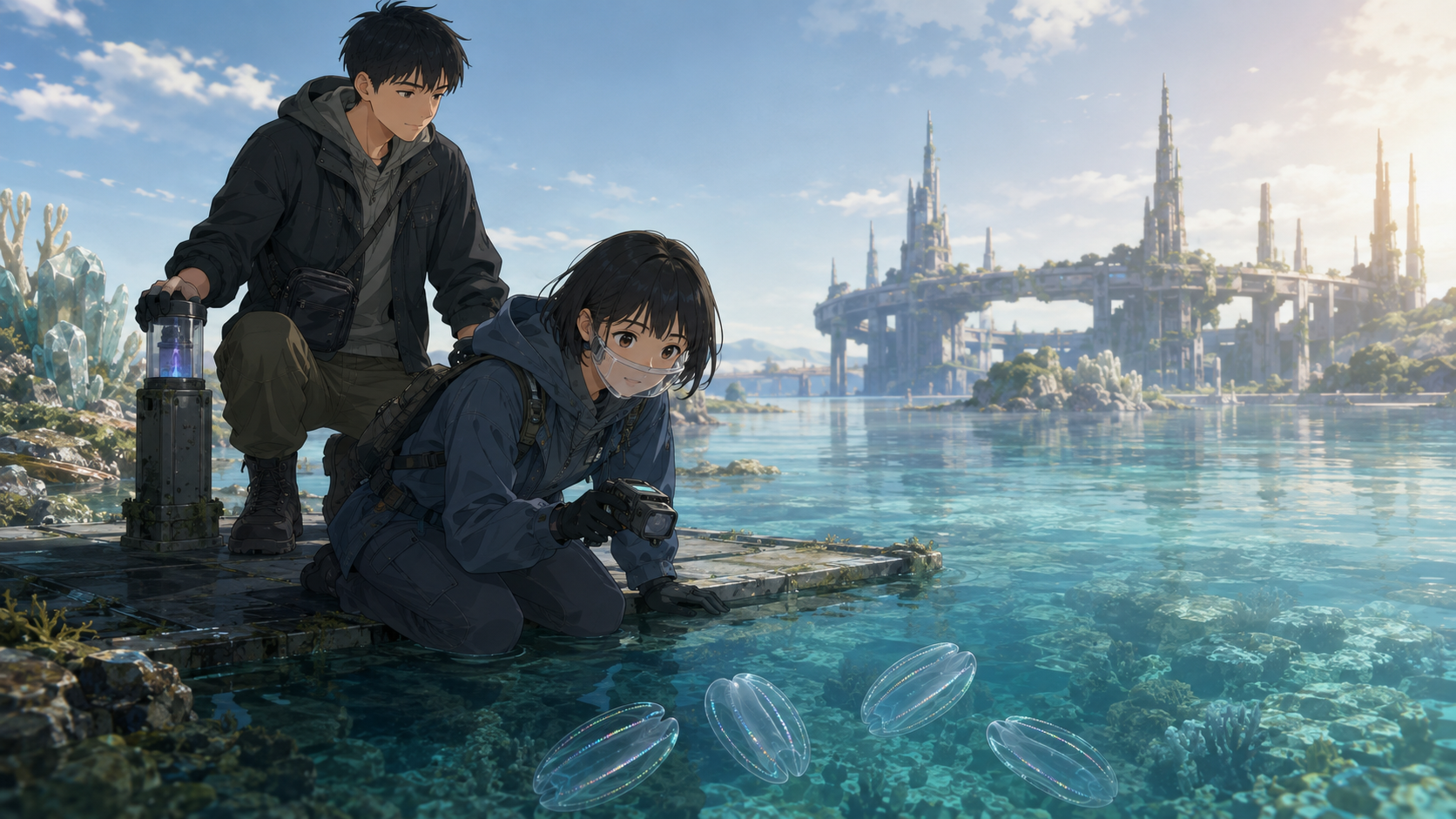
Crystal-Comb Current Jelly26
Transparent oval comb jelly with eight short iridescent ciliary rows, no long tentacles, and a rhythm that changes with current speed and suspended particlesLow Risk

Crystal-Comb Current Jelly

The jellies feed on plankton and drift calmly without long tentacles. Their eight short comb rows produce soft bands of color as they adjust to current speed. They do not swim through the metal-bearing return flow. Instead, they hold beyond its edge, then turn with the natural current once the artificial interference is removed.

Read its way of life ↗
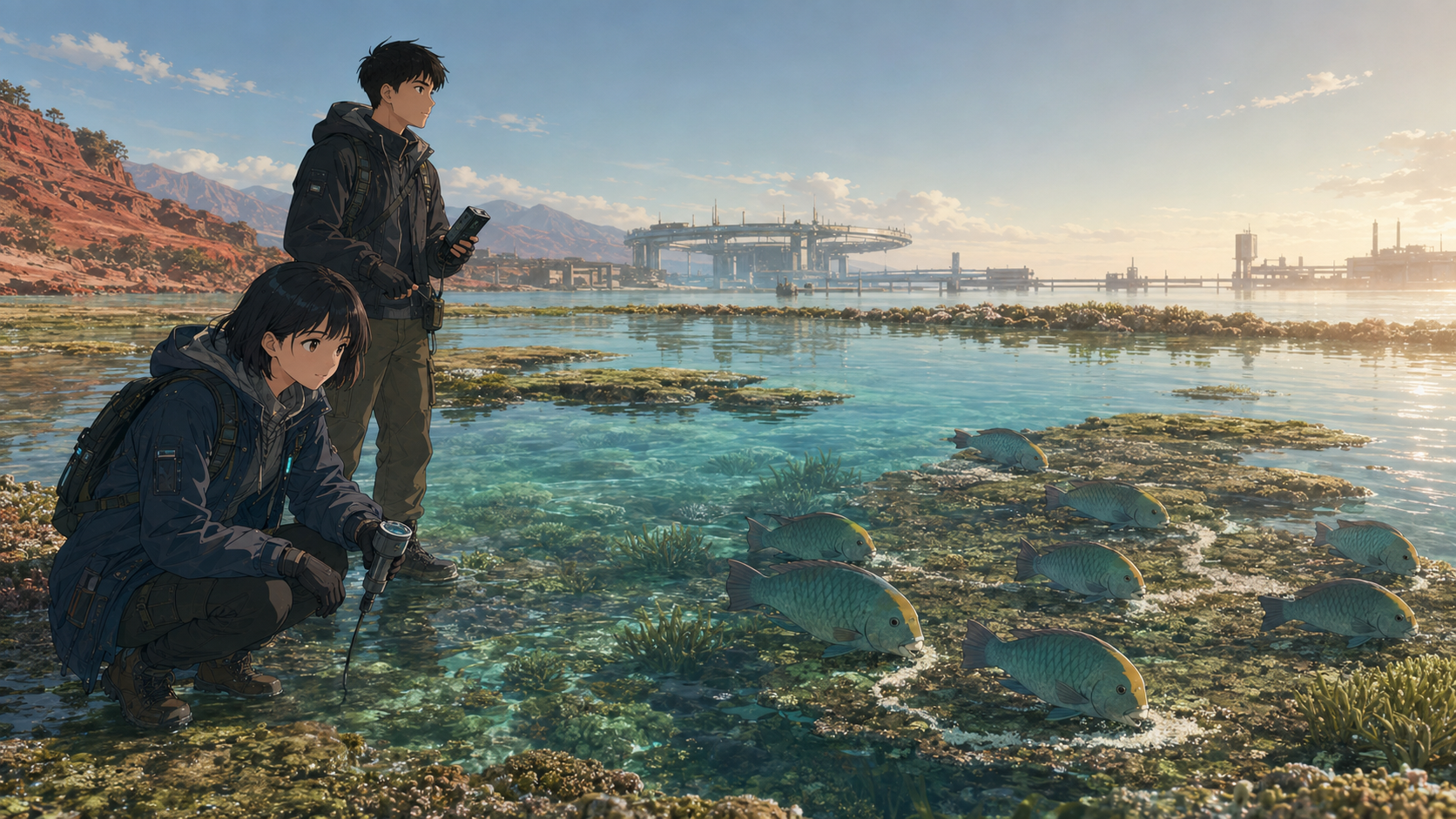
Sand-Crown Reef Parrotfish27
Half-meter reef parrotfish with teal scales, muted gold forehead crowns, closed beak-like dental plates, and dark paddle-shaped tailsModerate

Sand-Crown Reef Parrotfish

The fish scrape algae from the reef with closed beak-like dental plates and release carbonate sand after feeding. They remain in a calm school and graze only where reef-harvest vibration has not disturbed the algae surface. When the low-frequency drill is shut down, the school crosses back into the old algae flat and the sand belt begins to reconnect with the seagrass nursery corridor.

Read its way of life ↗
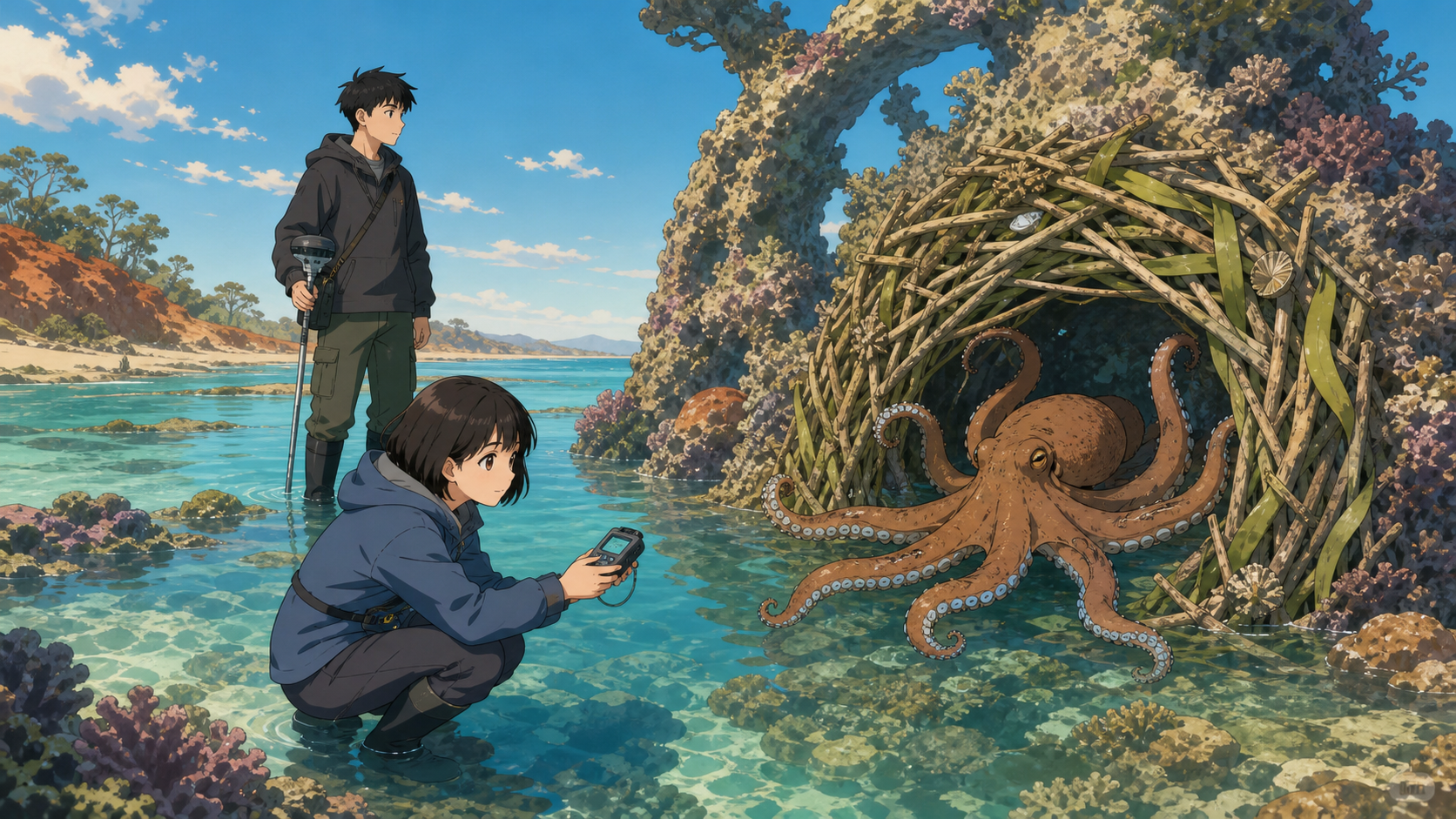
Gate-Pore Reef-Weaver Octopus28
Intelligent reef octopus with a two-meter arm span, warm umber matte skin, eight natural arms, pale cyan suckers, and a flexible woven denIntelligent

Gate-Pore Reef-Weaver Octopus

The octopus uses eight arms and pale cyan suckers to loosen, tighten, and rebuild flexible knots as tidal pressure changes. It works with empty shells, naturally fallen coral branches, and seagrass fibers rather than cutting living reef. When mechanical debris jams a pore, it closes the exposed entrance while maintaining water exchange through safer openings. It remains alert but does not attack.

Read its way of life ↗
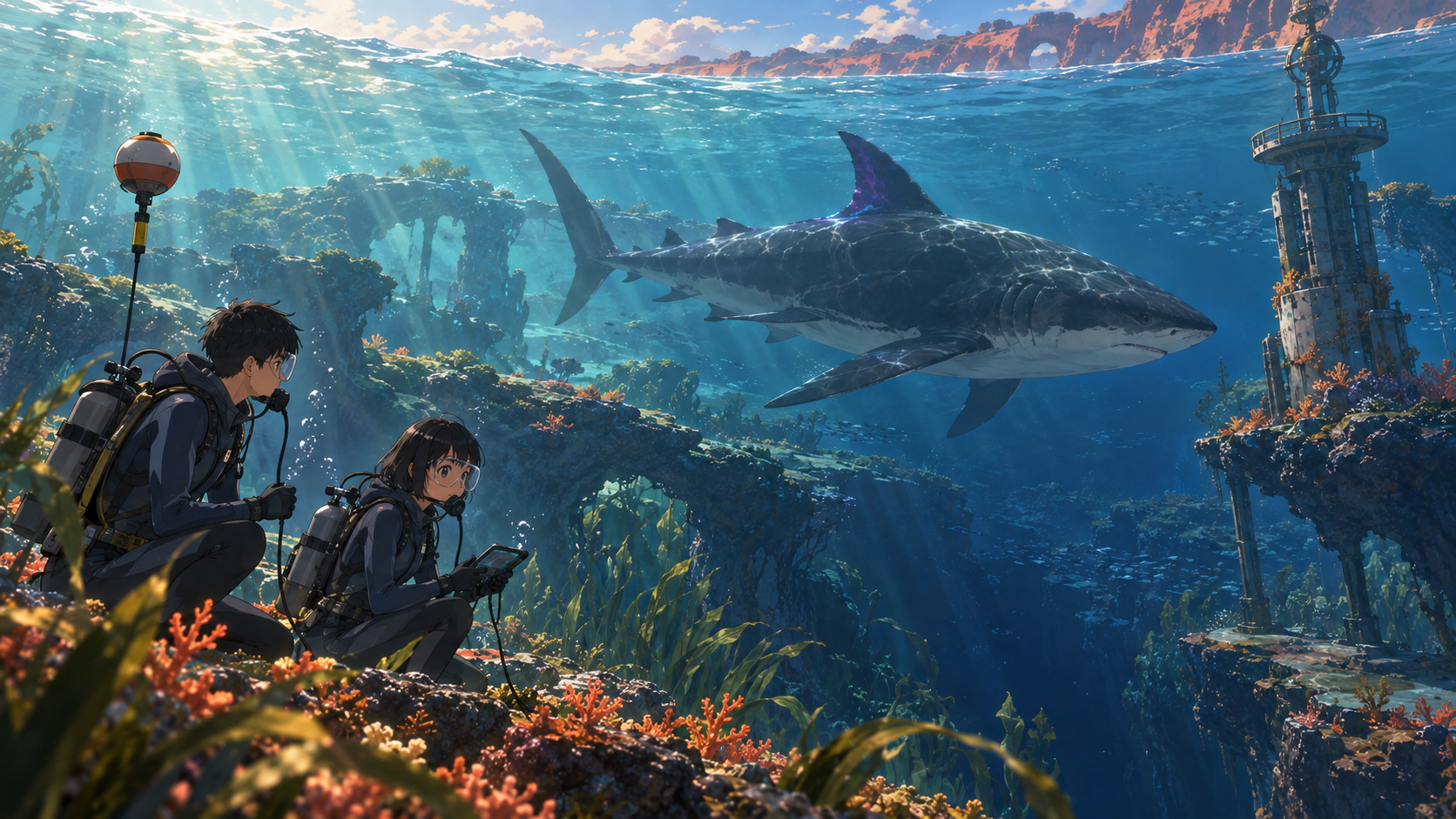
Rift-Tide Crystal-Fin Shark29
Eight-meter reef shark with a streamlined body, charcoal-gray back, pale belly, and one restrained mineral-violet dorsal-fin ridgeHigh Risk

Rift-Tide Crystal-Fin Shark

The shark follows the outer-blue deep channel on a calm territorial patrol. It keeps its mouth closed, changes direction without charging, and uses measured tail beats and turning lines to maintain the distribution of medium-sized fish. It does not approach human structures voluntarily. When a reflective beacon illuminates the wrong shallow corridor, it turns away rather than entering.

Read its way of life ↗
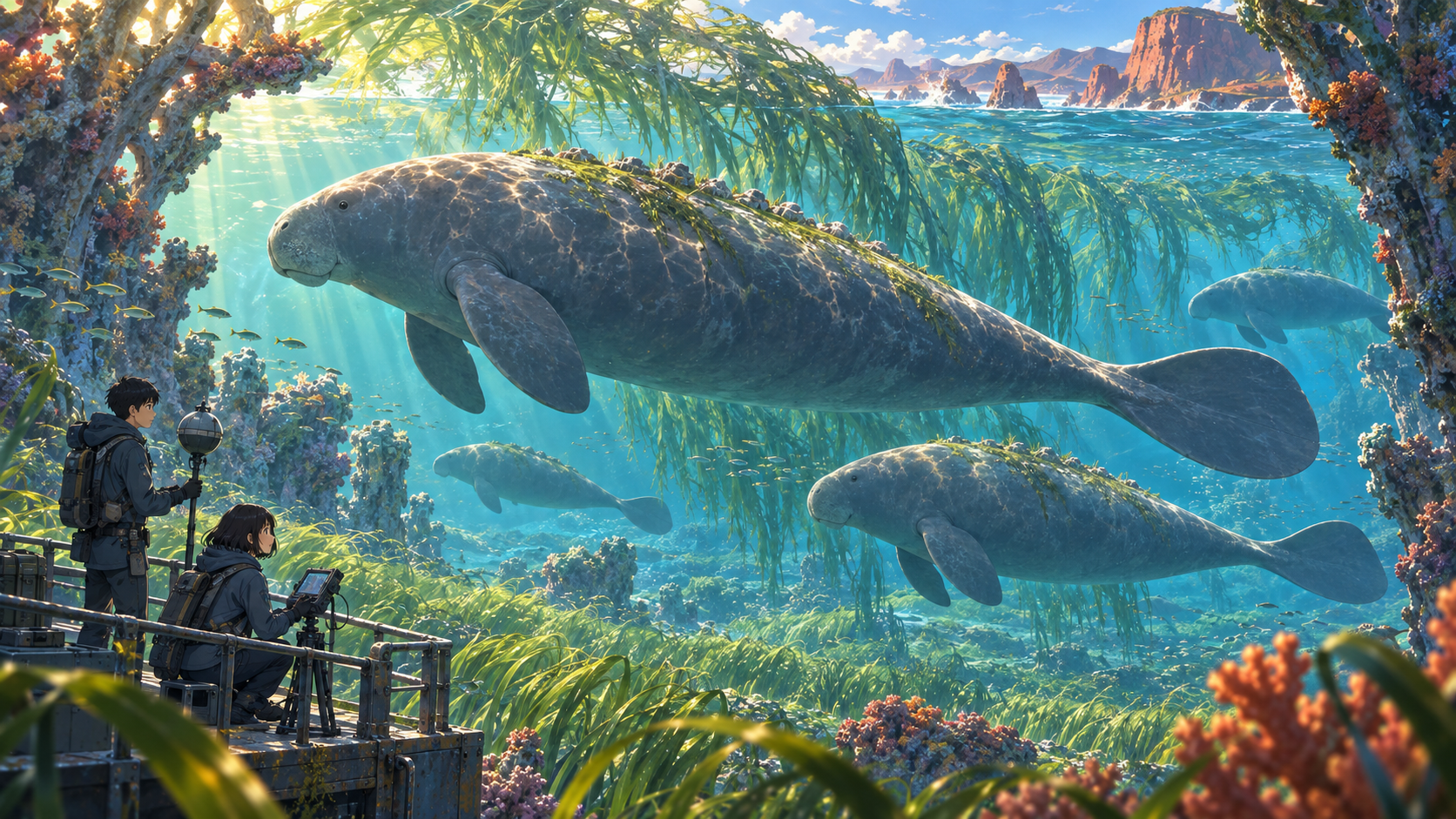
Ark-Ridge Sirenian Herd30
A calm, multigenerational herd of ten-meter sirenians with rounded snouts, paired fore flippers, broad horizontal paddle tails, and low mineralized dorsal ridgesDivine; not actively aggressive, but the herd's migration reshapes seagrass corridors and the distribution of loose reef fragments

Ark-Ridge Sirenian Herd

The herd selectively grazes older seagrass with rounded snouts. Its broad horizontal paddle tails move loose crystal fragments without cutting living reef, while low mineralized dorsal ridges carry seagrass seed between beds. The animals pause outside blocked gaps, follow restored water flow, and choose their own route through the corridor. They do not actively attack.

Read its way of life ↗
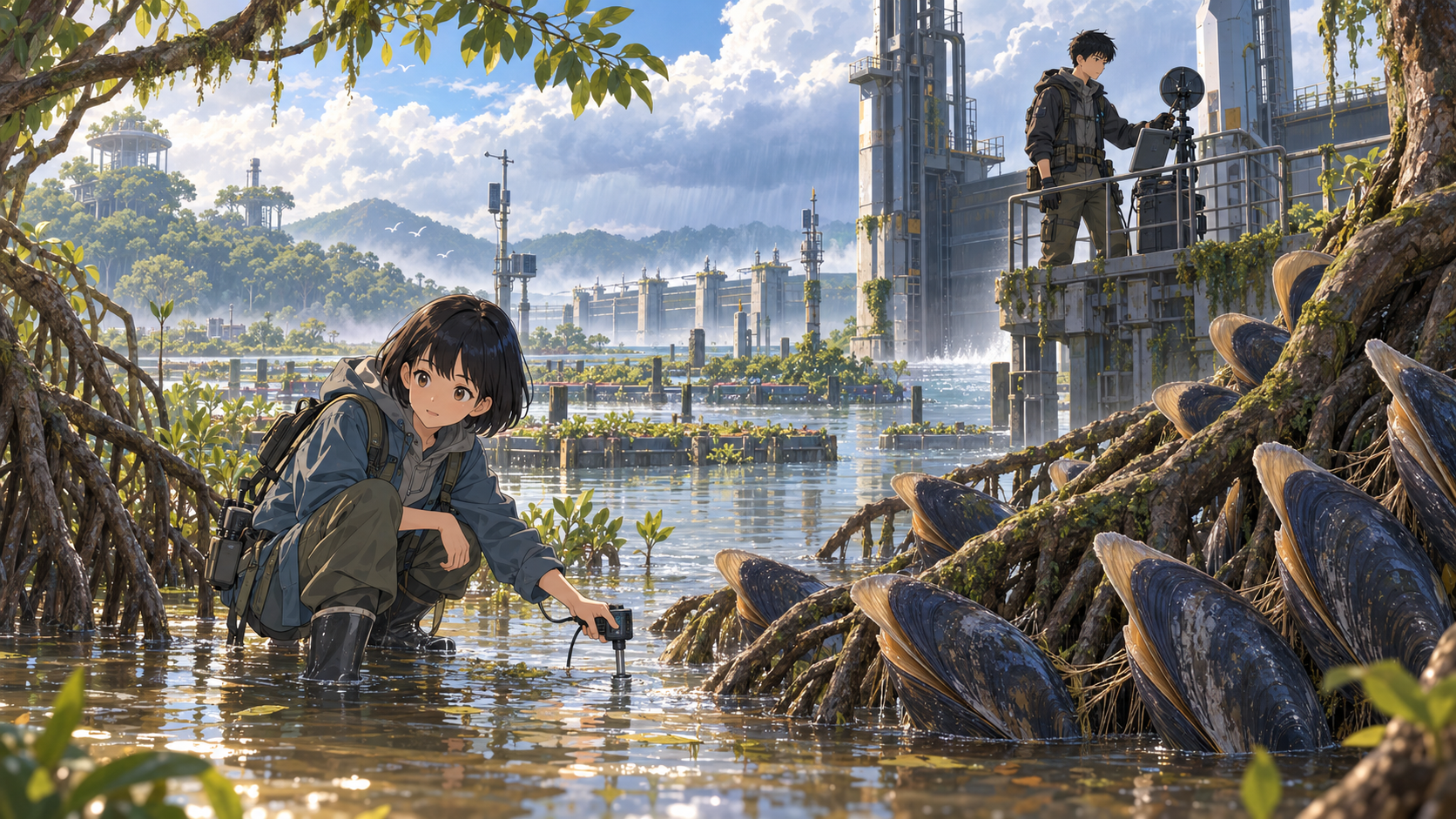
Rainfold Sail Mussel31
Sixty-centimeter brackish-water mussel with an asymmetrical indigo-gray shell, a broad sail-like upper lip, pale amber mantle edges, and strong root-clinging byssal threadsLow Risk

Rainfold Sail Mussel

The broad upper shell lip guides a gentle current into the gills. Before each reverse low-frequency pressure pulse, the pale amber mantle withdraws and the entire colony closes in sequence. The mussels stay shut while suspended silt covers the roots. When one pump segment is returned to the natural tidal range, individuals nearest the root crown reopen first, followed by the rest of the colony.

Read its way of life ↗
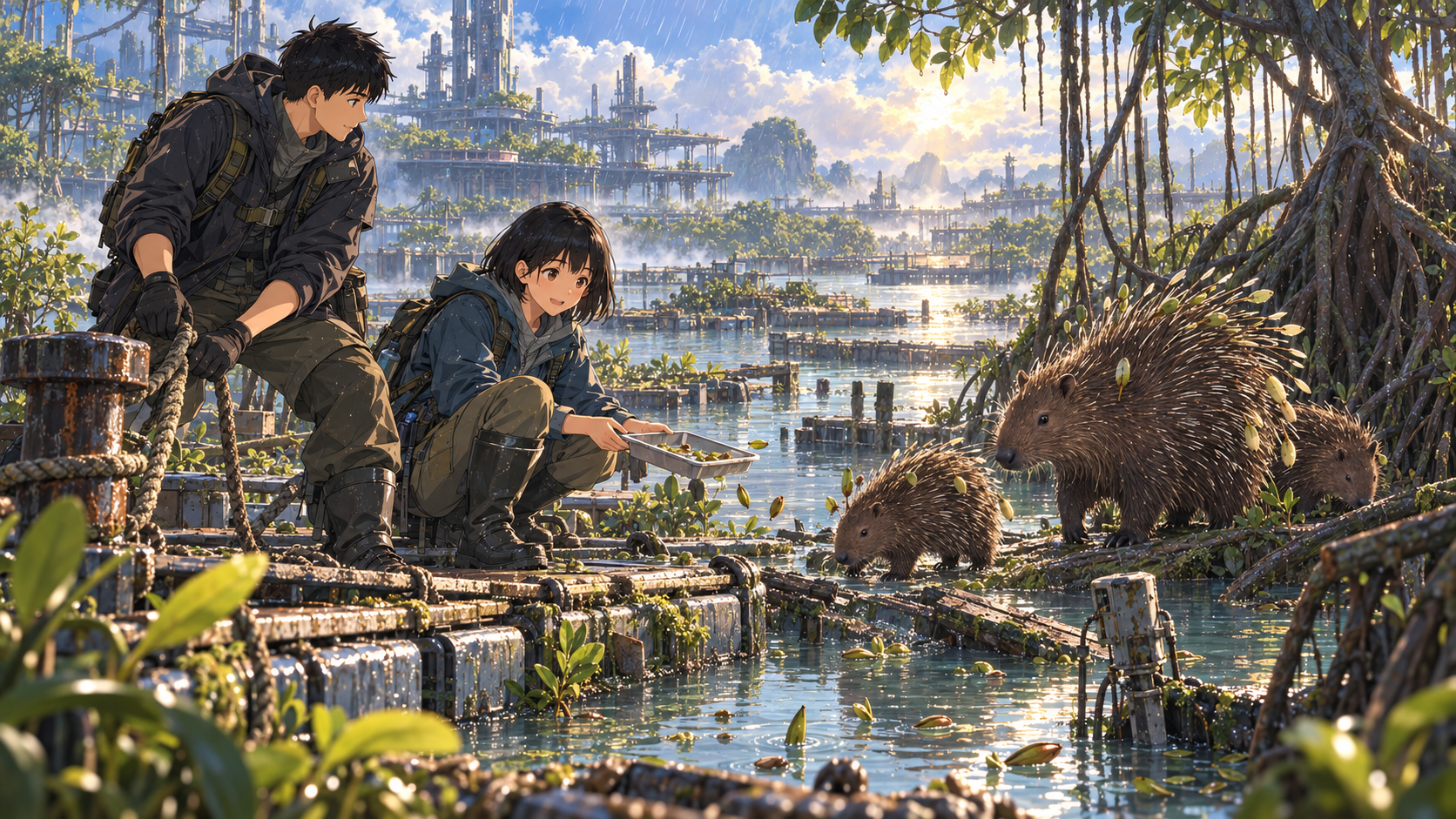
Floating-Seed Quill Porcupine32
One-meter semiaquatic porcupine with matte chestnut quills, pale barbless seed-carrying tips, broad splayed wetland paws, a compact muzzle, and a short buoyant tailLow Risk

Floating-Seed Quill Porcupine

The broad, barbless ends of the chestnut quills pick up floating seeds without piercing them. Wide splayed toes spread body weight between rafts and wet roots. Families use raised mounds as seed caches and avoid root rafts destabilized by reverse flow. After the pump sequence slows and the rafts settle, they return without being driven and transport seeds across washed-out mud ridges.

Read its way of life ↗
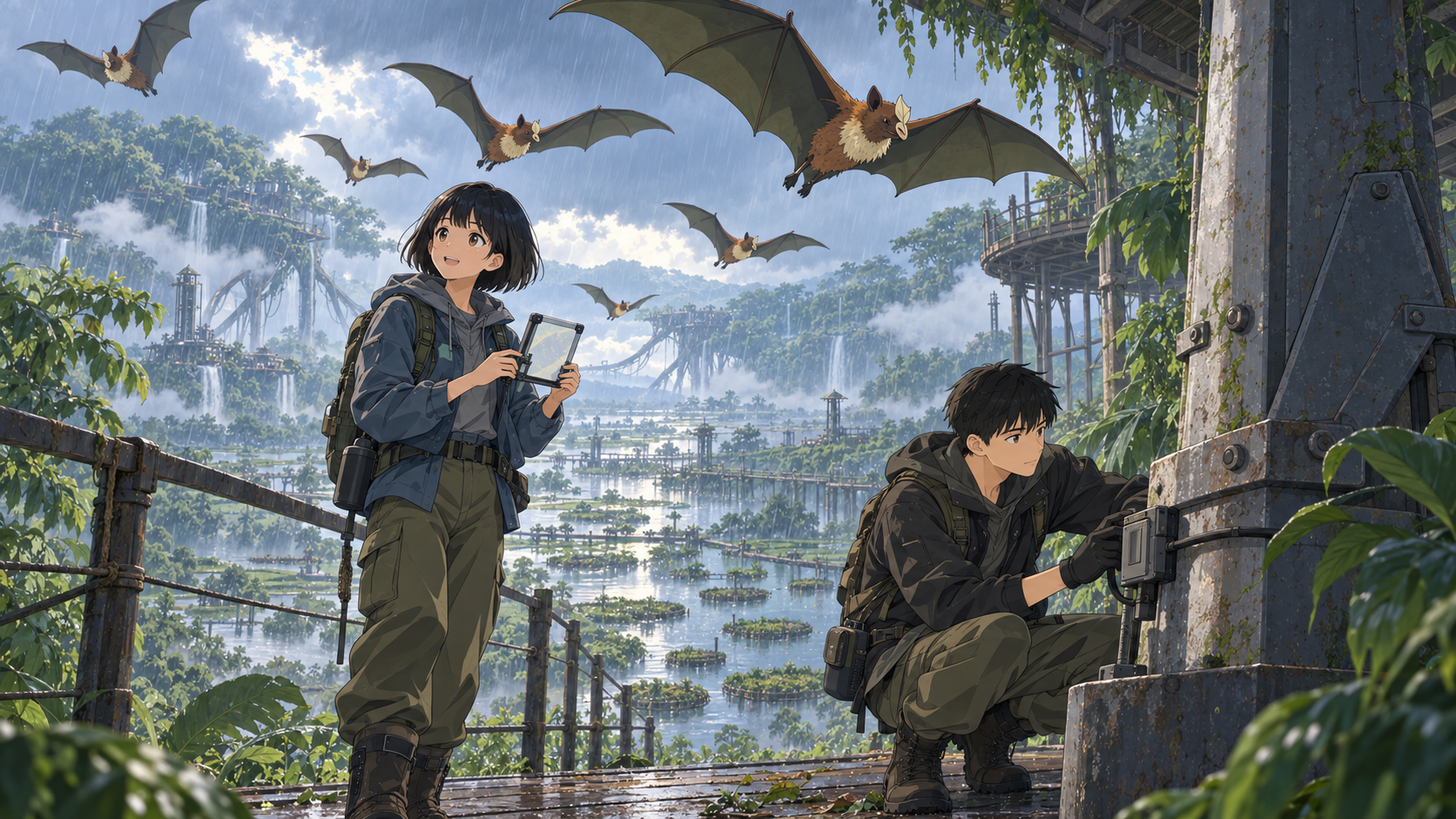
Monsoon Flower-Nosed Flying Fox33
Large nectar-feeding flying fox with a 1.8-meter wingspan, russet fur, matte dark-olive wing membranes, a pale leaf-shaped nose pad, and a pollen-carrying chest ruffModerate

Monsoon Flower-Nosed Flying Fox

Groups glide low through gaps in slanting rain, using stable wind pressure and floral scent to hold a canopy route. Pollen collects naturally in the long chest ruff as they feed on nectar. When low-frequency vibration is amplified through a tower brace, the entire group detours around the seed vault. Once the brace is isolated, the bats return through the rain window and carry pollen back toward the floating seed rafts.

Read its way of life ↗
JOURNEY DISPATCH

Subscribe to K's Hunting Log

Follow Fang and K into a world that has not yet been understood.