Sand-Crown Reef Parrotfish
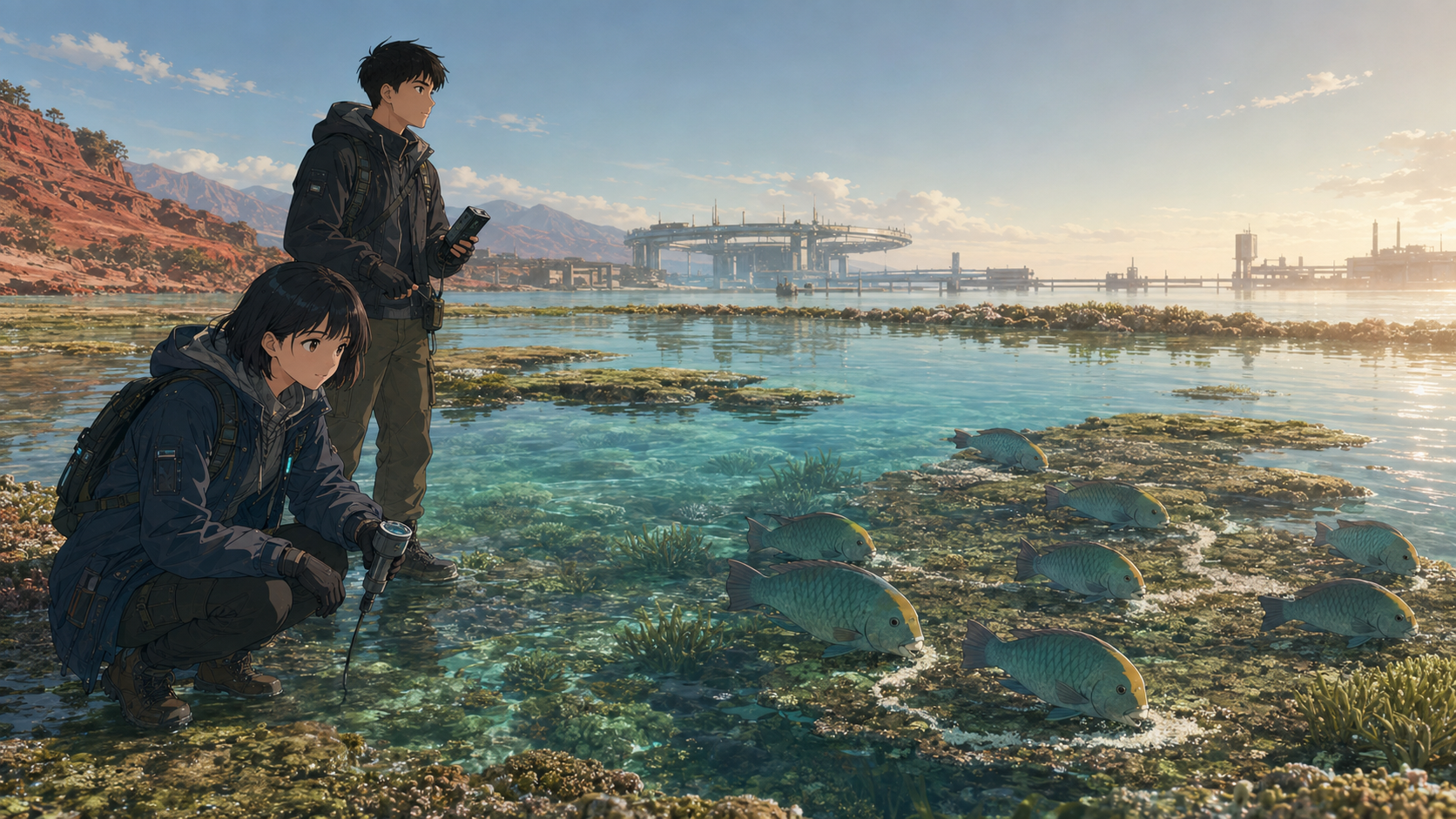
The fish scrape algae from the reef with closed beak-like dental plates and release carbonate sand after feeding. They remain in a calm school and graze only where reef-harvest vibration has not disturbed the algae surface. When the low-frequency drill is shut down, the school crosses back into the old algae flat and the sand belt begins to reconnect with the seagrass nursery corridor.
Observation LevelCoastal field note
First SeenDay 02 · Parrotfish Reef-Grazing Flat
HabitatShallow reef flats, algae-covered crystal coral, carbonate-sand belts, and seagrass root beds along the Tide Vein outside Coral Ark Harbor
VariantsShort-snouted juveniles, half-meter teal adults, and calm eight-fish schools that graze the reef
Habitat and Mechanism
Shallow reef flats, algae-covered crystal coral, carbonate-sand belts, and seagrass root beds along the Tide Vein outside Coral Ark Harbor。Crystal corals adsorb metal and radioactive particles from seawater, while seagrass roots hold the carbonate sand produced by grazing parrotfish. Flexible reef pores and deeper channels keep the hard breakwater open to larvae, fish, and large migrants. Excessive cutting by automated reef-harvesting arms released loose crystal fragments and sent vibration through this system. The Sand-Crown Reef Parrotfish abandoned the affected algae flat and grazed only beyond the vibration zone, breaking the sand belt that replenished the seagrass root bed.
Enter Tide-Vein Crystal-Reef Restoration Corridor ↗Behavior and Ecological Role
The fish scrape algae from the reef with closed beak-like dental plates and release carbonate sand after feeding. They remain in a calm school and graze only where reef-harvest vibration has not disturbed the algae surface. When the low-frequency drill is shut down, the school crosses back into the old algae flat and the sand belt begins to reconnect with the seagrass nursery corridor.
Their grazing keeps the reef surface open while supplying carbonate sand to seagrass roots. A break in that sand trail records where machinery displaced the school. Its return shows that the old algae flat and nursery passage are becoming continuous again.
Form and Identification
Short-snouted juveniles, half-meter teal adults, and calm eight-fish schools that graze the reef
- Biologically plausible reef-parrotfish anatomy at roughly half a meter in length
- Teal scales with restrained muted-gold crowns across the forehead
- Closed beak-like dental plates used to scrape algae from reef surfaces
- Dark paddle-shaped tails and a calm school of eight
- A carbonate-sand trail left behind after grazing
Observation Rule
Fang and K keep outside the school and do not chase the fish or force them to change direction. Fang uses non-invasive observation and analyzes only naturally expelled sand. K removes only artificial cable fragments without touching living coral, keeps active weapons stowed, and shuts down human reef-harvest interference. The school chooses whether and when to cross back into the old algae flat.
At Parrotfish Reef-Grazing Flat, the school fed only on algae surfaces beyond the machinery's vibration and left a visibly interrupted sand trail. Fang read its response through non-invasive observation. K remained on the outer line, marked load-bearing points, return flow, and retreat routes, and kept every active weapon stowed.