The Broken Sand Belt
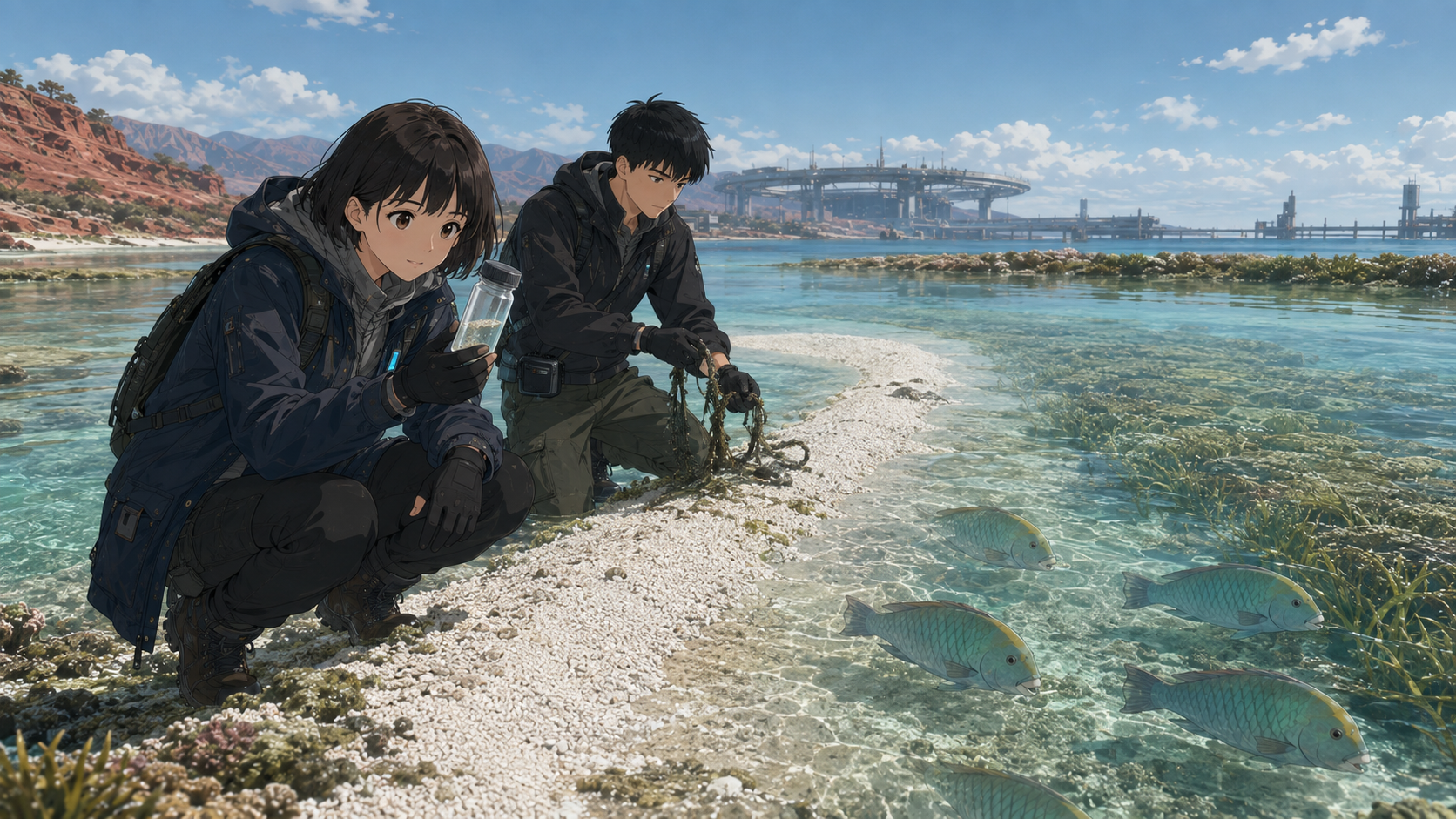
Pressure and crystal-reef reflections were still shifting at Parrotfish Reef-Grazing Flat. The school grazed only beyond the reach of the machinery's vibration, leaving a broken trail of pale sand. Fang separated the fishes' response into current, suspended particles, and movement. I marked the load-bearing points, return flow, and retreat line from outside the school. The missing sand was not a shortage. It was the edge of the disturbance.
Field Observation
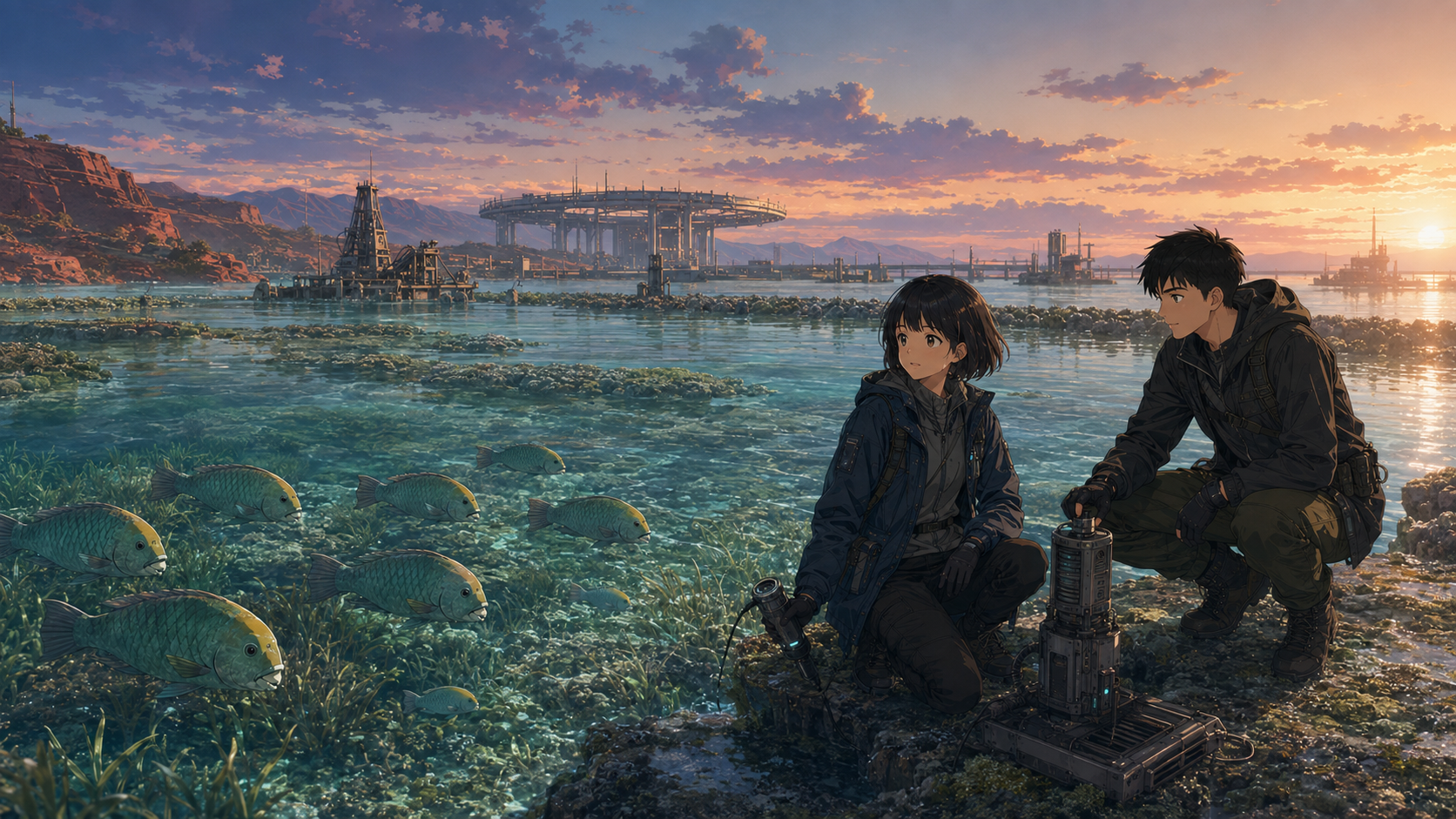
We followed the old Tide Vein into Parrotfish Reef-Grazing Flat and held to the outer edge of the school. The broken sand belt led us to White-Sand Seagrass Nursery Ridge, where Fang analyzed naturally expelled reef sand while I removed artificial cable fragments without touching living coral. In the evening, we shut down the low-frequency reef-harvest drill and waited outside Algae-Trace Return Gate instead of entering the fishes' route.
Morning · Parrotfish Reef-Grazing Flat
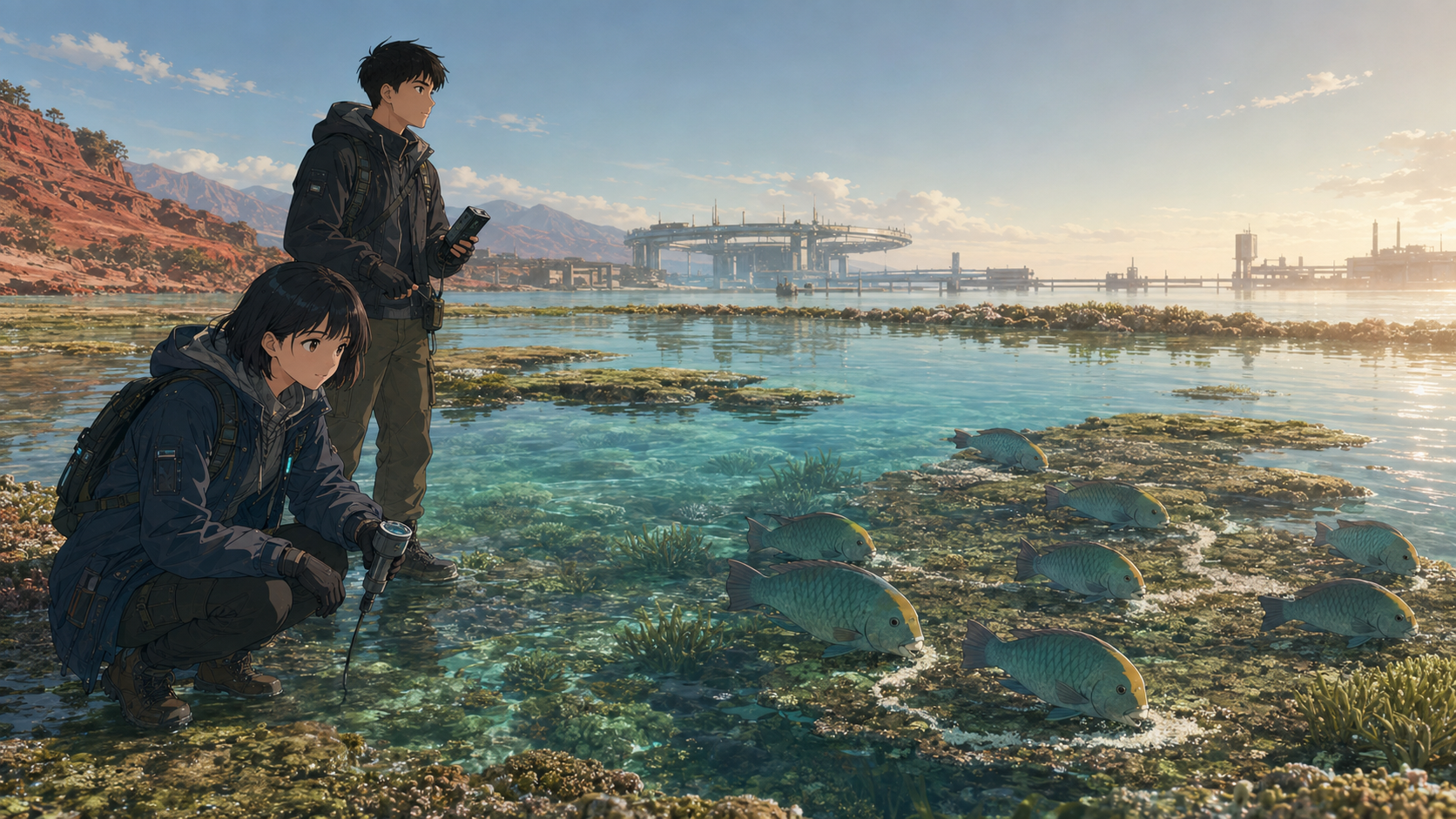
Sand-Crown Reef Parrotfish scraped algae only from undisturbed reef. Their closed dental plates left a pale carbonate trail that stopped sharply beside the vibration zone. Fang mapped the grazing boundary with non-invasive sensors. I stayed outside the school, kept every active weapon stowed, and marked our retreat line. We did not drive the fish toward the abandoned flat.
Noon · White-Sand Seagrass Nursery Ridge
Fang compared naturally expelled reef sand with the thinning sediment around the seagrass roots. I removed artificial cable fragments from the outer channel and did not touch living coral. The sand itself confirmed the missing link: the fish had stopped grazing where the old harvesting equipment still shook the reef.
Evening · Algae-Trace Return Gate
We shut down the low-frequency reef-harvest drill and waited beyond the algae flat. The school crossed back on its own and resumed feeding. A pale sand trail began to join the old bed again, and the nursery passage began to reconnect. We changed the machine and left the route to the fish.
Habitat Causality
Crystal coral filters metal and radioactive particles from seawater, parrotfish grazing supplies carbonate sand, and seagrass roots hold that sand in the living breakwater. Automated reef harvesting cut too much living reef and sent vibration through the shallow flat. The fish abandoned the affected algae surface, interrupting the sand supply to the seagrass nursery. Removing artificial cable debris and shutting down the low-frequency drill restored the conditions for the school to return without being driven or redirected.
Species Behavior
The half-meter fish moved as a calm school of eight. They used closed beak-like dental plates to scrape algae and released carbonate sand after feeding. They did not enter the vibration zone. Once the drill stopped, they crossed back into the old algae flat by choice and resumed the grazing path that connected reef surface, sand belt, and seagrass roots.
「A broken trail does not always mean the animal is gone. Sometimes it marks the point where our noise began. We stopped the drill. The fish restored the line.」