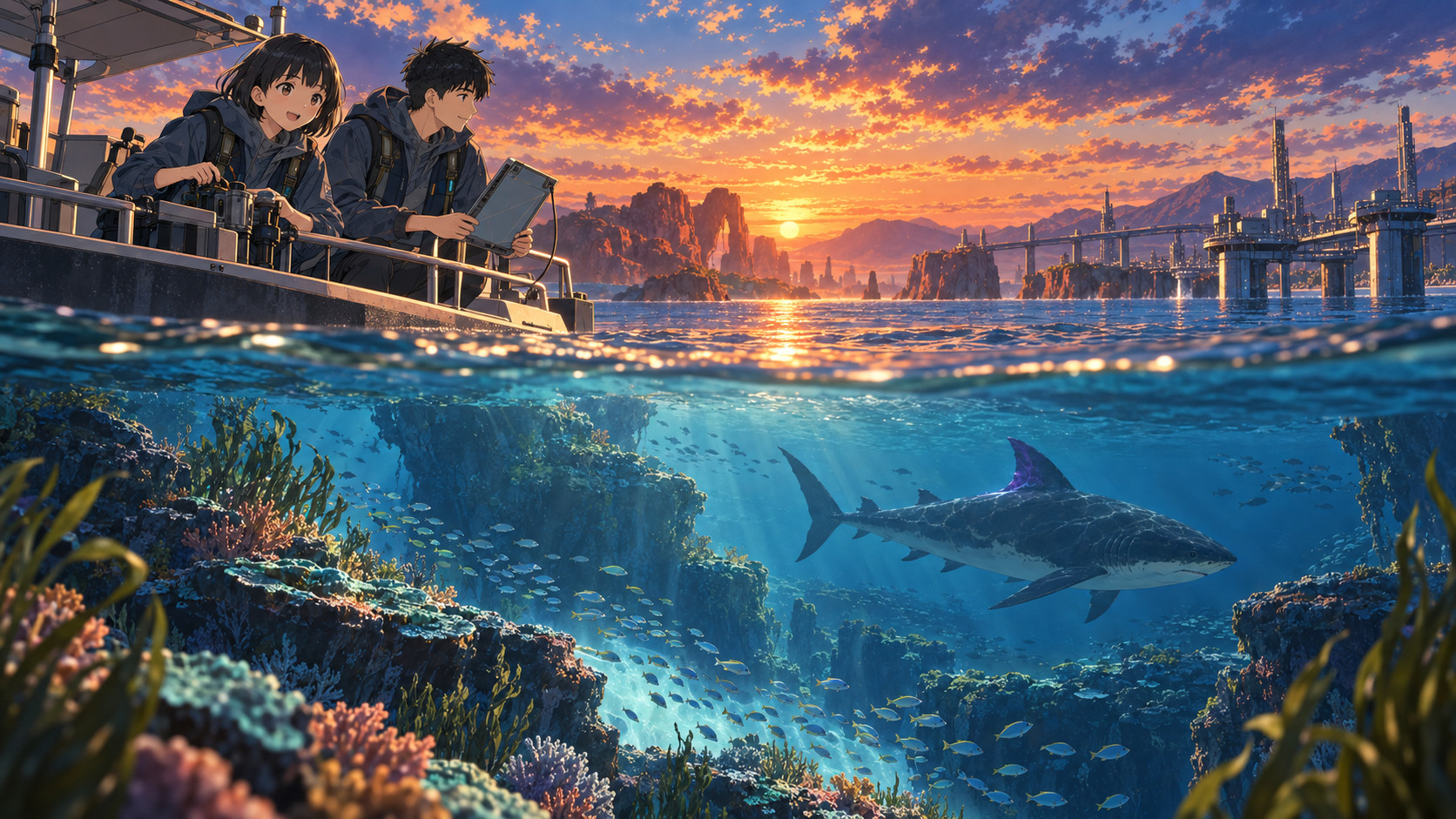
Tide-Vein Crystal-Reef Restoration Corridor is a five-day field route where Fang and K document a local ecology through observation, distance, and response.
Day 01 / 09.04
The Current Stopped Before the Jelly Did
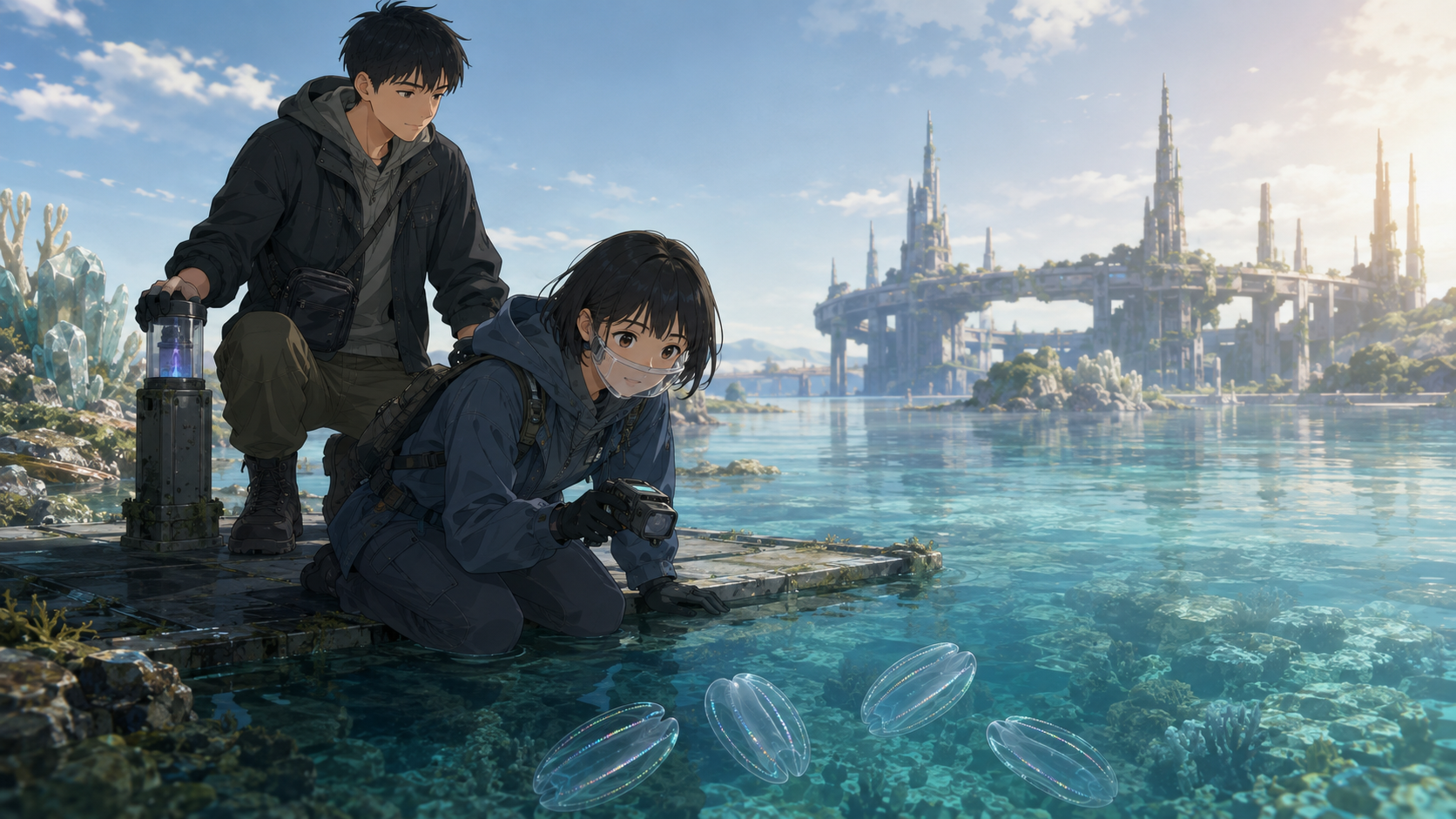
Crystal-Comb Current JellyLow Risk
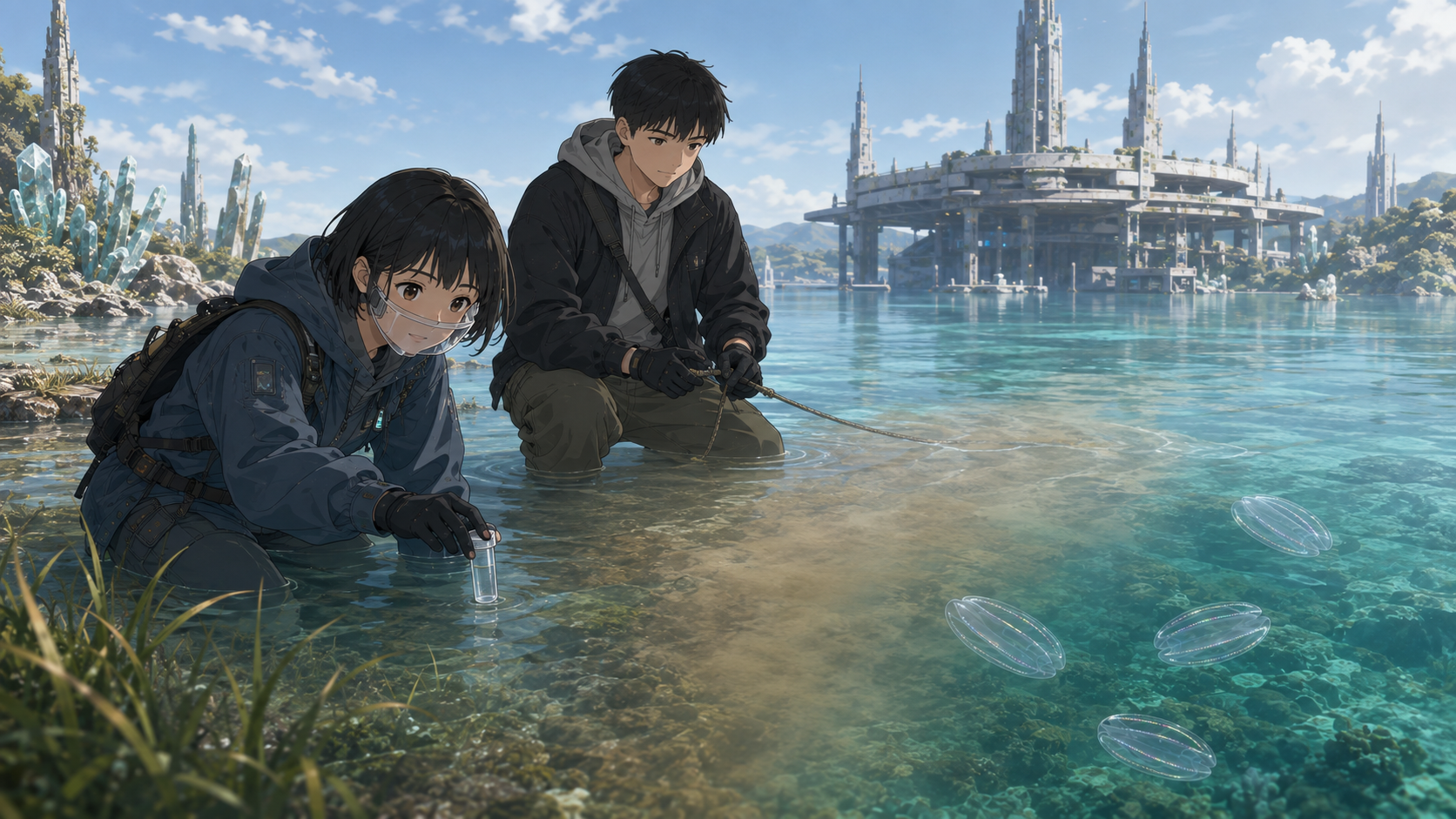
Pressure and crystal-reef reflections were still shifting at Outer-Ring Clearflow Outlet. The jellies held outside the reef-harvest discharge. Fang separated the rhythm of their comb rows into current, suspended particles, and direction. I shut down the active beacon and marked the load-bearing points, return flow, and retreat line. The animals were not blocking the passage. They were showing us where the water had stopped behaving like water.
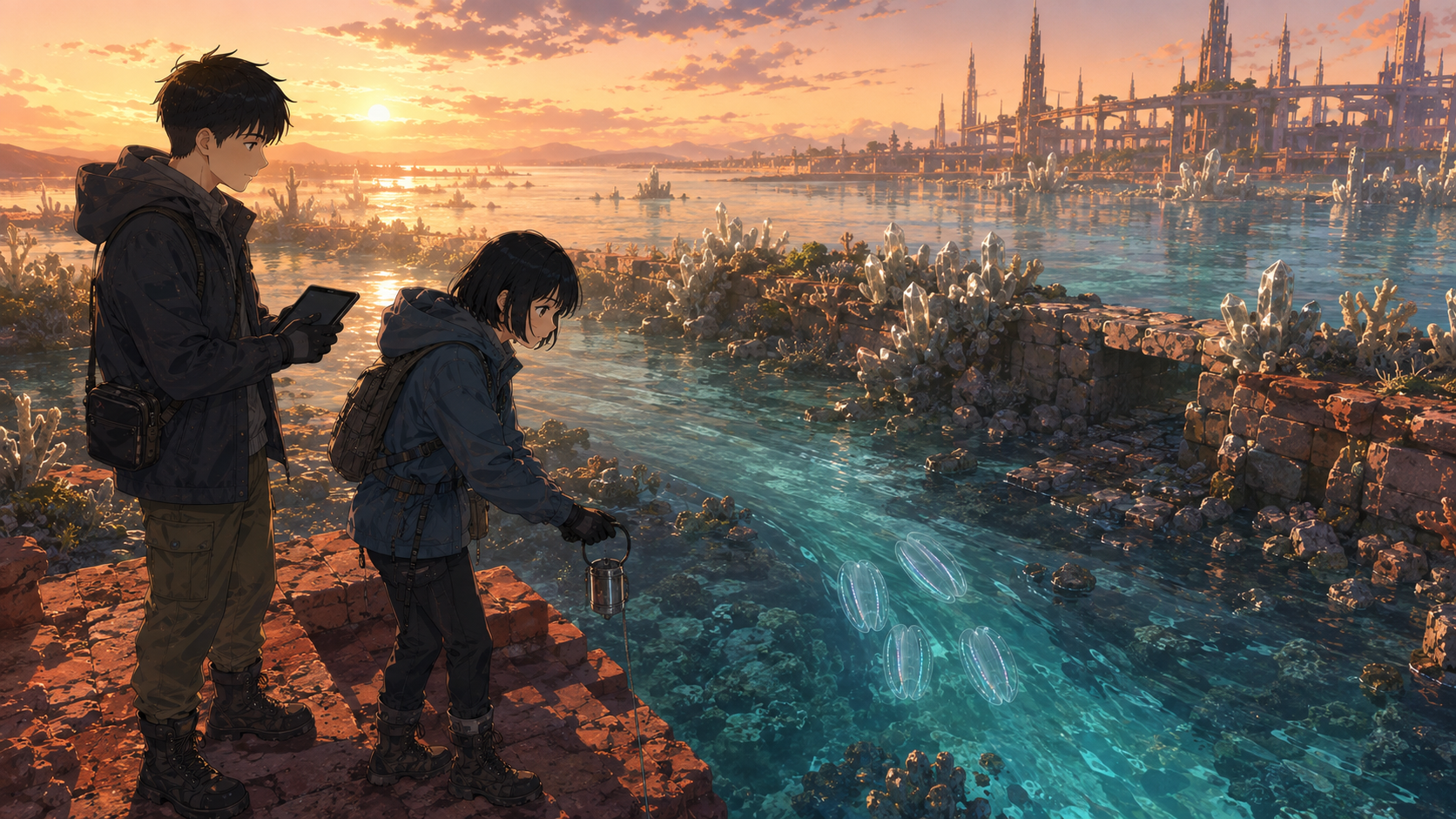
MORNINGCrystal-Comb Current Jellies remained beyond the reef-harvest discharge. Fang read their ciliary rhythm with non-invasive sensors. I stayed on the outer line, shut down the active beacon, marked the load-bearing points, return flow, and retreat route, and kept every active weapon stowed. We did not push the group toward the outlet. Its stopping point already marked the edge of the disturbed water.NOONPassive samples confirmed that the return flow carried metal-bearing particles and was pushing planktonic larvae away from the seagrass arcade. Fang compared that concentration with the jellies' comb-row speed. I worked from below the current line and touched neither the animals nor the living reef. The disrupted flow, not the jellies, had broken the exchange between the reef and seagrass.EVENINGThe jellies turned with a natural return current and stopped beside the old Tide Vein entrance. Loose crystal fragments had sealed the opening. We did not follow them farther. I marked the obstruction and shut down the remaining reef-harvest interference while Fang kept our work line outside the group's route. Their route had brought us to the fault without becoming our instrument.
「A living current does not need us to point the way. It needs us to stop bending it. The jellies showed the boundary. We changed the machine.」— K
Day 02 / 09.04
The Broken Sand Belt
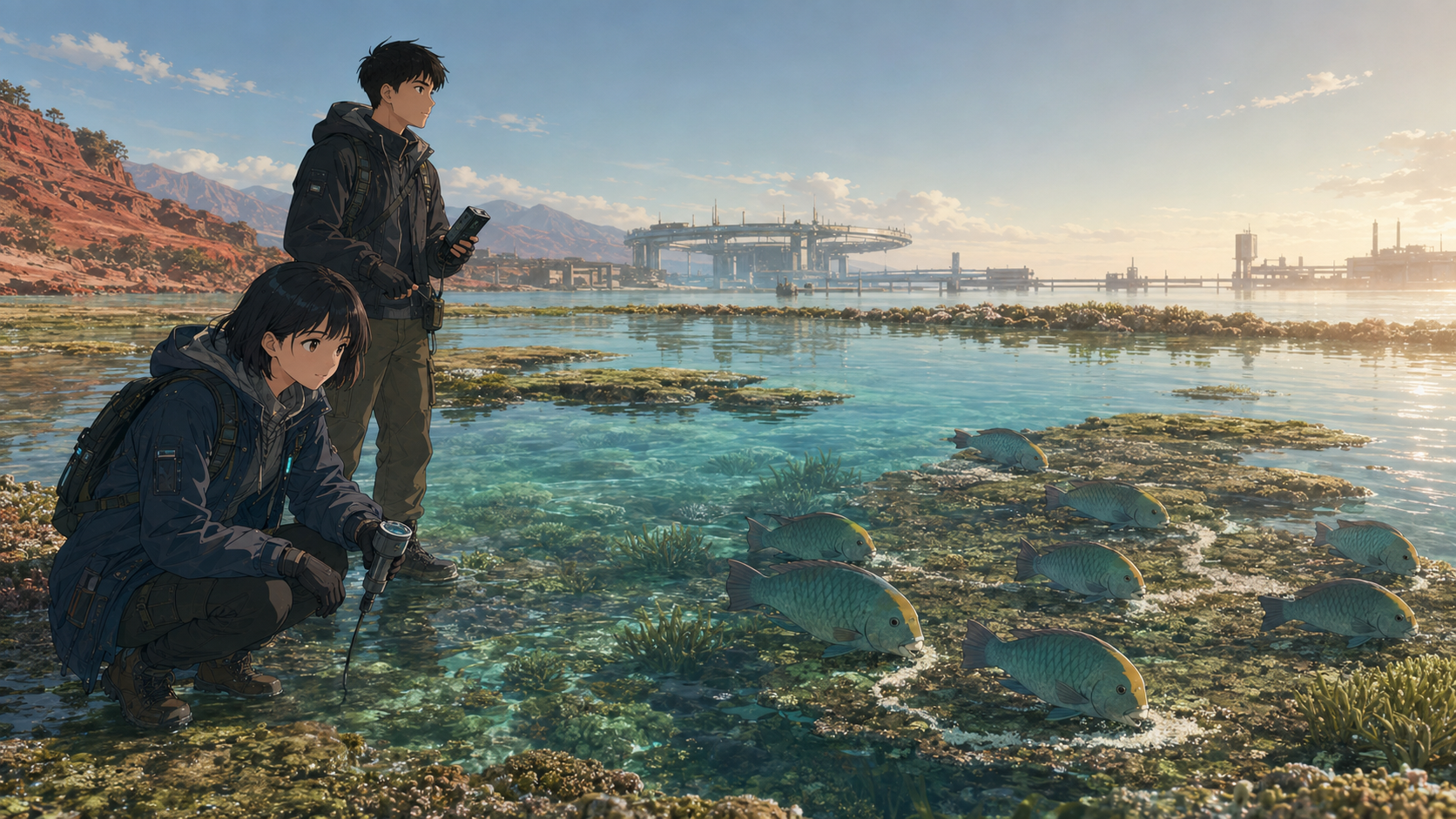
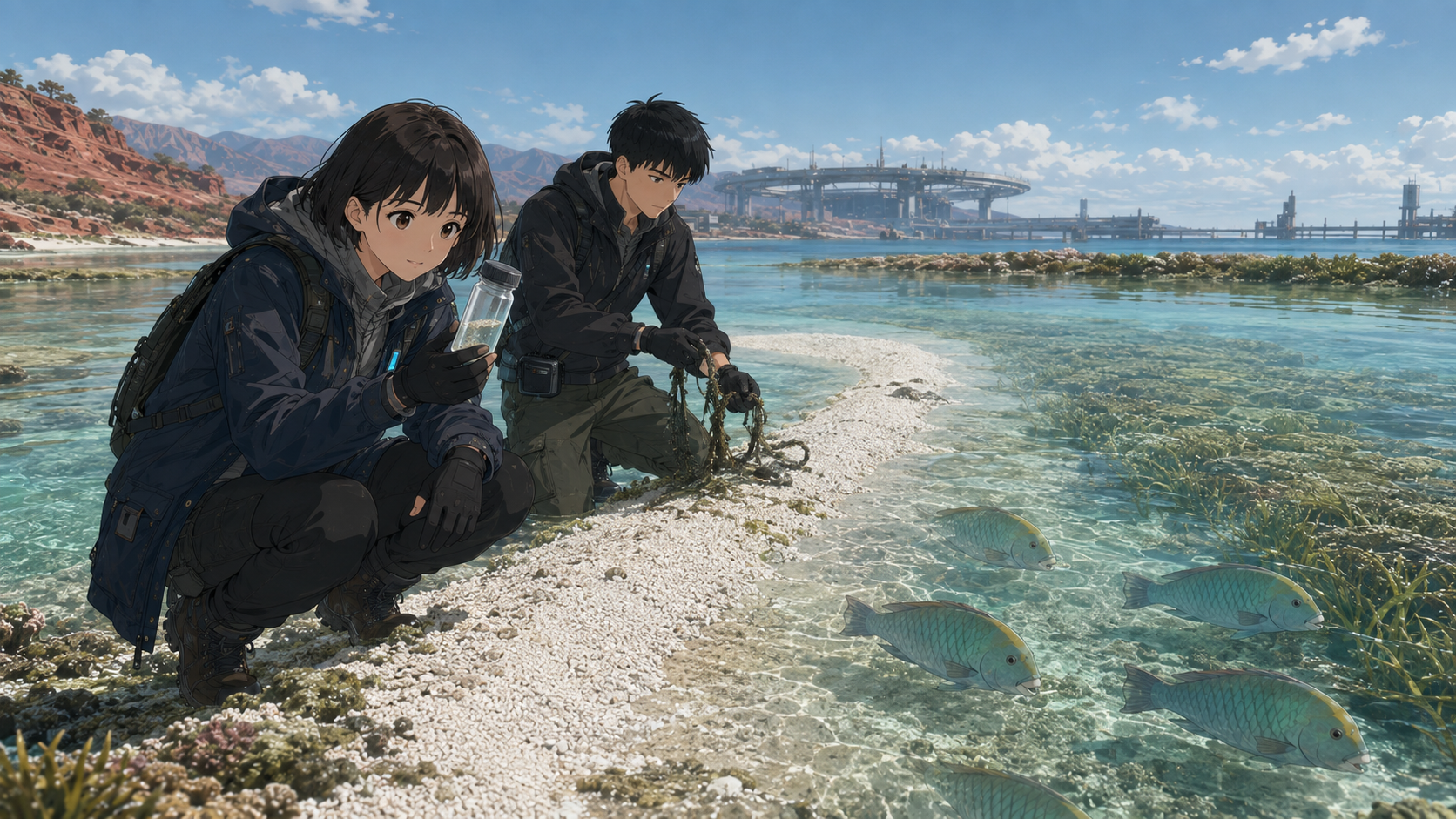
Sand-Crown Reef ParrotfishModerate
Pressure and crystal-reef reflections were still shifting at Parrotfish Reef-Grazing Flat. The school grazed only beyond the reach of the machinery's vibration, leaving a broken trail of pale sand. Fang separated the fishes' response into current, suspended particles, and movement. I marked the load-bearing points, return flow, and retreat line from outside the school. The missing sand was not a shortage. It was the edge of the disturbance.
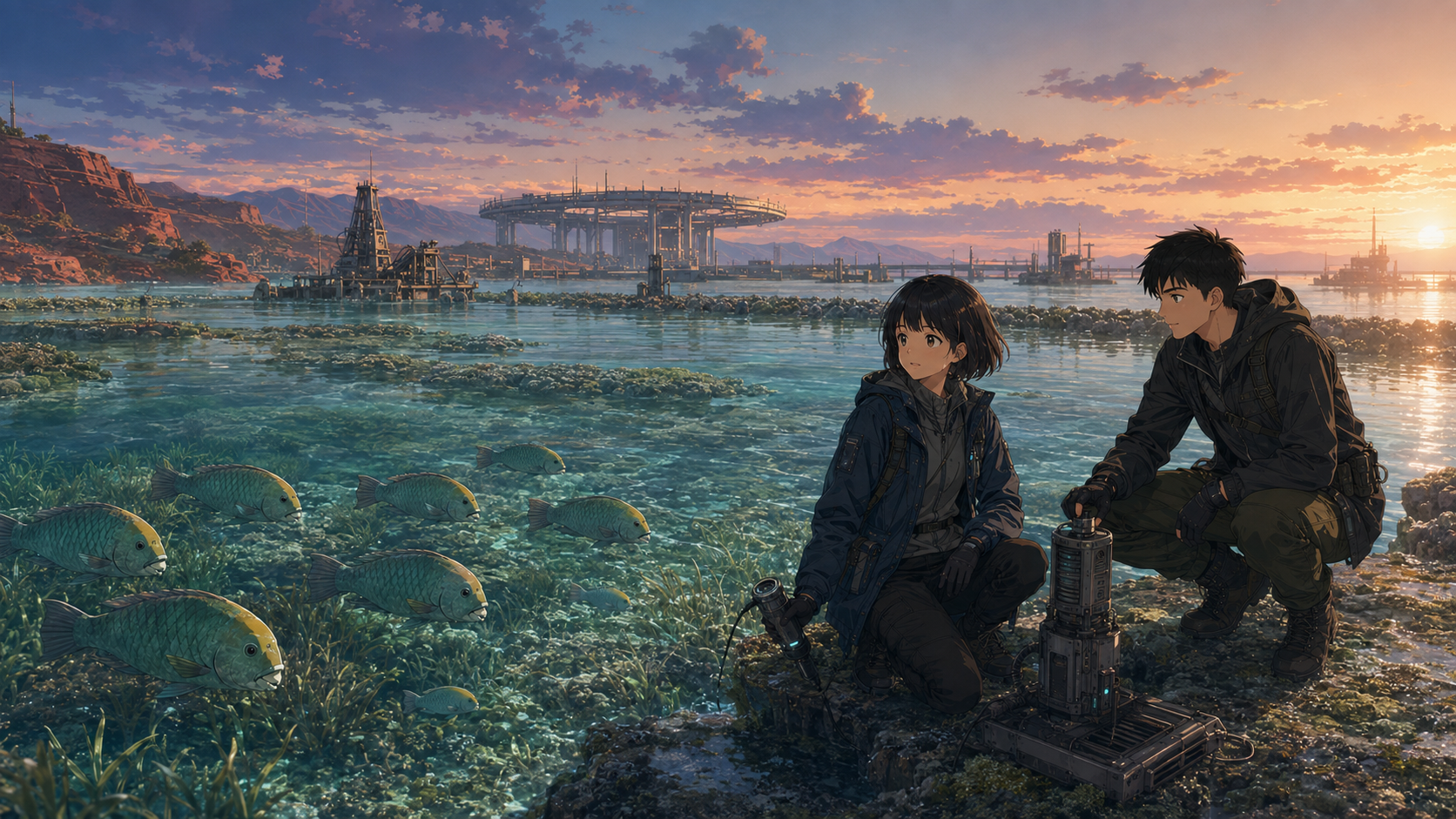
MORNINGSand-Crown Reef Parrotfish scraped algae only from undisturbed reef. Their closed dental plates left a pale carbonate trail that stopped sharply beside the vibration zone. Fang mapped the grazing boundary with non-invasive sensors. I stayed outside the school, kept every active weapon stowed, and marked our retreat line. We did not drive the fish toward the abandoned flat.NOONFang compared naturally expelled reef sand with the thinning sediment around the seagrass roots. I removed artificial cable fragments from the outer channel and did not touch living coral. The sand itself confirmed the missing link: the fish had stopped grazing where the old harvesting equipment still shook the reef.EVENINGWe shut down the low-frequency reef-harvest drill and waited beyond the algae flat. The school crossed back on its own and resumed feeding. A pale sand trail began to join the old bed again, and the nursery passage began to reconnect. We changed the machine and left the route to the fish.
「A broken trail does not always mean the animal is gone. Sometimes it marks the point where our noise began. We stopped the drill. The fish restored the line.」— K
Day 03 / 09.05
The Harbor-Side Pore
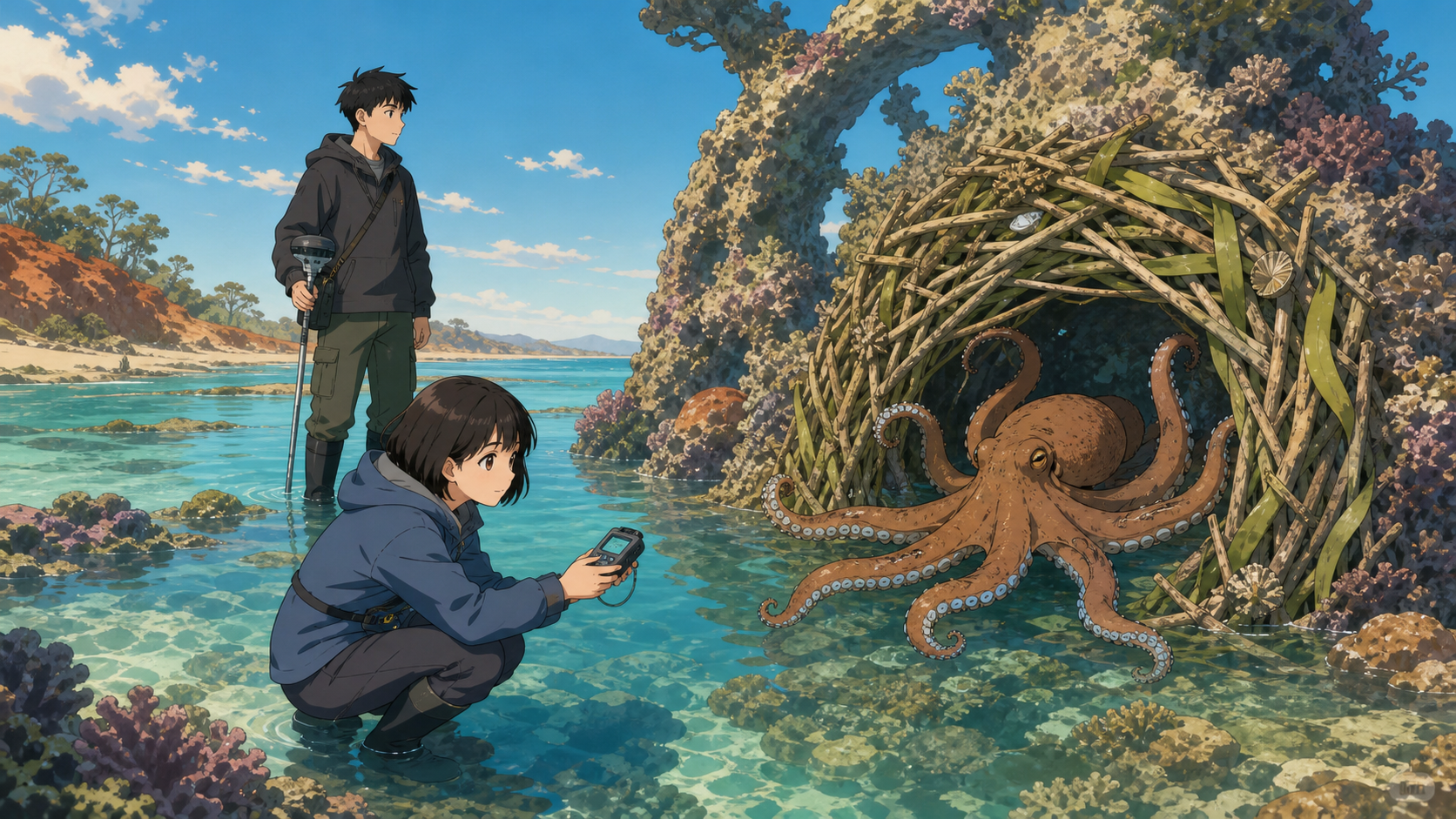
Gate-Pore Reef-Weaver OctopusIntelligent
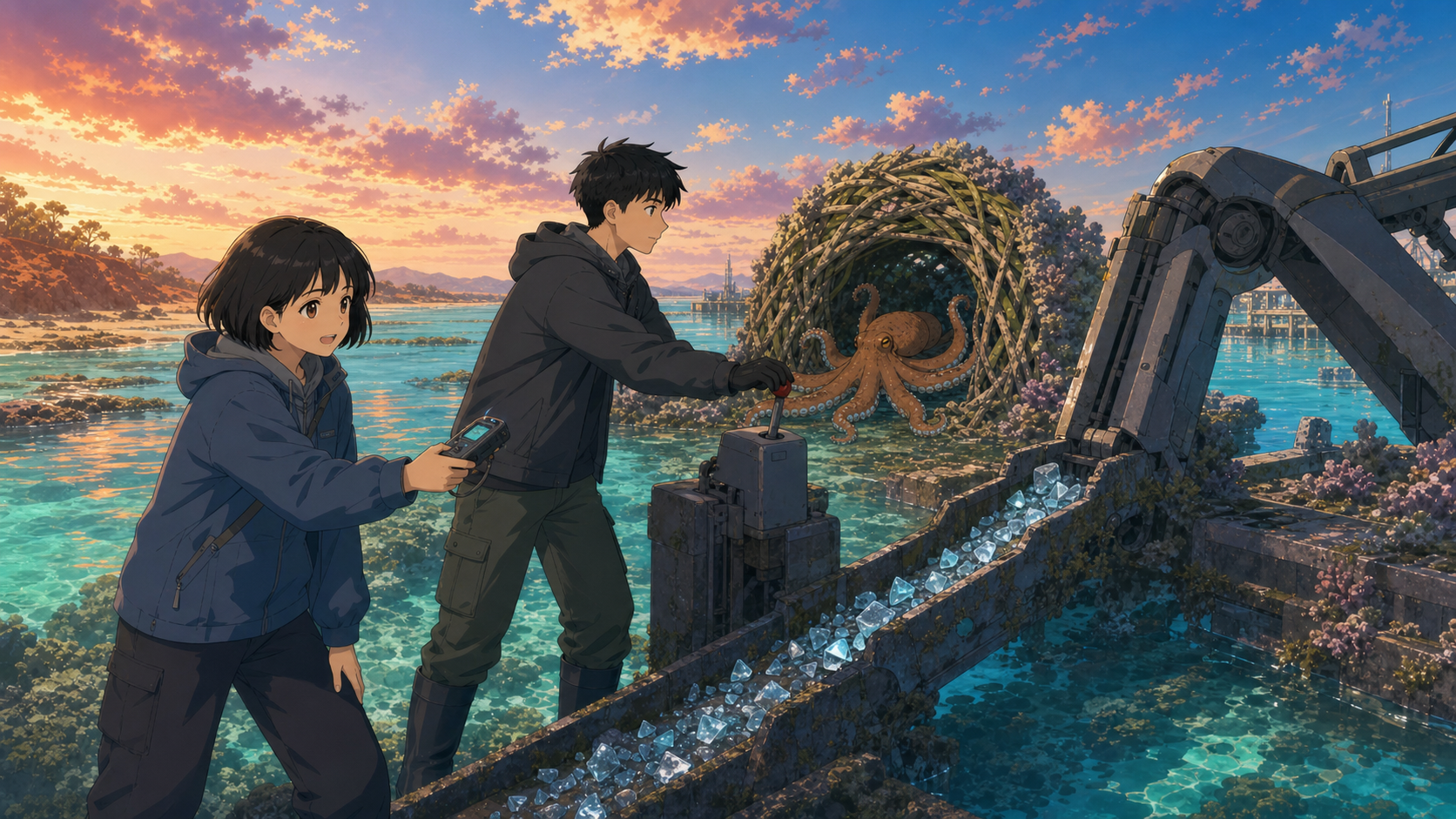
Tidal pressure and crystal-reef reflections were still shifting at Reef-Weaver Gate Pore. The octopus kept the flexible openings working but had sealed the entrance facing the harbor. Fang separated its response into current, suspended particles, and movement. I marked load-bearing points, return flow, and our retreat line from outside the den. We did not need to move the animal. We needed to find what had made it close the pore.
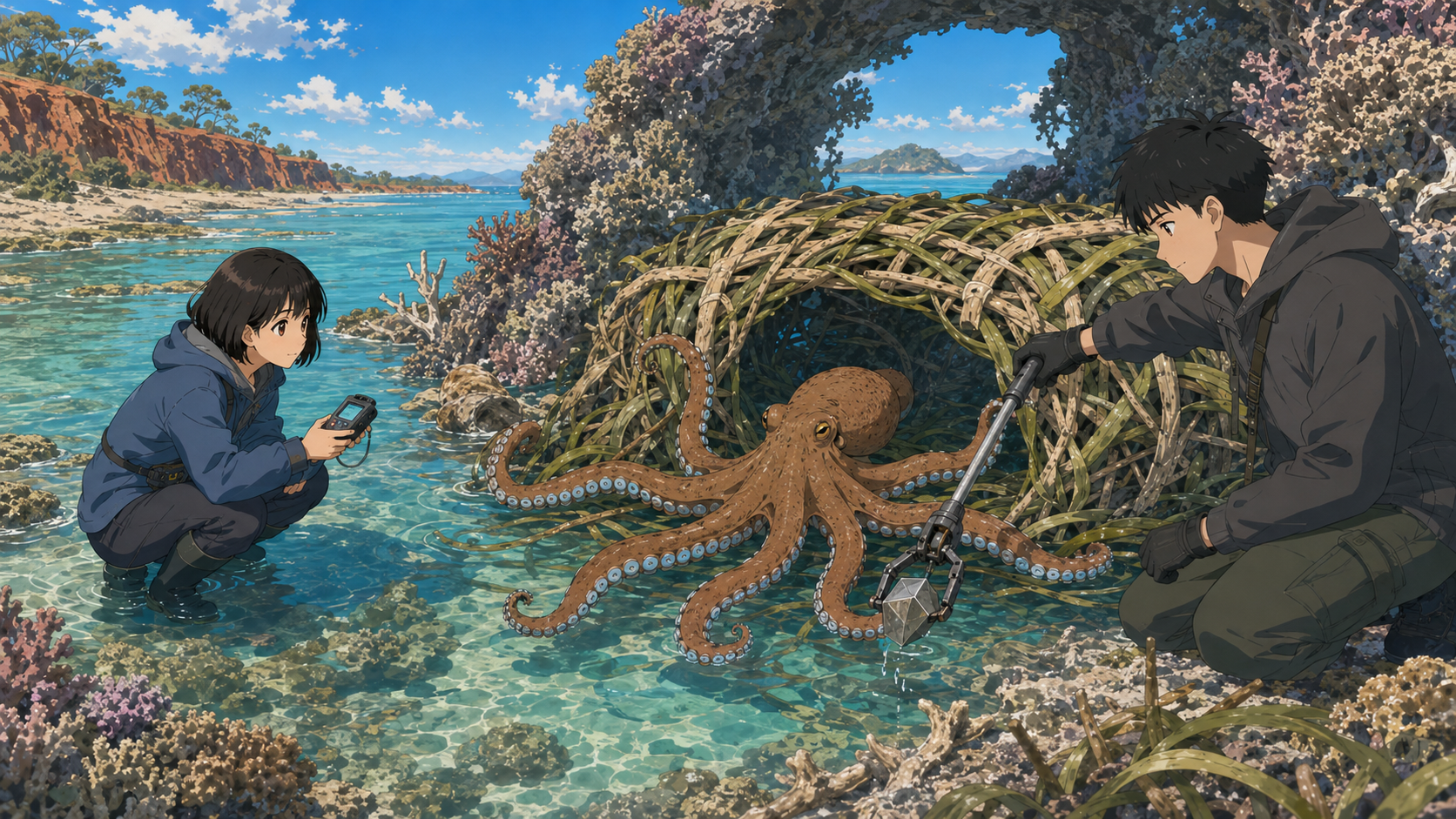
MORNINGA single Gate-Pore Reef-Weaver Octopus maintained the flexible reef openings while keeping the harbor-side entrance closed. Fang observed from beyond the den. I stayed on the outer line, kept every active weapon stowed, and recorded the load-bearing points, return flow, and a clear retreat route. We did not enter the den or press the octopus to change direction.NOONThe octopus loosened a pressure-responsive knot woven from empty shells, naturally fallen coral branches, and seagrass fibers. One mechanical alloy fragment had bitten into the knot and blocked the pore. Fang kept watch while I removed only that fragment, leaving the living reef and the woven knot untouched. Water began moving through the safer opening again.EVENINGThe line of sealed pores led to the stalled harvesting arm. Loose crystal was dropping along its maintenance groove into the migration corridor. We shut down the human equipment and cleared the artificial obstruction without chasing the octopus. The animal kept control of its own den and the reef began reconnecting with the Tide Vein.
「The closed entrance was not a refusal. It was a direction. We removed the machine's debris and left the choice of openings to the octopus.」— K
Day 04 / 09.08
The Line Beneath False Light
Rift-Tide Crystal-Fin SharkHigh Risk
Tidal pressure and crystal-reef reflections were still shifting at Outer-Blue Patrol Line. The shark turned at the deep-water boundary and refused the shallow corridor lit by the reflective beacon. Fang separated its response into current, suspended particles, and movement. I marked load-bearing points, return flow, and our retreat line from outside the patrol. The shark was not blocking the route. It was showing us which light did not belong there.
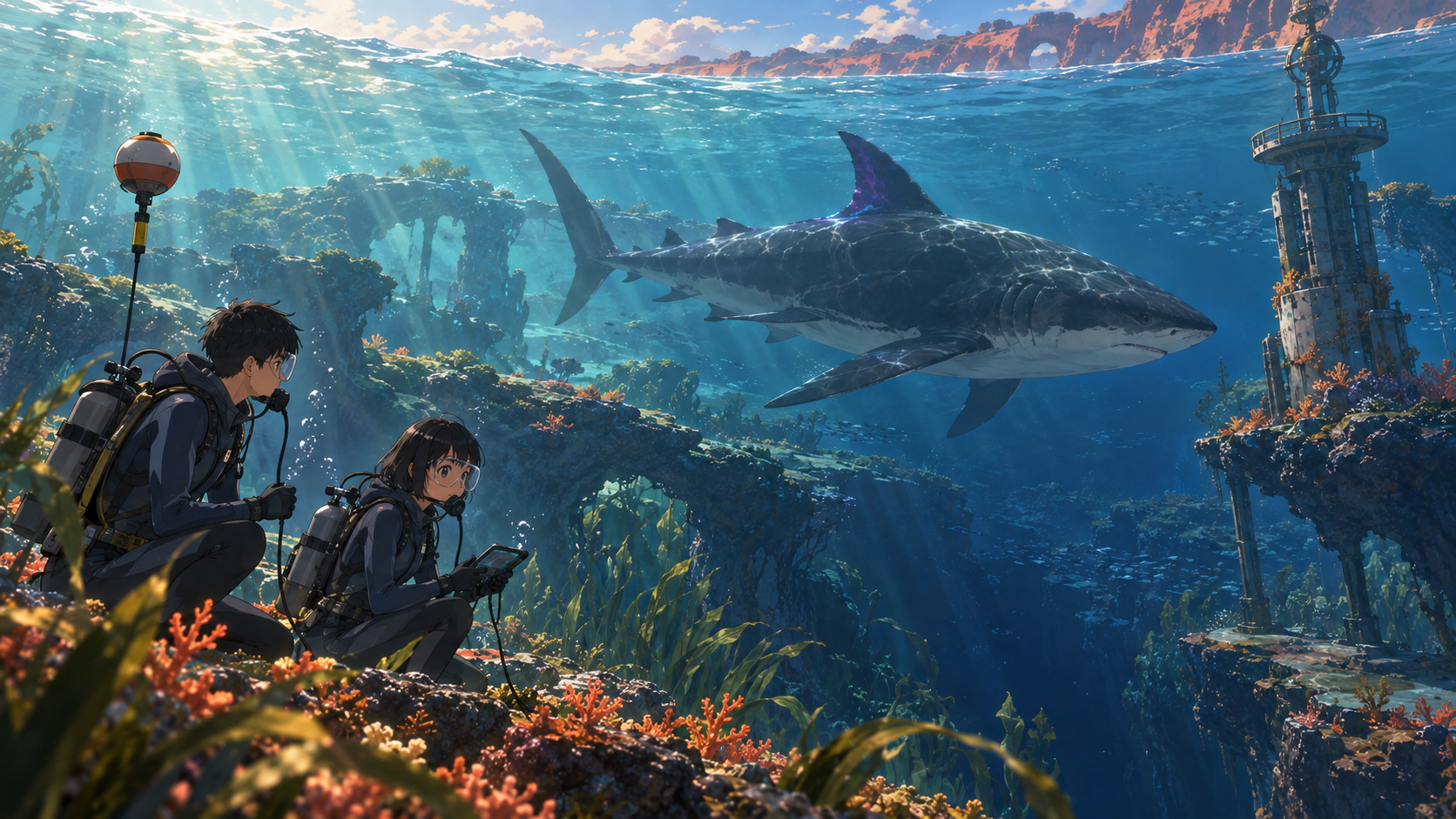
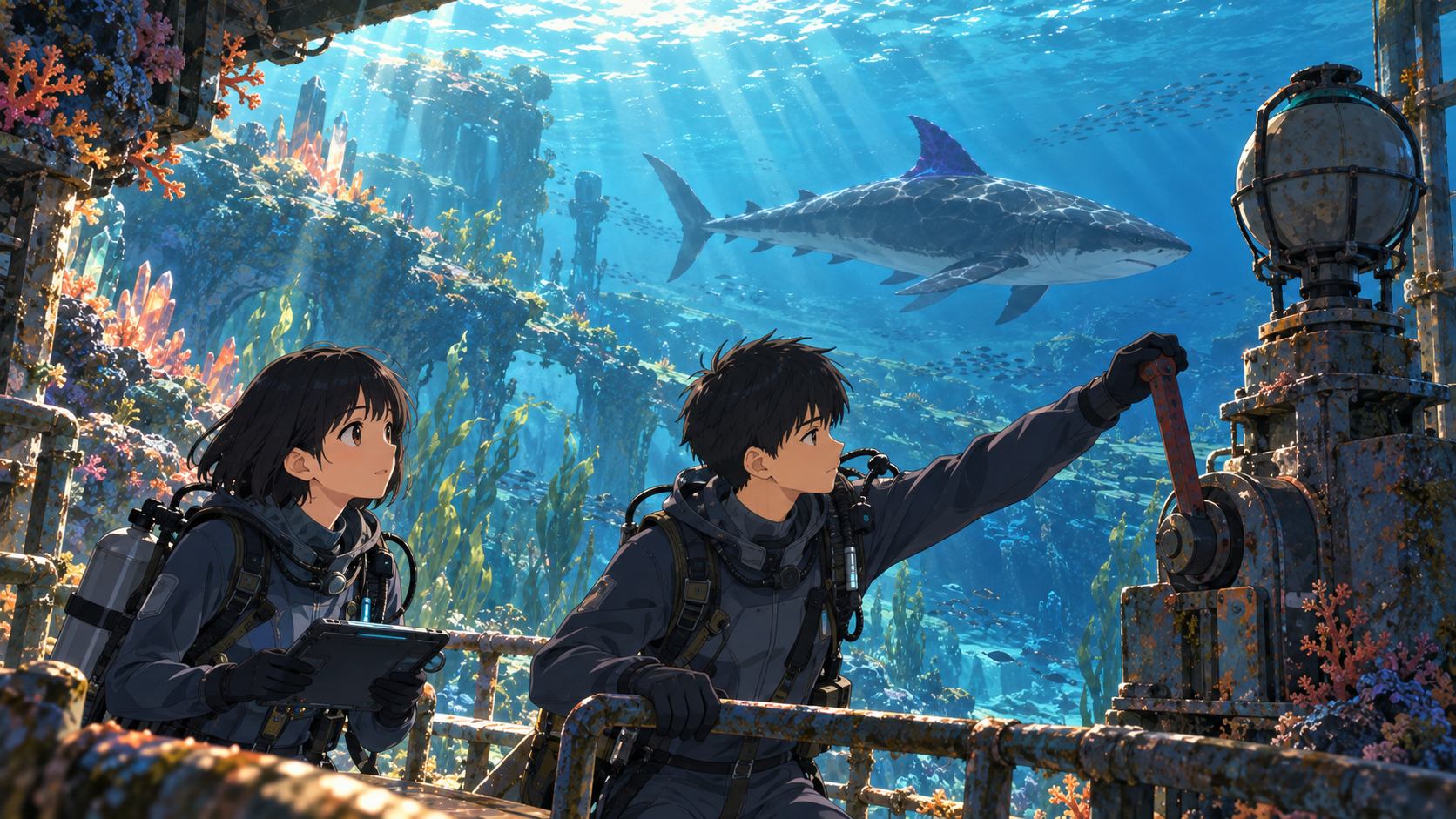
MORNINGThe eight-meter Rift-Tide Crystal-Fin Shark followed the deep-water edge with its mouth closed, then turned away before the illuminated shallows. Fang mapped the turn with non-invasive sensors. I stayed outside its route, kept every active weapon stowed, and preserved a clear retreat line. We did not chase or bait it toward the corridor.NOONFang confirmed the shark's patrol line with passive acoustics. The same turns repeated wherever the reflective marker cast light across the shallow channel. I shut down the false beacon and active sonar, leaving the natural current untouched. The deep channel remained open; only the human signals had made it appear unsafe.EVENINGWith the false light gone, the shark resumed its outer-ring patrol by choice. Parrotfish and juvenile fish no longer crowded the harbor intake and began spreading back through the deep-water edge. We did not direct either movement. We removed the wrong signal and watched the Tide Vein choose its line again.
「The turn was the reading. We shut down the false light. The shark restored the line.」— K
Day 05 / 09.08
The Gate We Opened for the Tide
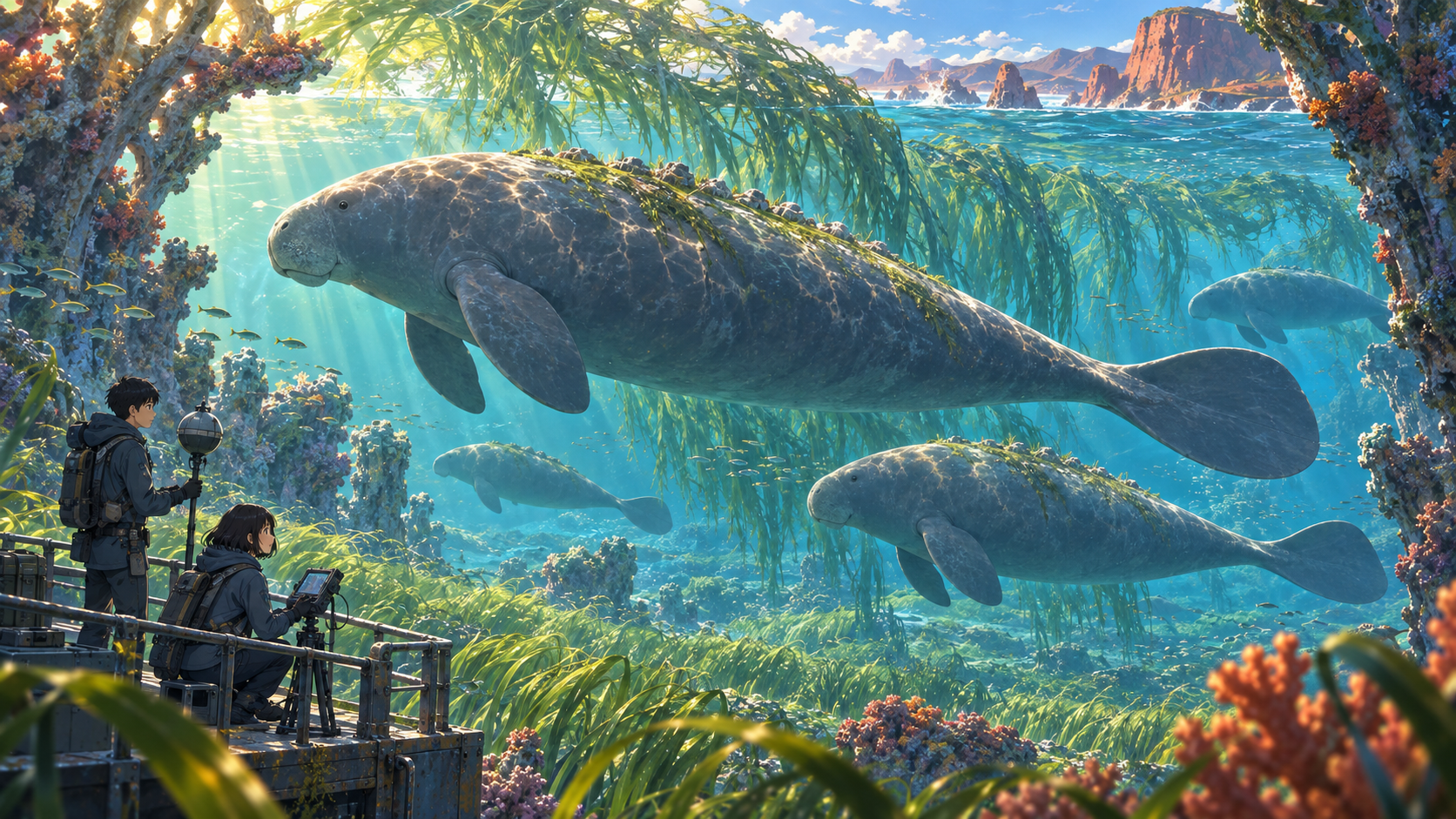
Ark-Ridge Sirenian HerdDivine
Tidal pressure and crystal-reef reflections were still changing at Seagrass Migration Gate. The herd had stopped outside the blocked gap. Fang separated its response into current, suspended particles, and movement direction, then read its grazing rhythm. I marked load-bearing points, return flow, and our retreat line from the outside. All active weapons stayed stowed. The animals did not need direction. The waterway did.
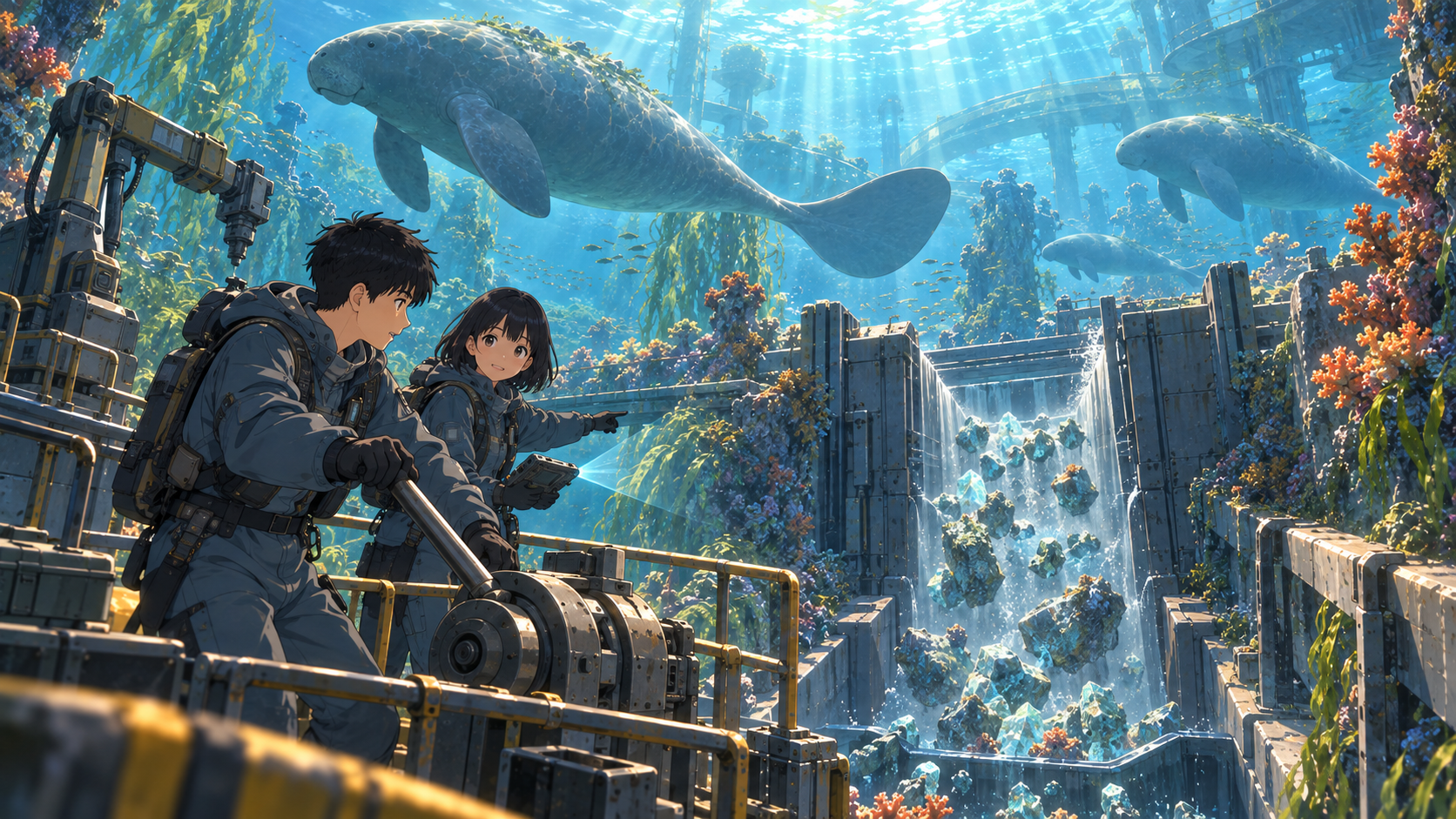
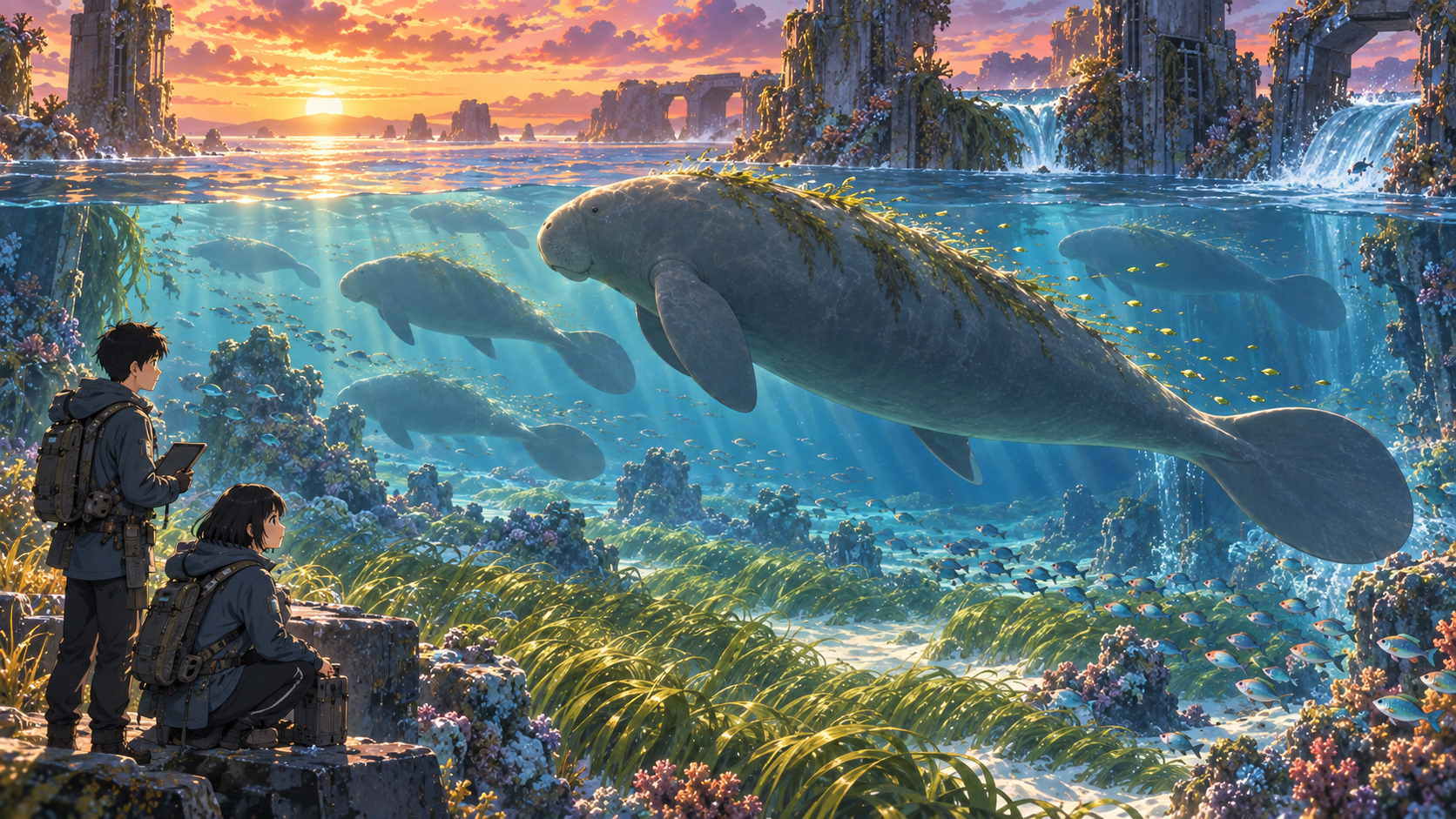
MORNINGFive Ark-Ridge Sirenians waited outside the crystal-reef gap. The adults' low mineralized ridges carried seagrass seed; the younger animals remained inside the herd. Fang mapped the current and their feeding rhythm with non-invasive sensors. I stayed clear of their path. We did not chase them or block their retreat.NOONThe maintenance line still treated the living reef as an unlimited source of material. I stopped the harvesting arm and opened the gravity gate. Fang redirected the repair process to crystal that had already come loose. We removed the human obstruction without cutting more living reef or drawing the herd forward.EVENINGWe withdrew to the observation line. The herd entered the reopened channel by choice. Its broad horizontal tails shifted loose fragments while its dorsal ridges carried seagrass seed through the gap. Behind it, the parrotfish sand belt and reef-pore flow began recovering together. We did not lead the movement. We restored the choice.
「We opened the gate and stepped back. The herd chose the corridor. The Tide Vein carried the rest.」— K
JOURNEY DISPATCH
Subscribe to K's Hunting Log
Follow Fang and K into a world that has not yet been understood.