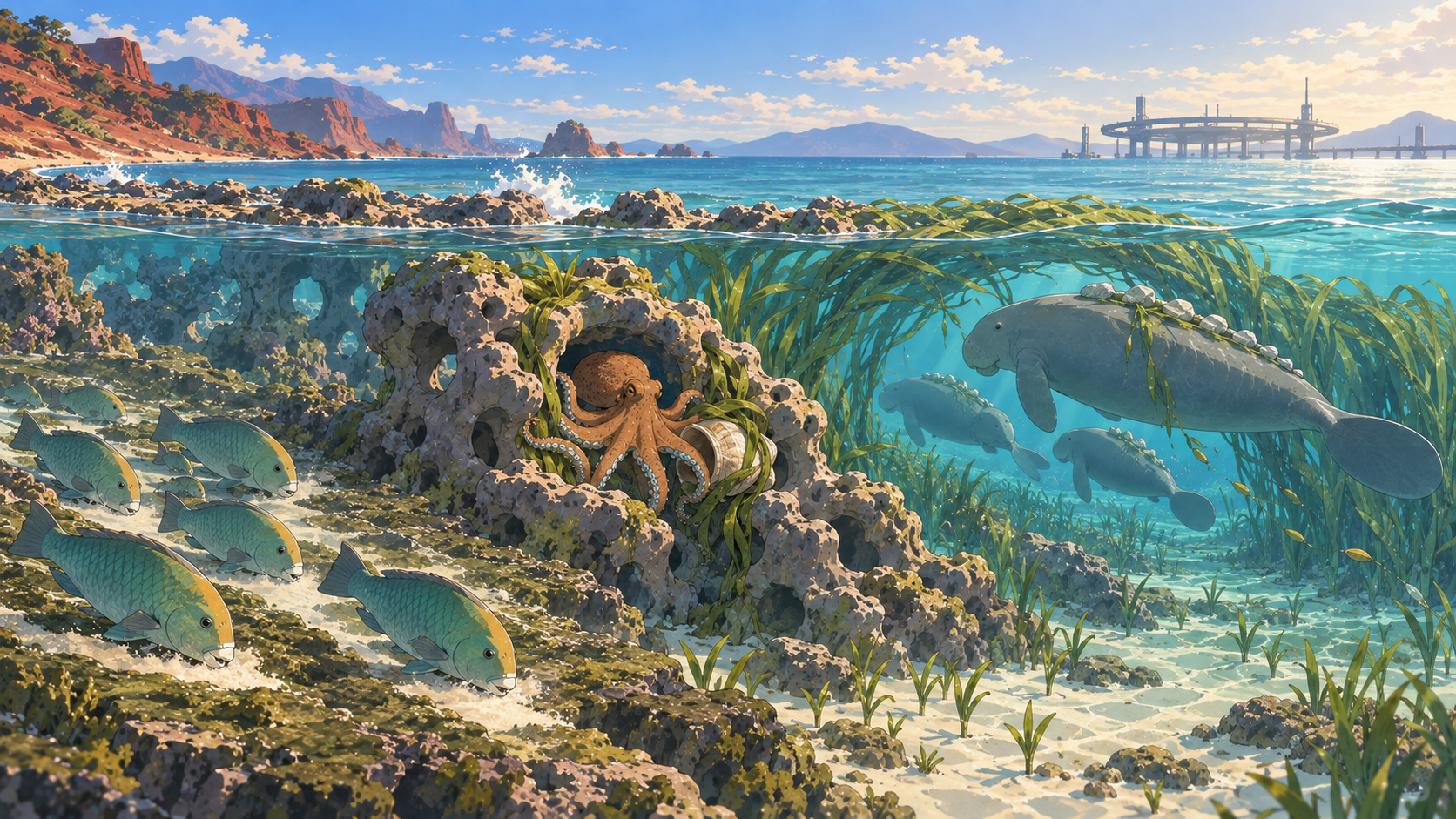
Tide-Vein Crystal-Reef Restoration Corridor
This corridor is the harbor's outer natural breakwater and can still renew itself. Crystal coral adsorbs metals and radioactive particles from seawater. Seagrass root beds hold the carbonate sand made by parrotfish. Flexible reef pores and deep channels let larvae, fish, and large migrants cross the harbor before storm season. Hard reef becomes a sealed wall unless those flexible openings and the seagrass belt remain connected.
- Parent Domain
- NB-06 · Coral Ark Harbor
- Location
- The outer ring of the semi-submerged Coral Ark Harbor, spanning a crystal-coral breakwater, seagrass arcades, and the red-soil coast of northeastern Australia.
To repair the shells of its rising residential modules, the harbor let automated harvesting arms cut too much living reef. Loose crystal clogged the old Tide Vein. Return flow carrying metal particles pushed planktonic larvae away from the seagrass arcade, and a reflective navigation beacon displaced the shark from its outer-ring patrol. The sirenian herd finally stopped outside Seagrass Migration Gate. Fang and K had to change the maintenance process to use already loosened crystal and restore the living breakwater without driving away any species.
How Tide-Vein Crystal-Reef Restoration Corridor Works
Crystal coral intercepts polluted particles and seagrass stabilizes sediment. Crystal-Comb Current Jellies reveal changes in suspended particles and current through the rhythm of their eight comb rows. Sand-Crown Reef Parrotfish graze reef algae and replenish seagrass beds with carbonate sand. Gate-Pore Reef-Weaver Octopuses maintain pressure-responsive openings in hard reef with flexible knots of empty shell, fallen coral, and seagrass fiber. Rift-Tide Crystal-Fin Sharks stabilize the distribution of fish along the outer ring. The Ark-Ridge Sirenian Herd carries seagrass seed and moves loose reef fragments, reconnecting all five layers into a passable Tide Vein.
Observation Ethic
Fang and K observe outside each species' chosen route, use non-invasive sensors and passive equipment, keep active weapons stowed, and preserve retreat lines. They do not chase drifting jellies, force parrotfish back to feeding grounds, enter an octopus den, bait a shark, or drive the sirenian herd through the gate. They shut down excessive harvesting, remove artificial debris, turn off the false beacon, and open the gravity-fed channel. Repair means giving route choice back to the habitat.
Five-Day Route
- Read the current jellies' comb rhythm to locate metal-bearing harvesting return flow and the old Tide Vein entrance.
- Follow the break in the parrotfish carbonate-sand belt to the vibration that drove the school from its former algae flat.
- Trace the octopus's sealed reef pores and jammed flexible knot to loose crystal falling from the stalled harvesting arm.
- Use the shark's turn away from the false reflective beacon to identify the safer outer-blue deep channel.
- Stop cutting living reef, clear the artificial obstruction, turn off the false beacon, open Crystal-Reef Gravity Gate, and step back while the sirenian herd chooses the restored corridor.
Five species maintaining this local ecology
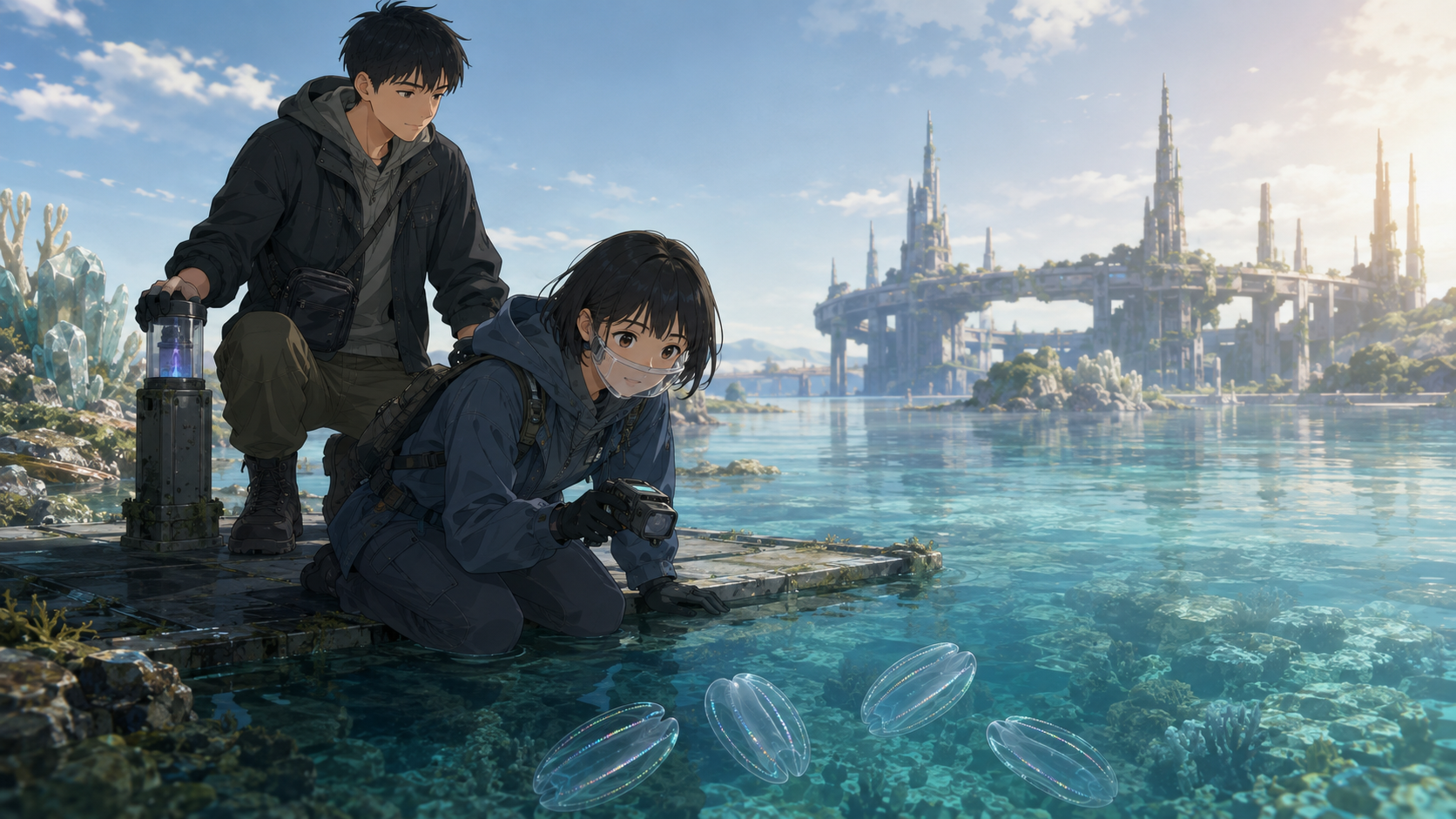 Day 01
Crystal-Comb Current Jelly
The jellies feed on plankton and drift calmly without long tentacles. Their eight short comb rows produce soft bands of color as they adjust to current speed. They do not swim through the metal-bearing return flow. Instead, they hold beyond its edge, then turn with the natural current once the artificial interference is removed.
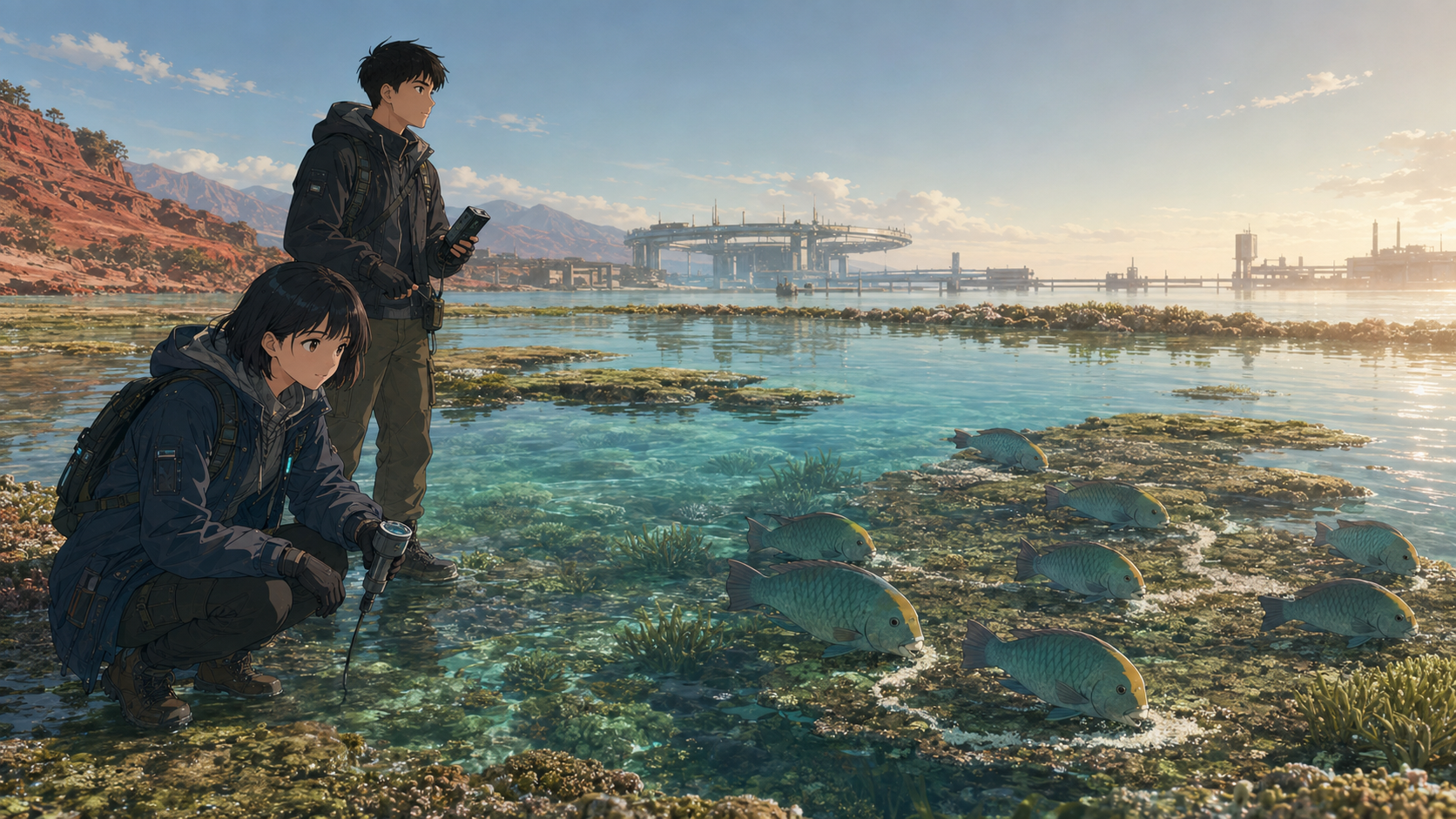 Day 02
Sand-Crown Reef Parrotfish
The fish scrape algae from the reef with closed beak-like dental plates and release carbonate sand after feeding. They remain in a calm school and graze only where reef-harvest vibration has not disturbed the algae surface. When the low-frequency drill is shut down, the school crosses back into the old algae flat and the sand belt begins to reconnect with the seagrass nursery corridor.
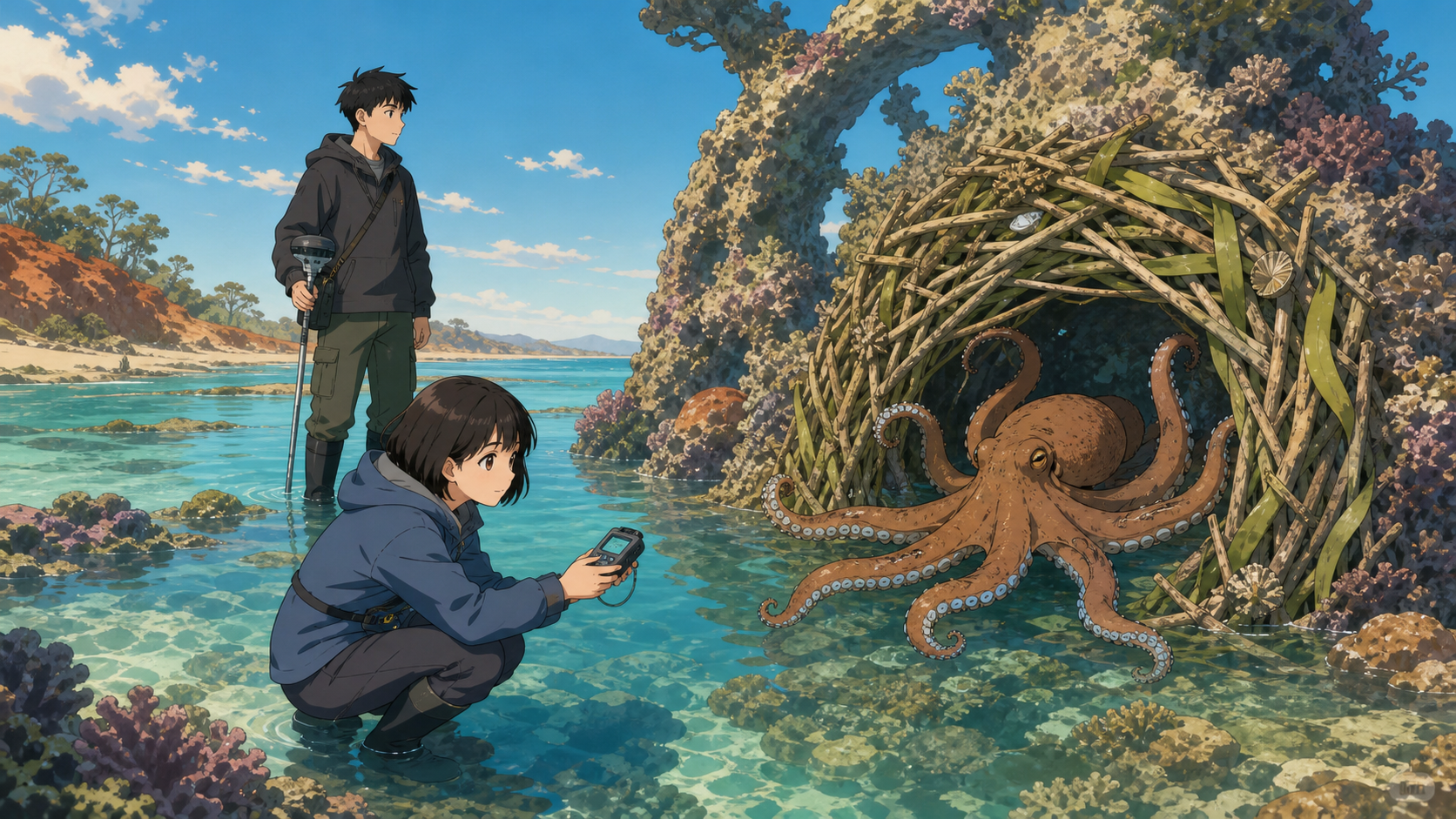 Day 03
Gate-Pore Reef-Weaver Octopus
The octopus uses eight arms and pale cyan suckers to loosen, tighten, and rebuild flexible knots as tidal pressure changes. It works with empty shells, naturally fallen coral branches, and seagrass fibers rather than cutting living reef. When mechanical debris jams a pore, it closes the exposed entrance while maintaining water exchange through safer openings. It remains alert but does not attack.
 Day 04
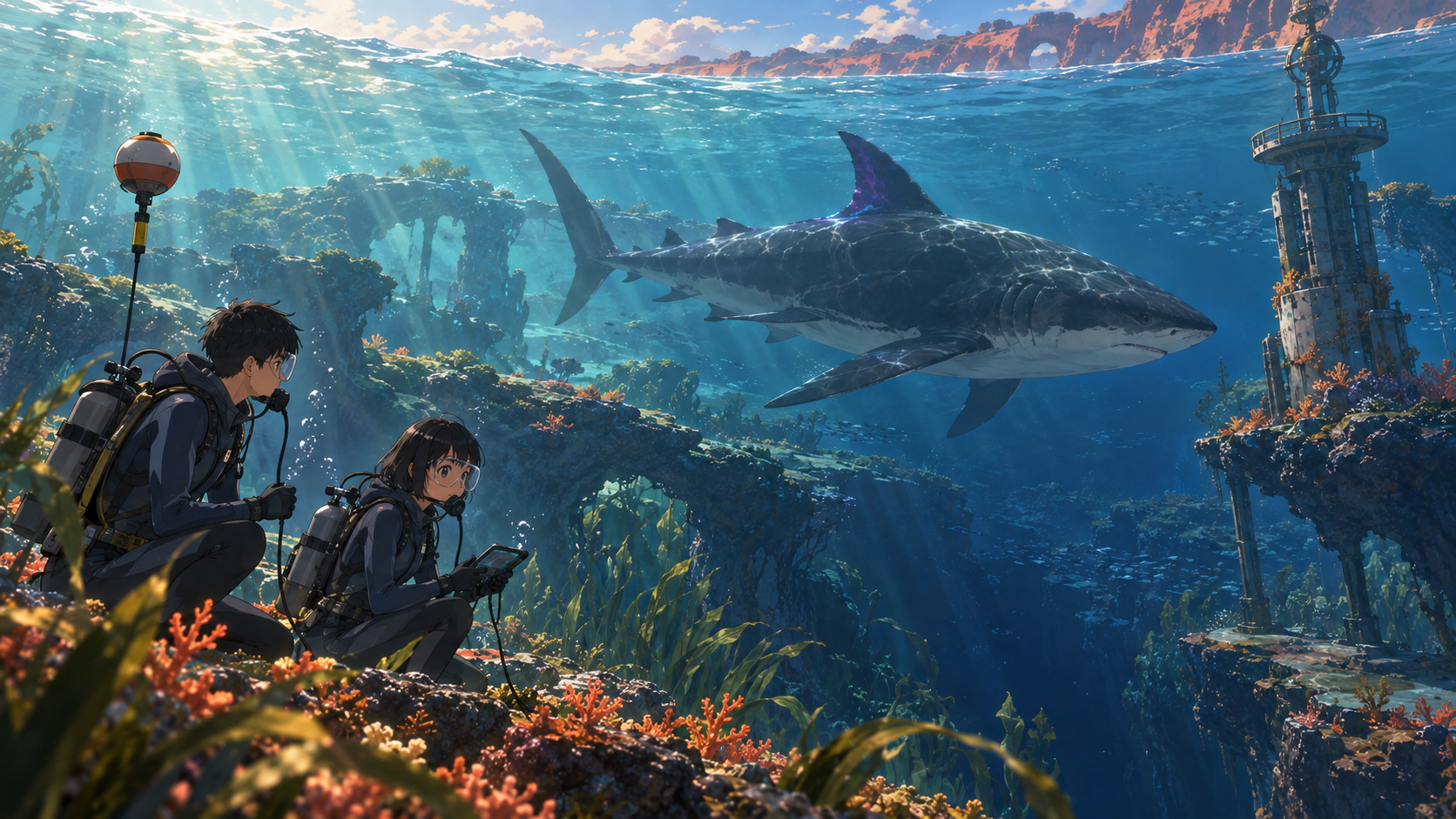
Rift-Tide Crystal-Fin Shark
The shark follows the outer-blue deep channel on a calm territorial patrol. It keeps its mouth closed, changes direction without charging, and uses measured tail beats and turning lines to maintain the distribution of medium-sized fish. It does not approach human structures voluntarily. When a reflective beacon illuminates the wrong shallow corridor, it turns away rather than entering.
 Day 05
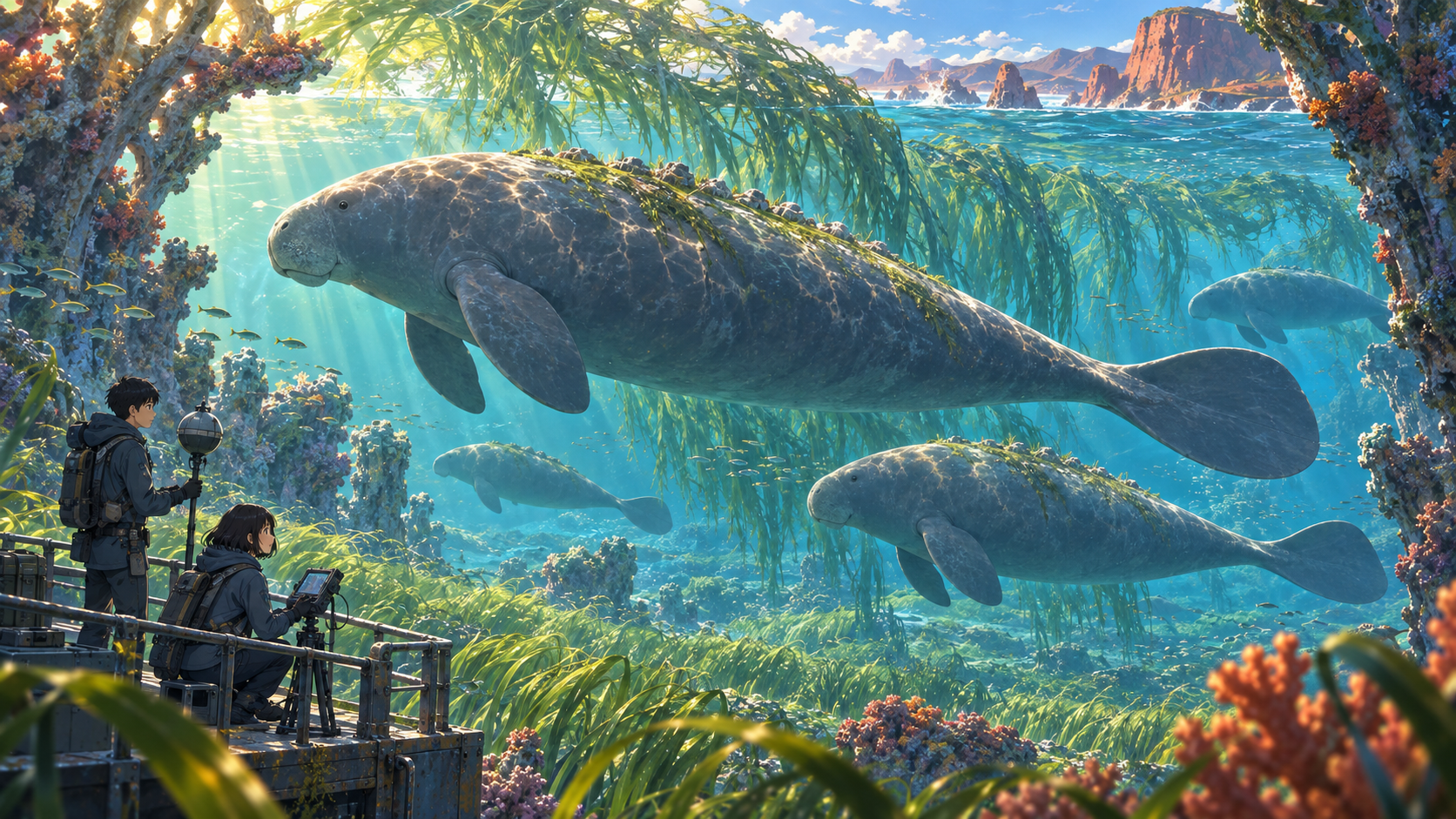
Ark-Ridge Sirenian Herd
The herd selectively grazes older seagrass with rounded snouts. Its broad horizontal paddle tails move loose crystal fragments without cutting living reef, while low mineralized dorsal ridges carry seagrass seed between beds. The animals pause outside blocked gaps, follow restored water flow, and choose their own route through the corridor. They do not actively attack.
「No species caused the anomaly. Coral Ark Harbor had treated a living breakwater as an unlimited source of construction material. When Fang and K stopped cutting living reef, removed loose crystal, shut down the false beacon, and opened the gravity-fed channel, the sirenian herd passed through Seagrass Migration Gate by choice. Seagrass seed, the parrotfish sand belt, and reef-pore flow recovered behind it. Repair meant changing the human maintenance system and returning the Tide Vein's route choice to the habitat.」