Crystal-Trench Burrower
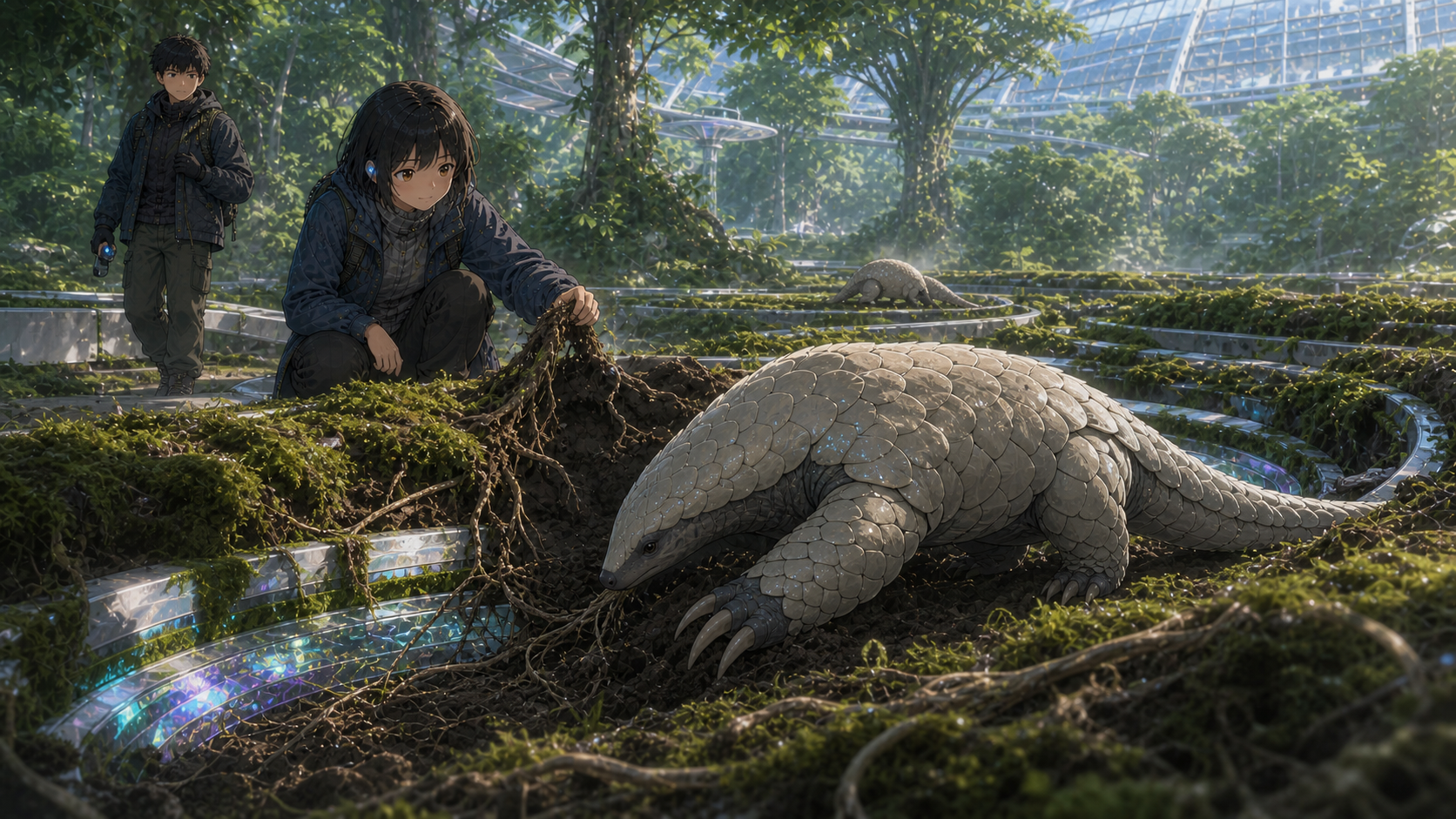
The burrowers use broad digging claws and blunt sensory snouts to turn over retired wafer trenches. They do not threaten Fang or K. Adults continue digging at a distance when the observers stay clear of fresh entrances and nursery tunnels. A group eventually exposes a pulsing photonic cable beneath the new soil.
Observation LevelCoastal field note
First SeenDay 03 · Day 03 · Crystal-Trench Refill Zone
HabitatRetired photonic wafer trenches, damp root tunnels, sealed maintenance corridors, and electrostatic mounds inside Diffraction Mycelium Reserve
VariantsGray-brown young with soft plates, matte ivory ceramic-silicon adults, and shared root-system burrow colonies
Habitat and Mechanism
Retired photonic wafer trenches, damp root tunnels, sealed maintenance corridors, and electrostatic mounds inside Diffraction Mycelium Reserve。The retired test layer was built as a hard, water-resistant barrier. Crystal-Trench Burrowers break it open with broad claws. Their damp tunnels reconnect condensation water, mycelium, tree roots, and small animals across ground the city had sealed. Overlapping matte ivory ceramic-silicon plates insulate the animals from the static charge still present in the old trenches.
Enter Diffraction Mycelium Reserve ↗Behavior and Ecological Role
The burrowers use broad digging claws and blunt sensory snouts to turn over retired wafer trenches. They do not threaten Fang or K. Adults continue digging at a distance when the observers stay clear of fresh entrances and nursery tunnels. A group eventually exposes a pulsing photonic cable beneath the new soil.
The species acts as a habitat engineer. Its tunnels let water, fungal threads, roots, and Veinlight Ear Hares cross the impermeable test layer. The cable uncovered under a fresh mound reveals the transmission path of the old exposure sequence and points toward Seventh Diffraction Atrium.
Form and Identification
Gray-brown young with soft plates, matte ivory ceramic-silicon adults, and shared root-system burrow colonies
- A believable pangolin-armadillo body plan about one and a half meters long
- Overlapping matte ivory ceramic-silicon plates
- Flexible charcoal skin visible at the joints
- Broad digging claws and a blunt sensory snout
- Low, powerful movement suited to damp tunnels rather than pursuit
Observation Rule
Fang and K never enter the nursery tunnels, block an active burrow, or force the animals away from the cable. They read exposed evidence from outside the colony, preserve a return route, and let the burrowers continue reconnecting the habitat.
At Crystal-Trench Refill Zone, a fresh mound rose in front of Fang and K and a matte ivory armored back slid beneath the trench. Fang approached the newly exposed roots, not the entrance. K remained on the return line. The animal gave no threat display; it kept reopening soil the city had sealed.