The Route the City Sealed
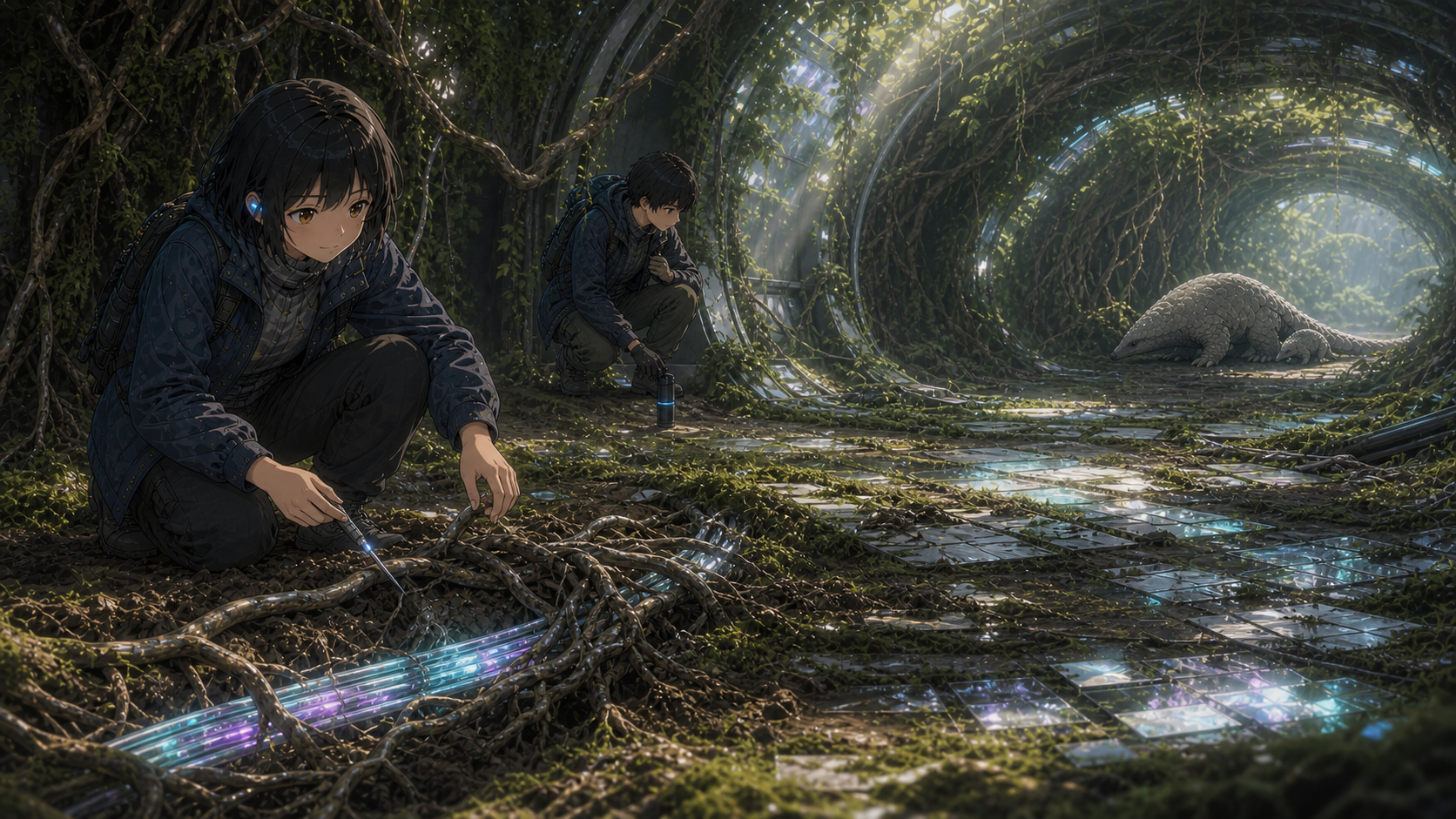
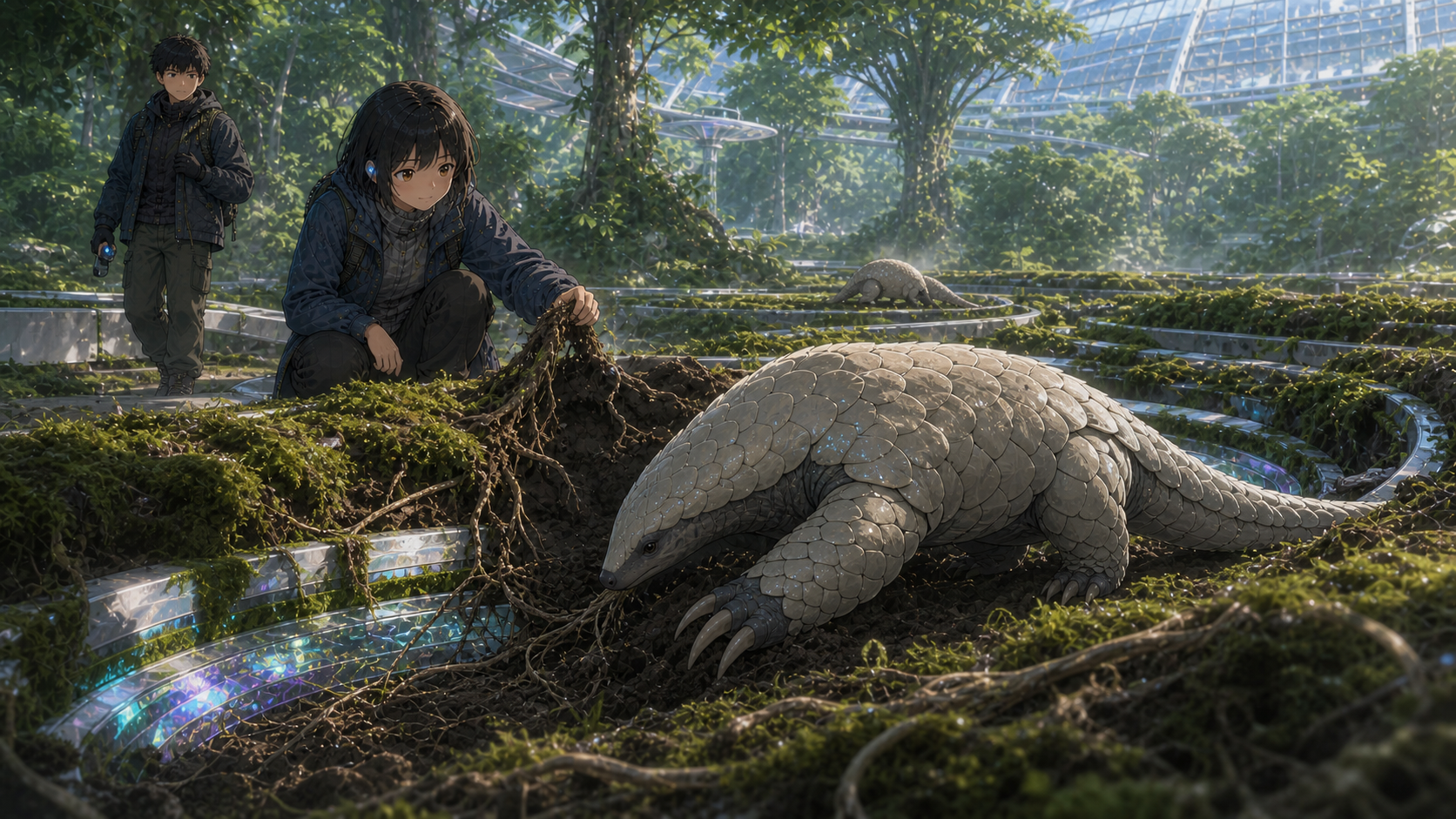
The mound rose in front of us. A mist-white armored back moved beneath the trench. Fang approached the newly exposed root, not the burrow mouth. I held the return line. The burrower made no threat. Its broad claws only reopened ground the city had sealed shut.
Field Observation
From the cooling channel, we followed a retired wafer-transport rail into Crystal-Trench Refill Zone and kept clear of fresh burrow mouths. At noon we stayed along the outer edge of the damp tunnel network to enter Root-System Maintenance Corridor without crossing a nursery burrow. We returned to the open ground at Electrostatic Mound and waited until the colony had finished turning the soil before checking the fiber line's direction.
Morning · Crystal-Trench Refill Zone
A one-and-a-half-meter burrower slid beneath the retired test layer, its overlapping ceramic-silicon plates shedding static. Fang examined the roots lifted with the new soil. I stayed on our exit line. We watched the animal break through the waterproof layer without moving toward its hole.
Noon · Root-System Maintenance Corridor
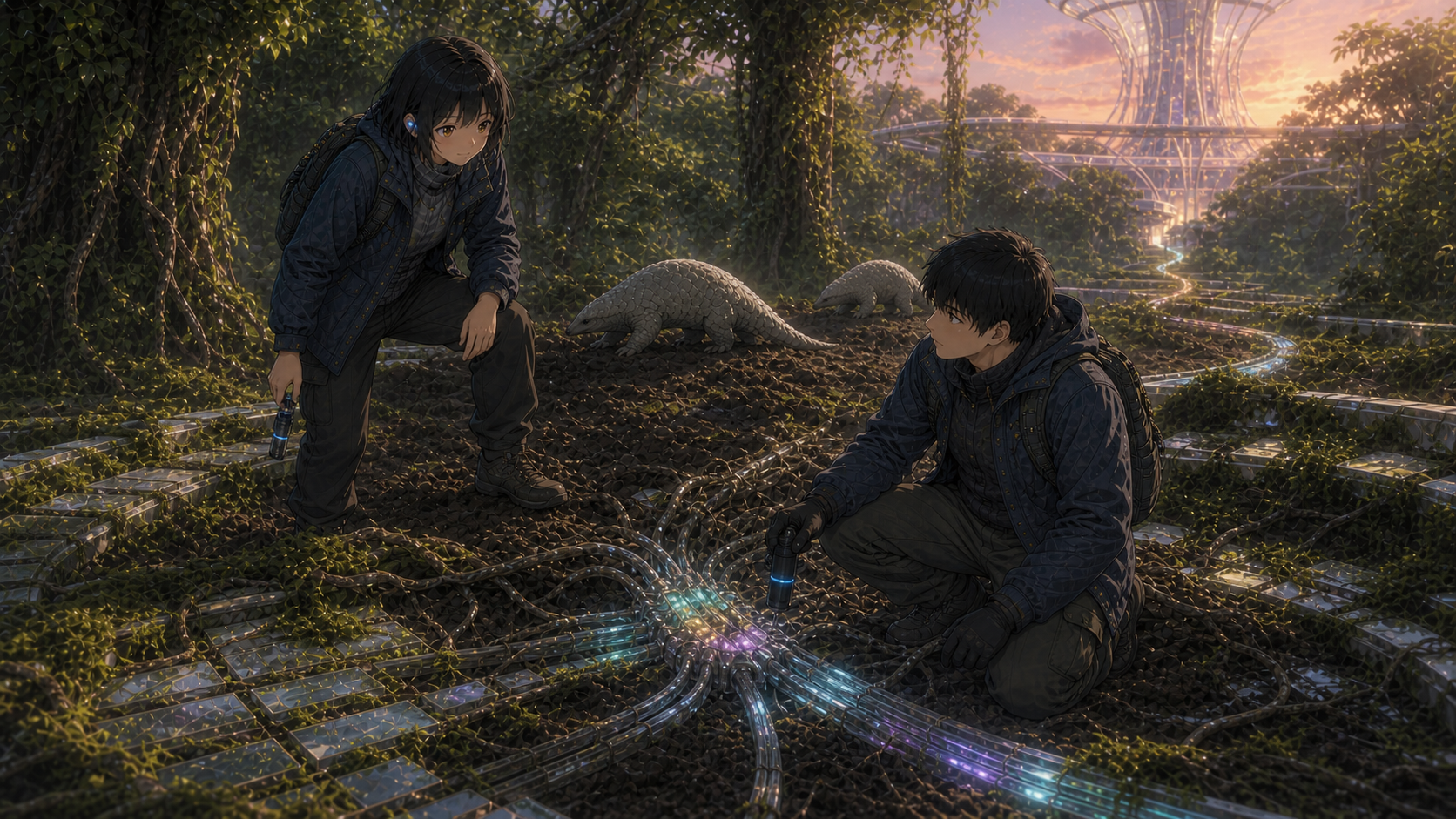
Roots had bent the maintenance door, but an old fiber line still pulsed inside them. Fang placed the sampler against its exposed sheath. I set a silent boundary marker before the nursery burrow. The answer could continue ahead. Our steps did not have to.
Evening · Electrostatic Mound
In the evening light, the colony turned the last section of fiber up from the soil. Its pulse led toward Seventh Diffraction Atrium and matched the response recorded in the spider webs and the hares. Fang brushed dirt from her knee. I packed away the marker. Tomorrow's route would have to go around a forest raising its young.
Habitat Causality
Retired photonic-wafer trenches left a waterproof test layer between fungal mycelium, tree roots, and the cooler soil below. Crystal-Trench Burrowers use broad claws to open damp tunnels through that barrier. The passages reconnect roots, fungi, and small animals, while the newly turned earth exposes an old fiber line that is still transmitting the false exposure sequence toward Seventh Diffraction Atrium.
Species Behavior
Crystal-Trench Burrowers are one-and-a-half-meter digging mammals with overlapping ceramic-silicon plates that insulate them from static. Adults excavate with broad claws and share root-linked tunnel systems; juveniles have softer gray-brown plates. They keep working when observed from a safe route, give no threat display here, and maintain nursery burrows that must not be entered.
「We found the direction of the signal because the burrowers reopened a path. We did not repay them by taking it.」