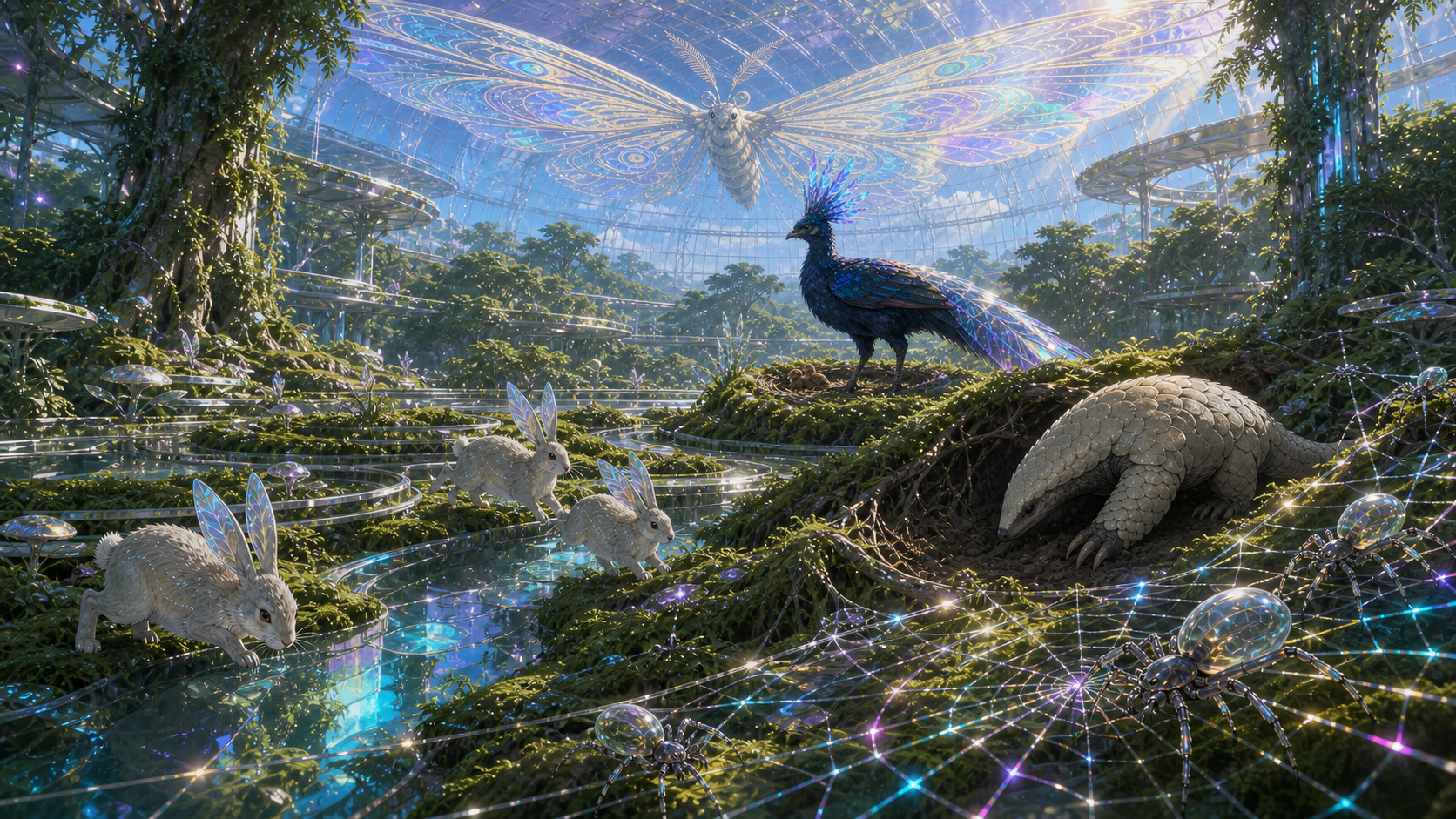
Diffraction Mycelium Reserve
The reserve began as an understory isolation zone for testing photonic wafers and heat-dissipation materials. Mycelium and tree roots now cover the retired wafer glass, turning it into polarized terraces that split dome light. Condensation water, low-grade waste heat, and mineral films left by maintenance machines sustain a local ecology that depends on diffraction, static charge, and fungal rings.
- Parent Domain
- NB-03 · Neo Babylon Chip Sanctuary
- Location
- The boundary between Jidian City's southern conservation belt and a retired photonic-wafer test zone, formed by dome condensation channels, rewilded woodland, exposure atriums, and sealed maintenance corridors.
The southern reserve repeatedly recorded noon and dusk in the same forest at the same time, causing the maintenance system to classify wildlife as intruders. Fang and K entered to determine whether the contradiction came from damaged sensors, fungal contamination, or a large organism altering the dome's light cycle. Their evidence led to a non-aggressive divine-class Layerlight Canopy Moth whose migration was being blocked by an obsolete exposure corridor still replaying its test sequence at night.
How Diffraction Mycelium Reserve Works
Retired wafer glass, dome condensation, low-grade waste heat, and wild mycelium create polarized light bands and electro-moss. Diffraction Spore Spiders carry fungal spores while feeding on small insects. Veinlight Ear Hares graze on electro-moss and young fungal growth and transport seeds across cooling channels. Crystal-Trench Burrowers reopen damp passages through the impermeable test layer. Prism-Crest Nursery Pheasants raise chicks in fungal rings and regulate small arthropods. The non-predatory Layerlight Canopy Moth redistributes the dome's disrupted light into morning, noon, and dusk, synchronizing the activity of all four other species.
Observation Ethic
Fang and K observe, sample, reroute, shut down obsolete equipment, and coexist. They do not attack the reserve's animals, enter nursery burrows, force nesting birds aside, or obstruct the moth's flight. When a living boundary closes the shortest route, they choose another route; when a human system disrupts the habitat, they stop that system.
Five-Day Route
- Read the competing light cycles in spider webs at Outer-Ring Photoalgae Channel.
- Use the hares' twelve-second warning to identify the fixed exposure loop at Waste-Heat Orchard.
- Follow the live fiber exposed by burrowers from Crystal-Trench Refill Zone toward Seventh Diffraction Atrium.
- Yield the shortest corridor to the nesting pheasants and take Lightless Detour.
- Align the moth's three-part rhythm, shut down Old Exposure Test Corridor, and watch the habitat resynchronize from Canopy Afterglow Platform.
Five species maintaining this local ecology
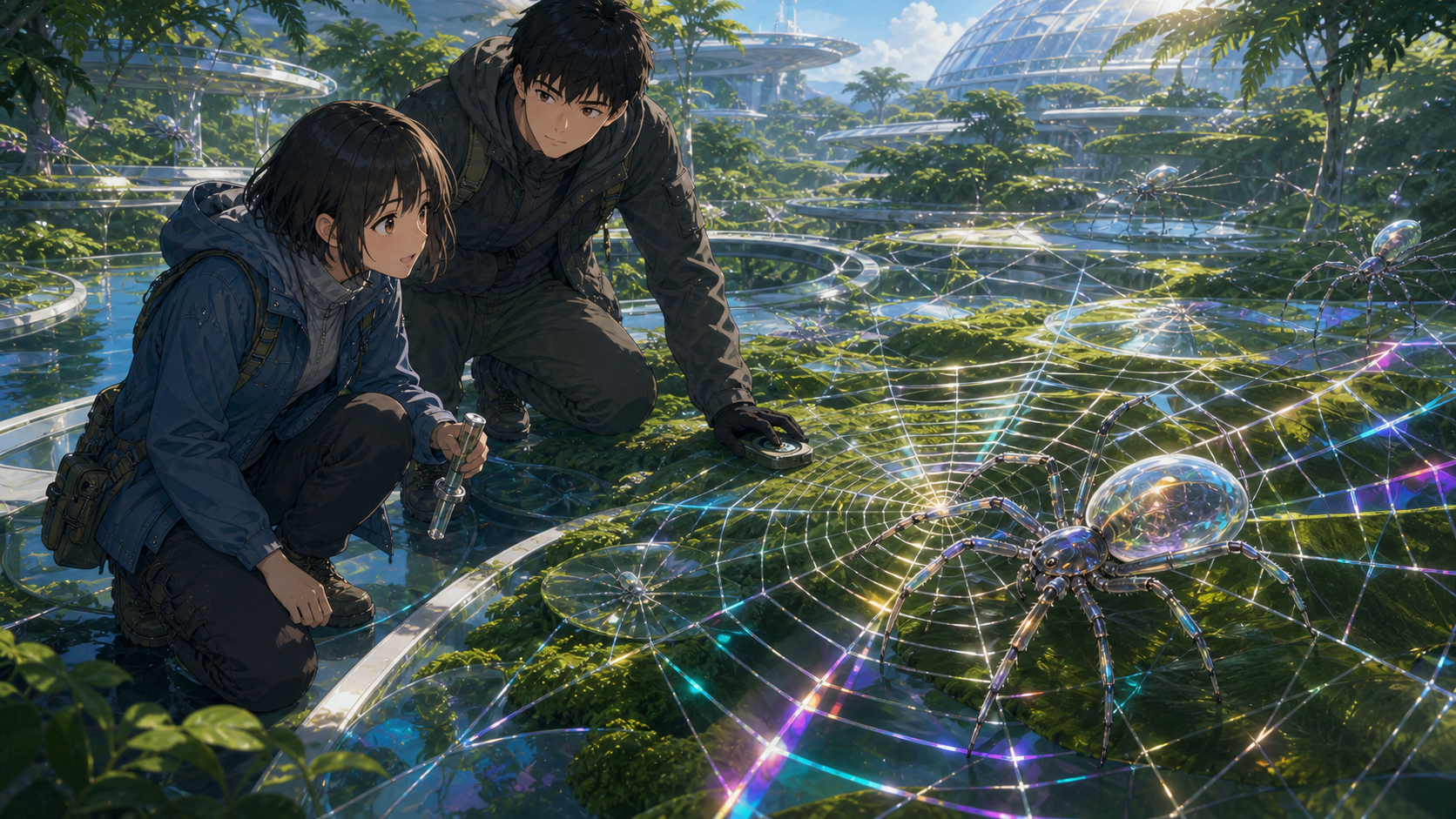 Day 01
Diffraction Spore Spider
The spiders anchor all eight legs to the edges of wafer-glass leaves and weave clean radial webs. They prey on small insects from the retired test zone without threatening Fang or K. Fungal spores adhere to the silk and are carried into new cracks beneath the canopy as the colony rebuilds.
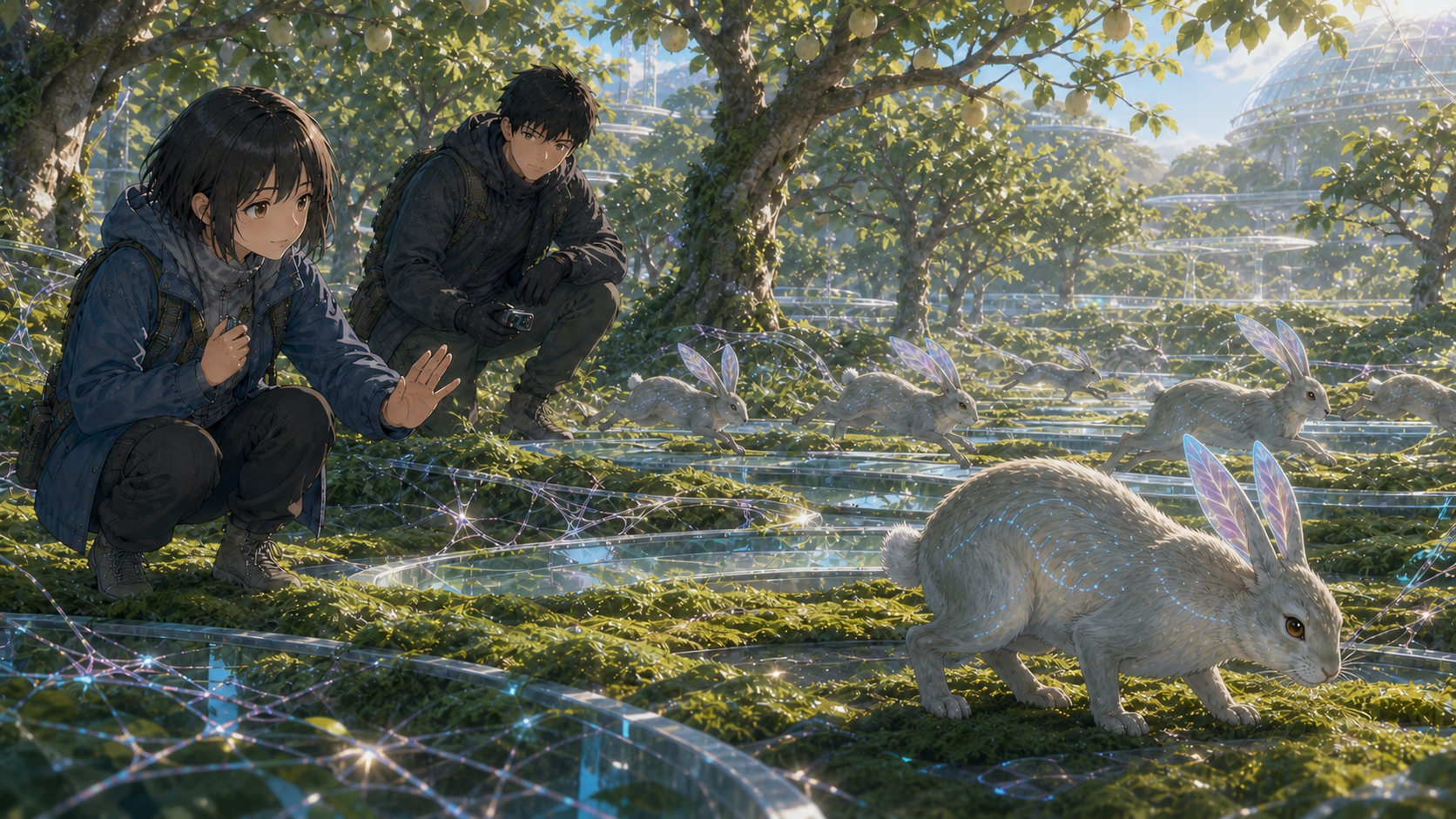 Day 02
Veinlight Ear Hare
The hares graze on electro-moss and tender fungal-ring shoots. Twelve seconds before each false exposure pulse, the whole group lowers its long ears and withdraws toward the cooling channel. They avoid the overheated light band rather than charging observers, and they pass quietly through any open route left by Fang and K.
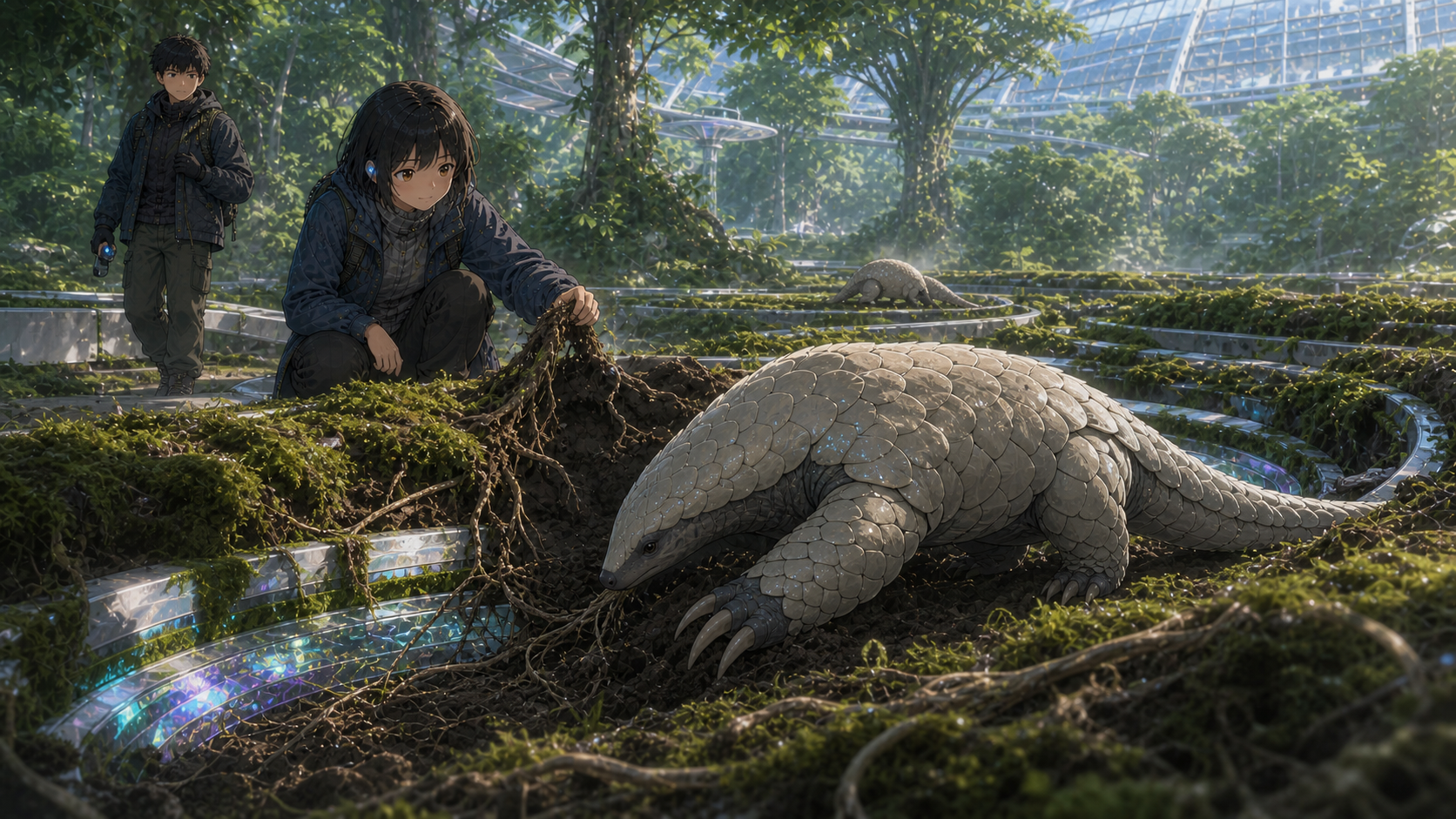 Day 03
Crystal-Trench Burrower
The burrowers use broad digging claws and blunt sensory snouts to turn over retired wafer trenches. They do not threaten Fang or K. Adults continue digging at a distance when the observers stay clear of fresh entrances and nursery tunnels. A group eventually exposes a pulsing photonic cable beneath the new soil.
 Day 04
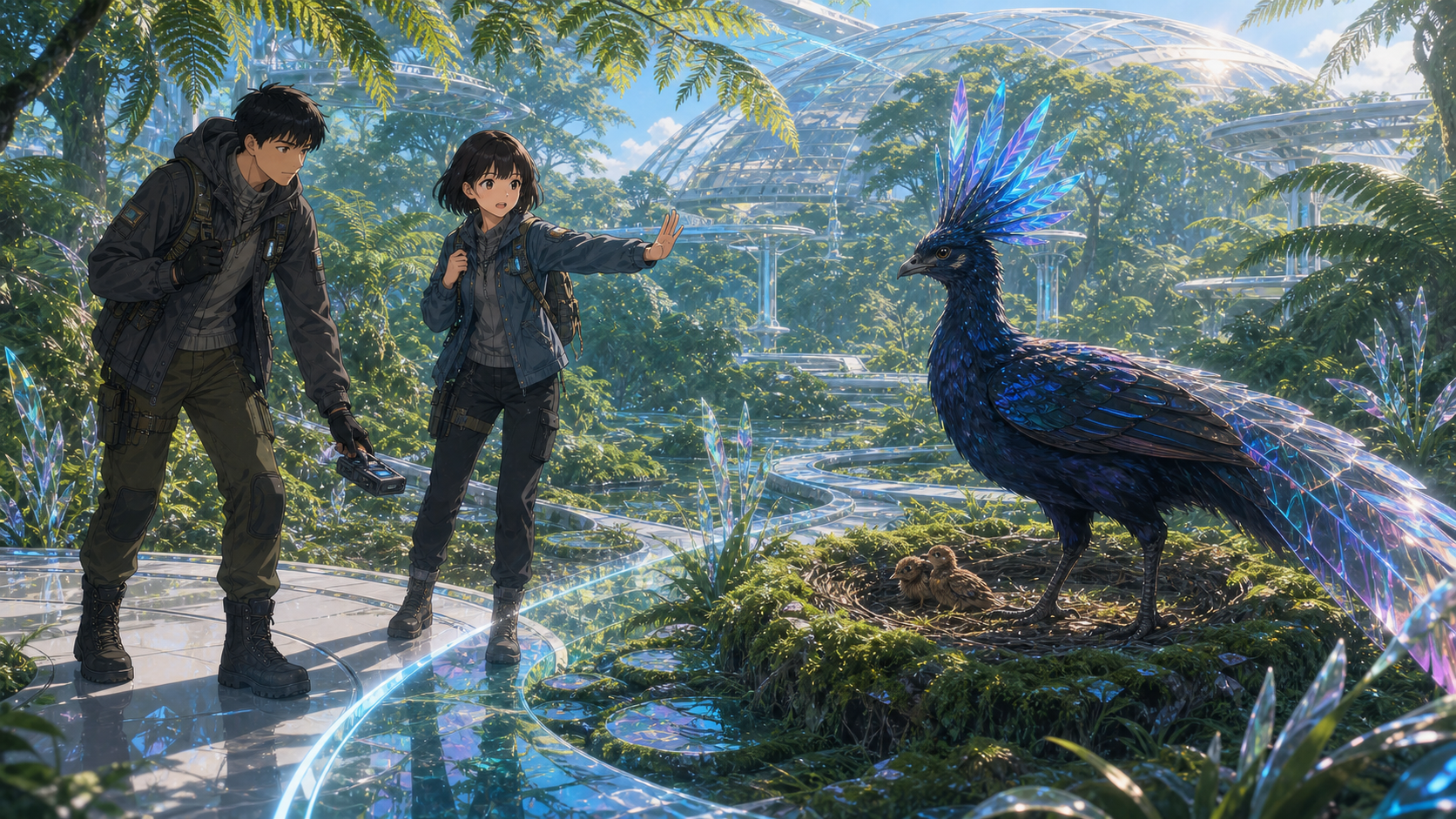
Prism-Crest Nursery Pheasant
Adults jointly guard the nursery. They raise their prism crests, give low-frequency calls, and stand across an approach to mark a boundary. They do not need to strike when an observer stops outside the reflected light line. Once Fang and K take the longer lightless route, the adults lower their crests and the nest circle settles.
 Day 05
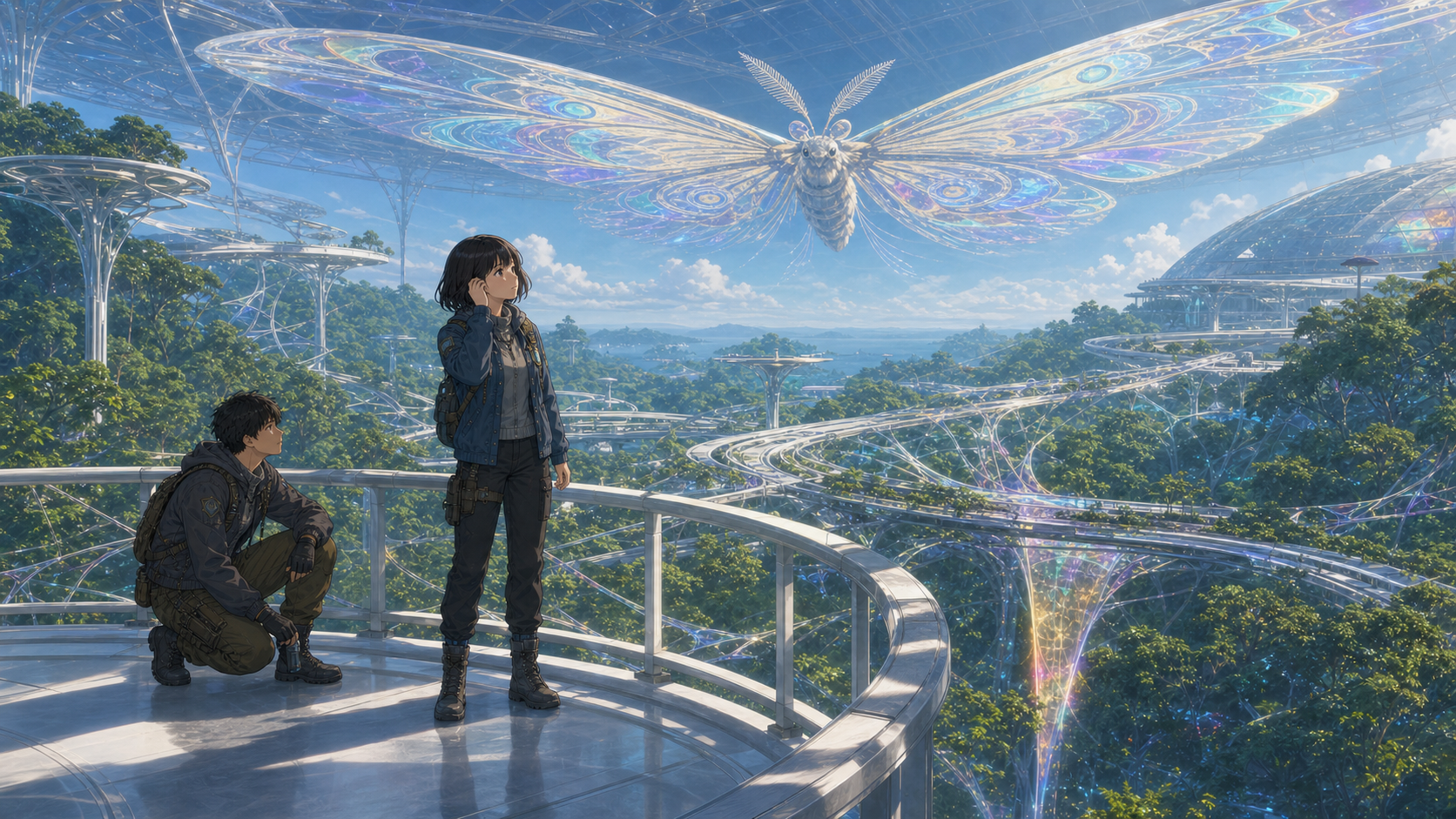
Layerlight Canopy Moth
The moth never approaches Fang or K and shows no predatory behavior. It glides over the canopy, feeding on microalgae in dome condensation and airborne spores. Its wing veins do not accelerate when K shuts down the test loop; they slowly return to the moth's own rhythm before it passes through the atrium.
「The anomaly was not a divine animal invading a human system. An obsolete human system was preventing the habitat's living clock from completing its migration. Once the fixed exposure loop stopped, the moth returned morning to the reserve and the other four species resumed their own rhythms.」