NB-03 / CANON_ANCHOR
Neo Babylon Chip Sanctuary
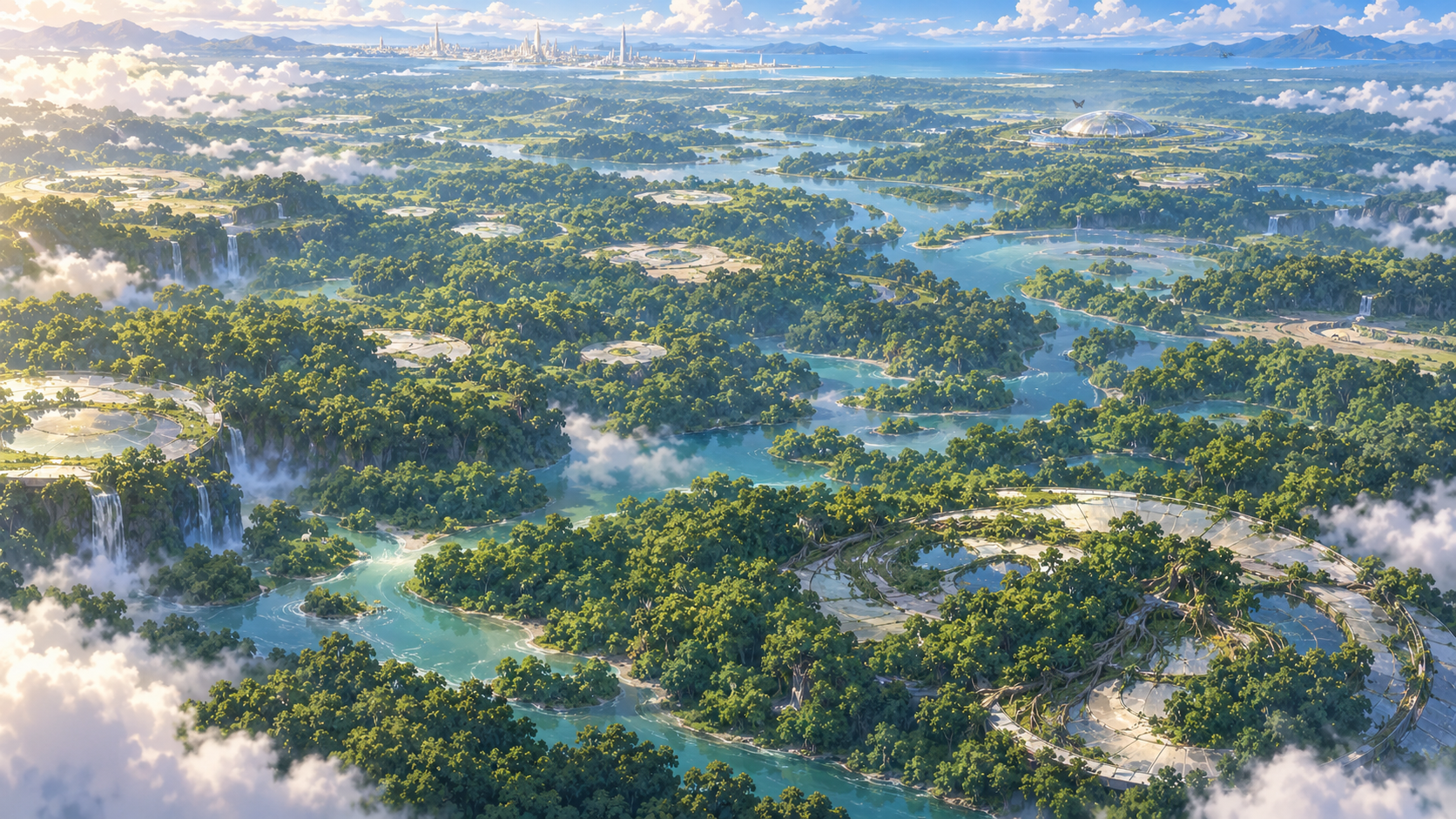
New Babylon Island is the former island of Taiwan, with Jidian City on the island. Open plains, broadleaf forests, marshes, and rock faces survive at its southern tip, where ironboar herds make their home.
FIELD ORIENTATION
Coastal Node Profile
The platinum structures of Jidian City coexist with southern landscapes largely spared the direct devastation of the nuclear catastrophe. Across grassland, wet forest, and mud, ironboar nursery routes intersect with the patrols of steel-clawed giant eagles.
- Coastal Hub
- Jidian City
- Buffer Biome
- buffer ecology zone
- Core Hazard
- regional environmental hazard
- Representative Species
- representative mutant species
- Reveal Status
- Field record available
Terrain Behind the Light
A domain is not drawn by walls. It is rewritten by tides, storms, salt, fungi, ice, or glassed ground.
Each local reveal records a new habitat, species relation, and human remnant.
Connected Domains
NB-01Vancouver Dome Frontiercoastal survival hub · buffer ecology zoneNB-02Aleutian Magnetic Storm ChainAleutian Storm Harbor · buffer ecology zoneNB-04Kuroshio Floating City ChainKuroshio Floating City Chain · buffer ecology zoneNB-05South Seas Forgotten Archipelagocoastal survival hub · buffer ecology zone