The Wind Window Moves
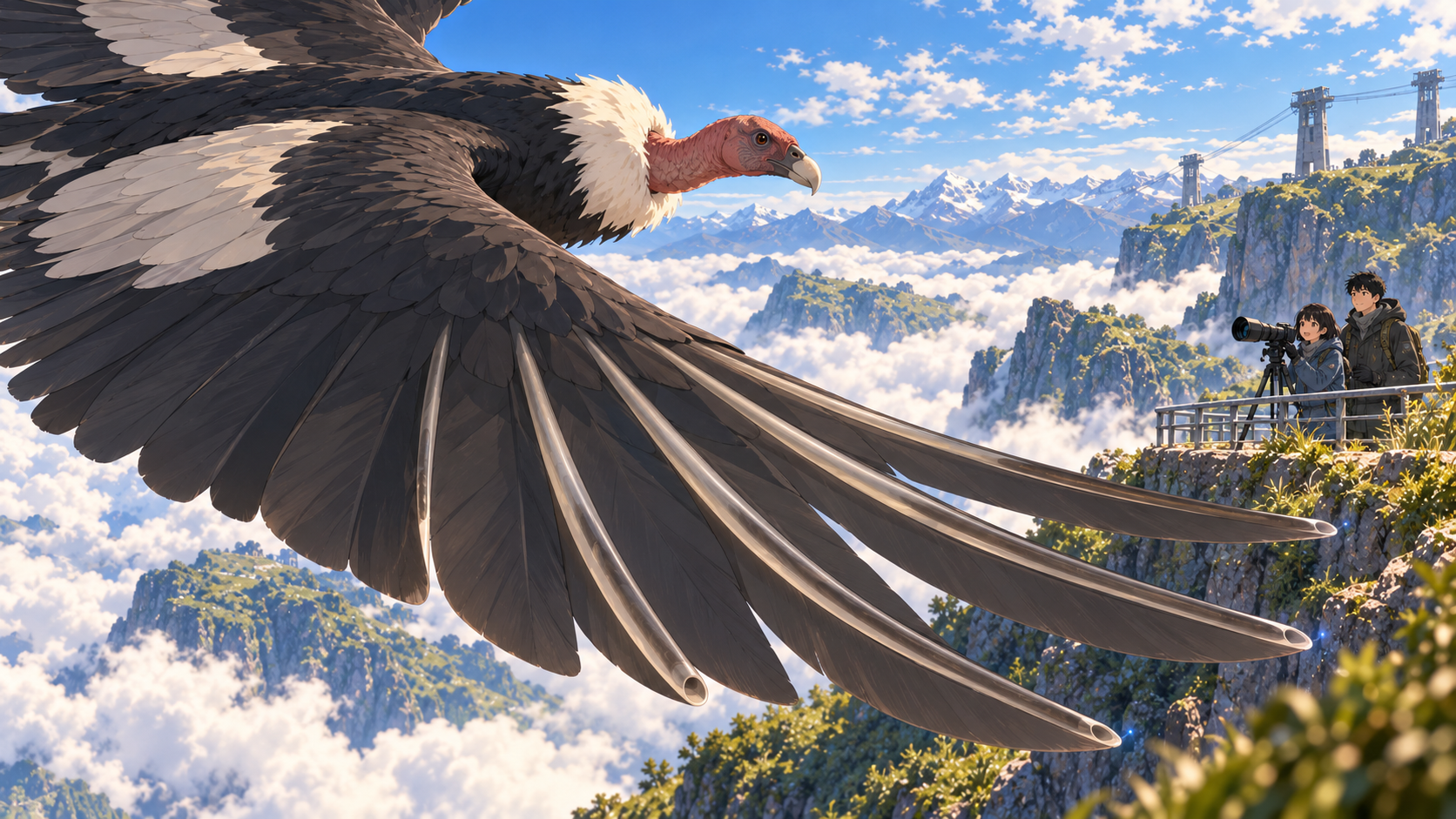
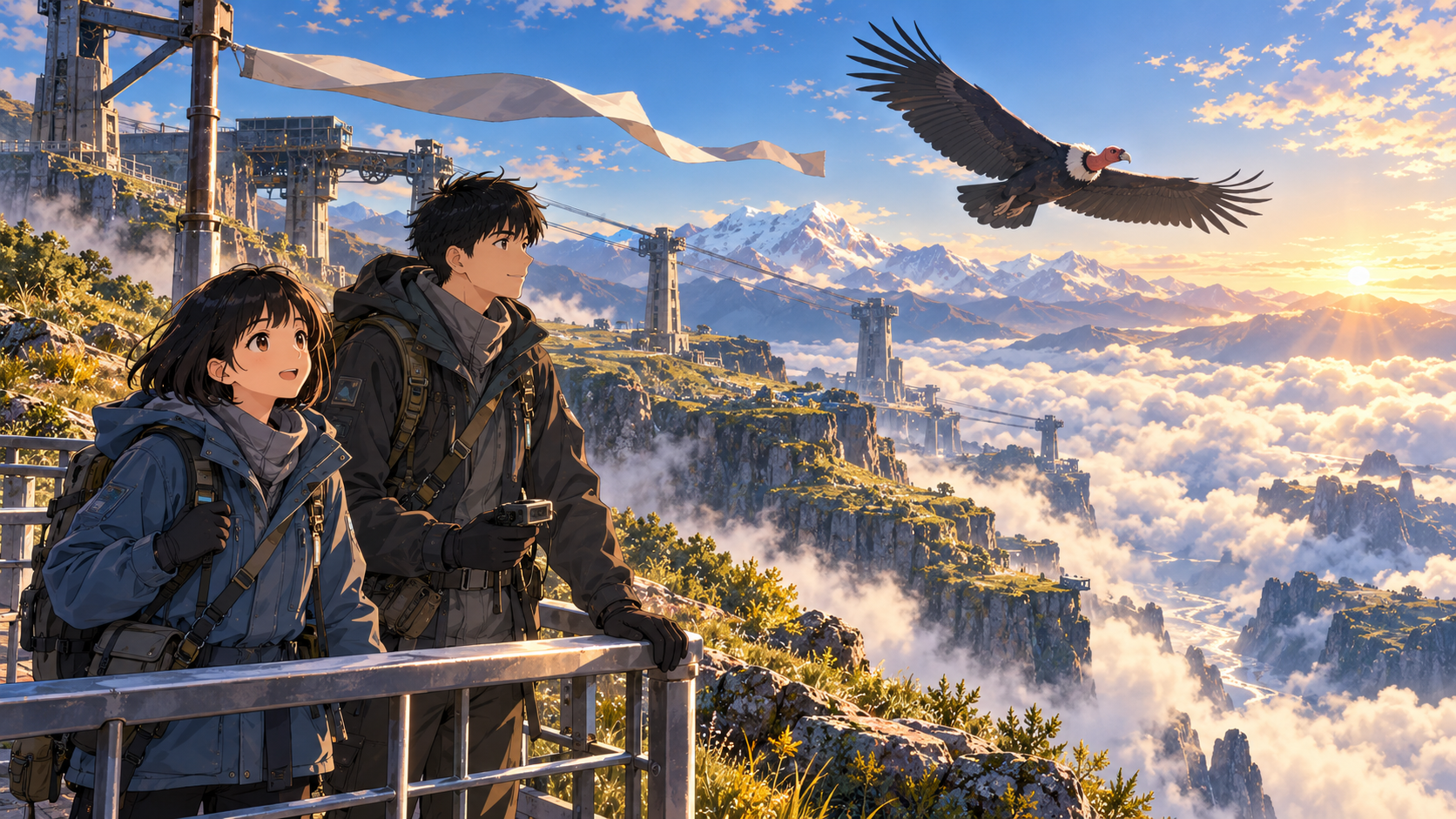
Cold fog reduced the cableway support to a short outline. The wind-window flight line moved outward. Fang checked the wind flag's shadow; I recorded the fixed cableway pulse from behind the rail. High above us, one condor's wide wings and bare neck came into view.
Field Observation
Morning at Thunder-Tether Aerial Wind Window: record the outward shift in the flight line, wind direction, and cableway pulse. Noon at Quill Static Observation Point: use a passive long lens to check the hollow shafts and faint wingtip discharge without lighting the bird. Evening at Cliff Return-Wind Belt: hold a remote shutdown window, then withdraw while it glides alone on the natural return wind.
Morning · Thunder-Tether Aerial Wind Window
Cold fog left only part of the cableway support visible. The wind-window flight line had moved outward. One condor crossed it high above us. Its broad wings, bare neck, and hollow conductive feather shafts formed a distinct silhouette; a faint charge left the wingtips in the high wind. Fang compared the wind flag's shadow while I wrote down the cableway's fixed pulse from inside the rail. The bird patrolled the grass slope and cliff, feeding on the remains of highland animals that had died naturally and returning nutrients to the mountain. The shifted flight line and continuous vibration from the old mine line could occur together, but one flight cannot settle the cause for the whole slope. I recorded wind direction, stone steps, and time, then checked them against yesterday's clues. Fang asked me to mark our safe way back. I did.
Noon · Quill Static Observation Point
From the observation point, our passive long lens showed the hollow feather shafts and a faint release of static at the wingtips. We stayed back and did not turn on a light. Fang and I compared the wingtip rhythm with the cableway pulse, wind direction, lichen on the outer rock, the grass belt, and the wildlife path. Local static and the old mine line might both affect the wind window. No single observation makes the bird the cause of an equipment fault. I added the time and our safe retreat to the map before drawing any wider conclusion.
Evening · Cliff Return-Wind Belt
The cableway fell silent for a short interval. The condor glided alone along the cliff's natural return wind, keeping its airspace apart from distant birds. We held the shutdown window remotely and came down from the observation point without calling it closer. I compared the flight line with wind, stone, time, yesterday's clues, and the mine-line record. The pattern justified a maintenance route around the habitat; one bird could not diagnose the whole mountain. Fang checked our way out. I kept it on the map. The mountain has its own rhythm. The equipment can make way.
Habitat Causality
Continuous mine-line vibration can reach the terraces through old cableway supports and shift readings from the grass-slope path and aerial wind window. Local static can also disturb the window. The condor's glide height and faint wingtip discharge are clues to compare with wind, stone, lichen, grass, wildlife paths, and prior records; they are not proof on their own. A brief remote shutdown and a maintenance route around the habitat leave the natural return wind open.
Species Behavior
A solitary, broad-winged, bare-necked condor patrols grass slopes and cliffs. Hollow conductive feather shafts let faint static leave its wingtips in the high wind window. It scavenges naturally dead highland animals, returns nutrients to the mountain, and keeps its flight territory apart from distant others.
「I marked our retreat and the condor's open wind route on the same map. The equipment can make way.」