Cloud-Stair Mining Bypass is a five-day field route where Fang and K document a local ecology through observation, distance, and response.
Day 01 / 10.22
A Route Around the Copper Veins
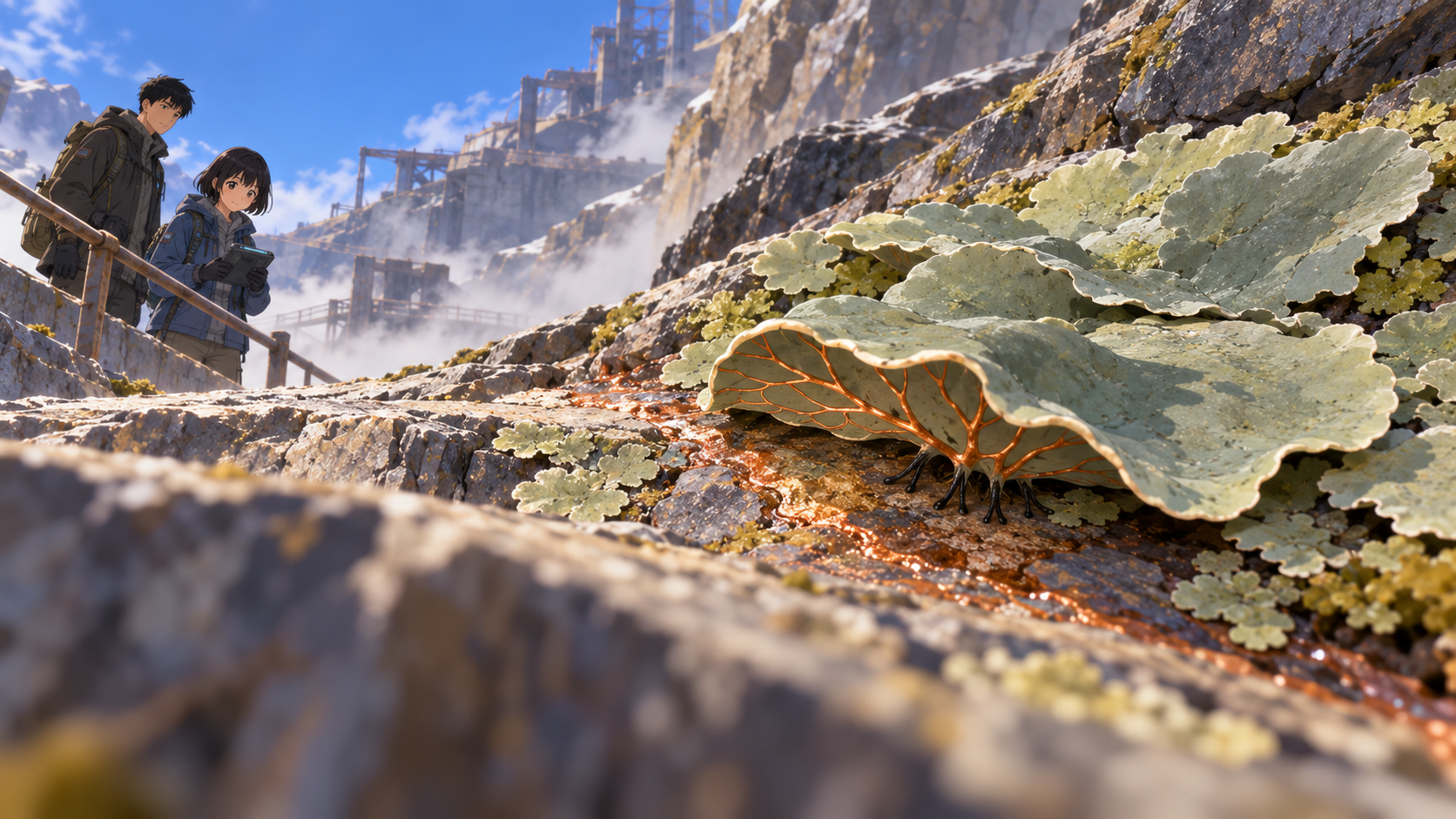
Copper-Vein Rock LichenLow Risk
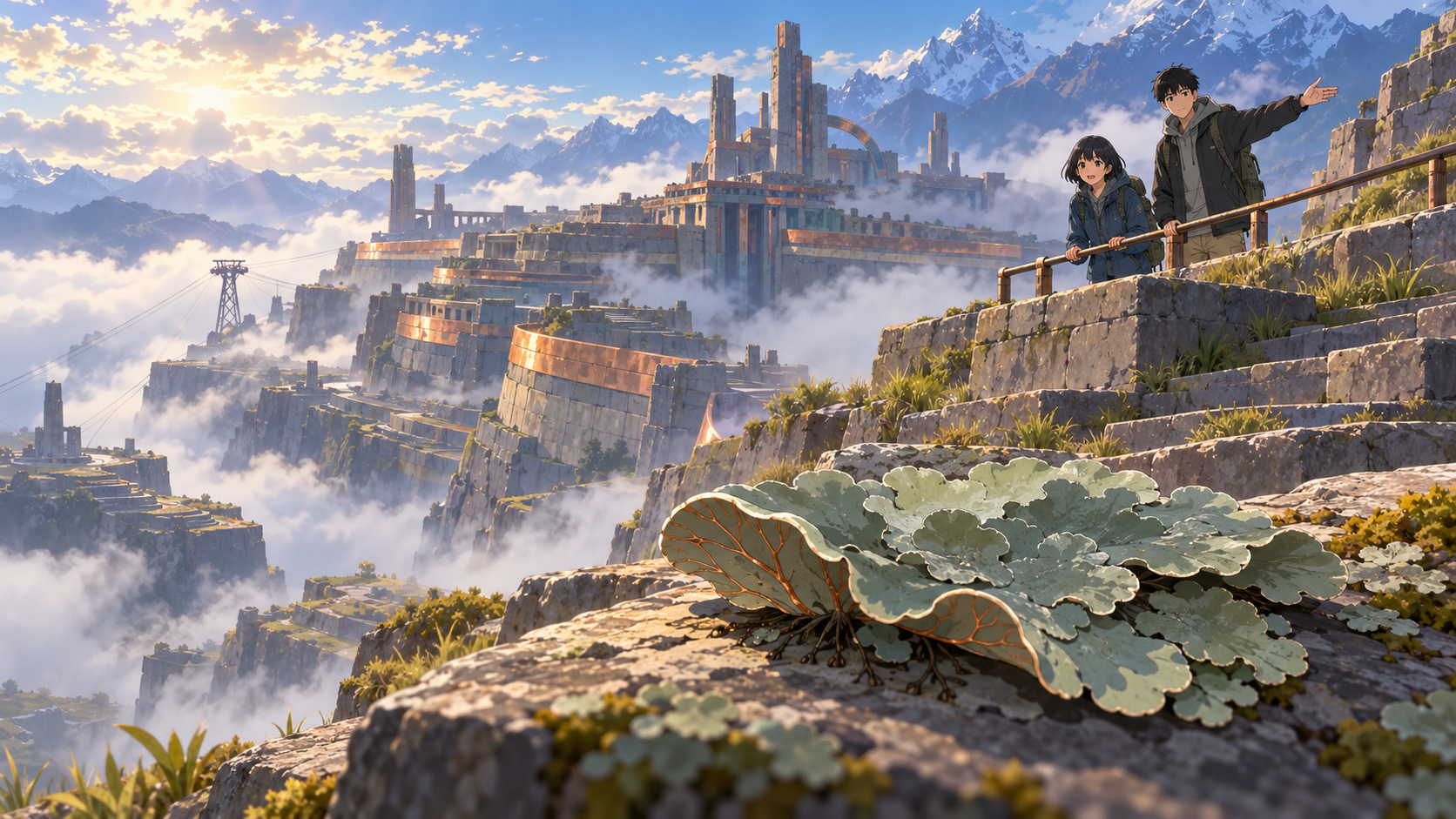
Cold fog hid most of the old cableway support. The new copper band on the stone did not align with the old one. Fang stopped outside the safety rail. I marked the upper path around the lichen before we took another reading.
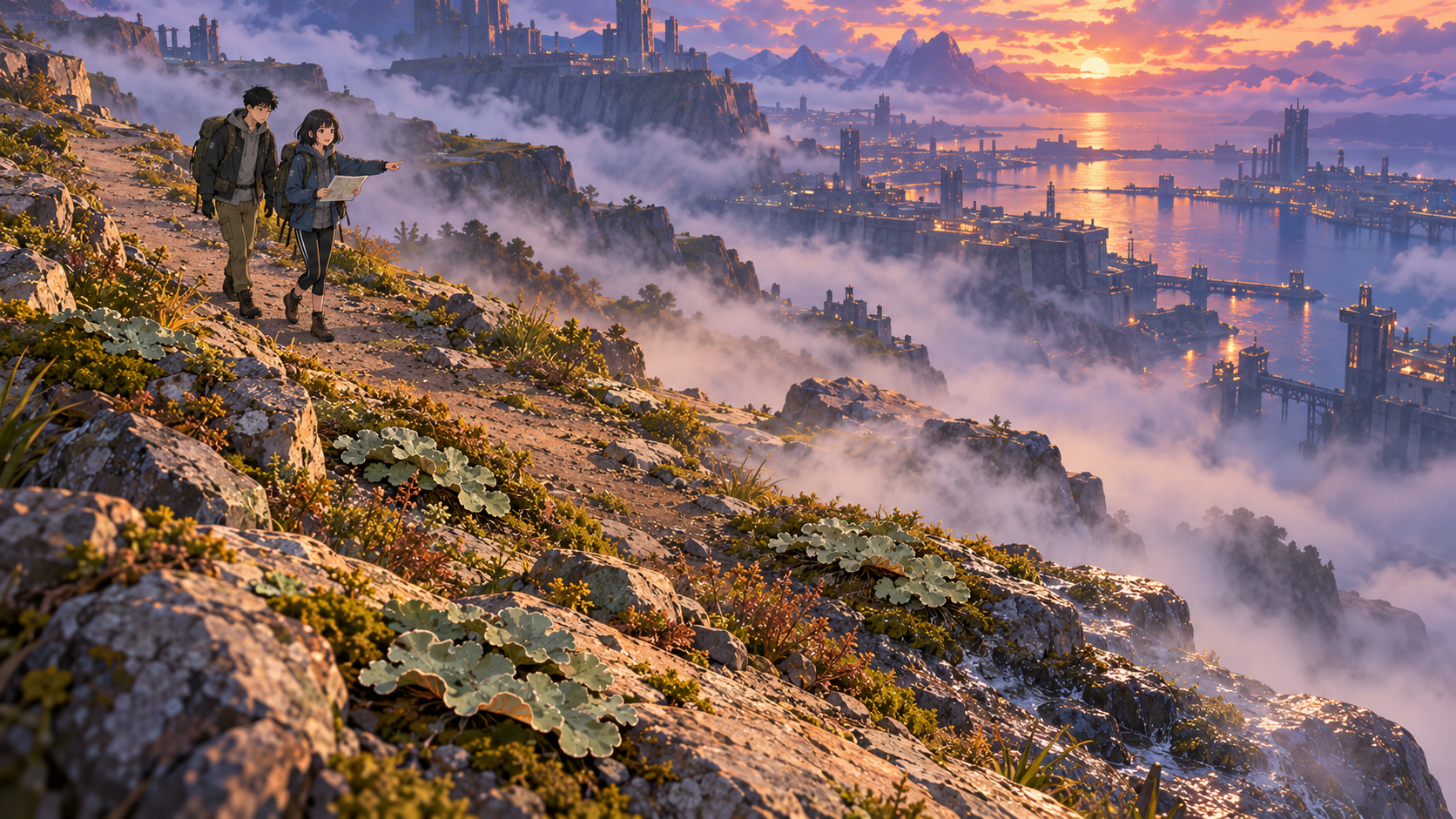
MORNINGCold fog left only one span of cableway support visible above the stone steps. Old and new copper-colored bands did not align. The lichen was still clear: palm-wide, broad gray-green lobes lay flat over one another. Copper-colored veins crossed their undersides; short black filaments fixed them to the rock. Fang compared the bands from outside the rail. I marked the upper detour and the way back. The organism binds a little metal at the abandoned mine edge, but it lives only where cold mist and dry stone alternate. The old line vibrates continuously. The two changes might overlap; one mark cannot speak for the whole slope. I wrote down the wind, the step, and the time, then checked them against the previous day's clues before drawing a conclusion.NOONFrom our distant point, the underside veins and short holdfasts came into view. Mineral seepage stayed on the rock face instead of washing straight into the thin soil. Fang read a noncontact metal value against the wider slope. I remained beyond the rail and switched off the sample lamp. We took nothing from the lichen. Its copper pattern darkened near one edge and paled beyond it, a possible boundary for seepage, not a fault signal from a living sensor. I checked the same wind direction against the first stone step. The records were still too few to blame the old cableway for every change.EVENINGThe fog drew back. Separate lichen patches followed the boundary between damp and dry rock; the thin soil beyond them had no fresh mine-cart track. Fang and I left the steps and marked a protected strip from higher ground. There was no need to put a wheel through it to test the reading. The lichen held trace metal, the slope held the first grass, and the wildlife corridor lay farther on. I compared the three places, then drew a maintenance route outside the living strip. Fang asked me to put our retreat on the same map. I did. The mountain has its own rhythm. Equipment can make way.
「I left the lichen on its rock and the retreat route on our map. The mine line can turn before the habitat has to.」— K
Day 02 / 10.23
The Grass Belt Can Keep Its Rhythm
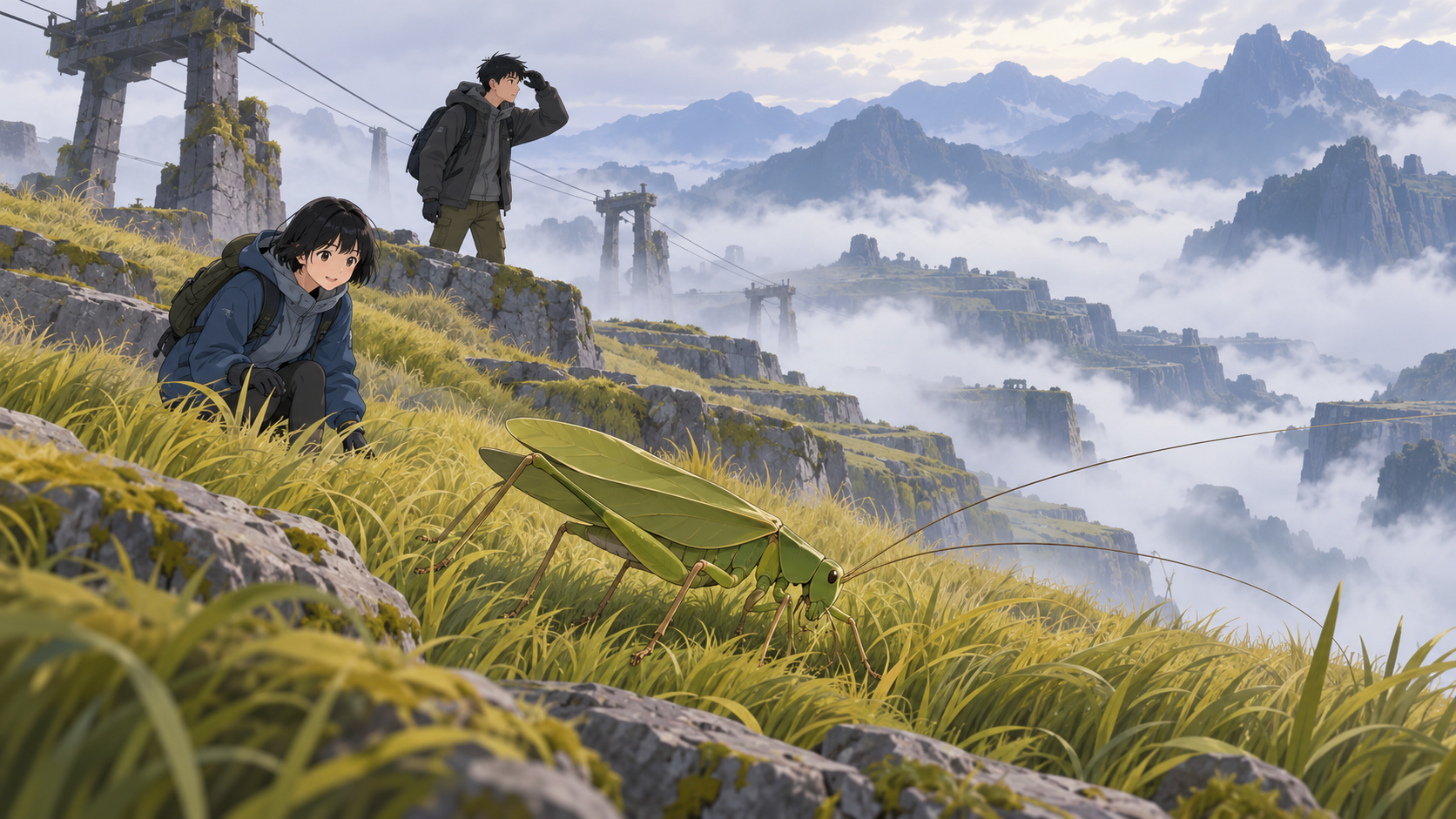
Mist-Step Foldwing KatydidLow Risk
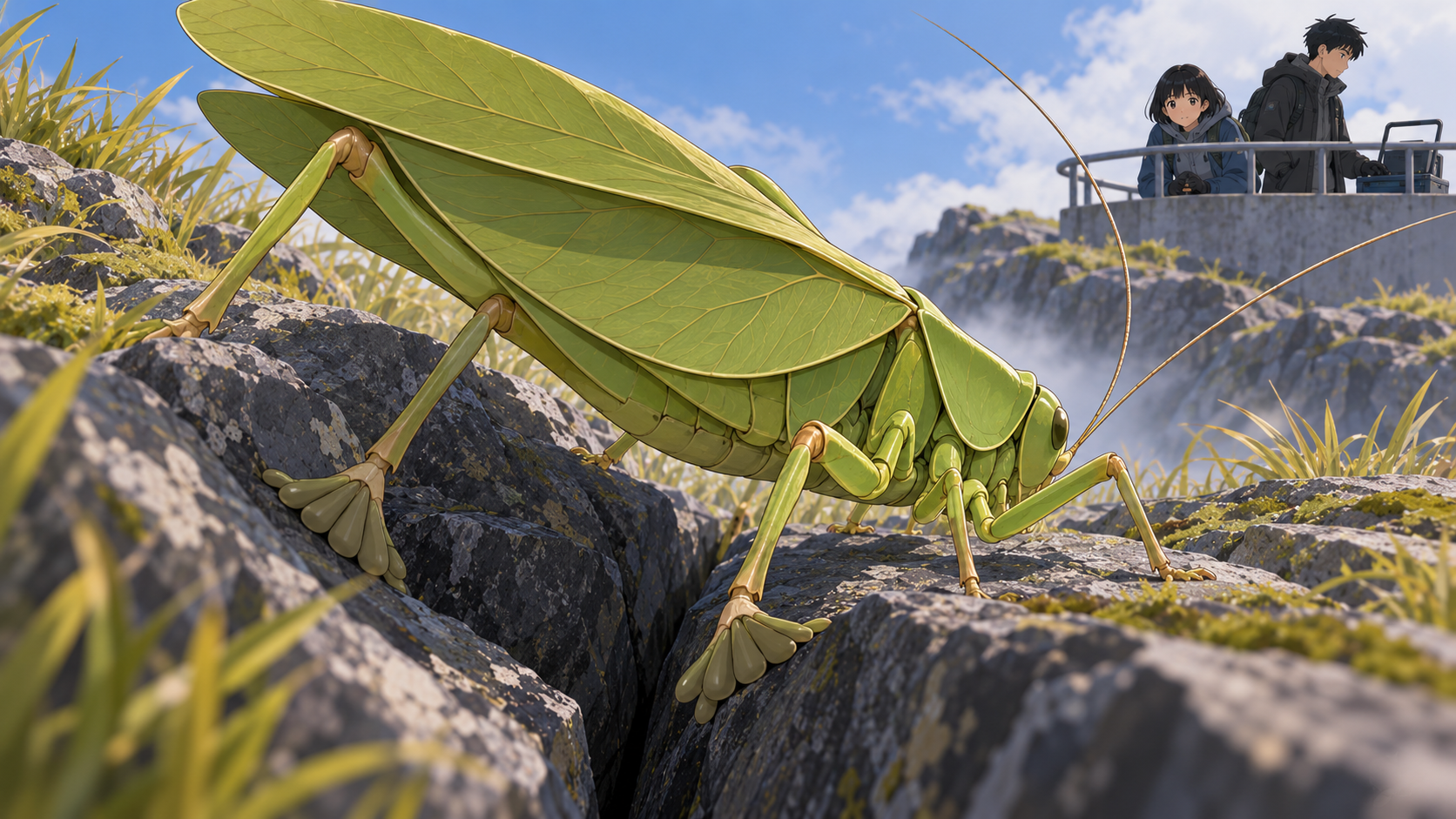
Cold fog reduced the old cableway support to one outline. A line of grazed grass ended beneath it. Fang followed the gap; I took the higher path to check the wind. A lone katydid showed its broad hind foot between the leaves.
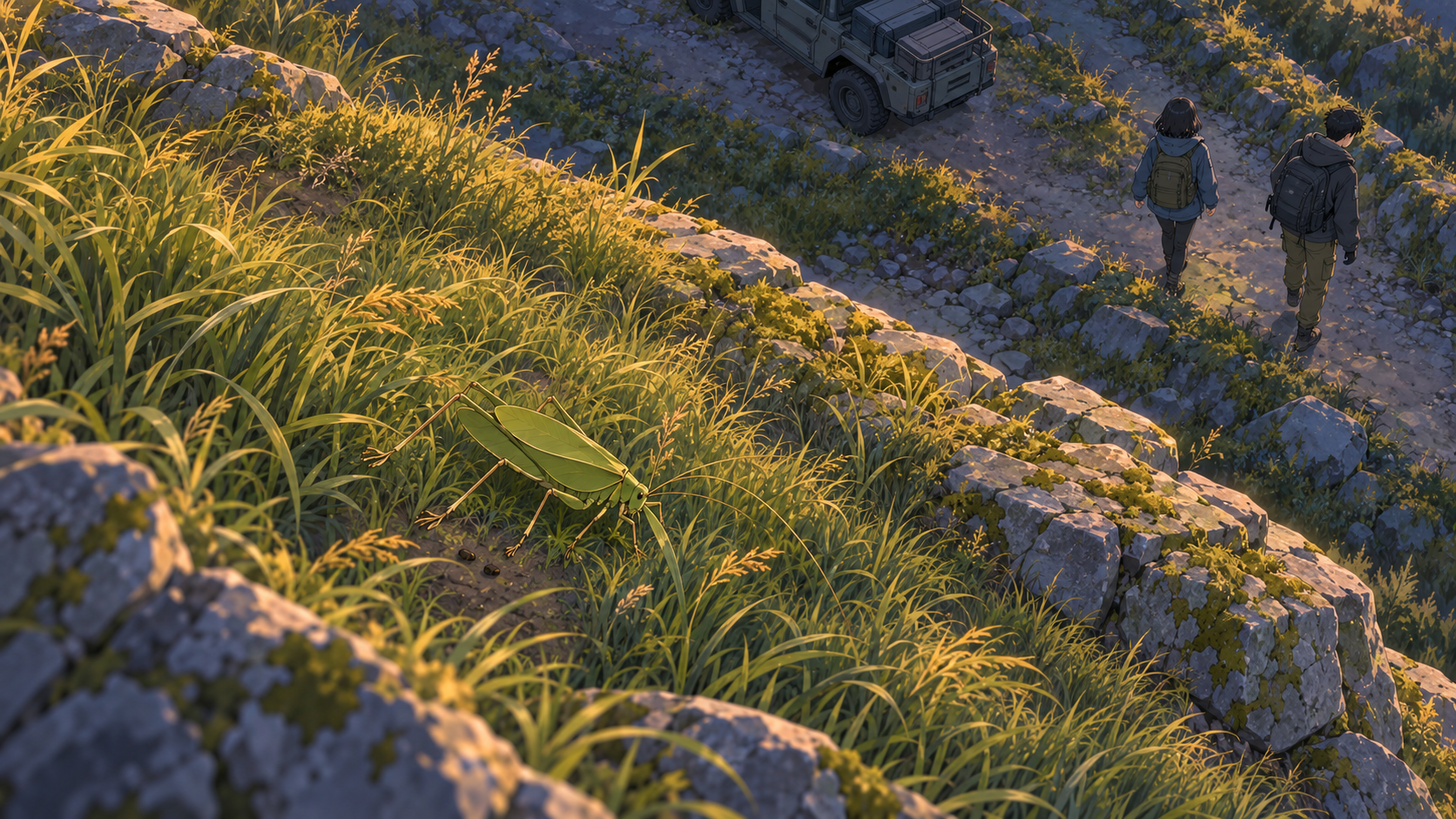
MORNINGThe cold fog left only a section of the old cableway support visible. Grazed leaves stopped in its direction. Fang followed their gap while I checked the wind from a higher path. One hand-length katydid stayed low in the grass. Its long, fine antennae moved ahead of two folded hindwing sections; broad, soft hind tarsi held it against the ground. It grazed the cold-fog leaves rather than gathering with others. The breaks in the grass might coincide with continuous vibration from the old mining line, but a single mark cannot speak for the whole slope. I wrote down wind direction, stone step, and time, then compared them with yesterday's clues. Fang asked me to mark a safe way back. I did.NOONFrom a low viewpoint, I saw the katydid close both sections of its hindwings. Its flexible hind feet braced in the stone crevice and absorbed vibration as the wind rose. Fang compared the pulse at the old support from farther back. I switched off the nearby maintenance vehicle's fixed-frequency test. We did not handle the animal or blame it for equipment faults. Its shelter, the lichen on the rock, the grass belt, the wildlife path, and the wind window each gave us a different piece of the route. I checked the time and wind against the morning record; there was still too little evidence to blame one machine for every change on the mountain.EVENINGThe vehicle stayed still. One katydid returned to the grass and grazed alone. A few droppings fell into the thin soil, returning plant matter to the slope. Fang and I moved away along the side path so the grass belt remained continuous. I compared the three sites and yesterday's clues before drawing a maintenance line around the habitat. Nothing required us to drive through the grass to confirm a reading. I put our retreat on the same map. The mountain has its own rhythm. Equipment can make way.
「I left the grass belt unbroken and the retreat route on our map. The maintenance line can turn before the habitat has to.」— K
Day 03 / 10.24
The Grass-Slope Path
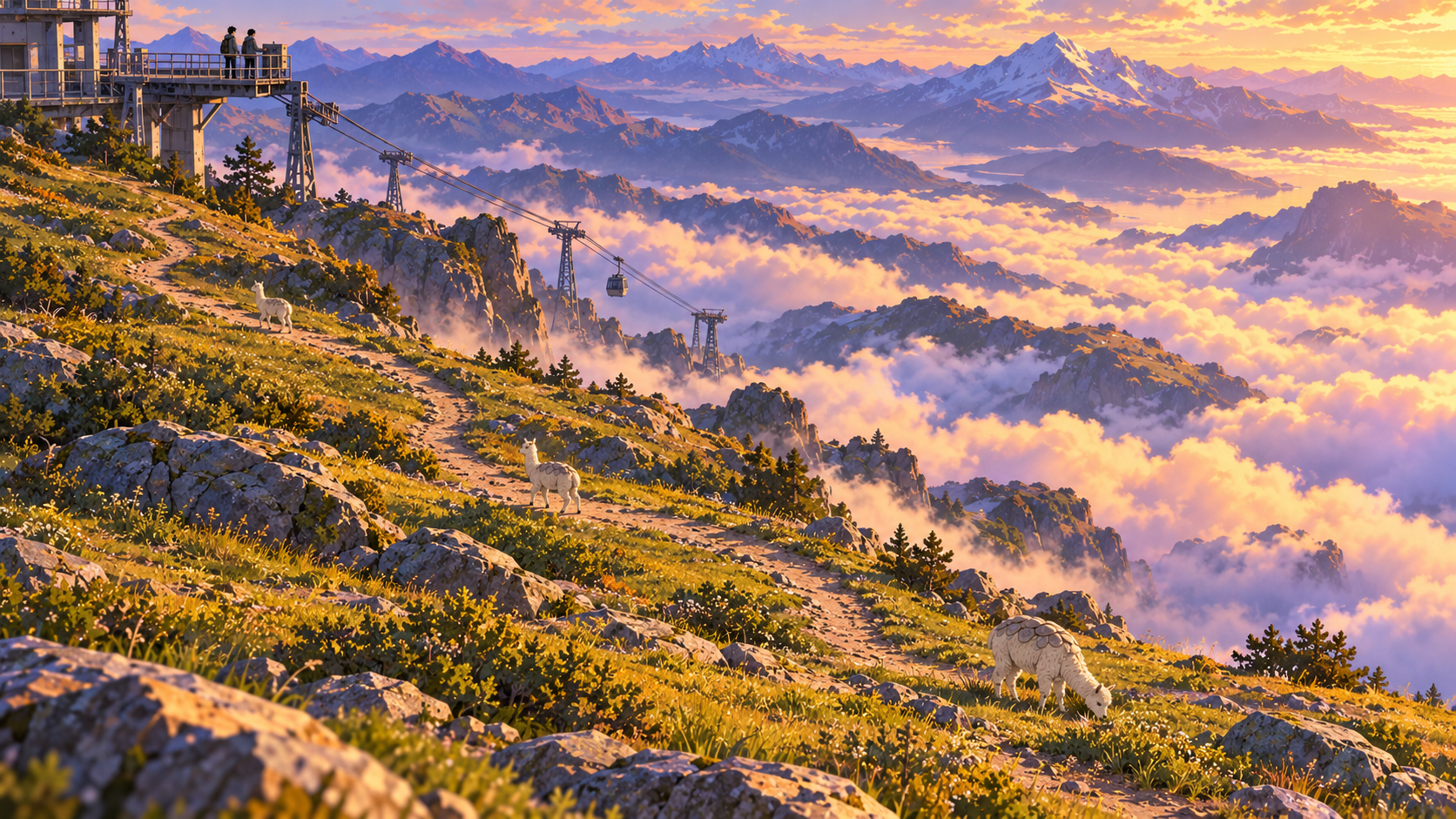
Crystal-Back AlpacaModerate
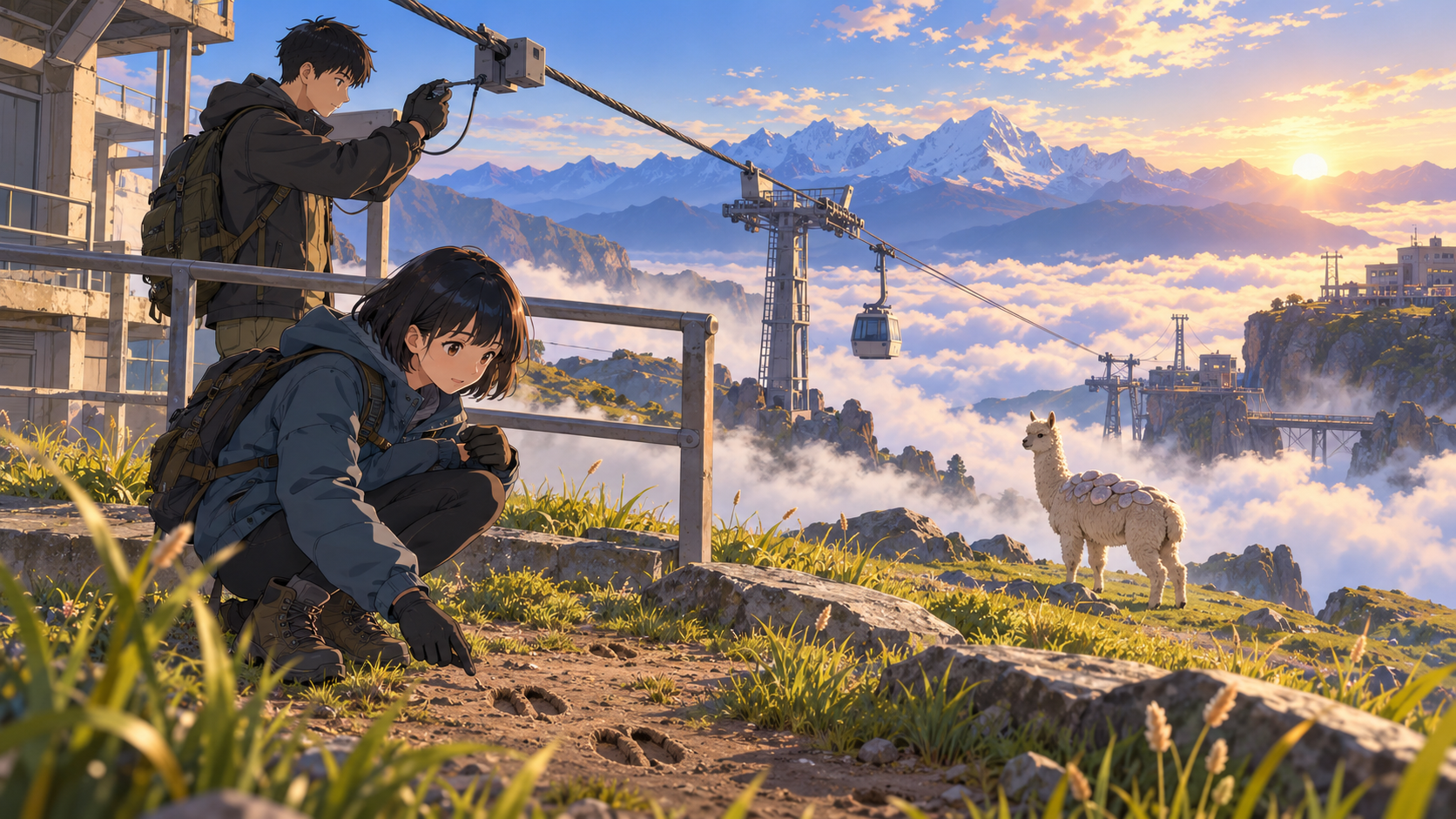
Cold fog left only part of the old cableway support in view. Hoofprints broke off beside the mining line, with grass seeds among them. Fang crouched over the marks; I checked cable vibration from behind the safety rail. A low-backed alpaca emerged without coming toward us.
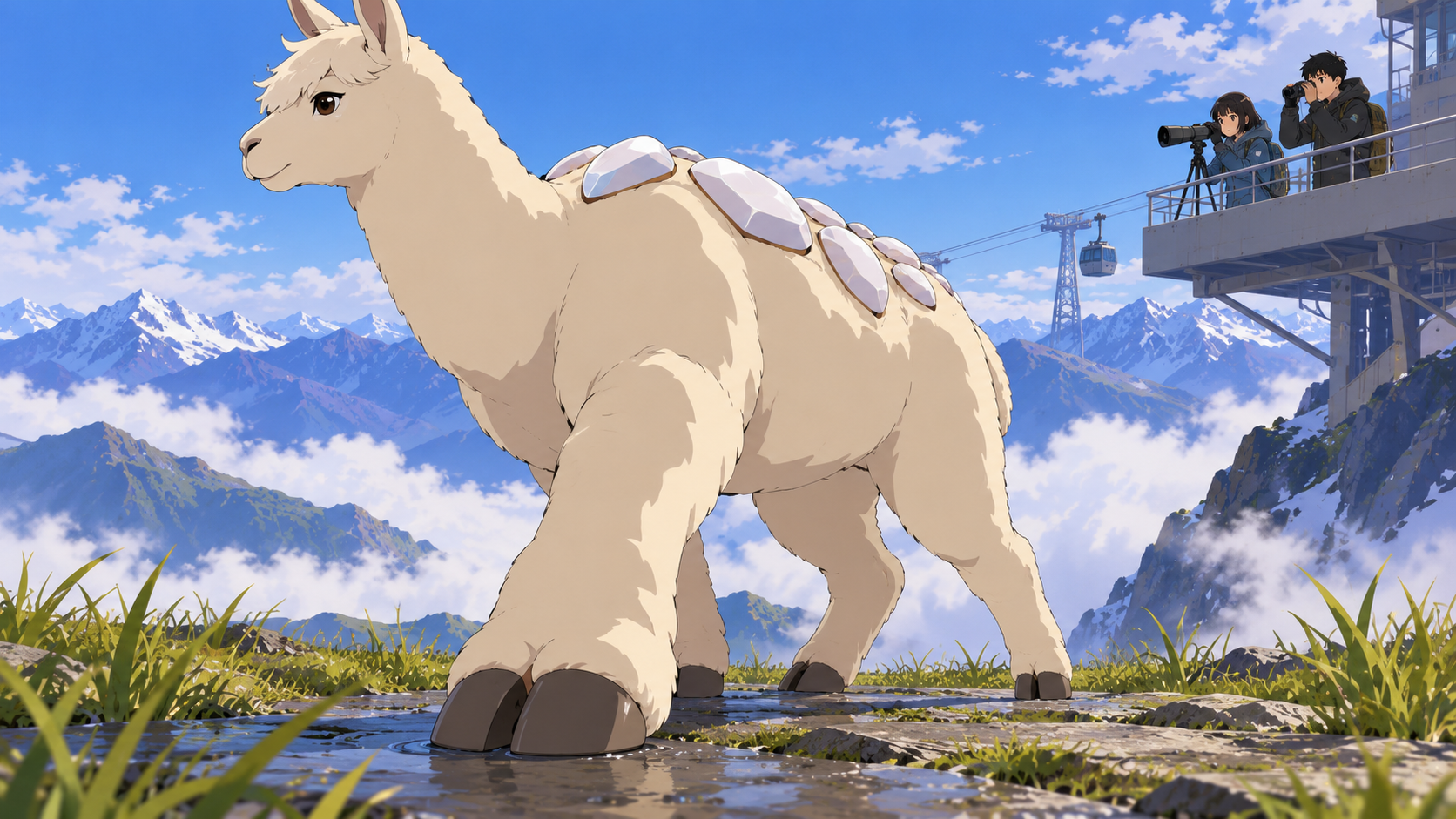
MORNINGCold fog reduced the cableway support to an outline. Interrupted hoofprints and grass seeds lay beside the mining line. Fang crouched to compare the prints while I measured the cable's pulse from behind the safety rail. One compact, hump-free alpaca appeared in the mist. Low keratin-mineral plates followed its shoulders and back; broad lung sacs supported its breathing in thin air, while split soft hooves spread pressure across uneven stone. It grazed short sedge and carried seeds farther up the slope. The shifted trail might coincide with continuous vibration from the old line, but one print cannot settle the cause for a whole mountainside. I noted wind, stone step, and time, and compared them with yesterday's clues. Fang asked me to put our safe way back on the map. I did.NOONFrom the low side, the plates looked broad and close to the animal's back, not like a high hump. The area over its broad lung sacs rose and fell in the cold air. Split soft hoof pads spread its weight on the wet grass at the stone edge. Fang and I stayed at the far end of the terrace and used optical readings to compare that breathing rhythm with pulses from the mining line. We did not touch the small group. Lichen holding mineral seepage on the outer rock, the grass belt, the wildlife path, and the wind window gave us separate clues. I checked them against the morning record before drawing a wider conclusion. The animals had no duty to explain an equipment fault.EVENINGA small group moved along its older grass-slope route, with space between animals. They grazed short sedge and carried seeds through the fog while avoiding the disused branch. Fang and I switched off that branch and stepped back to the viewing terrace. The alpacas passed without being driven or touched. I marked the shifted hoofprints, grass seeds, and rubs from their low back plates, then compared them with wind, the old line, and yesterday's notes. I kept our retreat on the same map. A maintenance route can bend around this passage instead of pressing fixed vibration into it. The mountain has its own rhythm. Equipment can make way.
「I left the retreat route on our map and the grass-slope path open. The equipment can turn before the animals have to.」— K
Day 04 / 10.25
The Wind Window Moves
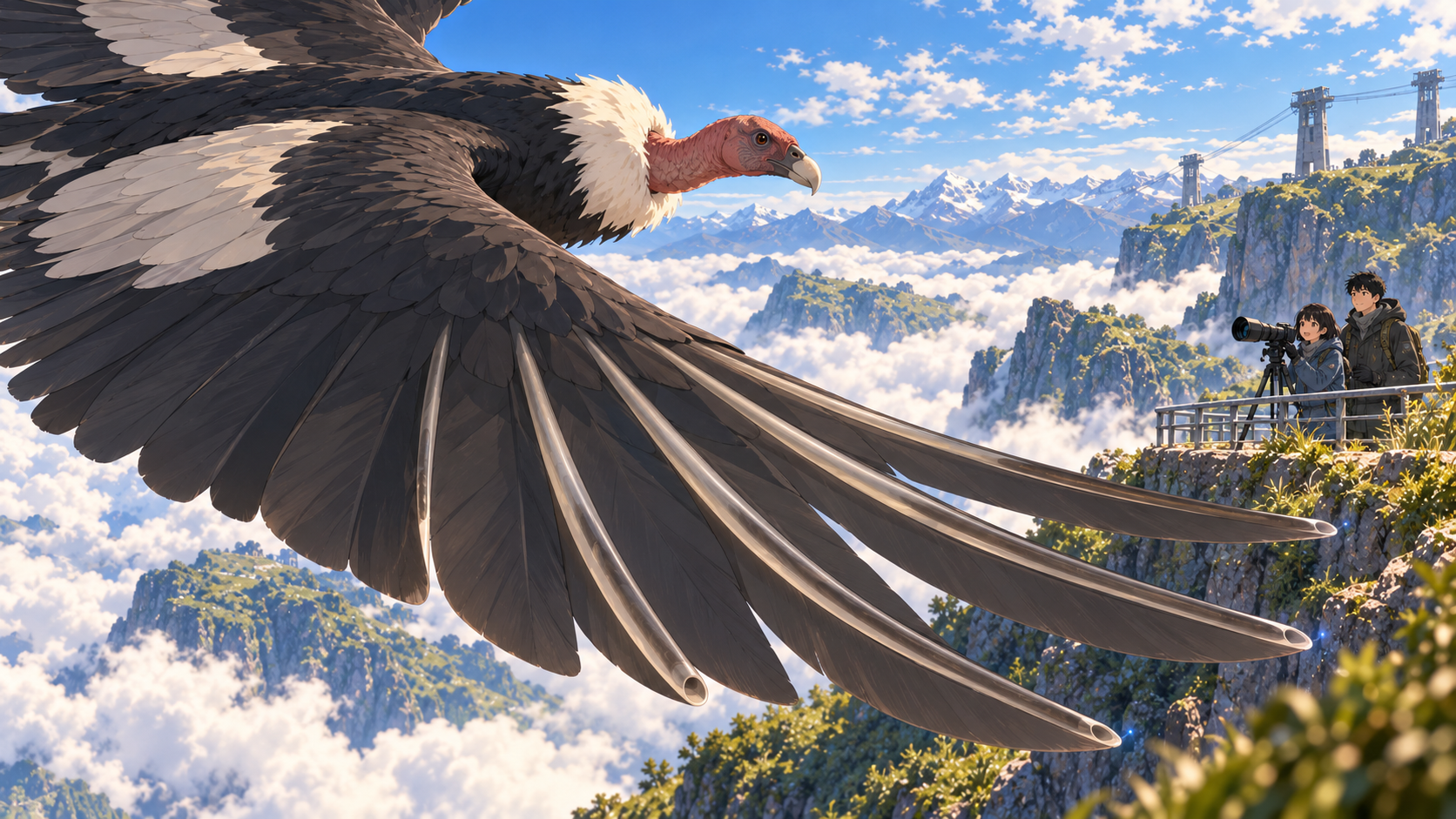
Thunder-Tether CondorModerate
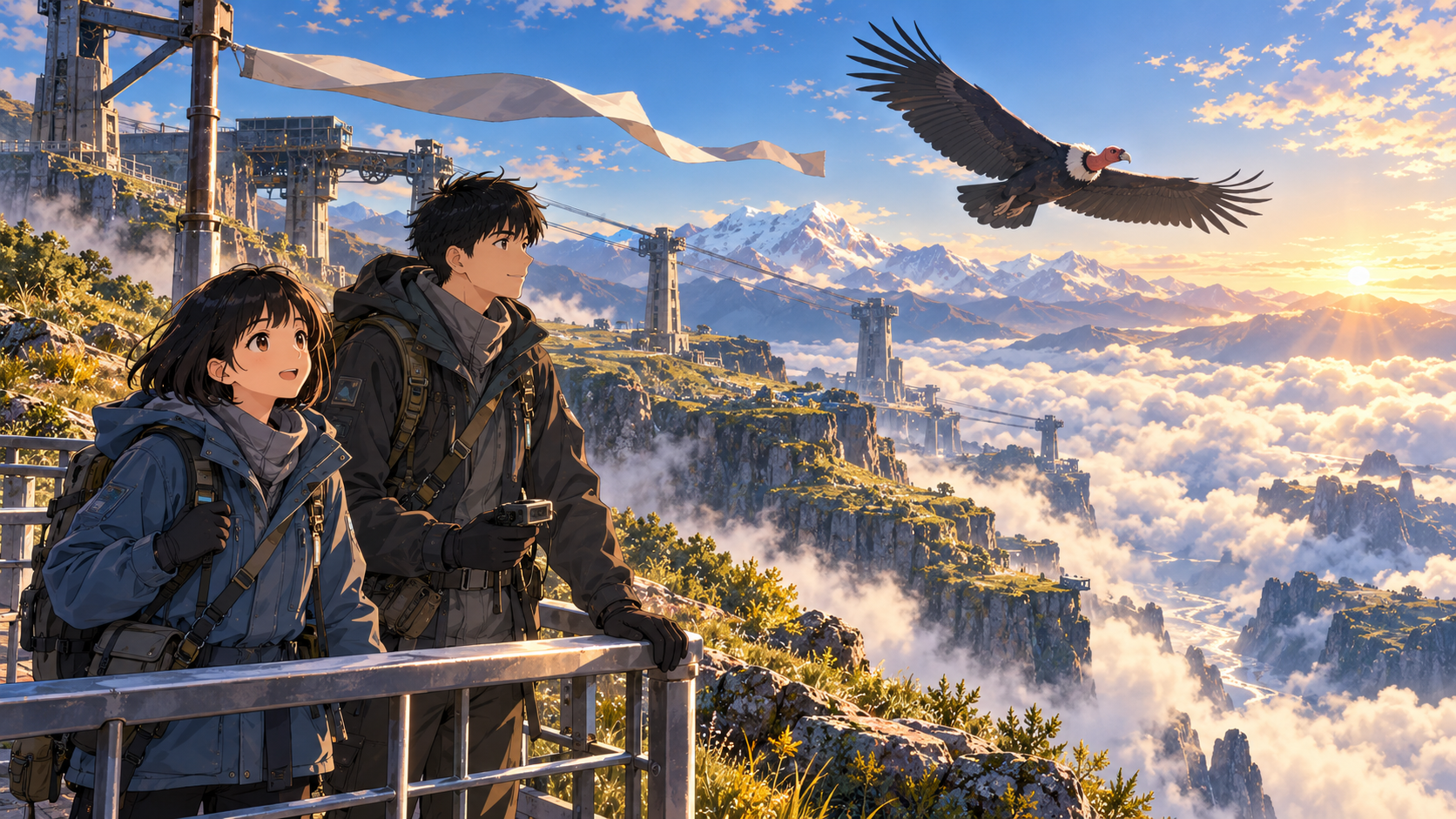
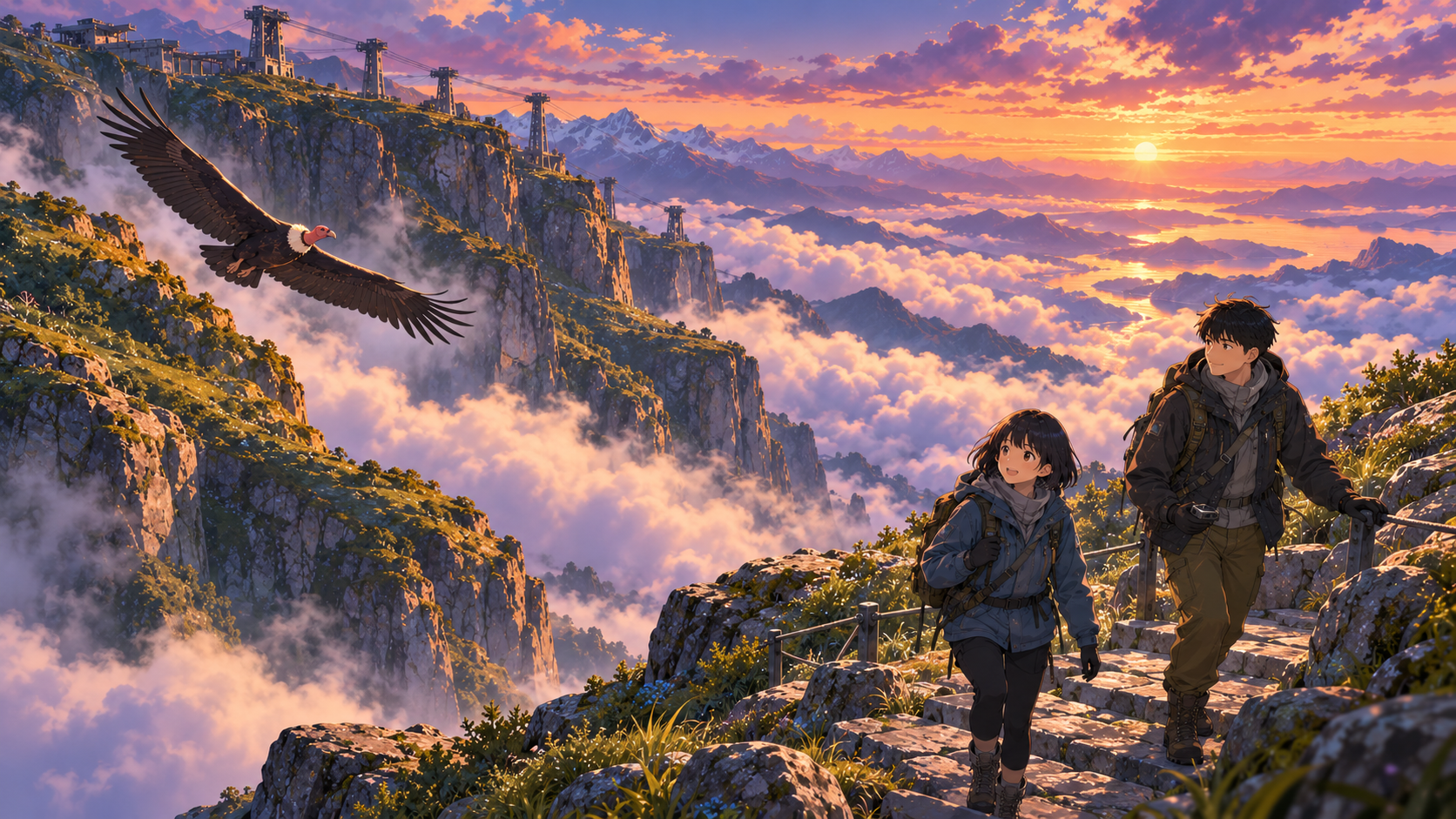
Cold fog reduced the cableway support to a short outline. The wind-window flight line moved outward. Fang checked the wind flag's shadow; I recorded the fixed cableway pulse from behind the rail. High above us, one condor's wide wings and bare neck came into view.
MORNINGCold fog left only part of the cableway support visible. The wind-window flight line had moved outward. One condor crossed it high above us. Its broad wings, bare neck, and hollow conductive feather shafts formed a distinct silhouette; a faint charge left the wingtips in the high wind. Fang compared the wind flag's shadow while I wrote down the cableway's fixed pulse from inside the rail. The bird patrolled the grass slope and cliff, feeding on the remains of highland animals that had died naturally and returning nutrients to the mountain. The shifted flight line and continuous vibration from the old mine line could occur together, but one flight cannot settle the cause for the whole slope. I recorded wind direction, stone steps, and time, then checked them against yesterday's clues. Fang asked me to mark our safe way back. I did.NOONFrom the observation point, our passive long lens showed the hollow feather shafts and a faint release of static at the wingtips. We stayed back and did not turn on a light. Fang and I compared the wingtip rhythm with the cableway pulse, wind direction, lichen on the outer rock, the grass belt, and the wildlife path. Local static and the old mine line might both affect the wind window. No single observation makes the bird the cause of an equipment fault. I added the time and our safe retreat to the map before drawing any wider conclusion.EVENINGThe cableway fell silent for a short interval. The condor glided alone along the cliff's natural return wind, keeping its airspace apart from distant birds. We held the shutdown window remotely and came down from the observation point without calling it closer. I compared the flight line with wind, stone, time, yesterday's clues, and the mine-line record. The pattern justified a maintenance route around the habitat; one bird could not diagnose the whole mountain. Fang checked our way out. I kept it on the map. The mountain has its own rhythm. The equipment can make way.
「I marked our retreat and the condor's open wind route on the same map. The equipment can make way.」— K
Day 05 / 10.26
The Boundary Beyond the Fog
Mist-Crest JaguarExtremely Dangerous
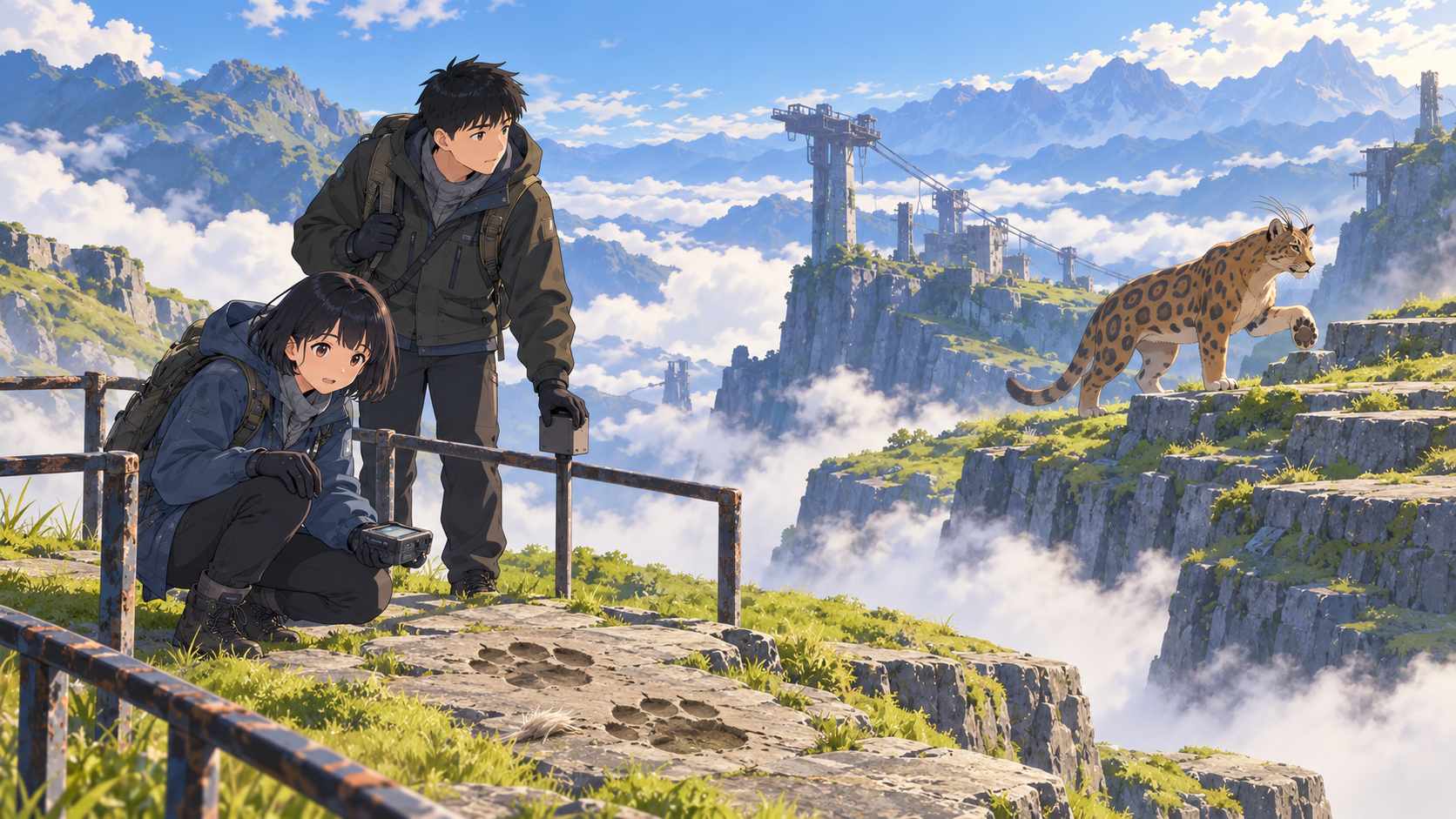
Cold fog erased most of the cableway support before it gave us the pawprints on the stone. Rock-mouse fur was caught in grass roots. Fang compared the spacing from behind the rail. I marked our way back.
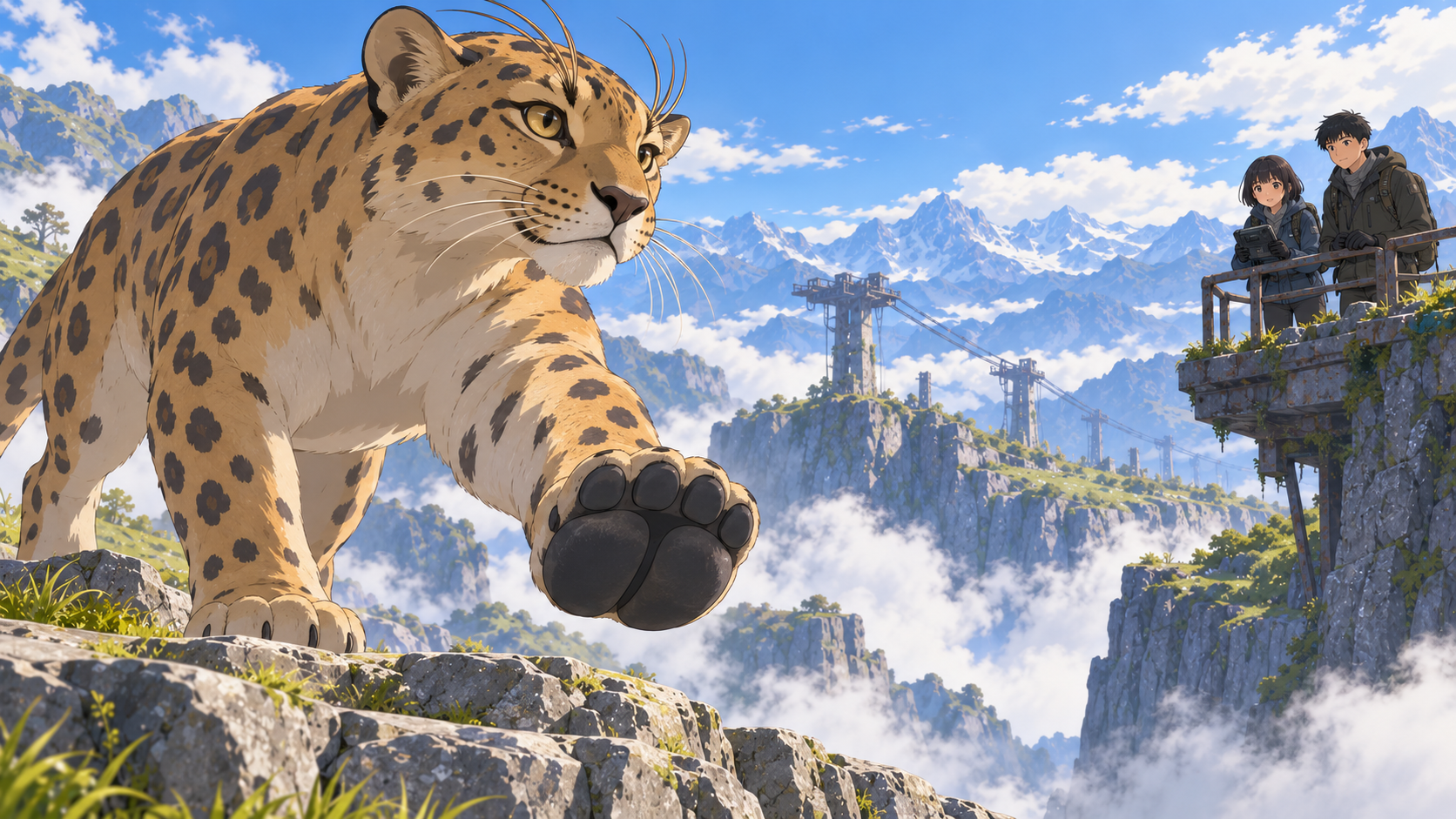
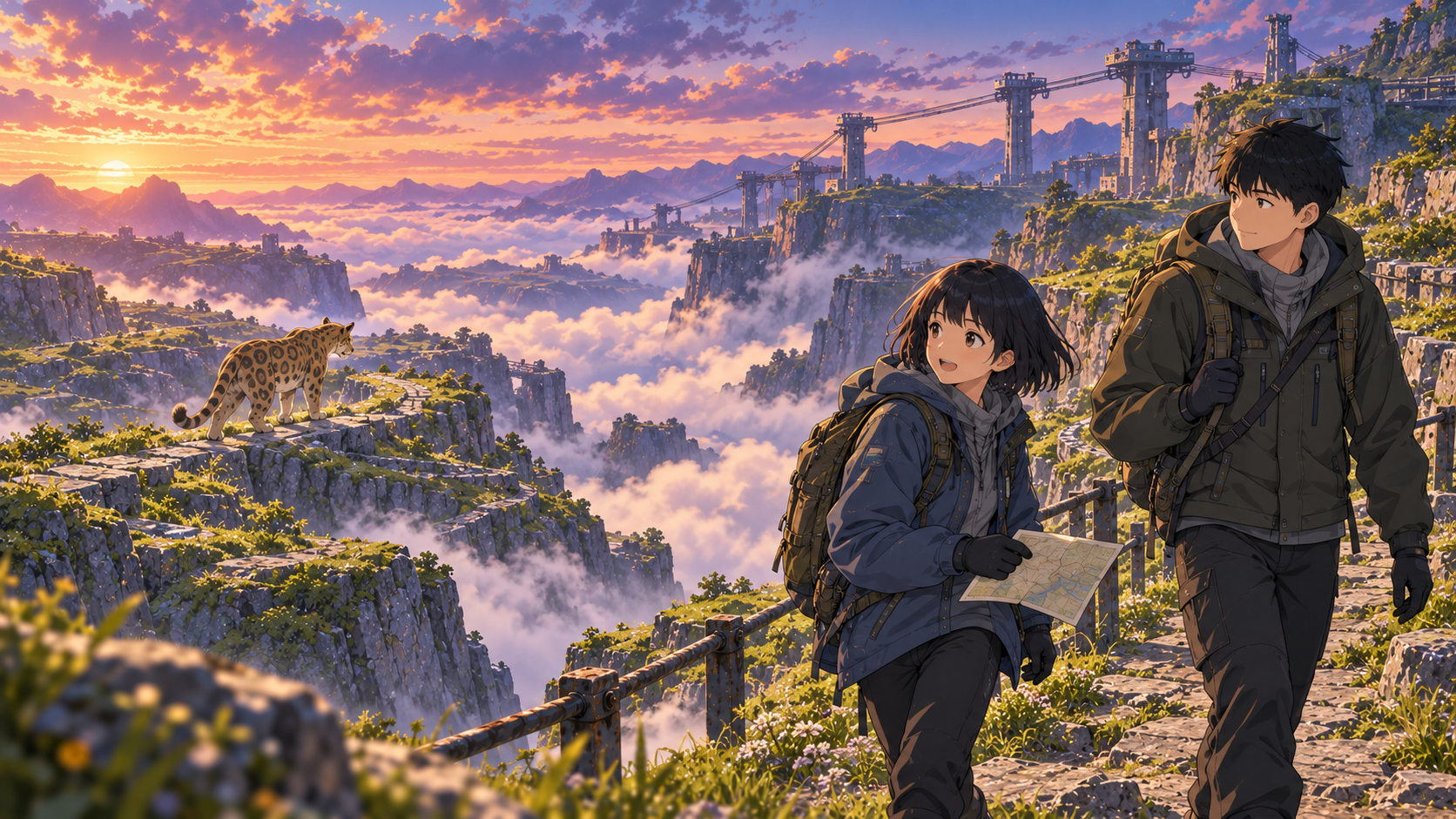
MORNINGCold fog reduced the cableway support to an outline. Then we found broad pawprints on stone and a few tufts of rock-mouse fur in the grass roots. They did not tell us when the mouse had passed. Fang crouched behind the rail to compare the prints. I marked the return cableway and stayed outside the exclusion line. On the opposite steps, a short, heavy Mist-Crest Jaguar lifted a forepaw. Its divided pads spread as it set the paw down. Two stiff tufts above its eyes curved into the wind; its deep chest rose in the thin cold air. At roughly three metres long, it still kept its shoulders close to the stone. Fang put away the sensor and asked me to record wind direction and time before blaming the mine line. I did. Seeds and hoofprints from earlier days remained on the grass slope. Its path met those paths, but it was no shortcut for us. When fog filled the gap again, we changed our forward arrow to a return route. The first boundary we recognized today was not on the map.NOONThe wind was steadier at the terrace. We stayed on the opposite platform and let a passive recorder receive wind pressure; we sent no signal toward the jaguar. Its stiff brow whiskers were clear now. They were not horns. Each slender whisker bent with the breeze. It slowly raised a forepaw and opened its broad divided pad on the next rock face. Its deep oxygen-exchange chest expanded with each breath while the rest of its body stayed low. Fang compared those changes with the wind direction. I recorded time, without assigning the animal a purpose. The fog gap between platform and steps remained empty. That distance let us see without asking it to respond. Continuous vibration from the old mine line still needed checking; one jaguar could not explain the whole mountain. We added the pads, whiskers, and stone positions to the record and checked our retreat. Fang said we had enough. I switched off the active equipment and left the gap alone.EVENINGThe mine line finally stopped its continuous vibration. Cloud rose between the steps. One solitary adult walked along the far slope edge. It did not approach us or wait for our conclusion. Fang opened the route map and checked the detour against the grass-slope wildlife path. I marked the exit on our side. That open path connected the thin soil held by lichen, the grass eaten by katydids, and the slope where alpacas carried seeds. Above it remained the wind window the condor had crossed. Together, those clues gave us reason to reroute the line. They did not guarantee that tomorrow would be free of drift. We still needed wind-pressure readings and pawprints after the shutdown; one patrol was no proof of recovery. The jaguar’s compact back receded into the evening light until its stiff brow whiskers became fine lines. Fang folded the map. We left by our own path, without stopping for a closer record. The mountain did not move aside for us. This time, the mine line did.
「We withdrew on our own path. The mine line was the thing that made way.」— K
JOURNEY DISPATCH
Subscribe to K's Hunting Log
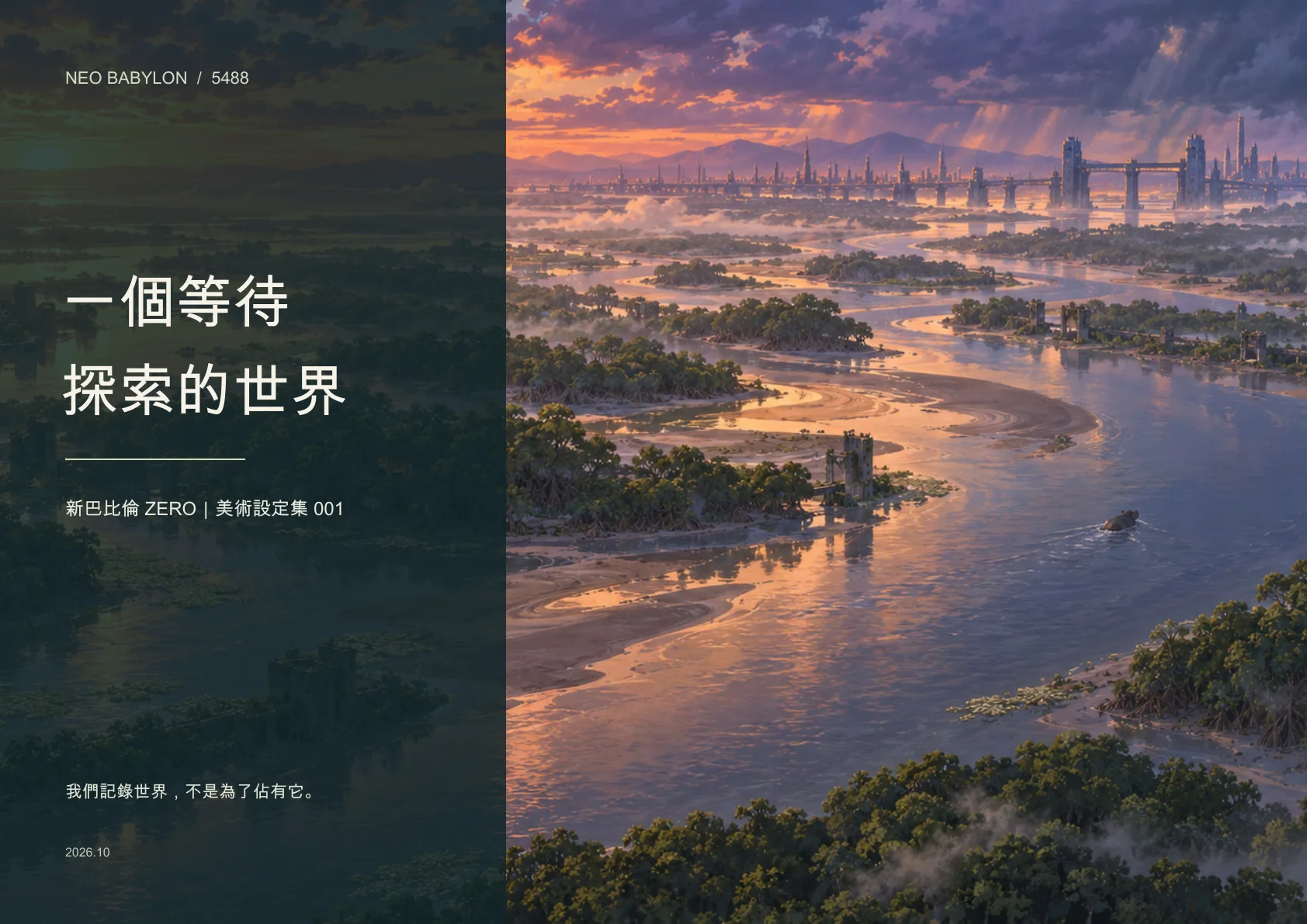
Subscribe to K's Hunting Log and receive Neo Babylon Zero Art Book — A World Waiting to Be Explored in Traditional Chinese, plus Fang and K's new field records.