The Last Wet Branch Changed Our Route
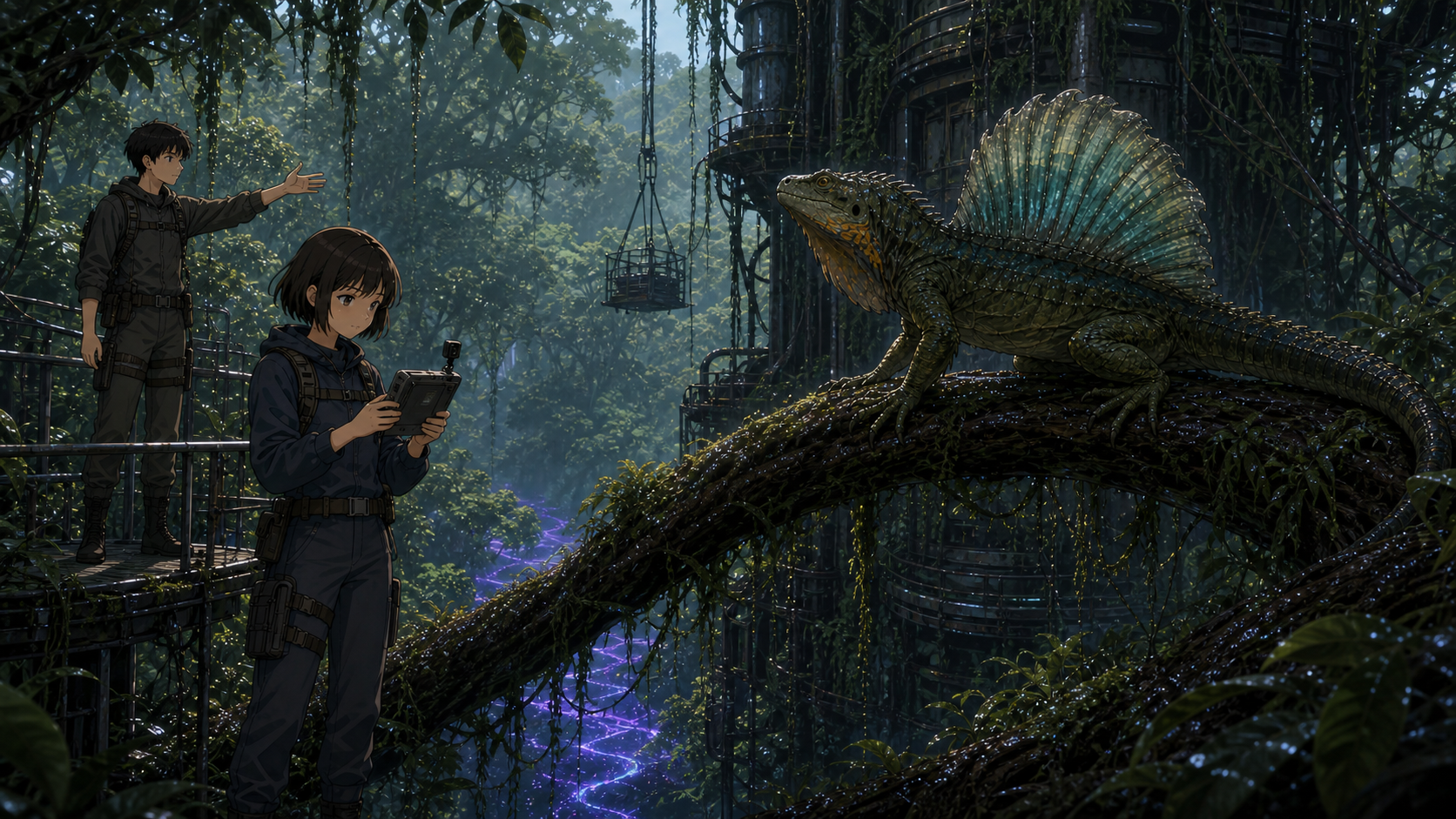
The leaves were still dripping, but the mycelial light between the buttress roots had dimmed. A Mist-Sail Arboreal Lizard held the last stable wet branch. Fang read the water in its sail. I marked the supports, wind, and retreat line. We stopped the lift and gave up the direct route.
Field Observation
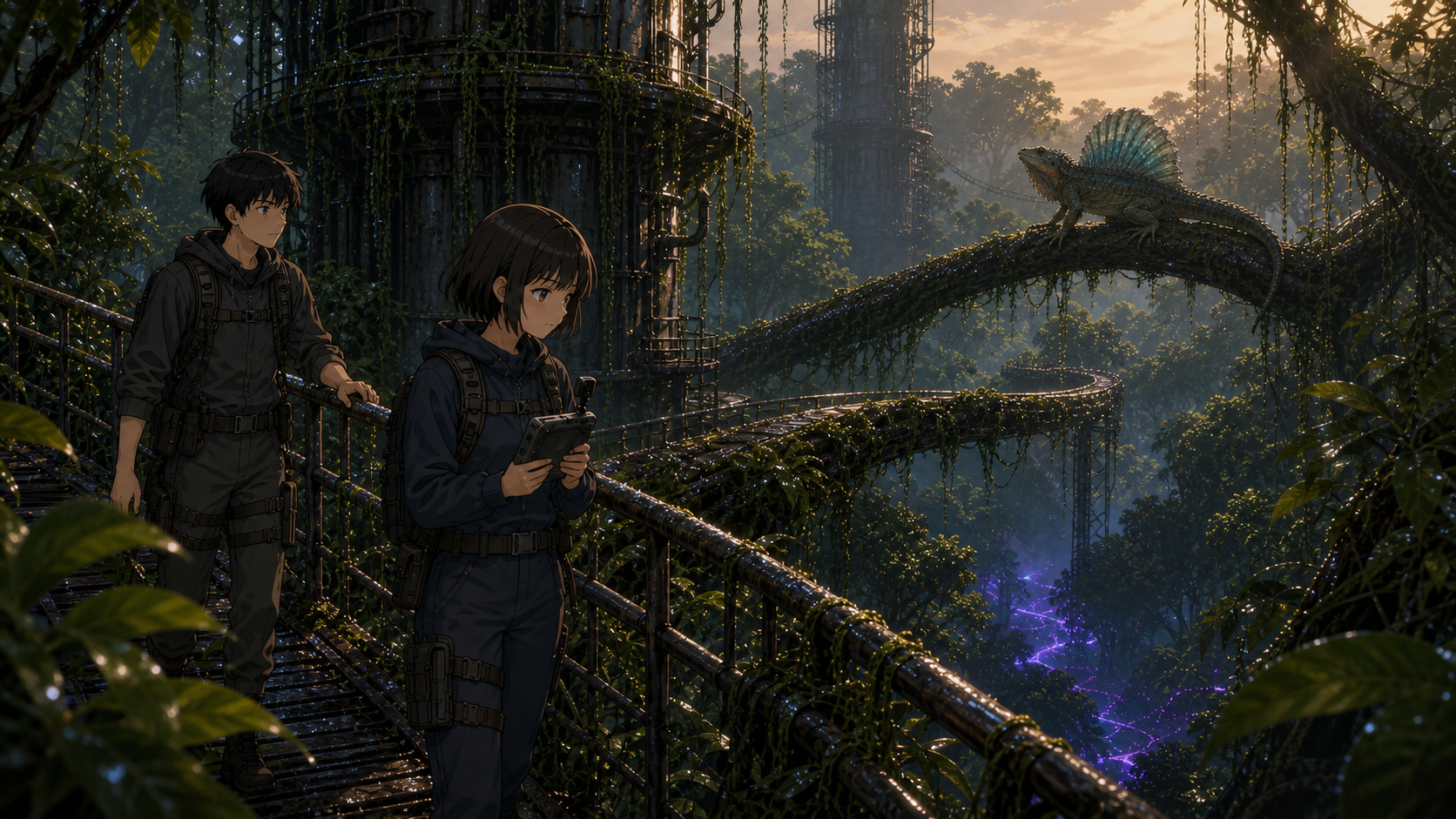
We climbed the old maintenance ladder beside Alloy Root-Bridge Sluice to the condenser's canopy level and stopped outside the lizard's territory at Mist-Sail High Branch. We observed from the shaded side of the same tower without crossing its guarded branch bridge. At Still-Wind Bypass Cable, we followed the old leeward maintenance line down to the control level while leaving the lizard's wet retreat open.
Morning · Mist-Sail High Branch
The high-risk lizard raised its sail on the last wet branch and warned us with a strike of its tail against the trunk. Its descent from the upper hunting grounds showed that the shaded side of the condenser held the canopy's final stable moisture. We kept every active weapon stowed and stopped using the lift equipment that was drawing more mist away.
Noon · Mist-Condenser Tower Shade
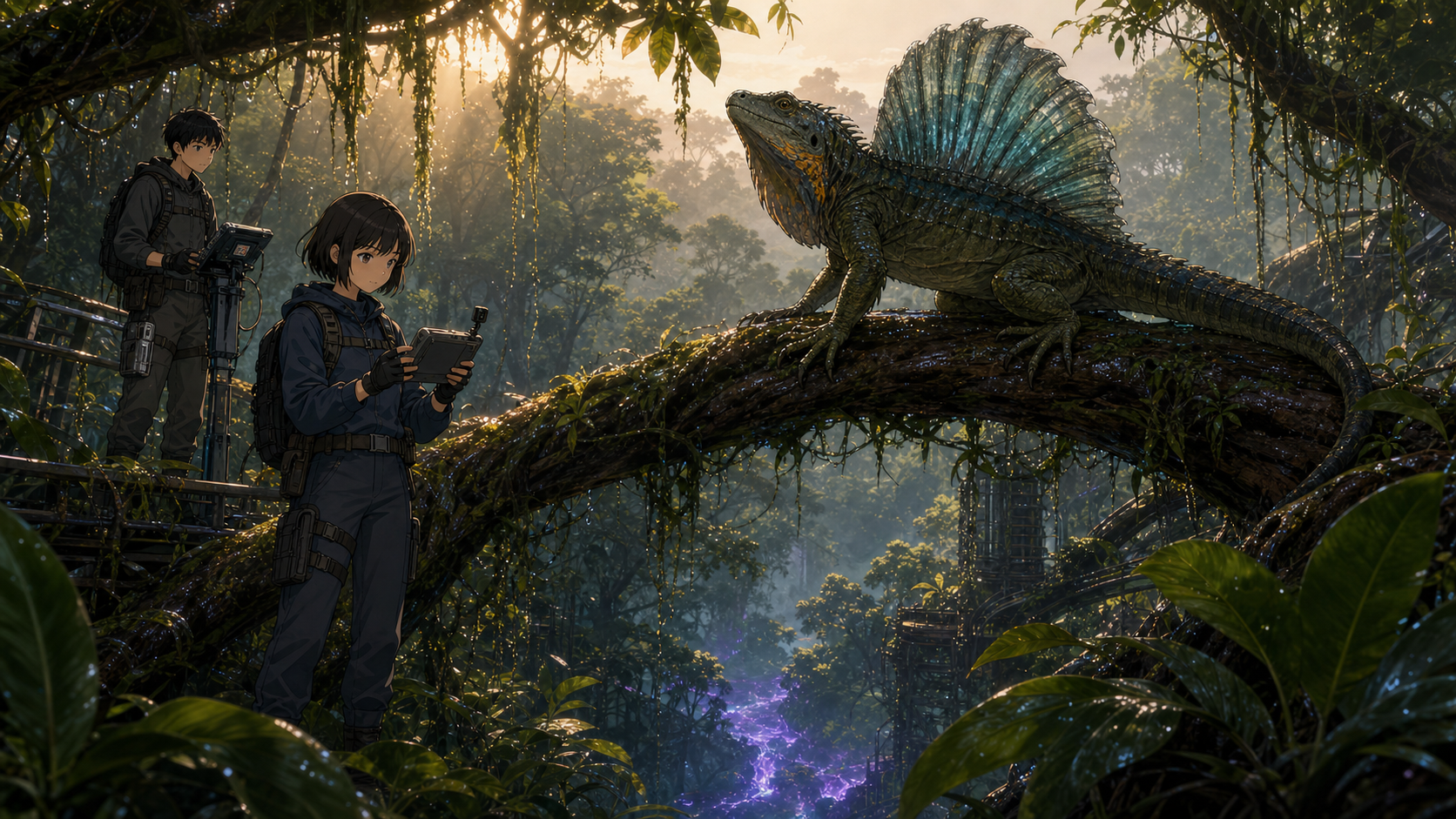
Fang measured the sail's water content by remote spectroscopy. Its drying rate matched the tower's extraction cycle exactly. I stayed outside the guarded branch bridge and abandoned the shortest crossing. We collected nothing from the animal; if sampling became necessary, we would use only naturally shed material. Here we relied on readings gathered at a distance.
Evening · Still-Wind Bypass Cable
We circled along the old maintenance cable on the tower's leeward side and reached the lower control level without driving the lizard away. The bypass let us confirm that mist extraction and concentrated acidic discharge came from the same backup module. Its wet branch and retreat line remained intact.
Habitat Causality
The lizard normally hunts large insects, tree frogs, and juvenile crabs on wet upper-canopy bridges. Continuous mist extraction dried those hunting grounds and pushed it down to the tower's last stable wet branch. Its territorial warning marked a moisture boundary rather than an attack. The sail's drying cycle identified the running equipment, and the leeward bypass connected that extraction to the same module releasing concentrated acidic water into the Mycelial River.
Species Behavior
The lizard raised its sail, struck the trunk with its tail, and blocked one branch. It did not chase us when we stopped outside its territory and kept its retreat open. Its downward movement, warning display, and sail moisture all answered the same question: water was being removed from the canopy faster than the habitat could replace it.
「The lizard did not force us out. It showed us where the forest could no longer afford our shortcut. We controlled our own system and left its branch untouched.」