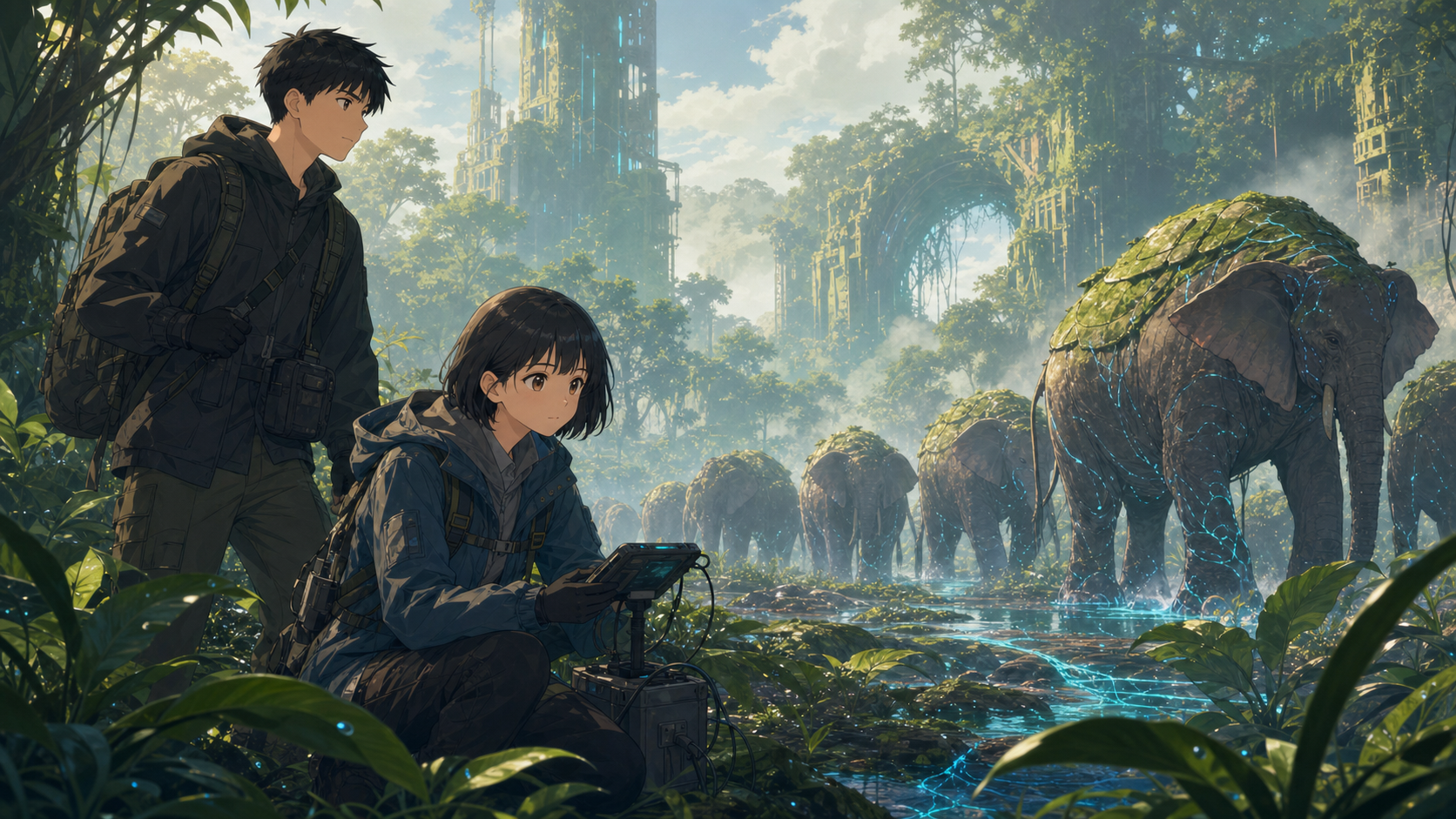
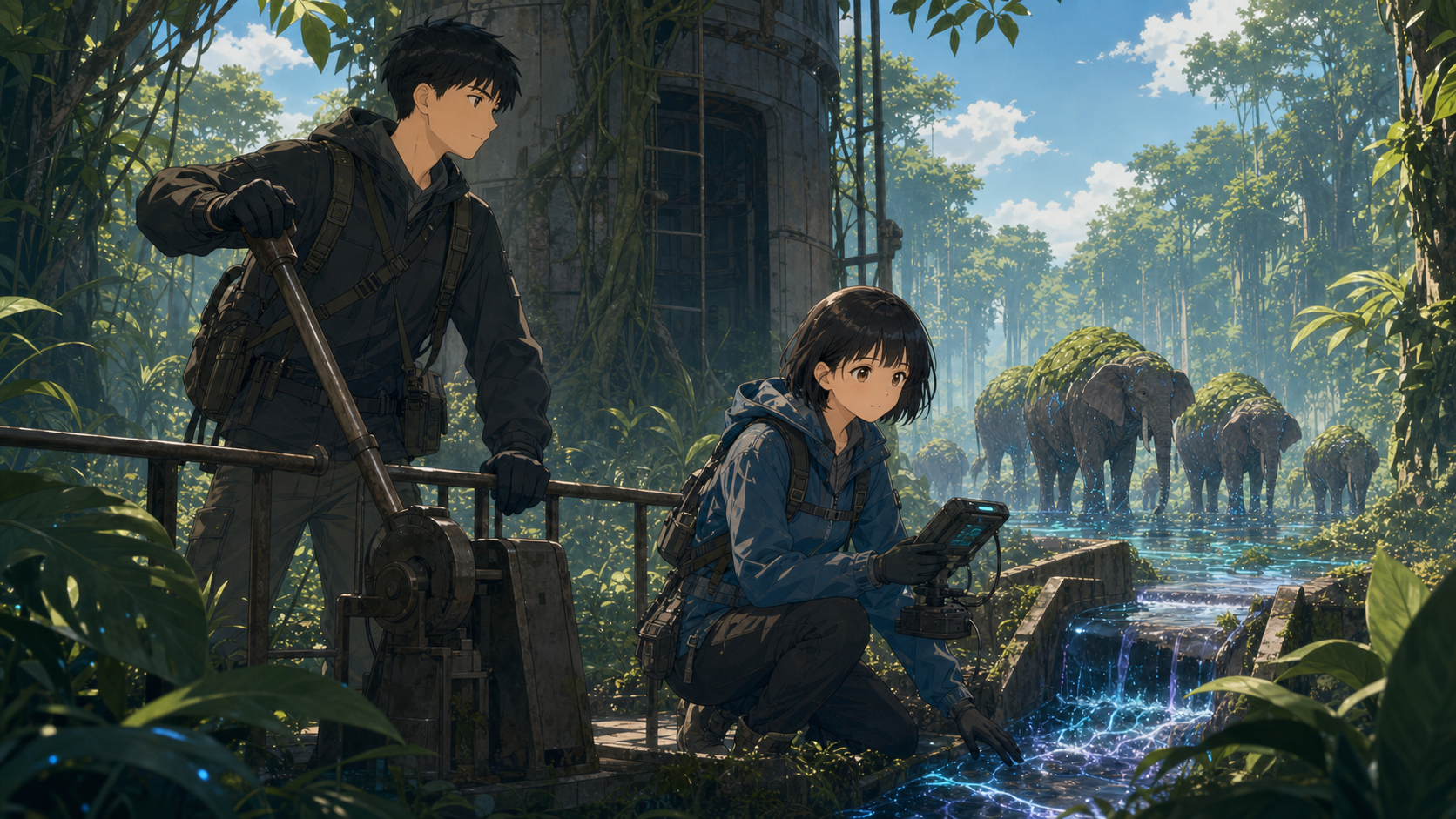
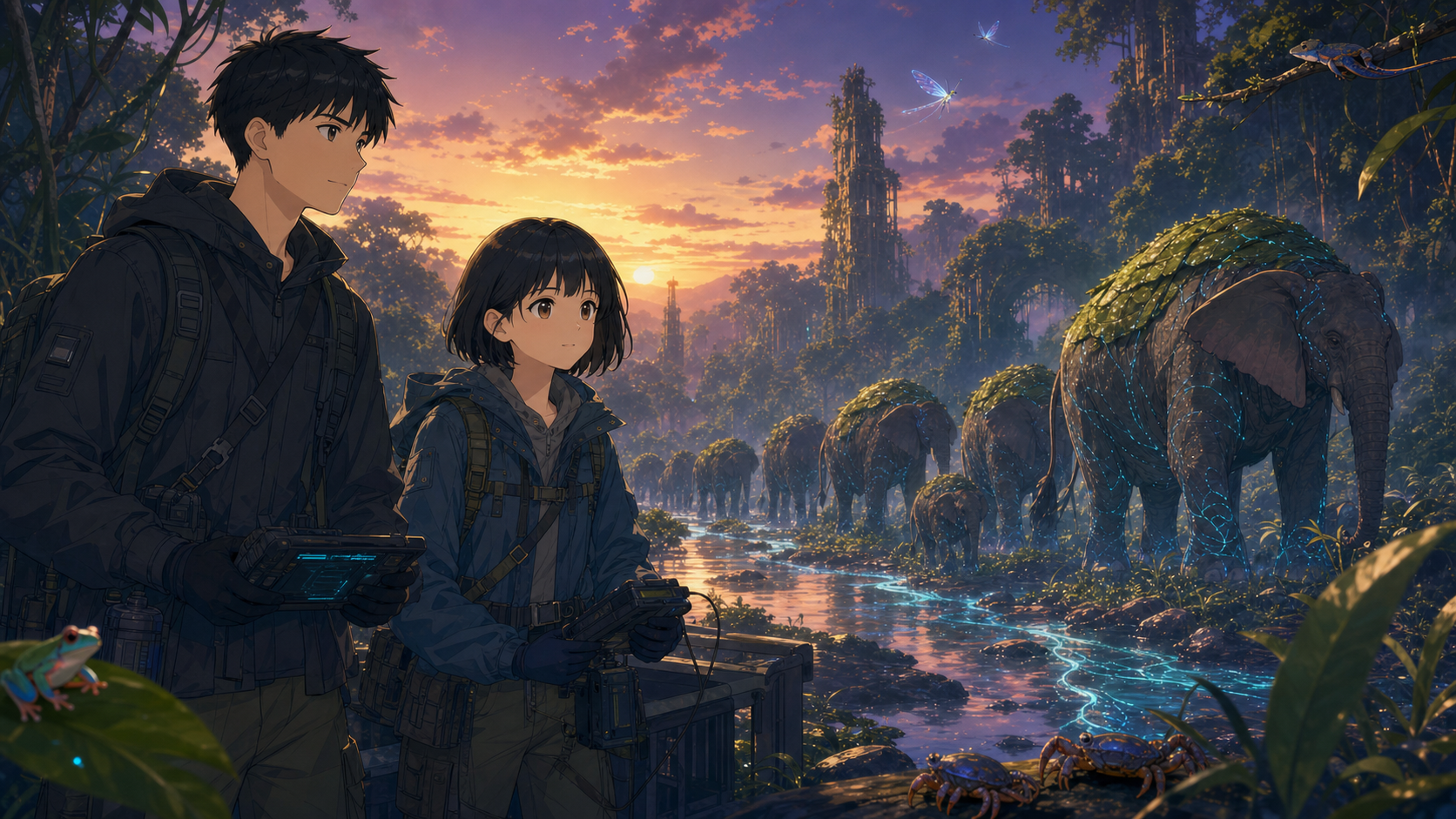
Mist-Crown Mycelial River Buffer Forest is a five-day field route where Fang and K document a local ecology through observation, distance, and response.
Day 01 / 08.27
The Moths Left Before the Rain
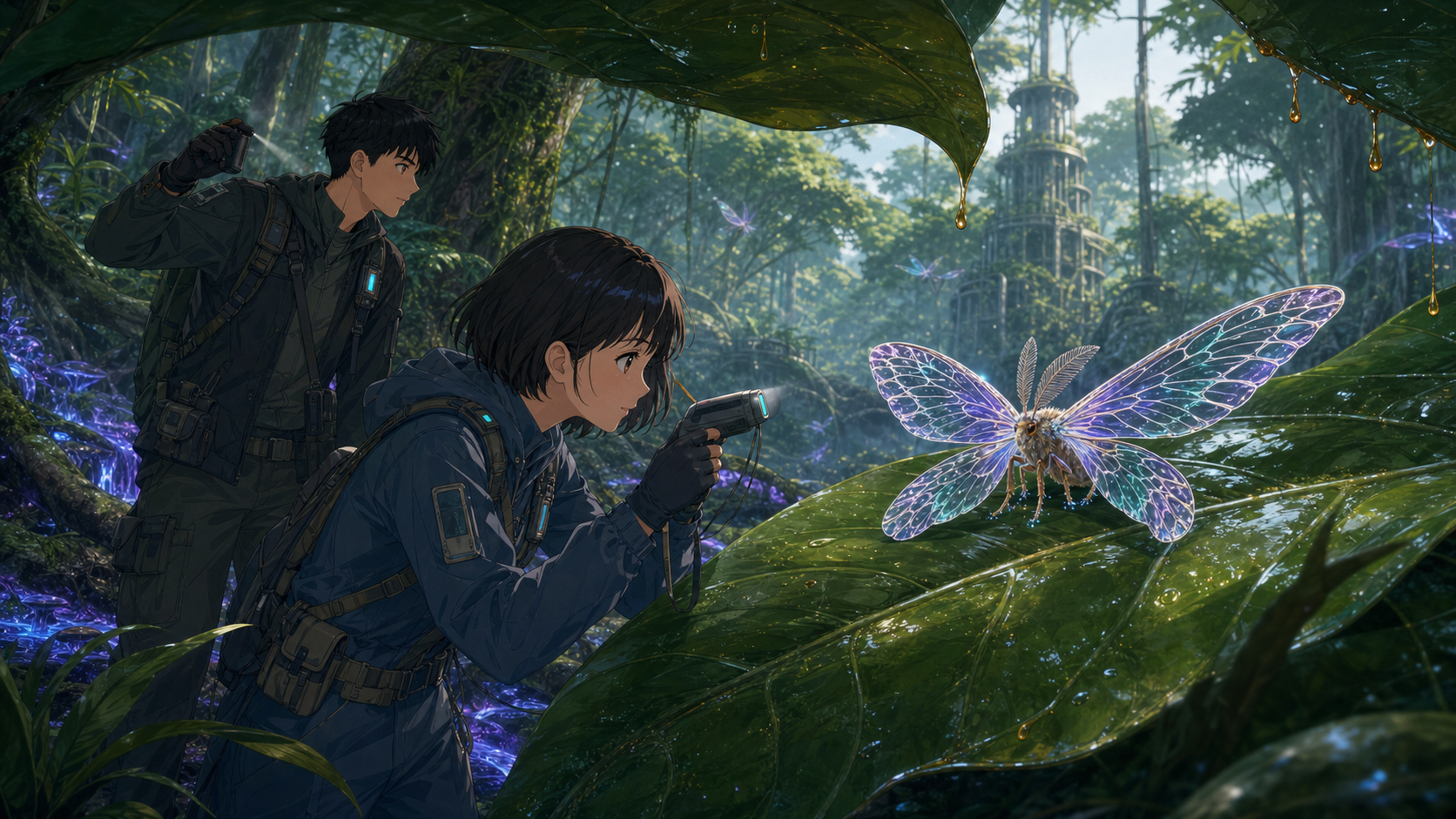
Dew-Vein Mycelial MothLow Risk
Moisture at Acid-Rain Leaf-Edge Station was uneven. Water still fell from the leaf tips, but the fungal light between the buttress roots had dimmed. The moths left the upstream leaves before the rain. Fang measured the water in their wing veins. I shut down the active lights and marked the load-bearing path, wind, and retreat line. The first anomaly was evidence, not a threat.
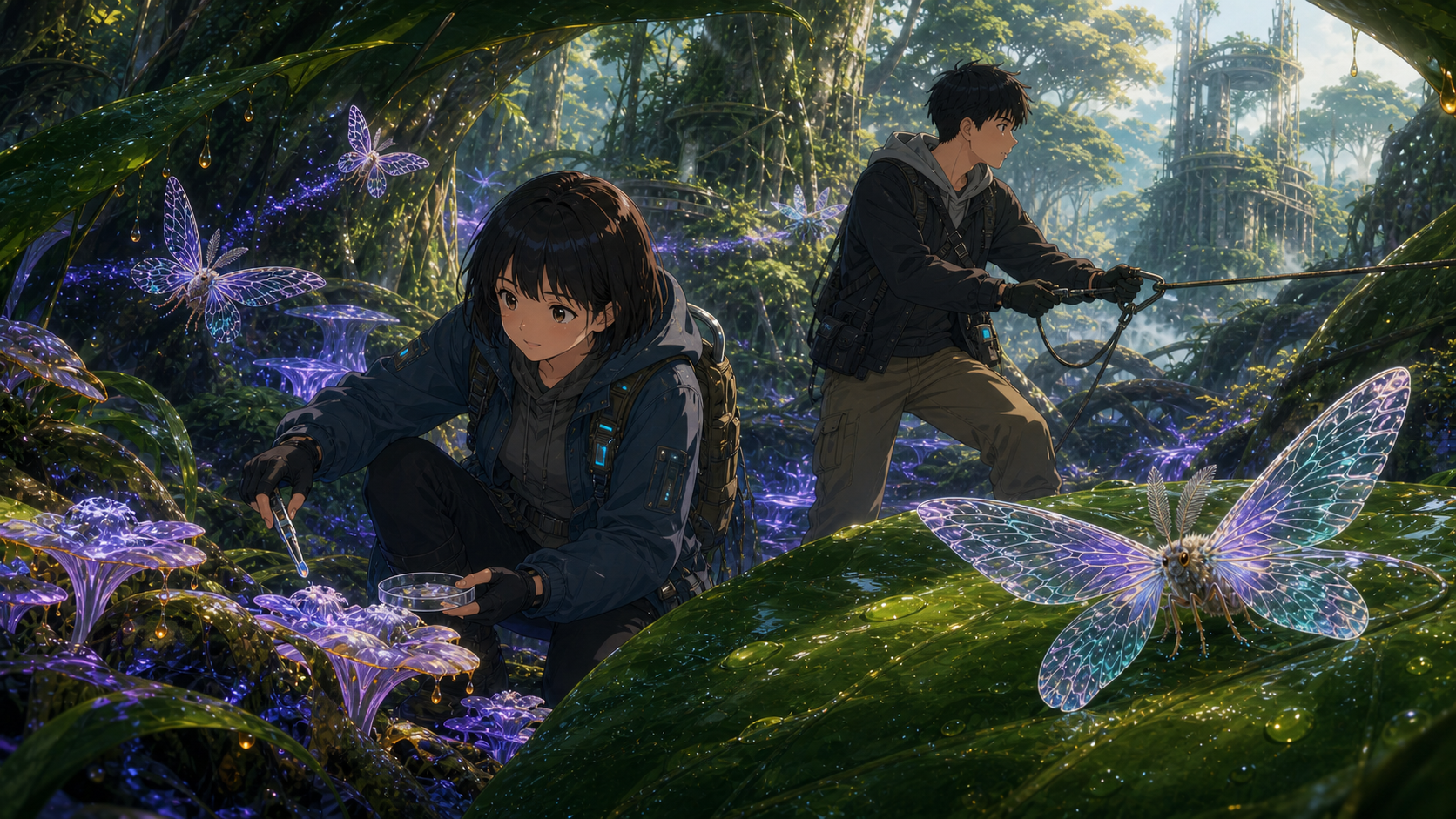
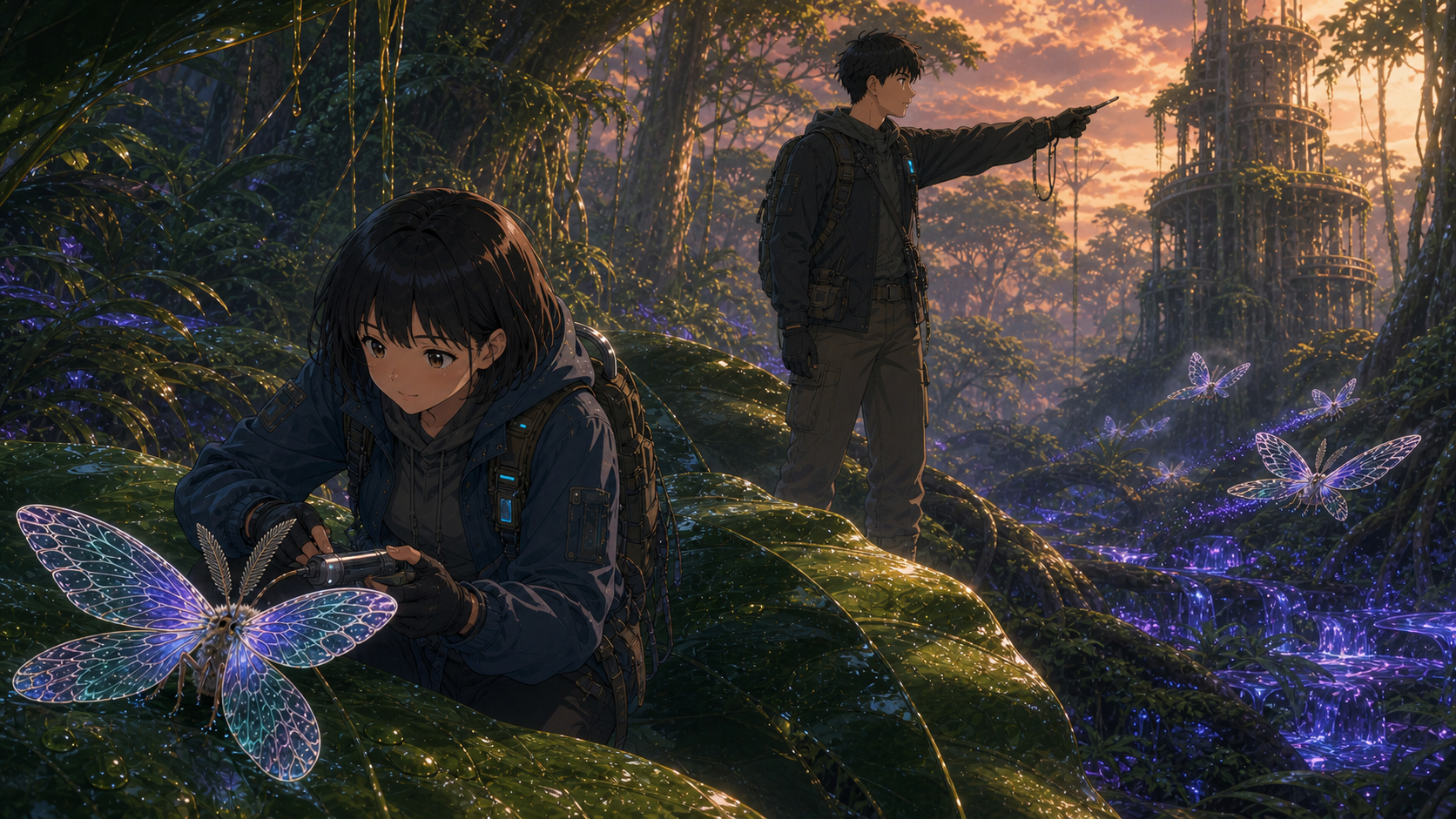
MORNINGDew-Vein Mycelial Moths departed the upstream giant leaves before rainfall. Fang recorded their reduced wing-vein moisture without touching them. I kept every active weapon stowed, switched off the lights, and watched from outside their flight path. Their early departure showed that the canopy had already been losing mist for some time.NOONFang collected only fungal flowers and dew that had fallen naturally. I secured the safety line from beneath the leaves and recorded the pollination belt contracting downstream. The fungal flowers could still reduce the acidity of the water, but without a continuous supply the moths' pollination and spore dispersal were being compressed into a smaller part of the canopy.EVENINGThe moths resumed gathering dew after crossing the ridge. Passive readings confirmed a sharp difference in humidity between its two sides. We did not follow the animals farther. Their restored rhythm had already placed the extraction source in the upstream Mist-Condenser Tower belt.
「Restoring a passage does not mean giving the forest an order. It means taking our hand out of the waterway. Fang was right. The only system we needed to control was our own.」— K
Day 02 / 08.28
The Calls Stopped Upstream
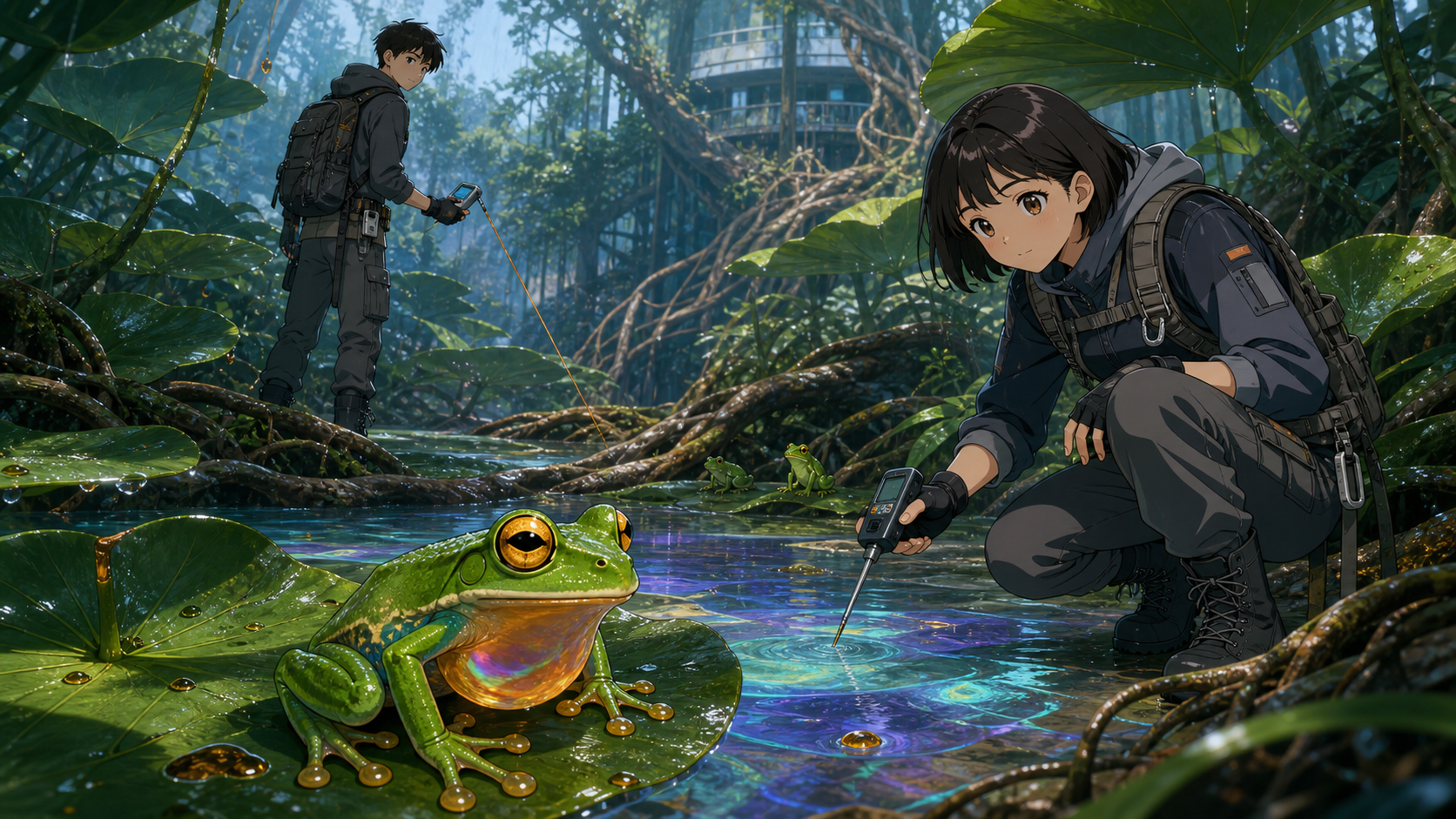
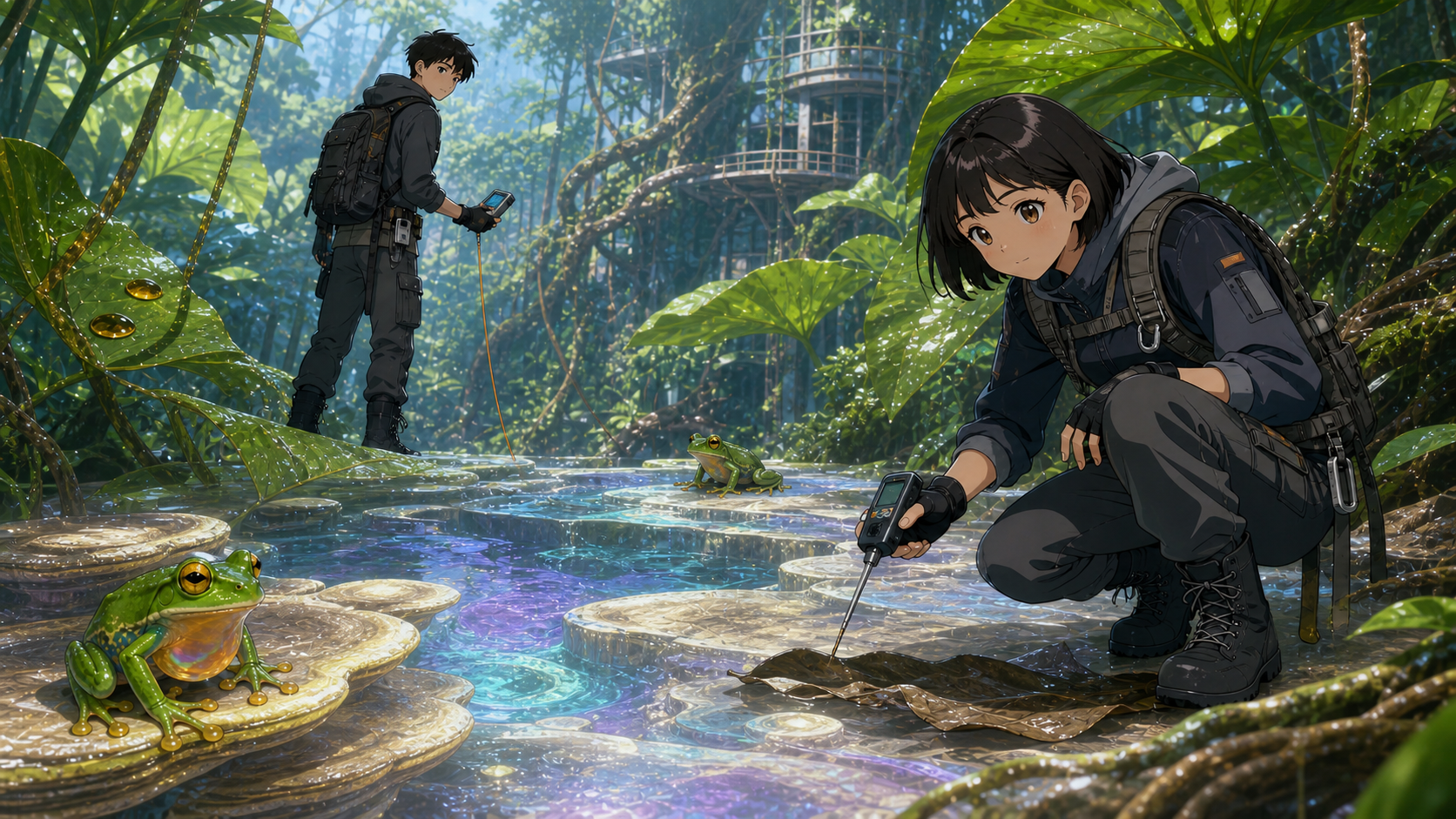
Rainbow-Sac Tree FrogLow Risk
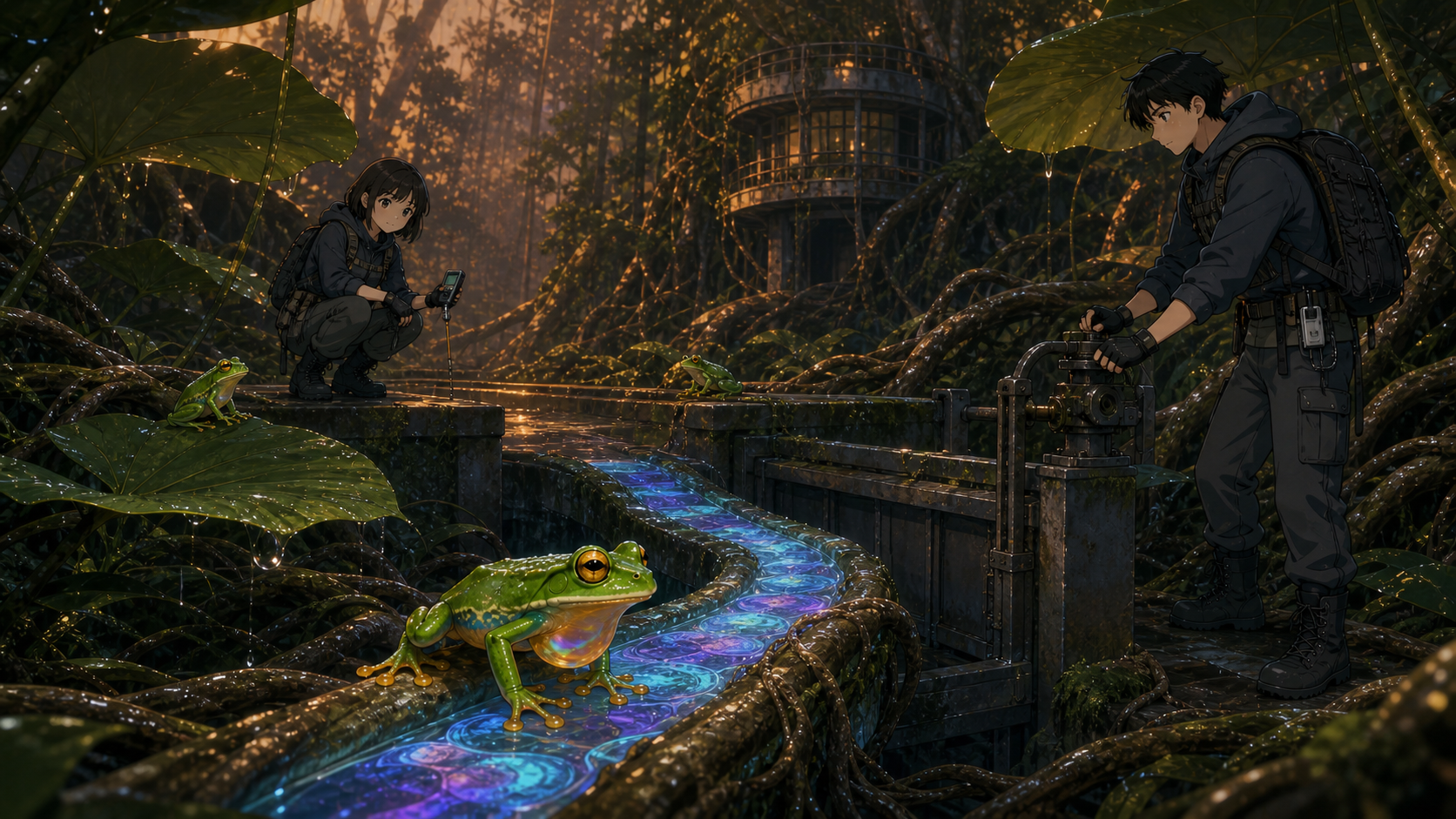
The leaf tips still dripped, but the calls came only from downstream. Fang compared the acidity of the water held in the frogs' throat reservoirs. I marked the dry branch segments, load-bearing points, wind, and retreat line. The frogs were not trapped. The waterway was broken around them.
MORNINGRainbow-Sac Tree Frogs called only from the downstream pools. Fang used remote readings to compare the acidity held in their translucent throat reservoirs. I stayed outside the movement corridor with every active weapon stowed and marked the first dry branches. The difference across the pools showed that the Mycelial River's break was not seasonal drying.NOONThe frogs fed on fungal gnats and carried spores across the terrace. Fang sampled only material that had fallen naturally. The living fungal film could still neutralize a small amount of acid rain. The forest had not lost its ability to repair itself. It had lost the continuous water that repair required.EVENINGI opened a blocked low-flow gate in the old human system. It was a local and reversible change. Fang watched from a distance as the frogs crossed the first rewetted branch on their own. Their immediate return confirmed the connection, but the upstream Mycelial River remained dry.
「The frogs did not need us to choose a route for them. They needed one obstruction removed. Their immediate return was enough to tell us the repair was real, and incomplete.」— K
Day 03 / 08.29
The Mud Seals Pointed Upstream
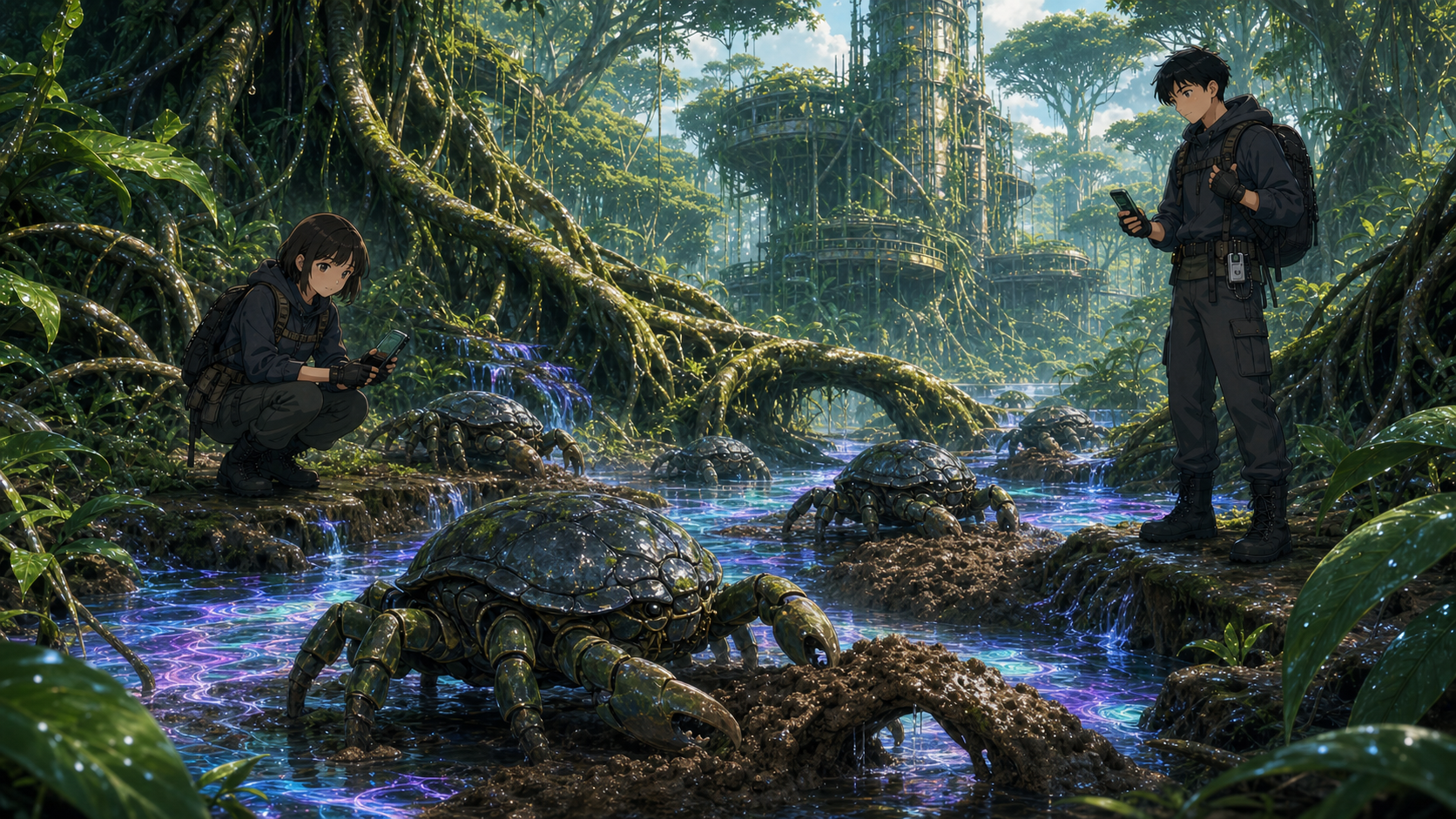
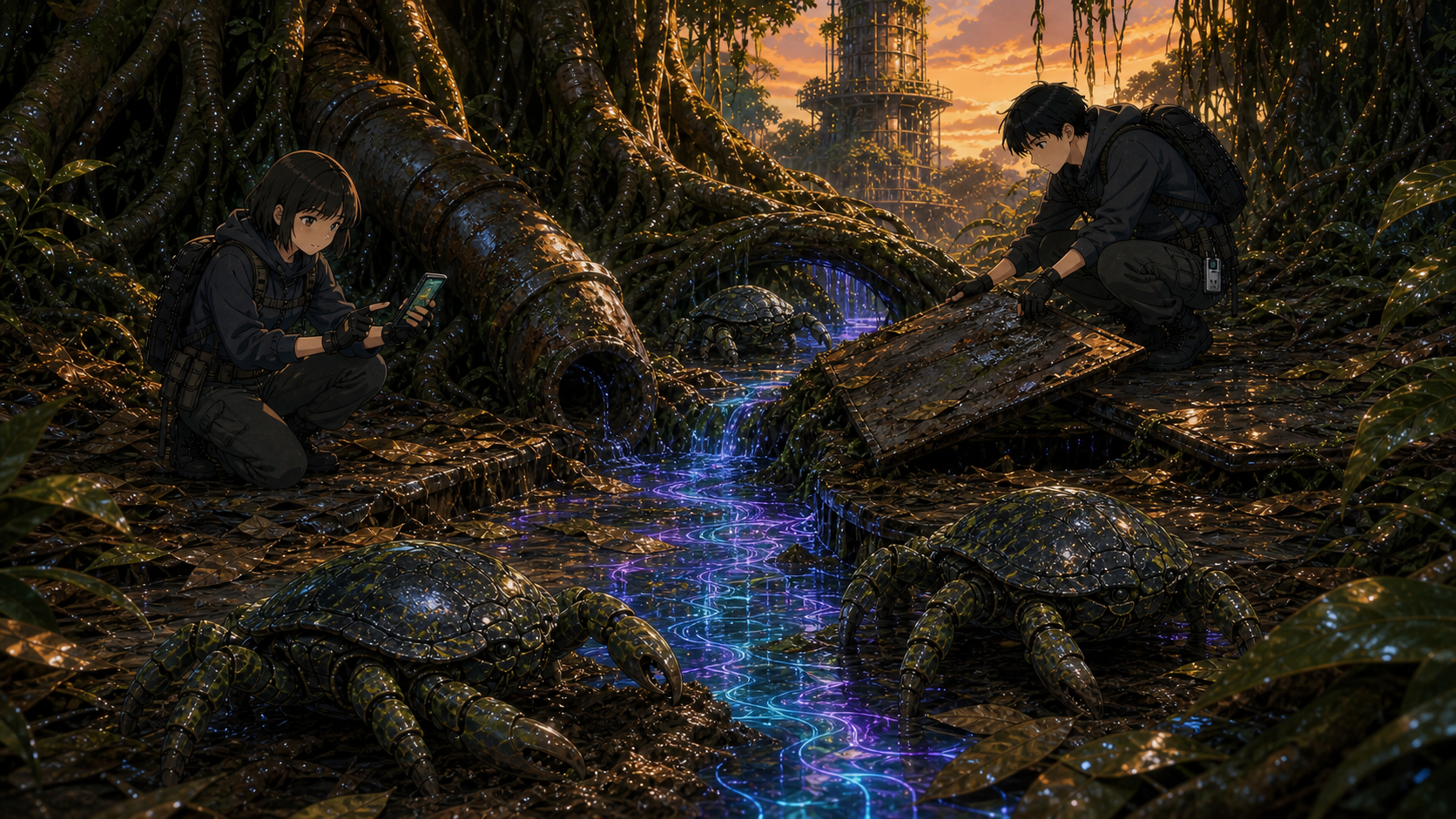
Root-Channel Armored CrabModerate
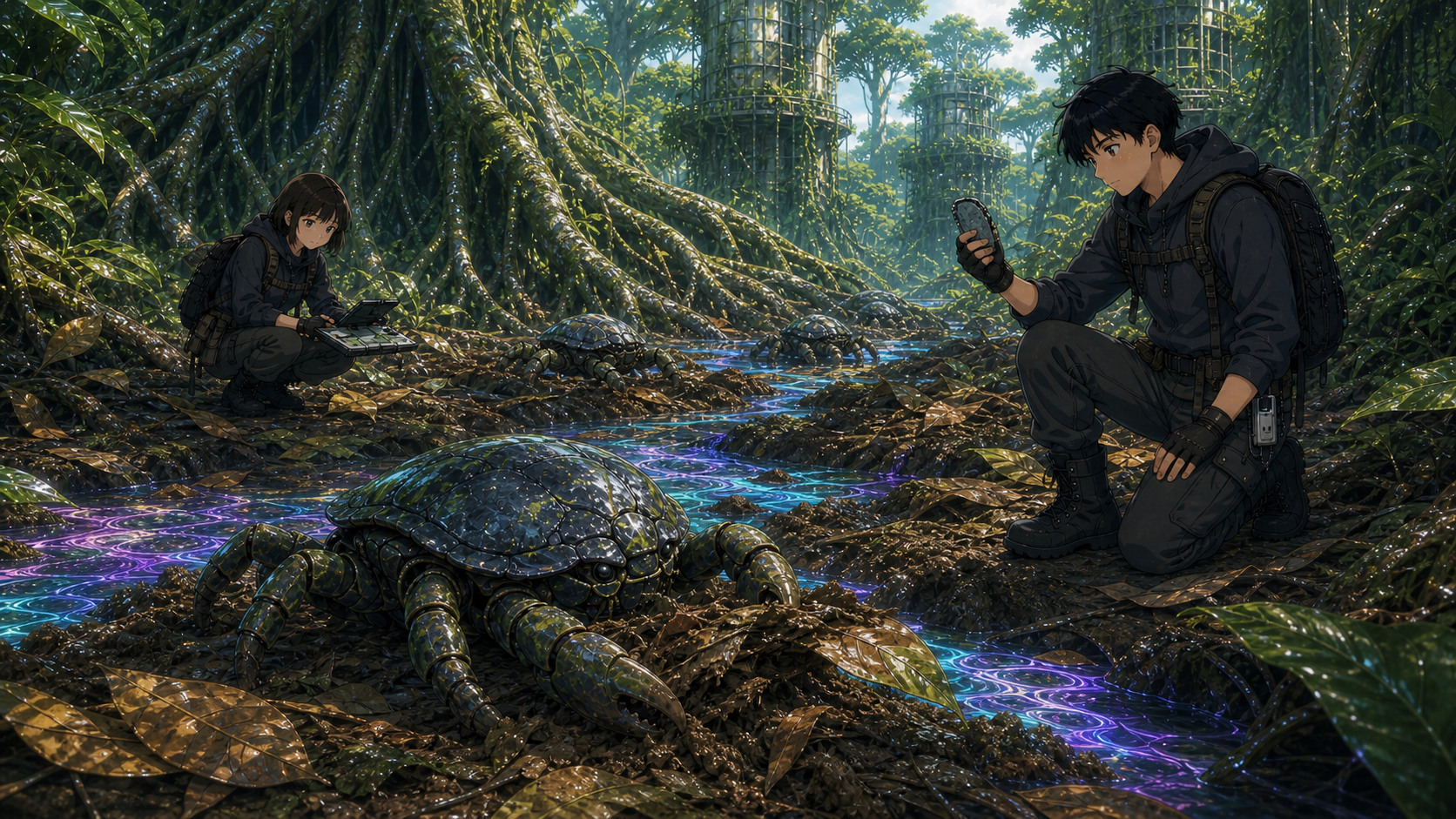
Fresh mud closed only the upstream openings. Fang watched the seepage. I marked the load-bearing roots, wind, and retreat line from outside the molting core. The crabs had not blocked the river. They had marked the side that was no longer safe.
MORNINGThe colony sealed the upstream burrow mouths with fresh mud. Fang separated water volume, acidity, and movement direction while I stayed outside the channel-building line with every active weapon stowed. Because the seals appeared only on the side facing the mist-condenser towers, water quality had failed before the flow disappeared.NOONFang examined leaves the crabs had already carried out. We took only naturally discarded material. Mineral scorch marks on the surfaces matched concentrated discharge from mist-condensing equipment, not ordinary acid rain. I removed loose alloy fragments only when they were clearly separate from the colony's arches.EVENINGWe left the crabs' natural channels intact. I lifted one loose gate plate that was pressing on a seepage arch while Fang located the acidic drain from the maintenance side. The pipe beneath the root bridge led directly toward Third Mist-Condenser Tower.
「The crabs did not need us inside their channels. Their mud had already drawn the direction. We removed one human obstruction and left every living structure where it was.」— K
Day 04 / 08.30
The Last Wet Branch Changed Our Route
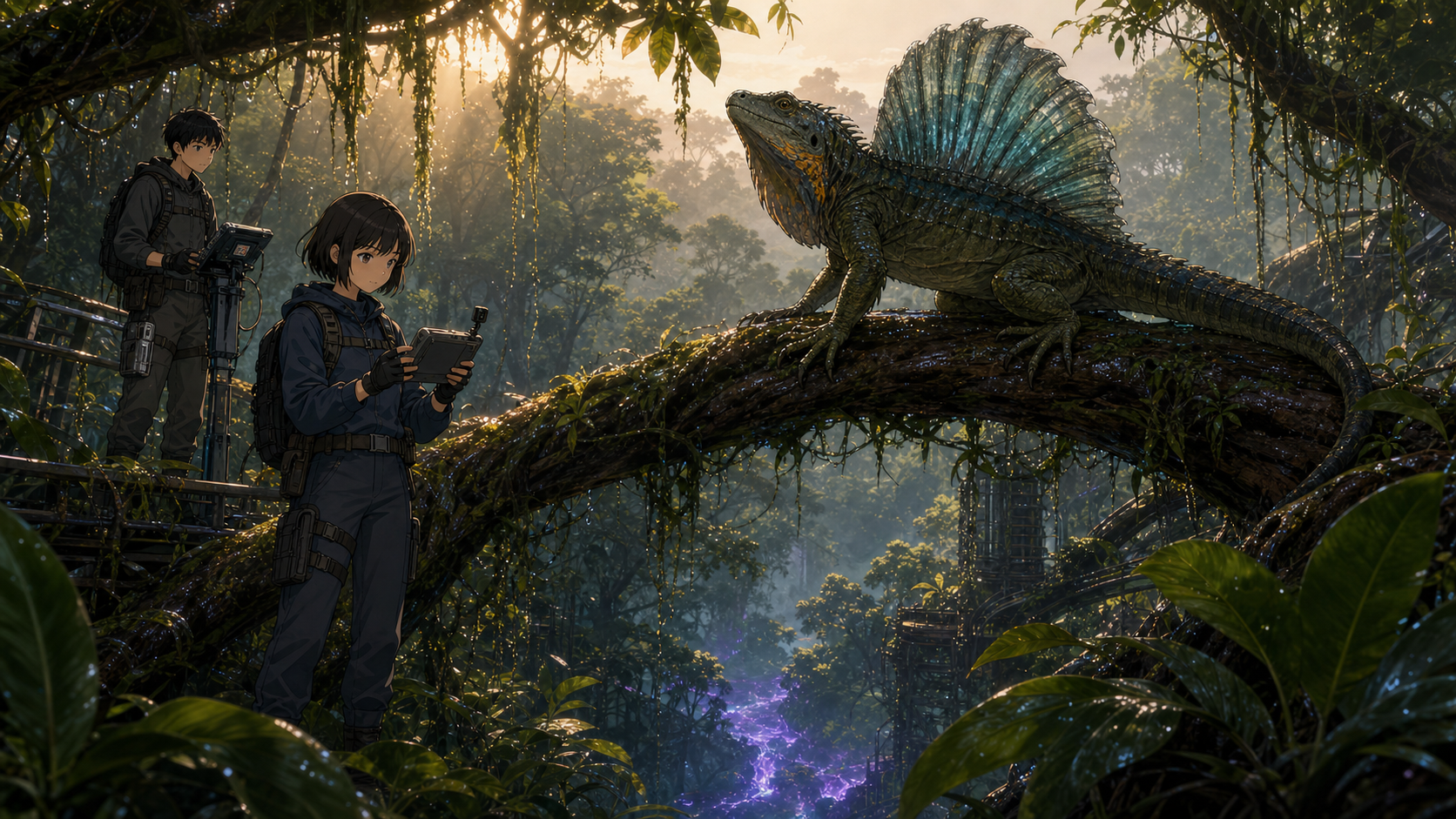
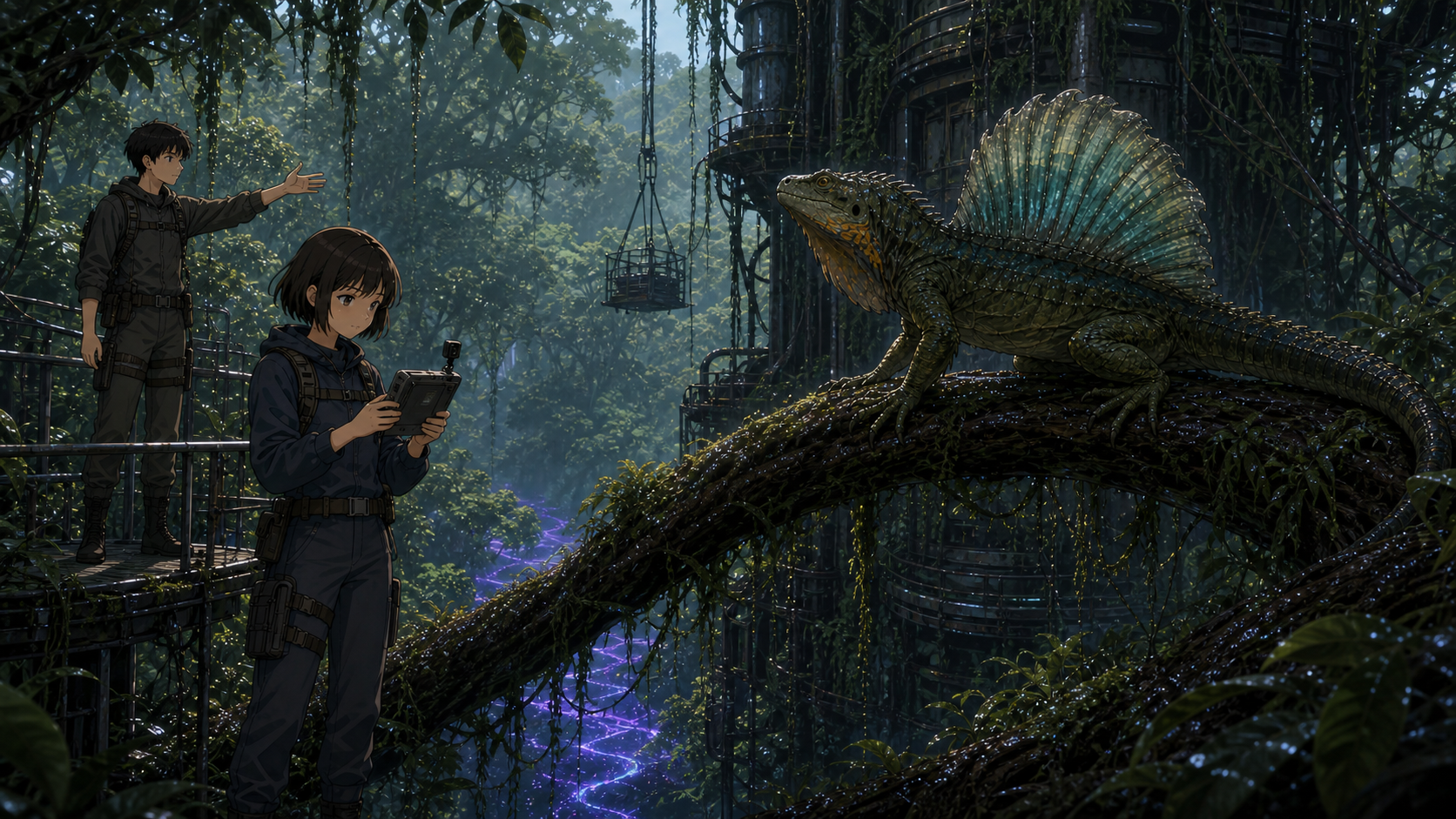
Mist-Sail Arboreal LizardHigh Risk
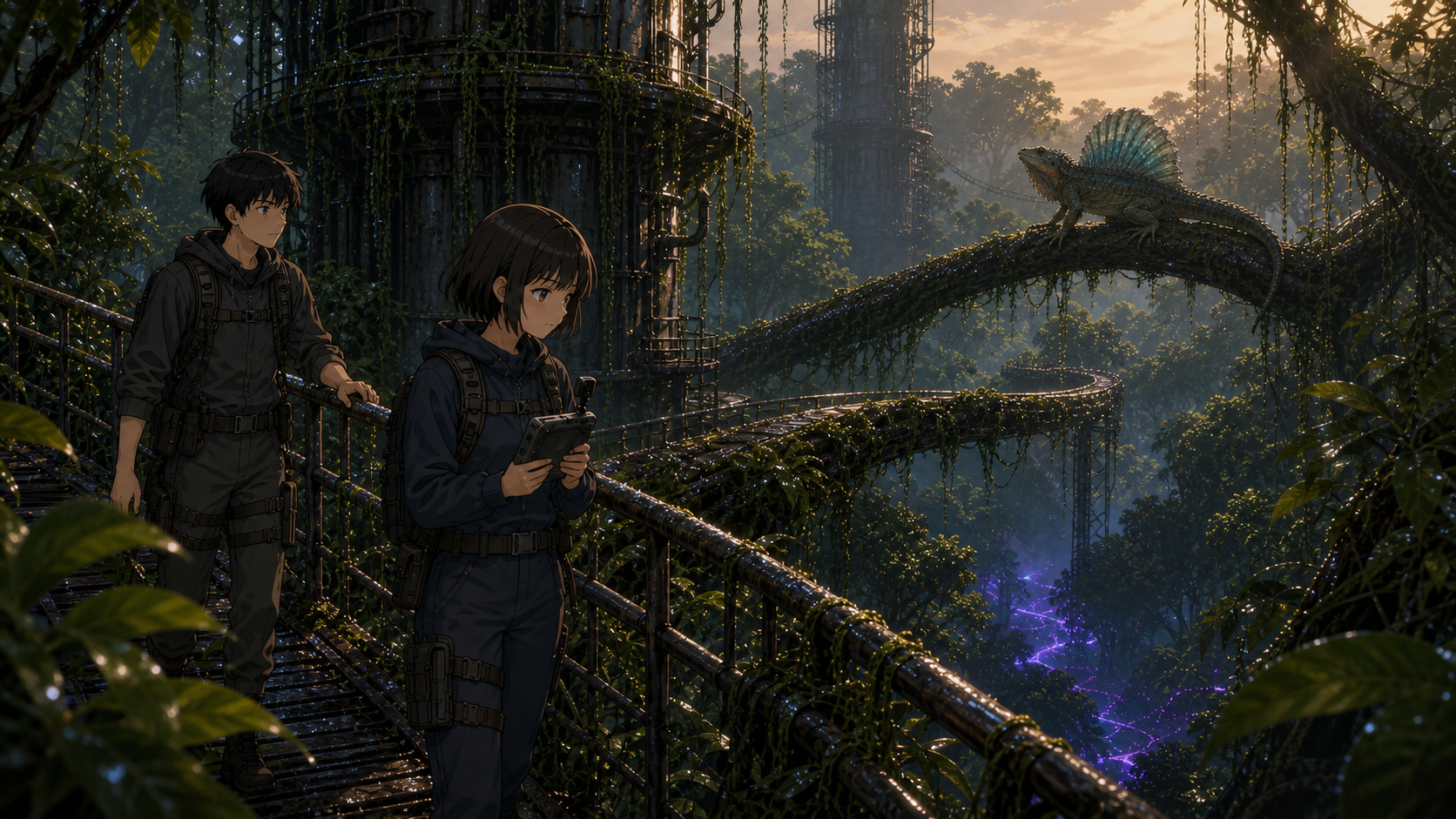
The leaves were still dripping, but the mycelial light between the buttress roots had dimmed. A Mist-Sail Arboreal Lizard held the last stable wet branch. Fang read the water in its sail. I marked the supports, wind, and retreat line. We stopped the lift and gave up the direct route.
MORNINGThe high-risk lizard raised its sail on the last wet branch and warned us with a strike of its tail against the trunk. Its descent from the upper hunting grounds showed that the shaded side of the condenser held the canopy's final stable moisture. We kept every active weapon stowed and stopped using the lift equipment that was drawing more mist away.NOONFang measured the sail's water content by remote spectroscopy. Its drying rate matched the tower's extraction cycle exactly. I stayed outside the guarded branch bridge and abandoned the shortest crossing. We collected nothing from the animal; if sampling became necessary, we would use only naturally shed material. Here we relied on readings gathered at a distance.EVENINGWe circled along the old maintenance cable on the tower's leeward side and reached the lower control level without driving the lizard away. The bypass let us confirm that mist extraction and concentrated acidic discharge came from the same backup module. Its wet branch and retreat line remained intact.
「The lizard did not force us out. It showed us where the forest could no longer afford our shortcut. We controlled our own system and left its branch untouched.」— K
Day 05 / 08.31
We Restored the River, Not the Herd
Monsoon Canopy-Crown Elephant HerdDivine
The herd was drifting toward the outpost, but it was not following us or the buildings. It was following moisture that the Mycelial River no longer carried. Fang read the water response without entering its migration line. I kept the route open and went back to the machine.
MORNINGThe elephants followed the scent and pressure of the missing river toward the outpost branch. Fang used non-invasive BCI sensing to read their groundwater perception. I stayed outside the migration line, marked the load-bearing roots, wind, and retreat path, and kept every active weapon stowed. Their course followed lost moisture and a broken seed corridor, not human facilities.NOONI physically shut down the faulty mist collection and concentrated acidic discharge. Fang directed gravity overflow back into a branch of the Mycelial River. The cyan-violet channel began to glow again before we made any attempt to move the herd. We changed the equipment and left the animals their own decision.EVENINGThe herd detected the returning moisture and turned back into the forest. Dew-Vein Mycelial Moths returned to the leaf edges, Rainbow-Sac Tree Frogs crossed the wet pools again, Root-Channel Armored Crabs reopened clean channels, and the Mist-Sail Arboreal Lizard withdrew toward the upper wet branches. Five species changed direction after one human fault was removed.
「We did not turn the herd. We returned the river, and the herd chose the forest. The part that needed control was ours.」— K
JOURNEY DISPATCH
Subscribe to K's Hunting Log
Follow Fang and K into a world that has not yet been understood.