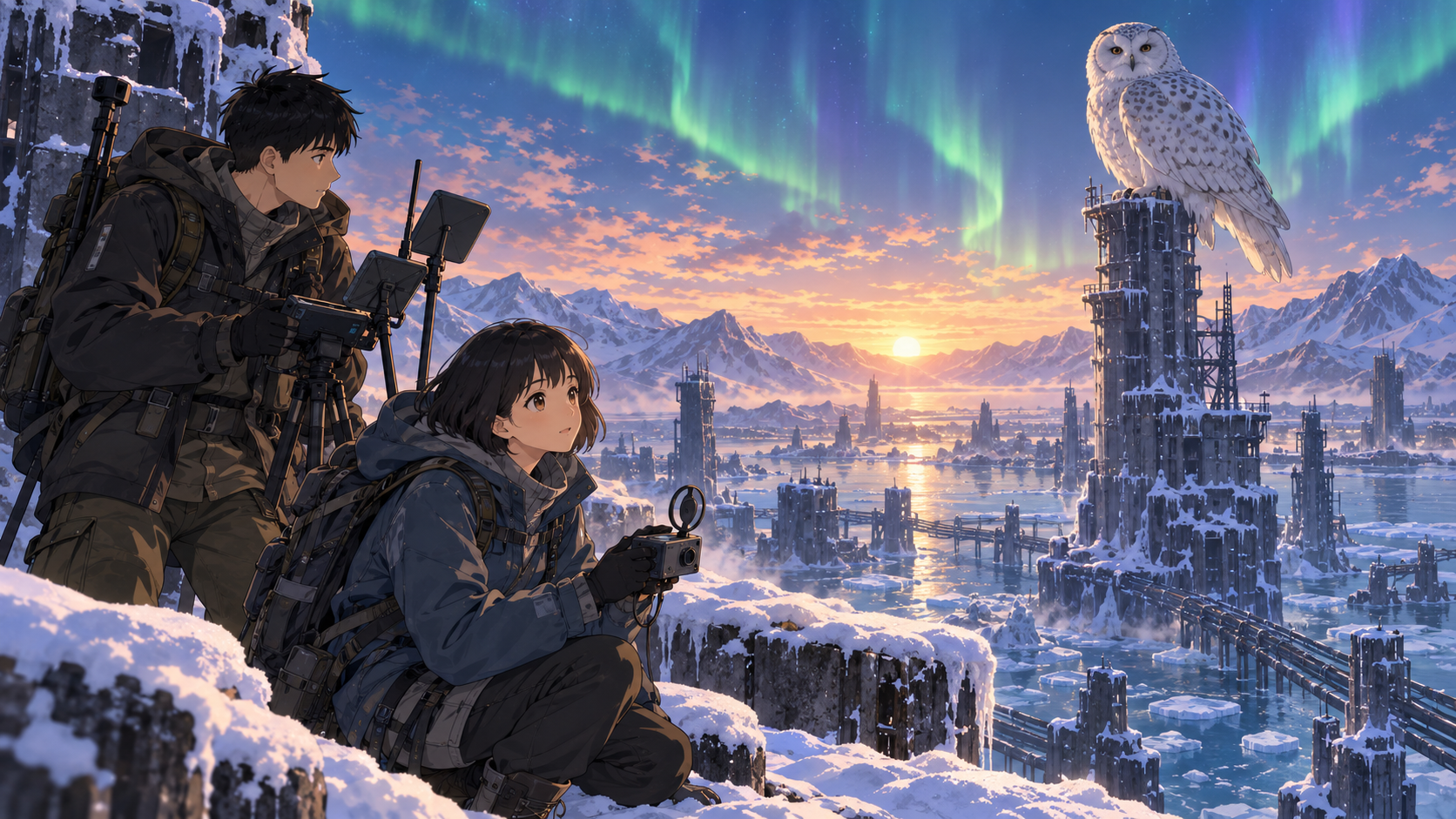
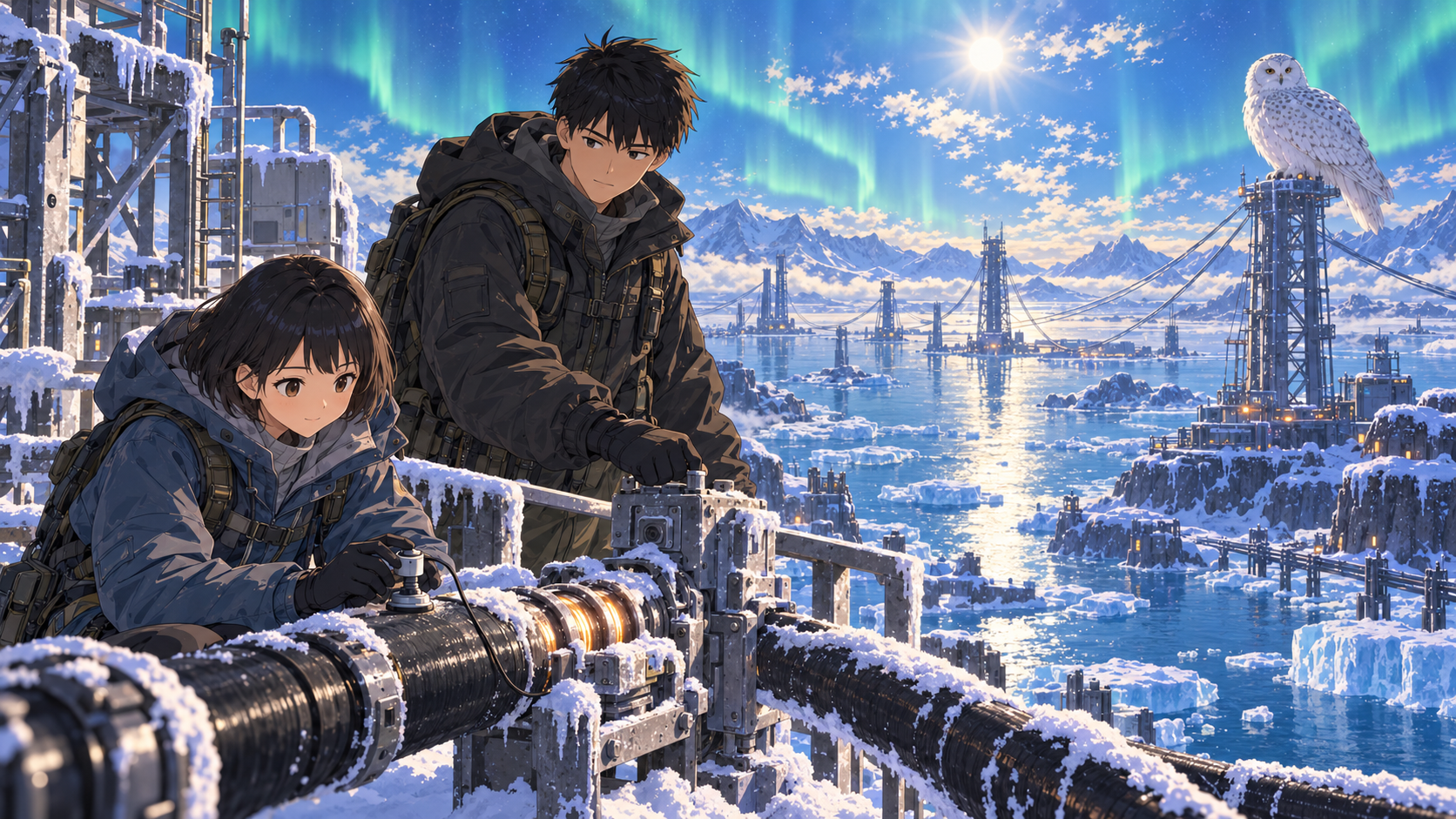
Frostlamp Sunken-Cable Windbreak Ring is a five-day field route where Fang and K document a local ecology through observation, distance, and response.
Day 01 / 10.01
Thirteen Seconds Beneath the Ice
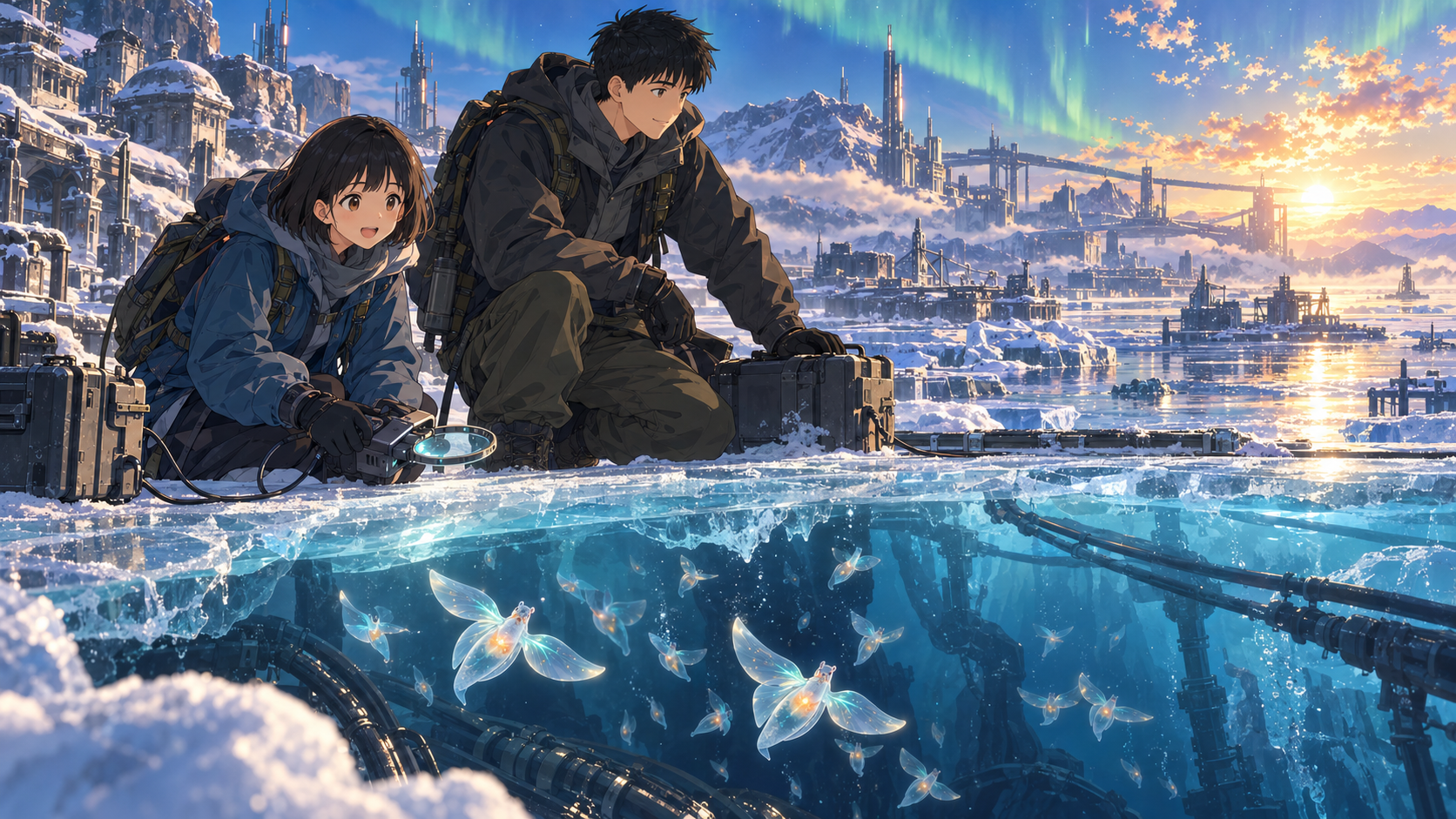
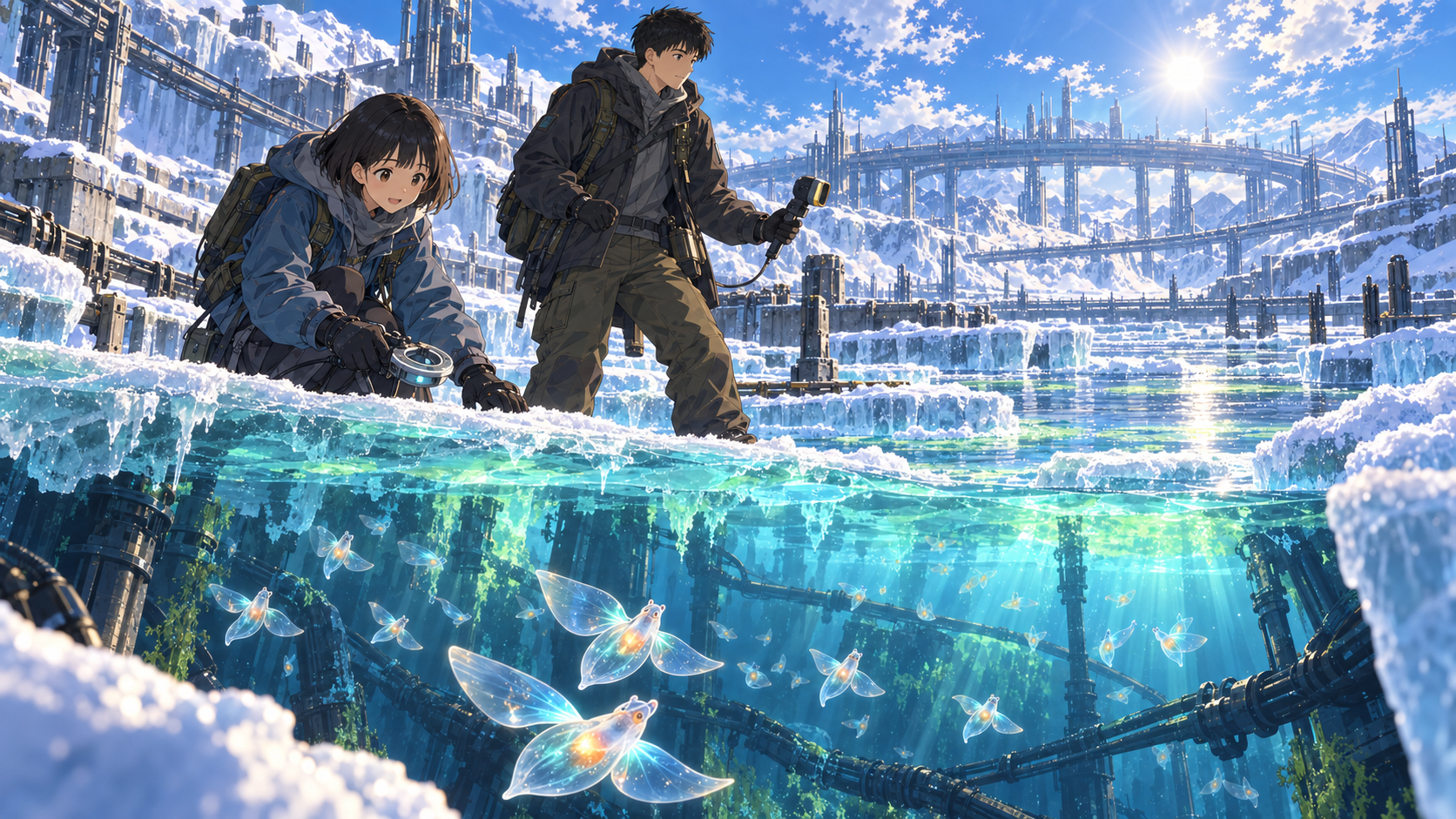
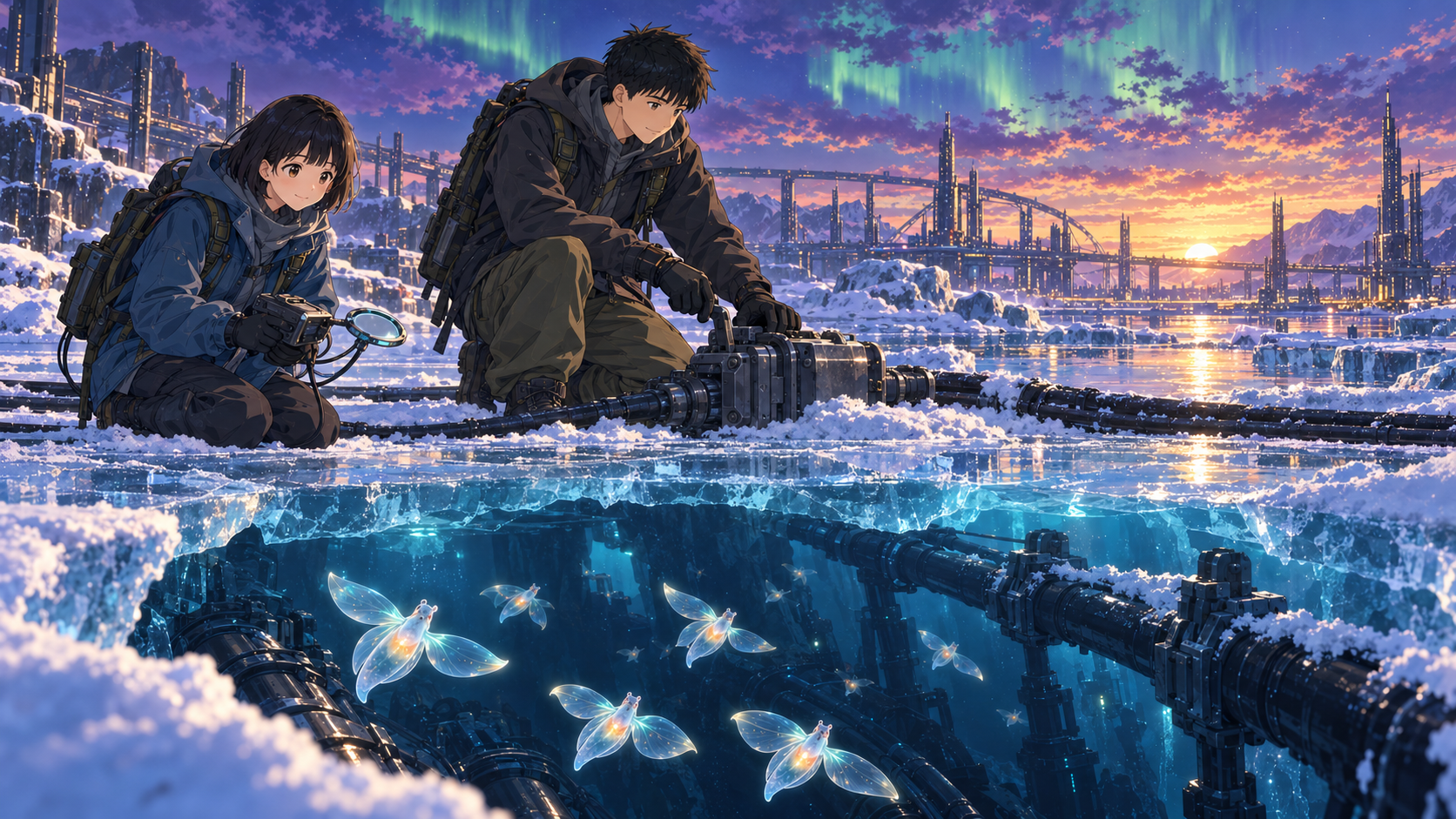
Aurora-Sail Sea ButterflyLow Risk
At Frostlamp Under-Ice Window, I shut down active scanning first. Below us, the sea butterflies folded their broad wing feet together and sank. The de-icing pulse had not arrived yet. Their line showed where it would cross. Fang kept her noninvasive BCI and sampler at a safe distance. I stood on the windward side with my weapon secured low.
MORNINGThe sea butterflies moved close under the ice, feeding along the aurora-algal film. Their milky mantles carried a narrow orange-cyan gland. Then the band folded its two wing feet and descended as one. We stayed outside that line. The harbor alarm would follow thirteen seconds later. The animals had read a fault in the cable de-icer before the harbor could report it.NOONFang compared each closure of the wing feet with the changing brightness of the algal film. I used a passive heat meter to trace the pulse beyond the cable boundary. The harbor had restarted a fixed-frequency de-icer to reconnect its outlying research towers. It had flattened the rhythm that let living things read aurora current, brine openings, and the windbreak. We did not move the animals or run another pulse through them to confirm the path.EVENINGWe switched off only the first connector whose timing was wrong. The trough grew cold and dark again. One by one, the sea butterflies spread their wing feet and glided close beneath the ice. Fang kept measuring from a distance. I kept my weapon where it was and left the rest of the cable system untouched.
「We changed the machine. We did not chase, aim at, or ask the sea butterflies to prove the repair for us. I recorded where their line returned to the ice and let them go.」— K
Day 02 / 10.02
The Living Route Through the Warm Fissure
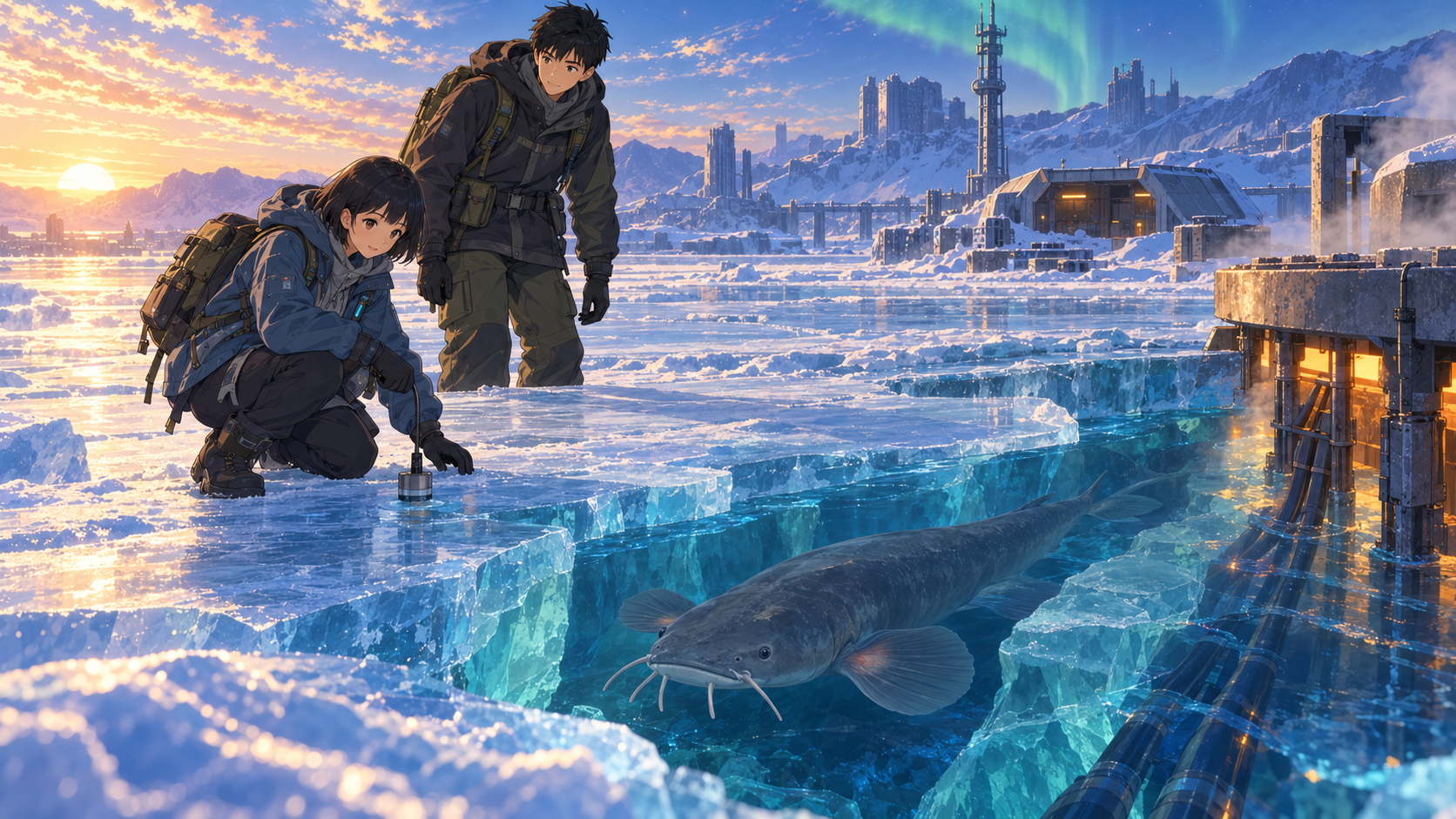
Warm-Fissure Ceramic-Barbel CatfishModerate
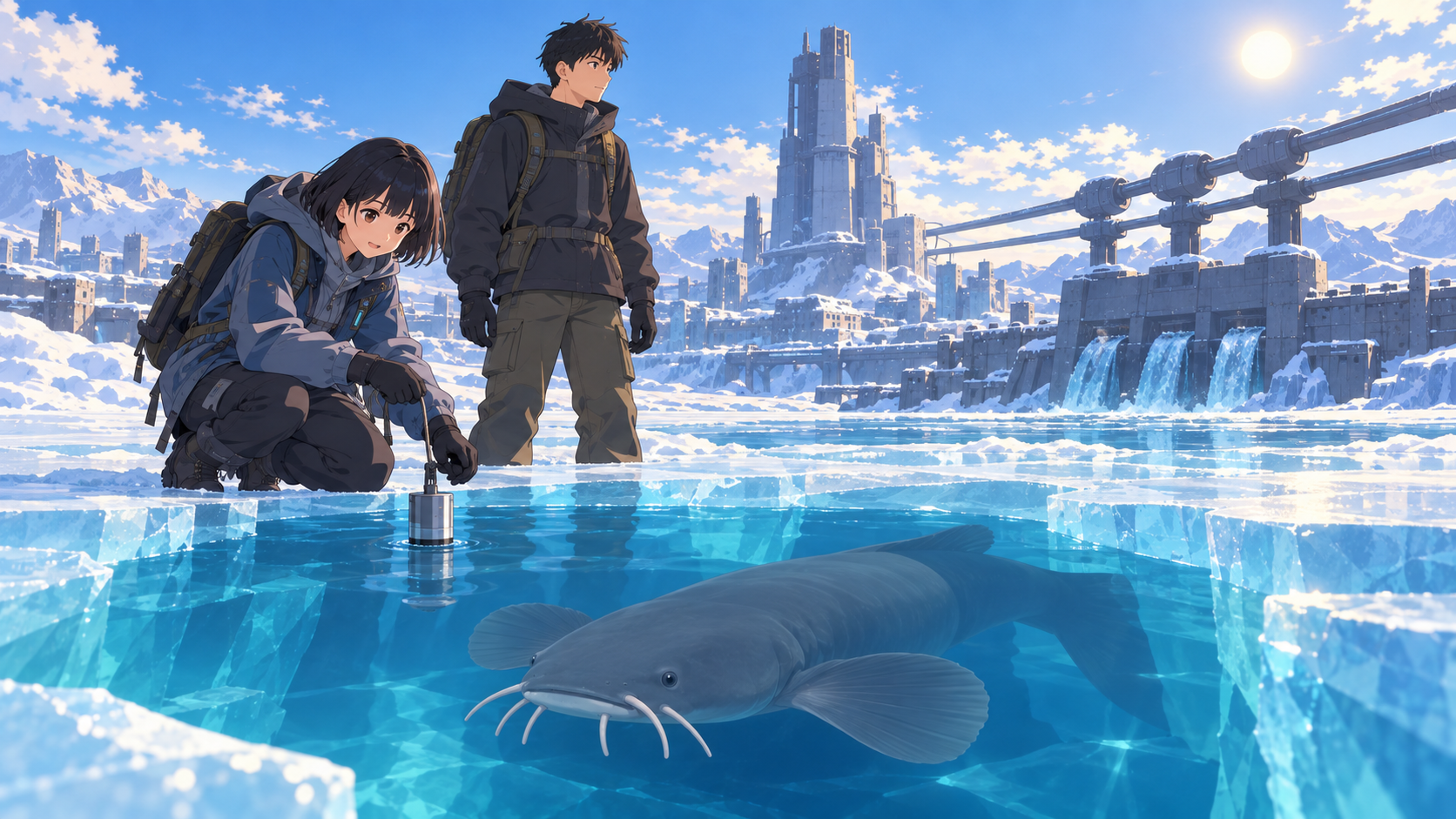
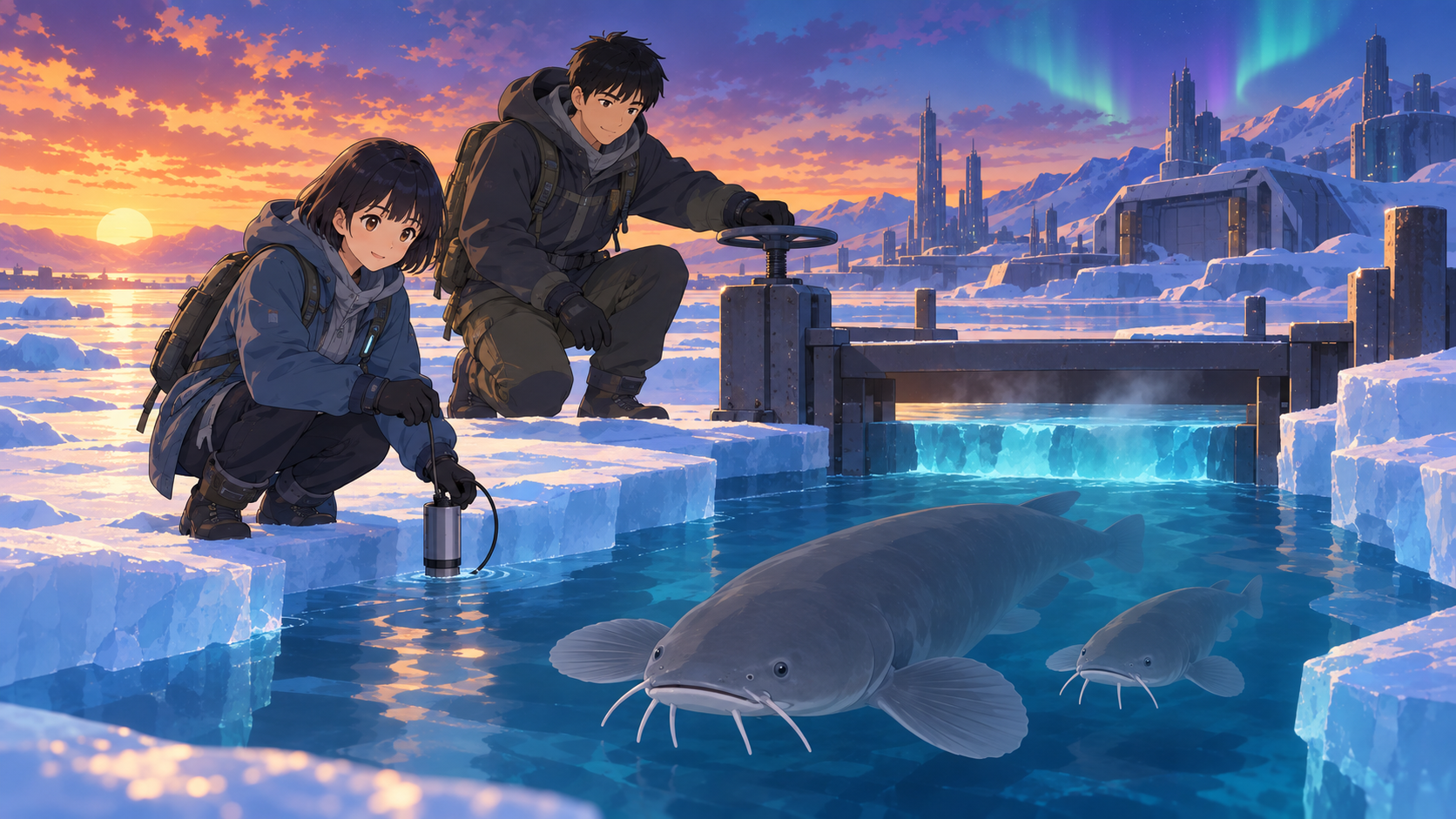
I shut down active scanning at Warm-Fissure Cable Well. Old city roofs lay beneath blue ice, but the de-icer had warmed the water beside the sunken cable too quickly. A slate-gray catfish approached a joint. Its six short ceramic barbels spread slightly, then it turned toward a natural warm fissure. It did not bolt. It kept feeding along the same brine line.
MORNINGFang crouched on thick ice and sampled salinity and residual heat without touching the fish or placing a tool in its route. Wind pressed in from behind the tower. I moved to her windward side, checked the ice and our way back, and secured my weapon low. The harbor had wanted continuous heat pulses to reconnect a research tower. The fish's detour revealed the pulses were out of frequency before the alarm did. We marked the fissure it had chosen. Tonight we would change the cable system, not this living waterway.NOONNoon light made the return-water inlet clear. Three swollen joints were plain to see. From the safe line on thick ice, Fang measured where the six porous barbels pointed. Each time the catfish came near the human-made inlet, it turned back to the natural fissure. Those barbels read salinity and leftover heat; they showed the fish which water was still passable. I touched only the shut maintenance valve with my glove and recorded the joints. Fang said the city would mistake a sound brine route for a fault if heat pulses were its only guide. I stood on the windward side while she finished the third reading, then packed the loose snow on our retreat line. First the diversion channel should take the warm water; then we could lower the de-icer. No animal needed to test that choice for us.EVENINGBefore dark, I opened the manual valve slowly and checked that warm water ran through the old channel beyond the thick ice instead of striking the thin ice. Fang stayed on the upstream observation line, using a passive sampler to watch salinity return to its earlier gradient. Two catfish came from the far end of the fissure. The adult moved its pectoral fins gently; a juvenile followed. They crossed the cable well without being turned back by overheated joints. Beneath the distant signal tower, the Frostlamp resumed its slow pulse. I put away the valve handle, returned to the windward side, and watched Fang record the last water temperature.
「We caught nothing and drove nothing down a prescribed route. We brought our equipment back into a rhythm the brine, windbreak, and fish could share. Fang said this path was worth keeping. I think the lives that cross it tomorrow will tell us whether we were right.」— K
Day 03 / 10.03
The Breathing Hole We Left to the Walruses
Frost-Chisel Hammer-Tusk Walrus HerdHigh Risk
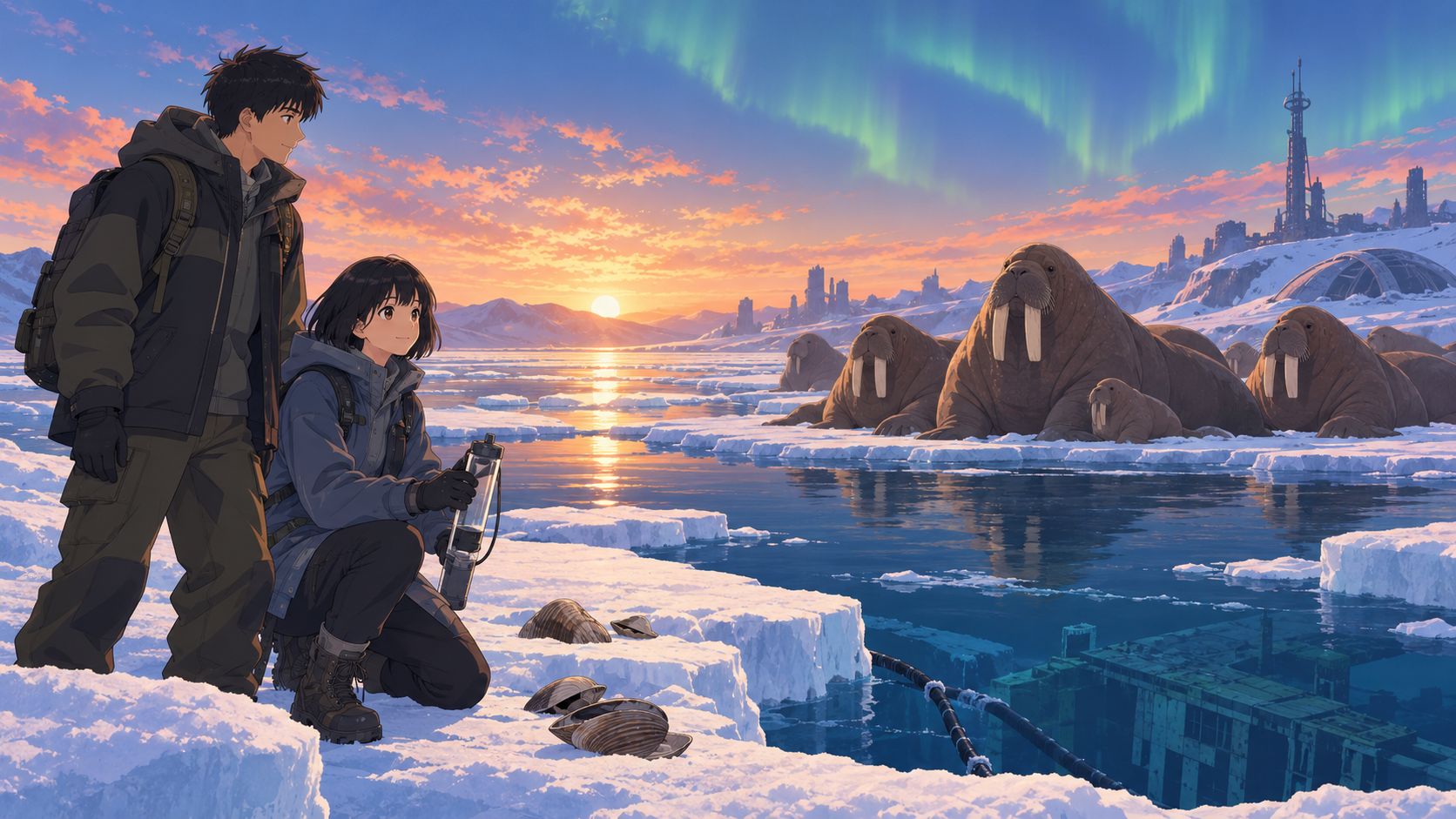
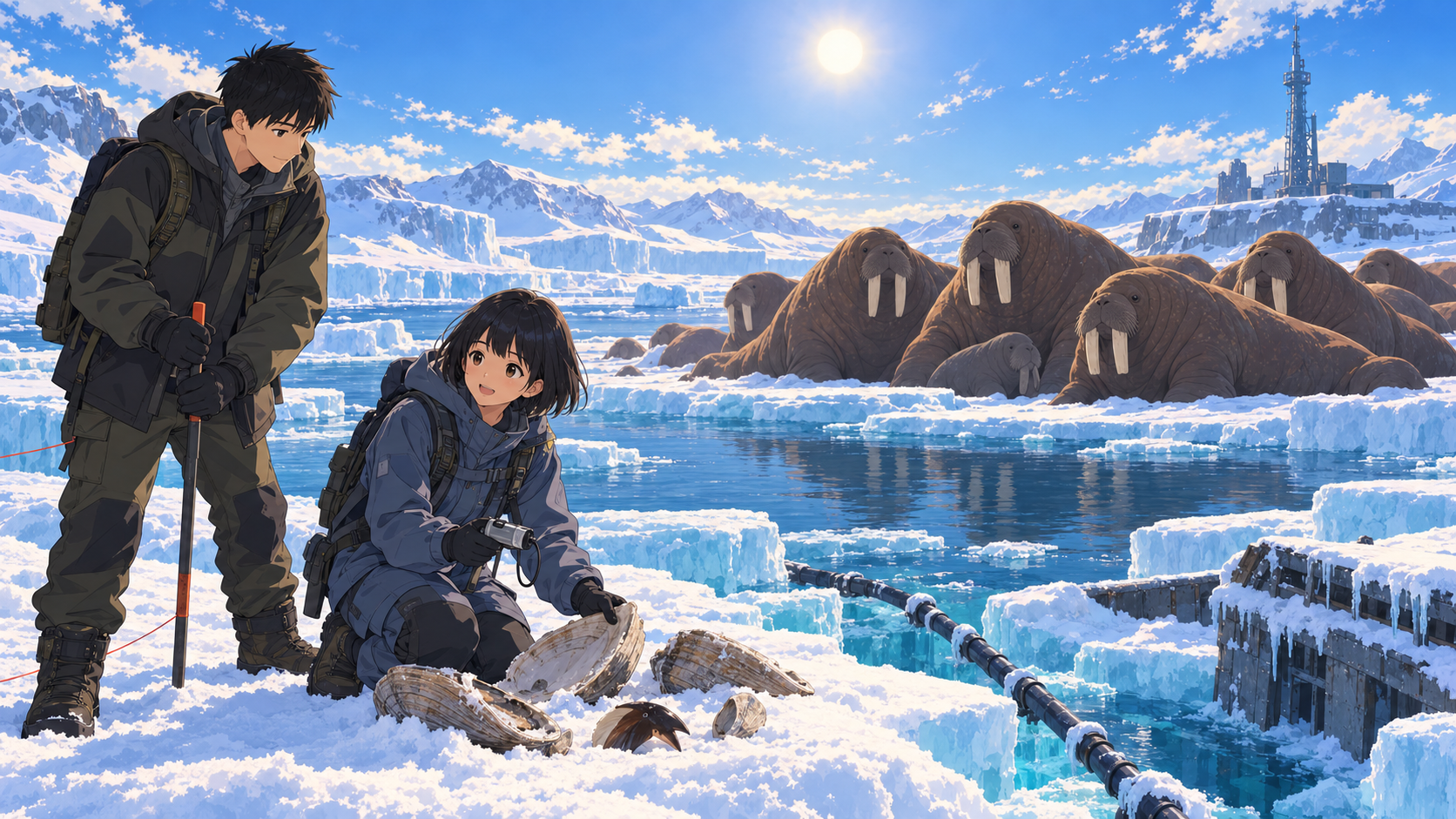
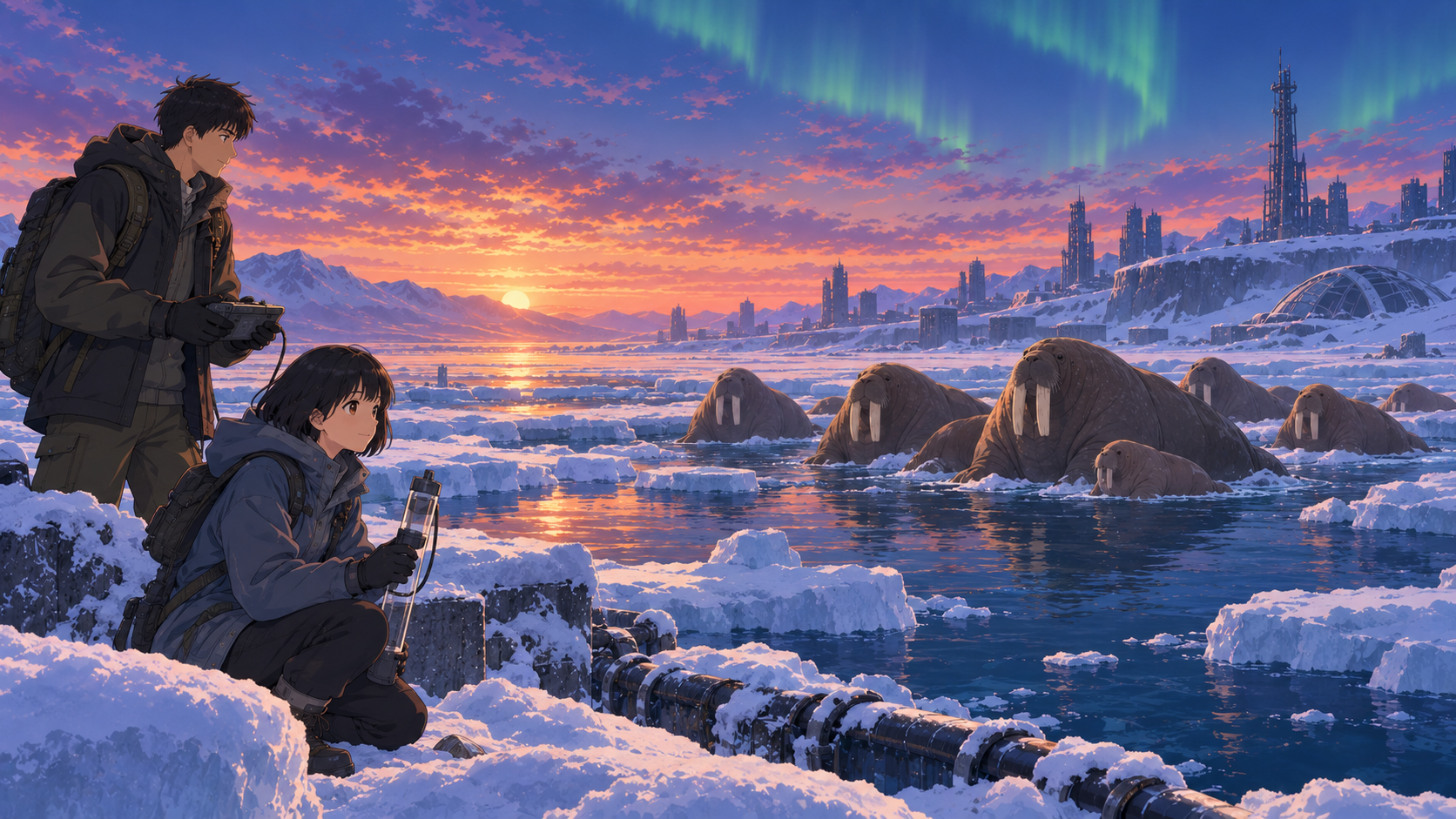
A skin of frost had sealed Hammer-Tusk Breathing Hole again before dawn. Blue light flickered below the sunken cable; the distant signal tower split the wind in two. We stopped on hard ice upwind and shut down active scanning. Across the opening, a gray-brown adult drove its broad, flat tusks through the new ice. Three matrilineal families held their short-tusked calves inside a ring. They did not move toward us, but their bodies closed the path over thin ice.
MORNINGFang read the low-frequency signals from across the channel. She gathered brine and ice residue only inside the safe line. I saw broken bivalve shells and one cephalopod beak beneath the thin ice. That was enough to tell us what they ate here. Closer observation would have become interference. The harbor's fixed de-icing pulse came down the cable again. The rim melted, then froze, forcing the herd to chisel the same exit open over and over. I stood on the side the wind pressure came from and marked Fang's way back. She asked if we should move the walruses away. I said no. Our equipment was what needed to leave their air route.NOONThe bank was narrower than the map showed. Sunlight passed through the loose snow, revealing thin ice hollowed from below by a mistimed heat pulse. I marked a retreat on hard ice before switching off the active scan that would cross the breathing hole. Inside the line, Fang picked up two shell fragments and a cephalopod beak. Her passive sampler traced the brine flow. Far away, the families kept their calves in a broad ring. A male at the hole sometimes lifted its flat tusks to break refrozen ice from the rim. We were seeing an order built around feeding and calf protection, not an enemy preparing to strike. Fang found a heated joint below the cable. Here the pulse cut the natural warm fissure off from the safe snow ridge. I mapped the joint and the cracks without crossing the herd's boundary. When she packed the samples, she checked my line; I nodded. We could repair a human machine without asking a whole walrus family to change its route.EVENINGTwo sounds reached us at dusk: wind over the old-city roofs and the cable de-icer still tapping the ice at one fixed frequency. Fang overlaid the day's brine readings on cable temperatures. Continuous heating was making the opening close again and again. She stayed on the stable outer platform while I switched the remote controller off beside her. We did not enter the calf-protection ring or draw a walrus away. Once the heat pulse stopped, water around the rim resumed its slow flow. The guarding male broke the last thin ice with its wide tusks. The families led their calves along their old channel, and a stretch of hard ice emerged again beside our rescue line. Fang said we still had to check tomorrow whether the snow ridge could hold under a new low-heat rhythm. I sealed the equipment log, and we left along the outer retreat route.
「The high risk here was more than a seven-meter walrus. Treating a habitat as a machine we could reset at will had turned each breathing hole into a trap. Tonight the herd found its own way out. We only stopped the pulse that should never have kept running.」— K
Day 04 / 10.04
The Map We Heard in the Rings
Tower-Ring Snow Macaque TroopIntelligent
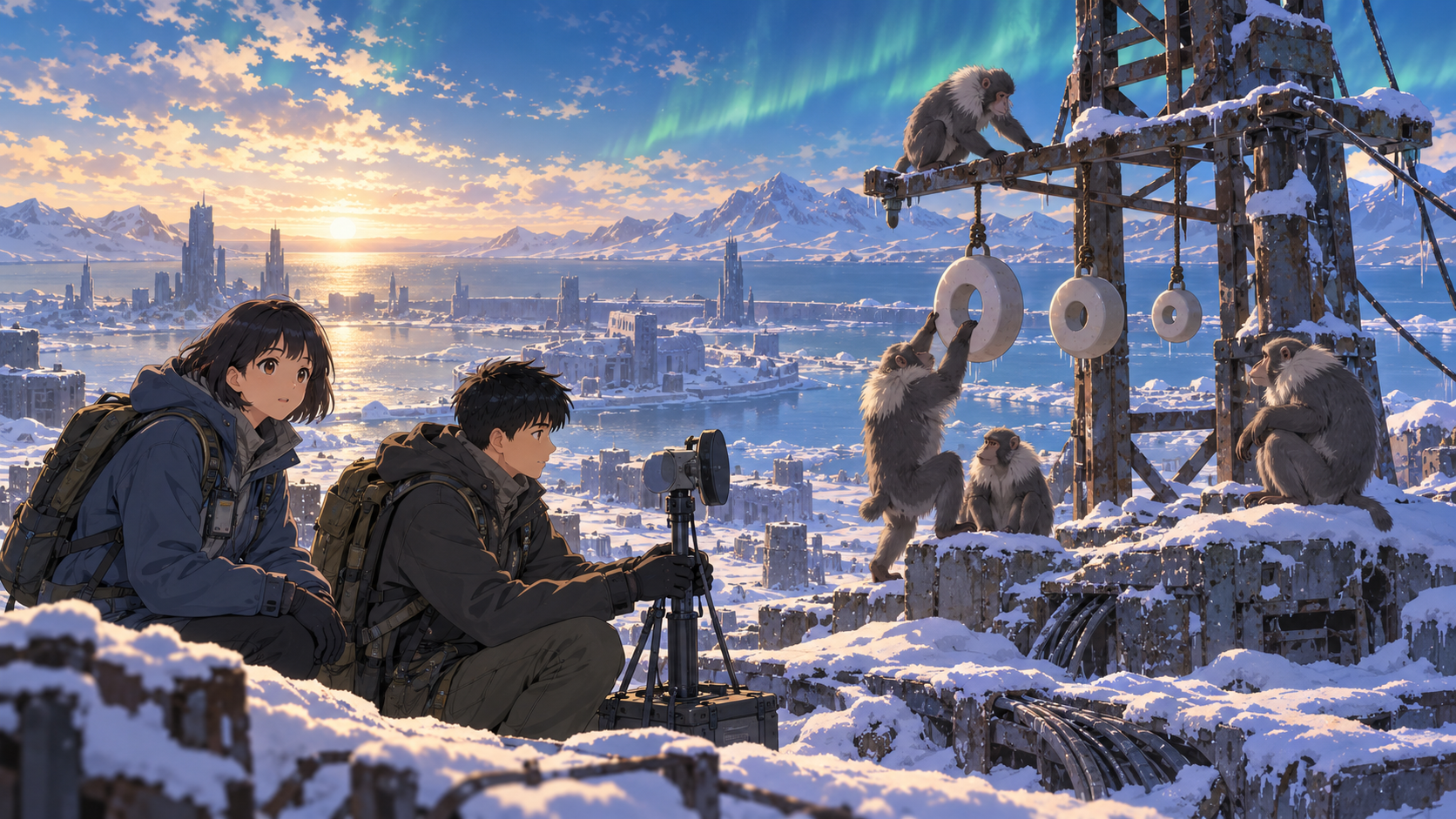
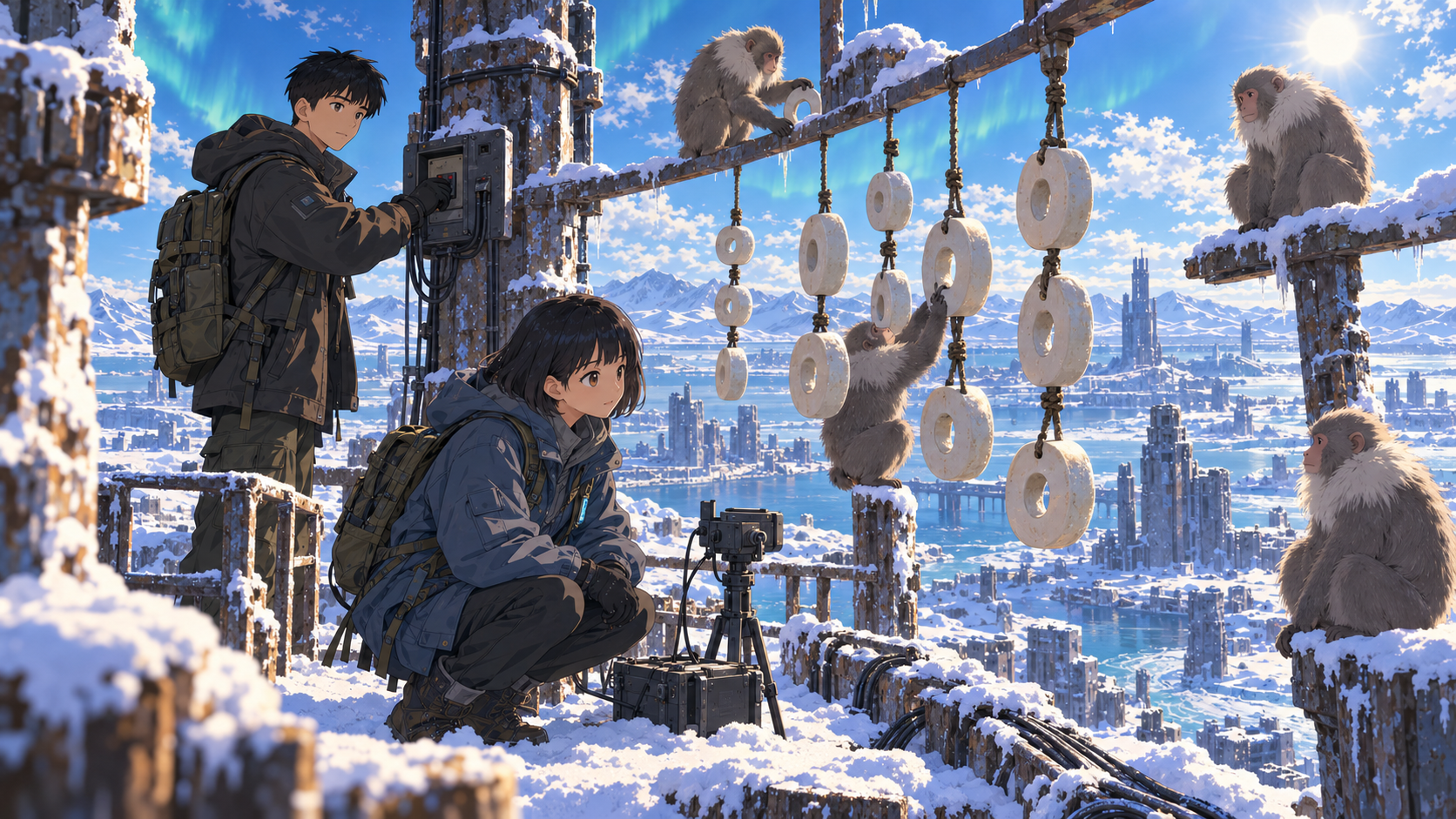
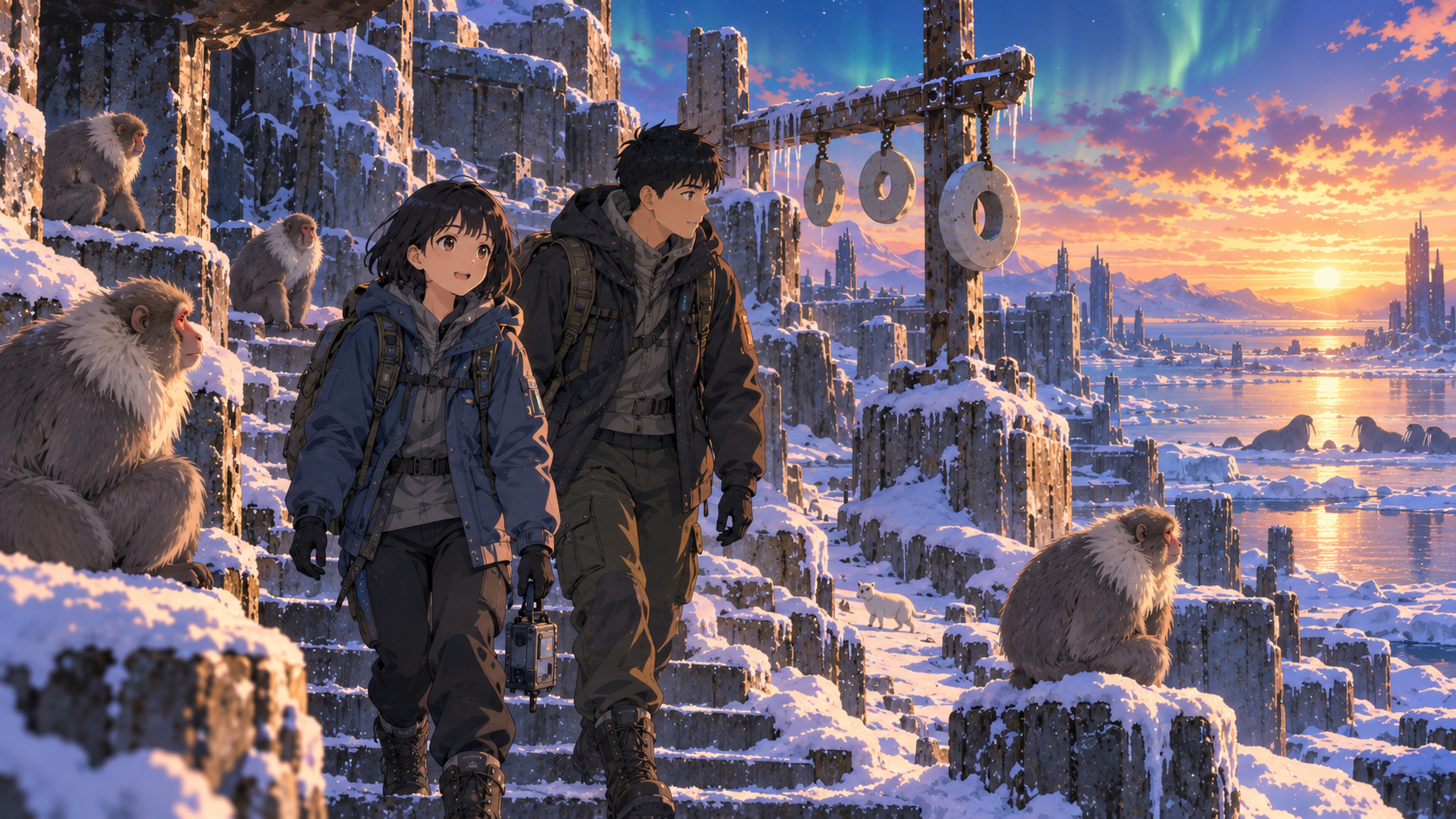
We followed the air route the walruses had reopened up to Tower-Ring Old-City Ridge. Wind cut hard edges into the snow on the half-buried roofs. I shut off active scanning first; another pulse would have buried the sounds here. Twelve snow macaques moved between two low towers. A gray adult raised a fallen ceramic insulator ring in its broad hands. Its hollow white shoulder mane lifted in the wind, and its short tail stayed close to its side. Three kinds of ring tone came to us in turn as the wind changed. The young copied them only beside safe crossbars.
MORNINGFang stayed behind the snow ridge and recorded the moments when the troop turned with a non-invasive BCI. I put a passive recorder between her and the incoming wind, then kept my distance. The brine vents we found over the previous two days and the thin ice the walruses guarded yesterday joined up in the gaps between the ring sounds: one line we could take, another we could not. A city test signal had covered that map. We listened through the whole sequence before deciding which stretch of human noise to shut down.NOONThe platform had no signs, only rings left by different generations. Fang laid our sound recording over their placement on the tower. The lower pitch pointed toward a sheltered snow cave; the middle sequence bent around the brine breathing holes; the highest stopped before the snowy owl's patrol boundary. New rings had not hidden the old. The troop had kept more than one way back between the two generations of signals. Then the tower-line test sent another fixed-frequency pulse. One mechanical hum swallowed all three sets of knocks. Several young macaques stopped at the platform edge. I left the rings alone, followed the tower cable to its test controller, and recorded the joint and timing before switching off that test pulse. From a safe distance, Fang saw an adult sound the original order again. Their map needed no repair. The city's equipment had made three voices into one.EVENINGAt dusk the three ring tones carried through the harbor wind again. Adults paused on the highest crossbar; young macaques settled on both sides of the steps. They did not approach us. They left open a passage hidden by the snow wall. Fang waited for smaller snow animals to cross before packing her sampler. Far away, I could see the breathing ring the walruses had just opened. Their calf-protecting families left by another ice channel instead of being pressed toward the same thin ice by the test pulse. The macaques had not drawn a shortcut for us. They had set wind, brine holes, and a no-entry line into the rings; other lives could hear a way out again. We descended through the space they left, without shifting one ring. When Fang looked back, a last low note still held in the wind. We had turned off human noise and left their order in place.
「We did not move a ring. The troop had already kept the route through wind, brine, and the owl's boundary. We only stopped the signal that made it impossible to hear.」— K
Day 05 / 10.05
Give the Quiet Corridor Back
Silent-Pressure Snowy OwlExtremely Dangerous
At Silent-Pressure Owl Boundary I switched off active scanning. I heard a snow cornice loosen before I saw the Silent-Pressure Snowy Owl on the highest rescue tower. Her wings, twelve meters from tip to tip, were folded, but her round facial disk kept turning toward the mistimed main cable. Soft-edged feathers made almost no sound. Downwash had lifted the snow below her. That was enough to tell us to go no farther.
MORNINGFang stopped outside the no-entry line the snow macaques had marked with ceramic rings. Through the BCI behind her ear she compared air pressure with the brine tide. I set a passive sensor for her and secured my weapon low. The owl hunts fish, seabirds, and medium-sized mammals; she guards a nesting territory, not a tower she wants to seize. The harbor’s continuous de-icing pulse had taken away her quiet flight layer first. Fang looked up at me. I crossed the forward route off our map. Today we would repair the cable rhythm, not the life in front of us.NOONSnow fell slowly at the station. Heat ran along the cable far too fast. Fang placed three records side by side: the Aurora-Sail Sea Butterfly folding its sail thirteen seconds early, the Warm-Fissure Ceramic-Barbel Catfish circling away from an expanding joint, and the snow macaques’ three ceramic-ring knocks. Together they gave us a quiet interval long enough for the owl to pass. On her signal, I divided the de-icer into stages and replaced continuous high heat with staged low heat. After the first stage eased, the disk on the distant tower stopped following the cable. After the second, mistimed hot air no longer pushed the snow cornice outward. We did not approach the owl or make noise to drive her off. Fang watched cold mist return to the brine breathing holes through a passive sampler. I watched the joint temperature, ready to stop any stage that ran away. She said we were not designing a passage for the owl; we were removing human noise from one already there. The quietest line on the instruments finally agreed with the wind.EVENINGAt dusk the frostlamp ring formed a soft arc again. The sunken cable no longer sent heat pulses into the snow ridge. The owl remained on a distant tower, and we waited outside the no-entry line. She eased out of her low-pressure patrol crouch, then rode the wind past the abandoned signal towers. Her forked tail turned briefly under the aurora. She reached the distant nesting ridge by her own route. Fang packed her sampler and checked that the brine holes, walrus breathing holes, and macaque wind markers had each returned to their own rhythm. I locked the last de-icer stage in low-heat mode and left the rescue passage to the windbreak, not an alarm. This line is still dangerous. Repairing equipment does not make a twelve-meter predator’s territory safe. Fang knew it too. She straightened the strap snow had pressed against my back without urging me on. We went down to the ice harbor. The frostlamp on the tower was still lit, but it no longer ordered any living thing where to go.
「We changed the pulse, not her path. The owl chose the far ridge. We left the no-entry line where it belonged.」— K
JOURNEY DISPATCH
Subscribe to K's Hunting Log
Follow Fang and K into a world that has not yet been understood.