The Distance the Cold Wind Restored
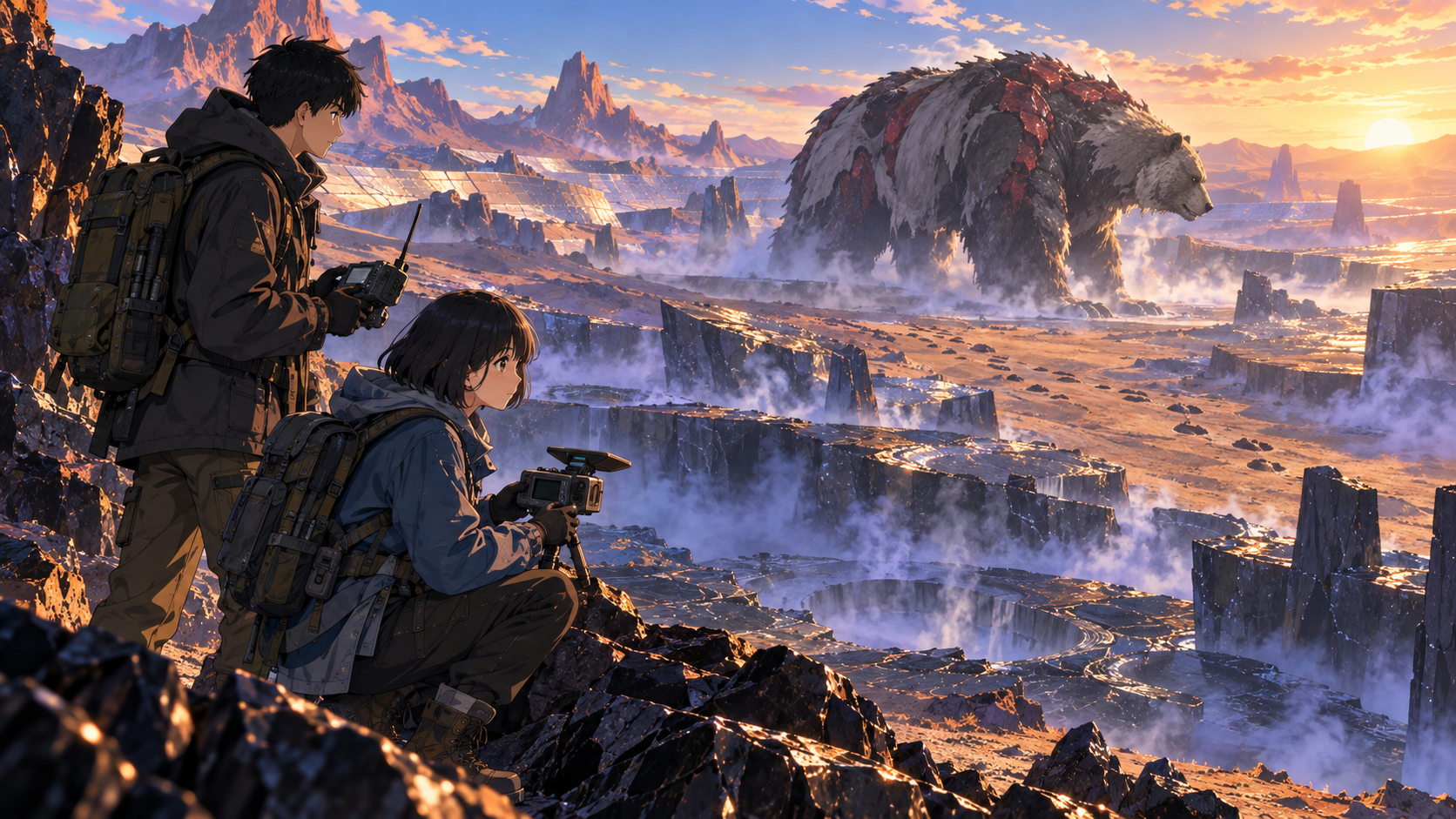
The obsidian ground at Heat-Veil Bear Boundary held two trails moving in opposite directions. Large foothill herbivores had turned away along the cold-well edge. The seventeen-meter bear had followed their scent on the descending night air. Its heavy muzzle stayed pointed into the wind. Overheated shoulder plates drove each step hard enough to split the mirror-black surface. Fang measured the heat veil from the safety line. I shut active scanning down and recorded the fractures. We could not approach. We did not need to. The ground had already told us how dangerous the distance was.
Field Observation
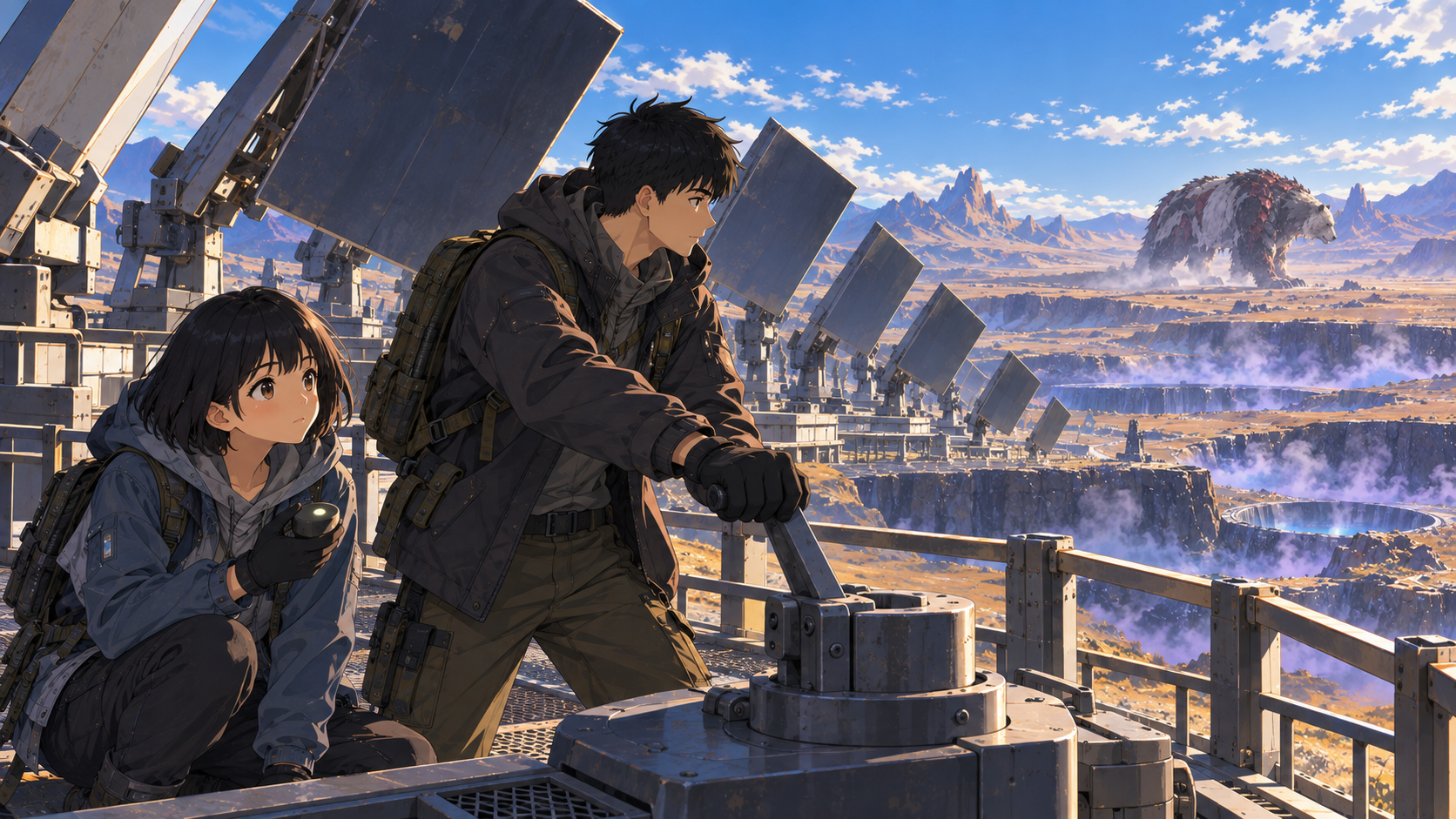
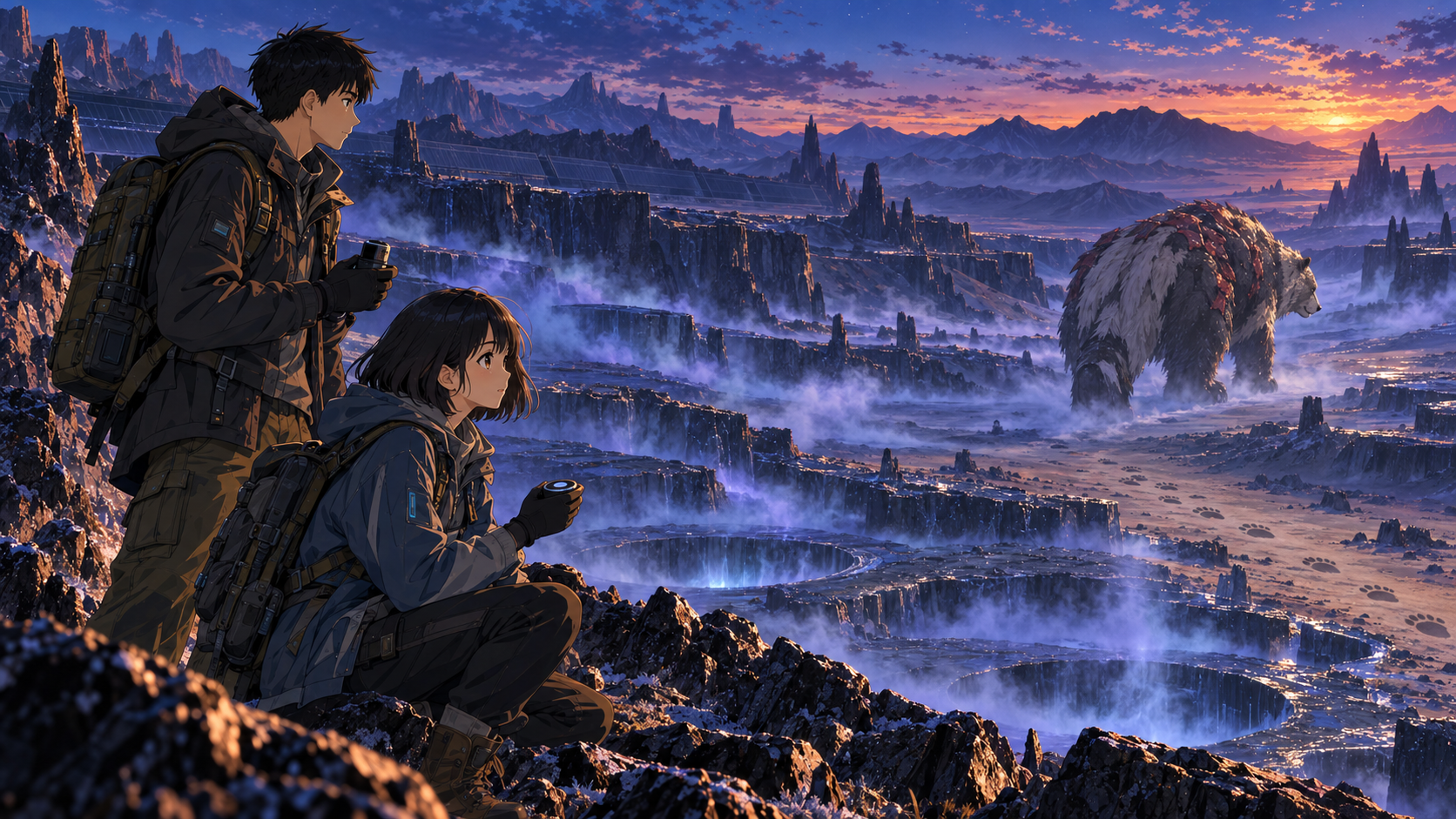
At dawn, we stopped at Heat-Veil Bear Boundary and read two opposing track lines from a safe distance. At noon, Fang combined the camel, solifuge, and herbivore signs at Main-Mirror Lights-Out Platform while I locked each sun-tracking mirror into its lights-out angle. At night, we withdrew to Obsidian Cooling-Return Basin Rim and let the restored airflow through three wells cool the bear until it chose its own route back to the den.
Morning · Heat-Veil Bear Boundary
The bear remained beyond the cooling-well rim, almost motionless except for its muzzle and shoulders. Pale hollow fur held the light in broad, dull panels. Beneath it, the charcoal skin and dark-crimson heat plates released waves into the empty basin. Fang compared the herbivore avoidance prints with the giant pads pressed into the obsidian. I kept only passive airflow and ground-temperature readings. My weapon stayed fixed. There was no chase, strike, blood, or injury. A predator did not have to cross the line to define it. The broken plates and the absence of every large grazer were enough.
Noon · Main-Mirror Lights-Out Platform
At the platform, Fang overlaid three records: the camel herd's inherited route, the solifuges' stopping line, and the large animals' retreat. Their rhythms opened one cooling window. I locked the first sun-tracking mirror into its lights-out angle, then the next. The old controller stopped reading living shadows as dirt. The bear still tested the wind in the distance, and obsidian continued to crack beneath its pads. We remained outside the ambush line. With every darkened row, mirror heat fell and the first cold air crossed a well mouth. I did not aim a signal at the animal. The only system we corrected was ours.
Evening · Obsidian Cooling-Return Basin Rim
Night air passed through all three cold wells again. The heat veil above the basin rim withdrew layer by layer. The bear lowered its scenting posture and stopped breaking the mirror surface. Then it turned toward an unoccupied cold valley and moved back to its den without entering the death basin. Fang read the habitat temperature returning across the corridor. I confirmed that every mirror row held its lights-out angle. Along the foothills, the old herbivore passage began to reopen. We stayed behind the observation line. The bear chose the time, the direction, and the distance.
Habitat Causality
The abandoned solar-mirror terraces collect heat during the day. At night, their main mirrors must lock dark so descending valley air can pass through underground cooling tunnels and rise from three wells. Restarting the tracking array kept the mirrors following light after sunset and sealed the return-cooling route. The bear's den overheated, its repeated steps fractured the obsidian, and hot convection blocked the corridor. Once K darkened the main mirrors, the three wells drew cold air again; the bear cooled, ceased the terrain-breaking gait, and withdrew on its own.
Species Behavior
The Heat-Veil Mirror-Rift Giant Bear is a carnivorous ambush predator. It uses a heavy muzzle to read large-herbivore scent on descending night air and waits along the outer well edge. Hollow insulating fur, charcoal heat-radiating skin, phase-change shoulder plates, and enormous heat-sink pads adapt it to the corridor's cold-hot cycle. Overheating turns its pacing into a calamity for the terrain; restored airflow returns it to a cooling route and deep-den rest.
「Fang said the corridor was open again because every life had room to keep its own line. I left active scanning off. There was no quarry and no victory. The task ended when the predator and the other animals no longer had to occupy the same distance.」