When the Third Beat Went Quiet
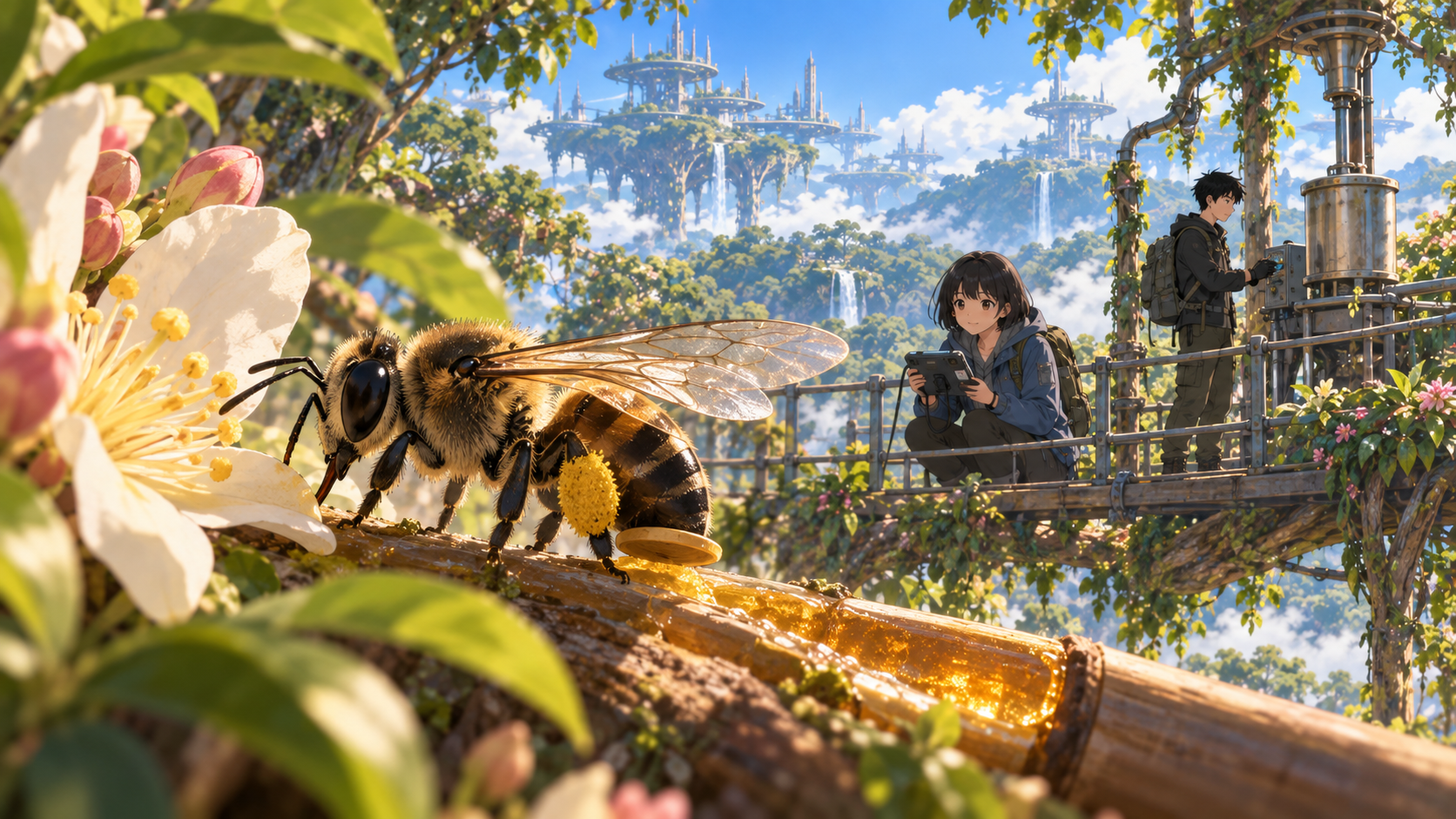
The tree bridge was still above the clouds. Flowers led toward the seed bank, with resin tubes hanging between white and pink blooms. A worker carried pollen past Fang. When the distant test pump started, the third beat stopped returning from the next tree. I marked the pump and wind from the bridge. We did not follow the bee.

Field Observation
Morning at Cloud-Bee Resin Drum: mark where pump noise masks the cross-tree relay. Noon at Flower-Mist Relay Branch: compare a worker's resin taps with the colony BCI, stop the test pump, and record the first renewed flower visits. Evening at Seed-Bank Pollination Window: watch the three beats pass between separated trees again, leave the pump-off interval on record, and withdraw.
Morning · Cloud-Bee Resin Drum
Morning light reached the flower corridor. Fang stopped beside a cluster of white flowers and did not touch the pollen-bearing worker. It skimmed a wet branch, and the drum plate beneath its abdomen showed a little warm color. Before the pump started, three taps had answered across the trees. The last answer vanished beneath its noise. Cloudport called the colony lost, but I could still see bees on another tree waiting for a reply. Fang asked me to mark where they stopped before going any farther. The seed bank floated beyond the cloud, and water still moved slowly along the branch channels of the suspended reservoir. One sighting could not settle what had happened to the whole water route. The relay did change when the noise began. The flower corridor was there; the bees could no longer hear across it. I marked each pause against bloom, wind window, and pump sound. We would check the same bridge again when it was quiet. If the colony could answer on its own, it needed no new orders from us.
Noon · Flower-Mist Relay Branch
Closer to the pump station, a white flower and a resin tube drew our eyes to one worker. Pollen clung to its short, broad hind legs. The plate beneath its abdomen touched the tube and tapped the old three-beat rhythm between nests. It was not a plea to us. Fang stayed behind the tree bridge, using the colony BCI to compare bloom timing with the inverted-rain wind window. She did not appoint a worker to speak for the colony. I switched off the test pump that covered the drum sound, took my hand from the controls, and stepped back. A nearby white flower was visited again. Then a short reply came from a distant tree. The display showed less noise, but the renewed passage between flowers told me more. We had not drawn a route for the bees. The city had paused an unnecessary sound and left them to choose their next beat. Fang said that reading group memory did not mean we knew their whole lives. I agreed. The distant reply was still faint, so I recorded only the two visits we had seen. Evening would test the next part.
Evening · Seed-Bank Pollination Window
Evening light outlined the pollination window. White and pink flowers occupied separate branches beside the bridge. The bees did not gather into a mass. A few workers crossed the mist between spaced blossoms, and three beats passed again between separate resin tubes. Fang put the BCI into read-only mode. It showed a colony moving between trees, not an individual following our command. I saved the pump-off interval in the seed-bank equipment and packed away the instruments with her. We walked back along the safe bridge. From here, gaps remained in the flower corridor. Whether the relay would survive the next wind window was for the colony to show us. Today we corrected human noise. The route among bee, flower, and seed had been here all along. Cloudport had wanted more signals to track each worker; we recorded quiet equipment hours and bloom instead. Fang watched a distant answer and did not call it a success. Neither did I. The space between trees was still long, but the bees were joining it one beat at a time.
Habitat Causality
Seasonal inverted-rain wind windows and separated canopy flowers shape the colony's pollination route. The seed bank's test pump masks its three-beat resin-drum replies across trees. Stopping the pump restores audible space without moving the flowers or directing the bees. Two renewed flower visits and a faint distant answer are evidence of a response; the next wind window must show whether the relay holds.
Species Behavior
Stingless workers carry pollen on short, broad hind legs. A matte resin drum plate beneath the abdomen taps a three-part rhythm on natural resin tubes. The split colony occupies several trees and remembers bloom and inverted-rain timing. Workers pause their cross-tree relay under pump noise; when it quiets, separate workers visit flowers and the rhythm resumes without a leader or human command.
「I left the pump-off hours in the record. Fang kept the BCI read-only. The next answer belongs to the bees.」