The Harbor-Side Pore
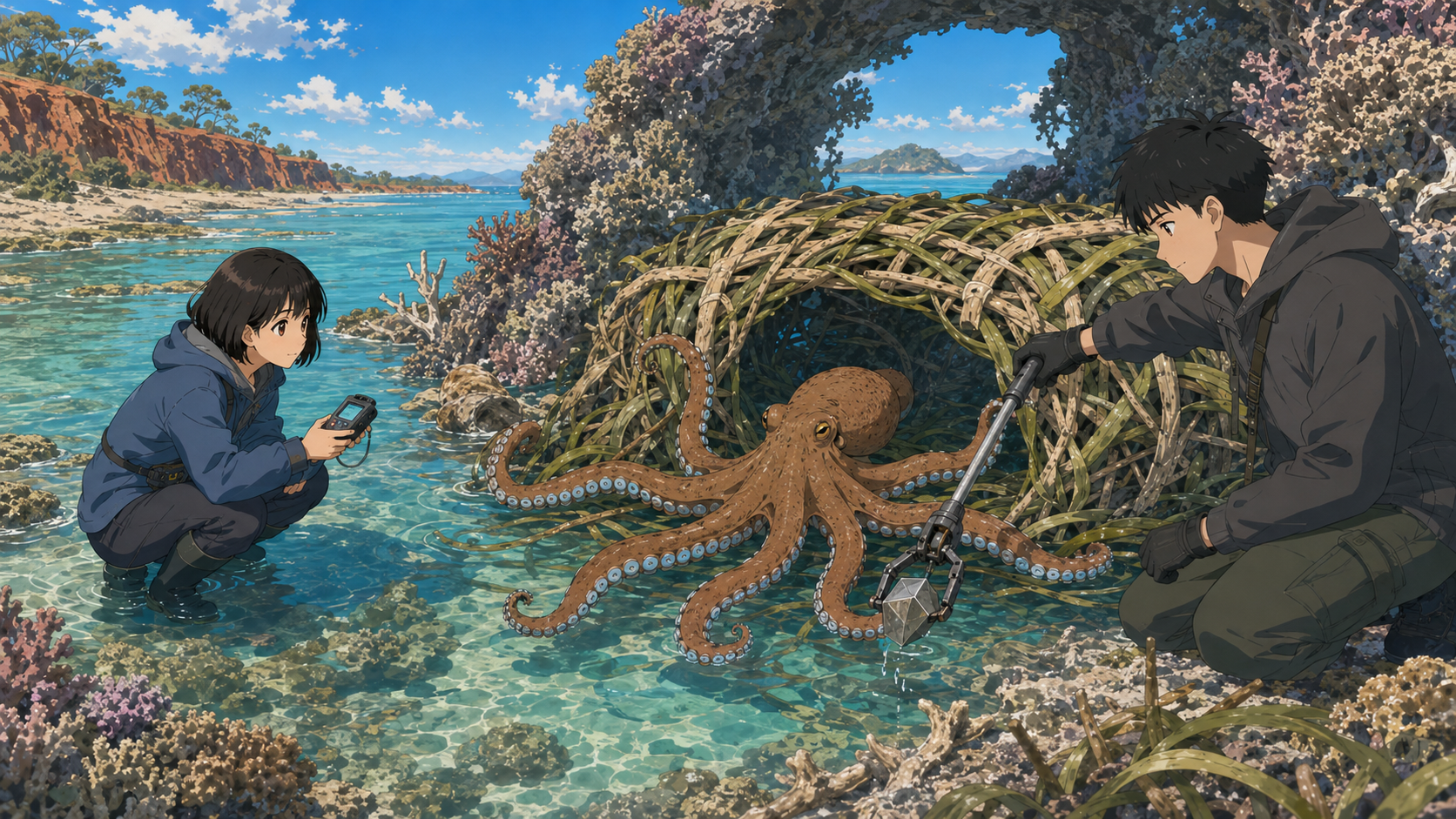
Tidal pressure and crystal-reef reflections were still shifting at Reef-Weaver Gate Pore. The octopus kept the flexible openings working but had sealed the entrance facing the harbor. Fang separated its response into current, suspended particles, and movement. I marked load-bearing points, return flow, and our retreat line from outside the den. We did not need to move the animal. We needed to find what had made it close the pore.
Field Observation
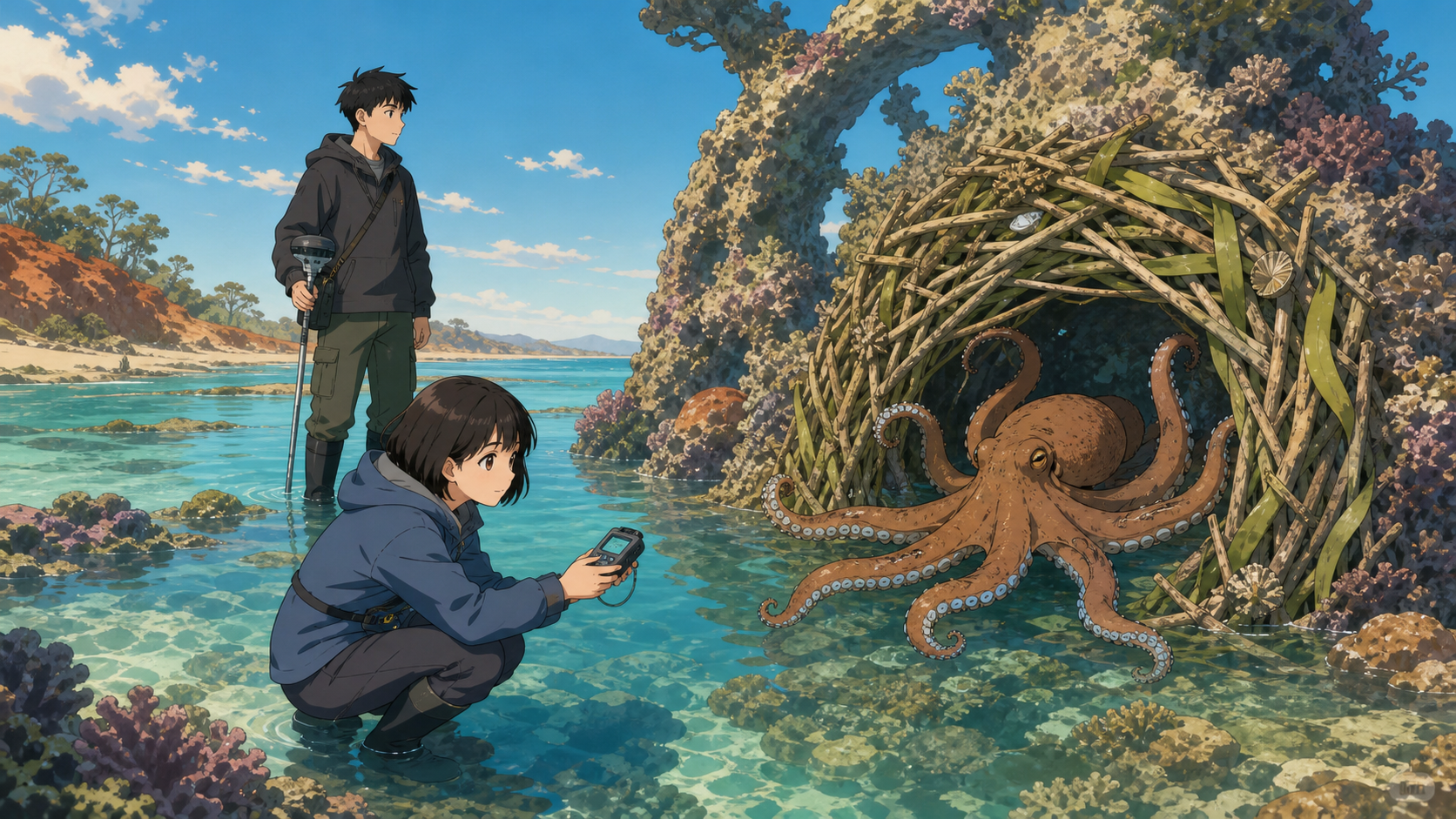
We stayed outside the den at Reef-Weaver Gate Pore and read the one opening the octopus had sealed on the harbor side. At Flexible-Knot Maintenance Hollow, Fang watched it loosen the jammed knot while I removed only the mechanical alloy fragment caught in it. We followed the direction of the closure to Broken-Arm Reef-Harvest Station and confirmed that loose crystal was falling from the stalled arm into the migration corridor.
Morning · Reef-Weaver Gate Pore
A single Gate-Pore Reef-Weaver Octopus maintained the flexible reef openings while keeping the harbor-side entrance closed. Fang observed from beyond the den. I stayed on the outer line, kept every active weapon stowed, and recorded the load-bearing points, return flow, and a clear retreat route. We did not enter the den or press the octopus to change direction.
Noon · Flexible-Knot Maintenance Hollow
The octopus loosened a pressure-responsive knot woven from empty shells, naturally fallen coral branches, and seagrass fibers. One mechanical alloy fragment had bitten into the knot and blocked the pore. Fang kept watch while I removed only that fragment, leaving the living reef and the woven knot untouched. Water began moving through the safer opening again.
Evening · Broken-Arm Reef-Harvest Station
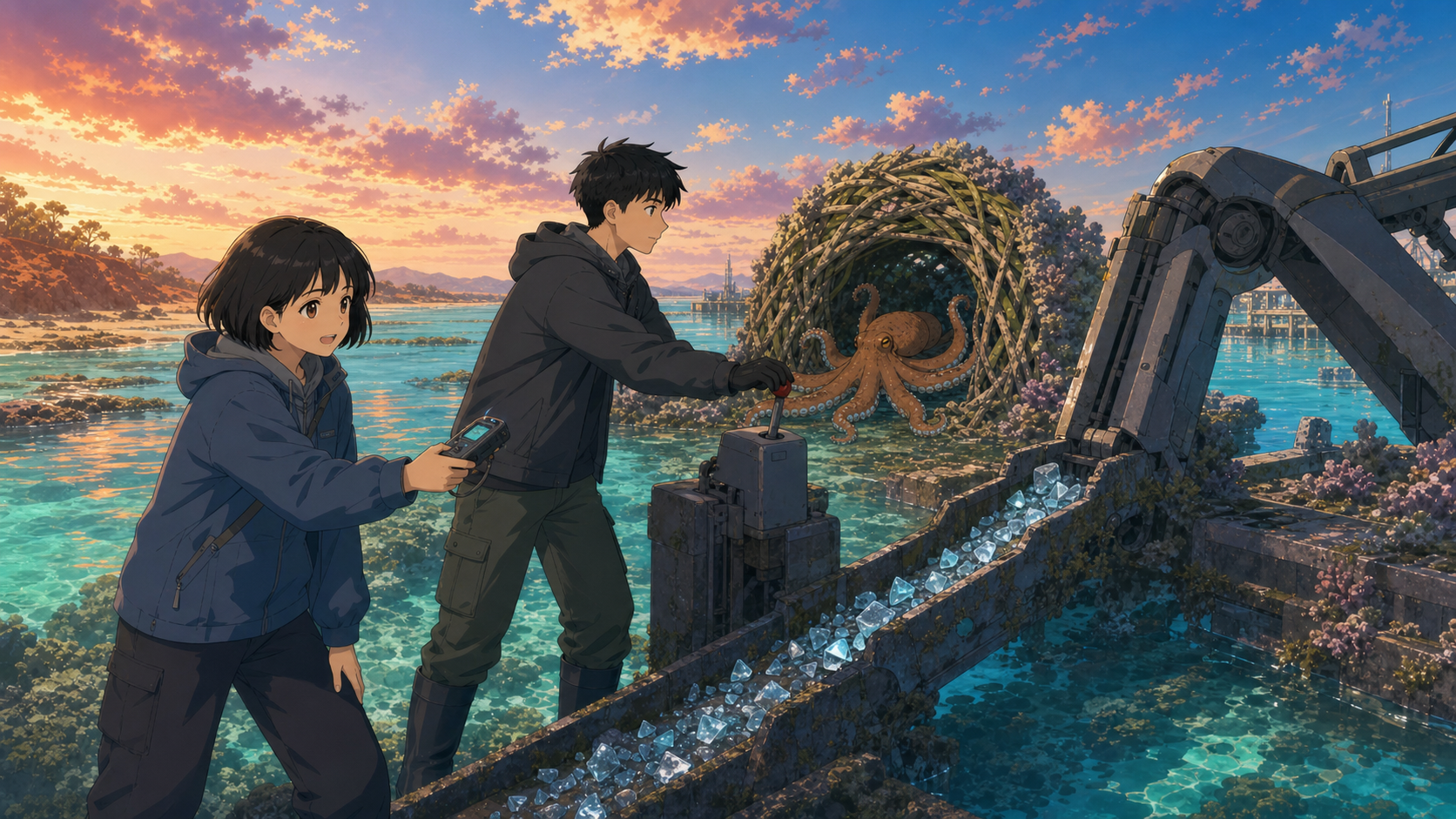
The line of sealed pores led to the stalled harvesting arm. Loose crystal was dropping along its maintenance groove into the migration corridor. We shut down the human equipment and cleared the artificial obstruction without chasing the octopus. The animal kept control of its own den and the reef began reconnecting with the Tide Vein.
Habitat Causality
Crystal coral forms a hard living breakwater, while flexible reef pores and deep channels keep water moving for larvae, fish, and large migrants. The Gate-Pore Reef-Weaver Octopus braids empty shells, naturally fallen coral branches, and seagrass fibers into knots that flex with tidal pressure. Excessive automated harvesting of living reef released loose crystal into the migration corridor, and a mechanical alloy fragment jammed a harbor-side knot. The octopus sealed the exposed entrance while maintaining flow through safer openings. The direction of the closure traced the debris back to the stalled harvesting arm.
Species Behavior
The octopus has eight natural arms, a span of about two meters, pale cyan suckers, and warm umber matte skin. It loosens, tightens, and rebuilds flexible knots as tidal pressure changes. A single den keeper tends the woven nest. When a mechanical alloy fragment blocks a pore, it closes the exposed entrance but preserves water exchange elsewhere. It remains alert and does not attack.
「The closed entrance was not a refusal. It was a direction. We removed the machine's debris and left the choice of openings to the octopus.」