The Reef Closed Toward One Sound
The sound of the water at the well thinned before the wrong pulse arrived. The crabs kept building. Fang mapped the openings from the outer ring. I marked the distance to the nursery core. She treats a living response as a coordinate. I keep the city quiet enough to read it. The reef had already recorded where the signal came from.
Field Observation
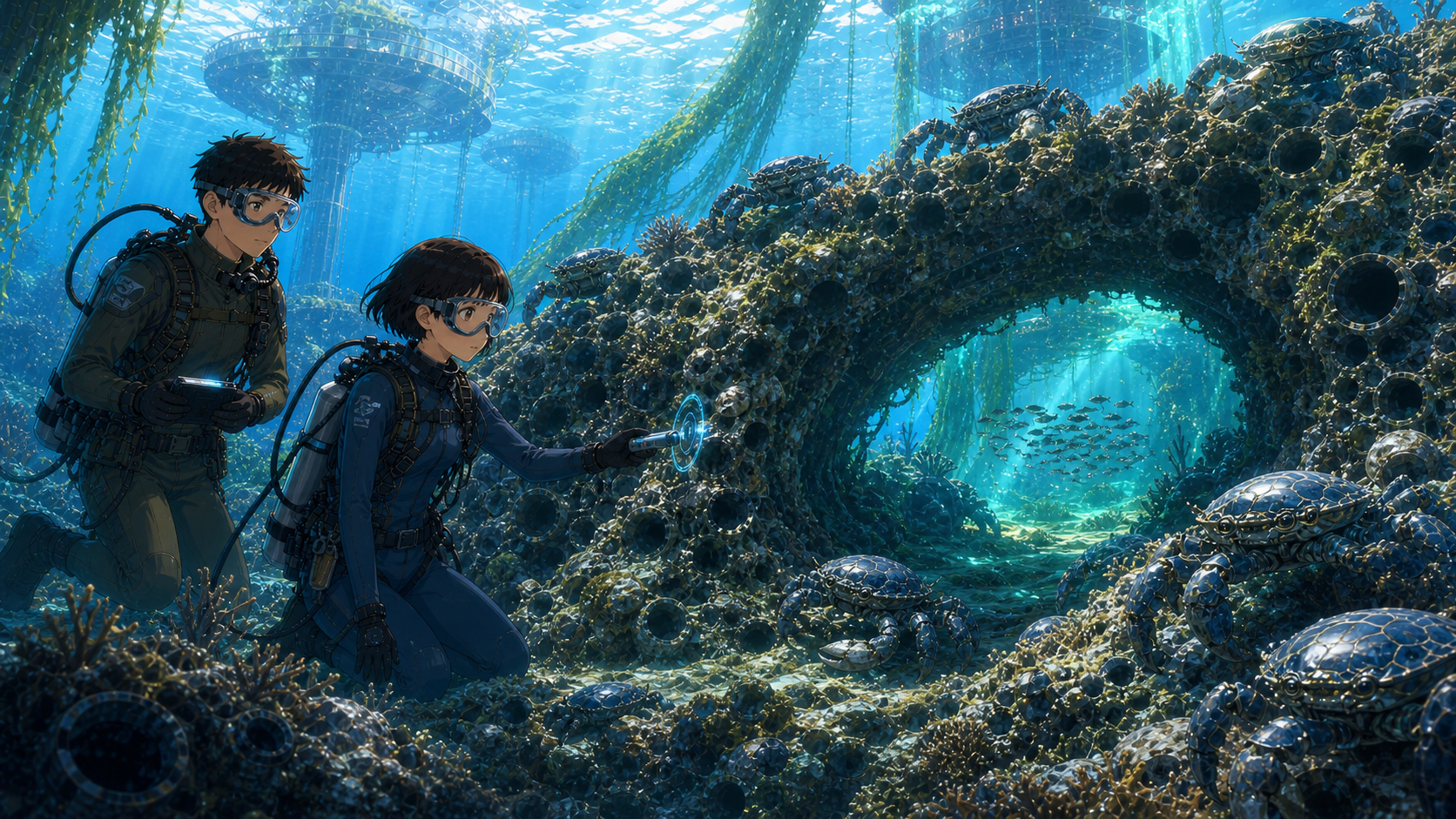
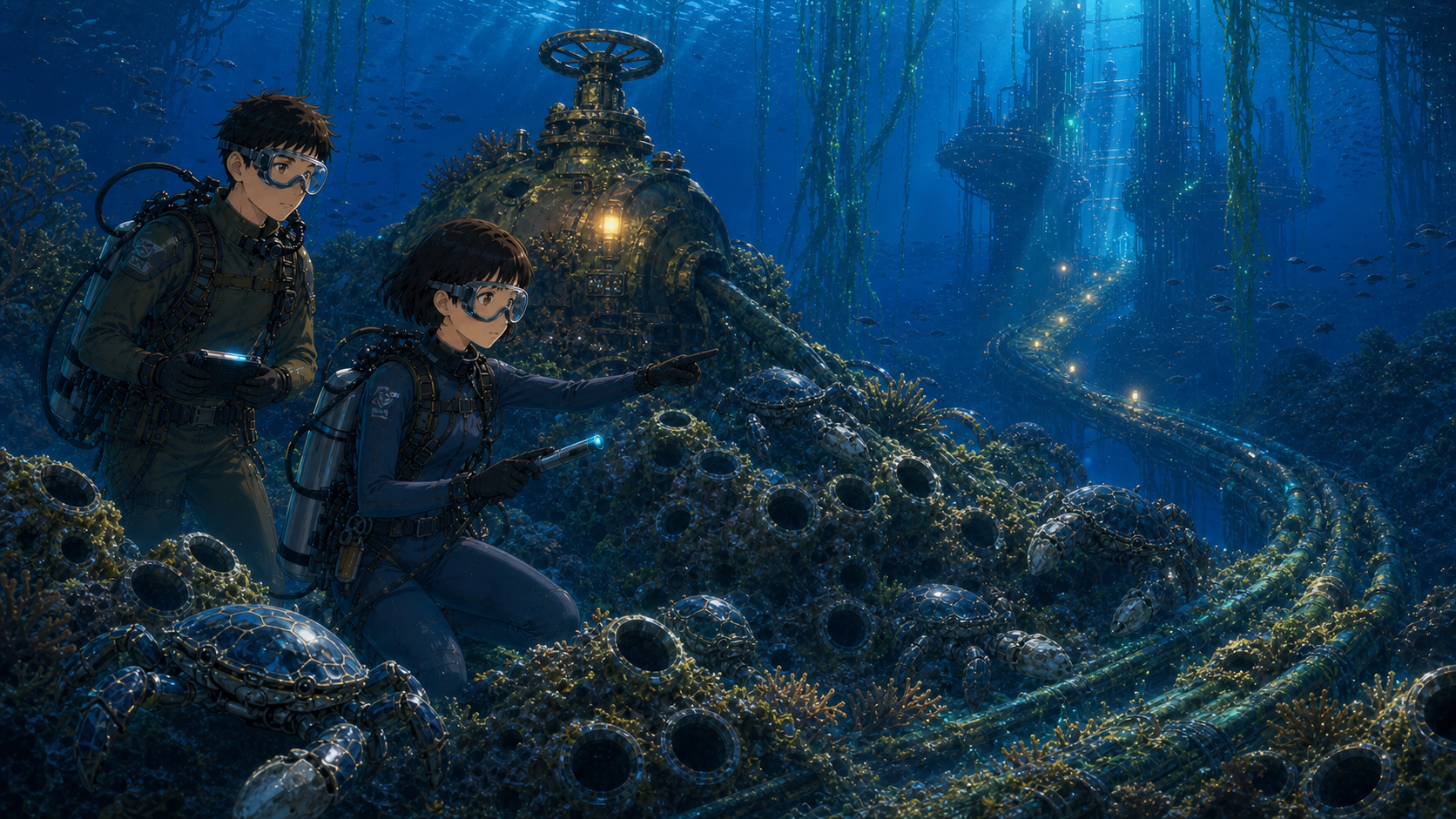
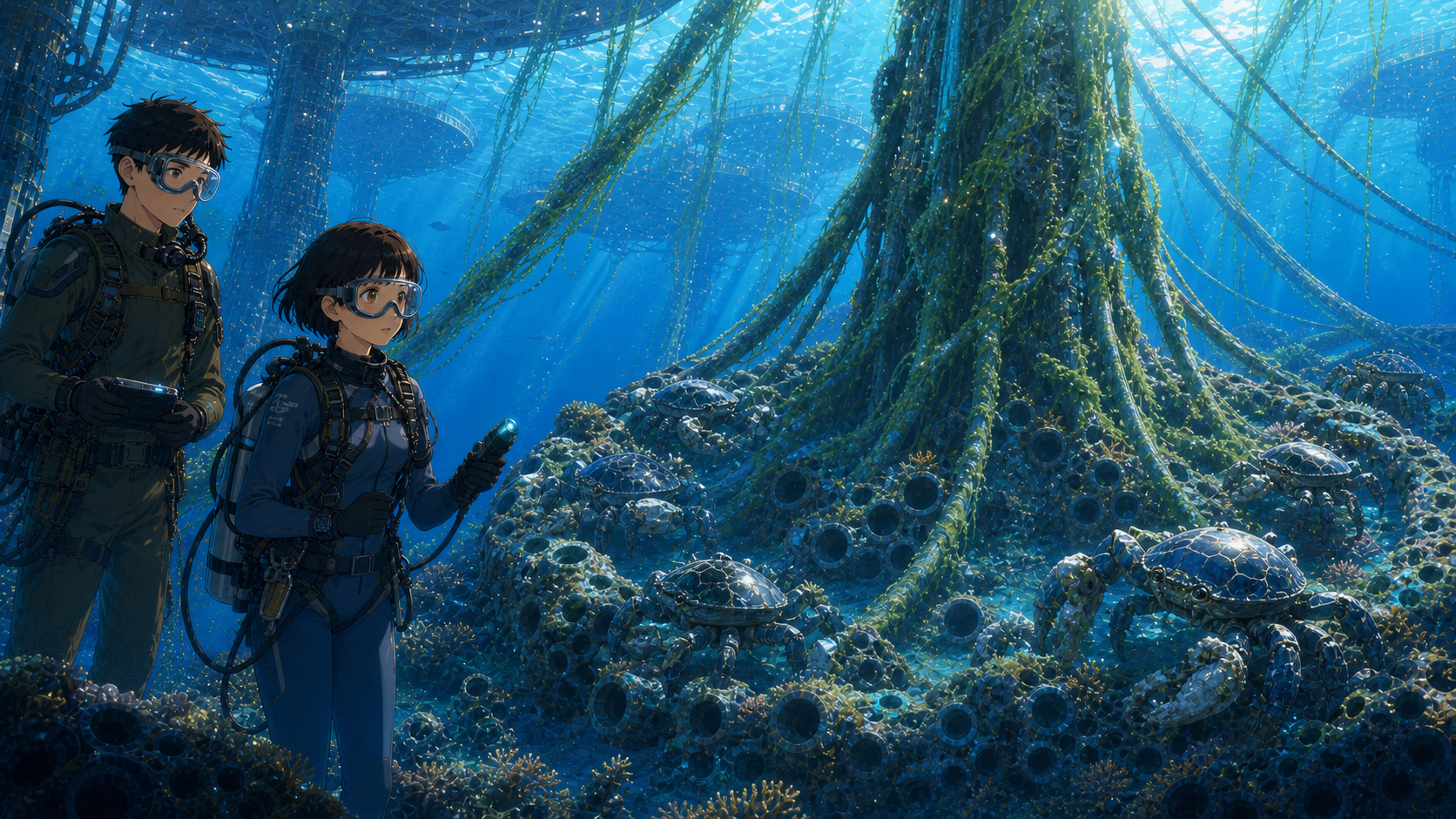
We left Tidal-Window Flow Gate and descended along the maintenance marks on a deep anchor cable to the outer ring of Ninth Deep-Anchor Well. Keeping clear of the nursery core, we followed the same reef ring into the dense openings of Anchor-Pore Reef Arch. We then followed the direction of the newest seals and an abandoned cable down to Spent-Cable Pressure Valve above the drowned city.
Morning · Ninth Deep-Anchor Well
The crabs pressed mineralized algae and empty shell around the anchor cable. We stayed on the outer ring. Fang recorded the direction of each pore while I listened passively and kept us beyond the shared nursery core. The newest openings did not match the natural current.
Noon · Anchor-Pore Reef Arch
Fang scanned the sealed passages without touching the reef. I marked the openings that still carried slow water for juvenile fish. We did not take the shortest path through the arch. A route that protects the nursery is not an obstruction. It is part of the habitat.
Evening · Spent-Cable Pressure Valve
Every new seal faced the same reflected pulse. We followed the abandoned cable down and stopped above Drowned-City Sonar Lane. The crabs had given the feedback a direction. We only had to keep enough distance to read it.
Habitat Causality
Deep anchor cables shed fibers that collect mineralized algae and empty shell. Reefbuilder crabs compact those materials into porous rings, and the resulting slow-water cavities shelter cleaner shrimp, juvenile algae bream, and microorganisms beneath the moving city. Repeated sonar from the drowned city causes the crabs to seal exposed pores in one direction, turning their protective construction into a map of the artificial feedback source.
Species Behavior
Anchor-Pore Reefbuilder Crabs brace with six walking legs and use blunt claws to press shell, mineralized algae, and cable fiber into reef. They preserve slow-water passages for smaller animals and close openings facing the strongest repeated sound. The crabs are wary but not aggressive, and they continue building when Fang and K remain outside the nursery core.
「Tracking did not mean catching the crabs. They left the direction in the reef. We left them the distance. Tomorrow, that line enters the drowned city.」