The Line Against the Water
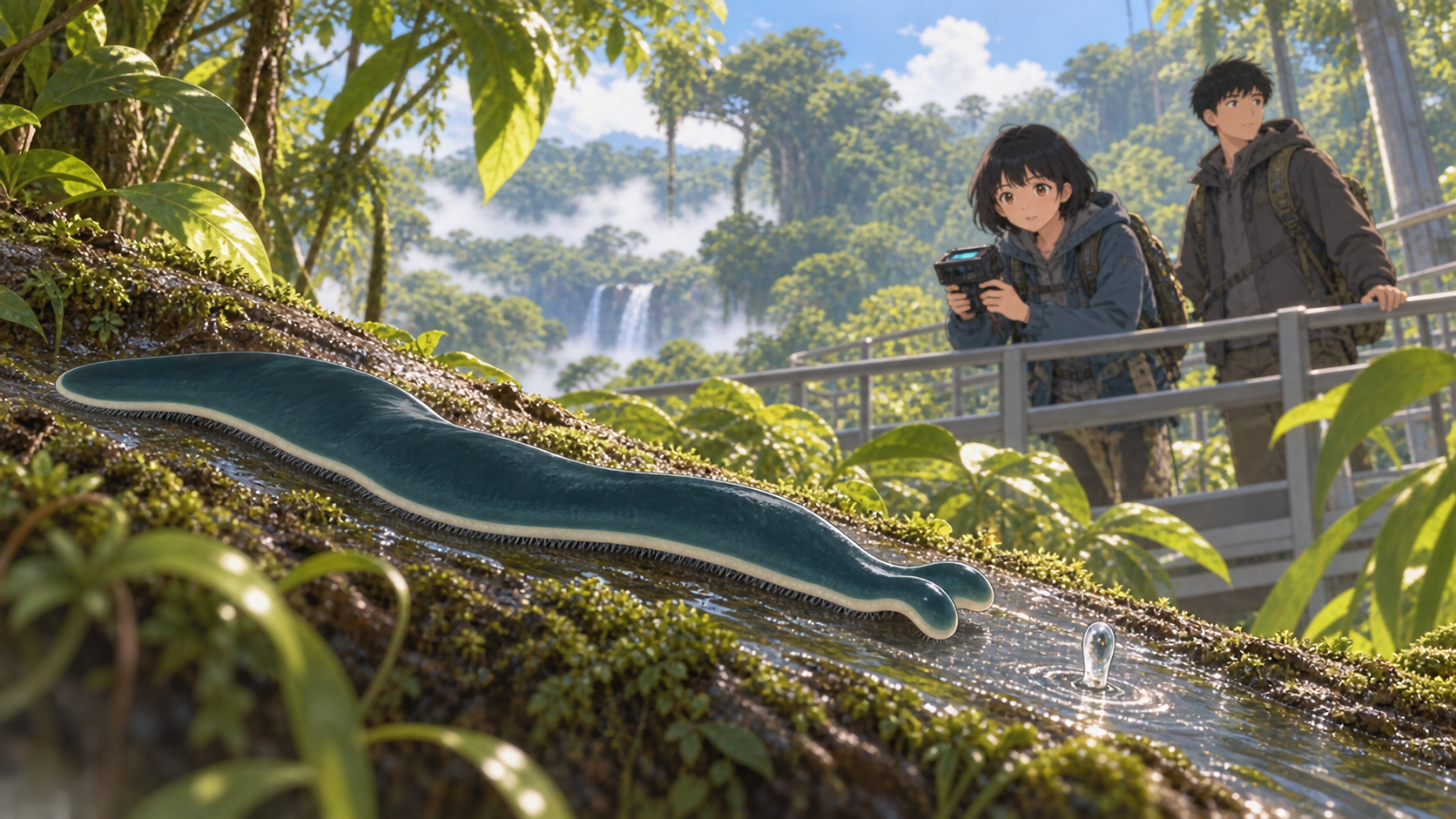
At Rain-Vein Branch Channel I stopped active tracking. A Rain-Vein Ribbon Flatworm turned against the film on a wet branch while mist droplets drifted upward. The two movements pointed in different directions. The first watercourse changed by pumping was under our feet, not in the warning light above us.

Field Observation
Morning at Rain-Vein Branch Channel: compare the animals' turn with rising mist and a drying water film. Noon at Rising-Mist Drop Vent: map three sealed side channels and confirm the pressure difference from human pumping. Evening at the First Overflow Leaf Gate: open the gate slightly from afar and watch water and flatworms choose their own paths.
Morning · Rain-Vein Branch Channel
Fang recorded the water level, wind, and the flatworm's turn from a safe distance. I stayed on the bridge side where we could retreat and checked the actual rhythm of the Cloudport pumps. The warning board classified every rising droplet as inverted-rain trouble. The flatworm kept to the bark and went the other way. Fang asked me to mark where it turned, then compare that point with the waterline in the leaf channel. These quiet marks told us more than the alarm. A natural wind window would not dry the whole wet branch at once. We did not follow the animal into its channel.
Noon · Rising-Mist Drop Vent
Fang took a non-invasive reading of the bacterial film and water level. I marked the boundary of the reverse flow caused by pumping from outside the branch channel. Along the safe bridge, I put three sealed side channels on an offline map, one by one. I did not lift the bark. Fang found fresh film and the trace of water drawn away; the flatworm's ventral cilia were still working in the same direction. Taken together, those signs traced the reverse flow to a pressure difference we had created in the upper reservoir, not a strange habit of the animals. We could correct our pumps and gates. We had no reason to handle the flatworms.
Evening · First Overflow Leaf Gate
We opened the leaf gate only a little by remote control and waited for the water to find its exit. The wet branch darkened first. Then the flatworms' tight turning line slowly loosened as a thin film ran downhill along the natural recharge course. Fang did not say we had repaired the whole forest. She wrote down a change we could observe again. I kept the gate's maximum opening low; the next inverted rain must not scour the branch channel that had just begun to recover. We noted the time, equipment state, and habitat signs for the next wind window. One scene was not proof of a restored ecosystem.
Habitat Causality
Seasonal inverted rain lifts mist for a short time, but branch shade, leaf channels, and intermittent overflow normally keep three canopy water levels connected. Continuous pumping for the seed bank and closed overflow gates broke that connection. The warning board mistook natural recharge for leakage. The flatworms' turn, the dry waterline, the bacterial film, and three sealed side channels exposed the pressure difference. A small remote opening let the water film descend again; the gate remains limited until the next wind window confirms the change.
Species Behavior
The flatworm glides on wet bark with a broad unsegmented body, two low flow-sensing head lobes, and fine ventral cilia that gather bacterial film and detritus. While droplets rose, several flatworms turned against the branch film. Their cilia kept working beside the withdrawn waterline. As downhill flow returned, the turning line relaxed and the animals dispersed along the recharge course.
「We adjusted the pump and gate, not the animals. Fang kept the measurements. I left the branch its next wind window.」