We Left the Shortest Route to the Eel
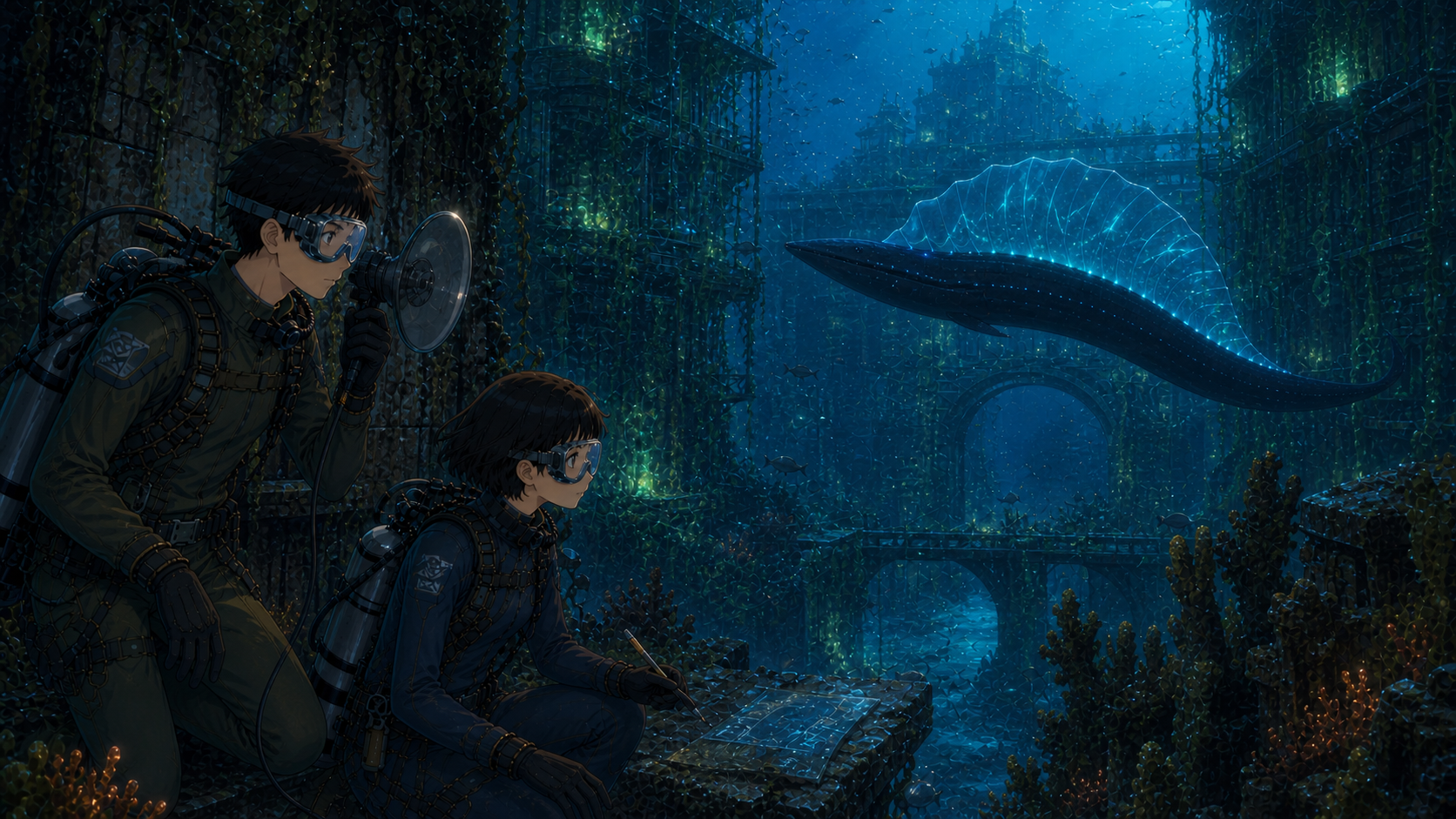
The soundscape in Drowned-City Sonar Lane thinned before the wrong pulse arrived. A six-meter eel held at the intersection returning the strongest echo. Fang killed the active sonar. I marked our ascent route and moved us into the building shadow. She treats a living response as a coordinate. I keep the city quiet enough to read it. The animal was not the obstruction. The noise was.
Field Observation
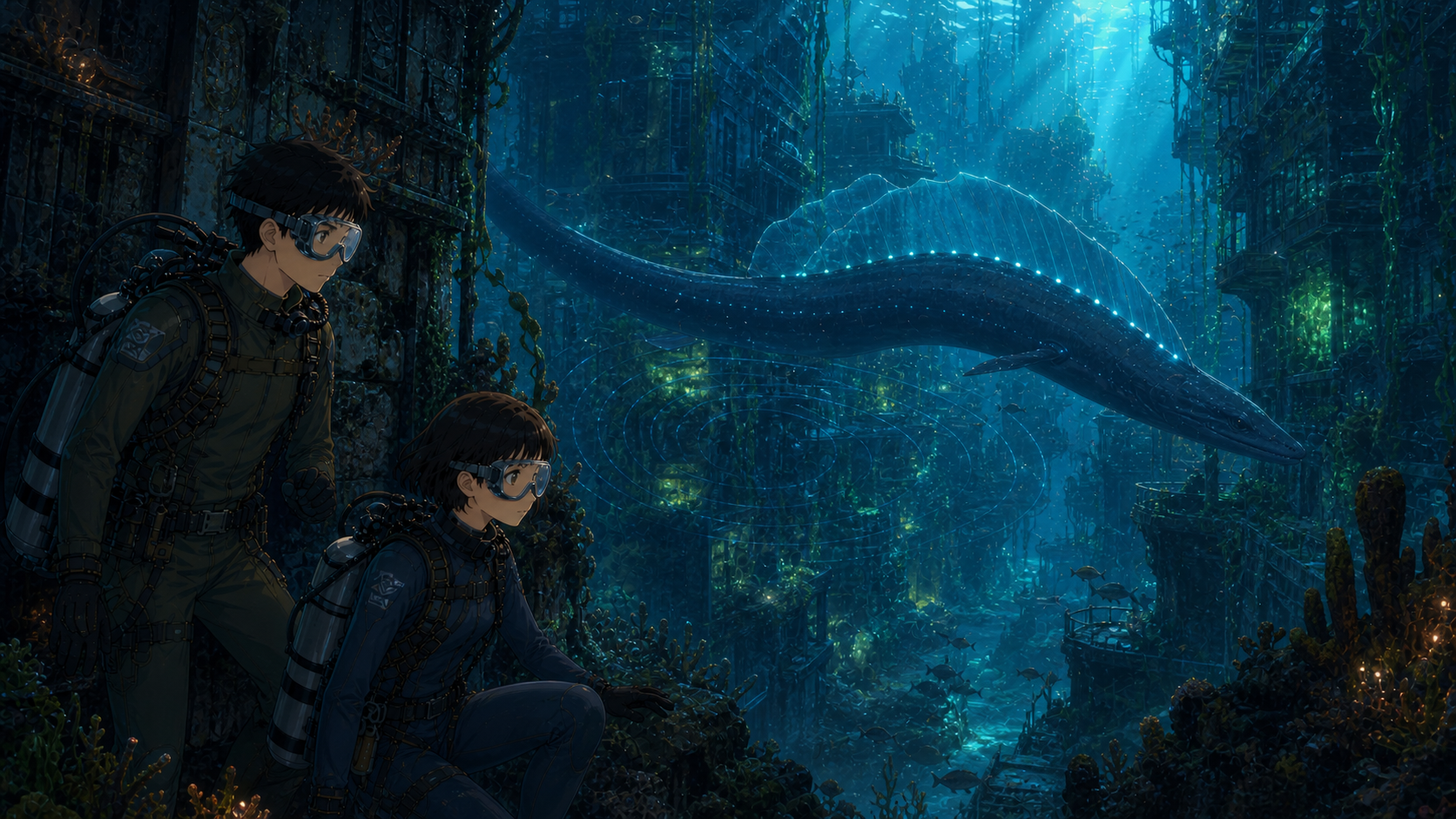
From Spent-Cable Pressure Valve, we entered the outer drowned city using passive navigation and kept an ascent route behind us. At Drowned-City Sonar Lane we withdrew into the building shadow instead of crossing the eel's retreat. We followed the side of the same flooded block to Sail-Eel Echo Gate, then took a low-noise current window along Silent Maintenance Sponson to the outer edge of Old Military Sonar Tower.
Morning · Drowned-City Sonar Lane
The eel held at the intersection returning the strongest echo. We turned off active sonar at once and backed into the building shadow. It kept its retreat. We kept ours. The eel did not pursue us, and we did not ask it to move.
Noon · Sail-Eel Echo Gate
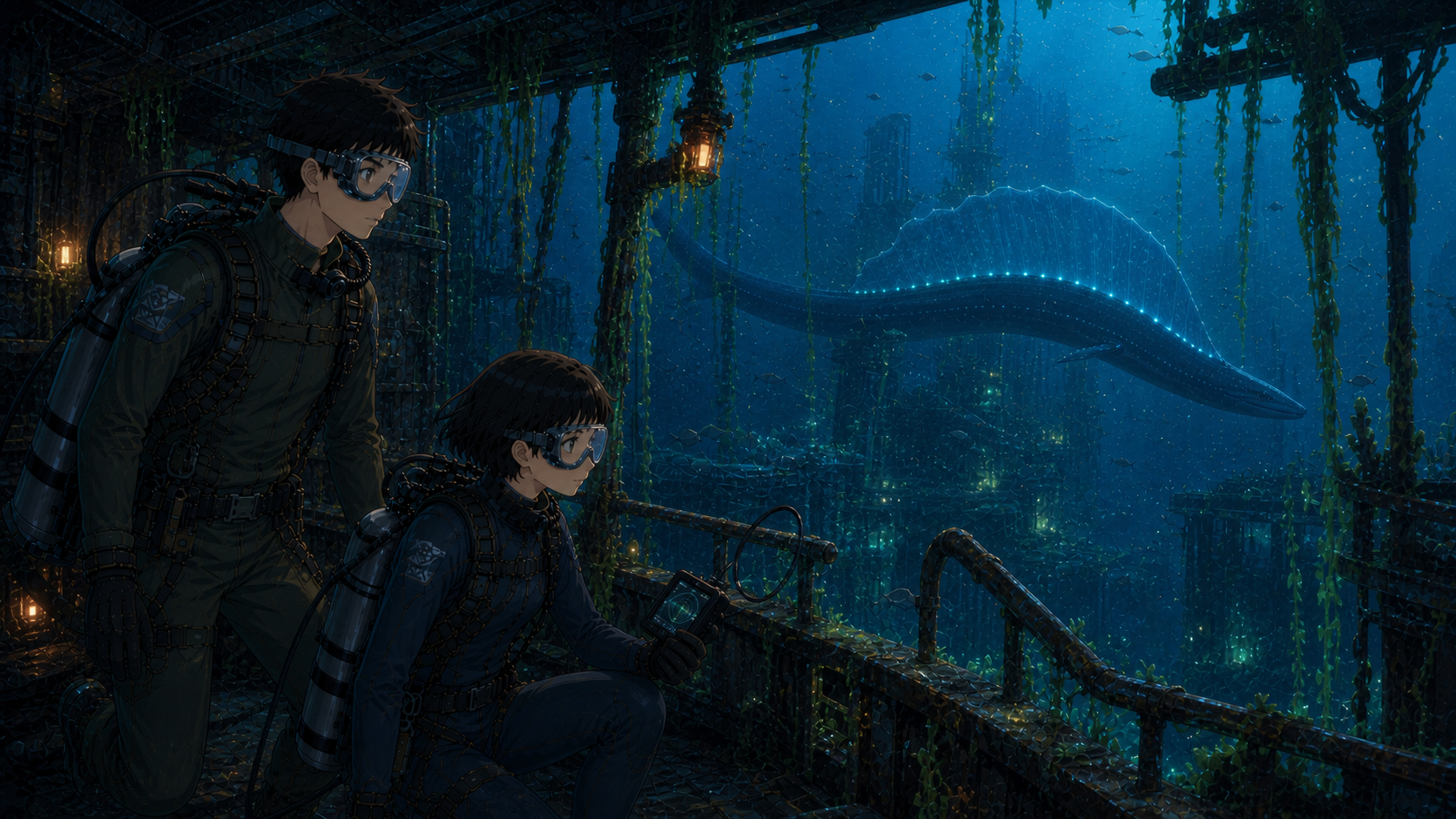
Fang used a passive hydrophone to separate the natural echo from the repeated pulse. The shortest route crossed the eel's guarded space. I struck it from the map. A direct line is useless when it turns a living boundary into a target.
Evening · Silent Maintenance Sponson
We followed an old maintenance sponson around the flooded block. A low-noise current window carried us to the outer edge of Old Military Sonar Tower. Behind us, the eel stayed in the acoustic shelter it had chosen. Ahead, the false pulse finally had a machine attached to it.
Habitat Causality
The algae canopy, city shadow, deep anchor cables, porous reef, and drowned streets form a moving acoustic habitat beneath the floating cities. Floating-city communications have reactivated the drowned military sonar array, and the resulting feedback folds the natural Kuroshio soundscape into overlapping False Kuroshio routes. The eel's sail channels low-frequency echoes toward its lateral line; when that field overloads, the animal stops at the strongest reflection to protect its retreat. Its defensive position therefore reveals the boundary of the artificial sound field while blocking the human shortcut through it.
Species Behavior
Echo-Sail Eels are solitary six-meter predators that eat injured fish and deep-trench cephalopods. They usually avoid the floating cities. Under intense sonar they hold at strong reflections rather than enter the exposed field. This individual was high-risk but did not attack or chase. Once Fang and K silenced active sonar, withdrew, and left its guarded route open, it remained in place.
「Tracking did not mean moving the eel. We left it the shortest route. The detour led us to the machine that had made the route dangerous.」