The Line Where the Gobies Stopped
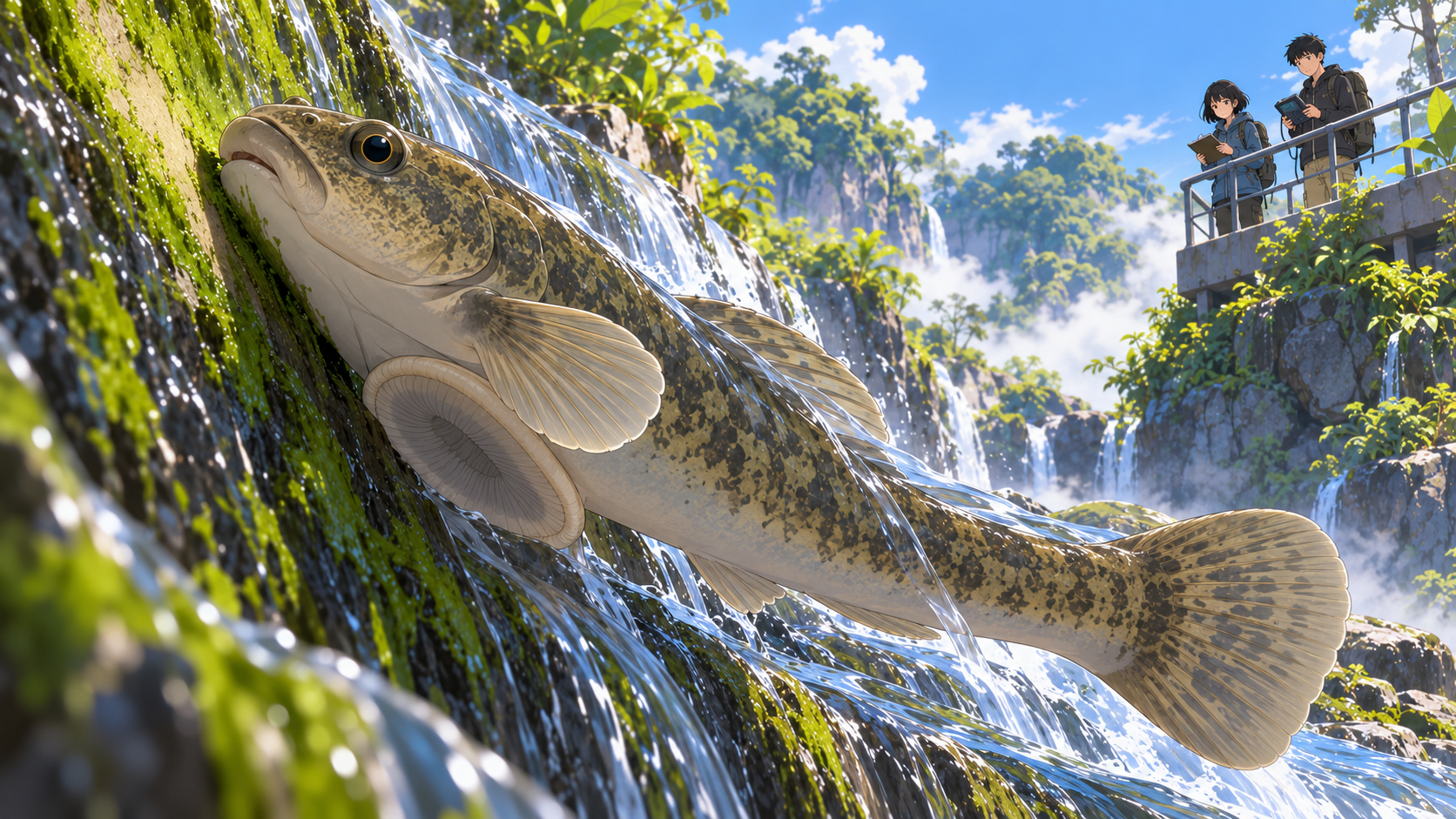
Fang and I looked down from the dry outer terrace. Several algae scrapes stopped at the same height, and a single goby held to wet rock below them. That shared line was a waterline, not a boundary set by the fish.
Field Observation
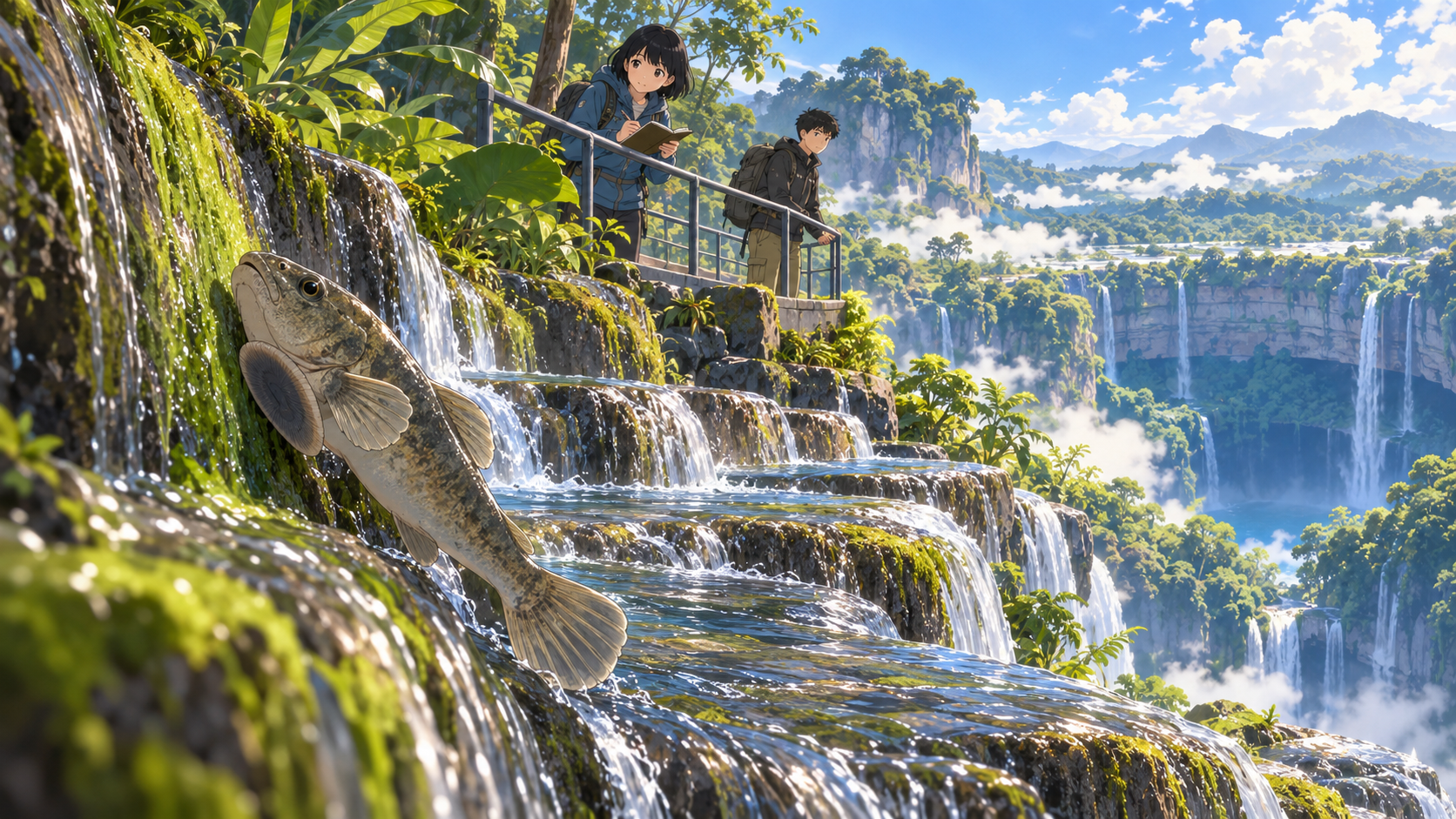
The dry outer terrace overlooks the shallow channel; a long lens resolves one fish on the algae-coated wall; the slow-flow steps reveal separate channels after the buoy changes.
Morning · Reverse-Fall Shallow Channel
We kept to the dry terrace above the channel. The thin algae scrapes ended together at one height. A blunt-headed goby pressed the broad disc beneath its belly to wet rock; short pectoral fins braced against the film of water, but it did not climb past the mark. Fang recorded the level along the rail while I kept the retreat path in sight. Our continuous buoy pulses were still rebounding through the falls. We marked the stalled line and left the fish undisturbed.
Noon · Algae-Film Rock Wall
Through the long lens I could see that the broad, soft disc was made from fused pelvic fins. A momentary change in pressure loosened its rim; it settled back against the rock before the goby resumed scraping the thin algae film with its blunt mouth. Fang checked the pressure difference from the distant dry platform. I wrote down each height where the disc released. The scrape line showed a changing water route, not a refusal by the fish to advance.
Evening · Slow-Flow Fall Terrace
I changed the outer buoy to intermittent ranging, leaving quiet intervals between pulses. Across the fall, gobies occupied several separate shallow channels, far apart. Each held to wet rock, edged slowly upward, and grazed the returning algae film; they did not gather as a school. Fang lowered the long lens while I kept the remote low-frequency reading. The waterline divided again into stable narrow flows. We moved no fish. We changed our own timing.
Habitat Causality
Buoy pulses and waterfall backflow disturb thin shallow channels. A transient pressure change briefly loosens a goby’s pelvic disc; the height of repeated release and the end of an algae scrape trail mark the disturbed line. Intermittent ranging leaves intervals in which shallow flows and separate feeding routes can be read again.
Species Behavior
This freshwater goby uses a single broad disc formed from fused pelvic fins, short pectoral fins, and a blunt grazing mouth. It attaches, releases, reattaches, and scrapes algae on wet rock; individuals use different channels.
「The fish did not need moving. Our measurements needed space between them.」