Mist-Step Echo Rim is a five-day field route where Fang and K document a local ecology through observation, distance, and response.
Day 01 / 10.15
The Drops Before the Alarm
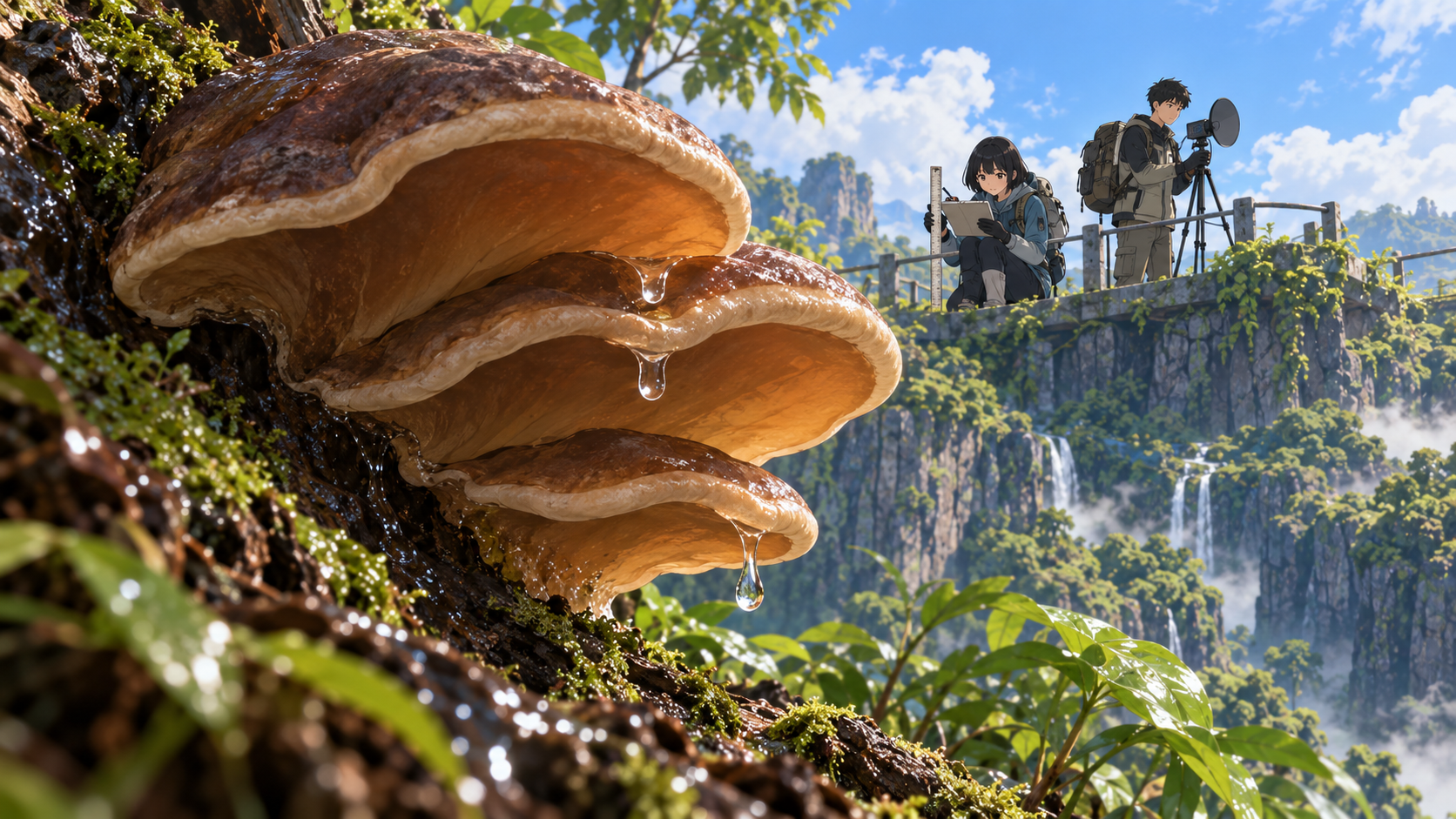
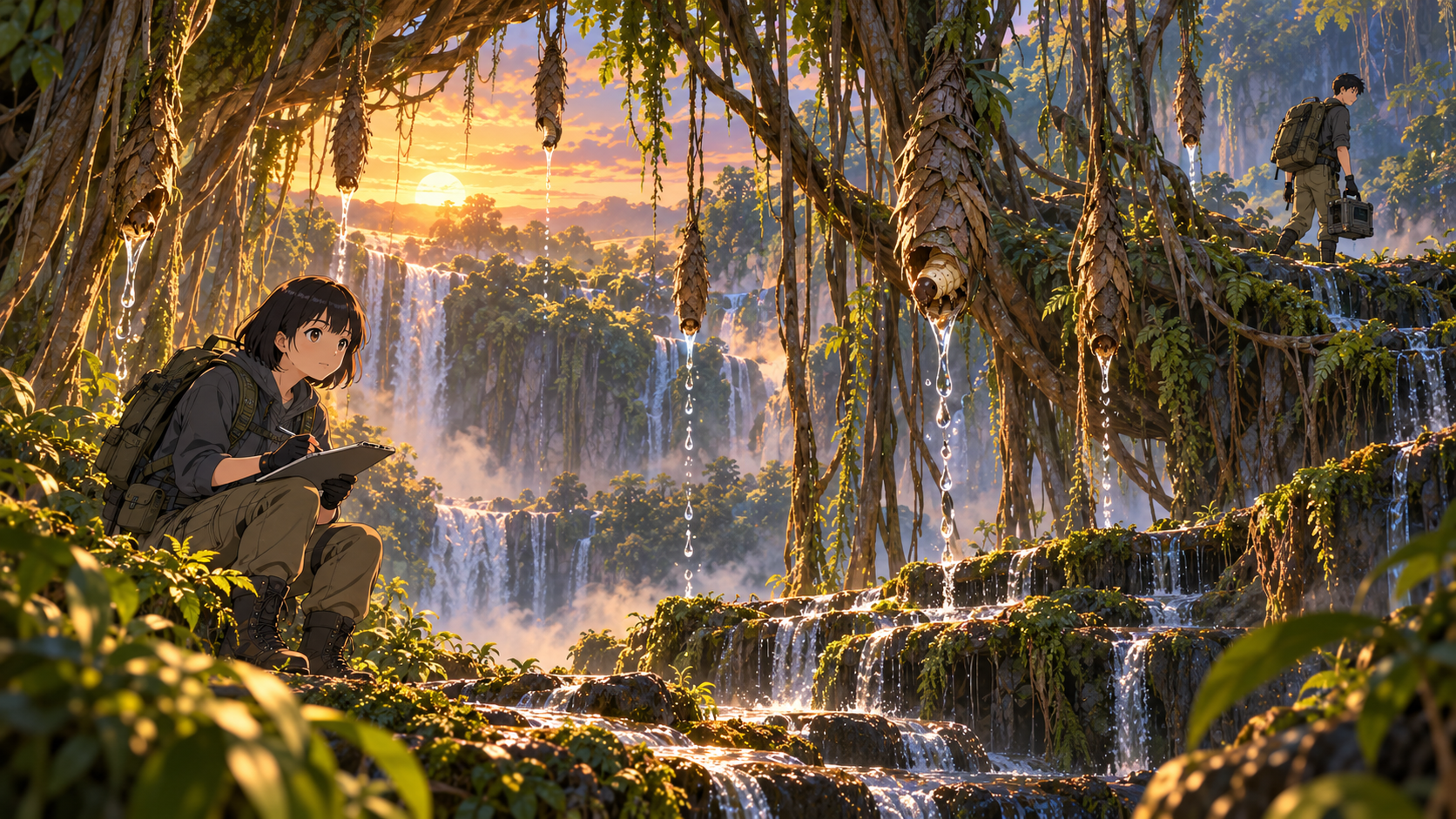
Drip-Bell Stone-Ear FungusLow Risk
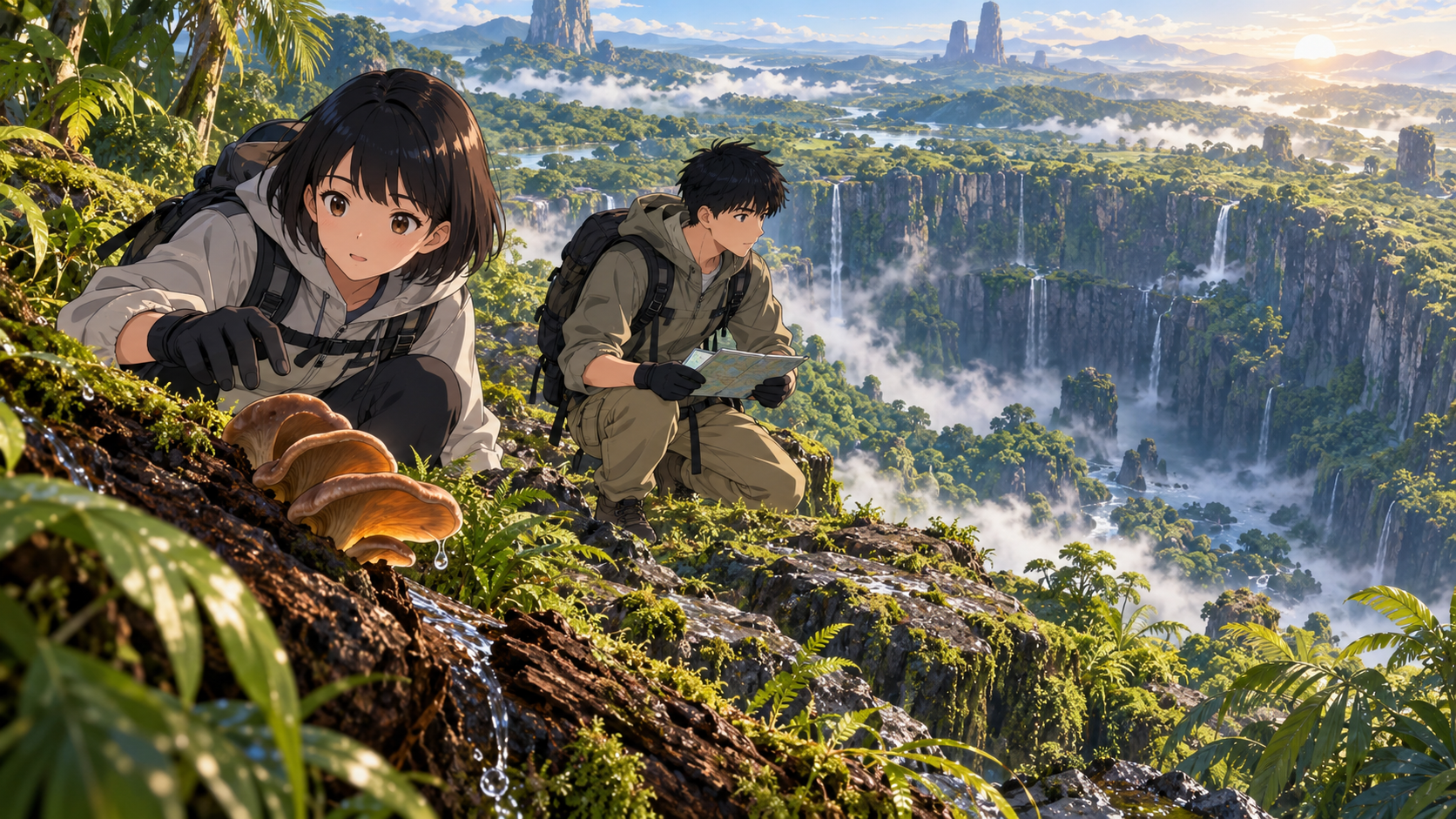
Morning light made the water marks on the mossy basalt easy to see, but the old buoy alarm still came half a beat late. I first blamed a wet sensor. Fang pointed to a small ear-shaped fungus on the decaying wood.
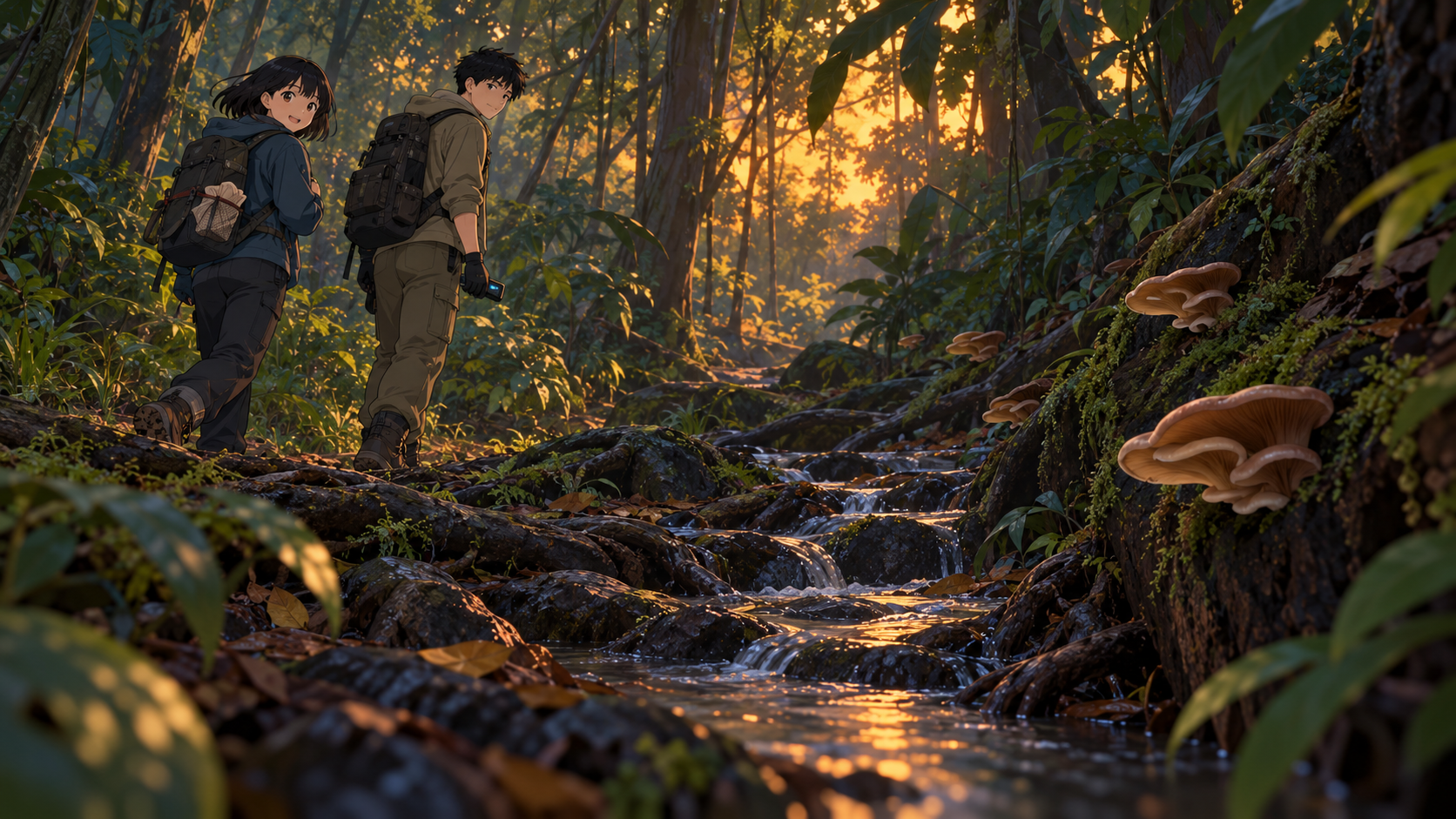
MORNINGMorning light made the old and new water marks on the mossy terrace easy to read. The old buoy alarm came half a beat late. I thought its sensor was damp. Fang pointed instead to a Drip-Bell Stone-Ear Fungus on decaying wood. The cap was about the width of a palm. Three cup folds lined its inner surface; mist gathered there and fell in sequence as pressure changed. It did not move toward us or make a sound. The rhythm came from drops striking the rock. Fang crouched beside the safe path to compare the water marks. I stayed farther out and marked the exit and the buoy. This first record showed a change in the rhythm of the outer mist terraces. It could tell us nothing yet about the lightless depth. When Fang looked up, I stopped myself from offering a hand across the slick stone and drew the dry route first.NOONIn the afternoon we moved to a drier point below the wood. The lens was nearly level with it. One fungus filled the frame. Each of its three pliant folds held water; the outer fold relaxed first, and the next released a drop after it. The buoy did not drive a mechanical clock. Rainforest mist and local water pressure already gave the fungus its own pace. Fang used a scale and recorder to mark the intervals. She neither touched the cap nor cut the mycelium. From higher ground I read the old buoy’s continuous pulses. Put side by side, the two sets of times made the alarm delay measurable. Fang said to let the equipment grow quieter first. I recorded the continuous setting. I did not name this small decomposer as the cause of our instrument’s mistake.EVENINGDusk lowered the canopy as we withdrew along a dry path above the root corridor. Separate ear-shaped caps held to different pieces of rotten wood; they were not one giant spectacle. Fine drops ran into fallen leaves, carrying water and broken-down organic matter slowly back toward the roots. Fang folded the cloth used only to compare drip marks and put it away. She took no fungal tissue. At the remote controller I changed the buoy to intermittent low-frequency ranging, then waited through one more echo. The alarm no longer spoke ahead of the water route. This was only the first piece of evidence from the outer rim. The deeper sinkhole and the caiman’s catch pool still lay beyond the exclusion line. Fang looked back at the small caps. I followed her out. Today we corrected the way we measured, not the way the forest lived.
「I changed our measurement, not the forest’s life. The catch-pool boundary stays where it is.」— K
Day 02 / 10.17
A Pause Before the Mist Shift
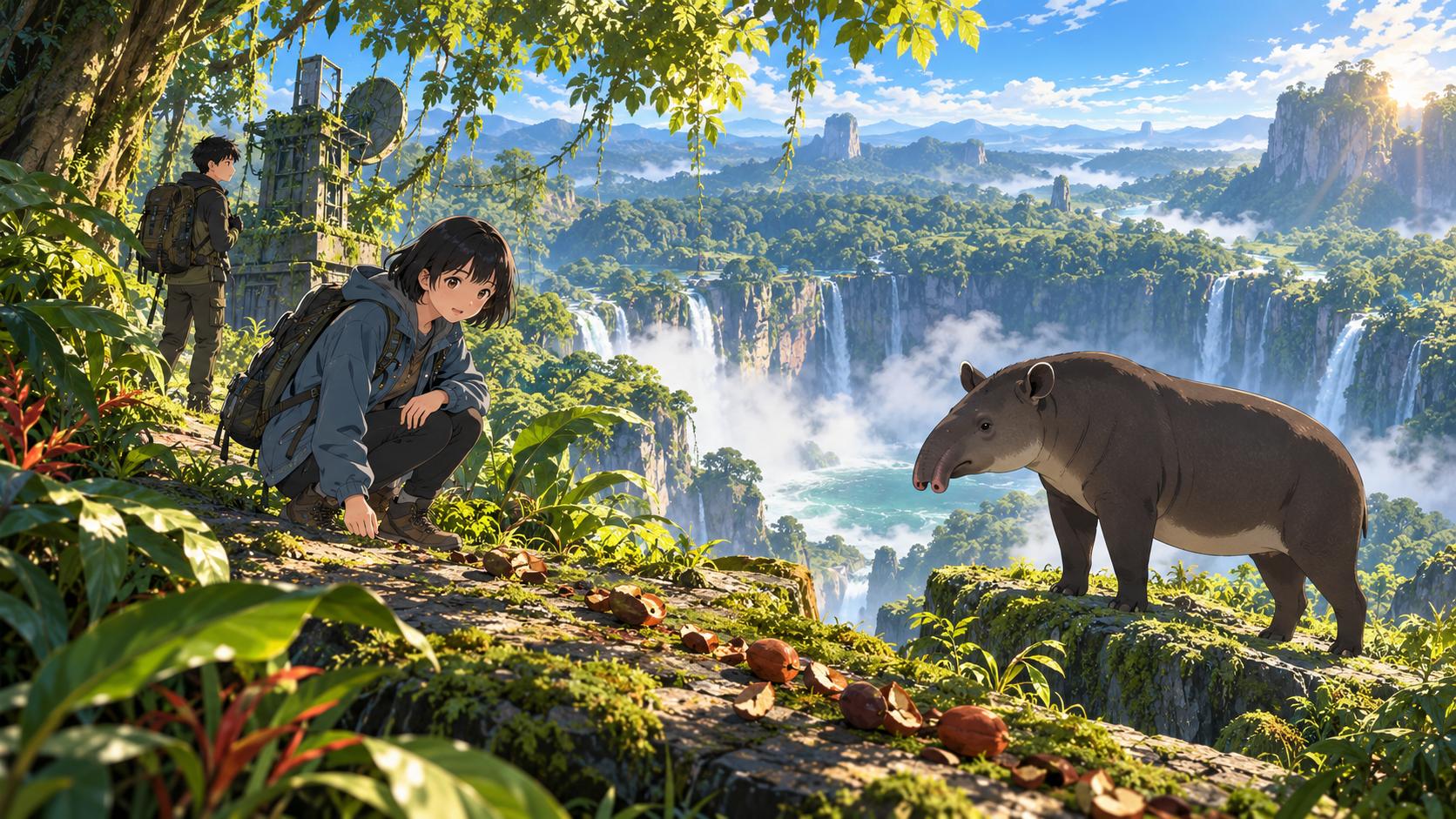
Mist-Lung TapirModerate
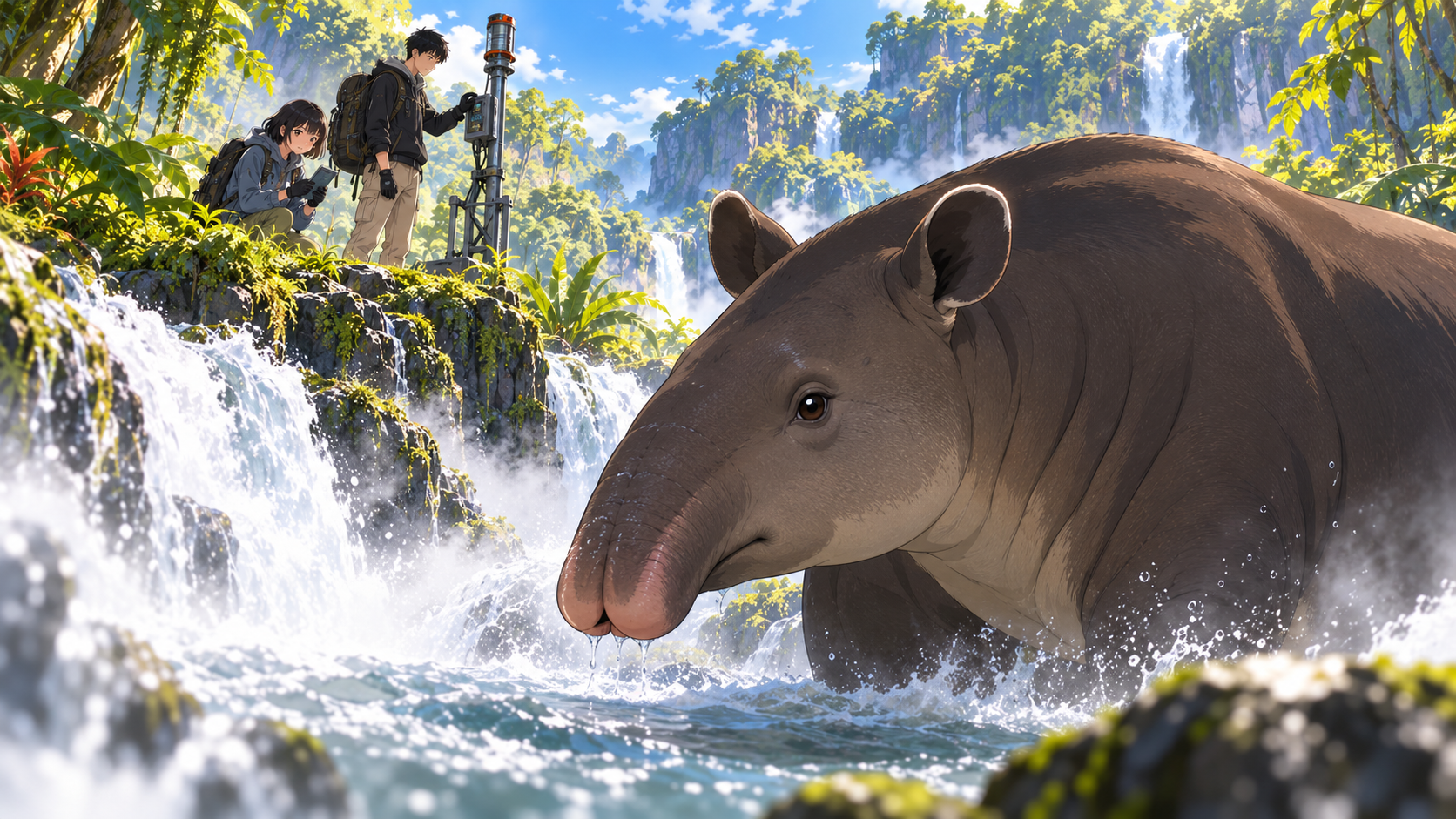
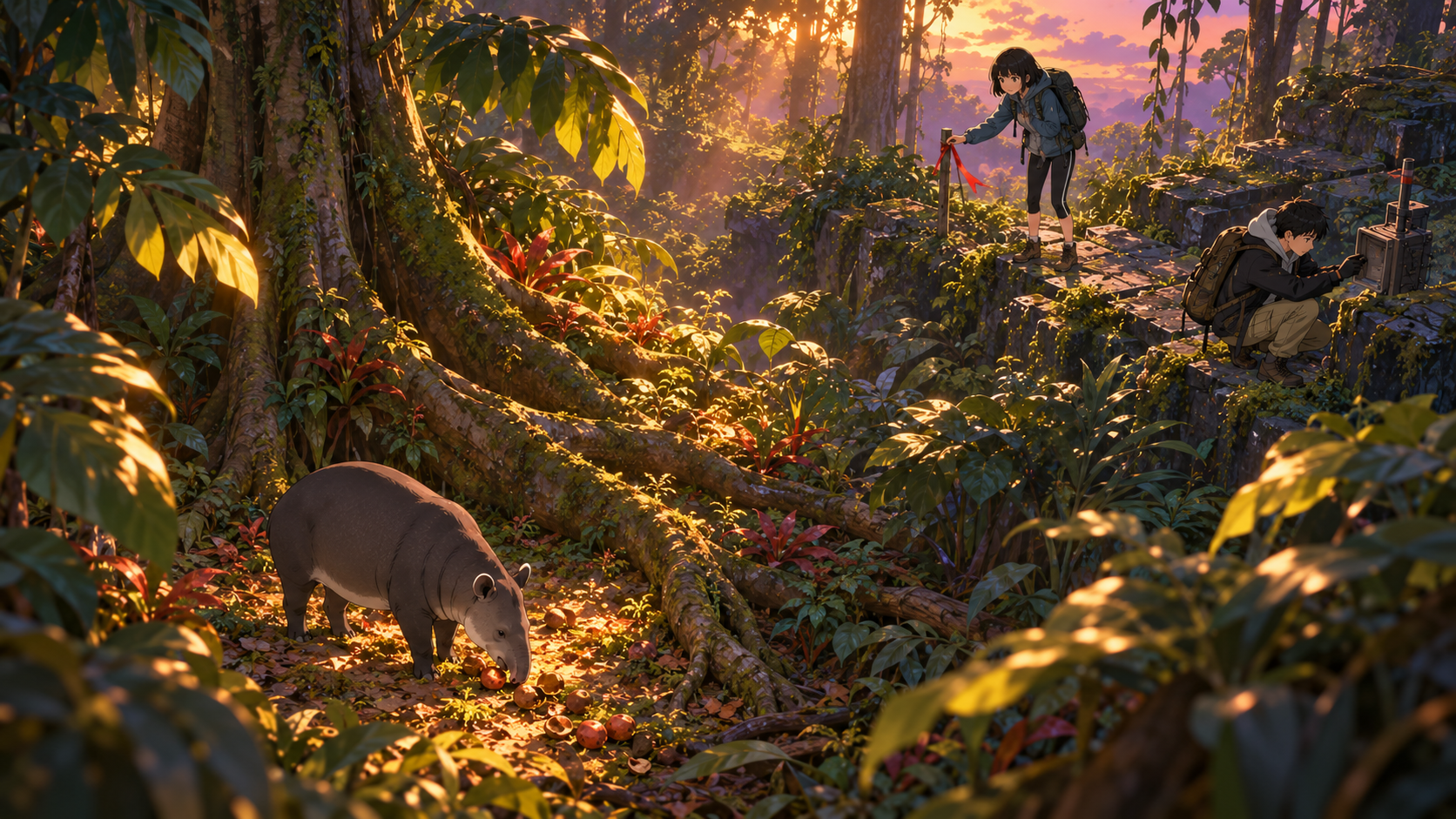
Fang and I recorded this from the safe line above the fallen-fruit slope. The seed trail broke off. One tapir closed the two valves at the end of its short snout before the mist pressure shifted, then stopped on the upper corridor. We waited where we were.
MORNINGThe line of fallen fruit and seeds ended suddenly on the slope. From the high deck, Fang traced where it stopped. I stayed at the base relay. A single tapir stood along the upper passage, its compact body clear against the mist. Before our pressure reading changed, the two fleshy lips at the end of its short snout met around their central notch. It paused instead of moving toward us. We marked the break in the seed line from the safe observation route; there was no reason to follow it.NOONAt a closer view of the animal, the paired snout valves opened again. Broad folds along its shoulders and ribs flattened and gathered with its breathing. They were part of the skin, not separate air sacs. Fang read the mist pressure from the upper platform. I paused the nearby positioning buoy’s continuous pulse for one interval. The old pulse could confuse our reading of the pressure point. Changing our equipment was the only intervention we needed; the tapir remained on its own route.EVENINGWhen the mist pressure eased, the solitary adult fed on fallen fruit along the upper slope. Seeds continued down the corridor toward the mossy terraces. Fang and I walked around its path and kept our distance. The quieted buoy gave us room to compare the observation with the water route. We did not trade a closer image for a disturbance. A sign on the outer rim cannot answer for the lightless depth below it.
「We changed the buoy and our pace, not the animal's path. I kept the deep core outside today's conclusions.」— K
Day 03 / 10.19
Where the Root Curtain Sends the Water
Curtain-Case BagwormLow Risk
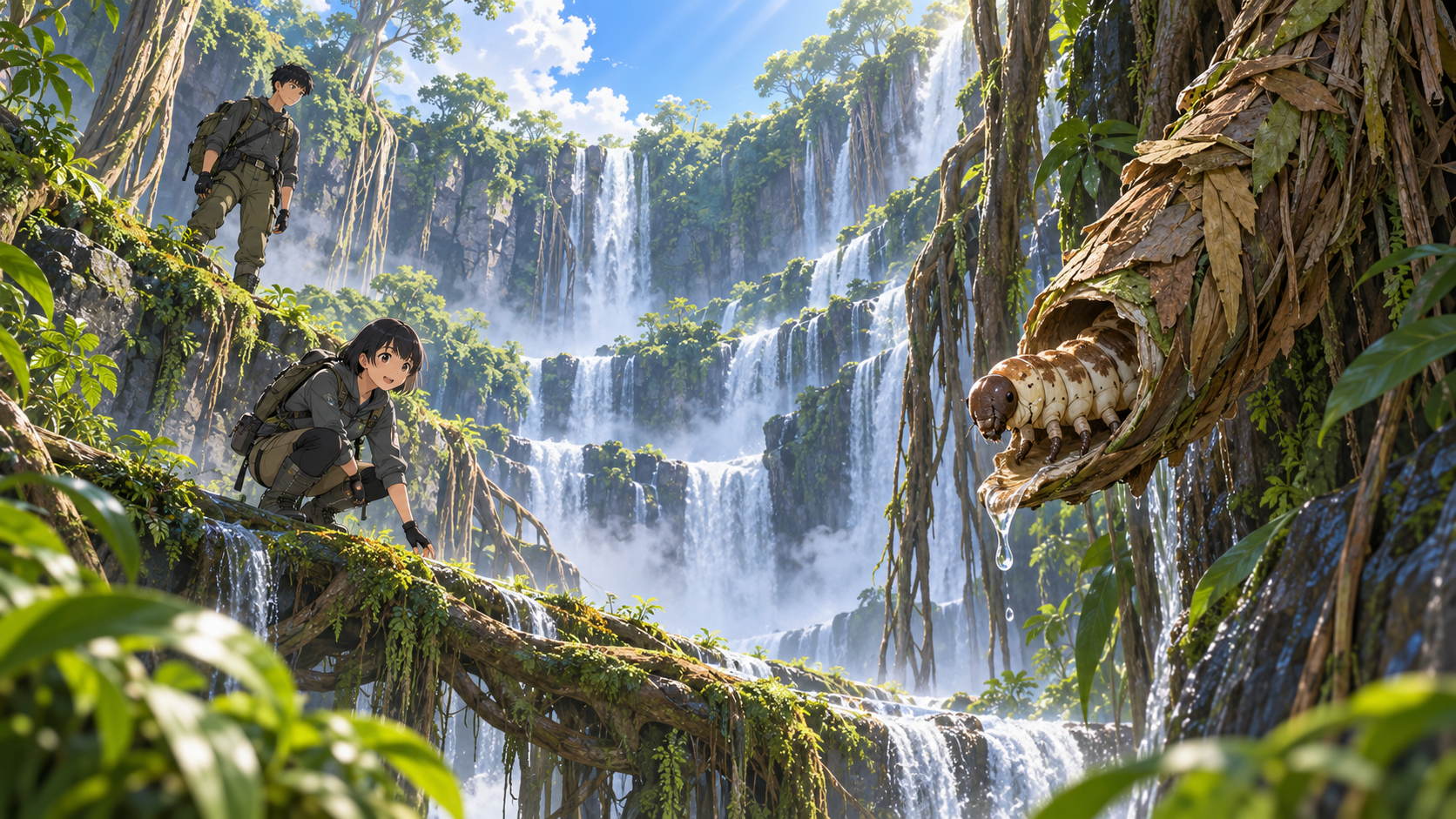
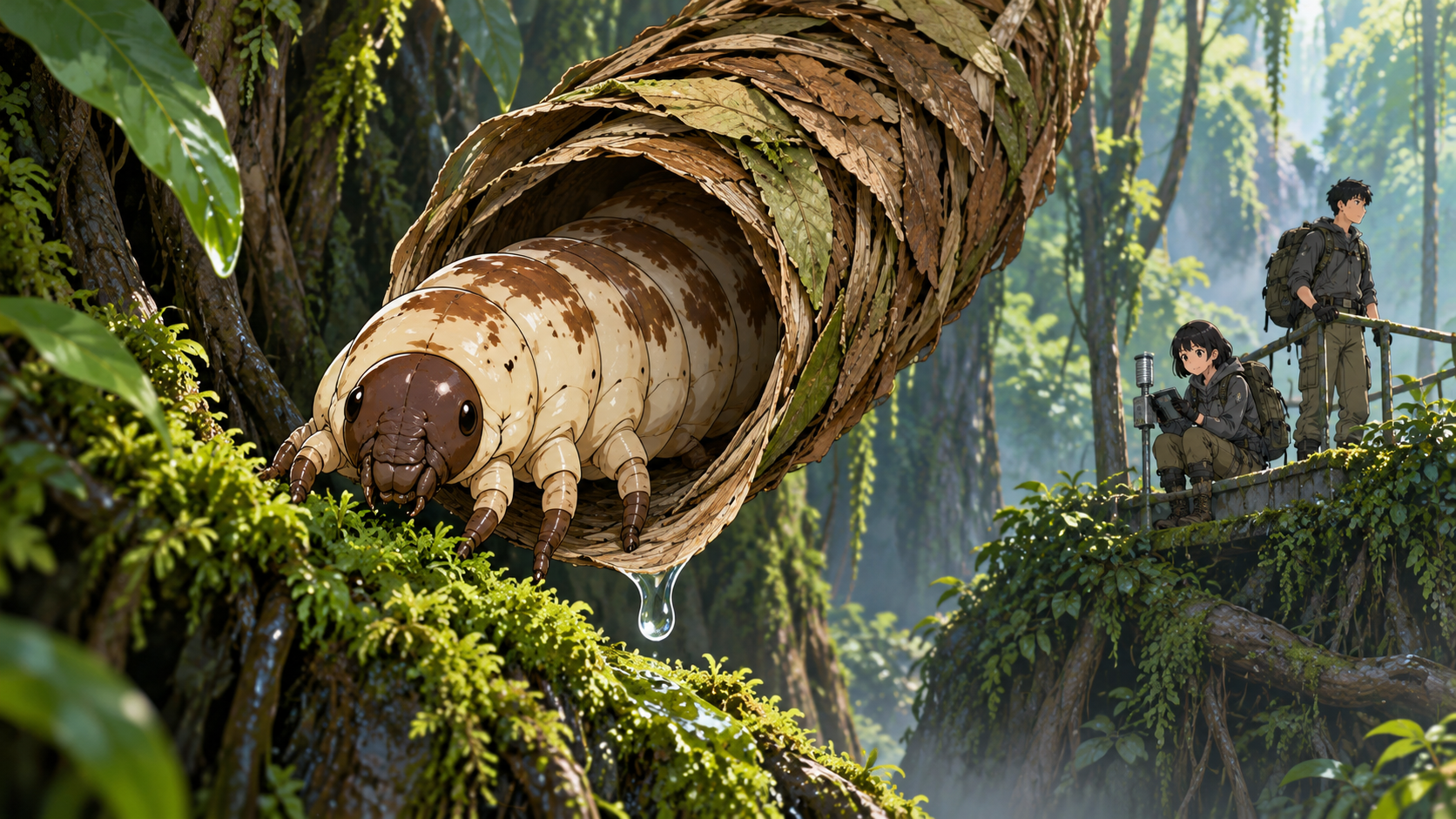
Fang and I looked down from the dry root bridge. Drops that should have followed the hanging roots were turning toward the side wall beside a narrow case. I kept the way back in sight.
MORNINGFang and I followed the dry root bridge to Hanging-Root Gate. Mist drops that should have fallen along the roots had veered toward a side wall beside one slender case. A wingless larva extended its head and thorax; six short legs gripped the fibers. The soft rim of the case still gave the water a downward route. Fang compared the drip lines above and below. I remained higher, watching our retreat. The buoy’s continuous pulse was interfering with this fine watercourse, but a changed line was all we could claim. We did not touch the nest.NOONI kept the lens on one case mouth and asked Fang to remain on the dry terrace. The larva reached out with six short thoracic legs to graze moss along the root curtain. The narrow case, woven of root and leaf fibers, held a flexible edge that caught mist and passed each drop to the ledge below. Fang compared the lower water mark with the pulse timing. When the pulse paused, the drip line briefly straightened. The larva was not repairing our buoy; it was simply living in the route that our equipment made harder to read.EVENINGEvening light reached the lower terrace. Several cases hung far apart, each guiding drops to a different mossy step. They were individual shelters, not a single colony. Fang drew the returning water line segment by segment. I withdrew the upper equipment to the dry terrace and set the outer buoy to intermittent ranging. As the drops sounded separately again, we stayed beyond the exclusion line. Today’s answer was small: our continuous signal should not cover the root corridor’s own rhythm.
「We gave the root corridor its quiet intervals back. We left every case where it belonged.」— K
Day 04 / 10.19
The Line Where the Gobies Stopped
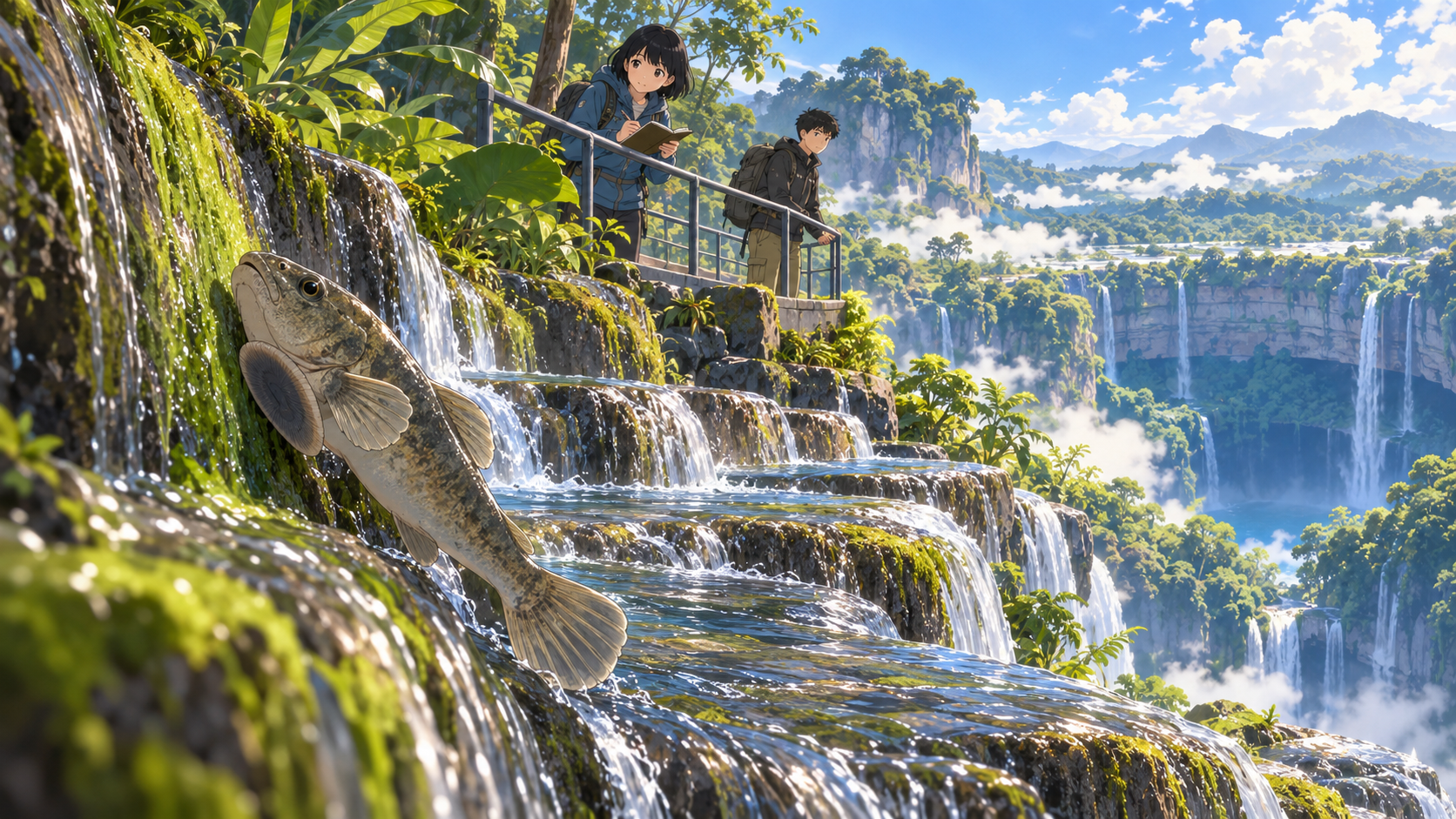
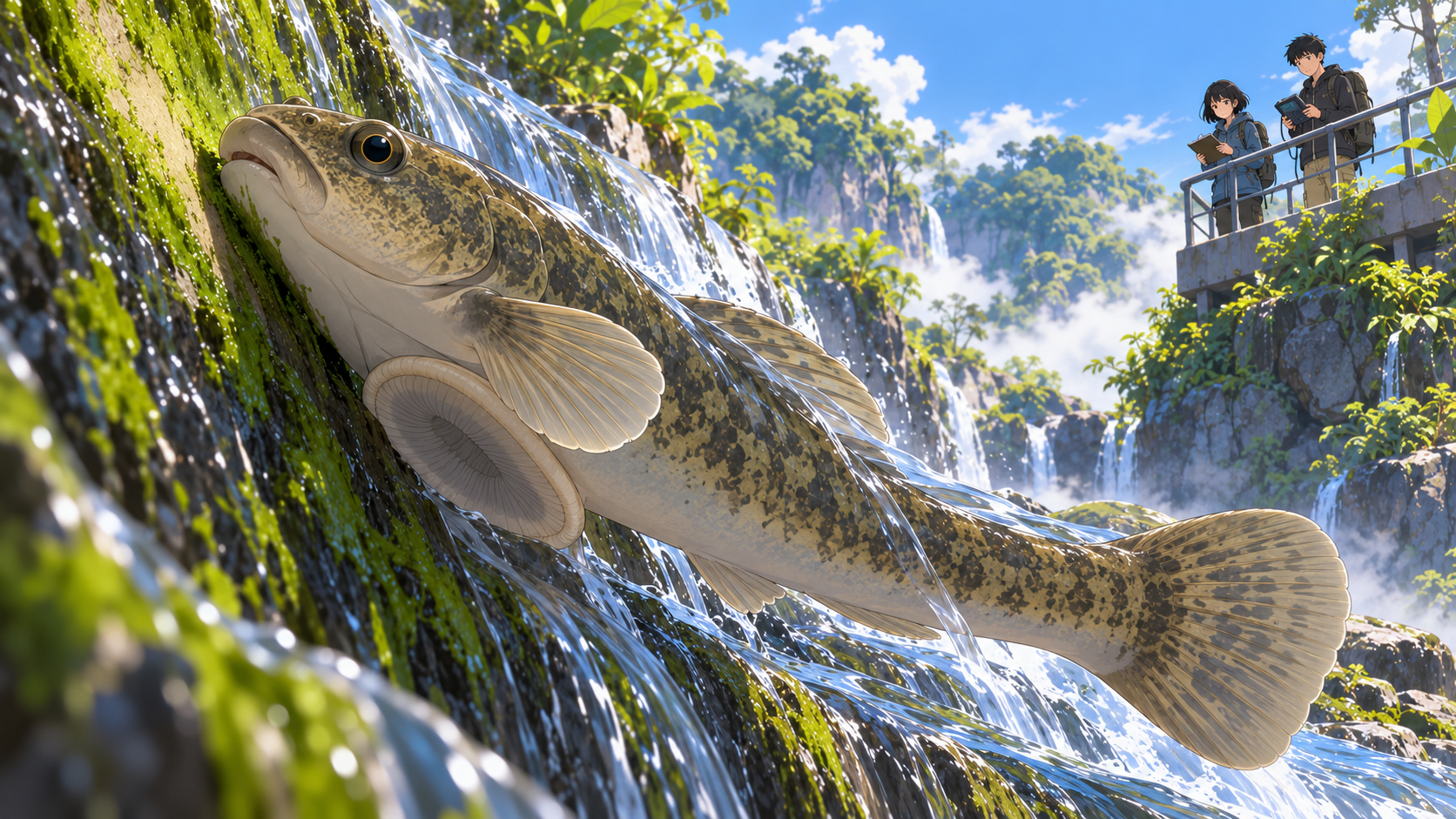
Reverse-Fall Sucker GobyModerate
Fang and I looked down from the dry outer terrace. Several algae scrapes stopped at the same height, and a single goby held to wet rock below them. That shared line was a waterline, not a boundary set by the fish.
MORNINGWe kept to the dry terrace above the channel. The thin algae scrapes ended together at one height. A blunt-headed goby pressed the broad disc beneath its belly to wet rock; short pectoral fins braced against the film of water, but it did not climb past the mark. Fang recorded the level along the rail while I kept the retreat path in sight. Our continuous buoy pulses were still rebounding through the falls. We marked the stalled line and left the fish undisturbed.NOONThrough the long lens I could see that the broad, soft disc was made from fused pelvic fins. A momentary change in pressure loosened its rim; it settled back against the rock before the goby resumed scraping the thin algae film with its blunt mouth. Fang checked the pressure difference from the distant dry platform. I wrote down each height where the disc released. The scrape line showed a changing water route, not a refusal by the fish to advance.EVENINGI changed the outer buoy to intermittent ranging, leaving quiet intervals between pulses. Across the fall, gobies occupied several separate shallow channels, far apart. Each held to wet rock, edged slowly upward, and grazed the returning algae film; they did not gather as a school. Fang lowered the long lens while I kept the remote low-frequency reading. The waterline divided again into stable narrow flows. We moved no fish. We changed our own timing.
「The fish did not need moving. Our measurements needed space between them.」— K
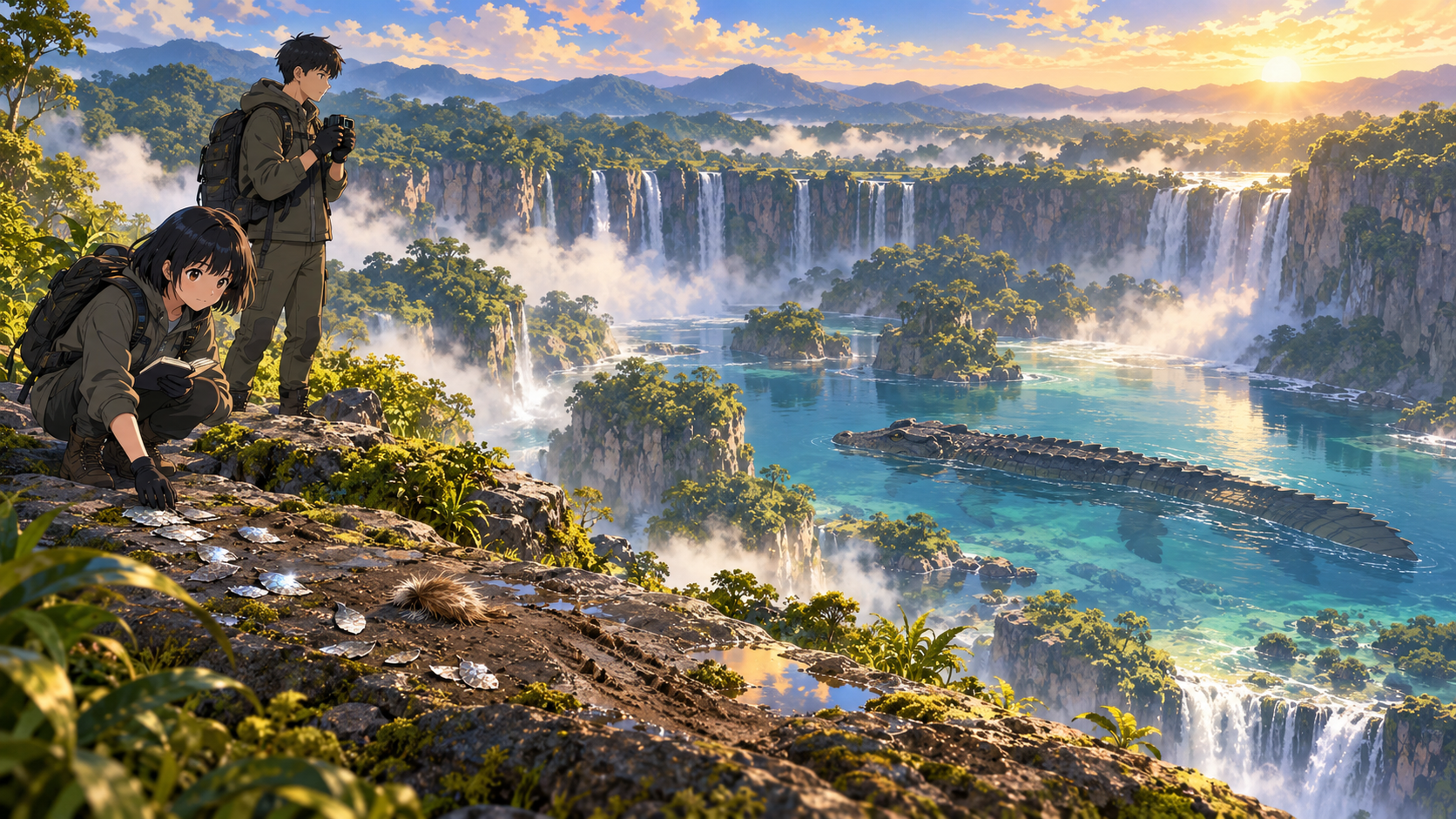
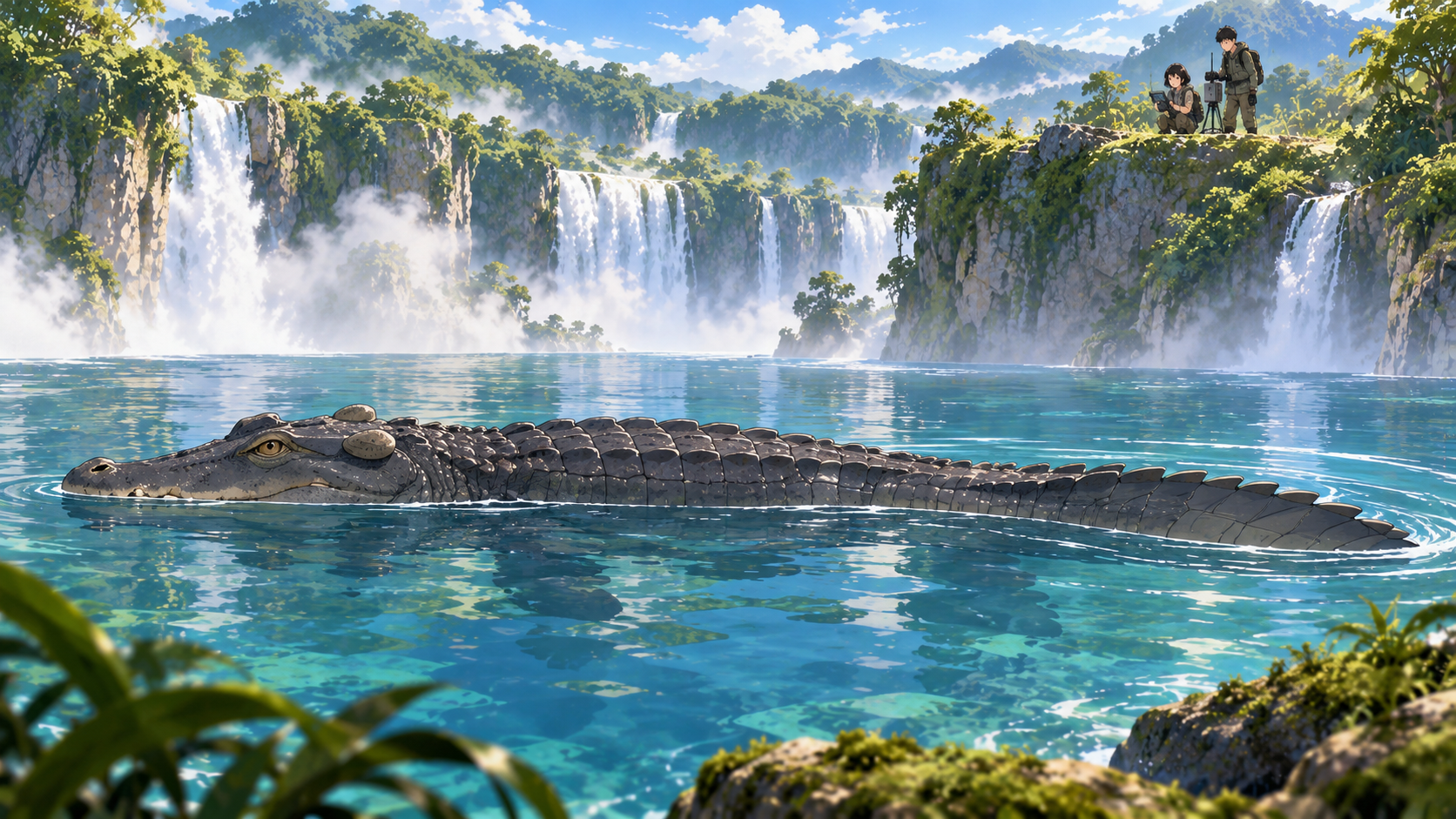
Fang and I stayed above the Outer Catch-Pool Exclusion Line. Fish scales, tufts of hair, and a low slide mark led toward the water. Far across the pool, a pair of crests briefly broke the surface. We did not go closer.
MORNINGFrom our safe line we could see scales, hair, and a low track at the outer catch pool. They pointed to a large predator feeding on fish and small mammals near the water. The seven-meter caiman remained far away; only its pressure-crest outline rose above the distant waterline. Fang marked the backflow route, and I kept our retreat clear. The traces belonged to this outer habitat. I would not use them to claim knowledge of the lightless core.NOONThrough the long lens I resolved two bony crests behind the eyes, aligned plates along the back, and flattened vanes at the tail’s sides. The broad snout stayed low. Fang compared the return-flow pressure from beyond the exclusion line. At base I stopped the buoy’s continuous pulses; they had been asking the pool the same question too often and the solitary caiman kept changing course. I retained only intermittent low-frequency ranging. We never put a person or instrument into its water.EVENINGThe broken-fall backflow gradually steadied. Across the pool, the adult took its own route around the remote nest bay. It was alone, and it never came to our terrace. Fang folded the observation map while I drew our instruments back from the high platform. We kept the catch-pool exclusion line as a permanent boundary. No closer image was worth changing the animal’s patrol again.
「We left the water, the nest bay, and the way back between them to the caiman.」— K
JOURNEY DISPATCH
Subscribe to K's Hunting Log
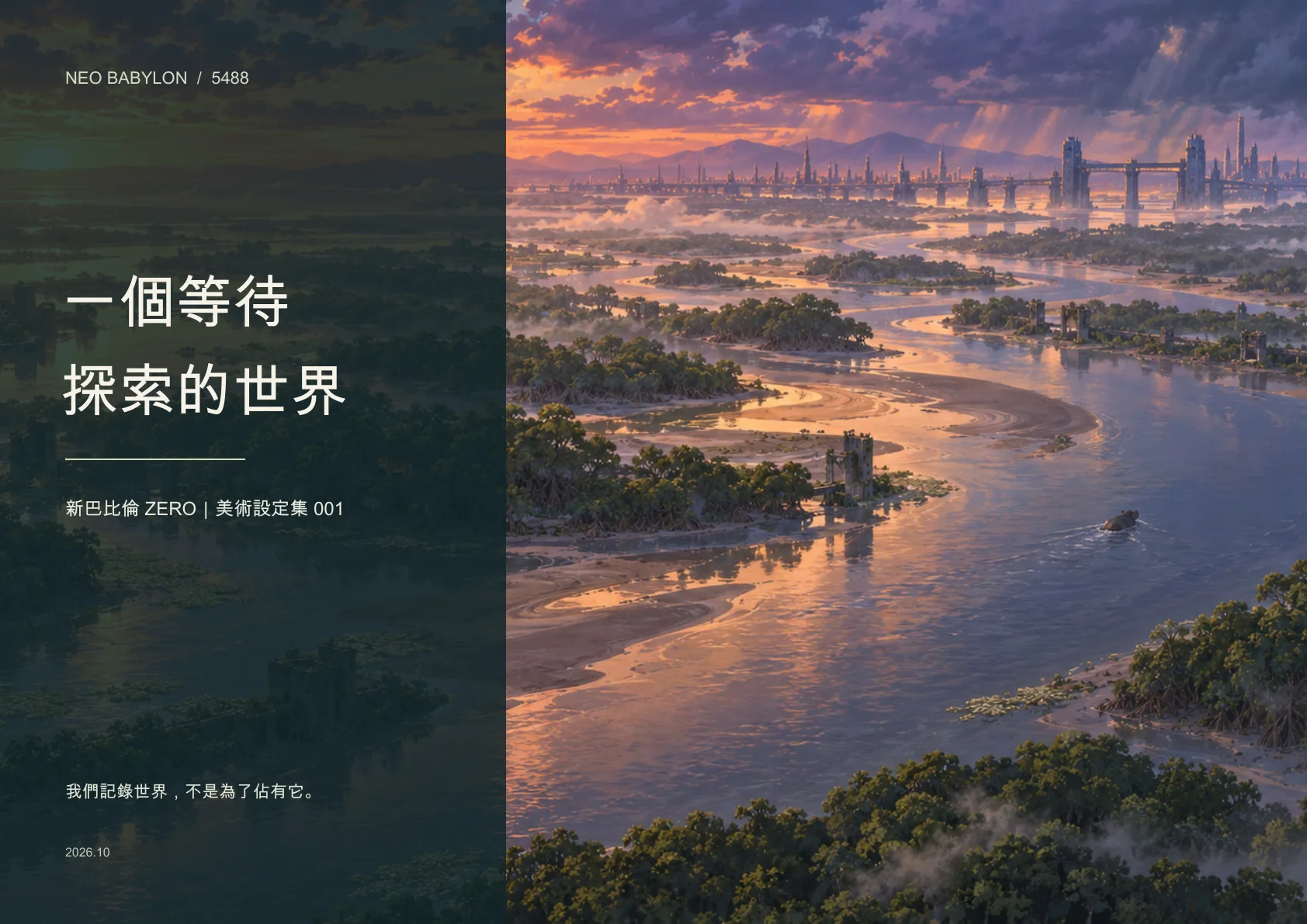
Subscribe to K's Hunting Log and receive Neo Babylon Zero Art Book — A World Waiting to Be Explored in Traditional Chinese, plus Fang and K's new field records.