The Route the Seeds Remembered
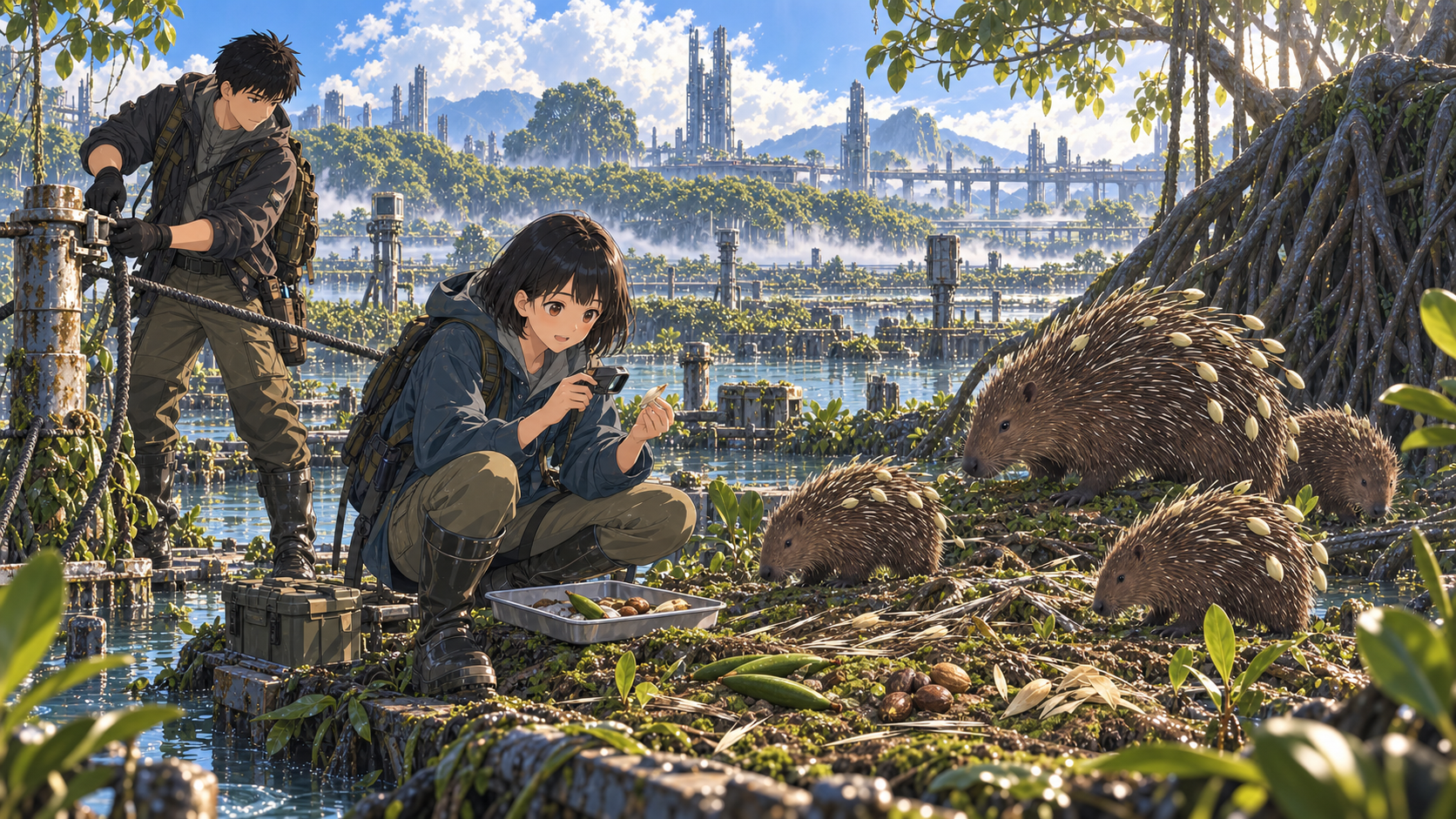
Rain pressure, root-raft height, and the old sensor readings were all changing at First Floating Seed Raft. A family of Floating-Seed Quill Porcupines carried floating seeds on broad, barbless quill tips, yet avoided the sections broken apart by reverse flow. Fang separated the quill-borne seeds, broad-toed tracks, and cache locations into repeatable evidence. I remained outside, marking load points, waterlines, and our retreat route. Every active weapon stayed stowed.
Field Observation
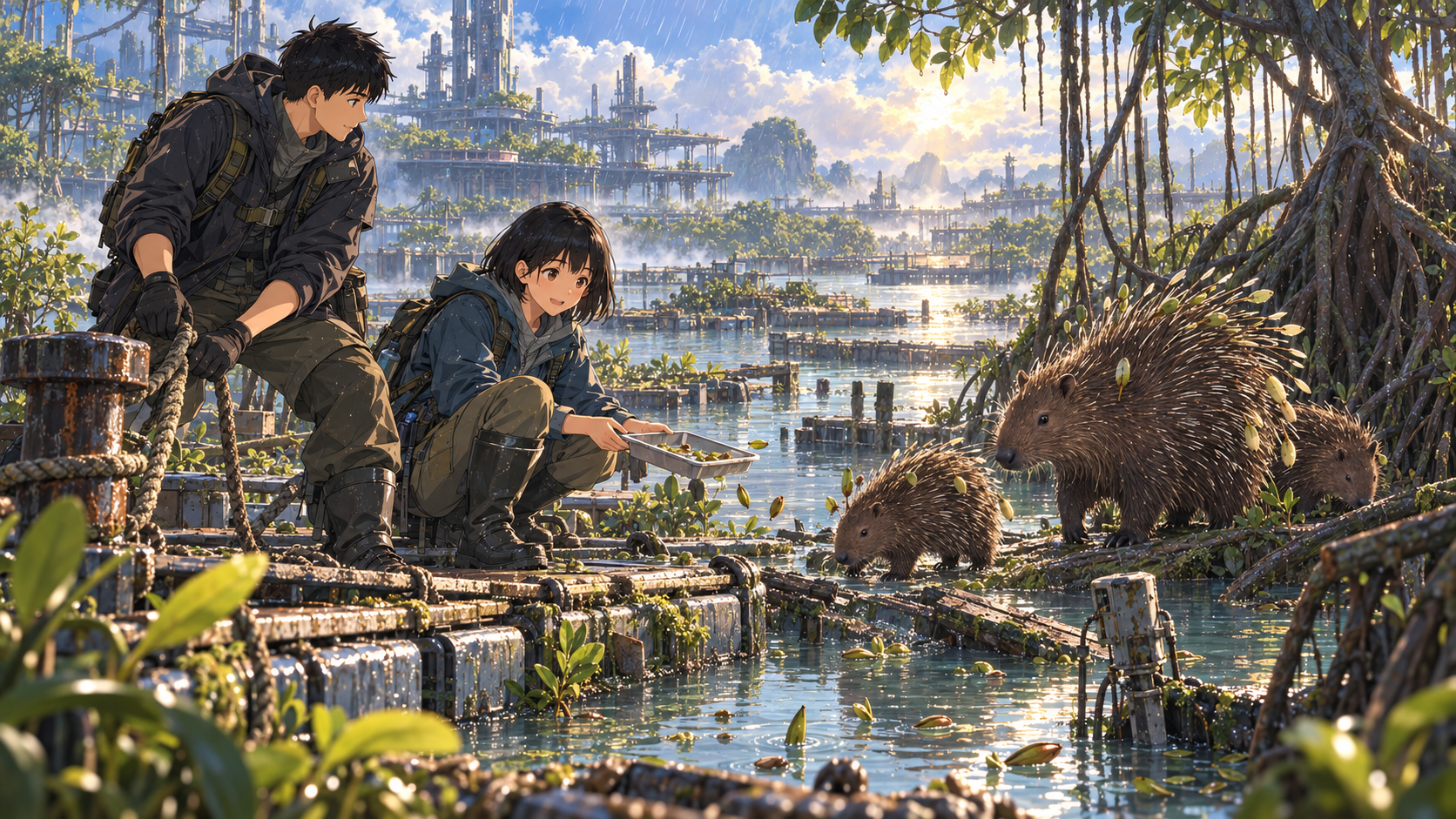
We took a short wetland boat from the root-filter bay to First Floating Seed Raft and stopped outside the family's activity range. At noon, we followed broad-toed tracks to the raised cache ground at Quill-Basket Seed-Cache Mound, collecting only seeds and quills that had fallen naturally. In the evening, we withdrew along the recovered slow current to the branch-line observation point at Floating-Root Replanting Fork and left the returning route to the porcupines.
Morning · First Floating Seed Raft
The porcupines did not treat every raft alike. Their tracks ended before the unstable sections, while seeds gathered on higher roots and intact platforms. The wide toes spread their weight across wet roots; the pale ends of the chestnut quills carried seeds without hooks. We stayed outside the family range and read the route from what the animals had left behind.
Noon · Quill-Basket Seed-Cache Mound
Fang identified three kinds of mangrove seed on naturally shed quills. She used a sampling tray and did not enter the cache burrows. I fixed a loose artificial cable from the outside, without touching the mound. The concentration of caches on the raised embankment showed where reverse flow had made the lower raft network unreliable.
Evening · Floating-Root Replanting Fork
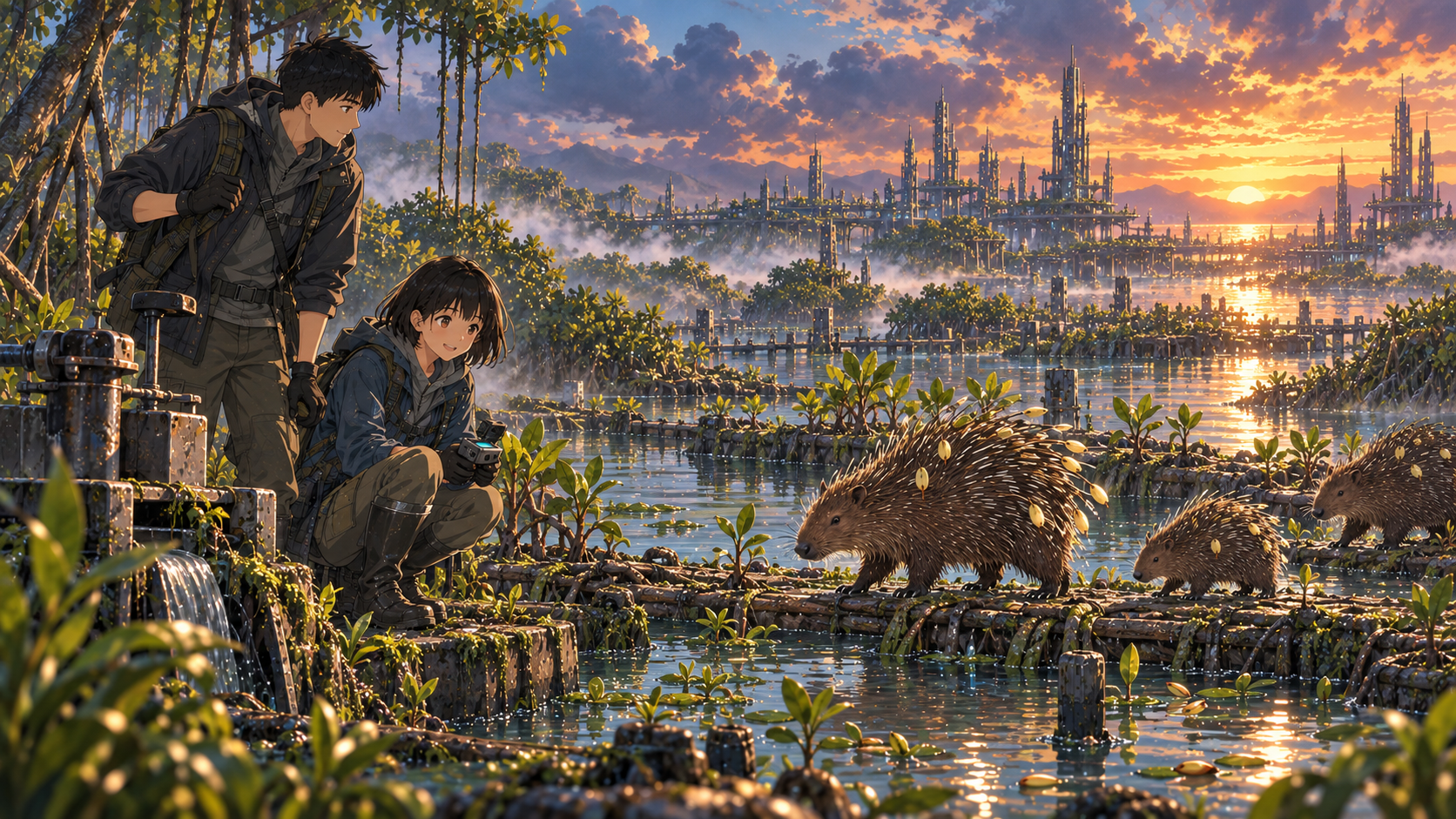
We slowed the pump sequence and secured only the cables people had installed. As the root rafts settled, the family returned along them by choice, carrying seeds across a mud ridge that the backflow had scoured empty. We did not chase, move, or redirect a single animal. The route reappeared because the water and roots could hold still long enough for the porcupines to use it.
Habitat Causality
Detachable floating seed rafts preserve salt-tolerant crops and wild seed stock as the monsoon redraws the delta. The fixed pump sequence drove water backward, broke the continuity between root rafts, and stripped seeds from low mud ridges. The porcupines avoided those unstable sections and shifted their caches to higher ground. Securing loose human-made cables and slowing the pump allowed the roots to settle, reopening the seed route without altering the animals.
Species Behavior
Floating-Seed Quill Porcupines are semiaquatic animals about one meter long. Broad, barbless quill tips carry floating seeds without piercing them, and wide splayed toes distribute weight across rafts and wet roots. Families of two to four cache seed on raised ground, avoid platforms destabilized by reverse flow, and return on their own when the route becomes stable.
「We did not repair the porcupines. We removed the instability our equipment had put in their way. By dusk, their tracks and seeds crossed the empty ridge again.」