The Grass-Slope Path
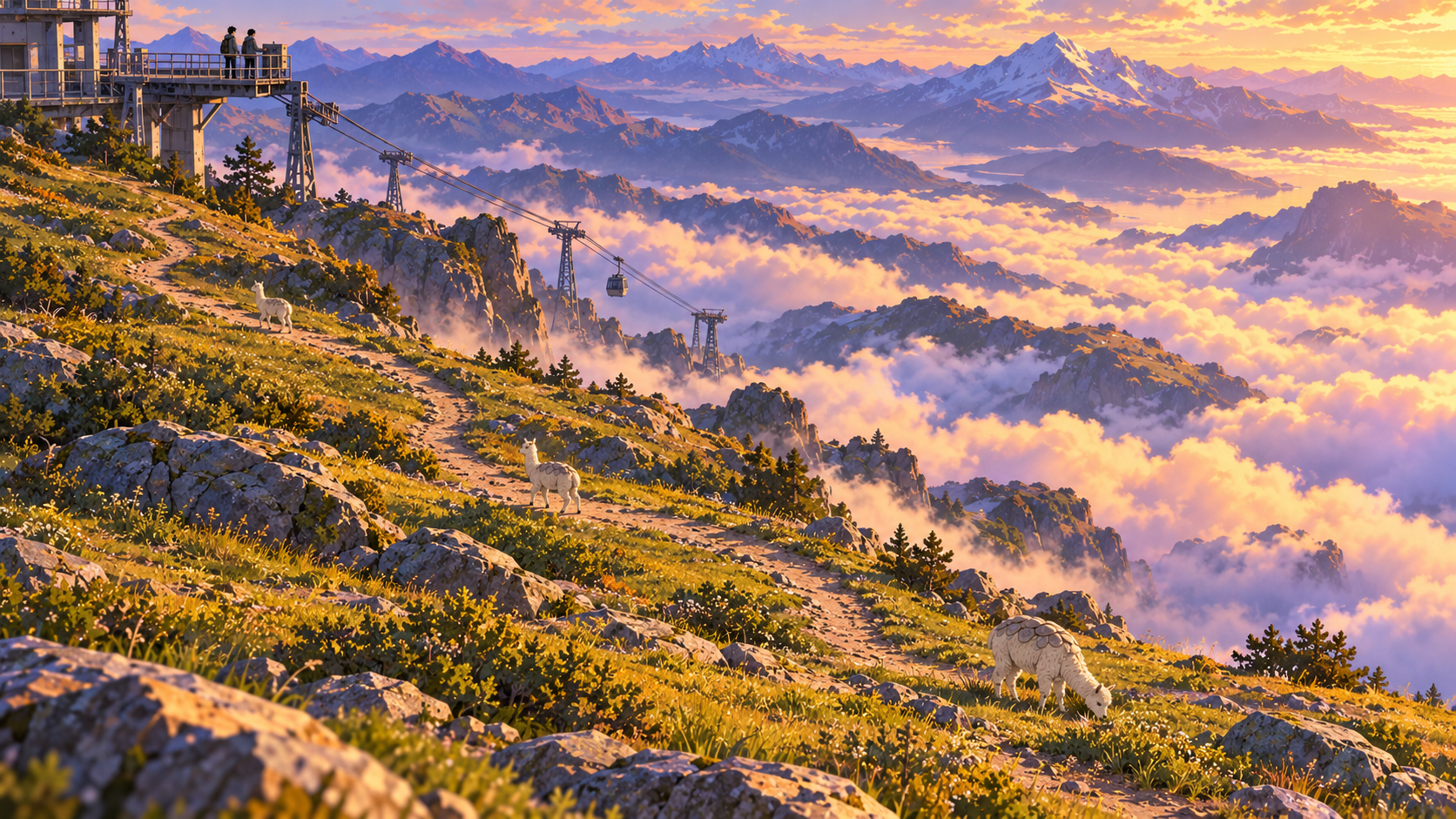
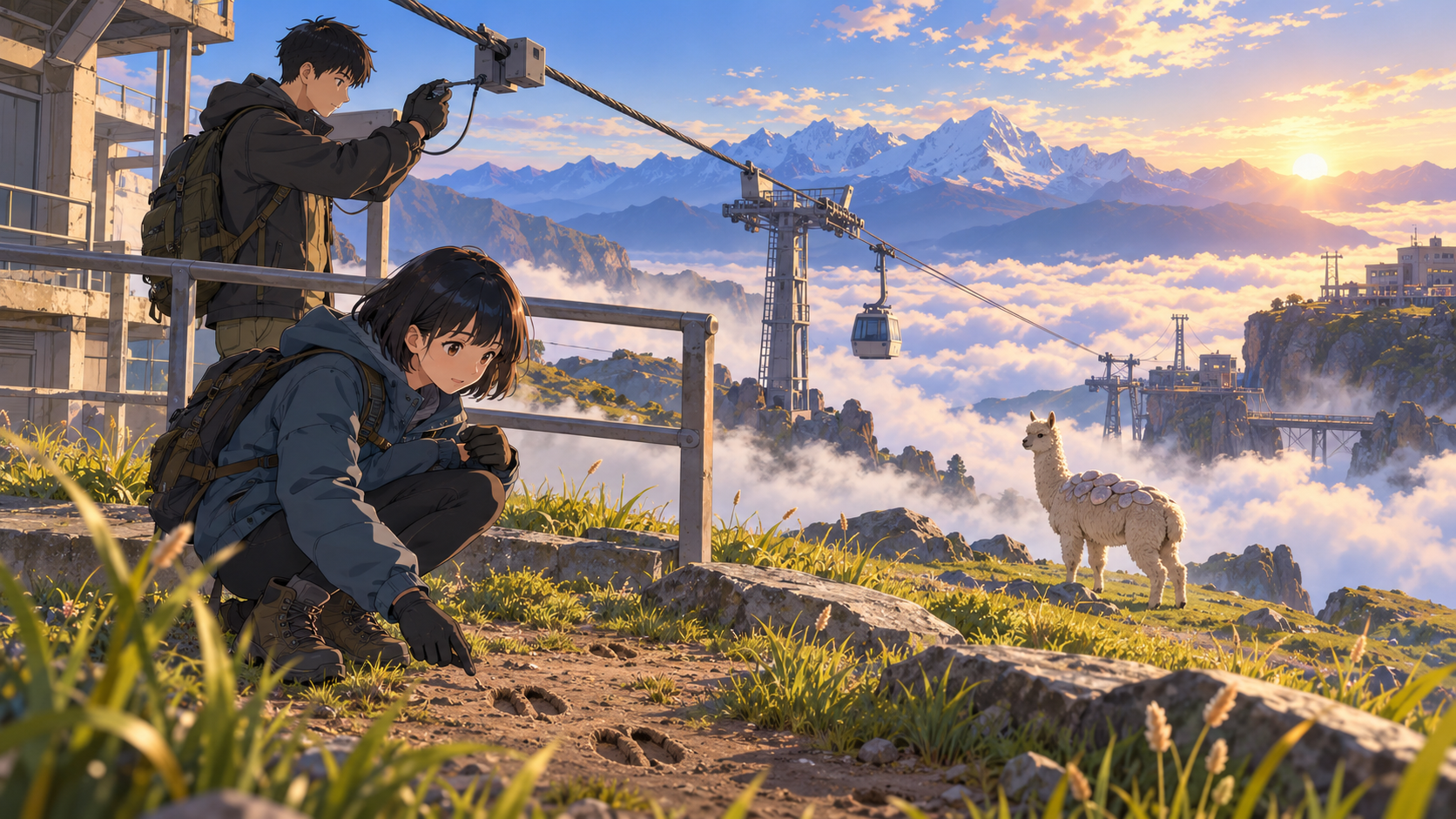
Cold fog left only part of the old cableway support in view. Hoofprints broke off beside the mining line, with grass seeds among them. Fang crouched over the marks; I checked cable vibration from behind the safety rail. A low-backed alpaca emerged without coming toward us.
Field Observation
Morning at Crystal-Back Grass-Slope Entrance: record hoofprints, seeds, and cable vibration. Noon at Low-Plate Observation Terrace: compare breathing and mine-line pulses from a distance. Evening at Cloud-Stair Wildlife Fork: switch off the old branch and withdraw, leaving the original wildlife path open.
Morning · Crystal-Back Grass-Slope Entrance
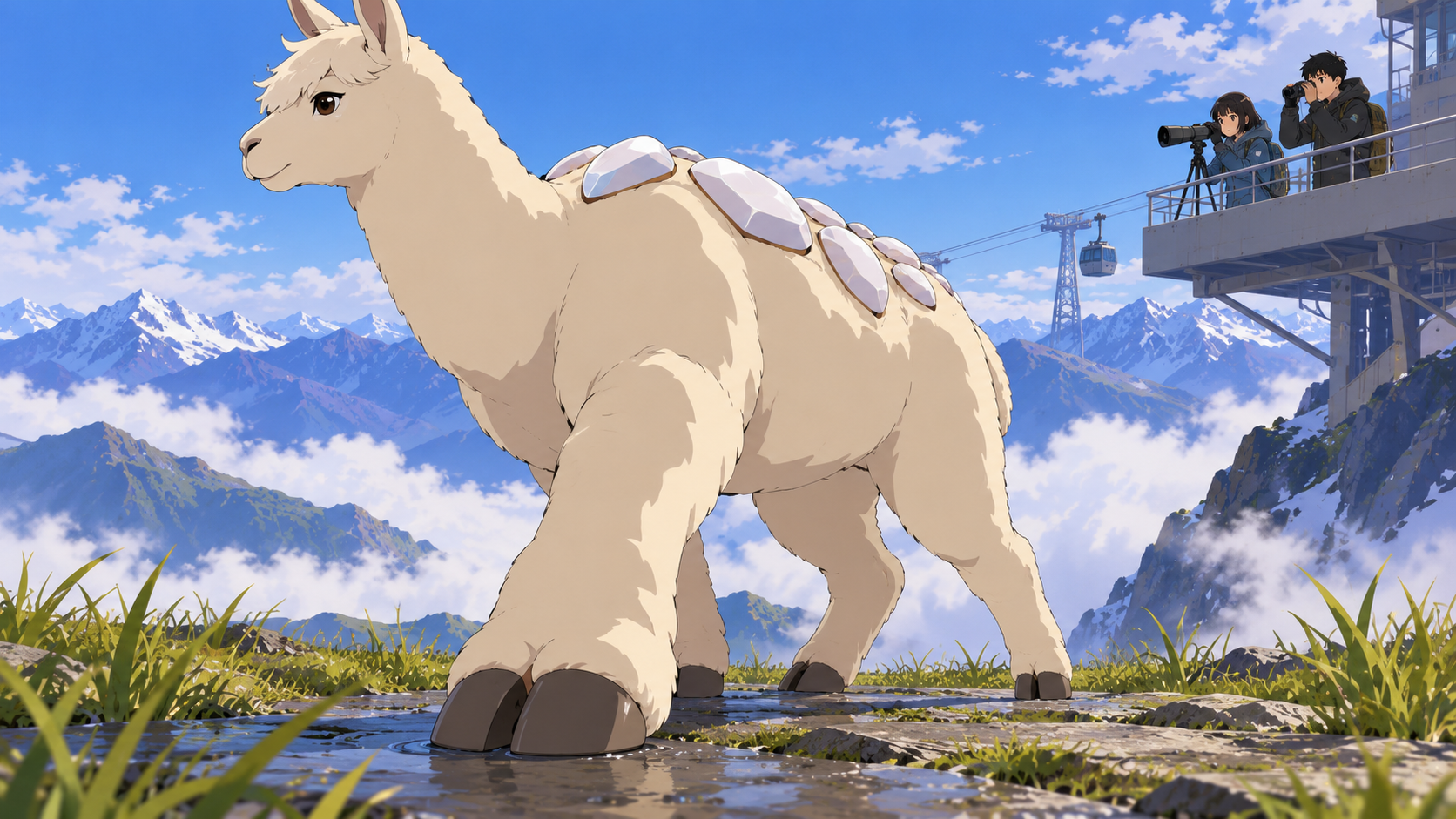
Cold fog reduced the cableway support to an outline. Interrupted hoofprints and grass seeds lay beside the mining line. Fang crouched to compare the prints while I measured the cable's pulse from behind the safety rail. One compact, hump-free alpaca appeared in the mist. Low keratin-mineral plates followed its shoulders and back; broad lung sacs supported its breathing in thin air, while split soft hooves spread pressure across uneven stone. It grazed short sedge and carried seeds farther up the slope. The shifted trail might coincide with continuous vibration from the old line, but one print cannot settle the cause for a whole mountainside. I noted wind, stone step, and time, and compared them with yesterday's clues. Fang asked me to put our safe way back on the map. I did.
Noon · Low-Plate Observation Terrace
From the low side, the plates looked broad and close to the animal's back, not like a high hump. The area over its broad lung sacs rose and fell in the cold air. Split soft hoof pads spread its weight on the wet grass at the stone edge. Fang and I stayed at the far end of the terrace and used optical readings to compare that breathing rhythm with pulses from the mining line. We did not touch the small group. Lichen holding mineral seepage on the outer rock, the grass belt, the wildlife path, and the wind window gave us separate clues. I checked them against the morning record before drawing a wider conclusion. The animals had no duty to explain an equipment fault.
Evening · Cloud-Stair Wildlife Fork
A small group moved along its older grass-slope route, with space between animals. They grazed short sedge and carried seeds through the fog while avoiding the disused branch. Fang and I switched off that branch and stepped back to the viewing terrace. The alpacas passed without being driven or touched. I marked the shifted hoofprints, grass seeds, and rubs from their low back plates, then compared them with wind, the old line, and yesterday's notes. I kept our retreat on the same map. A maintenance route can bend around this passage instead of pressing fixed vibration into it. The mountain has its own rhythm. Equipment can make way.
Habitat Causality
Maintenance vibration can travel through old cableway supports into the cold-fog terraces, shifting wildlife-path and aerial wind-window readings. Lichen fixes mineral seepage at the outer rock. Displaced hoofprints, grass seeds, and back-plate rub marks locate the path, but require comparison with wind and earlier evidence. Switching off the disused branch and rerouting maintenance protects the grass corridor.
Species Behavior
Compact hump-free alpacas use broad lung sacs to breathe in thin air, distribute weight with split soft hooves, graze short sedge, move grass seeds along the mist slope, and pass in small groups with space between individuals.
「I left the retreat route on our map and the grass-slope path open. The equipment can turn before the animals have to.」