A Boundary, Not a Breakthrough
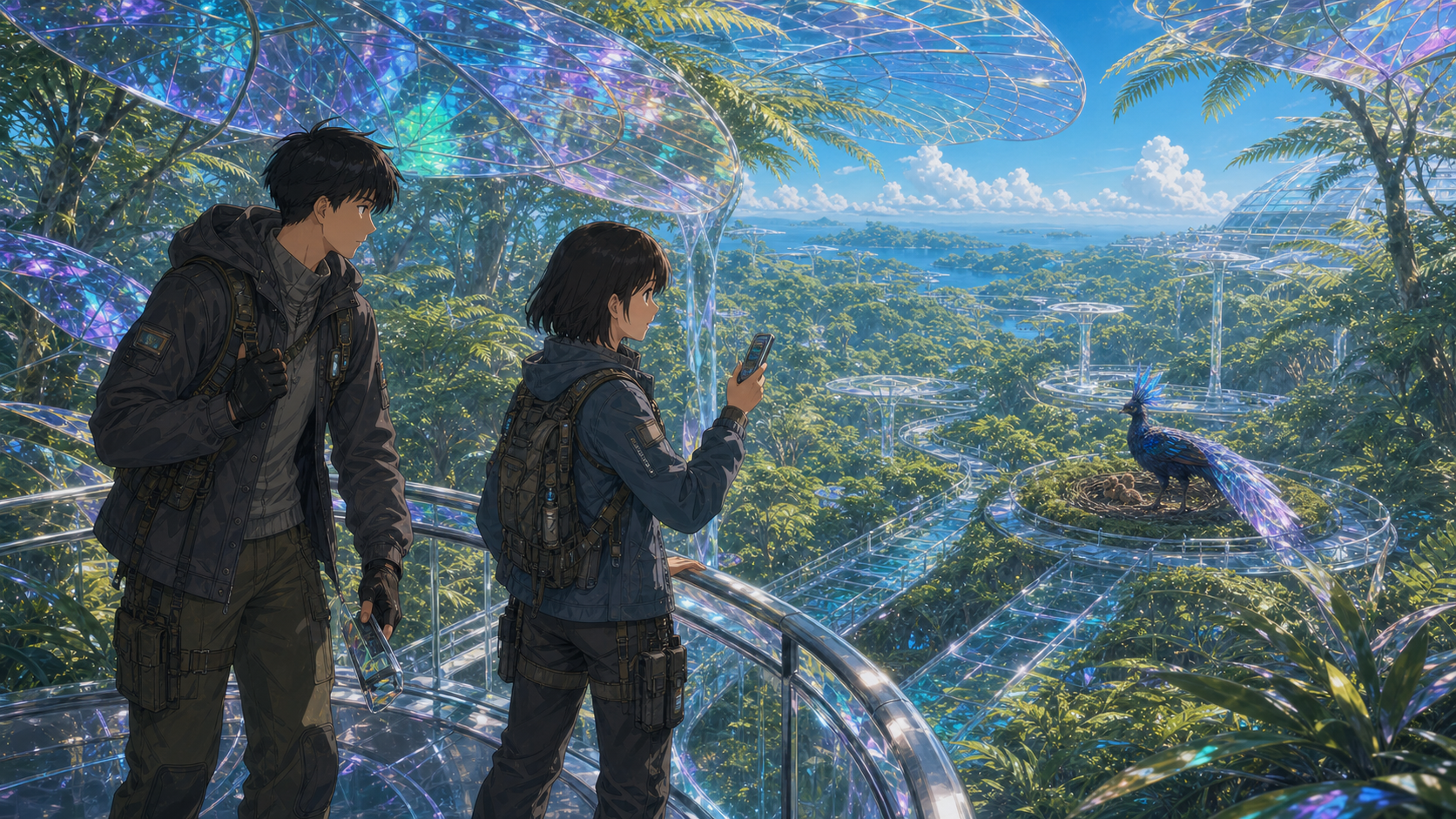
When the first adult raised its crest, the whole grove became a prism wall. Fang stepped back first. I followed and lowered the sensor. They were guarding chicks inside the fungal ring. If we could read the boundary, the warning did not need to rise.

Field Observation
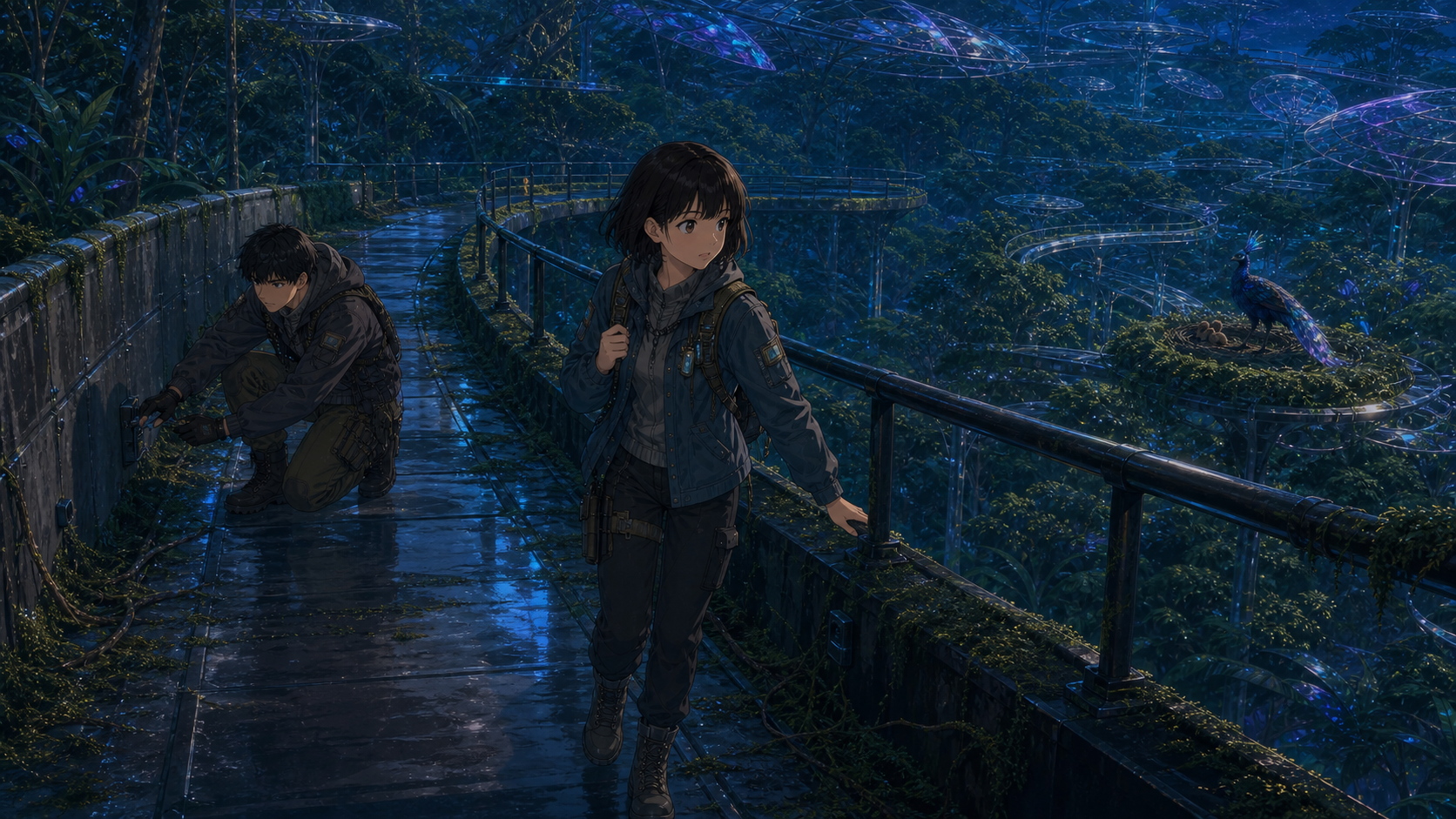
From Electrostatic Mound, we took the upwind maintenance path to the edge of Prism-Crest Nursery Wood and stopped outside the fungal-ring nest circle. At noon we surveyed along the upper margin of Reflective Leaf Canopy and abandoned the shortest corridor through the nesting ground. In the evening we entered a sealed maintenance path outside the canopy and used Lightless Detour to pass around the grove without crossing a nest.
Morning · Prism-Crest Nursery Wood
A two-meter adult spread its iridescent crest and gave a low call. More parents closed the nest circle without striking. Fang withdrew beyond the reflected light line. I lowered the sensor and followed. The chicks stayed inside the fungal ring.
Noon · Reflective Leaf Canopy
The noon canopy broke the nest circle into bands of different brightness. Fang found the chicks' resting interval in those reflections. I deleted the shortest maintenance corridor from our route. Cities prefer straight lines. A nursery does not have to accommodate them.
Evening · Lightless Detour
The sealed maintenance path had no lamps. Only cool afterlight remained where distant crests folded shut. Fang moved first with one hand on the guide cable. I fixed a silent, non-luminous marker at the turn. The route grew longer. The nest circle went quiet. This record was not a breakthrough. It was a boundary.
Habitat Causality
Fungal rings beneath the reflective canopy provide food and nesting ground for the pheasants. The city's abandoned exposure sequence prolongs the apparent day, so the adults remain on alert and block the shortest maintenance corridor. Reading the canopy's reflected light reveals a resting interval, while a sealed lightless path lets observers bypass the nursery without adding another flash or sound to the disturbance.
Species Behavior
Prism-Crest Nursery Pheasants feed on luminous fungal fruit, scraps from spider webs, and small arthropods. Adults jointly protect brown downy chicks inside fungal-ring nests. They warn approaching animals by spreading their prism crests, giving low-frequency calls, and blocking the route. Here they lower their crests once Fang and K retreat beyond the light line and take another path.
「We reached the other side without making the birds surrender theirs. That was the route worth keeping.」