The Line We Left at the Reservoir
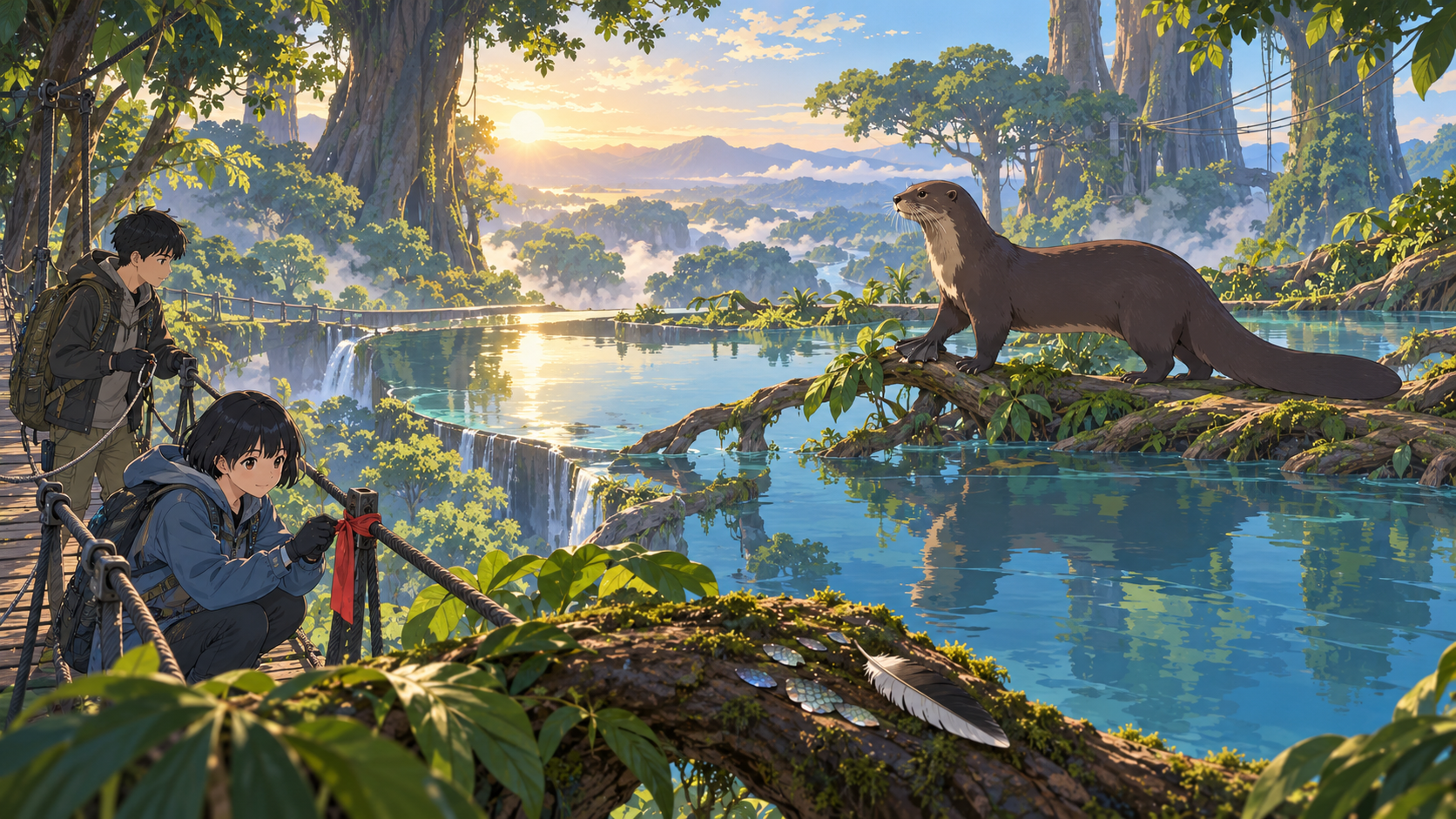
The wet branch gave us the first answer: a few fish scales and one waterbird feather beside the raised water. Before I saw the inner reservoir, I saw overflow below the station cable. Fang tied a red boundary marker to the bridge. We could watch from here. We could not step farther.
Field Observation
Morning at Split-Web Restricted Reservoir: read feeding signs and mark the nursery boundary. Noon at Remote Recharge Platform: observe the adult's anatomy across the water and change continuous pumping to staged intermittent recharge. Evening at Inverted-Rain Reservoir Boundary: confirm the inner route reconnects, let the adult and young leave on their own, and keep the no-entry line.
Morning · Split-Web Restricted Reservoir
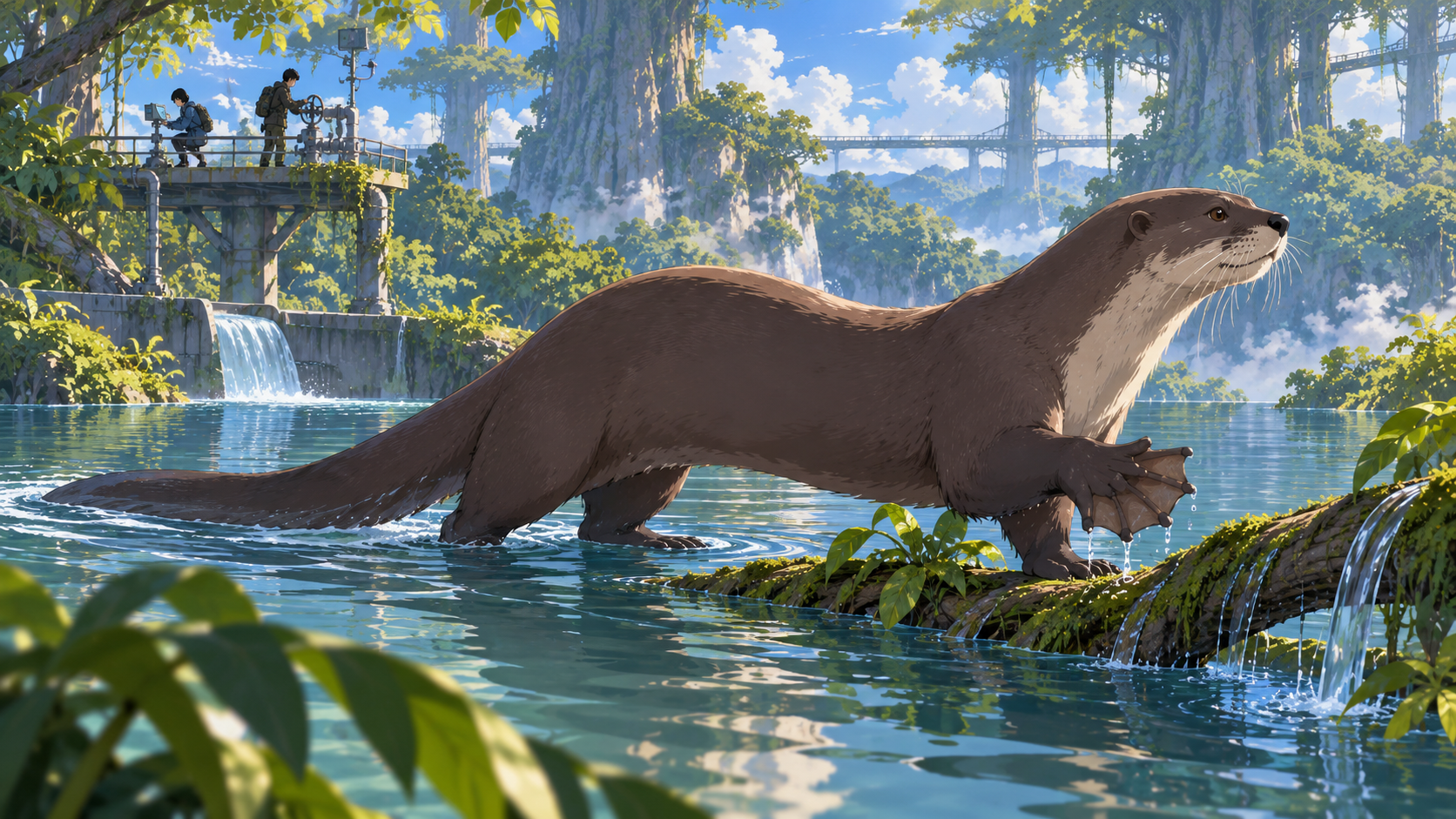
The wet branch gave us the first answer: a few fish scales and one waterbird feather caught in its bark beside the raised water. Before I could see inside the reservoir, I noticed overflow below the station cable. Fang tied a red marker to the tree bridge. This was the last safe observation point. Across the water, a Split-Web Reservoir Giant Otter rose onto a wet branch. Its long body nearly matched the branch channel. A thick, flat tail rested against the water and its forepaws spread over the bark. It did not come toward us. It kept watch over the inner pool. I walked back along the bridge to check the retreat route and the cable load. I did not push the camera toward the young. Scales and feathers support a diet of fish and waterbirds in these canopy channels. The marks where it had waited on the branch also told us its patrol had begun before we arrived. The changed thing was the level behind the closed gate. Water that once split toward the inner pool was being pressed toward the station by continuous pumping and an inverted-rain sensor reading natural recharge as leakage and closing the gate. Fang marked wind direction and the boundary. I wrote down the pumping hours. For now the red line would stay on our side. We would see from a distance whether water could return to its own route.
Noon · Remote Recharge Platform
From the Remote Recharge Platform, the otter looked closer through the lens than it had in the morning. A whole restricted reservoir still lay between us. The telephoto view brought its forepaw into focus as it stepped onto a branch channel. The paw was broad. Webbing divided into lobes between the toes opened and closed, and water dropped from each edge into the tree pool. Its short, dense fur did not flatten under the water. Its thick tail turned behind it. These parts let it move between wet branches and a suspended reservoir. We did not have to draw it closer to understand how it used the ground. Fang checked the nursery level from the opposite platform. I changed the seed bank's continuous pumping to short intervals of recharge. The first flow entered the outer channel. Only the second followed living branches toward the inner pool. That kept a pressure wave from reaching where the young rested. The adult stayed on its branch. It did not come closer after our adjustment. Scales, the feather, and the waiting marks showed what it ate; the clear paw view showed how it held this high water route. I wrote the equipment response and the animal response in separate lines. The level began to fall, but its territory had not become smaller. We left the controller outside the boundary and kept the power to reverse the setting at a staffed platform.
Evening · Inverted-Rain Reservoir Boundary
At dusk we looked back from above. Water no longer crossed the station cable. It followed channels in living branches, section by section, into the inner reservoir. The adult we had watched all day slipped into the pool. Behind it came a short-tailed, dark-brown young otter. Neither approached us or waited for us to clear a path. The overflow had changed direction; their old nursery passage was connected again. Fang put her instruments in read-only mode. I stopped the last unnecessary pumping interval, and we walked out along the safe tree bridge. I did not write that the mother had been tamed. She was still four meters long and could still drive a wave across a branch channel with her flat tail. A fall from this height and her patrol around the young were still dangers after the recharge. We left the red marker at the bridgehead so the next visitor could see where to stop. The seed bank still shone in the distance. For this wind window, the tree pools, slow drips along leaf channels, and bees in the flower corridor could be heard and measured together. This was one correction we could read back, not proof that we had repaired the forest. I logged the ceiling for intermittent recharge, how to undo it, and the water level to check tomorrow. The adult and young turned inside the pool and disappeared behind the trees. We gave the route back. The boundary remained theirs.
Habitat Causality
Continuous seed-bank pumping and an inverted-rain sensor that mistakes natural recharge for leakage and closes the gate push water away from the inner nursery and toward station cables. Staged intermittent recharge sends water through an outer channel before it reaches the young, restoring the inner branch passage without a direct pressure wave. One falling level and the otters' return are observable responses, not proof of a repaired forest.
Species Behavior
A four-meter carnivorous adult waits along wet branches for fish and waterbirds, with small arboreal mammals also recorded in the habitat. Split flexible webbing on broad forepaws, dense waterproof fur, and a flattened steering tail suit the suspended channels. The adult patrols its young's reservoir and later swims inward with one short-tailed dark-brown young animal. It does not approach the observers or obey them.
「I left the recharge limit and the reversal method in the record. Fang left the instruments read-only. The red line stays where we must stop.」