We Gave the Forest Its Morning Back
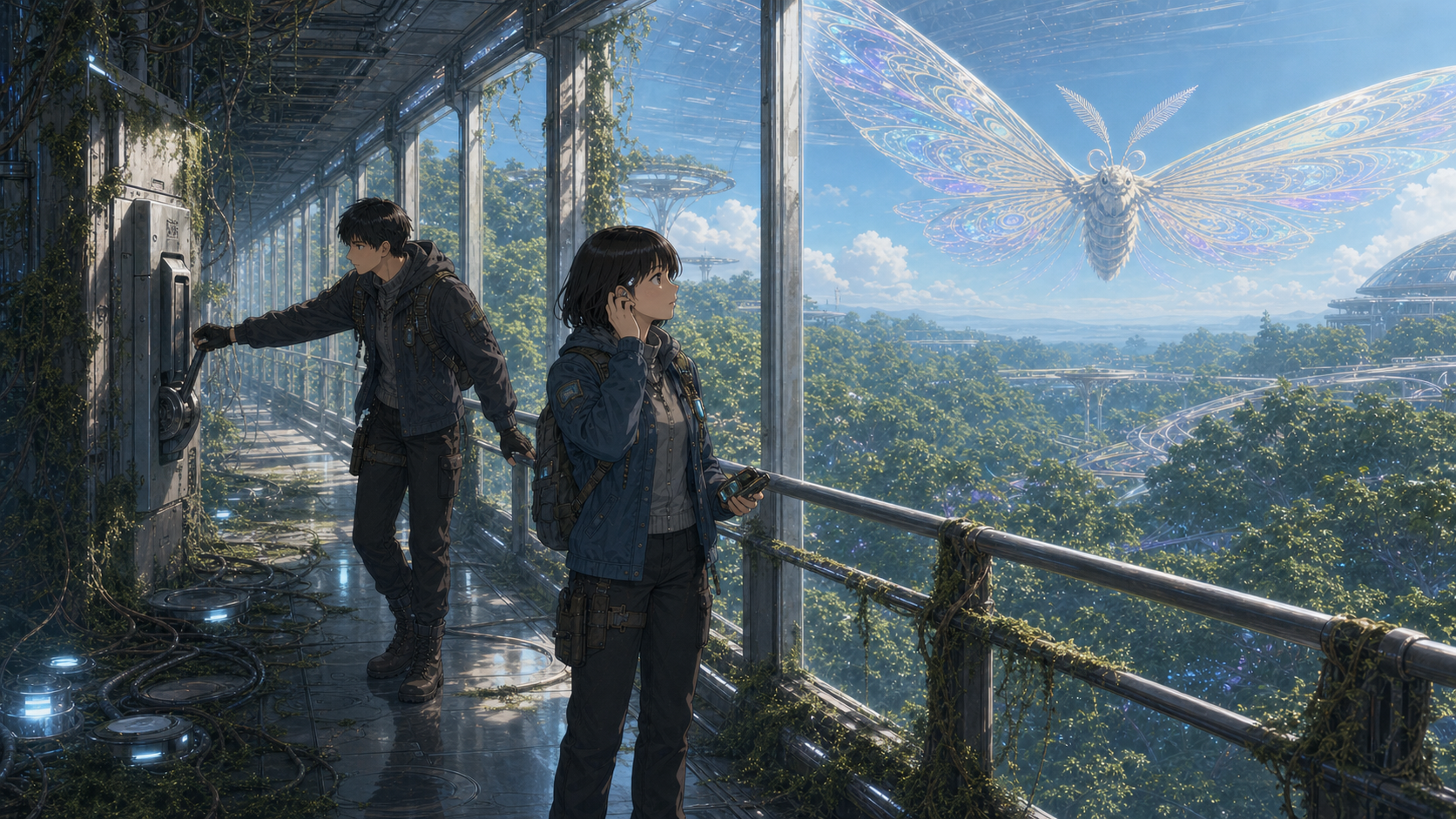
The wings opened above the atrium. Morning, noon, and dusk appeared across the same forest. Fang heard the three-part rhythm first. I saw only the old exposure sequence cutting through it again and again. The moth did not come closer. The city's residual light was blocking its way home.
Field Observation
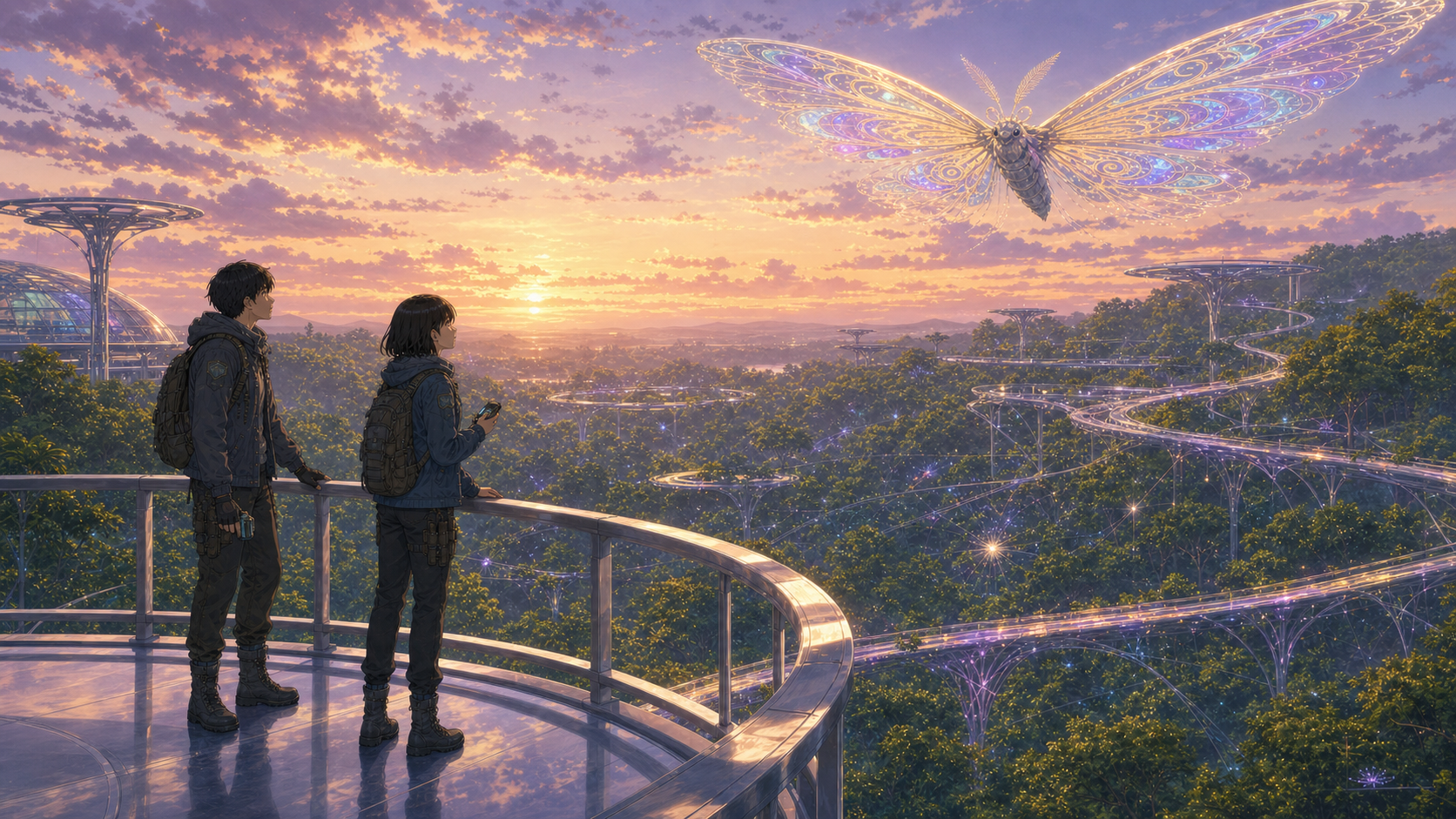
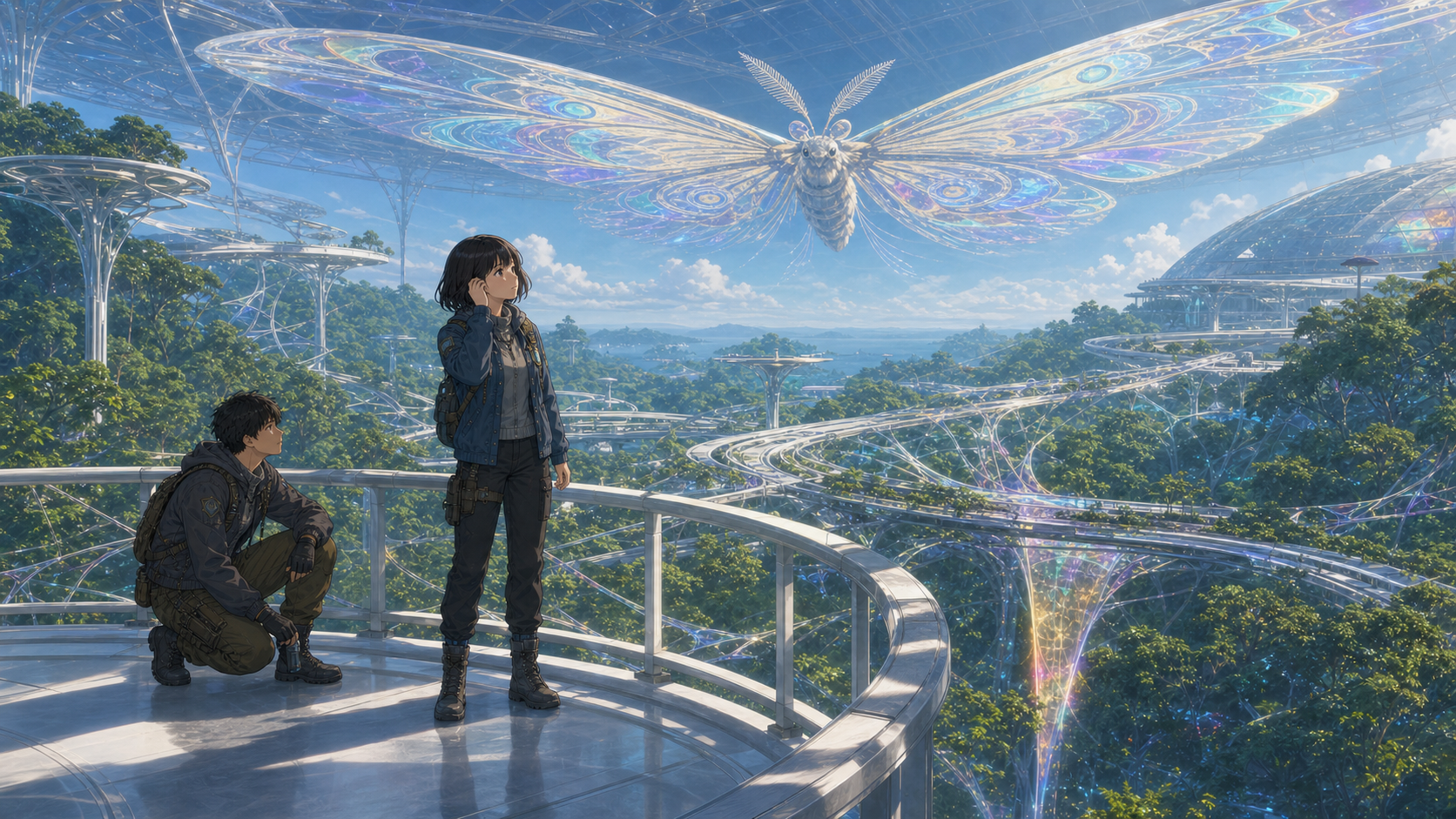
From Lightless Detour, we climbed to Seventh Diffraction Atrium along the reserve's highest exposure platform and stayed below the canopy flight line. At noon we followed the maintenance corridor into the sealed test zone without crossing the moth's route. In the evening we withdrew to the side platform and watched from Canopy Afterglow Platform as it passed through the atrium.
Morning · Seventh Diffraction Atrium
The twenty-five-meter moth held above the canopy, its cyan, magenta, and gold veins interrupted by flashes from below. Fang read the distant wing light with her non-invasive interface. I stayed low at the outer edge with the sensor. We did not enter its flight line.
Noon · Old Exposure Test Corridor
Fang aligned the three wing phases. One fixed error remained on the ground. I pulled the mechanical breaker, and the corridor went fully dark for the first time. Beyond the glass, the wing veins did not accelerate. They slowly returned to their own beat.
Evening · Canopy Afterglow Platform
When the moth crossed the atrium, the spider webs lit first. Then came the hares, the burrowers, and the nesting birds finally lowering their crests. Fang stored the last spectrum in the recorder. I watched from the rail. We took nothing today. We only gave the forest its morning back.
Habitat Causality
Retired wafer glass, dome condensation, low-grade waste heat, and wild mycelium created a habitat governed by polarized light. The abandoned corridor's fixed exposure loop interrupted the moth's three-part wing sequence, stretching false daylight across the reserve. Once the breaker stopped the human signal, the moth could pass through Seventh Diffraction Atrium and redistribute light into morning, noon, and dusk.
Species Behavior
The Layerlight Canopy Moth is a non-aggressive migratory giant with a wingspan of about twenty-five meters. It feeds on microalgae in dome condensation and airborne spores. Layered translucent wings carry cyan, magenta, and gold light veins. Its passage synchronizes web rebuilding, hare heat release, burrower emergence, and rest among nesting pheasants; it calibrates the habitat rather than preying on it.
「We did not make the forest follow our clock. We stopped our clock from speaking over its own.」