The Water Went Thin First
The water around the buoy went thin. Then the wrong pulse arrived. The shrimp's sensory setae had already folded flat. Fang measured the delay. I shut down the buoy's active signal. She treats a living response as a coordinate. I make the city quiet enough to read it.
Field Observation
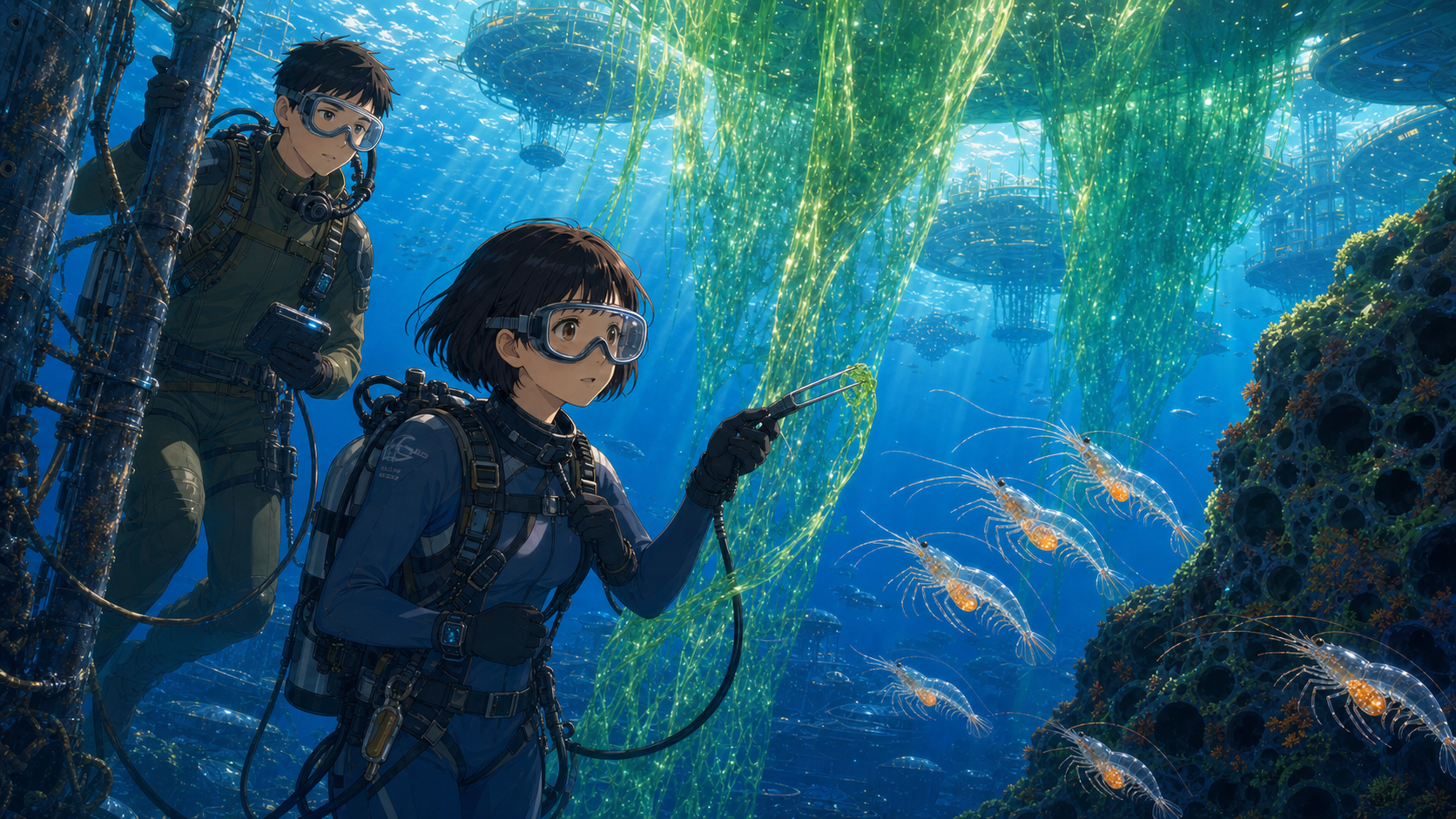
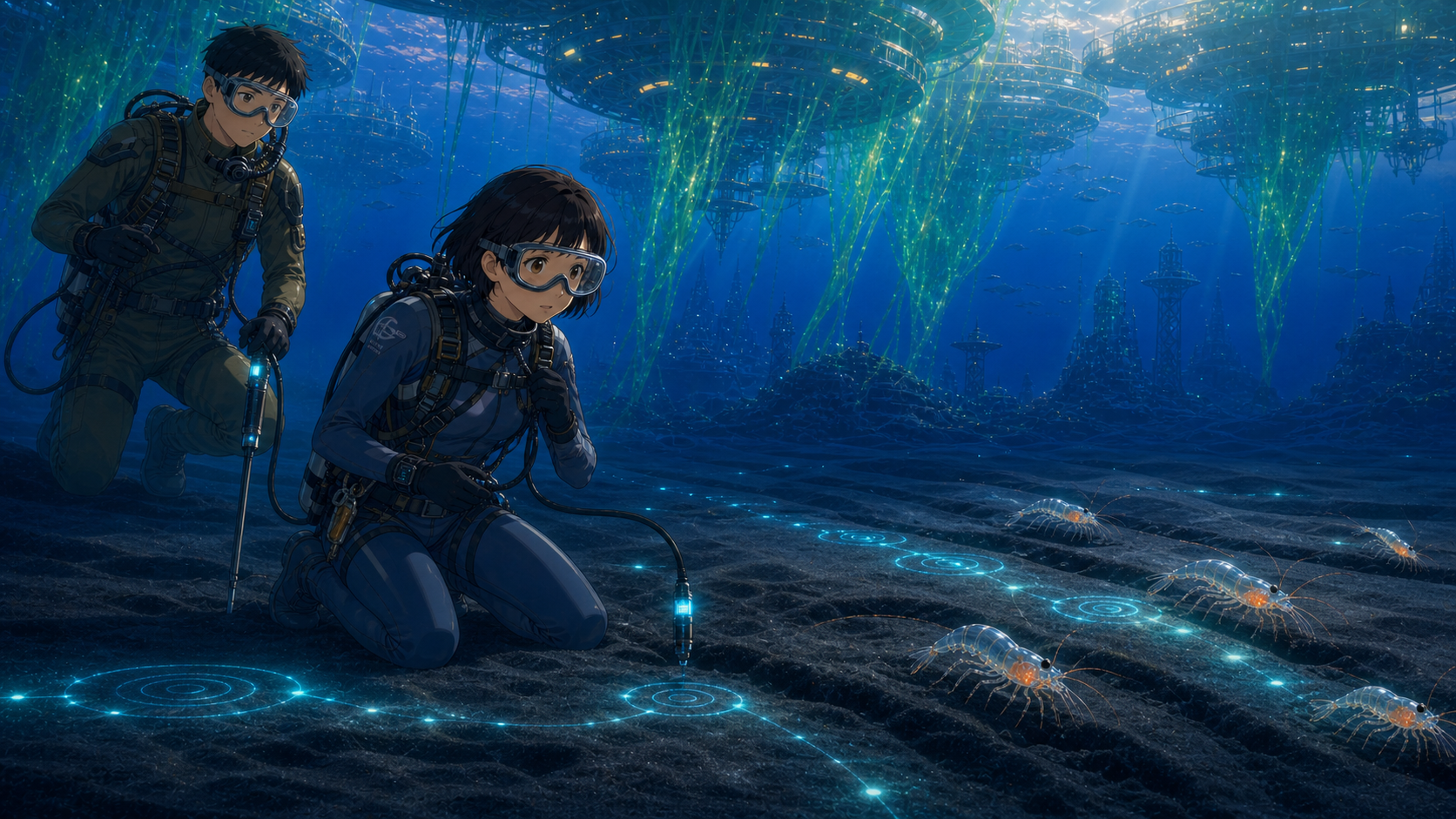
We descended from the Sixth City Cluster's maintenance bay to Floating-City Shadow-Edge Buoy and began a low-noise survey along the outer edge of the algae canopy. A secured cable ladder led down to Algae-Canopy Sampling Ladder beneath the energy membrane. From there, the falling-sand line carried us to Acoustic-Sand Settling Basin, where passive hydrophones could read the pulse coming from below the corridor.
Morning · Floating-City Shadow-Edge Buoy
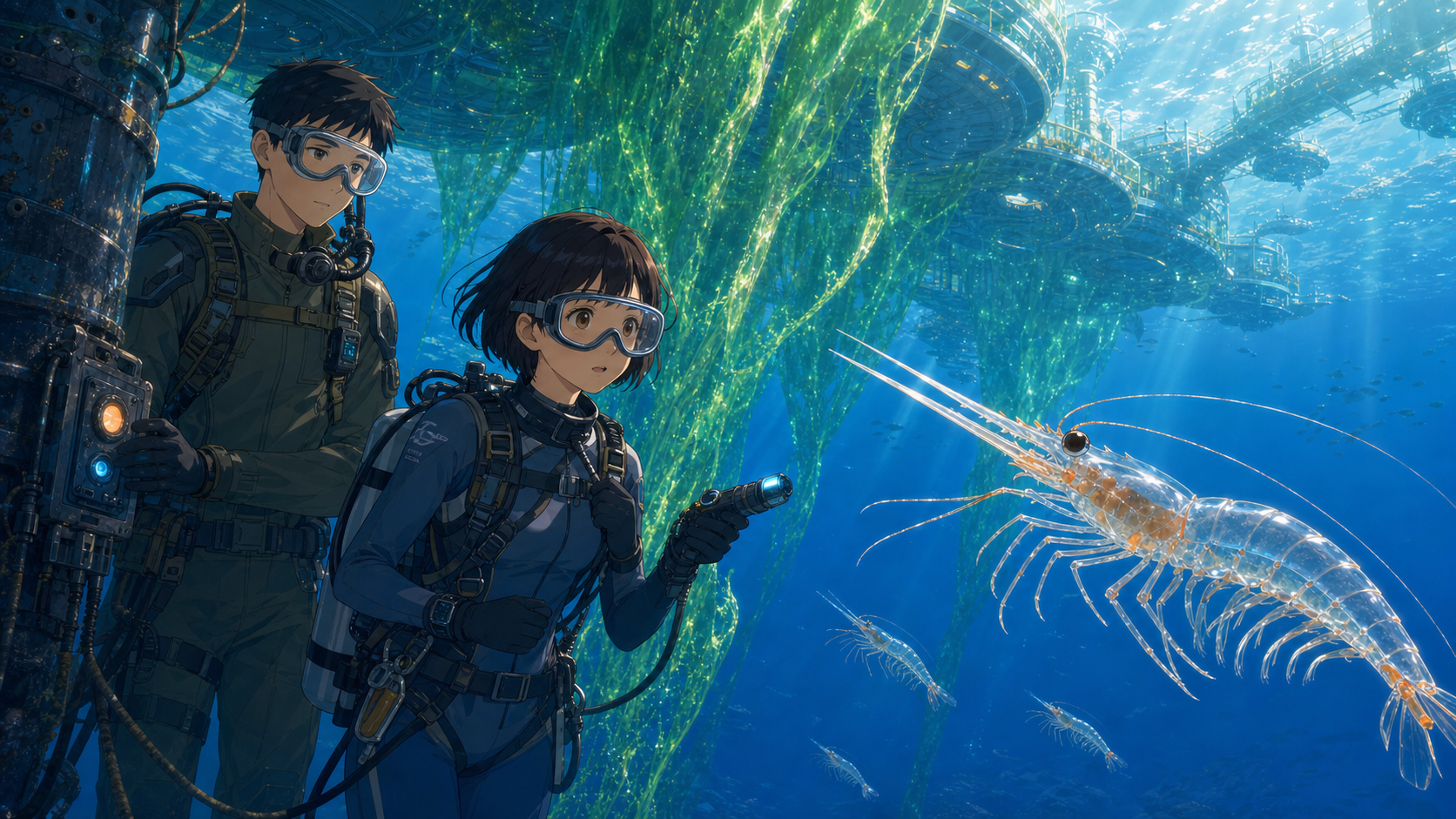
The shrimp folded their sensory setae before the sonar reached us. Fang read the delay with a non-invasive sensor. I switched off the buoy's active pulse and stayed outside the group. The response remained. The source was deeper than this marker.
Noon · Algae-Canopy Sampling Ladder
Fang took only membrane fragments that had fallen onto the ladder. I fixed the safety line and watched the shrimp comb the algae, then carry loosened spores back into the reef pores. We did not need to take an animal to understand what the habitat was doing.
Evening · Acoustic-Sand Settling Basin
The whole group entered the black sand on the same beat. We set passive hydrophones above the basin and waited through the next cycle. The pulse rose from below the corridor. This time, the shrimp gave us a direction before the equipment did.
Habitat Causality
Floating-city shadows, algae-energy membranes, deep anchor cables, acoustic sand, and porous artificial reefs form one moving habitat. The shrimp clean the membrane and return spores to reef pores. Repeating artificial sonar reaches their sensory setae before it becomes audible to Fang and K, so their timed burrowing reveals both the disturbance and its direction.
Species Behavior
Acoustic-Sand Needle Shrimp use quartz rostrums to comb microalgae and acoustic sand from the energy membrane. Their underside setae fold before high-frequency sonar arrives, and the cleaning group burrows on a fixed beat. They are non-aggressive and resume their work when active city equipment falls silent.
「The animals did not need correction. Our noise did. Tomorrow, we follow what their route carries through the reef.」