A Pause Before the Mist Shift
Fang and I recorded this from the safe line above the fallen-fruit slope. The seed trail broke off. One tapir closed the two valves at the end of its short snout before the mist pressure shifted, then stopped on the upper corridor. We waited where we were.

Field Observation
We stayed on the safe outer-rim line: from the interrupted seed trail at Mist-Lung Fallen-Fruit Slope, to a distant view of the snout valves at Twin-Valve Fork, then around the tapir's feeding route at Upper Seed-Root Slope. We did not enter the sinkhole's restricted core.
Morning · Mist-Lung Fallen-Fruit Slope
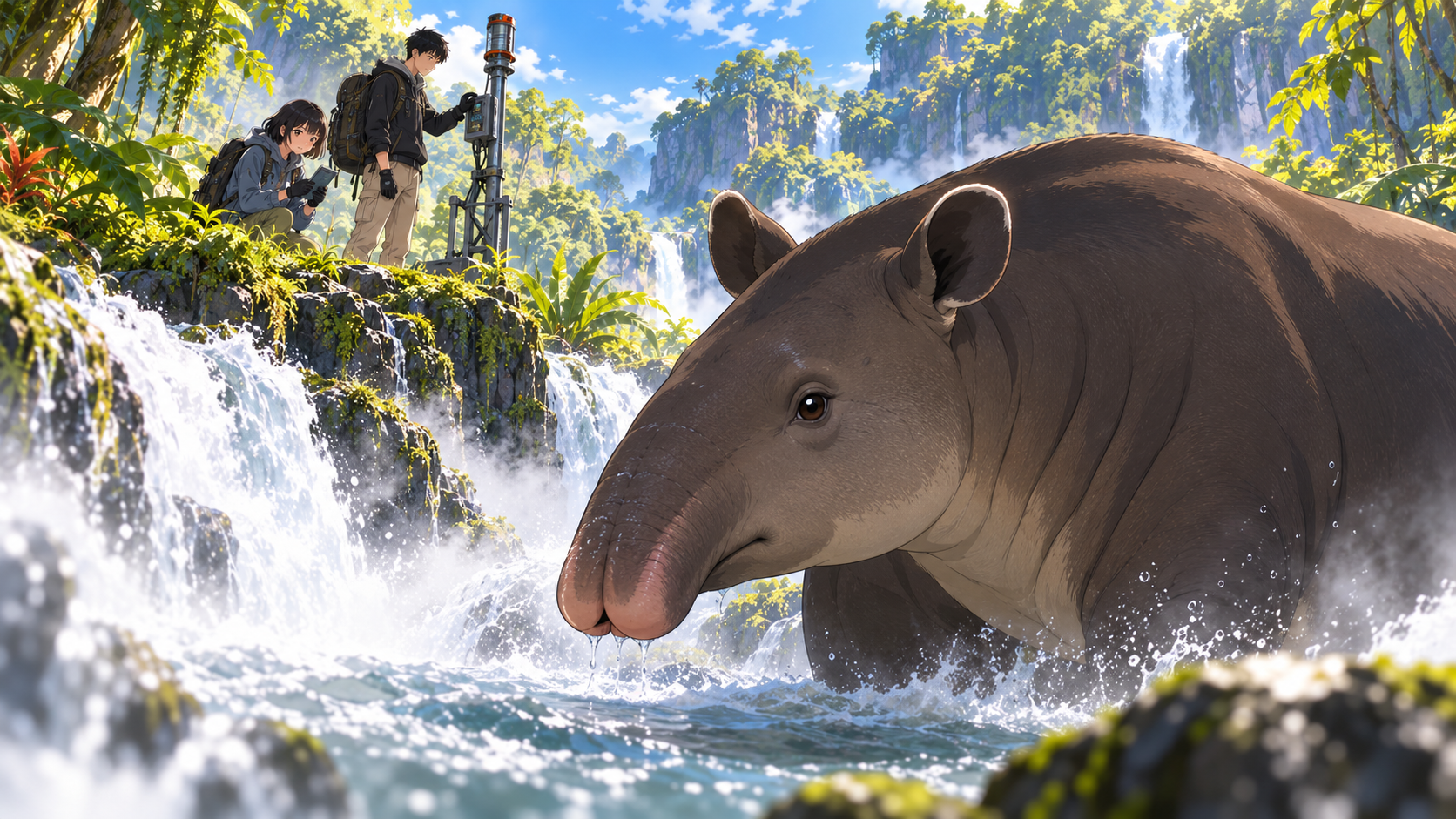
The line of fallen fruit and seeds ended suddenly on the slope. From the high deck, Fang traced where it stopped. I stayed at the base relay. A single tapir stood along the upper passage, its compact body clear against the mist. Before our pressure reading changed, the two fleshy lips at the end of its short snout met around their central notch. It paused instead of moving toward us. We marked the break in the seed line from the safe observation route; there was no reason to follow it.
Noon · Twin-Valve Fork
At a closer view of the animal, the paired snout valves opened again. Broad folds along its shoulders and ribs flattened and gathered with its breathing. They were part of the skin, not separate air sacs. Fang read the mist pressure from the upper platform. I paused the nearby positioning buoy’s continuous pulse for one interval. The old pulse could confuse our reading of the pressure point. Changing our equipment was the only intervention we needed; the tapir remained on its own route.
Evening · Upper Seed-Root Slope
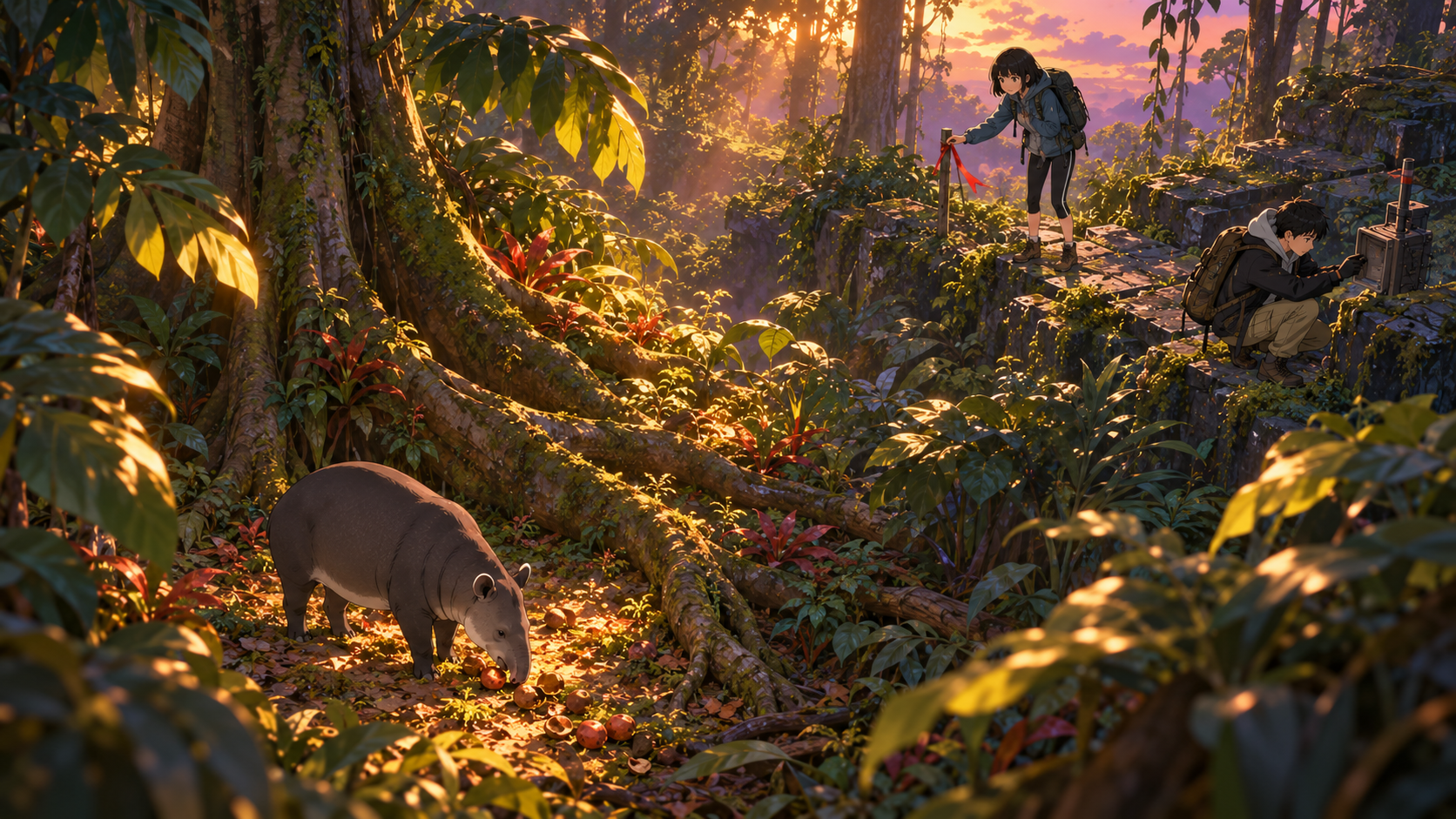
When the mist pressure eased, the solitary adult fed on fallen fruit along the upper slope. Seeds continued down the corridor toward the mossy terraces. Fang and I walked around its path and kept our distance. The quieted buoy gave us room to compare the observation with the water route. We did not trade a closer image for a disturbance. A sign on the outer rim cannot answer for the lightless depth below it.
Habitat Causality
Waterfall mist crosses stepped mossy rock terraces and separate catch pools. Continuous acoustic pulses from the old positioning buoy rebound through the rock steps, making the pressure alarm an unreliable guide to local mist and shallow flow. The tapir's valve closure and short pause reveal a pressure change before our instruments settle. Stopping the nearby continuous pulse corrects a human-made source of confusion; it does not prove that the deeper sinkhole has changed.
Species Behavior
A roughly three-meter tapir with a short flexible snout closes two broad fleshy valve lips around one central notch. Shallow shoulder-rib skin folds move with its breathing; no rounded sacs protrude. Adults are usually solitary. This one pauses in mist, then eats fallen fruit and disperses seeds along the upper forest corridor. A young tapir may follow far away, but none joined the observed adult.
「We changed the buoy and our pace, not the animal's path. I kept the deep core outside today's conclusions.」