The First Tide-Light Beneath the Wing
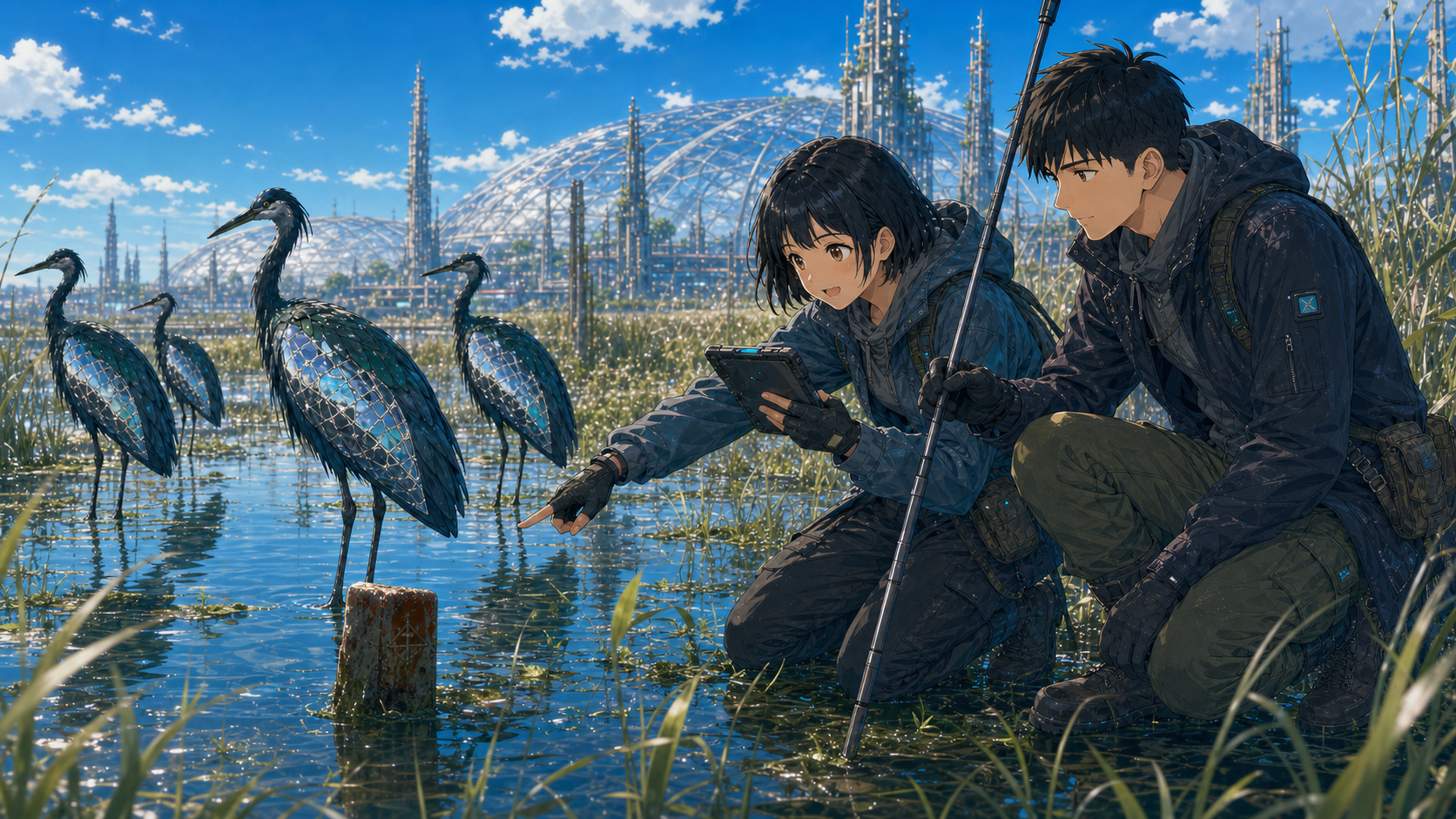
Fang spotted the juveniles first. She signaled, and we switched positions. Until we understood what we were seeing, I kept our pace slower than curiosity.

Field Observation
We moved inland from the outer shallows toward the old tide station. All three stops could be reached on foot or by short wetland-boat crossings.
Morning · Outer-Ring Tide Gauge
Fang found the juveniles beneath an adult's wing and signaled for us to switch positions. I followed her cue.
Noon · Mirror-Reed Flat
We used the reflections from the wing plates to identify submerged navigation markers. The herons fed quietly in the distance.
Evening · Dome Drainage Ridge
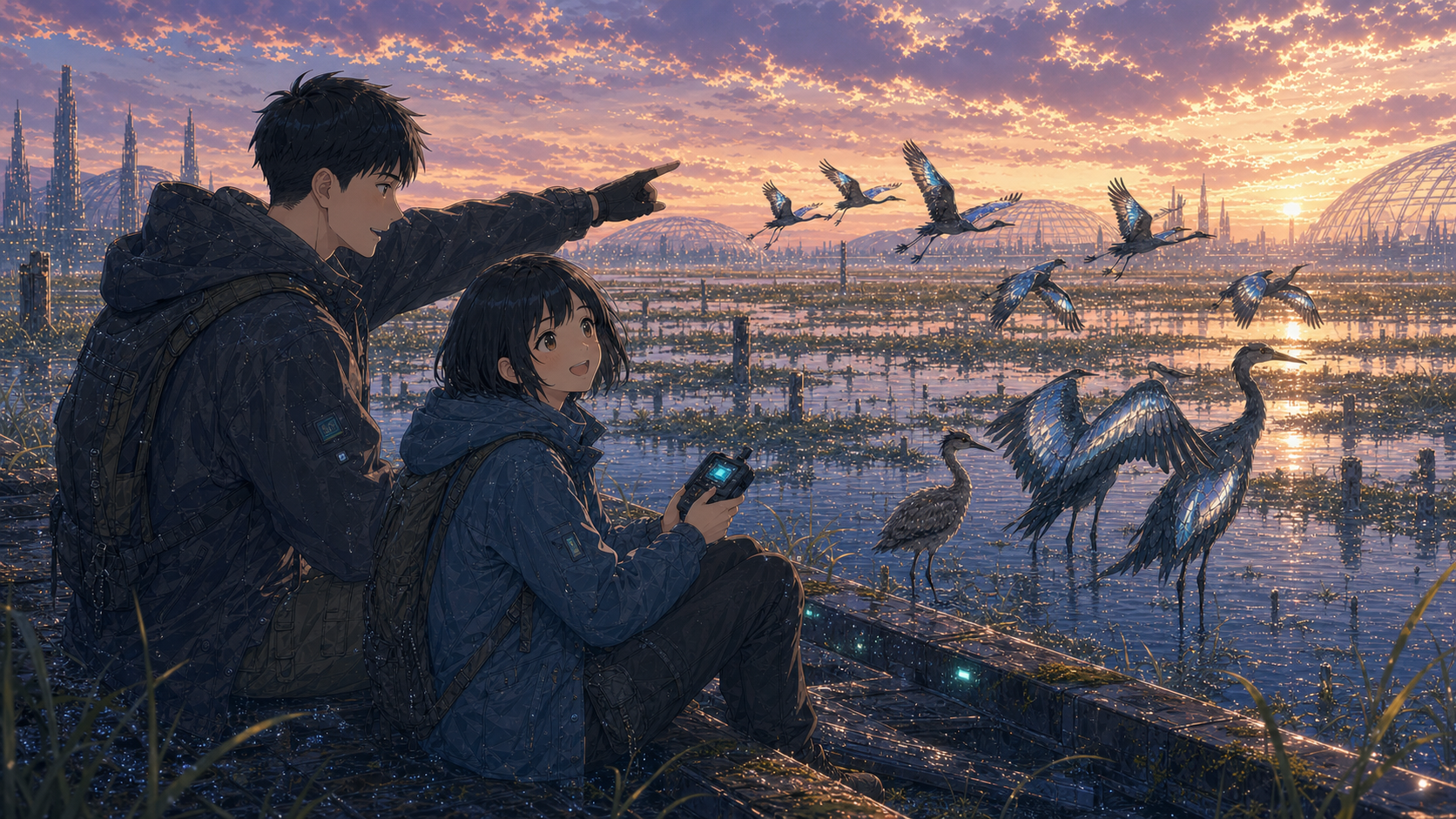
At dusk, the flock reflected the sunset and the inspection lamps. Fang and I stood side by side and recorded its migration direction.
Habitat Causality
Warm, humid dome exhaust, seawater intrusion, pressure released by old tide gates, and submerged metal structures create the wetland's low-frequency resonance. The flock's abnormal inland-facing alignment points toward the source.
Species Behavior
Mirrorwing Tide Herons gather on maintenance buoys and use mineral feather plates to reflect morning light and drive fish into the shallows. Their juveniles are mist-white; startled adults flash their wings and retreat.
「Until we understand, our steps must move more slowly than our curiosity. We recorded only the direction the flock revealed.」