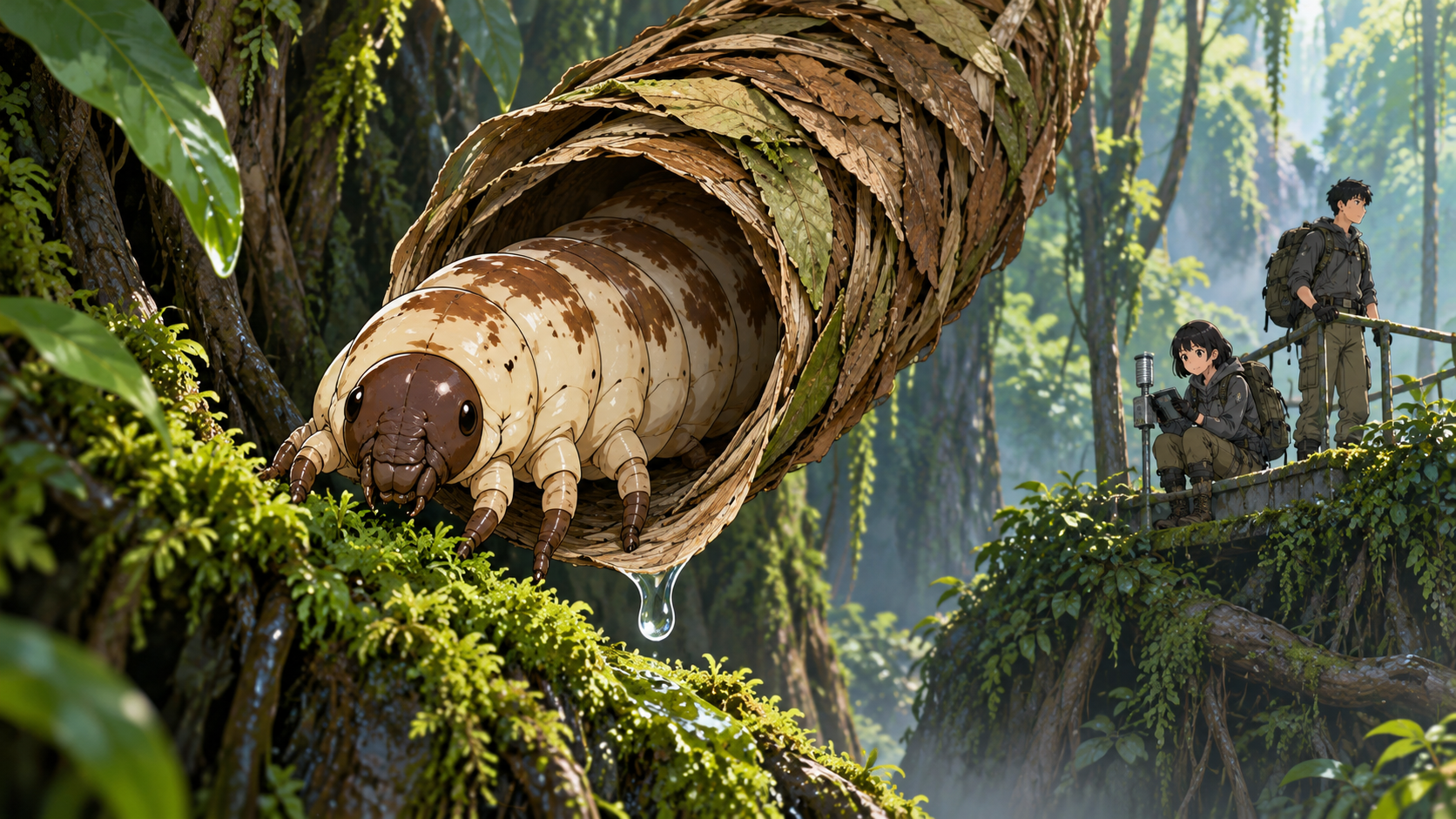
Where the Root Curtain Sends the Water
Fang and I looked down from the dry root bridge. Drops that should have followed the hanging roots were turning toward the side wall beside a narrow case. I kept the way back in sight.
Field Observation
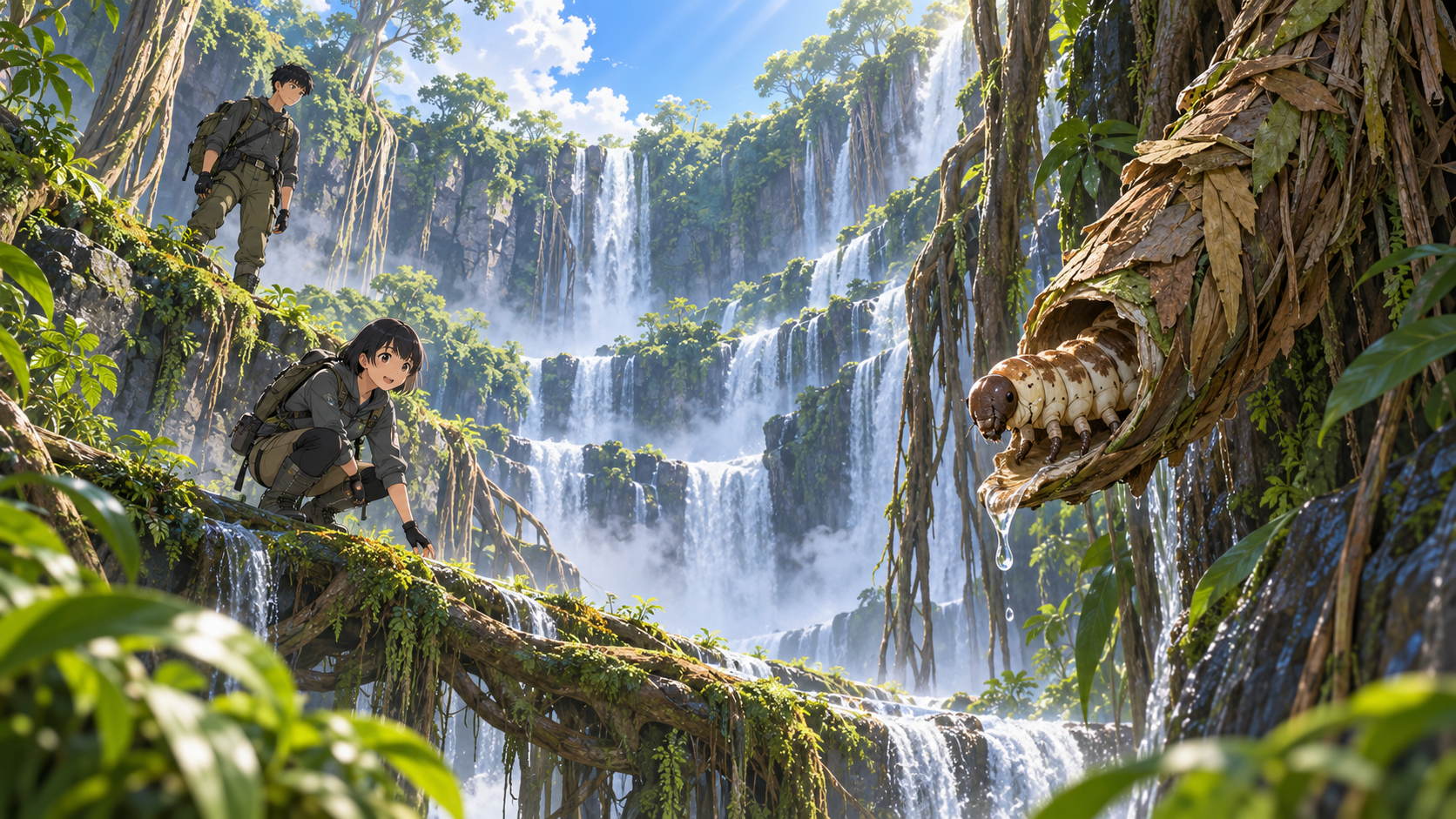
From the dry root bridge at Hanging-Root Gate, we compared a sideways drip line; at Water-Guiding Case Mouth we watched one larva without contact; by the lower terrace we kept the cases apart and changed only the outer buoy setting.
Morning · Hanging-Root Gate
Fang and I followed the dry root bridge to Hanging-Root Gate. Mist drops that should have fallen along the roots had veered toward a side wall beside one slender case. A wingless larva extended its head and thorax; six short legs gripped the fibers. The soft rim of the case still gave the water a downward route. Fang compared the drip lines above and below. I remained higher, watching our retreat. The buoy’s continuous pulse was interfering with this fine watercourse, but a changed line was all we could claim. We did not touch the nest.
Noon · Water-Guiding Case Mouth
I kept the lens on one case mouth and asked Fang to remain on the dry terrace. The larva reached out with six short thoracic legs to graze moss along the root curtain. The narrow case, woven of root and leaf fibers, held a flexible edge that caught mist and passed each drop to the ledge below. Fang compared the lower water mark with the pulse timing. When the pulse paused, the drip line briefly straightened. The larva was not repairing our buoy; it was simply living in the route that our equipment made harder to read.
Evening · Lower Root-Curtain Terrace
Evening light reached the lower terrace. Several cases hung far apart, each guiding drops to a different mossy step. They were individual shelters, not a single colony. Fang drew the returning water line segment by segment. I withdrew the upper equipment to the dry terrace and set the outer buoy to intermittent ranging. As the drops sounded separately again, we stayed beyond the exclusion line. Today’s answer was small: our continuous signal should not cover the root corridor’s own rhythm.
Habitat Causality
Mist descends through root fibers to lower basalt ledges. Continuous buoy pulses rebound among the terraces and obscure a shifted drip line. Separate bagworm cases guide water downward as part of normal feeding life; comparing their position and water marks with pulse intervals reveals the disturbed segment. Intermittent ranging changes our measurement, not the larvae.
Species Behavior
A wingless bagworm larva extends six short thoracic legs from a narrow fiber case to graze moss. Its soft mouth rim guides mist drops downward. Widely spaced larvae occupy separate cases and do not form a communal nest.
「We gave the root corridor its quiet intervals back. We left every case where it belonged.」