The Current Turned Beneath the City
The sound of the water beneath the bridge thinned before the wrong pulse arrived. The bream turned upstream together. Fang recorded the angle of their curtain fins. I checked the flow gate. She treats a living response as a coordinate. I make the city quiet enough to read it. This time, the current itself had been bent.
Field Observation
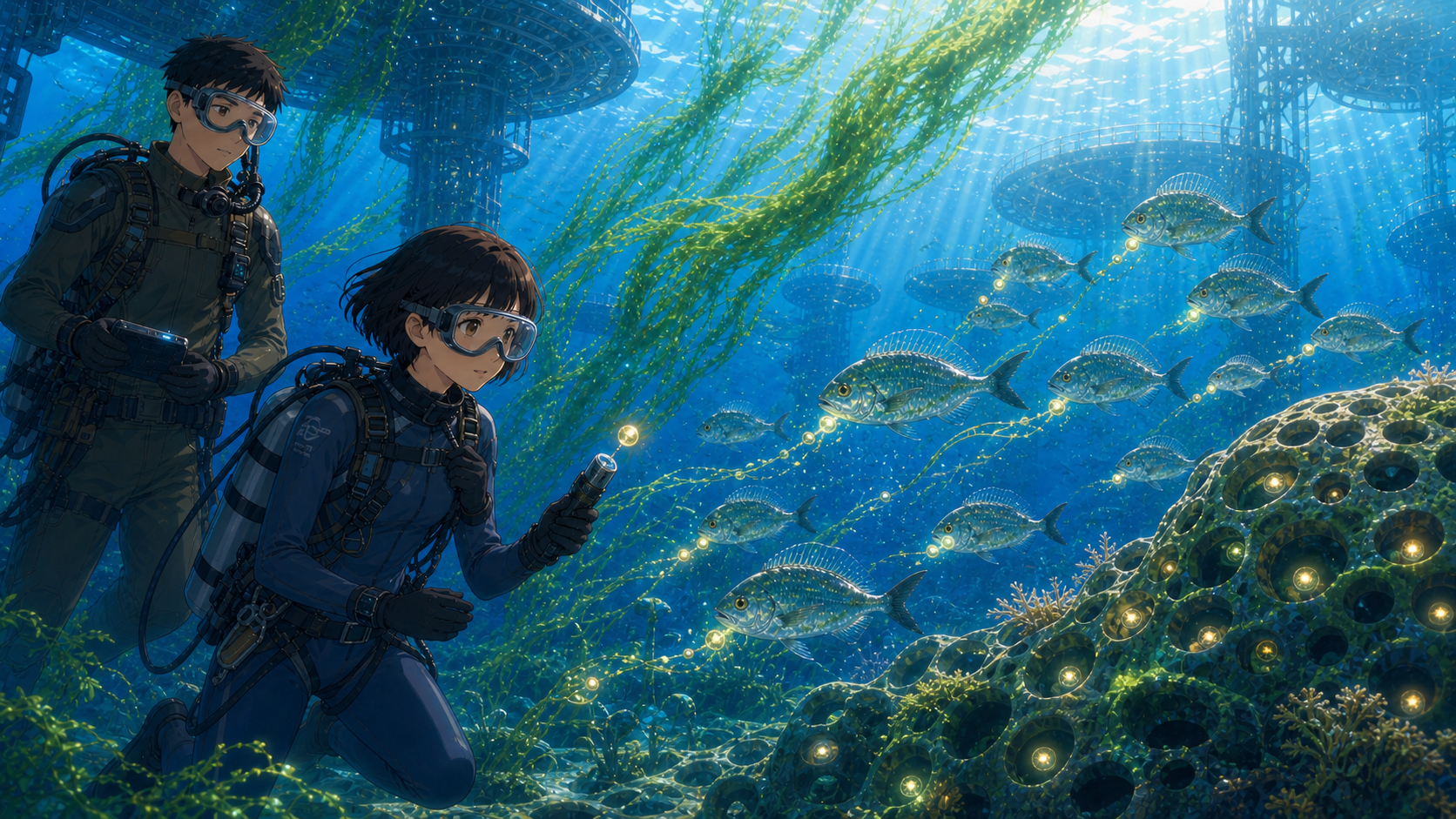
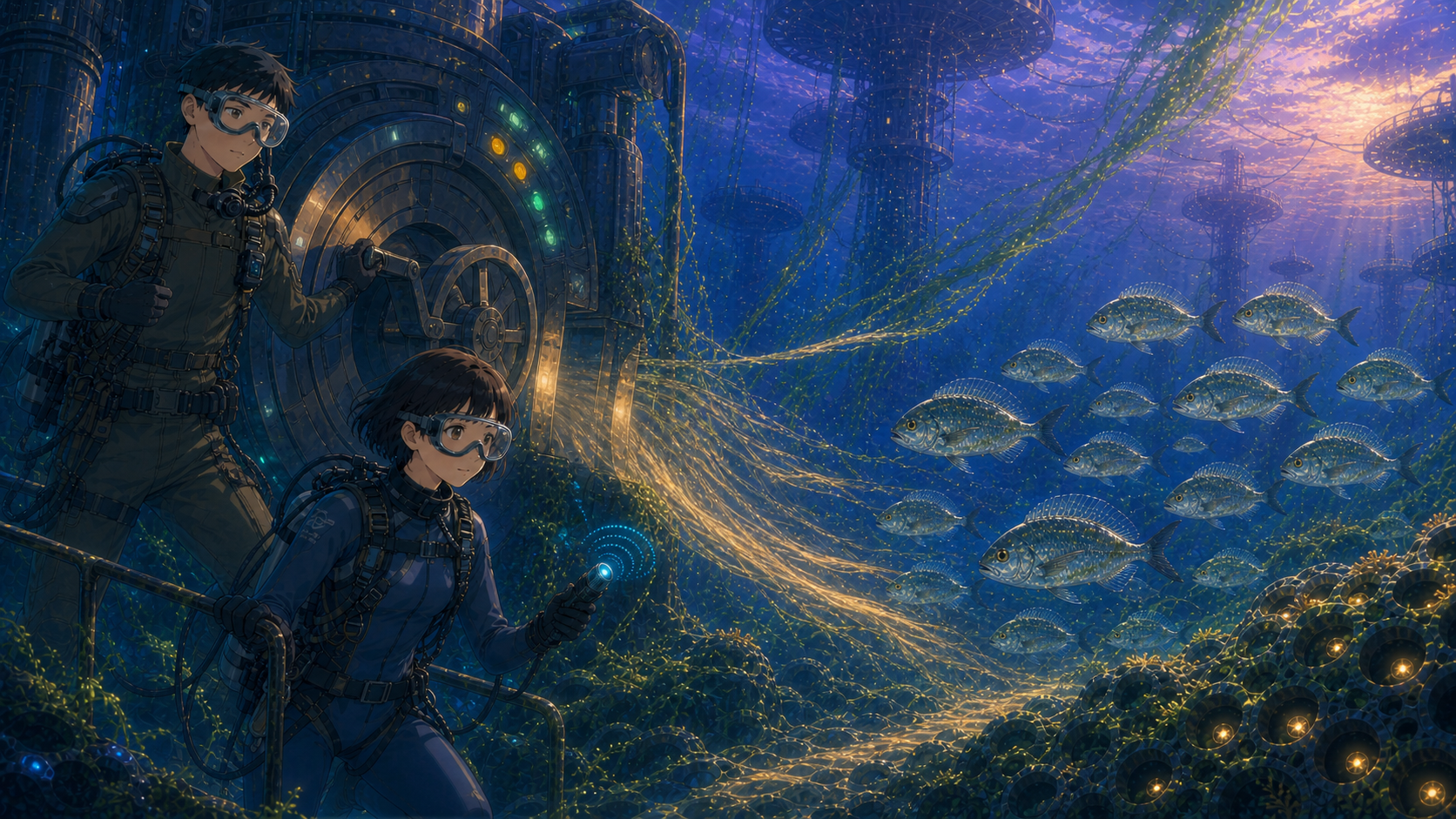
We left the outer buoy line and followed the shadow of a flexible city bridge south into Flex-Bridge Shadow Belt, where the school kept its feeding route beneath the hull. The luminous spore capsules carried us onward to Luminous-Fin Grazing Ground and a young artificial reef. From there, we continued downstream to Tidal-Window Flow Gate, the city mechanism that had opened at the wrong time and caused the current to reverse.
Morning · Flex-Bridge Shadow Belt
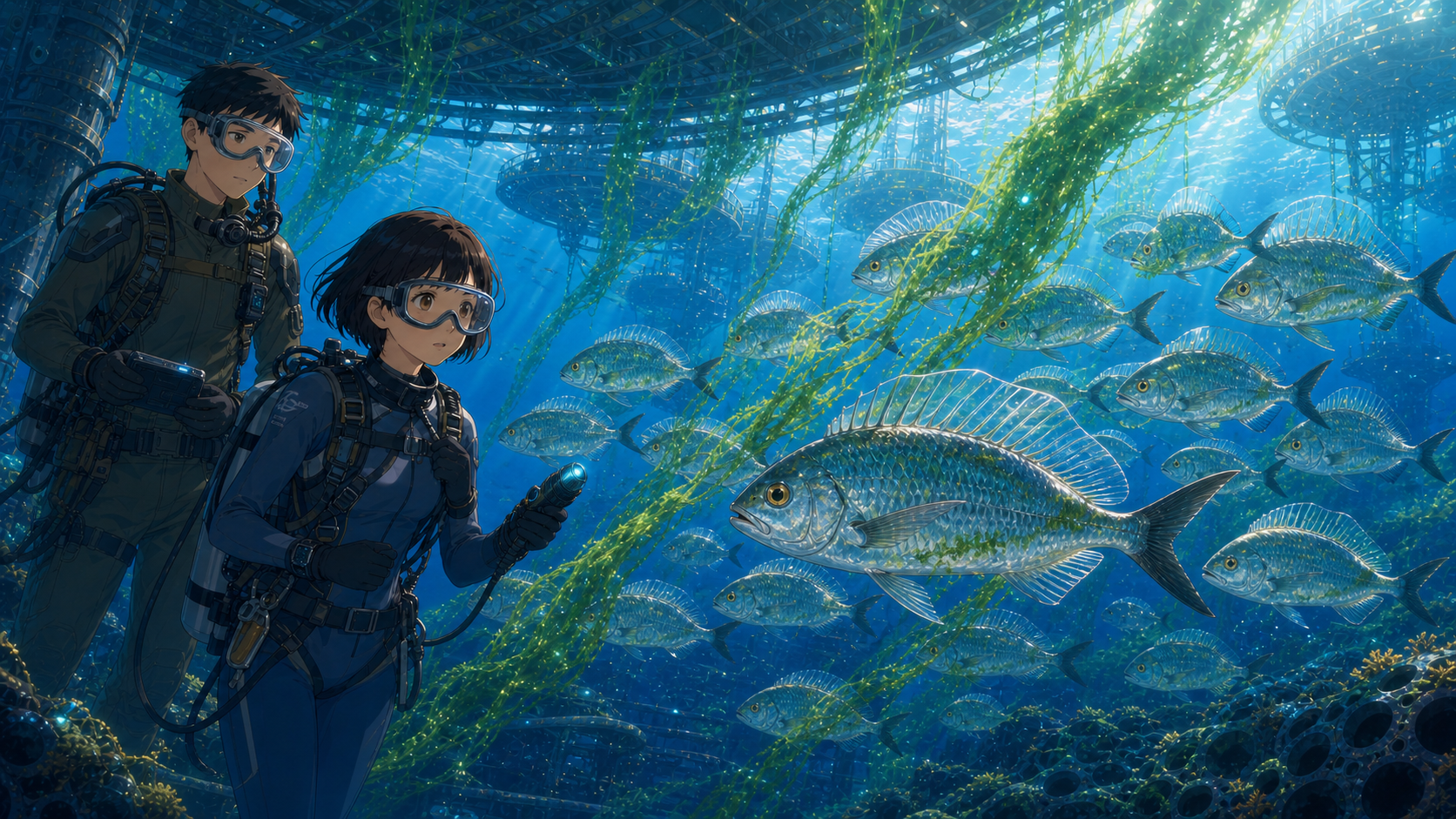
The school grazed naturally detached algae along the city shadow. When the false sonar sounded, every fish turned upstream at once. Fang read the fin angle without entering their turning radius. I compared the response with the gate log. The equipment had changed the water before the fish changed direction.
Noon · Luminous-Fin Grazing Ground
We followed the luminous spore capsules carried between the fish. They were not drifting at random. The school was moving them from the algae canopy into the pores of a young artificial reef. We stayed outside the feeding band and let the route explain itself.
Evening · Tidal-Window Flow Gate
The gate had opened on a false signal. I returned it to manual control. Fang used a non-invasive BCI to watch the school choose the restored warm current without being driven. The fish resumed their route toward the reef. Nothing living needed to be corrected.
Habitat Causality
Floating-city shadows and the algae-energy membrane create layered currents beneath the flexible bridges. The bream graze membrane fragments that detach naturally and carry toward new artificial reef the spore capsules that Acoustic-Sand Needle Shrimp clear from the acoustic sand. False sonar makes the city open a flow gate at the wrong time, reversing the feeding current and turning an acoustic error into a physical change in the habitat.
Species Behavior
Curtain-Fin Algae Bream use rows of soft dorsal fins to hold position in rising and falling water. They graze detached algae, move luminous spore capsules toward new reef, and turn as a coordinated school when the current reverses. They are non-aggressive and return to the natural warm flow once the city gate is placed back under manual control.
「The fish had not lost the route. Our system had moved it. Tomorrow, we follow the reef openings that began closing toward the same wrong sound.」