The Fjord Turns Before the Tide
The colony turned in the same second. Fang crouched to inspect the shell ridges. I set a mechanical compass on the wet rock. Both shifted by the same angle.

Field Observation
We entered from the outer harbor along the black-sand tide line, walked inward to a geothermal fissure during the low-tide window, then returned by the high basalt ridge before the channel flooded.
Morning · Black-Sand Needle Beach
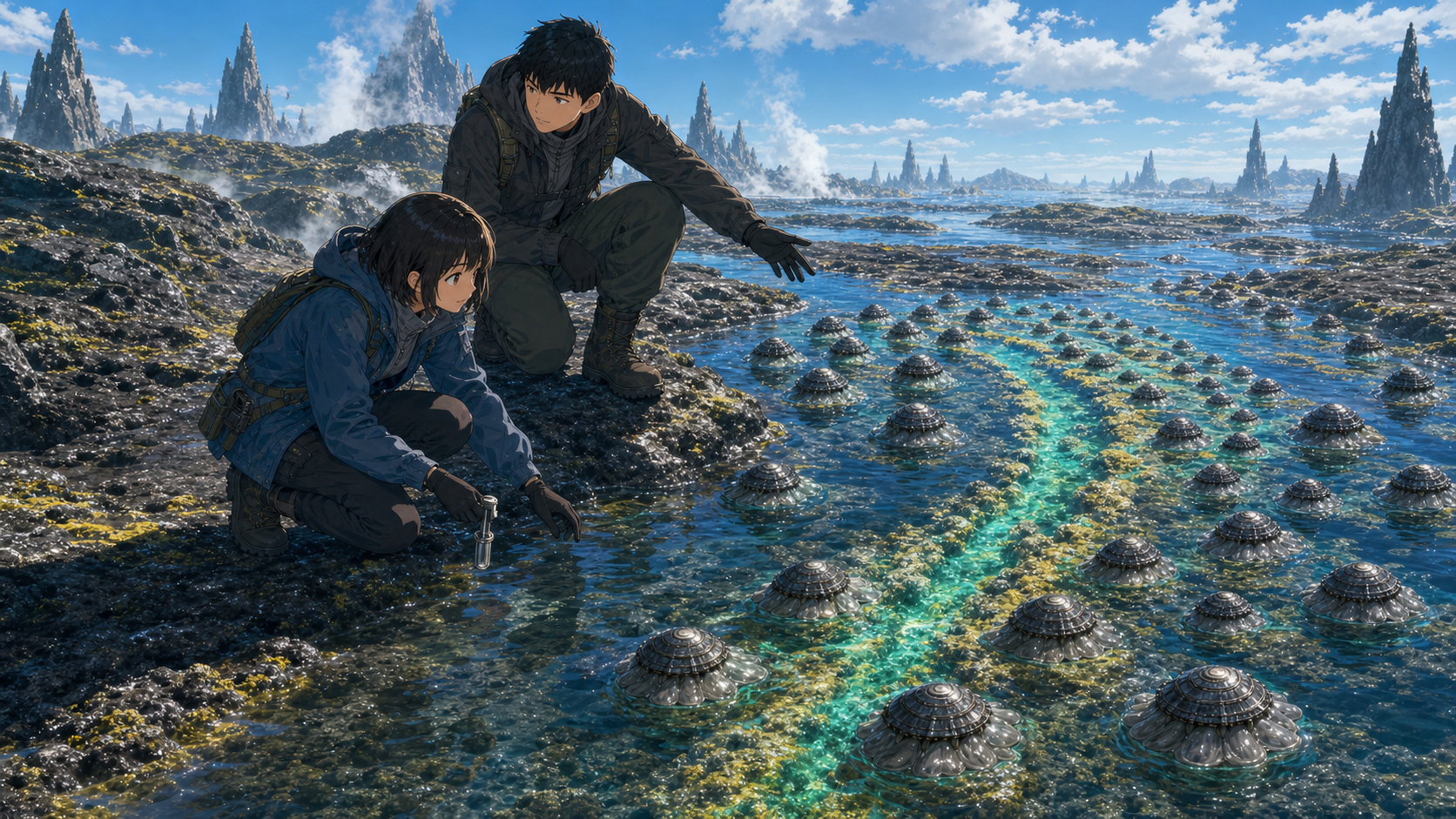
The entire colony turned at once. Fang examined the concentric shell ridges while I placed a mechanical compass on the wet rock. Its needle and the limpets shifted by the same angle.
Noon · Magnetoalgae Fissure
Fang compared the shell pattern, geothermal algae band, and compass deflection with a non-invasive sensor. I marked safe footholds outside the feeding spiral. The colony kept arranging itself along a line we could not see.
Evening · Thermal-Tide Marker Tower
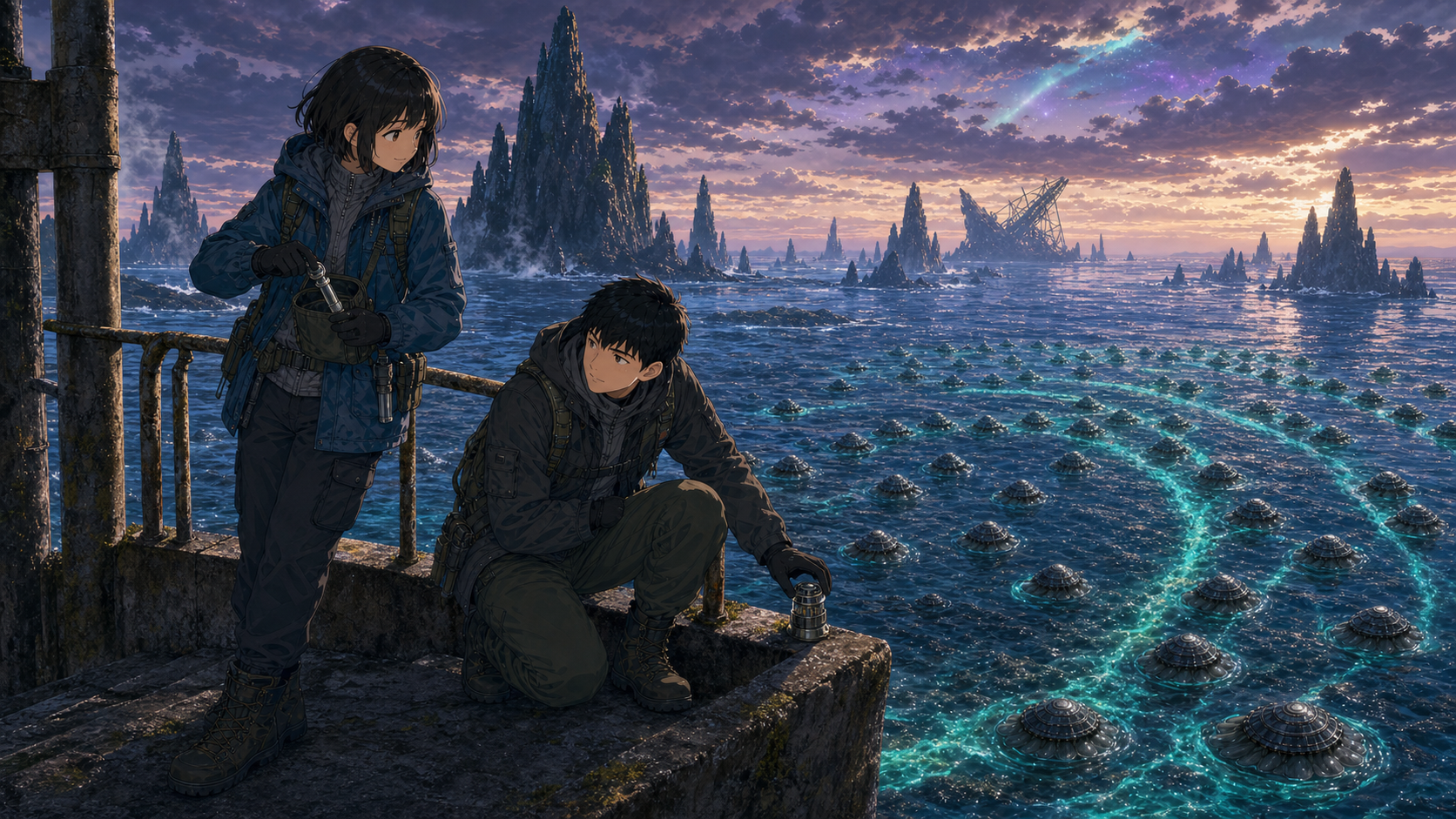
The last reading reversed before the tide covered the colony. Fang packed the probe. I left the marker on high ground without touching a single limpet.
Habitat Causality
Black-sand tide pools, wet basalt, turquoise geothermal algae, and a periodic magnetic field create a feeding ground where the colony's alignment makes changes in polarity visible. The matching compass deflection shows that the pattern belongs to the fjord, not to a broken instrument.
Species Behavior
Ash Compass Limpets graze geothermal algae in ordered spirals. Their black-and-silver magnetite shells align along invisible magnetic lines, and hundreds of individuals reverse direction together when the field changes.
「Nothing had failed. We had simply not learned to read the field yet. Tomorrow, we look for what makes the whole fjord turn early.」