A Crossing the Fish Chose
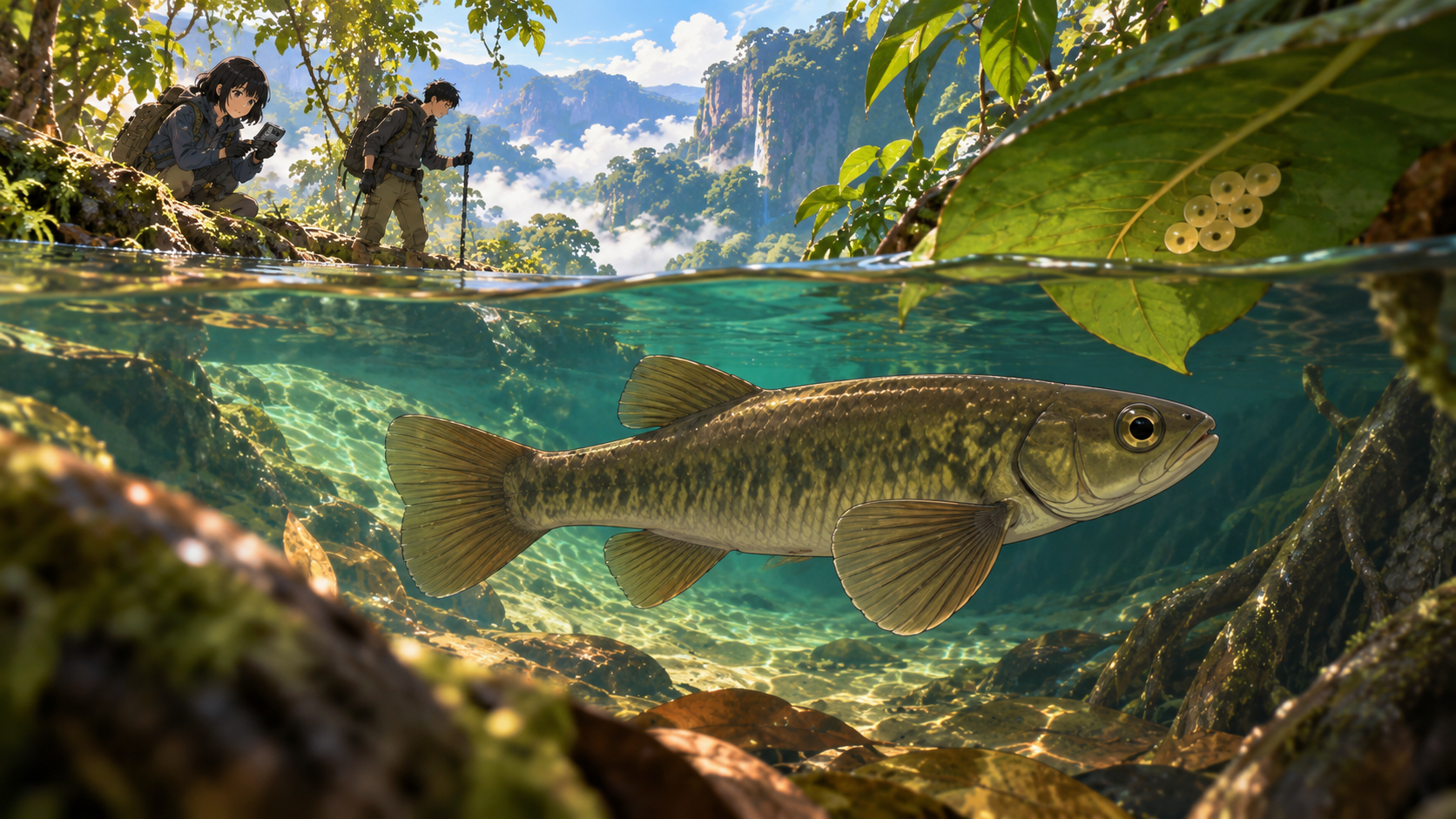
At Fold-Fin Tree Pool I stopped active tracking. A Fold-Fin Canopy Killifish folded its fins, tried twice to reach the next pool, and stopped at a dry branch channel. Its eggs clung beneath a leaf. The waterline had fallen below them. We had cut the route it knew.

Field Observation
Morning at Fold-Fin Tree Pool: watch two halted leaps and eggs stranded above the falling waterline. Noon at Leafback Egg Window: compare egg moisture and the channel slope, then identify the automatic gate between the pools. Evening at Mid-Canopy Shallow Channel: open the gate slowly, check both pools, and let the fish cross without handling it.
Morning · Fold-Fin Tree Pool
Fang recorded the water level, wind, and the fish's response from a safe distance. I stayed on the tree-bridge side where we could retreat and checked the Cloudport equipment's actual rhythm. The fish pressed its broad pectoral fins close and made two short attempts over the wet branch. Both ended at the dry gap. This was not an ocean fish taking flight. It was a freshwater fish using a nearby wet branch to pass between pools. The eggs beneath an overflow leaf were now above the waterline. Fang checked their moisture first. I followed the broken middle channel from the bridge; we did not chase the fish into another leap.
Noon · Leafback Egg Window
Fang compared egg moisture with the slope of the shallow channel and noted the salt level at the pool edge. I found the automatic gate that had cut the two pools apart. It looked as though it protected the seed bank, but it left the pools as islands. Fang did not scoop up the fish. I checked which way the gate would open against the natural slope. If I opened it all at once, one pool would pour into the other. The killifish waited in the shade. We waited too. Startling it would tell us nothing useful about its crossing.
Evening · Mid-Canopy Shallow Channel
I let water into the channel step by step. First we checked the undersides of the leaves, then the color of both pools. When Fang saw the eggs back within a moist layer, she nodded, and I widened the gate by one final increment. A thin flow joined the pools. One killifish crossed the short distance between branches on its own. We neither carried nor drove it. The small channel also joined mosquito larvae, fish, and the upper reservoir again. I recorded the time, the gate setting, and the signs we can check in the next wind window. One passage does not prove that the whole canopy has healed.
Habitat Causality
Natural branch shade, leaf channels, and intermittent overflow connect three canopy water levels. Continuous pumping for the seed bank and a closed gate severed the mid-canopy shallow channel, lowered the waterline beneath eggs attached to leaves, and left two pools apart. The killifish stopped at the dry crossing. Opening the gate gradually along the natural slope restored a thin link without a sudden surge; the fish crossed of its own accord. The next wind window must test whether the flow lasts.
Species Behavior
A roughly thirty-centimeter olive-brown freshwater killifish folded its broad pectoral fins and tried two short leaps over a wet branch. Its closeable moist gill cover helps it make such brief crossings. It stopped at a dry channel instead of jumping farther. Eggs adhered beneath overflow leaves above the retreating waterline. After slow flow returned, one fish crossed without being handled. This species also feeds on mosquito larvae and fallen insects in the tree pools.
「We changed the gate, not the fish. Fang kept the egg and water readings. I left the next wind window to test our work.」