A Web Holds Two Times
There was one sun over the channel. The web kept two times. Fang followed the angle across the silk. I pressed the ruler into the unlit strip. The eight-legged little things did not run. They made the error easy to see.
Field Observation
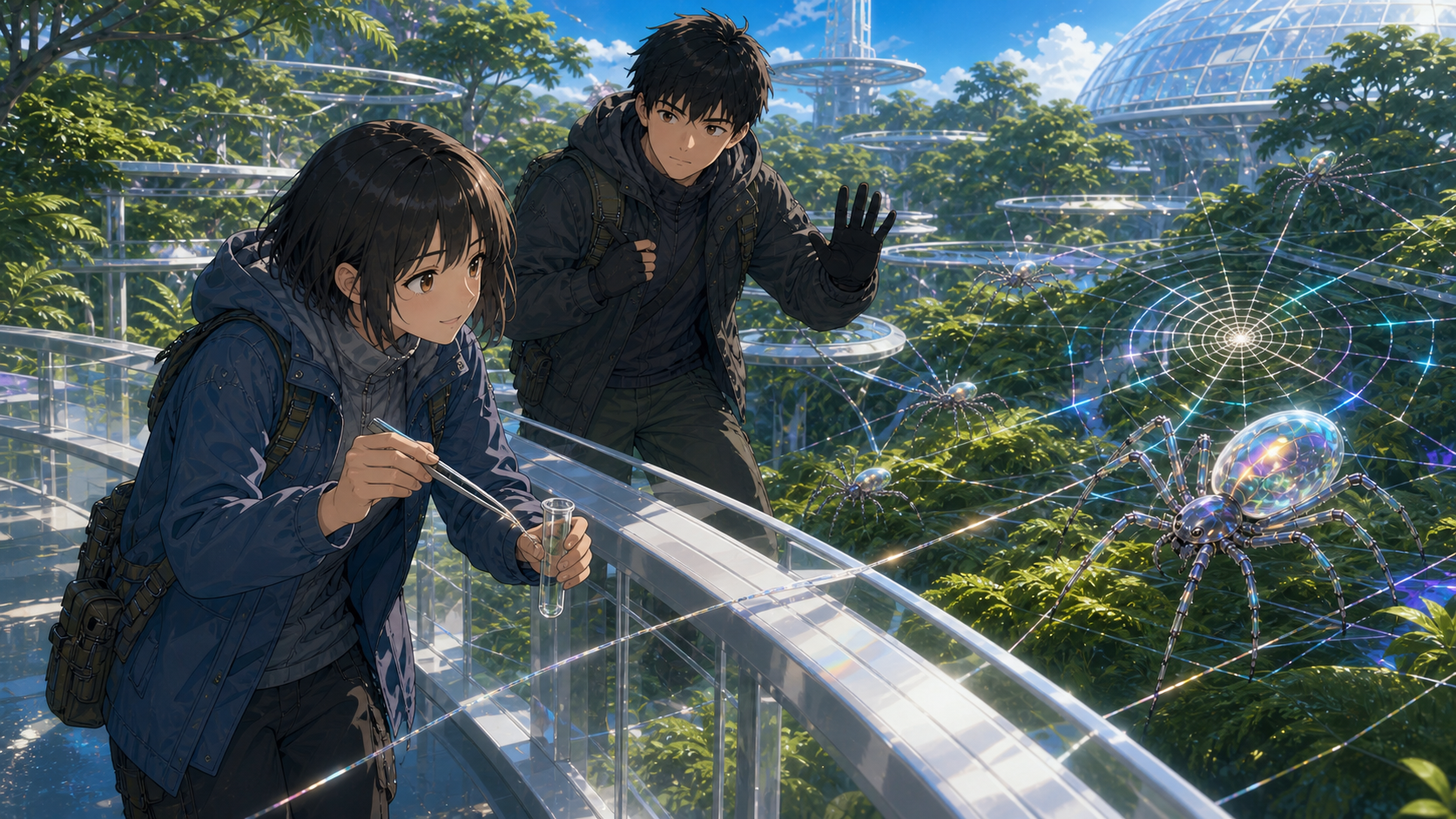
We entered through the southern maintenance gate and followed a condensation channel into the reserve's outer ring. A platinum service walk led above the fungal grove to Polarized Silk Bridge without crossing the active webs. From there, a canopy-side platform reached Spore-Rain Observation Deck while keeping clear of the communal polarized web.
Morning · Outer-Ring Photoalgae Channel
The polarized web cast morning and dusk at once. Fang crouched beside the channel and read the silk angle with her sampler. I fixed a dark reference ruler behind her, outside the light band. The spiders stayed on the web. We kept our hands off it.
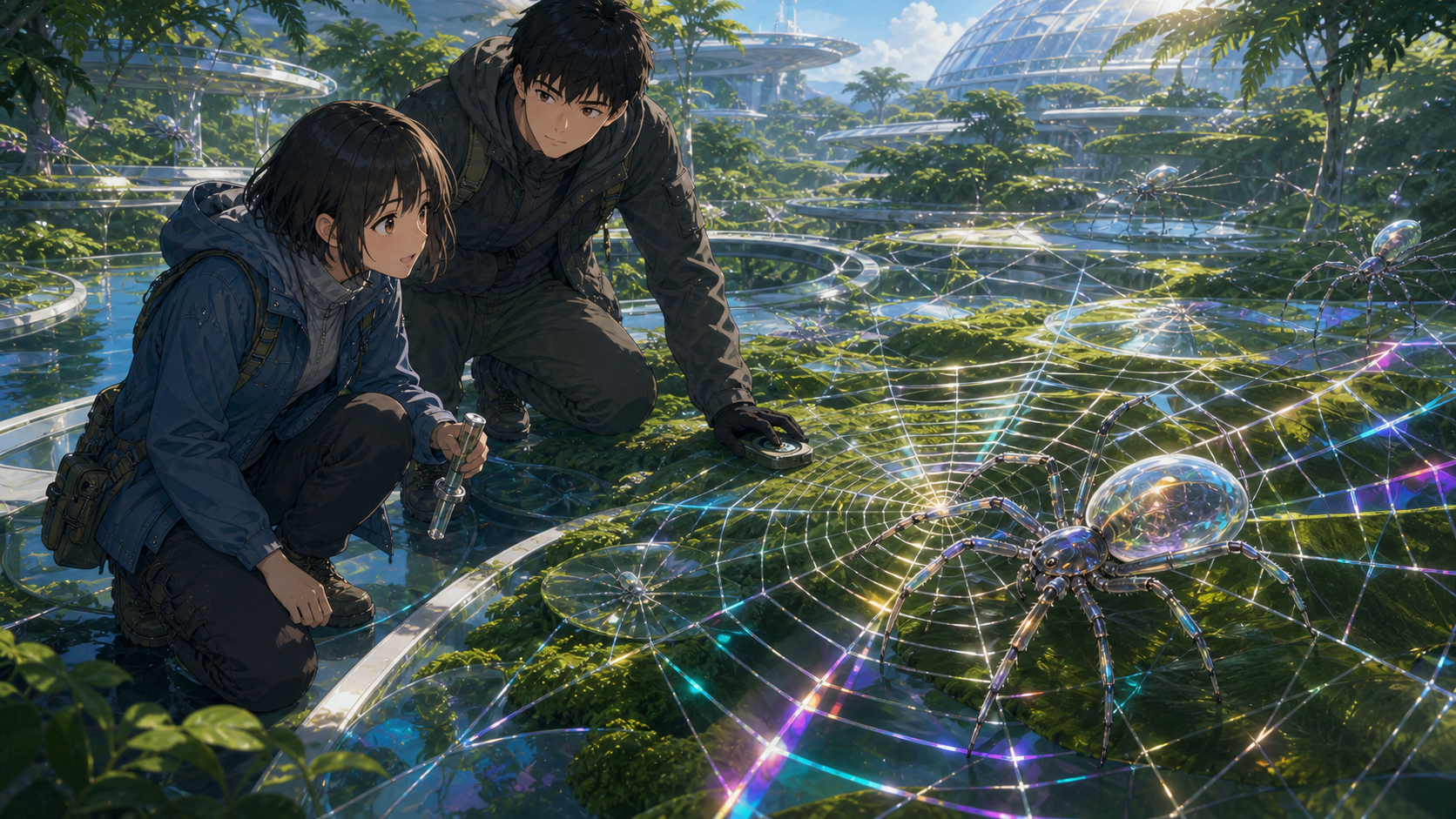
Noon · Polarized Silk Bridge
Fang collected one short strand that had already fallen onto the rail. I stopped the maintenance machines outside the grove and checked the colony from the side. Eight legs at a time, the spiders rebuilt slowly. If we wanted to understand them, the city's efficiency could not speak over the life already at work.
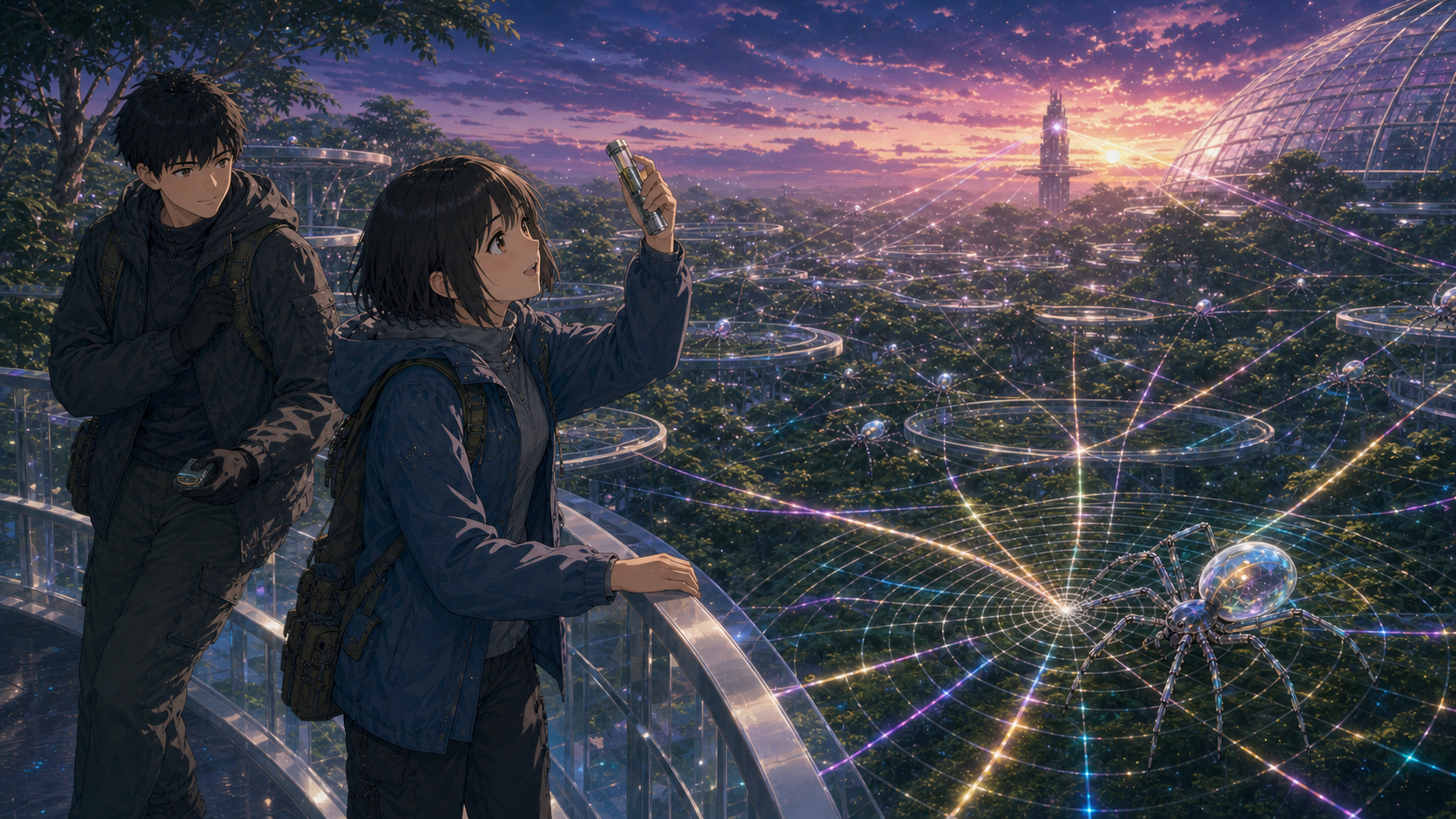
Evening · Spore-Rain Observation Deck
After dusk settled, the webs lit again. Every spider changed the same radial line on the same beat, as if something deeper in the grove had struck a second sunset. Fang gave one short smile. We finally had an error that would repeat.
Habitat Causality
Retired photonic wafer glass, dome condensation, low-grade waste heat, mineral films, and feral mycelium have formed a polarized light habitat. The spiders split dome light and move fungal spores through the understory. A fixed exposure sequence deeper in the reserve adds a second, incompatible light cycle, causing the whole colony to rebuild the same radial line in synchrony.
Species Behavior
Diffraction Spore Spiders anchor eight legs to wafer-glass edges, prey on small insects, and carry fungal spores on clean radial silk. They are non-aggressive. The colony keeps weaving while observers remain outside the active web and maintenance machines stay beyond the grove.
「A repeating error leaves a direction. Tomorrow, we follow the false light deeper into the reserve.」