The Gate We Opened for the Tide
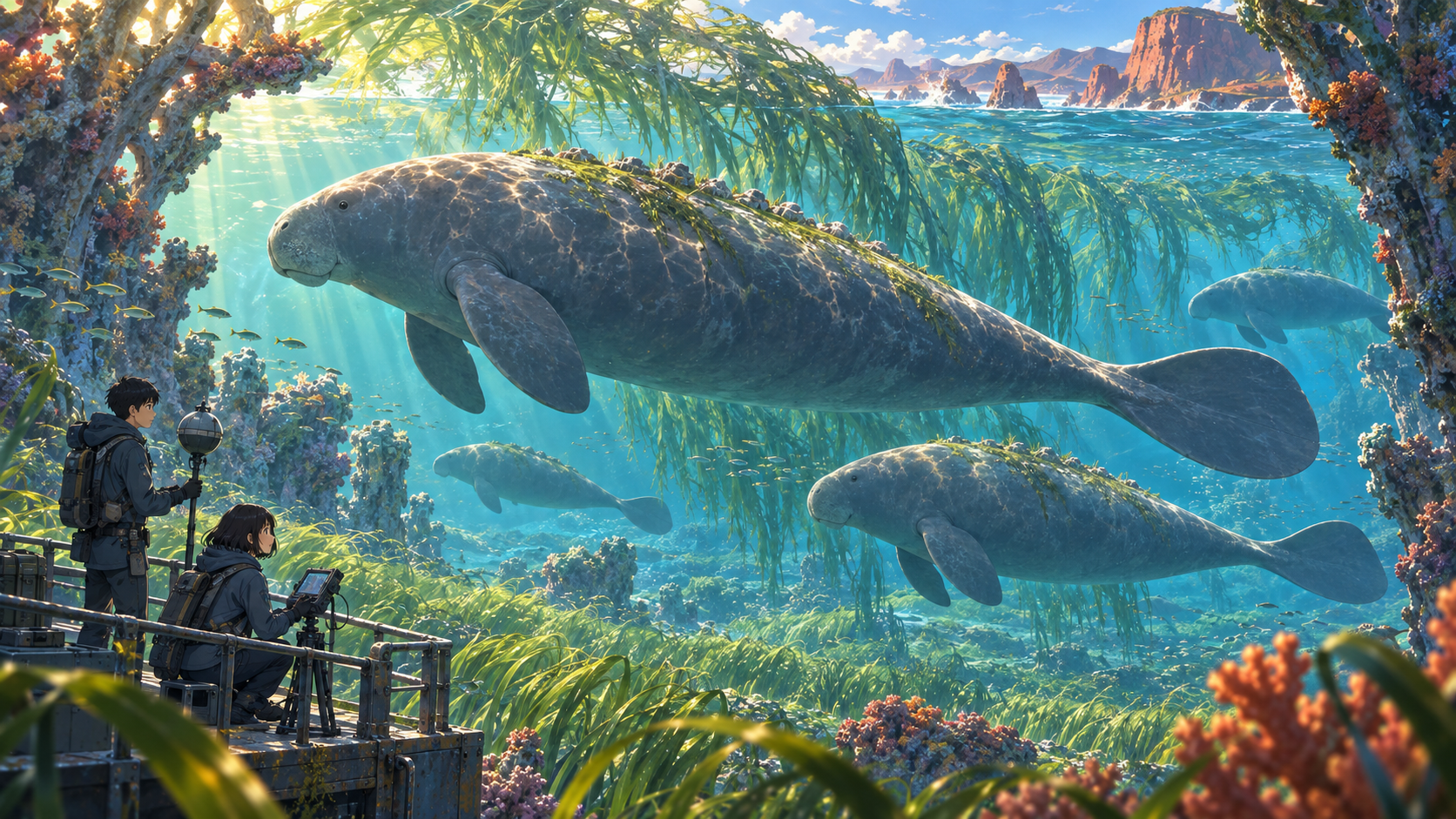
Tidal pressure and crystal-reef reflections were still changing at Seagrass Migration Gate. The herd had stopped outside the blocked gap. Fang separated its response into current, suspended particles, and movement direction, then read its grazing rhythm. I marked load-bearing points, return flow, and our retreat line from the outside. All active weapons stayed stowed. The animals did not need direction. The waterway did.
Field Observation
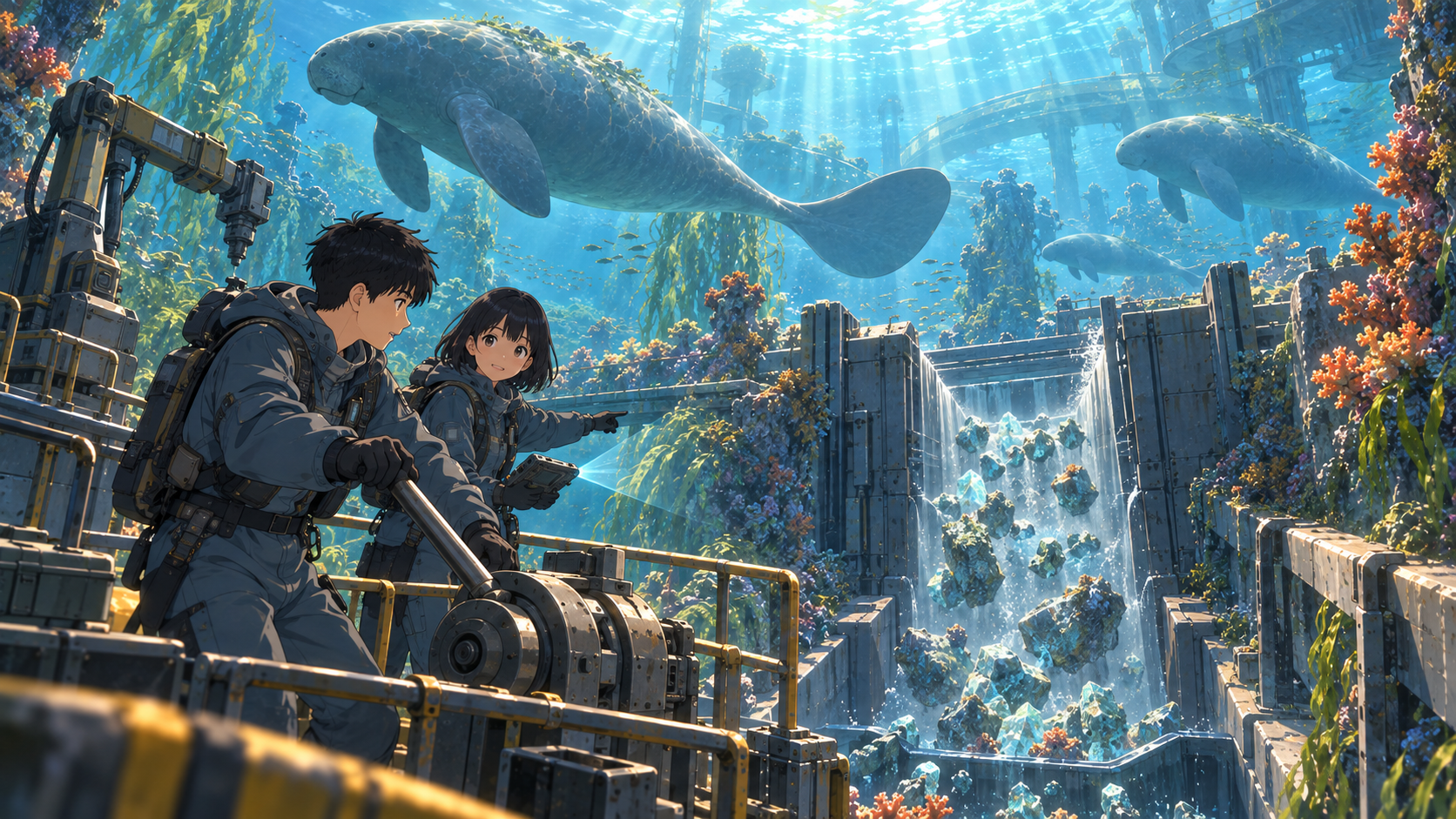
We entered the outer edge of the main seagrass corridor from the buffer cape and stopped short of the herd at Seagrass Migration Gate. At Crystal-Reef Gravity Gate, we stayed clear of living reef, shut down harvesting, and opened the gravity-fed channel. Then we withdrew along the reopened waterway to the observation line at Tide-Vein Release Corridor and left the route to the herd.
Morning · Seagrass Migration Gate
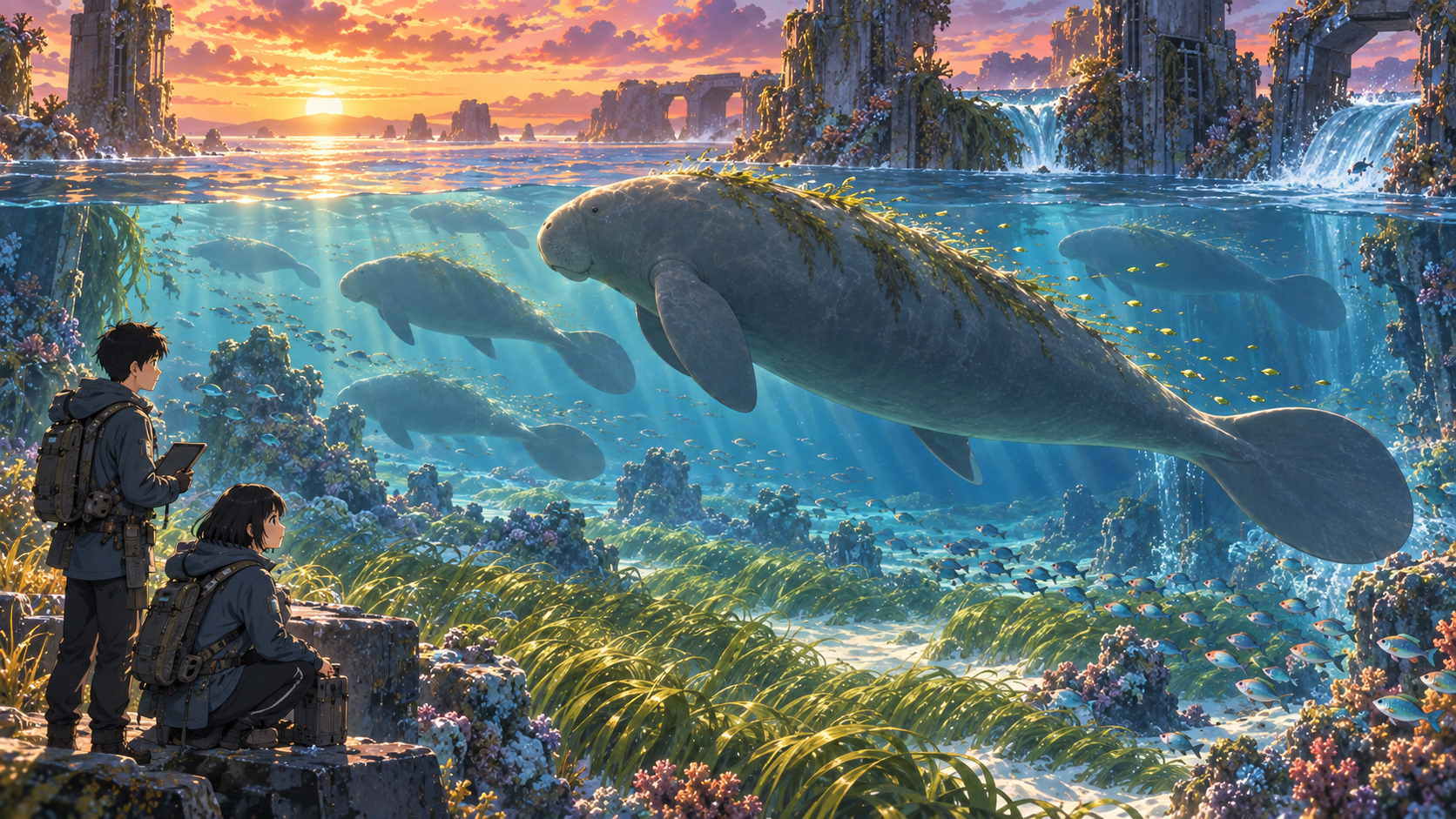
Five Ark-Ridge Sirenians waited outside the crystal-reef gap. The adults' low mineralized ridges carried seagrass seed; the younger animals remained inside the herd. Fang mapped the current and their feeding rhythm with non-invasive sensors. I stayed clear of their path. We did not chase them or block their retreat.
Noon · Crystal-Reef Gravity Gate
The maintenance line still treated the living reef as an unlimited source of material. I stopped the harvesting arm and opened the gravity gate. Fang redirected the repair process to crystal that had already come loose. We removed the human obstruction without cutting more living reef or drawing the herd forward.
Evening · Tide-Vein Release Corridor
We withdrew to the observation line. The herd entered the reopened channel by choice. Its broad horizontal tails shifted loose fragments while its dorsal ridges carried seagrass seed through the gap. Behind it, the parrotfish sand belt and reef-pore flow began recovering together. We did not lead the movement. We restored the choice.
Habitat Causality
Crystal coral traps polluted particles, parrotfish carbonate sand replenishes seagrass root beds, and flexible reef pores keep water moving through the hard breakwater. Excessive automated harvesting cut living reef, released loose crystal, and clogged the old Tide Vein. Return flow carrying metal particles pushed larvae away from the seagrass arcade, while a false reflective beacon displaced the outer-ring shark patrol. The sirenian herd, which carries seagrass seed and moves loose fragments, stopped at the final blocked migration gate. Shutting down harvesting, clearing artificial debris, turning off the false beacon, and opening the gravity gate restored a continuous route without driving any species through it.
Species Behavior
The ten-meter sirenians selectively graze older seagrass with rounded snouts. Broad horizontal paddle tails shift loose crystal fragments, and low mineralized dorsal ridges carry seagrass seed. The five-animal multigenerational herd pauses at blocked corridors and resumes migration only after water flow returns. It is not actively aggressive, but its passage reshapes seagrass routes and loose-reef distribution.
「We opened the gate and stepped back. The herd chose the corridor. The Tide Vein carried the rest.」