The Map We Heard in the Rings
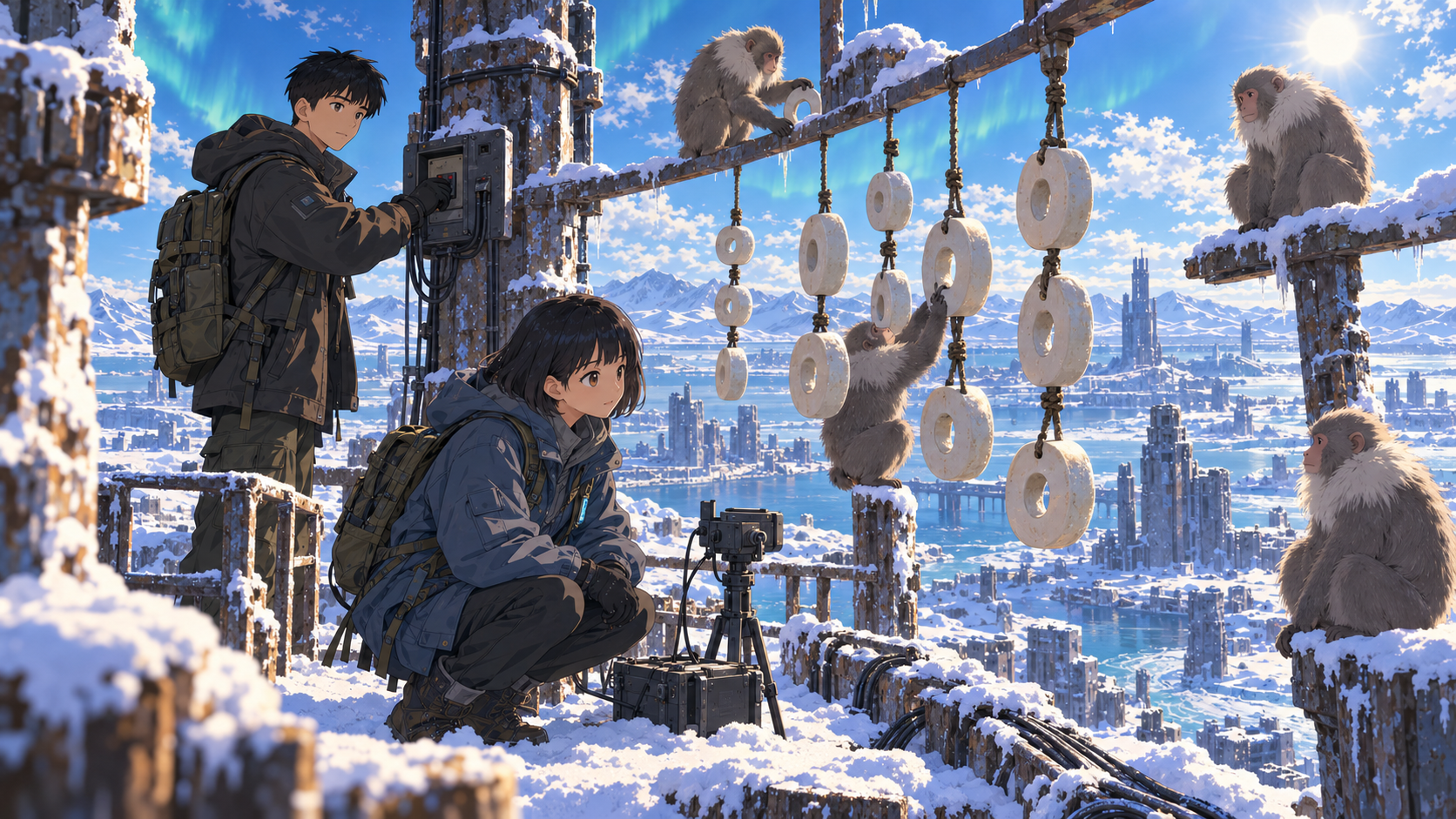
We followed the air route the walruses had reopened up to Tower-Ring Old-City Ridge. Wind cut hard edges into the snow on the half-buried roofs. I shut off active scanning first; another pulse would have buried the sounds here. Twelve snow macaques moved between two low towers. A gray adult raised a fallen ceramic insulator ring in its broad hands. Its hollow white shoulder mane lifted in the wind, and its short tail stayed close to its side. Three kinds of ring tone came to us in turn as the wind changed. The young copied them only beside safe crossbars.
Field Observation
Morning at Tower-Ring Old-City Ridge: listen to the troop across two low towers. Noon at Ceramic-Ring Wind Marker Platform: read the older and newer ring placements and turn off the masking tower-line test. Evening at Snow-Macaque Windbreak Steps: let smaller animals and the distant walruses take their own exits before leaving.
Morning · Tower-Ring Old-City Ridge
Fang stayed behind the snow ridge and recorded the moments when the troop turned with a non-invasive BCI. I put a passive recorder between her and the incoming wind, then kept my distance. The brine vents we found over the previous two days and the thin ice the walruses guarded yesterday joined up in the gaps between the ring sounds: one line we could take, another we could not. A city test signal had covered that map. We listened through the whole sequence before deciding which stretch of human noise to shut down.
Noon · Ceramic-Ring Wind Marker Platform
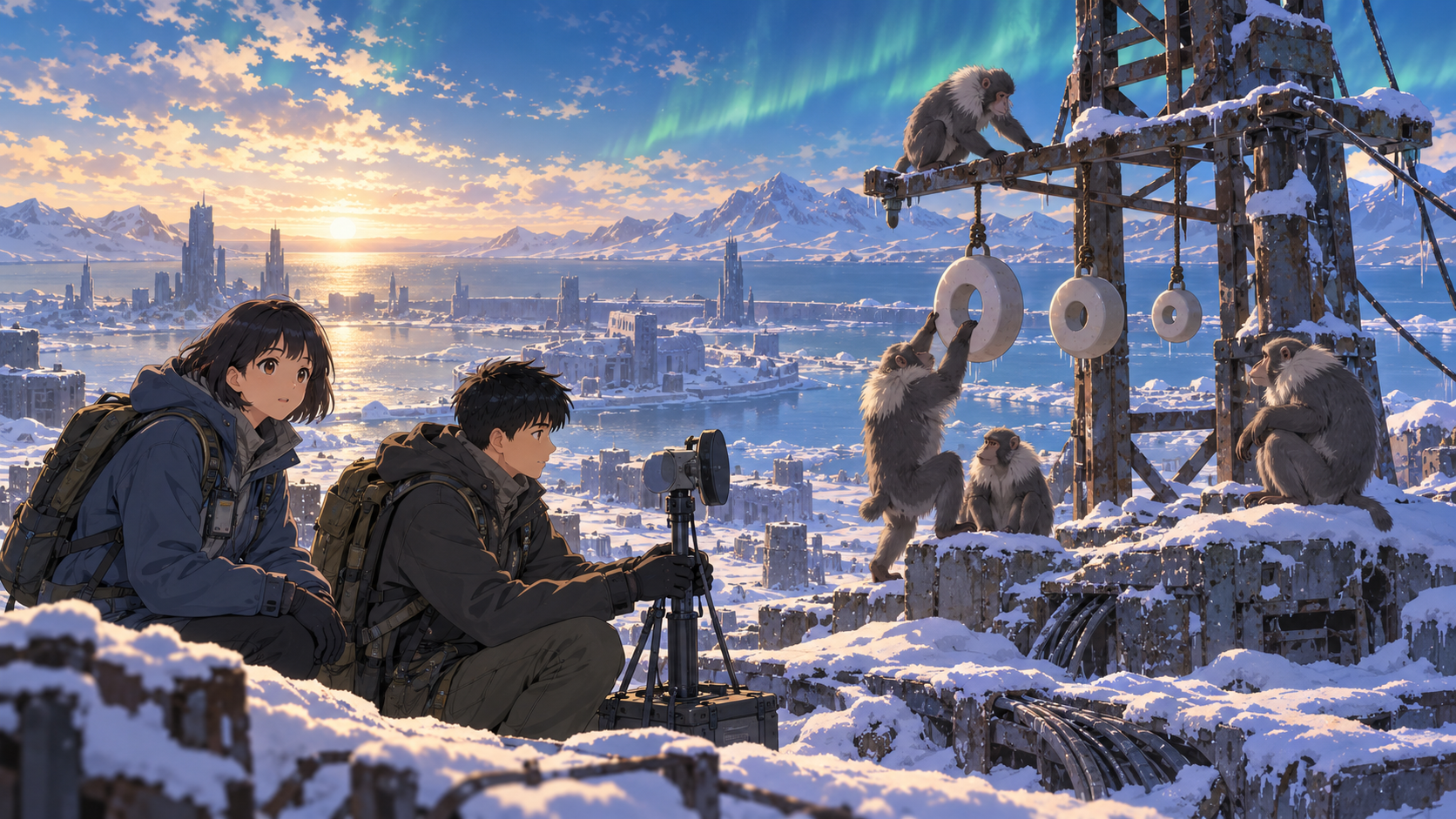
The platform had no signs, only rings left by different generations. Fang laid our sound recording over their placement on the tower. The lower pitch pointed toward a sheltered snow cave; the middle sequence bent around the brine breathing holes; the highest stopped before the snowy owl's patrol boundary. New rings had not hidden the old. The troop had kept more than one way back between the two generations of signals. Then the tower-line test sent another fixed-frequency pulse. One mechanical hum swallowed all three sets of knocks. Several young macaques stopped at the platform edge. I left the rings alone, followed the tower cable to its test controller, and recorded the joint and timing before switching off that test pulse. From a safe distance, Fang saw an adult sound the original order again. Their map needed no repair. The city's equipment had made three voices into one.
Evening · Snow-Macaque Windbreak Steps
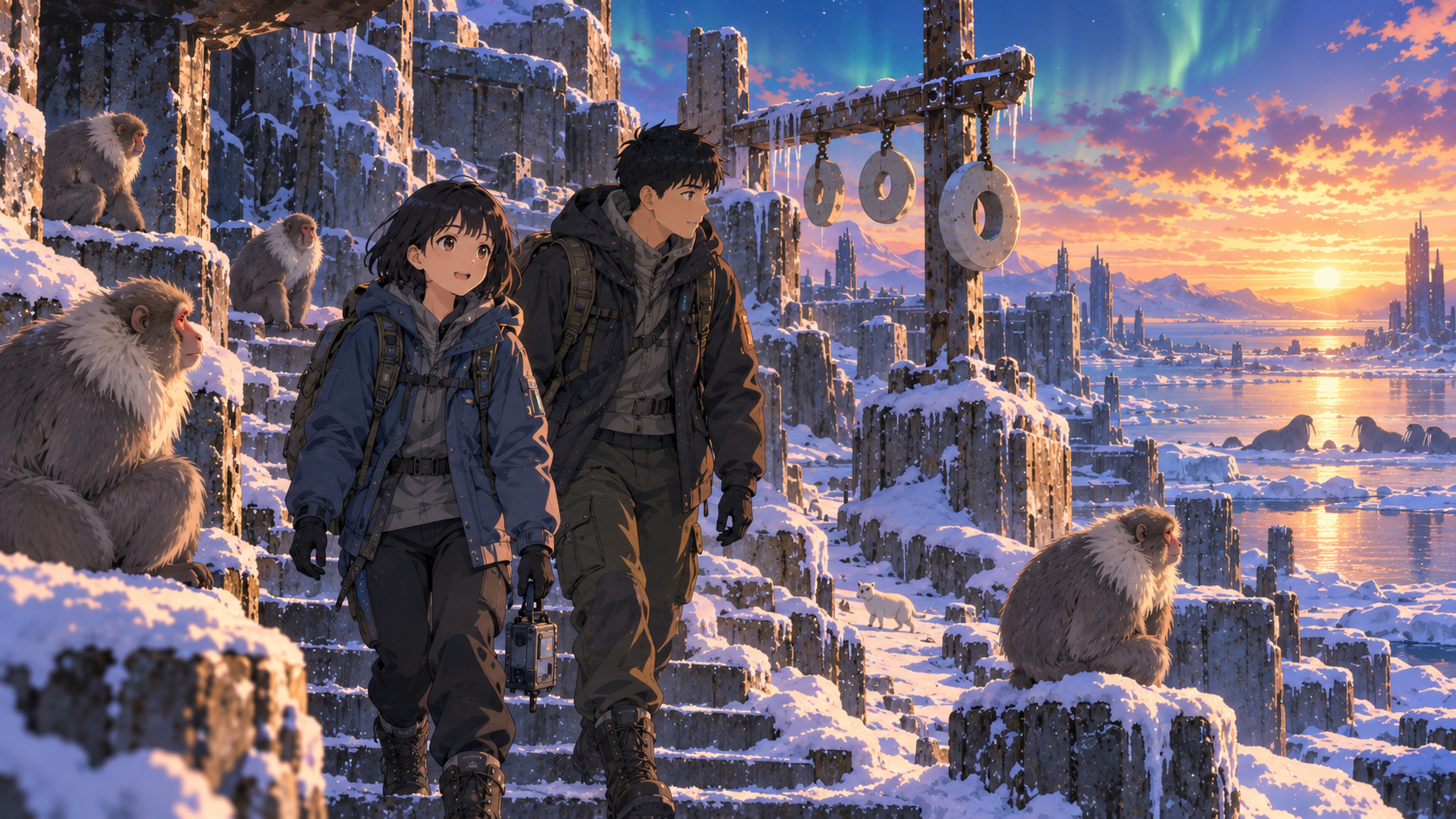
At dusk the three ring tones carried through the harbor wind again. Adults paused on the highest crossbar; young macaques settled on both sides of the steps. They did not approach us. They left open a passage hidden by the snow wall. Fang waited for smaller snow animals to cross before packing her sampler. Far away, I could see the breathing ring the walruses had just opened. Their calf-protecting families left by another ice channel instead of being pressed toward the same thin ice by the test pulse. The macaques had not drawn a shortcut for us. They had set wind, brine holes, and a no-entry line into the rings; other lives could hear a way out again. We descended through the space they left, without shifting one ring. When Fang looked back, a last low note still held in the wind. We had turned off human noise and left their order in place.
Habitat Causality
Aurora current, under-ice brine tide, and natural windbreaks sustain the Frostlamp–Sunken-Cable Rhythm. The harbor's fixed-frequency de-icing pulse can melt snow ridges early, seal brine holes through refreezing, and mask low-frequency bearings. The troop's wind-dependent ring sequence maps shelter, brine holes, and the snowy owl's patrol limit across generations. A fixed-frequency tower-line test covered its three pitches and stopped young macaques at the platform edge. We recorded the controller's joint and timing and turned off that human test, without changing the ring arrangement. The pitches returned; small animals crossed the sheltered steps while walruses kept to their own ice channel.
Species Behavior
Twelve short-tailed, broad-handed macaques occupied two low towers. Adults with hollow white shoulder manes hung fallen ceramic insulator rings by wind direction; young animals copied near safe crossbars. New rings left older signals legible. Three distinct pitches preserved a cross-generational shelter map and warned other animals about de-icer timing. When the machine hum stopped, adults resumed their sequence and the troop left a passage open without approaching us.
「We did not move a ring. The troop had already kept the route through wind, brine, and the owl's boundary. We only stopped the signal that made it impossible to hear.」