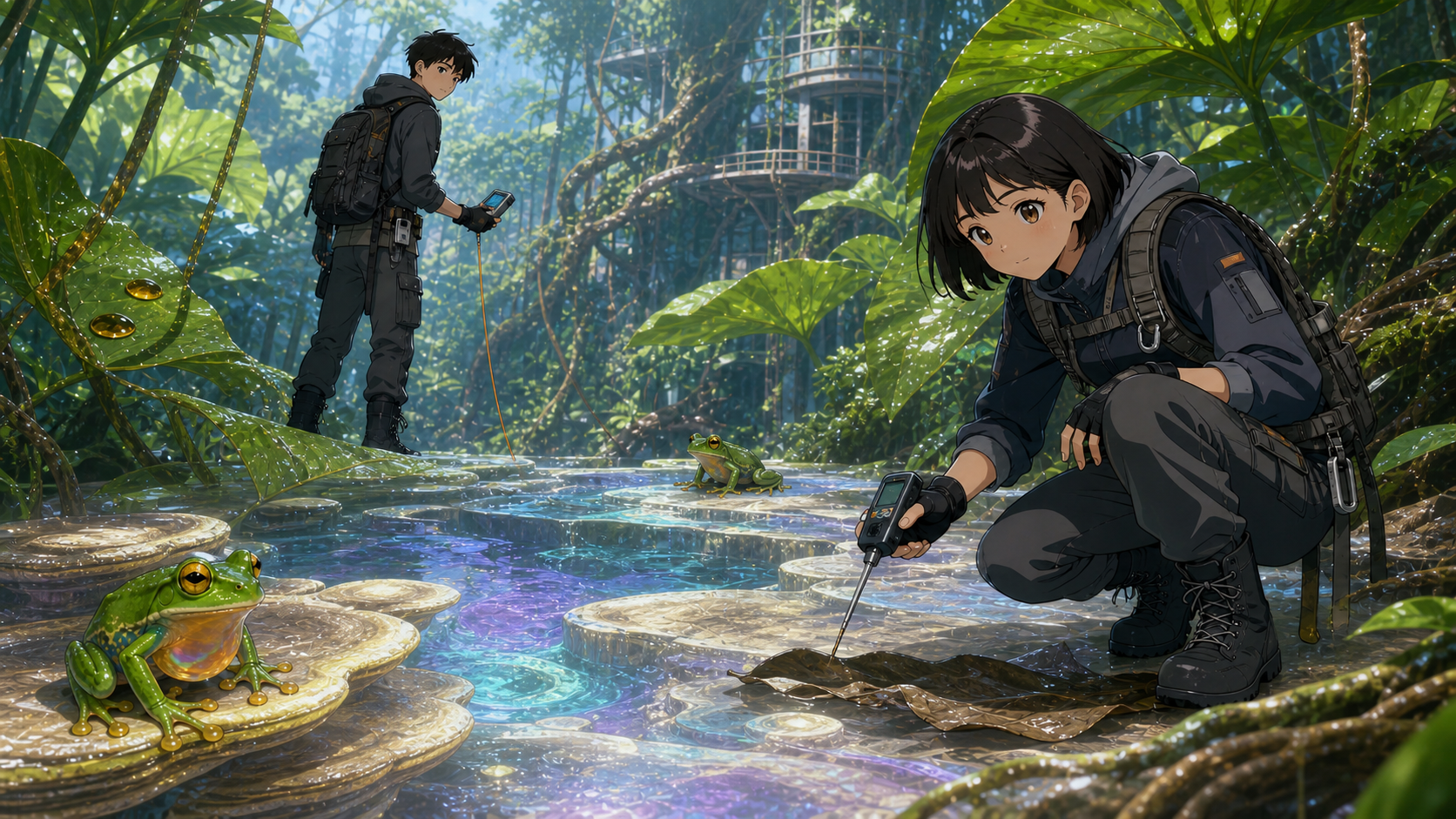
The Calls Stopped Upstream
The leaf tips still dripped, but the calls came only from downstream. Fang compared the acidity of the water held in the frogs' throat reservoirs. I marked the dry branch segments, load-bearing points, wind, and retreat line. The frogs were not trapped. The waterway was broken around them.
Field Observation
We left Spore-Drop Watershed Ridge along the wet branches downstream and entered Rainbow-Sac Tree Pool without crossing the unverified acidic water above us. We followed the frogs at the same canopy height to Calcifying Mycelial Terrace, then descended to the old observation station's low-flow gate at Frog-Call Return-Flow Gate. We worked only on the local, reversible blockage.
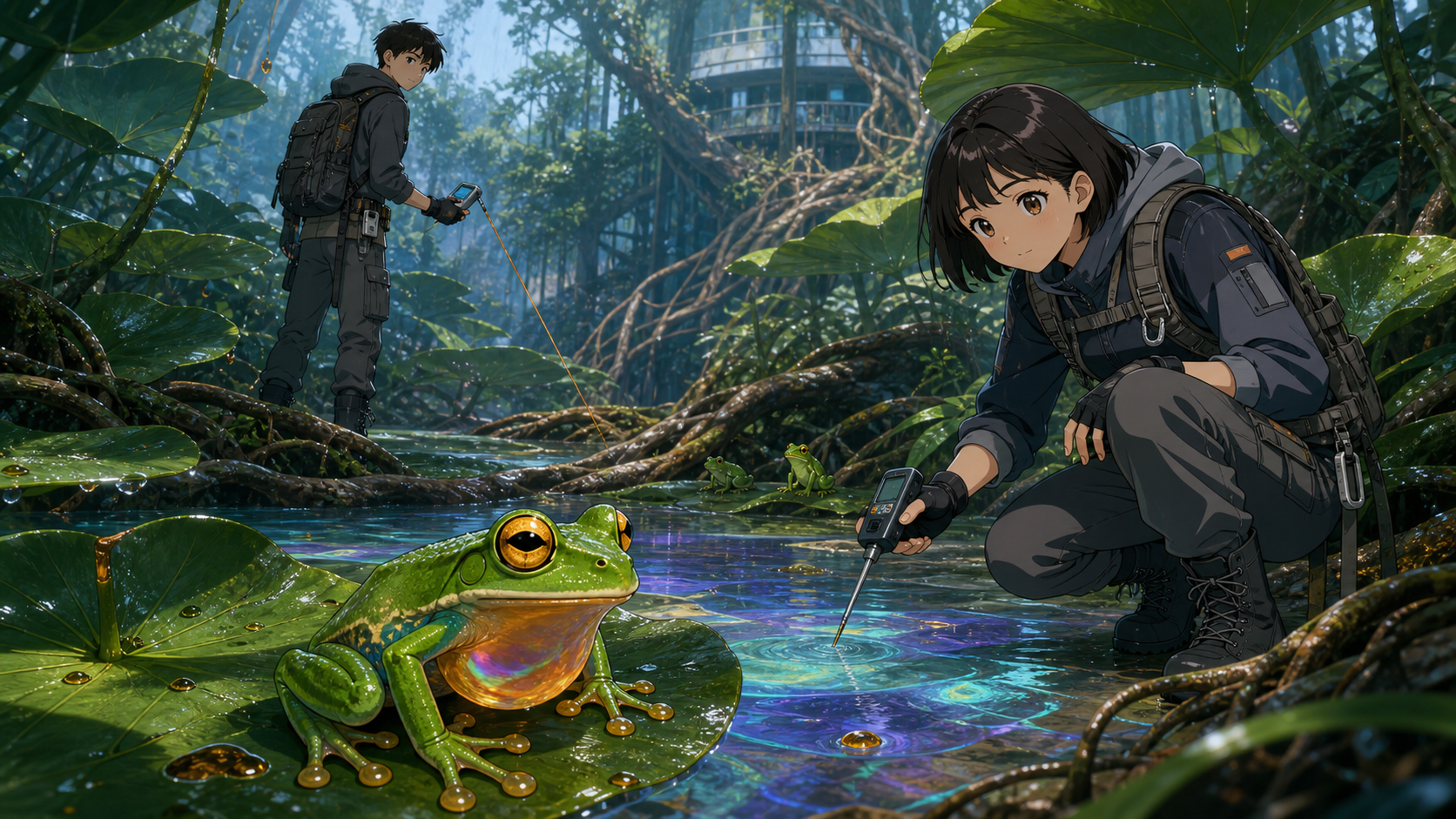
Morning · Rainbow-Sac Tree Pool
Rainbow-Sac Tree Frogs called only from the downstream pools. Fang used remote readings to compare the acidity held in their translucent throat reservoirs. I stayed outside the movement corridor with every active weapon stowed and marked the first dry branches. The difference across the pools showed that the Mycelial River's break was not seasonal drying.
Noon · Calcifying Mycelial Terrace
The frogs fed on fungal gnats and carried spores across the terrace. Fang sampled only material that had fallen naturally. The living fungal film could still neutralize a small amount of acid rain. The forest had not lost its ability to repair itself. It had lost the continuous water that repair required.
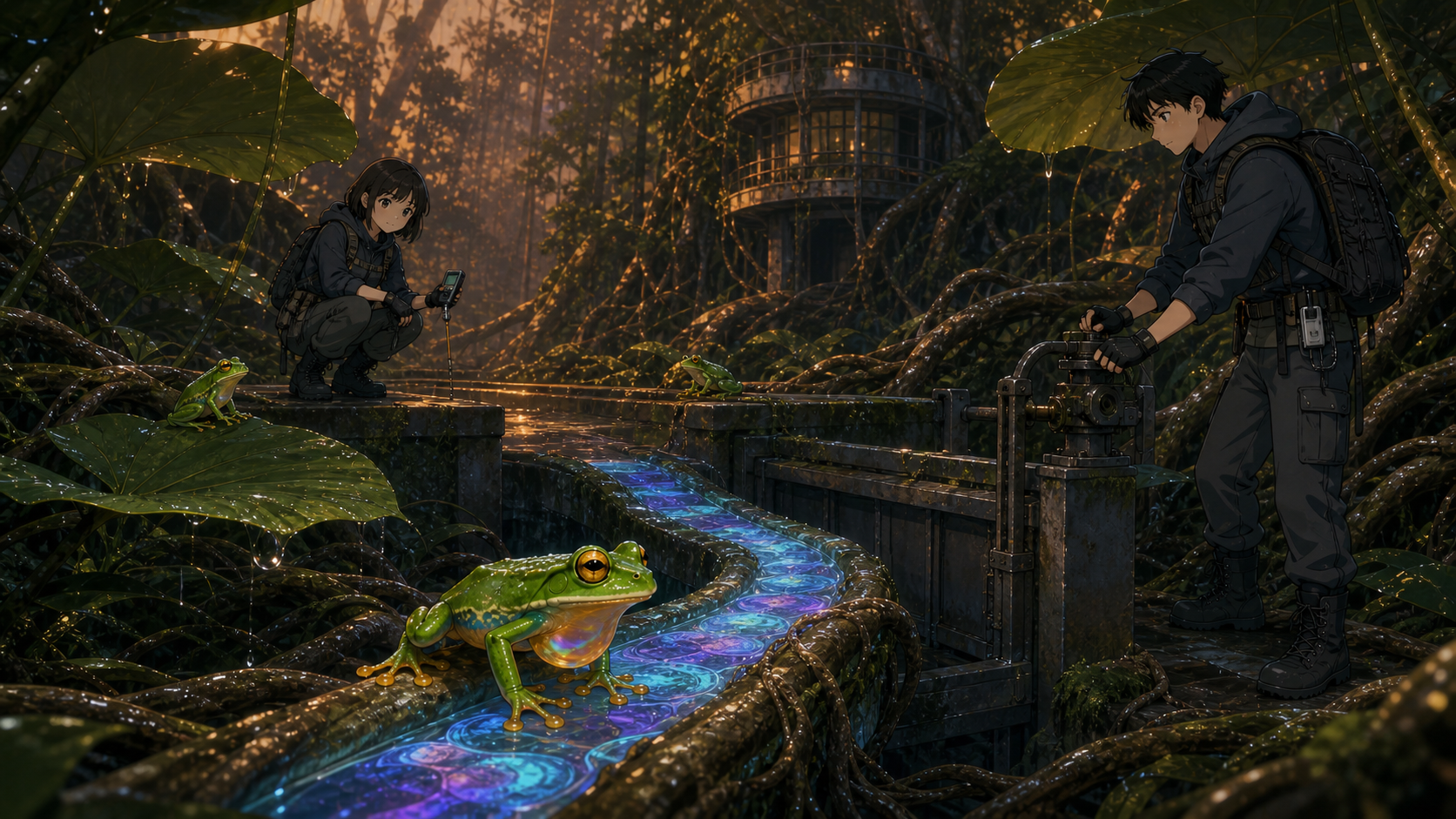
Evening · Frog-Call Return-Flow Gate
I opened a blocked low-flow gate in the old human system. It was a local and reversible change. Fang watched from a distance as the frogs crossed the first rewetted branch on their own. Their immediate return confirmed the connection, but the upstream Mycelial River remained dry.
Habitat Causality
Acid rain is intercepted by giant leaves and softened by mineral and symbiotic fungal films before entering the forest's root channels. Rainbow-Sac Tree Frogs store small amounts of neutralized water in their throat reservoirs, feed on fungal gnats and moth larvae, and move spores and seeds among tree pools. Continuous mist extraction upstream interrupted that network. Calls disappeared from dry branches, while reservoir acidity and surviving fungal-film activity showed that water continuity, rather than food or neutralization capacity, was the missing link. Reopening one return gate restored only the first local segment and did not resolve the upstream extraction.
Species Behavior
The frogs are alert, non-aggressive canopy travelers. They call across connected wet branches, hunt small insects, and carry spores and seeds between pools. When the flow broke, they remained downstream rather than crossing the dry segment. Once water returned to the first branch, they crossed it without bait, pursuit, handling, or direction from us.
「The frogs did not need us to choose a route for them. They needed one obstruction removed. Their immediate return was enough to tell us the repair was real, and incomplete.」