Forty-One Seconds Before the Light
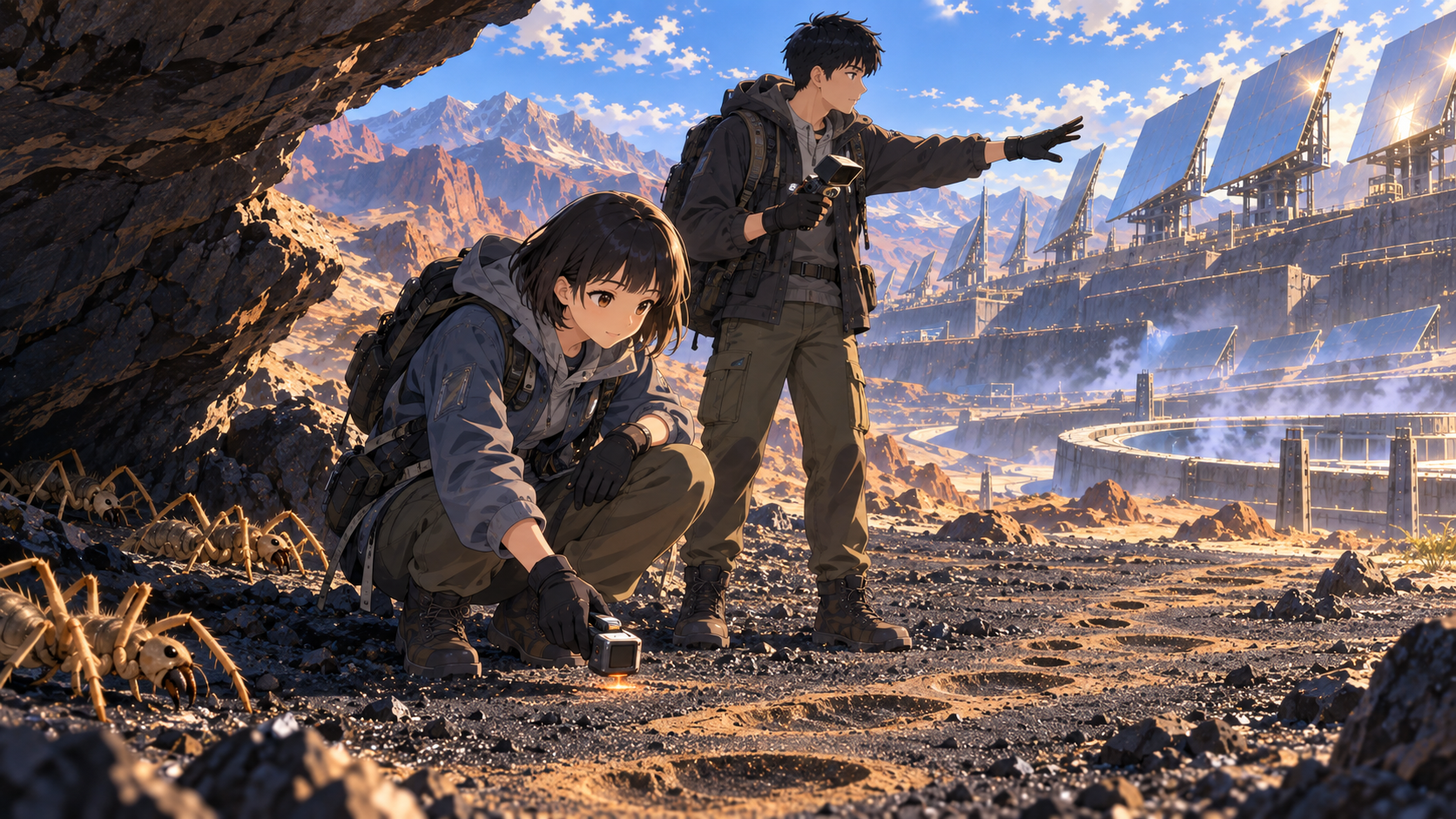
Thin mist from the night-cooled wells still clung to the black-glass gravel when we reached East Mirror-Trace Slope. Fang first saw a line of small ochre forms moving quickly along the edge of a shadow. I shut down active scanning and kept only the passive light meter running. The Lightbreak Solifuges stayed inside complete shade, long pedipalps testing the ground ahead. Then the entire line stopped at once. Forty-one seconds later, a heliostat hotspot swept across the path before them.
Field Observation
We entered East Mirror-Trace Slope at dawn and used the solifuges' stop rhythm to measure an approaching hotspot. At noon, we followed their footprints through Lightbreak Track Belt and matched each turn to three mirror-frame movements. By evening, we neutralized only the misaligned tracking axis beside No. 1 Heat-Shade Trough and watched the animals reopen the shadow route on their own.
Morning · East Mirror-Trace Slope
We had not startled them. They had read the surface-temperature change before the harbor's overheat alarm. Fang crouched beyond the activity line and placed her sampler close to the stone. I stood between her and the mirror field and marked the moving line of light. There was no visible hostility in the mirrors, only an automated program that had gone uncalibrated for too long. Fang told me to remember the stop rhythm: pedipalps raised, forelegs drawn back, body lowered, then the entire line waiting for the hotspot to pass. Without touching an animal, that rhythm gave us the hotspot's speed and preserved the first safe stretch of shadow toward the cold fissures.
Noon · Lightbreak Track Belt
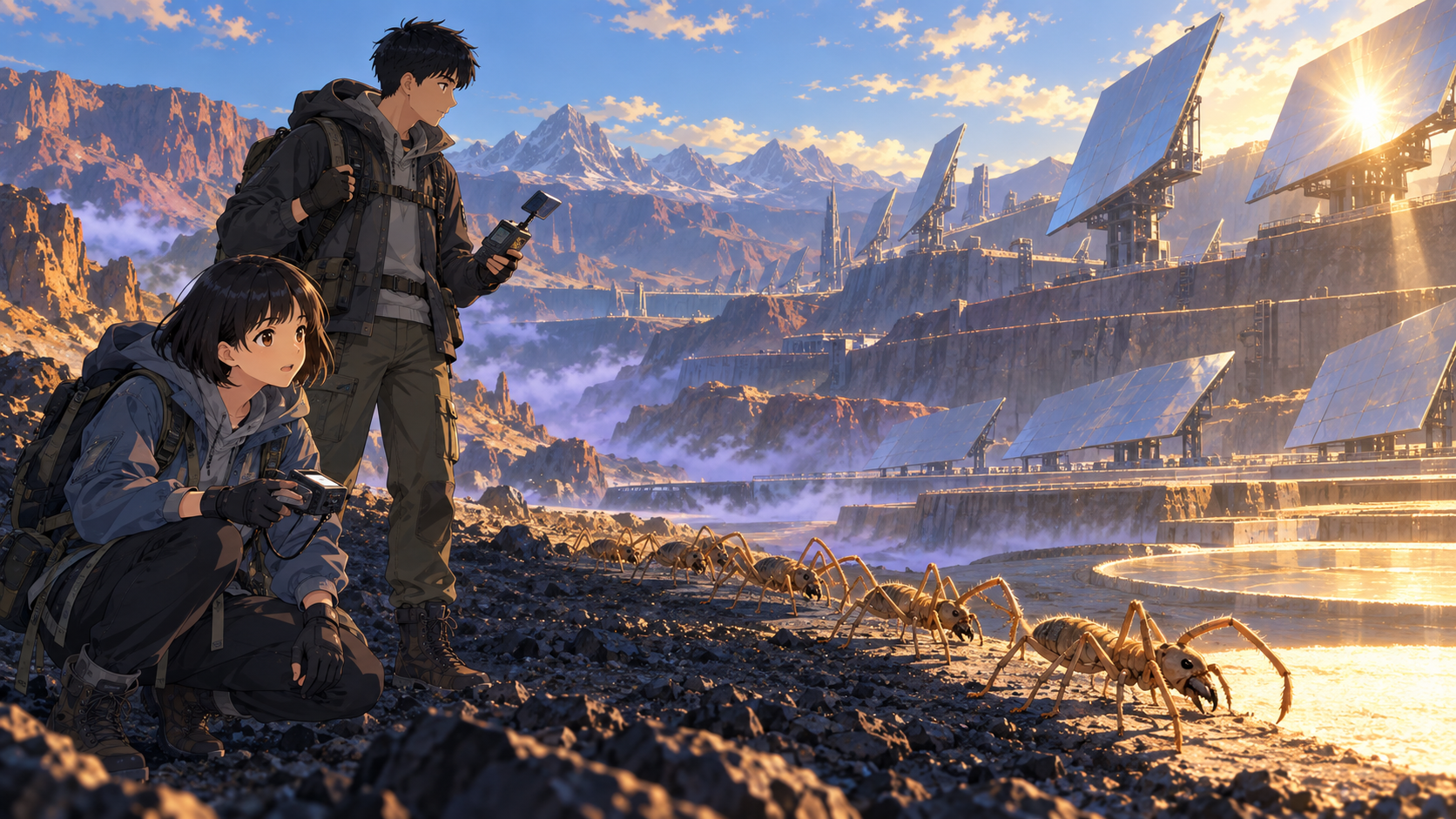
The fault became obvious at noon. Foot-pad marks ran straight and evenly spaced inside complete shadow, then broke sharply toward cool stone wherever the hotspot had crossed. Fang and I left one measurement line on each side. She read the ground-temperature difference with a noninvasive probe while I overlaid the turning times of three mirror frames on the footprint sequence. Every change of direction came before the mirrors moved. The solifuges were not chasing light; the old controller was misreading living shadows. Several adults remained beneath a rock shelf, their pedipalps testing toward us without approaching. Fang said the tracks were enough. I put away the barrier net and kept only the passive record. We marked three bends outside the activity boundary. No animal had to carry the burden of a human verification test.
Evening · No. 1 Heat-Shade Trough
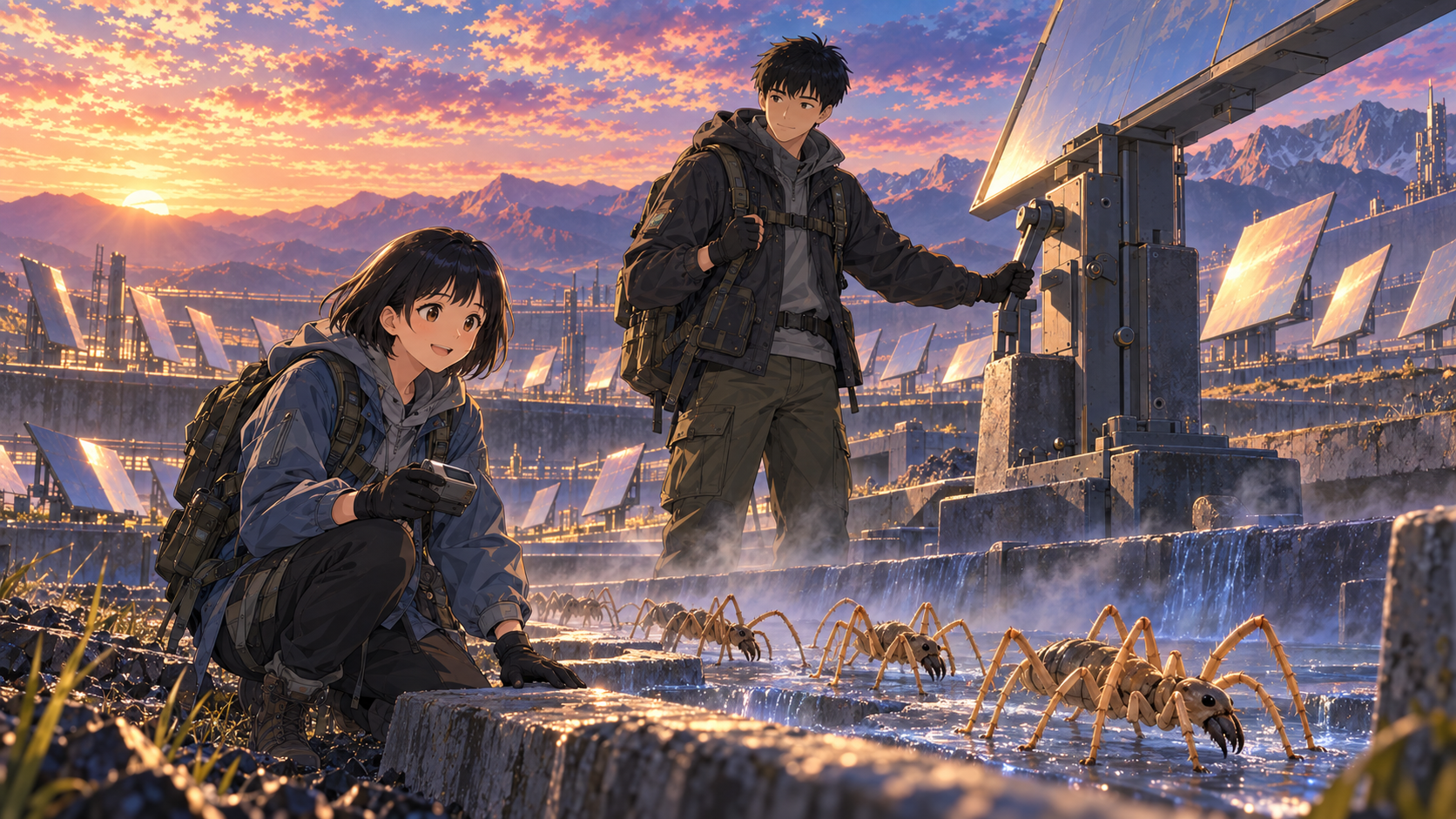
We worked on only the misaligned mirror row beside the trough. I locked its tracking axis at neutral while Fang observed from beyond the cooling stones. We moved no solifuge. The first adult touched the cool stone with its long pedipalps, then set all eight legs down. The others followed one by one through the same shadow. When the last crossed the trough mouth, the broken hotspot-warning trace became continuous again. Fang labeled the change 'passage restored,' not 'target cleared.' I did not argue. With one fewer living shadow under pursuit, the cold wells could retain a small hunting route for the animals that would come after. My weapon never left its securing strap. That was closer to repair than any victory.
Habitat Causality
The mirror field should gather heat by day, then lock into a lights-out angle so descending valley air can move through underground tunnels and rise from the cold wells at night. The restarted controller instead treated animal shadows as contamination and kept one mirror row tracking them with concentrated heat. The solifuges' stop line and footprint turns revealed the moving fault. Locking only that axis to neutral restored a continuous thermal shadow without restarting the array for another live test. Cold mist settled back into the trough, and the route toward downstream fissures became usable again.
Species Behavior
Lightbreak Solifuges stay inside thermally continuous shade and use long pedipalps to test the ground ahead. Before a hotspot arrives, they raise the pedipalps, draw back the forelegs, lower the body, and stop together. Adults may test observers from rock-shelf shade but do not approach. Once cool stone and a stable shadow return, one adult tests the boundary first and the others follow without human guidance.
「The habitat did not need to endure one more startup test so we could prove we were right. I recorded the mirror lock as a reversible correction and left the final review to the harbor engineers.」