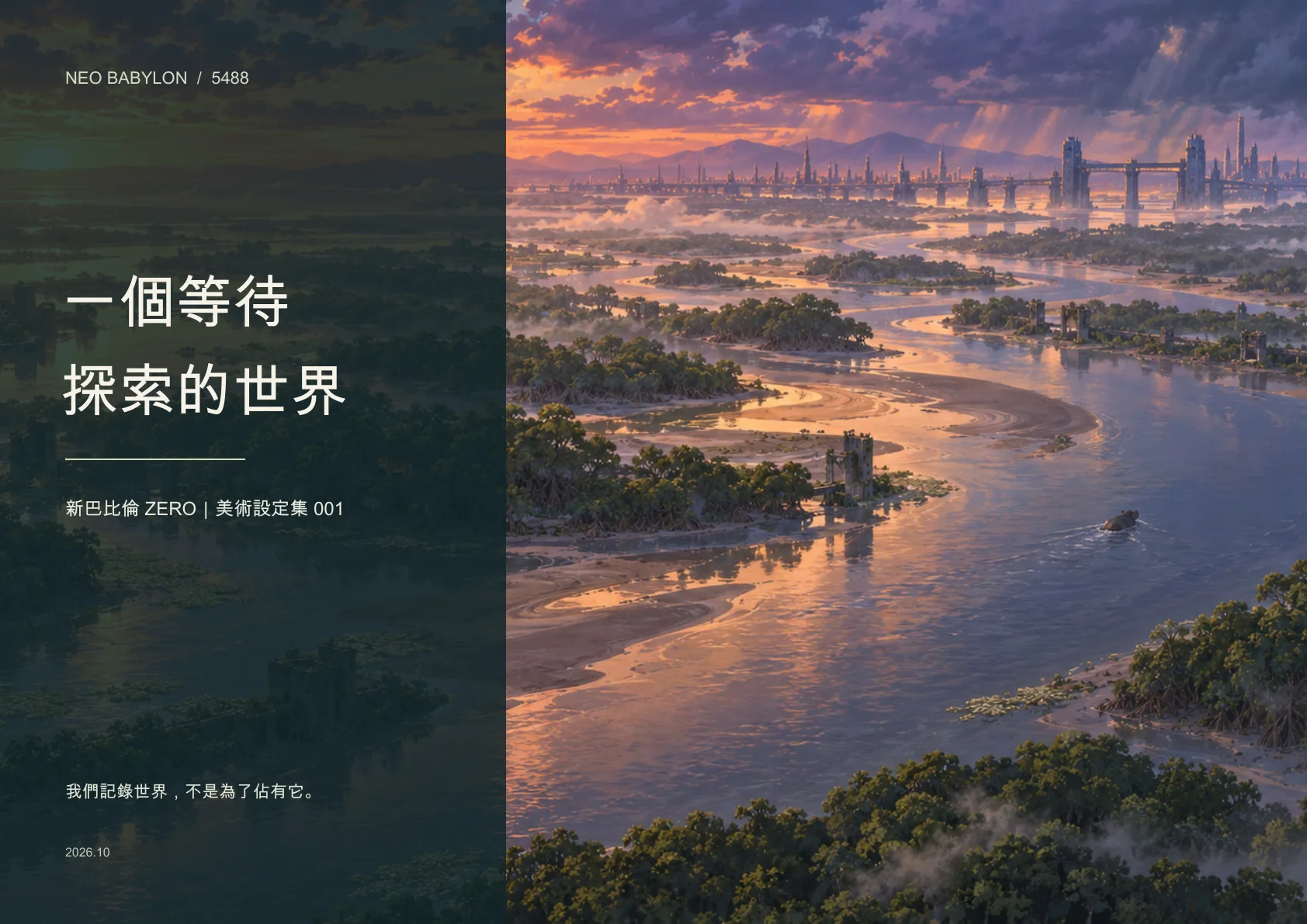
Still-Tide Broken-Ice Outer Bay
An old sonar buoy leaves a residual fixed low-frequency pulse that folds back along the ice lip. Kelp-bed currents, the icefish’s routes away from sound, and penguin feeding lanes no longer align. Fang and I compare signs from five forms of life along a safe observation line before the station reopens its outer-bay dock channel.
- Parent Domain
- NB-14 · Tierra del Fuego Polar Gateway
- Location
- Outside the Tierra del Fuego polar-night station, the outer bay spans a broken-ice fjord, giant kelp forest, rocky shore, and open channels. It lies far from the enclosed waters beneath the Antarctic continental shelf.
The polar-night station plans to reopen the outer-bay dock route. Fang and I use passive positioning and intermittent navigation windows, following the signs of five species without entering their habitat. We keep the dock line away from feeding lanes and preserve a deep-water exclusion boundary for the large squid.
How Still-Tide Broken-Ice Outer Bay Works
The fixed pulse returns from the ice lip and changes how water moves through the kelp belt. Under thin ice, low light reaches silica shells; near kelp roots, backflow may stall in rock crevices. Stronger low-frequency reflections shift fish passages and push penguin foraging toward the floe edge. We compare water samples, light, currents, and animal tracks before attributing any one change to the buoy. These species occupy different layers of the food web; they do not all eat one another in sequence.
Observation Ethic
We stay on the safe shore and use noncontact, passive observations. We do not approach or drive away the squid. The enclosed sea beneath the Antarctic shelf, deep-sea vents, and old strategic installations remain outside this route.
Five-Day Route
- At the ice-window edge, compare diatom patches with water samples and light readings beneath the thin ice.
- Along kelp-root rock, read urchin grazing arcs and tube-foot turns where backflow slows.
- Outside the kelp forest, follow loosely spaced icefish through gaps away from strong reflections.
- From the rocky shore, compare penguin entry tracks and return routes with the dock navigation window.
- At the distant deep-channel boundary, keep the squid exclusion line and switch the buoy route to passive positioning.
Five species maintaining this local ecology
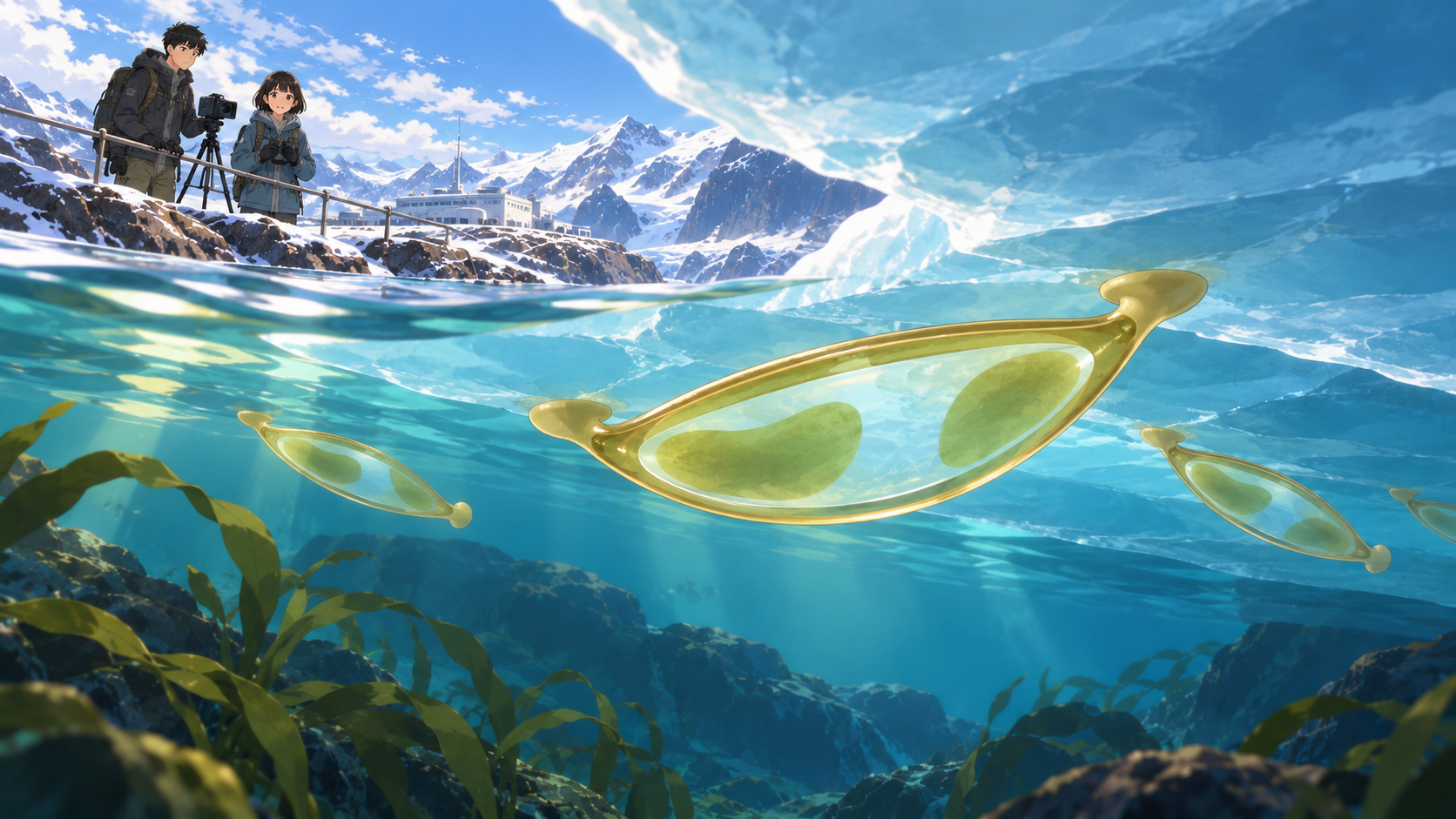 Day 01
Ice-Window Diatoms
Each asymmetrical, boat-shaped silica shell has a broad transparent light window and a blunt attachment pad at either end. The pads hold cells to the underside of the ice lip without forming a dense, opaque sheet. Sunlight passes through the window to the cell. At the colony edge, cells detach and drift with the natural current rather than following the buoy's fixed pulse in lockstep.
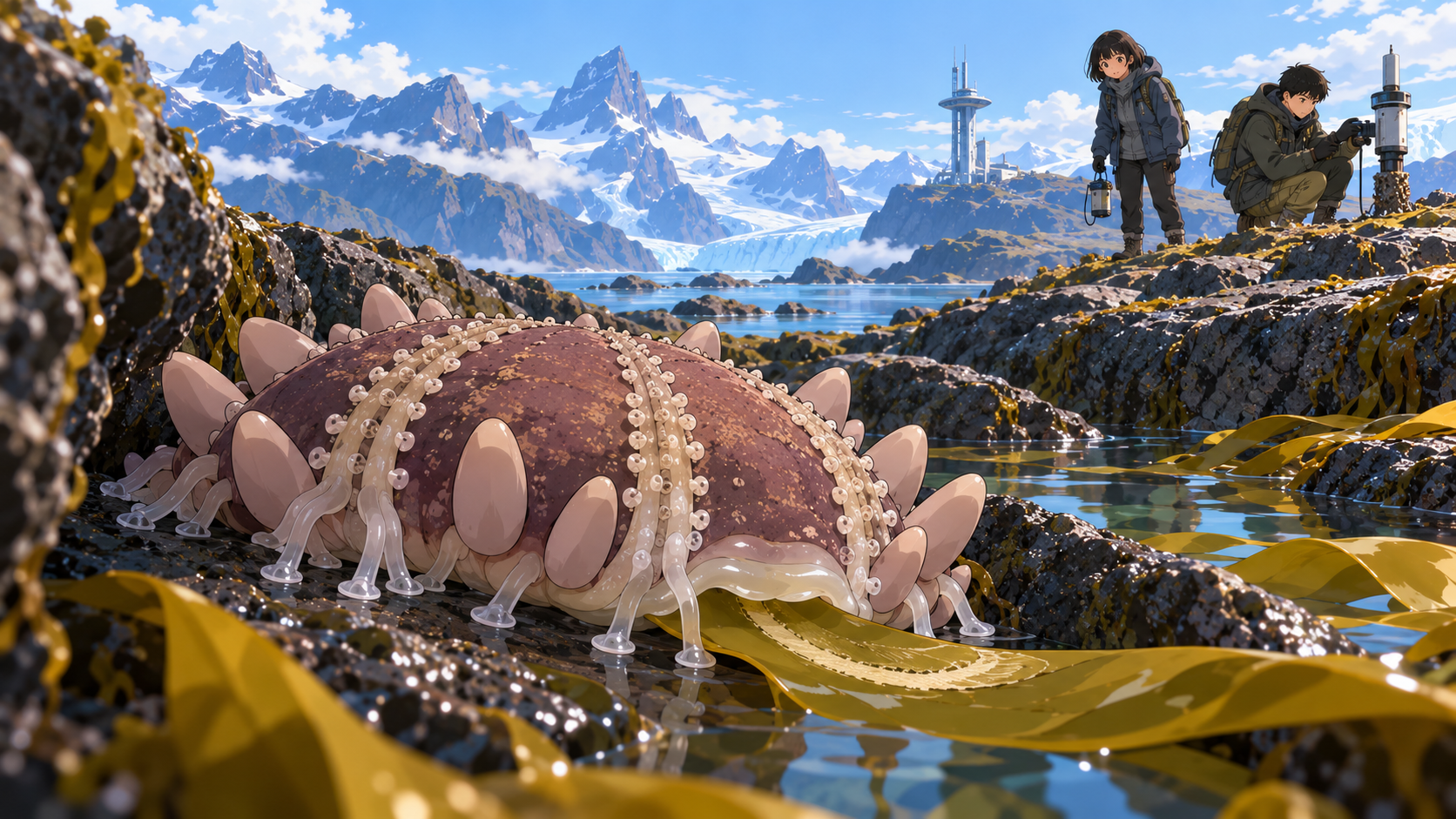 Day 02
Tideglass Sea Urchin
Tideglass Sea Urchin is part of the Still-Tide Broken-Ice Outer Bay ecology. Its behavior is presented as field observation rather than combat.
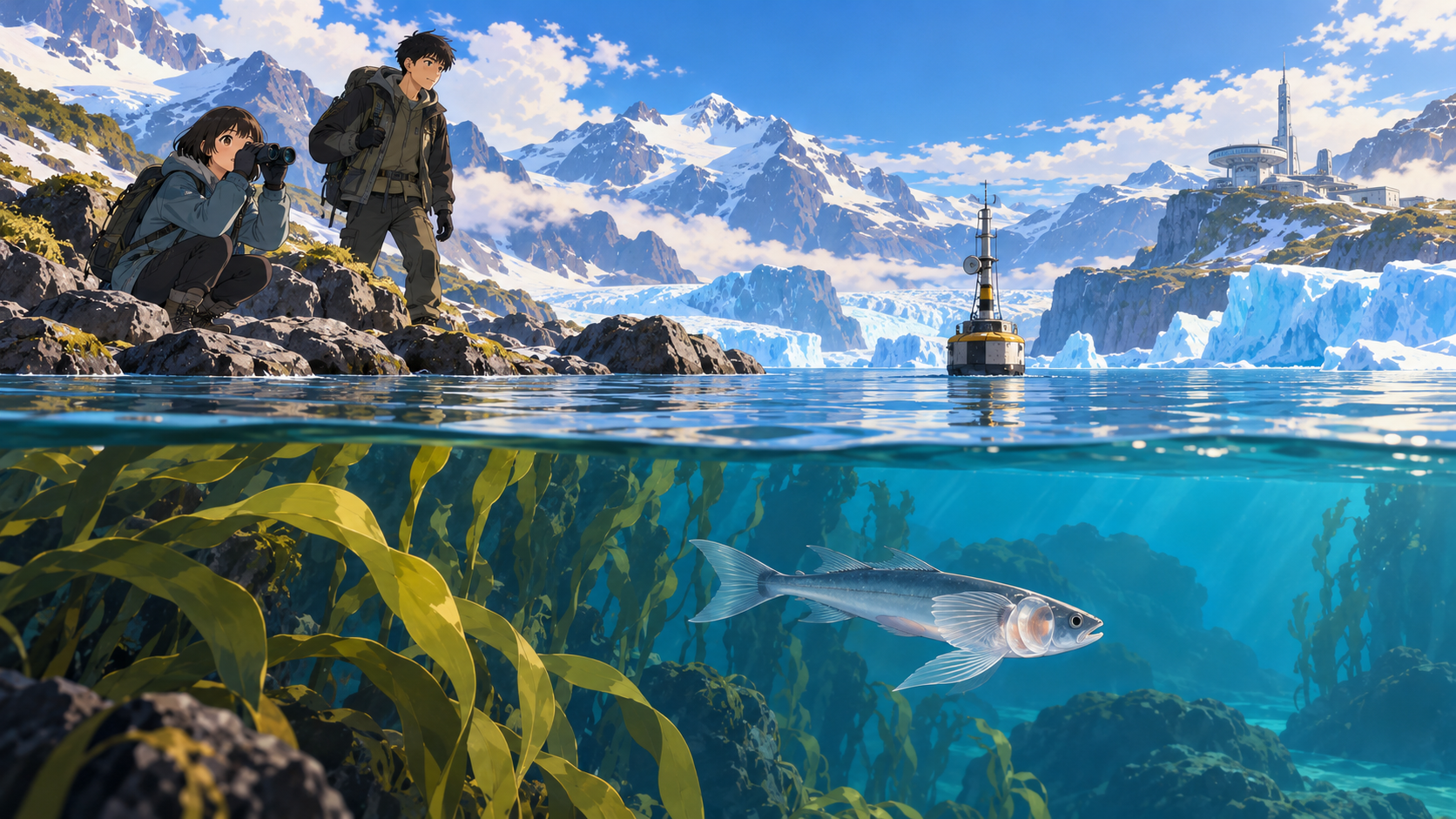 Day 03
Clear-Gill Icefish
Clear-Gill Icefish is part of the Still-Tide Broken-Ice Outer Bay ecology. Its behavior is presented as field observation rather than combat.
「The diatoms turn dim light into the base of the food web. Urchins keep space open among kelp roots; icefish feed along the outer forest; penguins follow them through open water. The solitary squid holds the deep channel. Their signs show how one human pulse can shift several routes without making these animals a single chain of prey. I mark a dock passage that leaves feeding lanes and the deep-water boundary alone. After the buoy is changed, we still need to compare the tides, light, and movements again.」