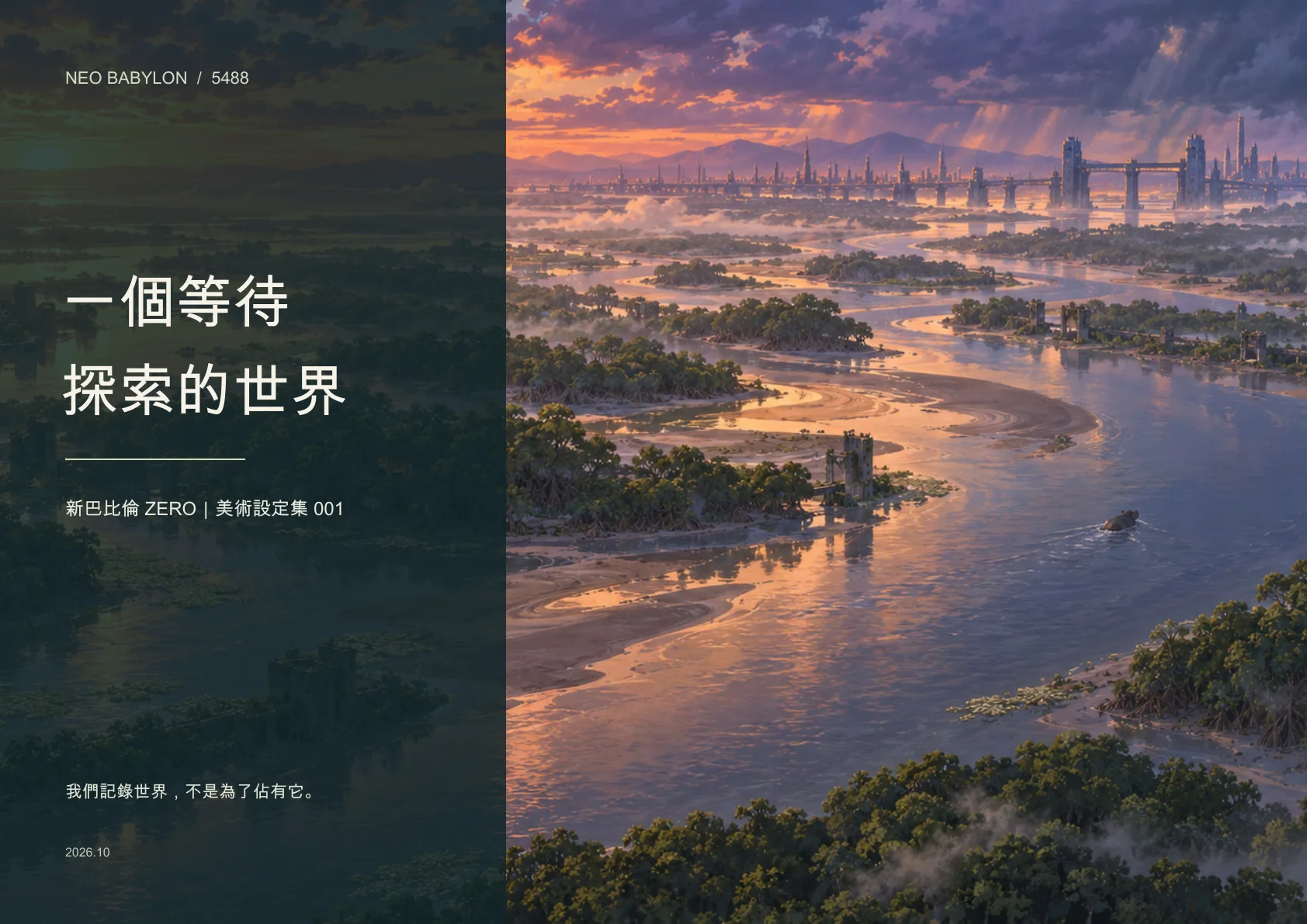
Cloud-Stair Mining Bypass
The mist port plans to reopen rare-mineral transport beside the abandoned mine. Continuous vibration from maintenance works travels through old cableway supports. Fang and I read separate signs left by five forms of life to choose a route around the grassland wildlife corridor.
- Parent Domain
- NB-13 · Andean Mist-Port Chain
- Location
- A safe observation corridor above the Andean mist port, along cold-fog terraces, the edge of an abandoned mine, and a cloud-sea grass slope. The thundercloud salt lake remains a restricted area outside this route.
Rare-mineral freight may resume along the mine edge. Rather than fix a vibrating line through living habitat, Fang and K compare lichen color bands, grazing marks, seed routes, gliding paths, and the jaguar’s distant territory signs. They mark a maintenance bypass that leaves the grass slope and migration corridor intact.
How Cloud-Stair Mining Bypass Works
Maintenance vibration follows the disused cableway frame into cold-fog terraces, shifting where grassland tracks and high wind-window readings appear. Mineral seepage remains bound to outer rock by lichen. A change in one mark does not prove that every slope has changed: wind, moisture, stone steps, and time must be compared. The five species record different layers of this system, not a chain in which each eats the next.
Observation Ethic
Fang and I stay outside railings and exclusion lines. We use distant, noncontact measurements, mark a safe retreat, and alter the human route. We neither collect organisms nor blame them for equipment readings. The thundercloud salt lake and the jaguar’s territory remain closed to us.
Five-Day Route
- At Copper-Vein Miststone Steps, compare old and new copper bands while remaining outside the safety rail.
- At the grass belt, read folded wings, sheltered hind feet, grazed sedge, and returned plant matter from a distance.
- Across the cloud-sea slope, map displaced alpaca tracks and seeds without crossing the migration path.
- At the high wind window, compare condor glide lines and faint static with cableway readings.
- At the distant territory boundary, respect the jaguar exclusion line and divert the continuous mining vibration around the habitat.
Five species maintaining this local ecology
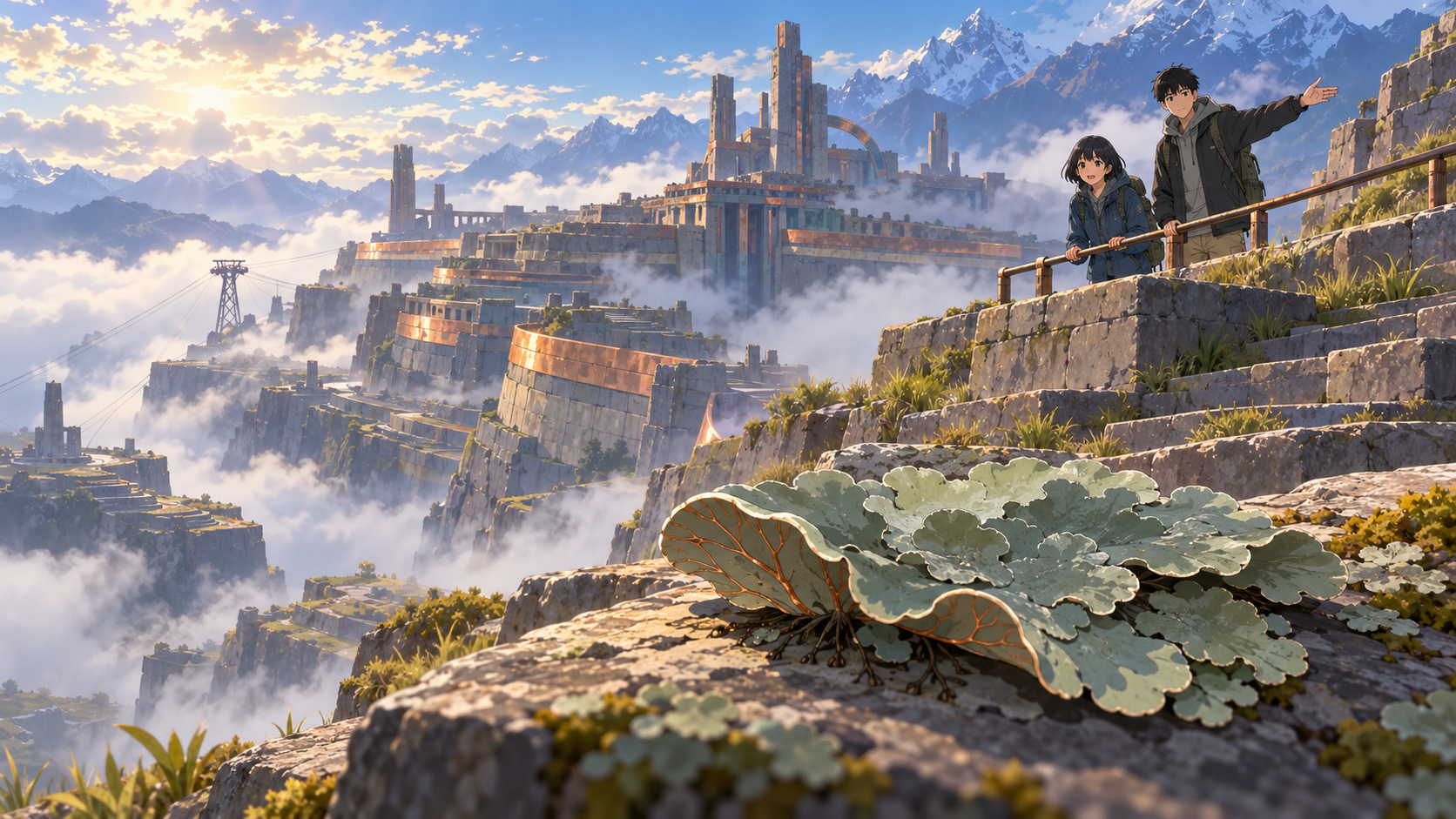 Day 01
Copper-Vein Rock Lichen
Broad, smooth, gray-green lobes overlap in layers. Copper-colored adsorption veins run across the underside, where short dark holdfast filaments grip stone. These structures hold trace metal seepage at the abandoned mine edge. The lichen expands along the wet-dry boundary when fog lifts. It has no eyes, limbs, or intention to follow observers.
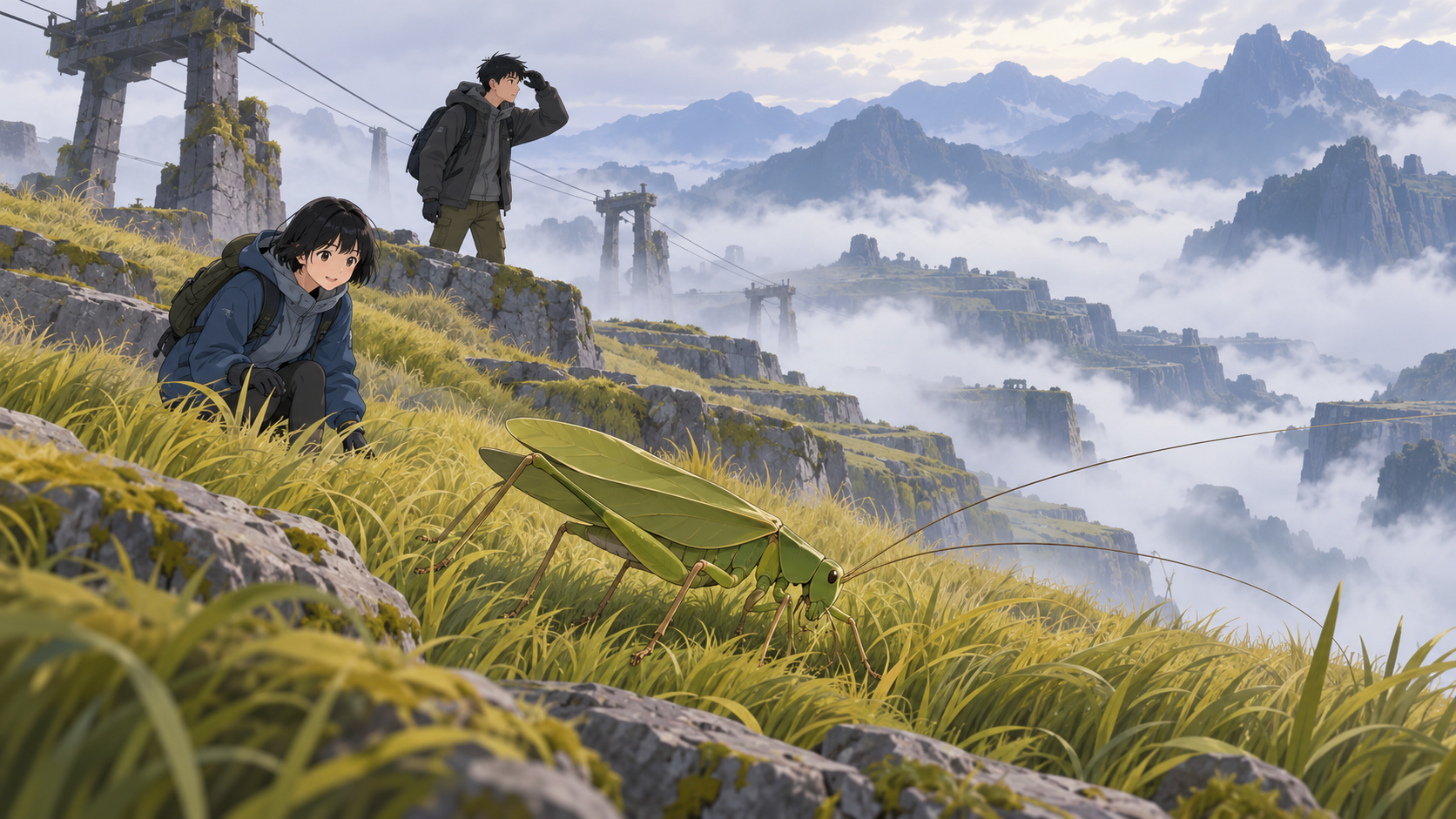 Day 02
Mist-Step Foldwing Katydid
A hand-length adult has two neatly folded hindwing sections, long fine antennae, and broad, flexible hind tarsi. It grazes cold-fog grass close to the ground. In strong wind it folds its wings and crouches in a rock crevice, where the soft hind feet absorb vibration. After the fixed-frequency vehicle test stops, a lone katydid returns to graze.
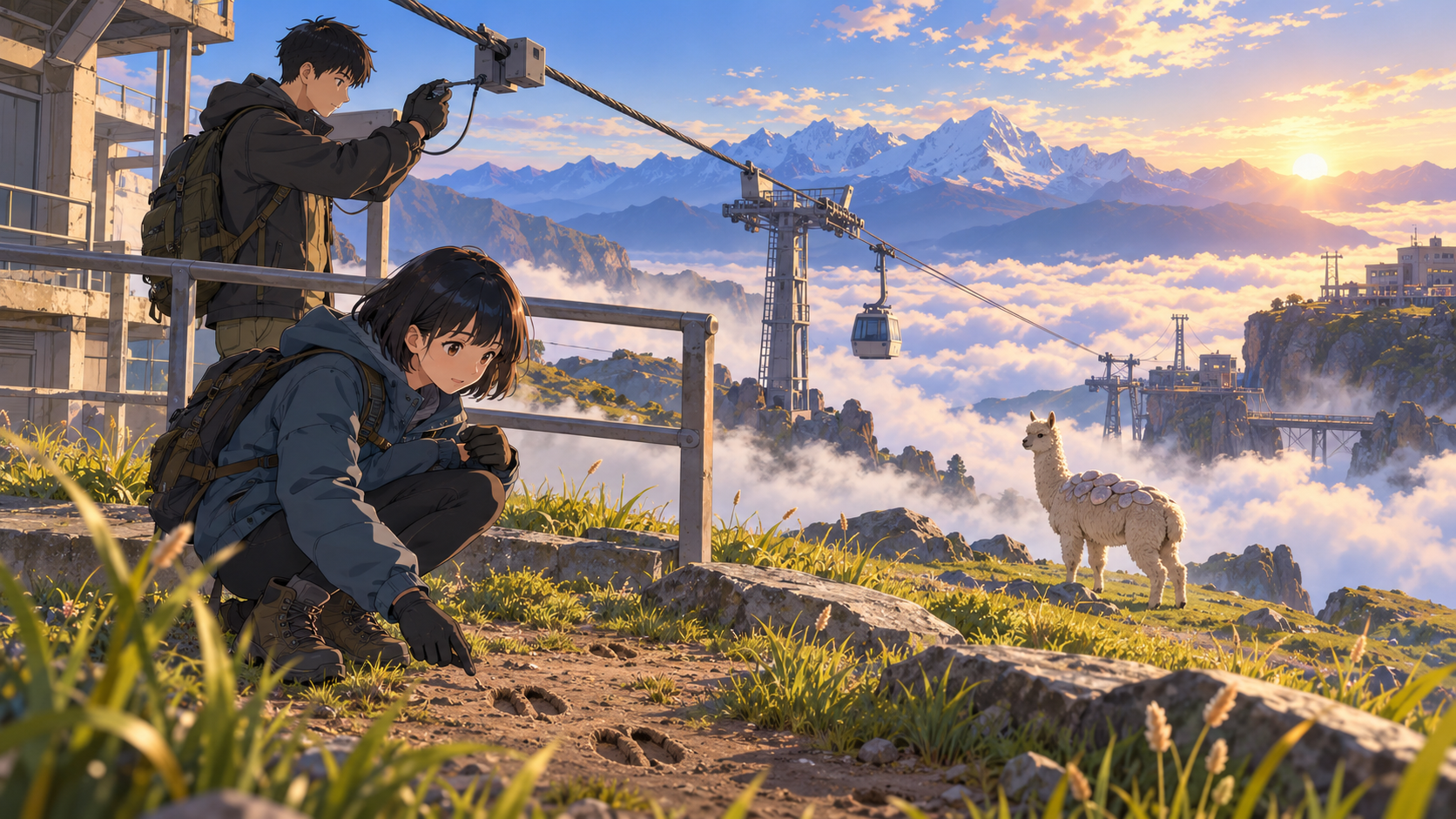 Day 03
Crystal-Back Alpaca
The alpaca has a compact body without a hump. Low, broad keratin-mineral plates lie along its shoulders and back, broad lung sacs support breathing on the thin-air slope, and split soft hooves spread pressure across wet grass and stone steps. It grazes short sedge and carries grass seeds along the mist slope. In the evening a spaced small group uses the original path while avoiding the disused branch line.
 Day 04
Thunder-Tether Condor
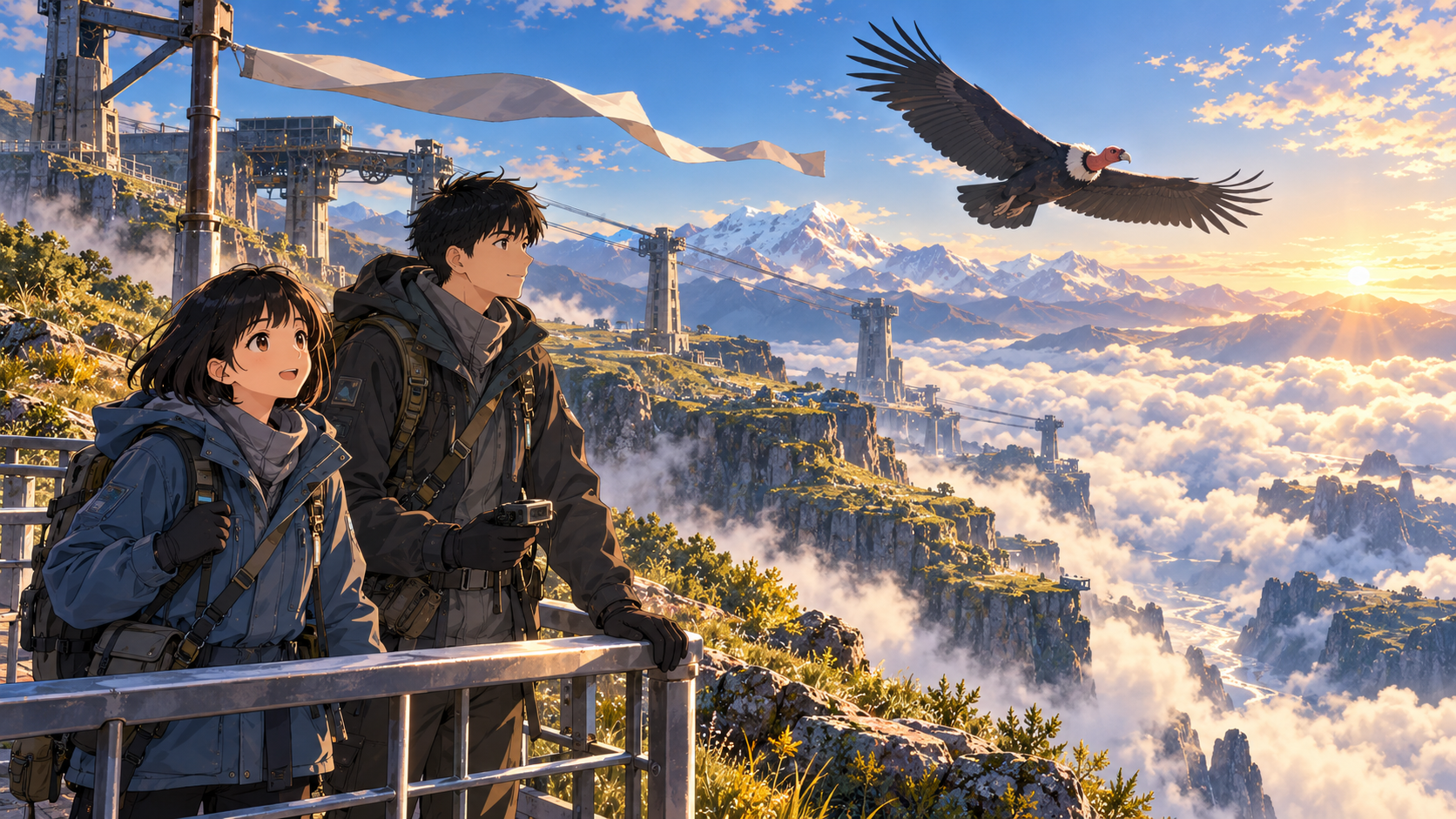
Its broad vulture-like wings and bare neck make it recognizable at height. Hollow conductive feather shafts carry a faint charge that dissipates from the wingtips in the high wind window. It patrols over grass slopes and cliffs, feeding on the remains of highland animals that died naturally and returning nutrients to the mountain. In the evening, one bird glides alone along the natural return wind after the cableway falls briefly silent.
 Day 05
Mist-Crest Jaguar
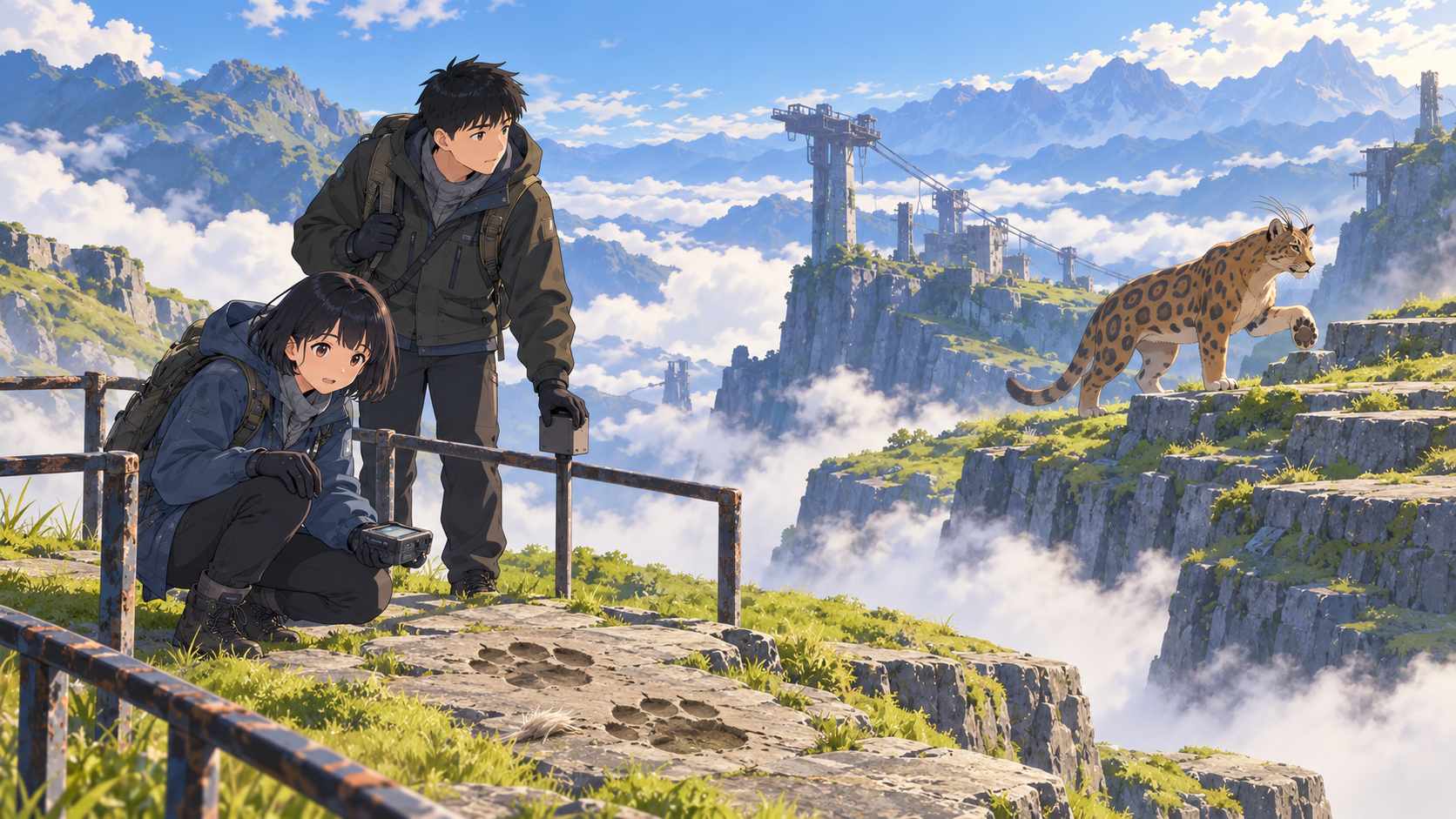
The compact, broad-shouldered jaguar keeps low to the stone. Two stiff, horn-shaped whisker tufts above its eyes are whiskers, not horns. Its deep chest contains an oxygen-exchange sac; broad divided climbing pads spread as a forepaw lands. It reads wind pressure and vibration through the stone, patrols the grass-slope boundary alone, preys on highland rock mice, and may wait for young grazing animals separated from their group. No chase or kill is witnessed during this encounter.
「The lichen fixes seepage at the mine edge, the katydid returns grass to thin soil, alpacas move seeds, the condor reads the wind, and the jaguar marks a territory we do not enter. Their signs differ but point to the same human-made vibration. I keep the safe route on the map and leave the grassland corridor to its inhabitants. Rerouting the line is a beginning; we must keep watching what changes.」