Lights-Out Cold-Well Corridor
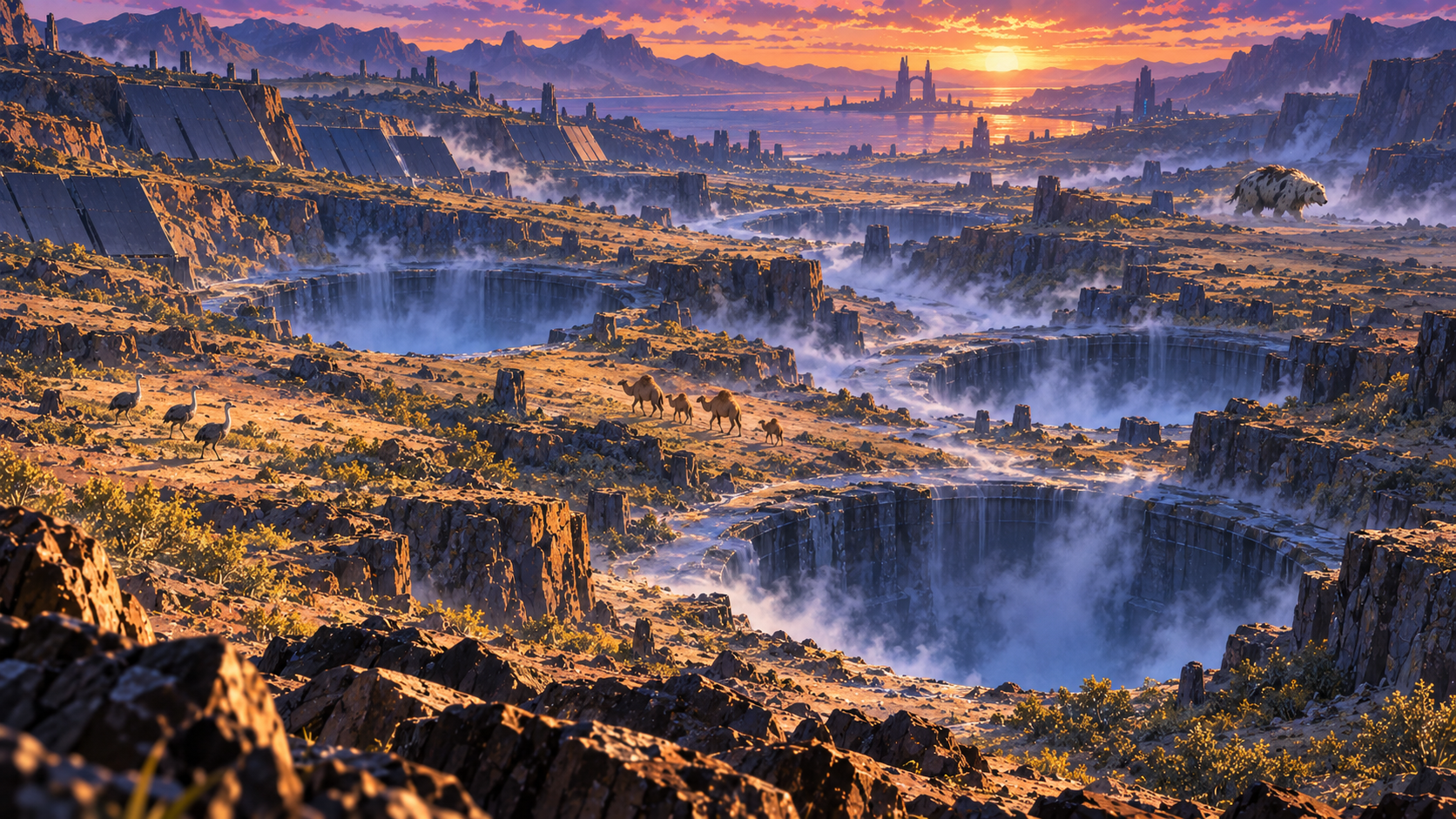
Lights-Out Cold-Well Corridor was once a buffer system for Atlas Gate's high-heat expedition machines. By day, weathered solar mirrors sent energy back to the port. At night, the arrays had to lock into lights-out angles so downslope air could pass through underground tunnels and emerge from the cold wells as an east-to-west Night Cooling Return Tide. Solifuges, elephant shrews, ostriches, camels, and a giant bear read shade, dew, seed supply, route memory, and denning temperature at different scales. The artificial mirror field became a true ecological corridor only when it stopped generating power.
- Parent Domain
- NB-09 · Atlas Gate and the Glass Sahara
- Location
- In a dry valley southeast of Atlas Gate, outside the obsidian-glass death basin, spanning Abandoned Solar-Mirror Terraces, black-glass scree, subterranean cooling tunnels, and three nocturnal cold wells.
Atlas Gate remotely restarted the retired sun-tracking mirror array to replenish power for high-heat expedition machines. The old controller classified moving animal shadows as surface contamination, keeping rows of mirrors on the sun into the night. Heat-storage grilles also sealed the side tunnels. The solifuges halted ahead of the focal hotspots, the elephant shrews lost their dew vaults, the ostrich flock had to shield its chicks, and navigation pulses overrode the camel herd's inherited cold-well route. In the deepest reach, the Heat-Veil Mirror-Rift Giant Bear woke when its den overheated and repeatedly cracked obsidian plates underfoot. Fang and K had to darken the main mirrors, release the heat-storage grilles, and restore night cooling without carrying the mission into the canonical death basin or any established battle site.
How Lights-Out Cold-Well Corridor Works
The abandoned mirror field stores heat by day, while cooling tunnels and three cold wells draw valley air downslope at night, creating a Mirror-Heat–Cold-Well Tide used by wildlife. Lightbreak Solifuges mark moving focal hotspots by halting along intact shade. Cool-Fissure Elephant Shrews trace cool side tunnels and carry drought-resistant seed into dew-wet fissures. Wind-Curtain Gray-Neck Ostrich Flocks shade chicks and seed slopes with layered wing curtains. The Well-Pattern Route-Memory Camel Herd preserves the order of the three cold wells across generations and shares its broad formation shade with smaller animals. The carnivorous Heat-Veil Mirror-Rift Giant Bear follows cold air toward large herbivore routes and dens deep beyond the wells. Whether it can cool determines whether the corridor remains passable habitat or becomes a calamity heat veil.
Observation Ethic
Fang and K remain outside focal zones, family groups, flock formations, inherited routes, and the giant bear's ambush boundary. They use passive light, thermal, wind, and track records, keep active weapons stowed, and preserve retreat space for people and animals. They do not lure solifuges into light, herd elephant shrews toward vents, drive ostriches back to seed slopes, command the camels' order, or approach the bear's scent line. They correct mirrors, grilles, and navigation signals, then let each species choose whether to return, pass through, or withdraw.
Five-Day Route
- At East Mirror-Trace Slope, use the solifuges' halt line to confirm that an artificial focal hotspot is moving.
- At Cool-Fissure Vent, follow the elephant shrews' gathering direction to find a cool underground side tunnel sealed by a heat-storage grille.
- At Wind-Curtain Ostrich Valley, stop the mirror-field cleaning program from tracking animal shadows so the seeding flock can return to the slope.
- At Route-Memory Camel Marker, silence the navigation pulse and use the herd's inherited tracks to restore the safe order of the three cold wells.
- At Heat-Veil Bear Boundary, darken the main mirrors row by row and open the cold wells, then remain clear as the calamity bear chooses to return to its den.
Five species maintaining this local ecology
 Day 01
Lightbreak Solifuge
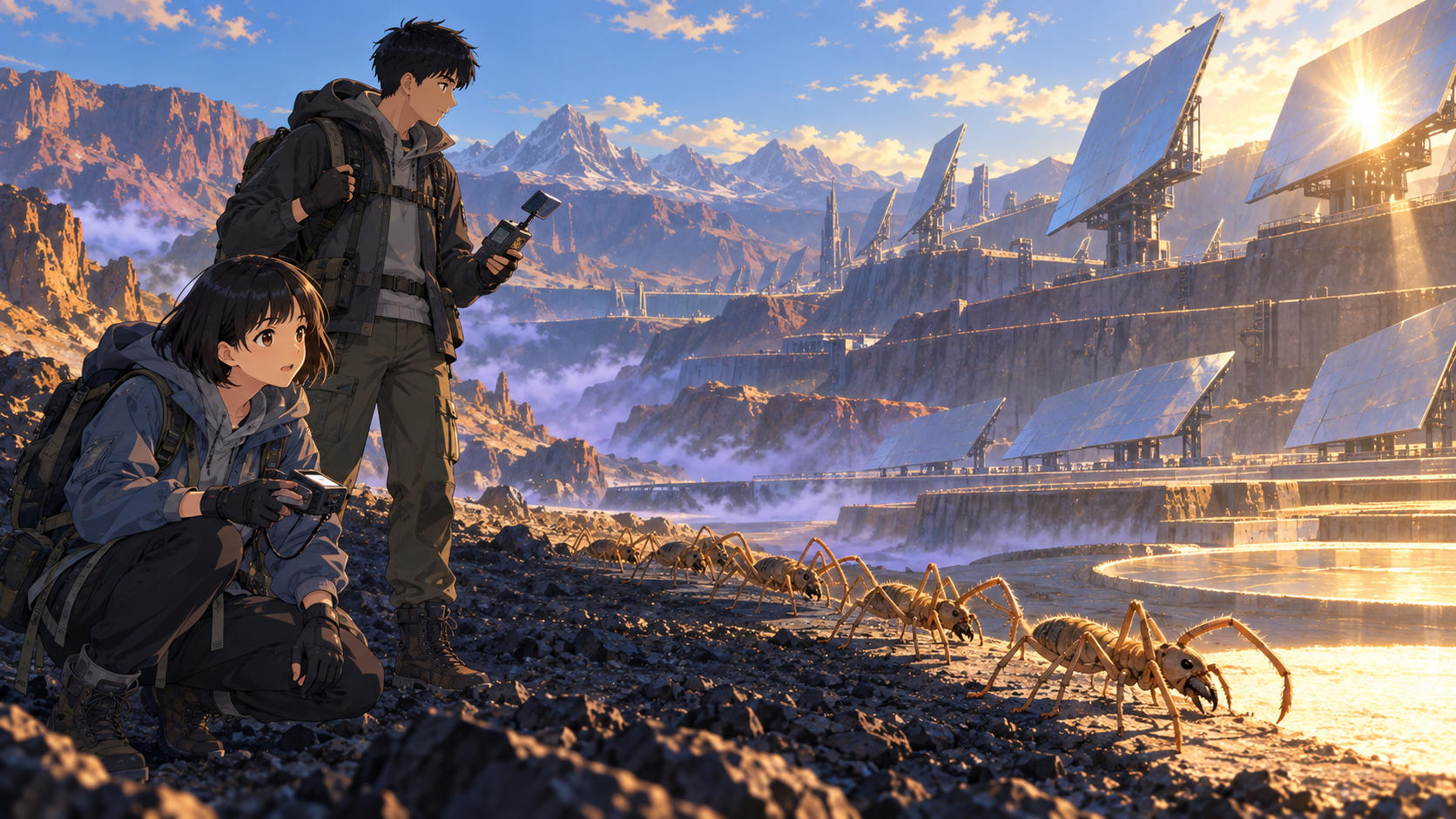
The solifuges use long pedipalps to read surface-temperature gradients and hunt glass-dust mites along shaded gravel. Their eight legs remain inside continuous shade. When a moving hotspot approaches, individuals raise their pedipalps, draw back the forelegs, lower the body, and stop together until the light has passed. They do not spin webs and have neither scorpion tails nor stingers.
 Day 02
Cool-Fissure Elephant Shrew
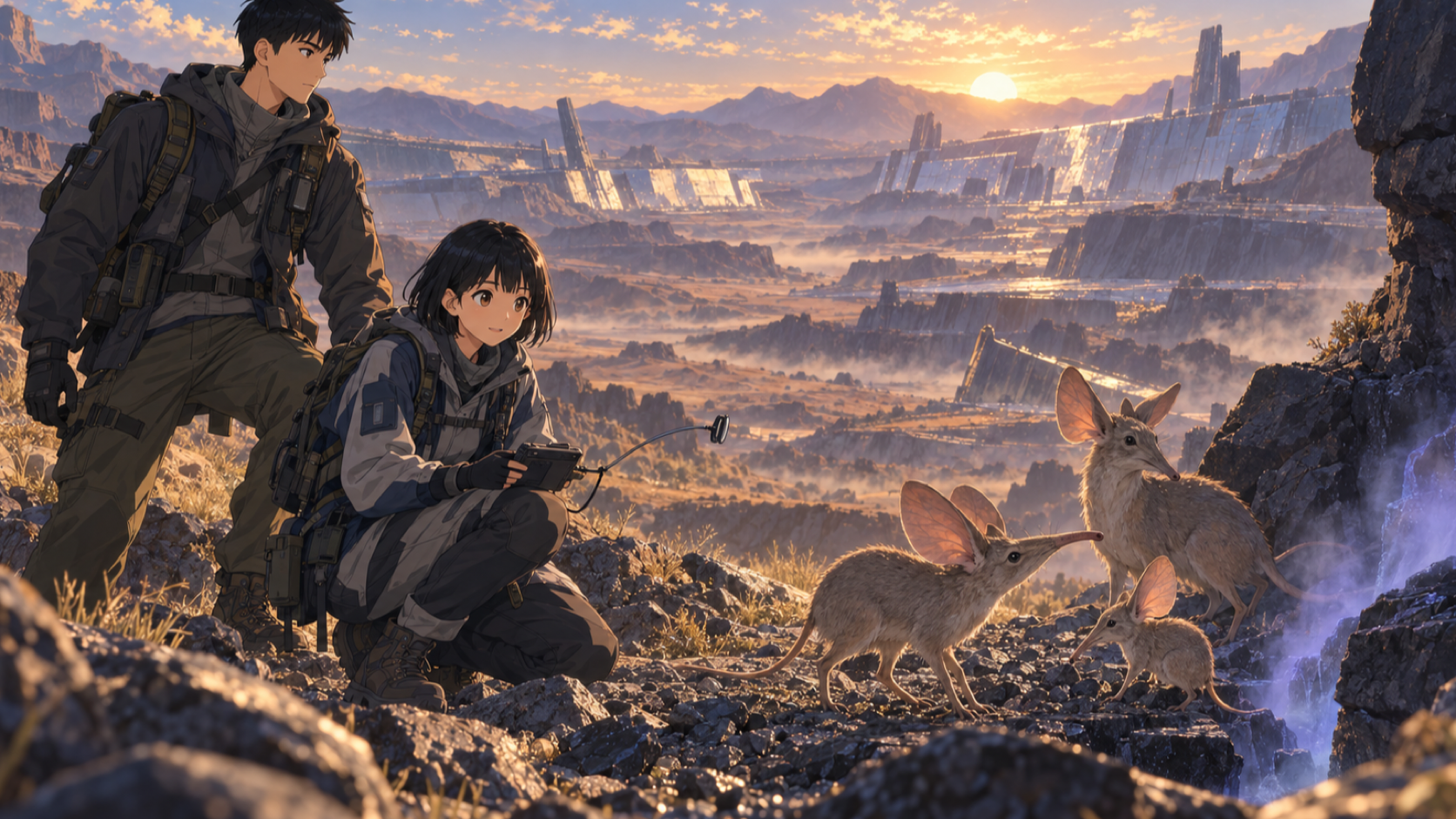
The elephant shrews probe fissures with mobile noses, search for solifuges and insect remains, and use broad vascular ears to shed heat. Drought-tolerant seeds cling to their belly fur and are carried into shaded fissures that collect night dew. At a blocked vent, a family alternates between listening with its ears and testing the broken airflow with its nose. Once the grille is removed and cool air returns, the animals choose the route themselves.
 Day 03
Wind-Curtain Gray-Neck Ostrich Flock
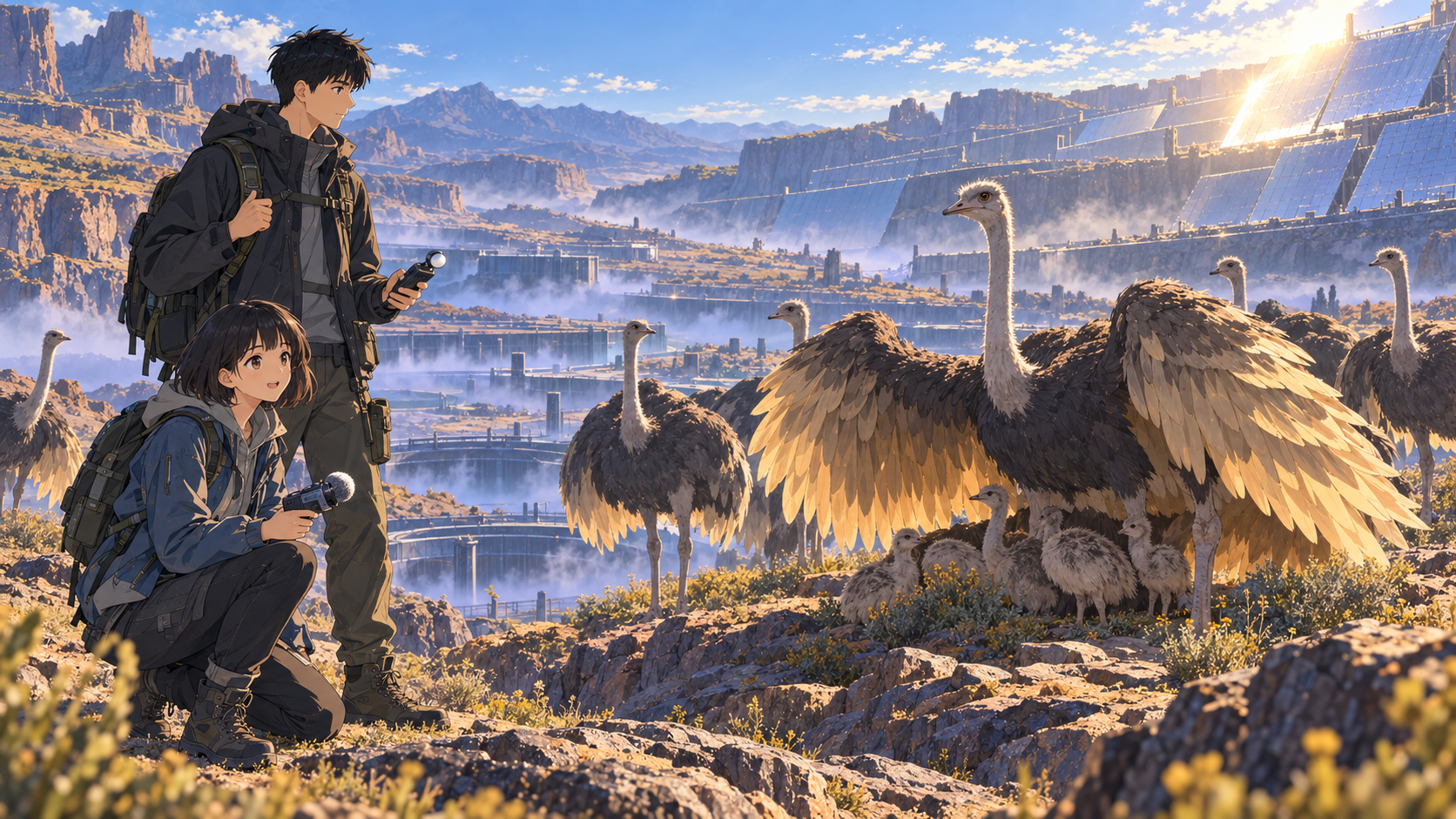
These flightless birds form a half arc and take turns opening layered wing feathers into heat screens. The adults keep chicks and the seed slope inside the shade, step across black-glass rubble on powerful two-toed legs, and wait for a genuine drop in surface temperature before moving. Their crops carry drought-tolerant seeds, which fall onto cooled sand as the flock follows the restored cold-air line.
 Day 04
Well-Pattern Route-Memory Camel Herd
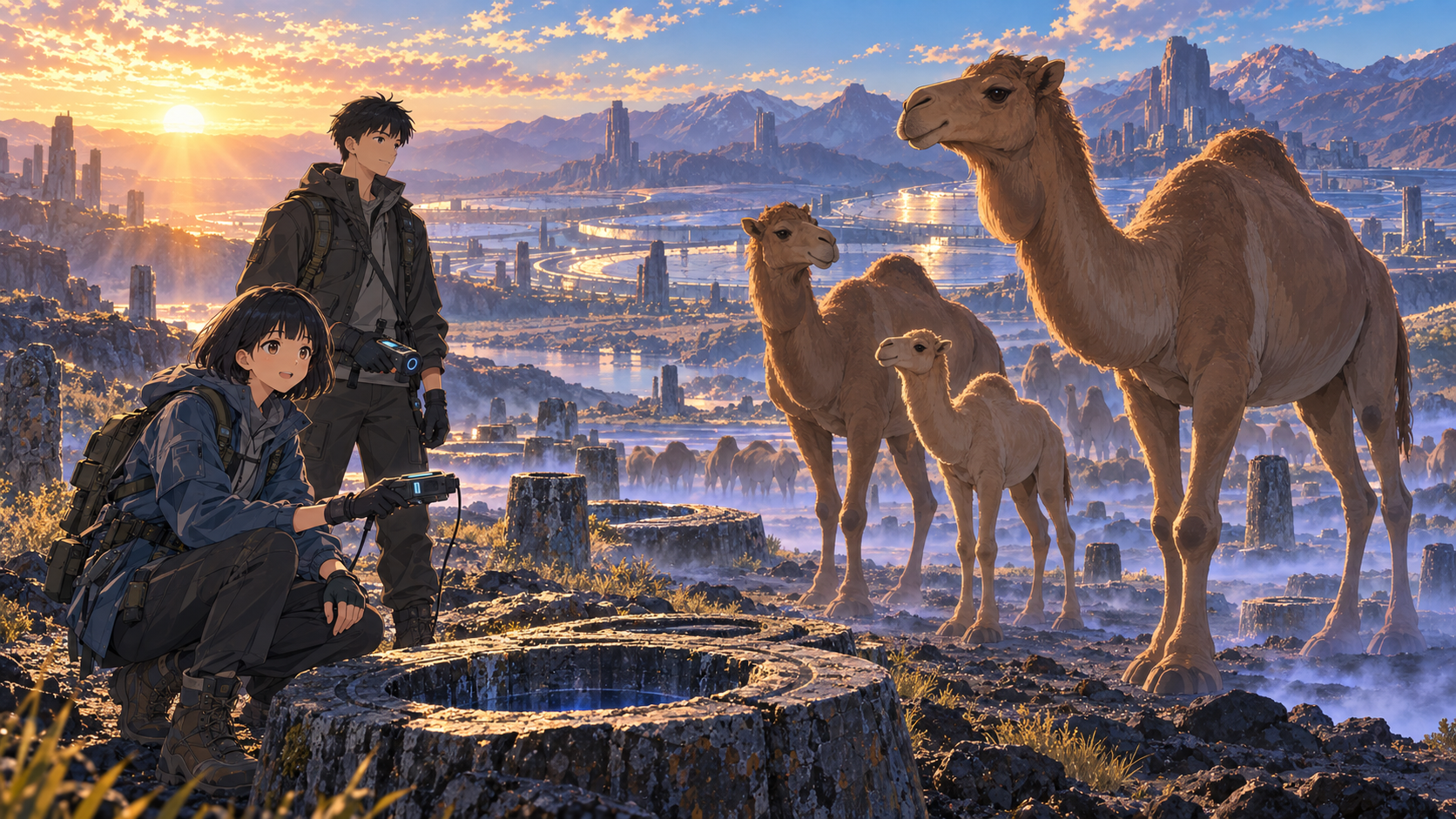
The herd stops at weathered markers in matrilineal order. Adults lower their throat sacs and send short resonant calls through the black-glass slope, then wait for cold air to return through the correct fissure. Broad pads leave concentric route marks linking the three wells. The oldest female takes the first step only after ground vibration ceases, while calves follow shallower inherited prints. The formation also holds long enough for smaller nocturnal animals to enter its shade.
 Day 05
Heat-Veil Mirror-Rift Giant Bear
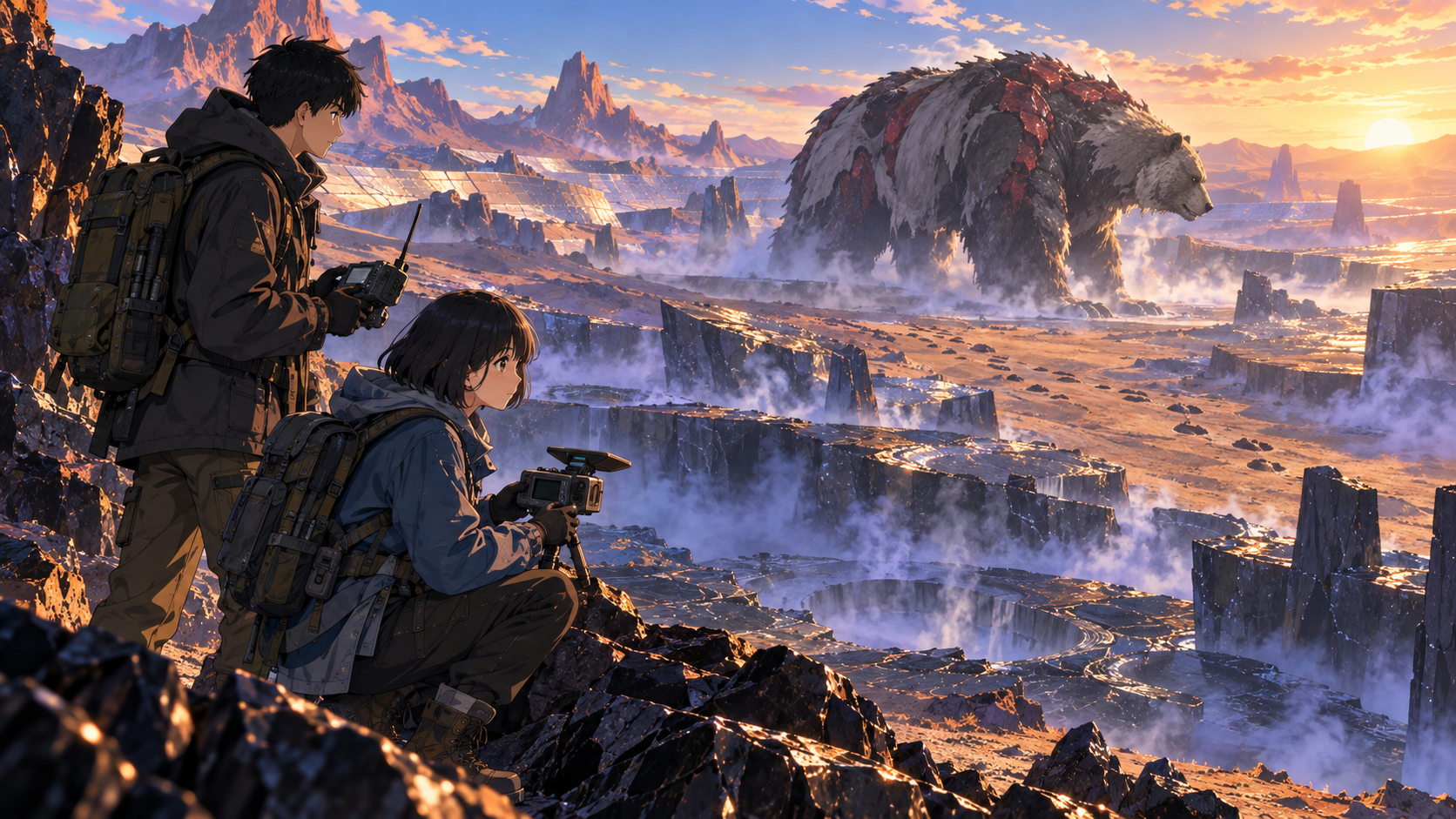
At night, the bear reads the scent of large foothill herbivores carried on descending cold air and lies in wait along the outer edge of the wells. Its heavy muzzle remains turned into the wind while its canines stay behind closed lips. Hollow fur bundles insulate the body through temperature swings; shoulder heat plates store phase-change heat, charcoal skin releases it, and enormous pads draw heat from the ground. When overheated, repeated steps fracture empty-basin obsidian and drive hot convection upward. Cooling air quiets that gait and allows the bear to withdraw along an unoccupied cold valley to its den.
「The moving focal hotspots, dry dew vaults, diverted shade, overwritten route memory, and giant predator's heat pressure were parts of the same human-made disruption. After Fang and K stopped the mirror array from chasing living shadows, released the side tunnels, and restored night cooling, the solifuges' halt line became stable, elephant shrews carried seed back into wet fissures, and ostriches recovered their nursery slopes. The camel herd reconnected the three wells in inherited order and shared its long shade with smaller animals. Finally, the giant bear stopped cracking the obsidian and withdrew along the cold valley. Repair did not tame or remove a species. It restored the distance among shade, dew, seed, memory, prey routes, and a carnivorous predator that keeps the whole corridor alive.」