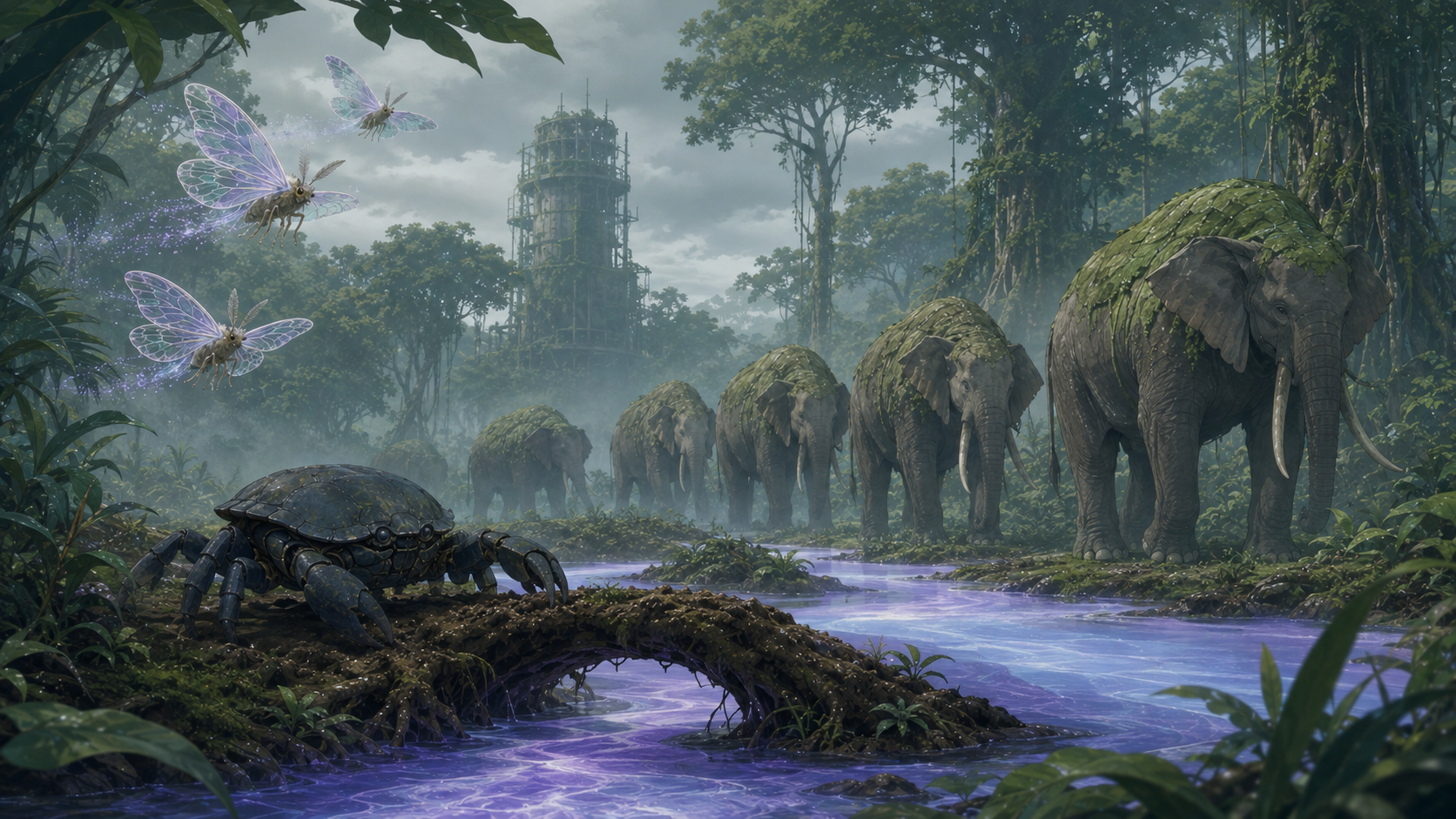
Mist-Crown Mycelial River Buffer Forest
The forest stands where equatorial monsoons meet ocean-borne acid rain. Giant leaves intercept the rain first. Mineral films and symbiotic fungi reduce its acidity before the water moves along buttress roots and shallow channels, forming a cyan-violet Mycelial River beneath the canopy. The abandoned climate station once supplied fresh water to the South Seas outpost through mist condensers. After shutdown, roots and mycelia gradually absorbed the structures into a vertically layered water system: canopy interception, under-leaf predation, ground-level decomposition, root-channel flow, and migration by large ecosystem engineers.
- Parent Domain
- NB-05 · South Seas Forgotten Archipelago
- Location
- A climate-buffer island southeast of the South Seas outpost and separate from the forgotten laboratory island where K's childhood accident occurred. Giant rainforest canopy, acid-rain margins, mycelial waterways, and abandoned mist-condenser towers define the terrain.
After a super-monsoon, the backup system at Third Mist-Condenser Tower restarted by itself. It drew too much moisture from the canopy and discharged concentrated acidic water into the upper Mycelial River. Moths left the leaf margins early, frogs stopped exchanging nursery pools, crabs sealed their drainage holes, and a high-risk lizard descended to defend the last wet branch bridge. The divine elephant herd then veered toward the South Seas outpost while following the lost groundwater signal. Fang and K had to read the five species' hydrological clues, stop the faulty condenser, and open gravity overflow before the herd entered human infrastructure.
How Mist-Crown Mycelial River Buffer Forest Works
Giant leaves, fungal films, canopy moss, and the Mycelial River form one connected water route. Dew-Vein Mycelial Moths collect dew and carry spores. Rainbow-Sac Tree Frogs move neutralized water, spores, and seeds across dry canopy gaps while controlling fungal gnats and moth larvae. Root-Channel Armored Crabs decompose leaf fall and build porous drainage arches beneath buttress roots. Mist-Sail Arboreal Lizards regulate frogs, juvenile crabs, and large insects, and their vertical movement marks the last wet canopy crossings. Monsoon Canopy-Crown Elephant Herds open canopy gaps, press shallow channels into the forest floor, and distribute seeds and fungal spores along their seasonal route.
Observation Ethic
Fang and K observe from outside each animal's chosen route, take only naturally fallen material, use passive sensing, detour around territorial boundaries, and shut down human equipment rather than control wildlife. They do not chase moths, move frogs between pools, open crab channels by force, displace the lizard, or drive the elephant herd away. Repair means changing the machine until the habitat can choose its own route again.
Five-Day Route
- At Acid-Rain Leaf-Edge Station, read the moths' early departure as evidence of sustained canopy moisture loss.
- At Rainbow-Sac Tree Pool, use the frogs' throat-reservoir acidity and call distribution to locate the broken river.
- At Root-Channel Armored Crab Bank, follow sealed drainage arches to the concentrated acidic leak.
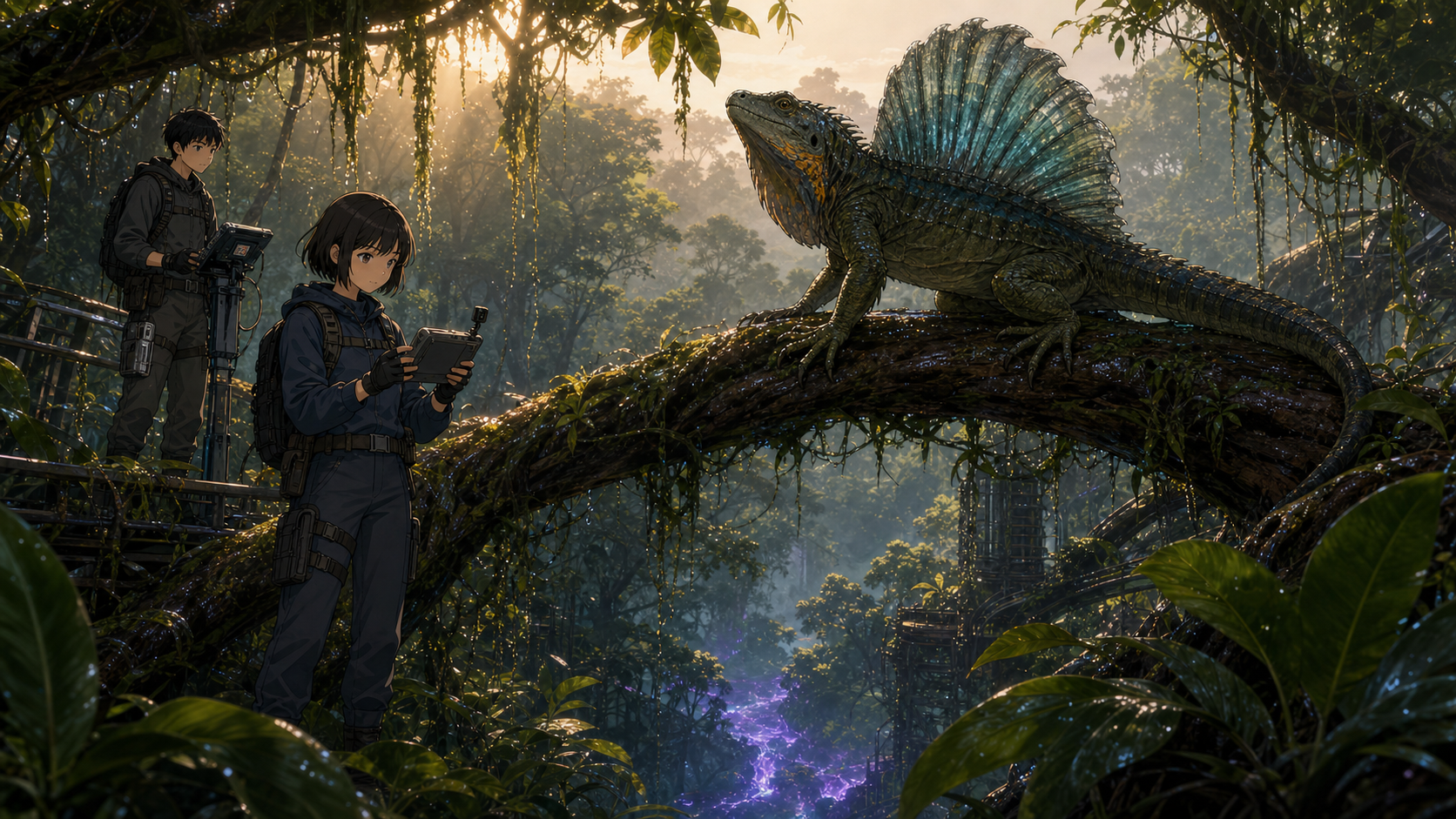
- In the shade of Third Mist-Condenser Tower, yield the last wet branch to the lizard and stop the equipment that is worsening the extraction.
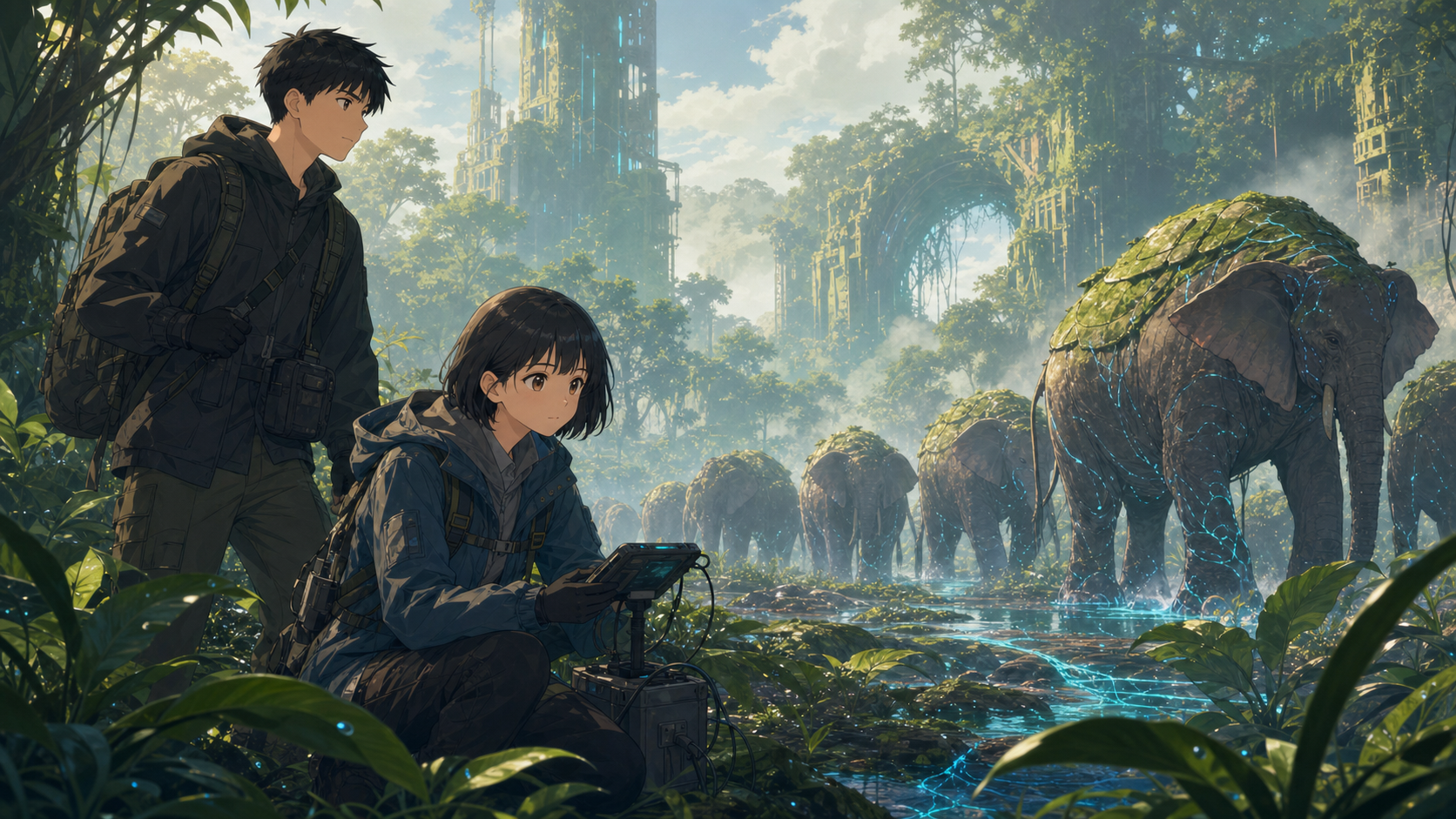
- At Canopy-Crown Migration Gate, read the herd's groundwater memory, shut down faulty mist collection, open gravity overflow, and watch the animals choose the restored forest corridor.
Five species maintaining this local ecology
 Day 01
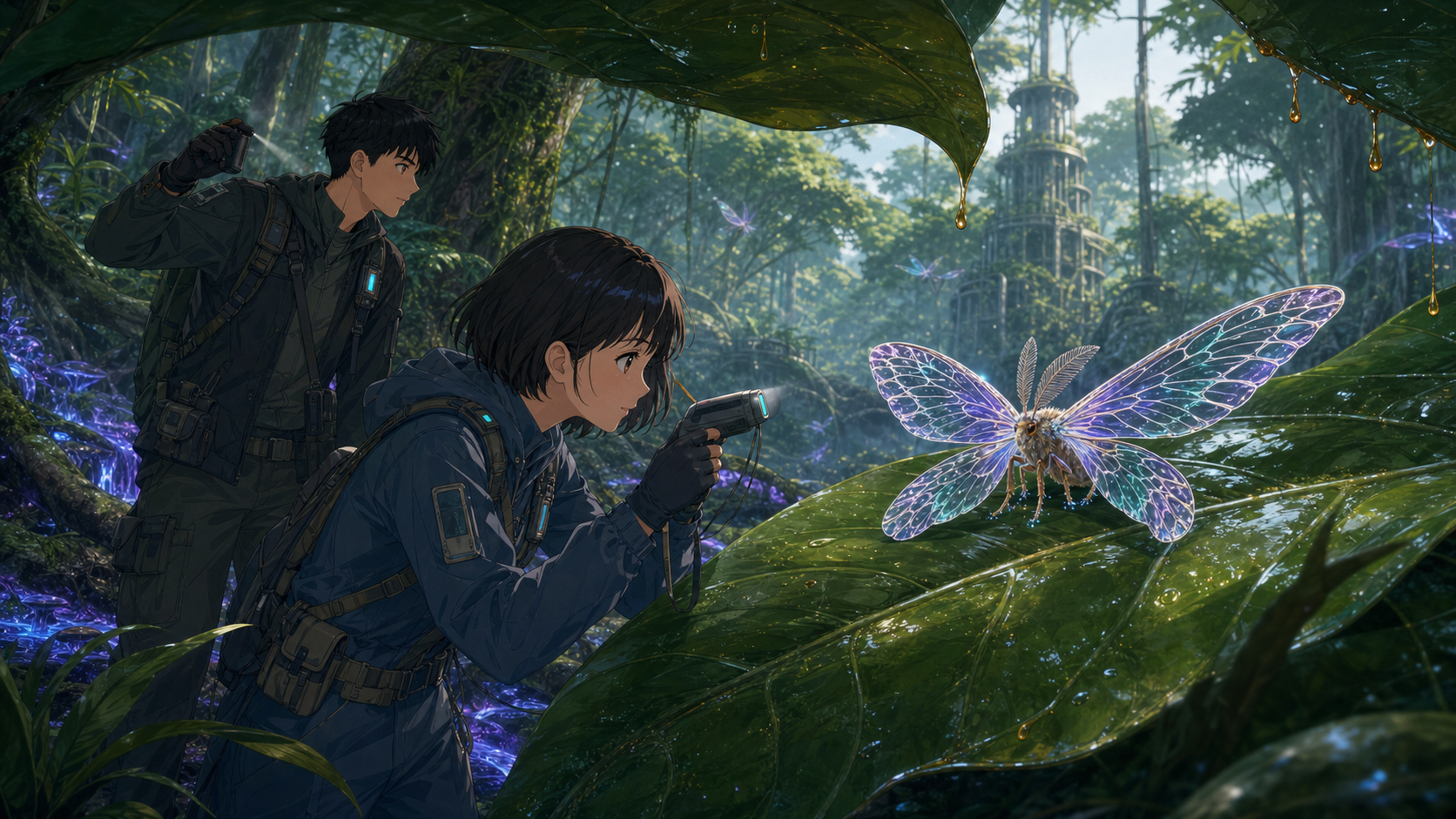
Dew-Vein Mycelial Moth
The moths are nocturnal and non-aggressive. They gather dew in hollow wing veins, feed from luminous fungal flowers, and transport spores between wet leaf edges and dry canopy fissures. Under ordinary conditions they remain upstream until rain begins. During this encounter they left before rainfall, their upstream veins held less water, and the group recovered normal dew gathering only after crossing Spore-Drop Watershed Ridge.
 Day 02
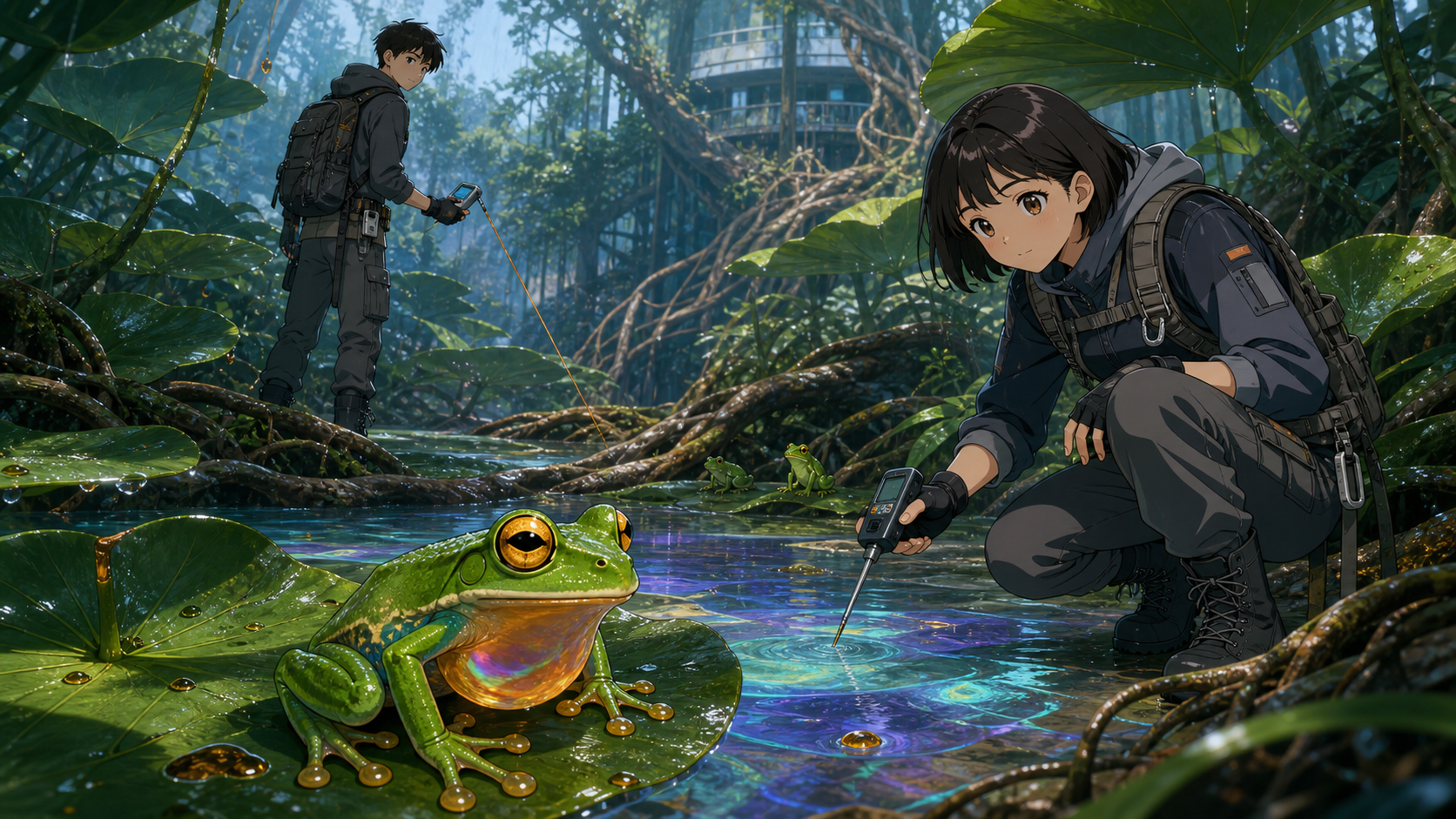
Rainbow-Sac Tree Frog
The frogs are alert and non-aggressive. They cling to wet branches with broad toe pads, hunt fungal gnats and moth larvae, and move spores and seeds between pools. During this encounter they called only downstream. They continued feeding above the active fungal film at Calcifying Mycelial Terrace, then crossed the first dry branch again as soon as a blocked low-flow return gate was reopened.
 Day 03
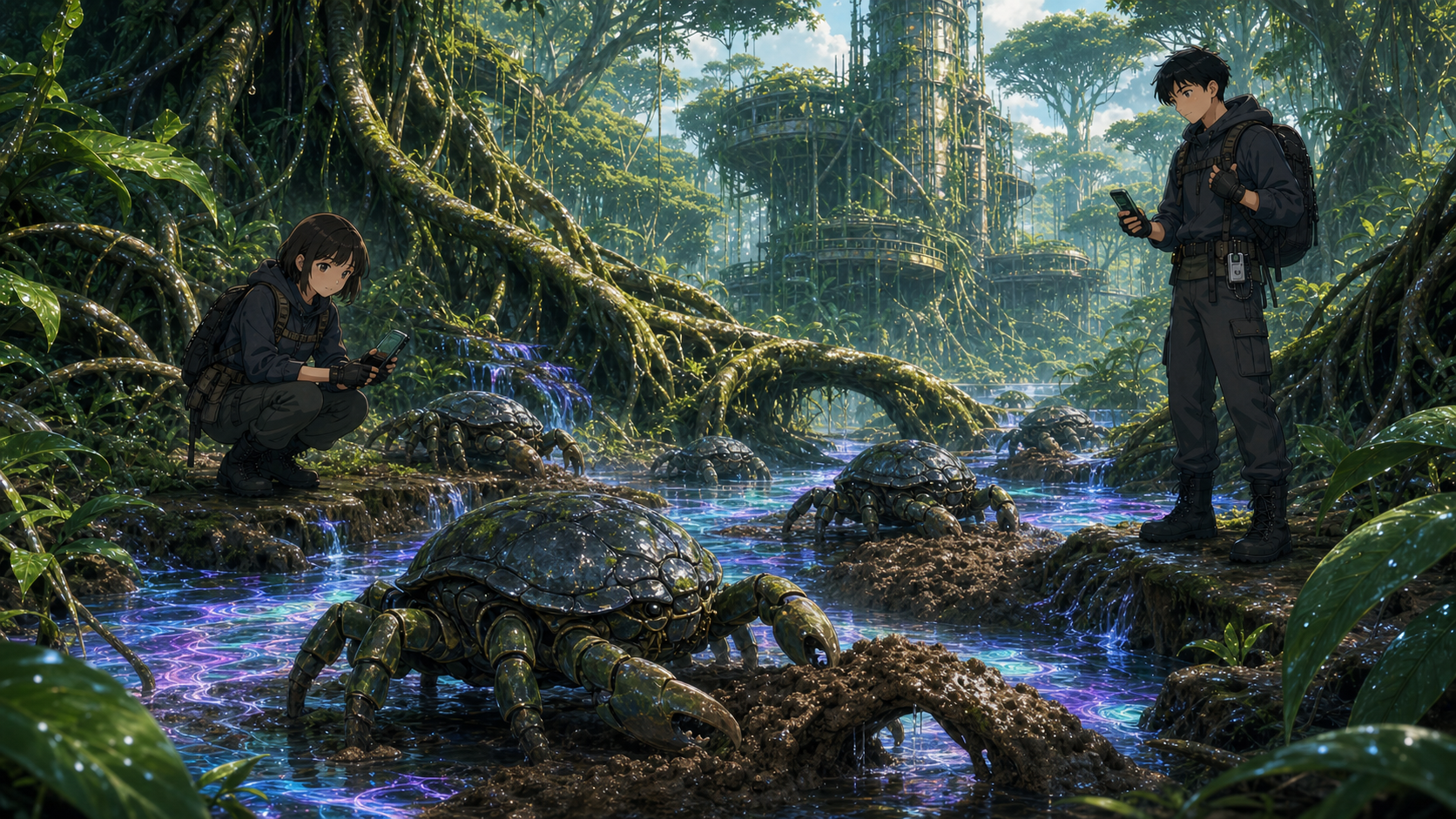
Root-Channel Armored Crab
The crabs sort fallen leaves and fungal matter, turn humus, and press sediment into arches that let water seep through dense buttress roots. They are wary but do not attack. During molting, the colony protects clean-water chambers and closes openings facing contamination while leaving its other channels intact.
 Day 04
Mist-Sail Arboreal Lizard
The lizard is a high-risk territorial predator, but it warns before any contact. When water is scarce, it raises its sail, strikes the trunk with its tail, and blocks the branch. It does not pursue observers who stop outside the guarded bridge and leave its wet retreat open. During this encounter it remained on the last stable branch while Fang and K abandoned the direct route.
 Day 05
Monsoon Canopy-Crown Elephant Herd
The herd is not actively aggressive. Its divine-class risk comes from scale: a migration can reshape canopy gaps, tributaries, and seed distribution across the island. The animals follow lost groundwater and seed corridors rather than human settlements. They change course when the habitat's water signal returns.
「The anomaly did not begin with any mutant animal. An old human system had removed the water shared by the entire canopy. When Fang and K shut down Third Mist-Condenser Tower and restored gravity overflow, the elephant herd followed the returning groundwater into the forest. Moths, frogs, crabs, and the lizard returned to their earlier layers in sequence. Repair meant putting human infrastructure back in a position where it no longer obstructed the Mycelial River or the migration corridor.」